Bring Pleasant Bay into your classroom—apply for a FoPB grant!
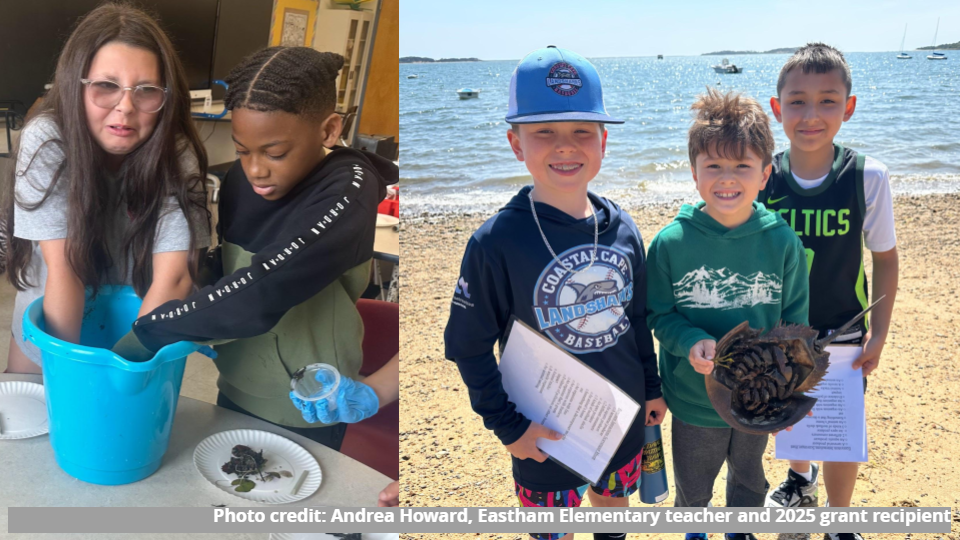
Calling all educators! The Friends of Pleasant Bay (FoPB) Education Committee has opened its 2026–2027 grant cycle, offering competitive grants of up to $5,000 for classroom projects and curriculum development that advance FoPB’s mission.
For more than 40 years, FoPB has supported innovative, hands-on learning centered on Pleasant Bay. Past grants have funded projects ranging from student-led water quality monitoring and oyster restoration studies to salt marsh field research and interdisciplinary coastal science units. The program is open to teachers in Chatham, Orleans, Harwich, and Brewster schools, as well as the Nauset Regional School District and Cape Cod Regional Technical School.
Two grant options are available:
-
2026–2027 Annual Curriculum Grant, and
- 2026 Rolling Grant.
Each grant named above links to full program details, eligibility guidelines, and application materials on our website. Applications for the Annual Curriculum Grant are due by May 1, 2026. Rolling grant applications have no set deadline.
| |
First report from the field: Pleasant Bay Fisheries Study underway
Last November, the Center for Coastal Studies (CCS) launched fieldwork for the Friends of Pleasant Bay–funded ecosystem assessment of Pleasant Bay — a comprehensive look at the fish, shellfish, and habitats that make this estuary so remarkable. This interdisciplinary study builds on similar research conducted a decade ago, allowing scientists to compare today’s conditions with those of 10 years past.
Over the course of a year, researchers led by Owen Nichols, Director of Marine Fisheries Research at the Center for Coastal Studies, are sampling the Bay monthly to document what’s living where — and how those patterns may be changing. The goal is to create a robust baseline dataset on the status and trends of Pleasant Bay’s natural resources, laying the groundwork for a long-term habitat monitoring program.
Field crews are working both along the shoreline and out on the water. In intertidal areas, they use beach seines and small box traps to sample fish and invertebrates. In deeper waters, the team conducts short net tows and bay scallop dredges, collects sediment samples from the seafloor, deploys underwater video cameras, and sets ventless lobster traps. Together, these methods provide a detailed snapshot of life above and below the surface.
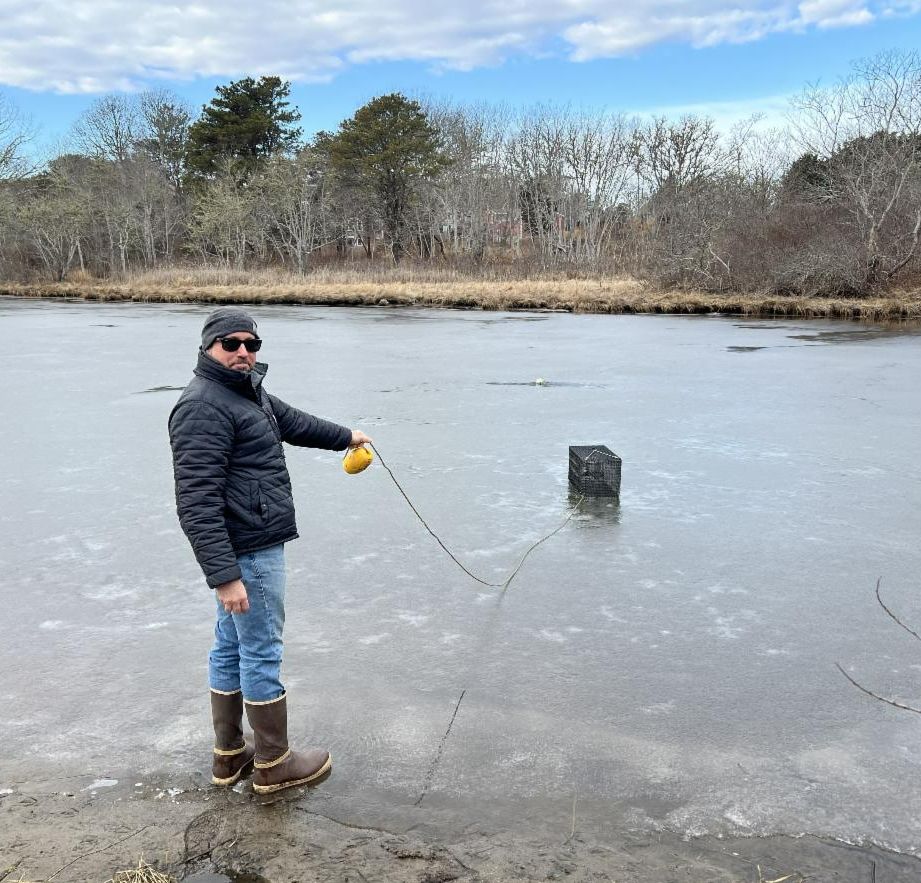
Most of this work takes place aboard the 21-foot skiff R/V Kingfisher (white hull and cabin with the black CCS logo), though you may also spot researchers working from a canoe, kayak, or occasionally a local fisherman’s vessel. Pictured above, Owen Nichols attempts to set a box trap at Frost Fish Creek, but is thwarted by ice and cold.
If you’re out on Pleasant Bay and see Owen and the team at work, give them a wave — science is happening in real time. For more information about the study and to learn how you can help, visit friendsofpleasantbay.org/fisheries.
| | |
How abundant shellfish help create healthy waters
CAI | By Elspeth Hay, Published January 22, 2026
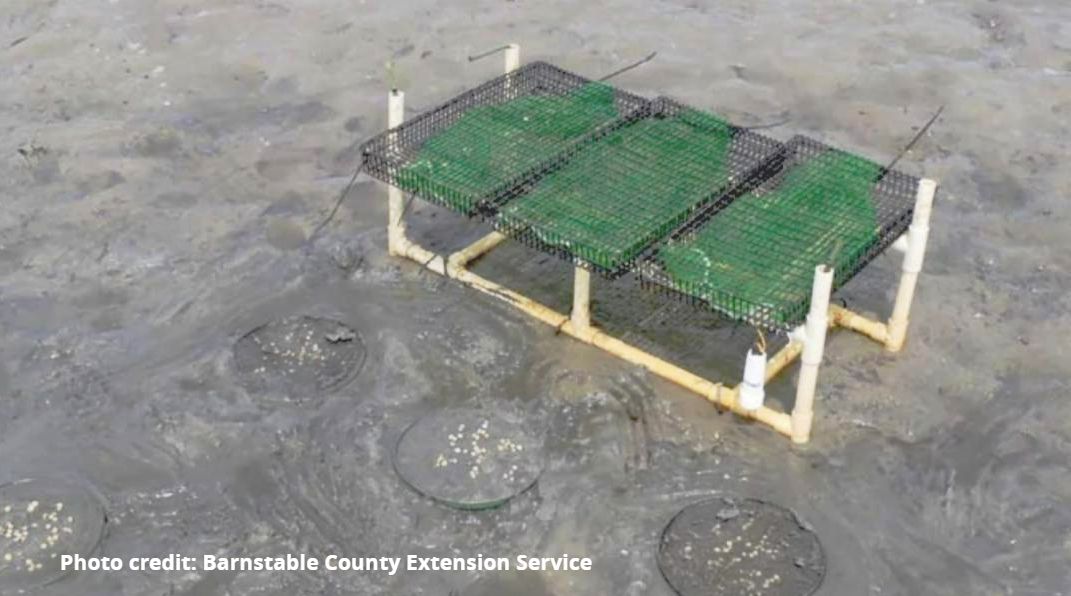
As a fisheries and aquaculture specialist at the Barnstable County Cooperative Extension, Abigail Archer spends a lot of time trying to help the public connect the dots between shellfish, nitrogen, and healthy estuaries. This relationship starts when nitrogen travels through freshwater streams and runoff into our marine environment.
"Oysters are kind of like sheep grazing out in a field. And so, you know, the sheep are not standing in a field absorbing the nutrients from the grass. They're actually munching on the grass and then eating that and then getting the nutrients in the grass," she explained.
"And so it's the same thing for the oysters. So the nitrogen that's coming through our groundwater is then fertilizing basically the algae, the phytoplankton that's in the water. And then the oysters are filter feeders. And so they're they're kind of grazing on all of that yummy algae." Read more.
| | |
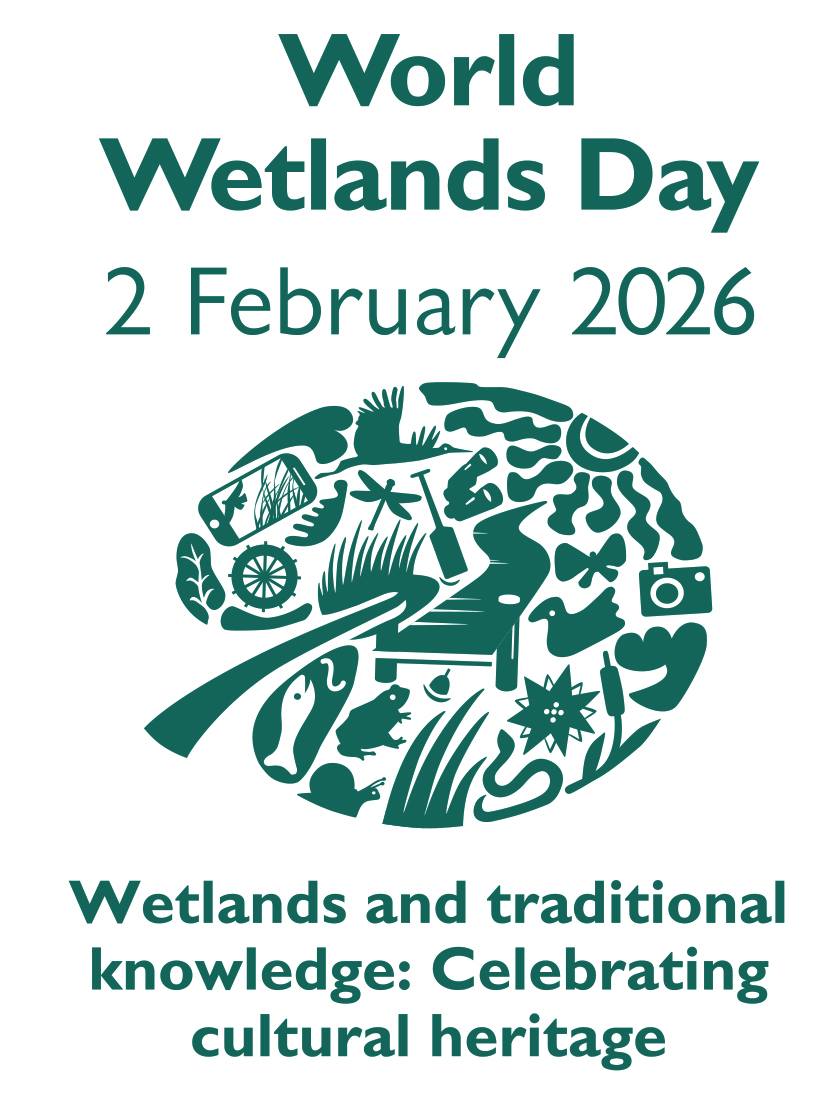
World Wetlands Day is February 2, 2026!
World Wetlands Day is an environmental celebration dating back to the year 1971 when several environmentalists gathered to reaffirm protection and love for wetlands. Wetlands are water ecosystems containing plant life and other organisms that bring ecological health in abundance to not only water bodies but environments as a whole.
Celebrated on the second day of February every year, World Wetlands Day highlight the influence and positive production that wetlands have had on the world and brings communities together for the benefit of Mother Nature. This day also raises global awareness of wetlands' significant role not only for people but for the planet.
This year’s theme is "Wetlands and traditional knowledge: Celebrating cultural heritage." The global campaign spotlights the timeless role of traditional knowledge in sustaining wetland ecosystems and preserving cultural identity.
Be part of the global celebration and please think how you might support the acquisition, protection, and preservation of wetlands in the Pleasant Bay watershed!
| | |
StormSmart Coasts Program: Planning for a changing shoreline by addressing erosion, flooding, & more
Recent winter storms are a reminder that Pleasant Bay’s shoreline is constantly evolving. Across Massachusetts, the Office of Coastal Zone Management’s (CZM's) StormSmart Coasts Program helps communities prepare for erosion, flooding, and sea level rise through science-based planning and nature-based solutions.
This fall, CZM awarded $3.8 million in Coastal Resilience Grants to 12 projects statewide. Within the Pleasant Bay watershed, Chatham received funding to advance a shoreline stabilization and salt marsh restoration project at Jackknife Beach. The project will restore marsh habitat using biodegradable materials and shellfish, support landward marsh migration, and help protect public shoreline access.
Programs like StormSmart Coasts reflect Friends of Pleasant Bay’s CARE framework — advancing Conservation, Access, Research, and Education to sustain the Bay’s ecological health and the communities that depend on it. Learn more about Massachusetts StormSmart Coasts Program here.
| | |
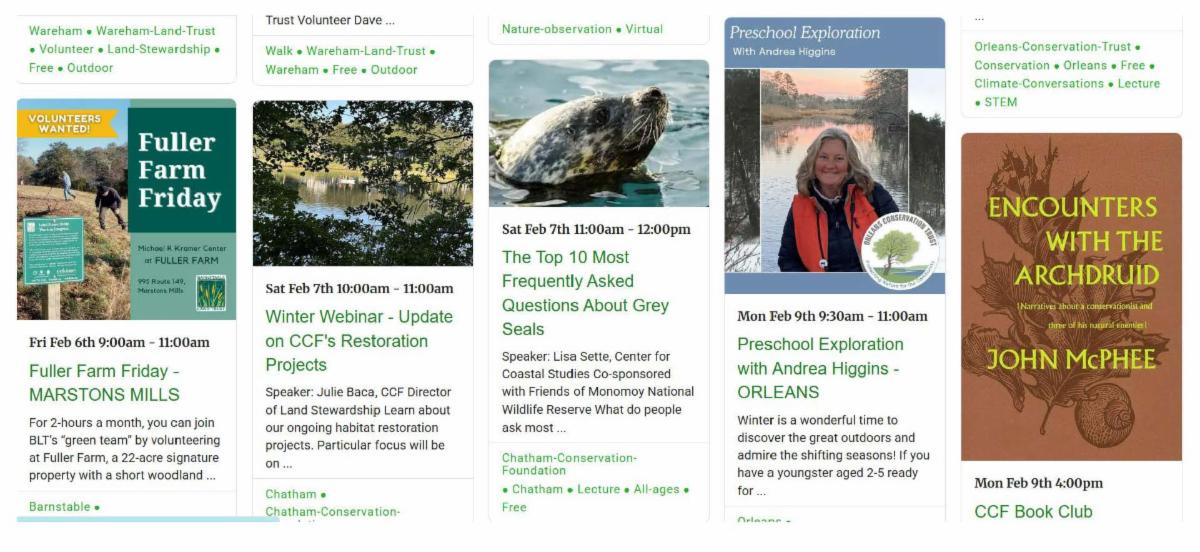
February's Cape Cod Conservation Calendar of events will warm your heart
This month's event calendar offers a full range of activities good for body, mind, and soul, and for people of all ages, interests, and abilities. Check out FoPB's Cape Cod Conservation Calendar here..
| | Watersheds, climate & more | | |
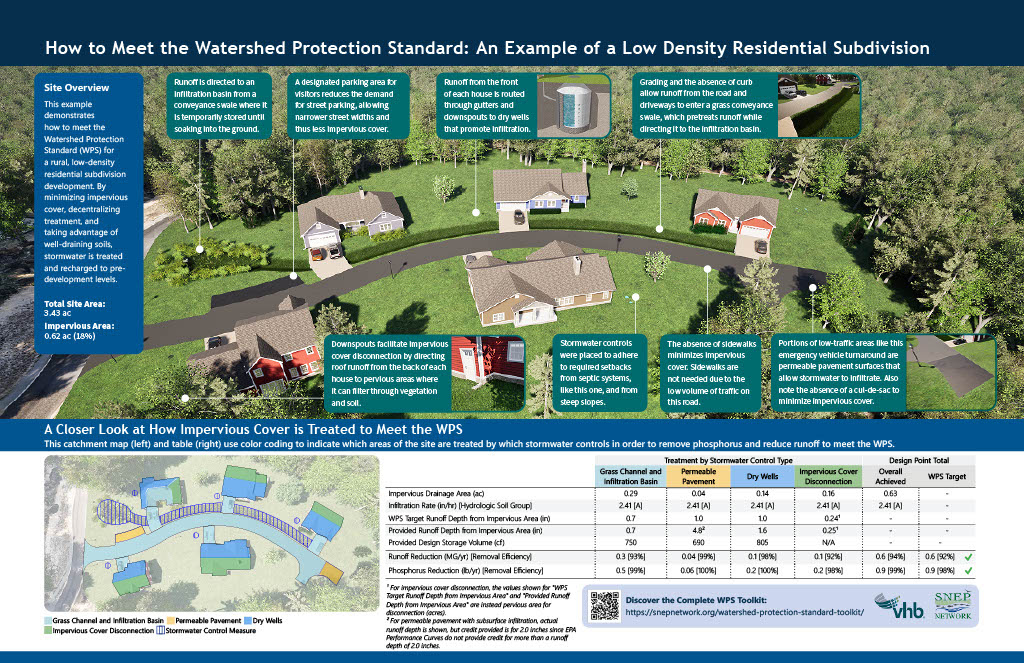
Designing for resilience: a new approach to stormwater management
As part of its stormwater planning series, the SNEP Network will present a webinar on the Watershed Production Standard (WPS) on Tuesday, February 10, 2026, from 10:00–11:00 AM. The session will be led by Dr. James Houle, Director of the UNH Stormwater Center.
Developed over two decades of research and field data, the Watershed Production Standard is a science-based approach to managing stormwater from new development and redevelopment projects. By reducing polluted runoff and better mimicking natural watershed processes, the WPS helps protect water quality, reduce flooding, and support climate resilience. For coastal communities like those surrounding Pleasant Bay—where stormwater runoff directly affects estuarine health, shellfish habitat, and water clarity—stronger stormwater standards can play a critical role in safeguarding the Bay for future generations.
The webinar will also introduce a watershed protection toolkit developed by the SNEP Network and its partners, along with practical guidance for communities interested in adopting the WPS.
Register for the webinar here.
| |
MA EEA grants available for coastal resilience & water quality projects
If your town or organization has been thinking about a project to address storm impacts, erosion, habitat restoration, or water quality challenges, now is a good time to take a look at state funding.
The Massachusetts Executive Office of Energy and Environmental Affairs (EEA) is running this year’s consolidated environmental grant round through its new online system, called Environment & Climate One Stop. Within that grant round, the Massachusetts Office of Coastal Zone Management (CZM) is seeking proposals for two programs:
In recent years, these programs have helped advance projects across Cape Cod — from salt marsh restoration and stormwater improvements to nature-based shoreline solutions.
If you’re involved in municipal planning or coastal conservation work in the Pleasant Bay watershed, this could be an important opportunity to move a project forward. If you have questions or need assistance, contact the Massachusetts EOEEA's Office of Grants and Technical Assistance. Applications are due March 20, and questions must be submitted by February 18.
| | | | Winter storms & the science of Pleasant Bay | | | |
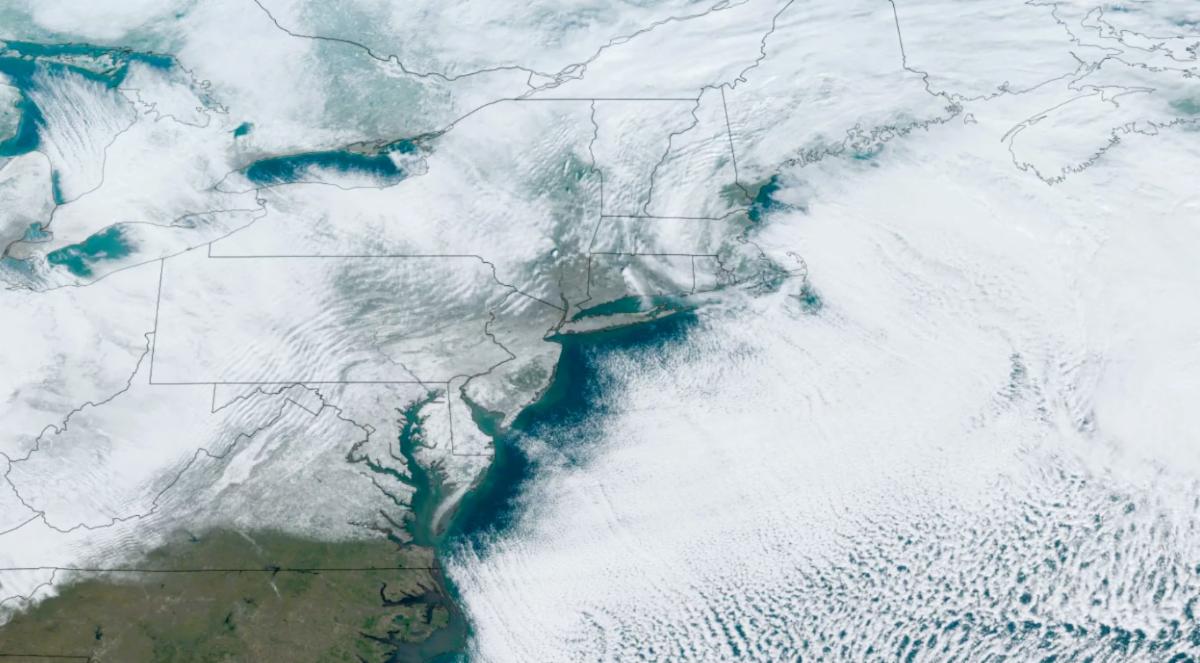
Winter storms don’t just batter the coastline — they actively reshape Pleasant Bay’s structure and influence how the estuary functions.
Pleasant Bay is a barrier beach estuary, separated from the Atlantic by a dynamic system of sand spits and barrier beaches. During strong nor’easters, waves and storm surge can move enormous volumes of sediment in a short period of time. Sand erodes from some areas and is deposited in others, shifting shoals, sandbars, and tidal channels.
These changes affect what coastal scientists call the tidal prism — the volume of water that flows in and out of the Bay with each tide. When inlets widen or channels deepen, tidal exchange with the ocean can increase, often improving flushing and dissolved oxygen levels. When shoals build up or channels narrow, water exchange can slow, potentially influencing water quality and habitat conditions.
Storm-driven sediment movement can also reshape eelgrass habitat, salt marsh edges, shellfish beds, and navigation routes. The 1987 “Break” is a dramatic example of how a single storm event permanently altered tidal circulation in the Bay — changes scientists continue to study decades later.
While winter storms can appear destructive, they are a natural and powerful part of how barrier beach systems evolve. Even in the quietest months, Pleasant Bay is constantly changing — shaped by wind, water, and the steady rhythm of the tides. (Photo credit: NOAA)
| |
| |
Friends of Pleasant Bay
P.O. Box 1243
Harwich, MA 02645
| | | | |
Friends of Pleasant Bay is a private nonprofit 501(c) 3 organization.
All donations are tax deductible as allowed by law.
JOIN & DONATE HERE.
| | | | | |