|
October Newsletter
from the
Community Streetcar Coalition
It's been a tough few weeks for our friends in hurricane country. I'm happy to report that Charlotte and Tampa are doing well. Brian Allan with HART let Joh Schlegel know that, "we made it through with only minor damage to the (TECO) line. Planning on resuming service (last Friday) afternoon."
This month's newsletter has a few things to note:
-
CSC will be at MPact in Philadelphia next week! We're sponsoring MW 06 South by Southwest, and thanks to the generosity of Stadler, we will be having an informal get together on Tuesday at 5 PM.
-
Next Year's Summit is Set! Mark your calendar for the upcoming event and check out the agenda.
-
Membership Dues Update: Be sure to check out the changes in the membership dues structure. If you haven't already, please check that your accounting department has what they need to process your invoice.
-
August Virtual Summit. Details are posted online
-
Streetcar News: Don’t miss the latest articles and updates towards the end of the newsletter.
As always, our Coalition thrives on active member involvement. If you have any comments or suggestions, please don't hesitate to reach out.
Thank you!
Christy Willhite, AICP
Executive Director
christy@streetcarcoalition.org
| |
|
See You in Philly at MPact!
The Streetcar Coalition is sponsoring MPact Transit + Community Conference Mobile Workshop 06 South by Southwest. Unfortunately, the session filled up quickly. Not to be deterred from getting together, we will meet at the Sheraton Hotel bar at 5 PM on Tuesday, October 22, for an informal gathering that our friends at Stadler will be sponsoring.
| | |
|
|
SAVE THE DATE
2025 Community Streetcar Coalition Summit - Portland, Oregon
Monday, 4/28/25 - Wednesday, 4/30/25 at the Sentinel Hotel.
Early bird registration begins 12/1/24!
| |
|
Did you miss the August Virtual Summit?
We had a great group of speakers! They let us know what's next for Atlanta, Omaha, Ramsey County, LA, Sacramento, and Orange County. You can watch the video and view the slides on our website.
| |
|
Community Streetcar Coalition Membership and Dues Structure Change
The activities and services of the Community Streetcar Coalition, such as organization management, peer exchanges, and event receptions, are funded through a membership dues structure. Invoices for these dues are sent out each July to coincide with the start of a new fiscal year. Recognizing that different organizations may have varying fiscal years, the payment deadline is extended to December 31.
This year, we've introduced a new feature for our private sector members. In previous years, private sector members were asked to sponsor the in-person Summit in addition to their membership dues to ensure maximum participation with low registration fees. This often required the management team to speculate if the secured sponsorships during the registration process would cover the Summit costs. Additionally, it posed budgeting challenges for those who hadn’t initially planned for sponsorships and had to find funds outside of their normal budget cycle.
To address these issues, the new invoices for private sector members include a base-rate membership level and an option to sponsor at varying levels each year. For example, a private sector member may choose to be a gold-level sponsor for fiscal year 2024-25 and then switch to a silver-level sponsor in FY2025-26. This annual selection provides flexibility and better budget planning.
We believe these changes will enhance our membership experience and support the Coalition’s efforts more effectively.
The Coalition Board of Directors would like to thank Carl Jackson and the Membership Working Group for there work in developing these changes.
Any questions or concerns should be directed to Christy Willhite, Executive Director-christy@streetcarcoalition.org.
| |
|
FTA’s Transit Asset Management (TAM) Program is continuing a series of peer programs for transit agency staff and organizations that manage a TAM Plan. FTA will host the next session, a virtual discussion specifically focused on Group Plan Sponsors, at 2 p.m. Wednesday, November 20. The 90-minute program will provide a forum for participants to discuss the unique considerations that must be taken when managing a group TAM Plan.
Since the virtual discussion is limited to 10 participants, FTA requires all who wish to participate to submit an application by October 23. Discussion forum participants should be well-versed in their agency or organization’s asset management policies and processes and willing to share ideas related to group plan management. Participants will be selected based on the diverse perspectives they bring from their agency, as well as thoughtful responses to the application questions to ensure an engaging conversation.
FTA’s TAM discussion forums provide an opportunity for peers from different transit agencies to share successes and challenges. The discussion topics go beyond the requirements in the TAM Rule (49 CFR 625) to promote an exchange about resources and best practices. This session will provide a place for individuals who manage TAM Group Plans to discuss challenges that may arise while developing and implementing these plans, which are likely to be different and unique to the challenges faced by agencies. Topics may include strategies to:
- streamline management,
- set performance targets, and
- engage with individual agencies in the group plan.
This exchange of approaches and resources can help participants more closely align their TAM performance targets with agency goals, going beyond traditional TAM planning.
The outcomes of the discussion will be shared through case studies or a published event summary.
Participants will be notified if they are selected to participate via email by October 30. For questions about the Peer Program or registration, contact Tamalynn Kennedy.
| |
 | |
KC Streetcar will Stop Service for a Month to Connect Existing Tracks to Main Street Extension
kcur.org
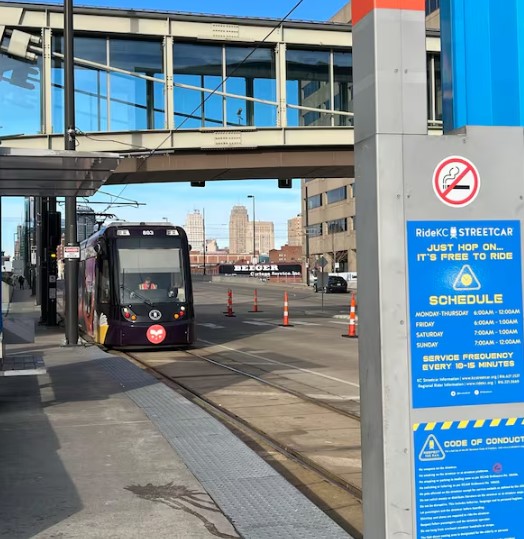
Kansas City's streetcar will stop running at the end of September so that construction crews can connect the existing tracks at Union Station to the UMKC extension. The city will offer bus service along the route during the outage.
Beginning on Sept. 30, Kansas Citians won’t be able to ride the streetcar for several weeks, as the city temporarily shuts down service in order to connect the downtown line to the new Main Street extension.
After more than two years of navigating a mess of orange cones during the rail construction — and longer before that, while Kansas City made underground utility improvements — drivers are getting a view of what the completed project may look like.
Most of the new platforms and shelters are in place, and poles and wires hang above the road, waiting for the streetcars to come their way.
With the expansion on track to open in 2025, it’s now time for some of the final big sprints of construction.
Read More
| |  |
 | |
Spreading the Streetcar Love
siteselection.com
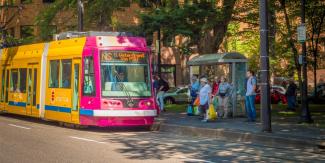
Built incrementally at a current cost of $250 million and considered the model of “second generation” urban rail projects, the Portland Streetcar began producing dividends even before it entered service in 2001. A 2016 study by the Federal Transit Administration found that as of the 1997 decision to go forward with the project, $4.5 billion of market value had been developed along the Streetcar’s path, including 7.7 million sq. ft. of commercial space and 18,000 residential units. According to Dan Bower, executive director of Portland Streetcar, Inc., added market value within the Streetcar’s target area has since surged to $13.3 billion.
The Streetcar initially covered about seven miles. Since extended to 16 miles along parallel loops and dotted by 70 stations, it stitches together a series of downtown neighborhoods, several of which it is widely credited with helping to revitalize and re-imagine. Property owners along the path were incentivized to invest in the public-private project, says Bower, by the rezoning of target areas from industrial to mixed use, which boosted property values and set the stage for the development that has followed.
“The people who paid for the Streetcar,” Bower tells Site Selection, “are largely the property owners along it who formed a local improvement district. Everybody within four blocks of the Streetcar essentially voted to tax themselves to build it.”
Read More
| | |
 | |
Decades of impasse: 6 Takeaways from the Recent Death of St. Paul’s Riverview Streetcar (Opinion)
minnpost.com
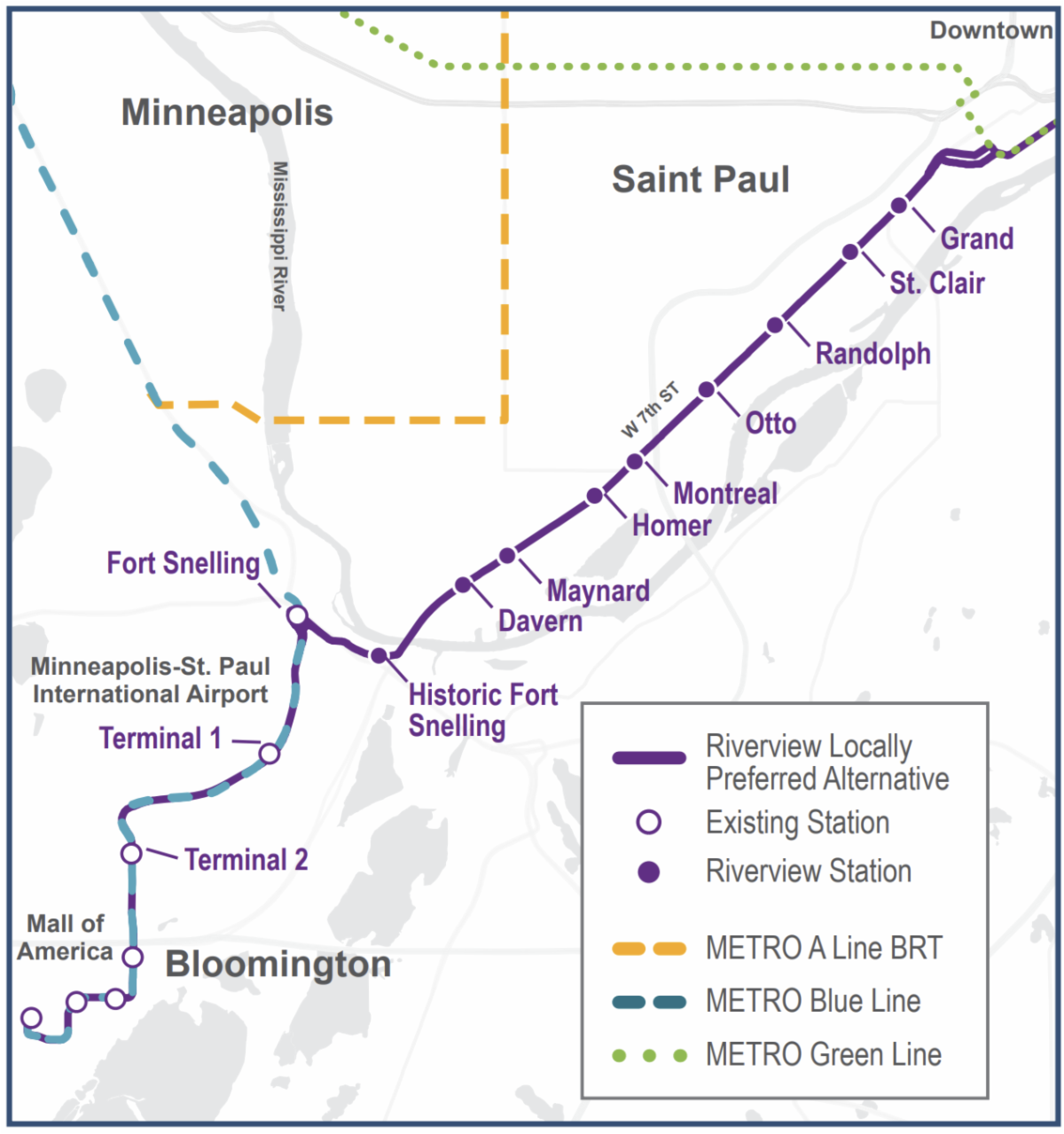
In a classic Friday afternoon news dump, Ramsey County quietly killed its expensive and bedraggled Riverview Corridor project. A long-planned connection running from downtown St. Paul past the Xcel Energy Center to the MSP airport and Mall of America, the rail transit project was set to cost at least $2.5 billion and open sometime in 2032. Instead, county officials washed their hands of a project that’s been in the works for 35 years, postponing again meaningful transit investment for one of St. Paul’s most important corridors.
I’ve been following this project for a long time as a St. Paul resident and transit advocate, then as a member of 2017-era Technical Advisory Committee, and finally as part of a recently aborted Community Advisory Committee. It brings me no pleasure to see the project abruptly canceled, but this week, looking at a post-mortem of the line, here are six observations.
30-plus years of impasse
Following the path once known as Old Fort Road, one the metro’s oldest trails, the contemporary history of the Riverview Corridor begins in the late 1980s when the first seeds of rail transit were planted. Along with the Central Corridor (Green Line) and Hiawatha (Blue Line) light rails, the Riverview Corridor was a focus for late 20th century planners. The route would connect one of the two downtowns to the airport, then and now an obvious candidate for large-scale transit investment.
Read More
| | |
 | |
Tampa secures $1 Million USDOT Grant to Support Streetcar Expansion and More
thatssotampa.com
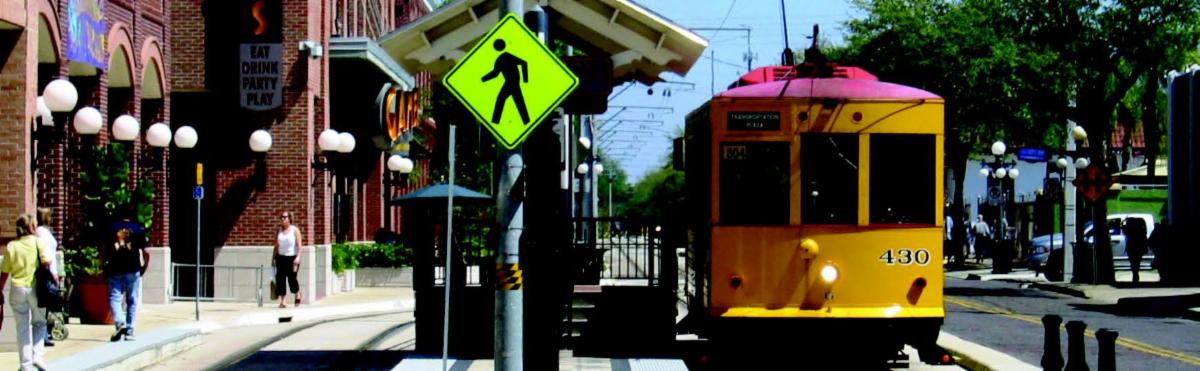
The City of Tampa has secured a $1 million Technical Assistance Grant from the U.S. Department of Transportation, thanks to the Innovative Finance and Asset Concession Grant Program (IFACGP). This funding, made possible by President Biden’s Bipartisan Infrastructure Law, aims to address the city’s growing public transit and housing needs. This news comes just days before Tampa’s big World Car-Free Day event.
With this additional support, Tampa will enhance its efforts to expand transportation and housing options throughout the Bay Area. This grant, combined with federal funding for the Tampa Bay Regional Infrastructure Accelerator (RIA) office, will serve as seed money to attract experts who can expedite major transit and transit-oriented development (TOD) projects. By leveraging public-private partnerships and subsidizing construction costs, Tampa can tackle its transportation challenges as a unified region rather than competing against neighboring communities.
Mayor Jane Castor expressed her gratitude to federal partners for recognizing Tampa’s potential. “If we don’t address serious transportation improvements, our growth will come to a halt. We won’t let that happen,” she said. “Expanding transit and affordable housing options remains a top priority. Addressing them together ensures we maximize value and build a brighter future for all residents.”
The funding will support several critical projects, including the Streetcar expansion, high-speed rail, rapid bus transit routes, and safe streets initiatives.
Read More
| | | | | |