Partners for Healthier Communities Monthly Newsletter | Dedicated to making the communities that we live, work and play in the healthiest they can be. | | February Greetings from the Director! | | |
Greetings All!
I hope your New Year is off to a great start! It’s been an abundant one for our team providing education on the new Maine state tobacco tax increase, engaging some of our schools in the SHAW Challenge to support youth mental health, and helping the Let’s Go! Program celebrate 20 years of promoting healthy eating and active living to families across our county!
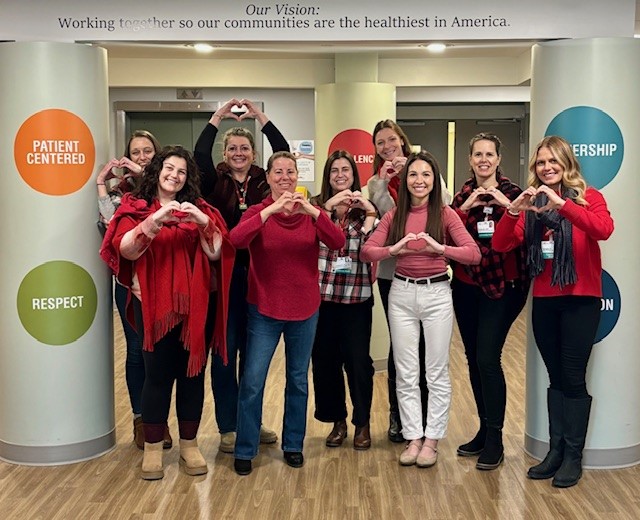
Now, as we move into February, the topic of good health is on our minds and especially our hearts. February is American Heart Month and nationally we celebrate Go Red for Women’s Heart Health. These national, annual observances are dedicated to promoting heart health to reduce the risk of heart disease, which remains a leading cause of death worldwide. The month serves as a reminder for individuals to prioritize their cardiovascular health and make lifestyle choices that support heart well-being.
This February, let’s go red together—for ourselves, our families, and our community.
With gratitude,
Betsy
| |
Maine Prevention Network
Maine Prevention Network (MPN) is a collaboration between the Maine CDC Tobacco and Substance Use Prevention and Control Program, Maine CDC Chronic Disease Programs (Obesity Prevention), and Public Health District-level community partners. With guidance from the Maine CDC, community partners work to implement evidence-based prevention programming for Substance Use, Tobacco, Obesity, and Youth Engagement and Empowerment.
| | |
Heart Health Starts Here!
As part of the Maine Prevention Network’s commitment to reducing chronic disease and substance use, we’re joining the American Heart Association in recognizing American Heart Month and Go Red for Women’s National Wear Red Day.
Winter can make healthy habits challenging, but prevention starts with small, everyday choices. Simple actions—like eating nutritious foods, staying active, getting enough sleep, avoiding tobacco and substance use, and reducing screen time—help create a healthier environment for you, your family, and your community.
Let’s make February a month of action and awareness to build a heart-strong southern Maine!
| |
Healthy Eating & Active Living
Our Healthy Eating & Active Living Team works within York County on healthy eating, active living and breastfeeding policies, systems, and environmental changes to help make the healthy choice the easy choice. The scope of this work includes partnering with schools, school nutrition programs, early care and education programs, out of school programs, parks and recreation departments, worksites, and supporting coalitions and community programs.
| |
Healthy Eating & Active Living for a Strong Heart
Small daily choices can have a big impact on heart health, especially when it comes to how we eat and move.
Healthy Eating
A heart-healthy diet focuses on balance and nourishment:
- Fill half your plate with fruits and vegetables
- Choose whole grains, lean proteins, and healthy fats
- Limit added sodium and processed foods
- Stay hydrated and practice mindful portions
Active Living
Staying active supports heart health, even in winter:
- Aim for short movement breaks throughout the day
- Walk indoors or bundle up for fresh air when possible
- Stretch, dance, or do light strength exercises at home
- Find movement you enjoy and can stick with
Find heart-healthy tips, recipes, and movement ideas:
Healthy Eating | American Heart Association
Getting Active | American Heart Association
Remember: You don’t have to do everything at once. One small step toward healthier eating or more movement can strengthen your heart over time.
Together, we’re building stronger hearts and healthier communities.
| | |
Tobacco Prevention
Our York County Tobacco Prevention Team focuses on the prevention of initial use of commercial tobacco and related products, prevention of involuntary secondhand smoke exposure, and promoting tobacco treatment services available. This work includes partnering with schools, youth serving entities, early care and education programs, healthcare organizations, landlords and housing partners, worksites, municipalities and other key stakeholders.
| |
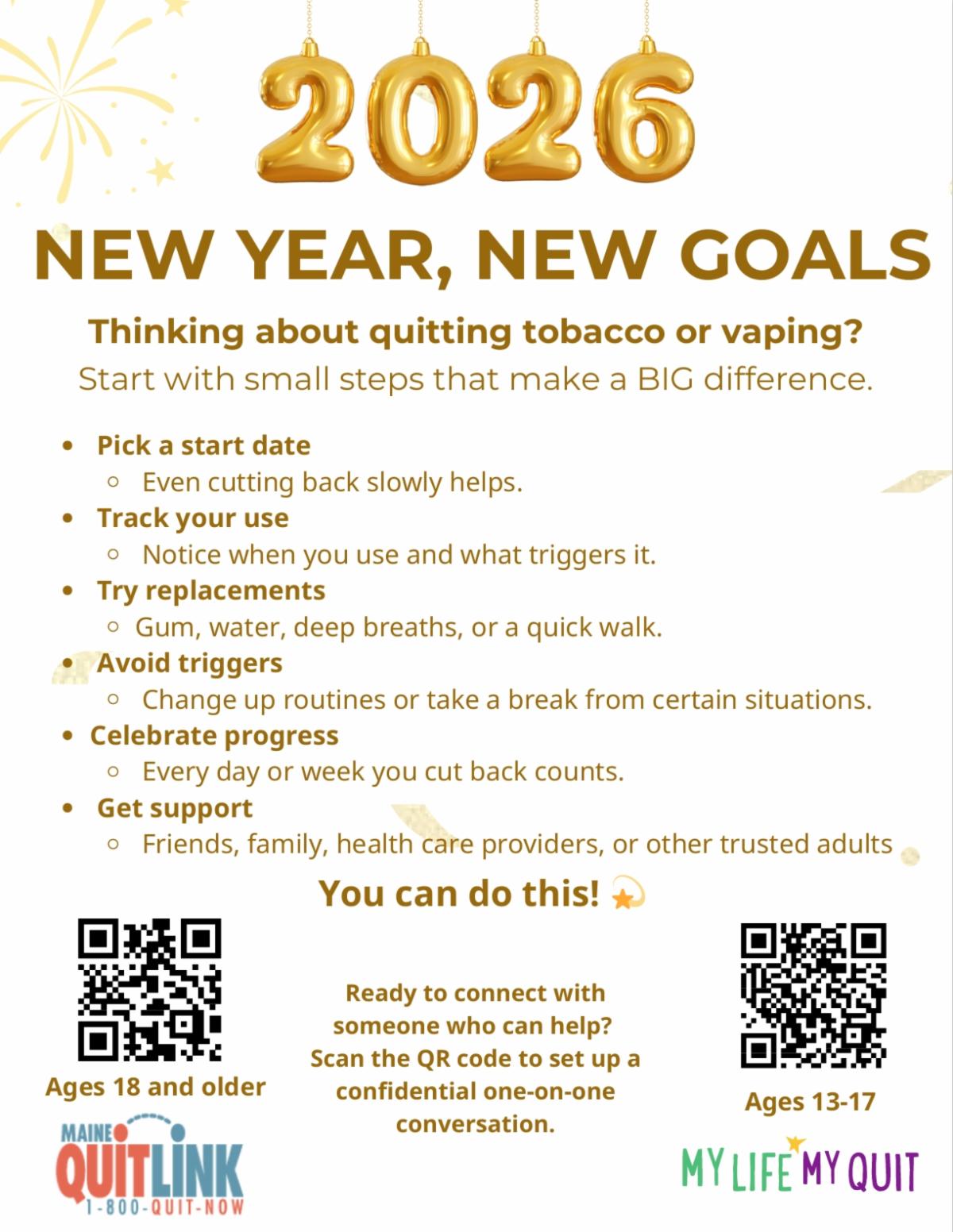
Kick off 2026 Tobacco Free
According to the Center for Disease Control and Prevention, quitting smoking is one of the most important actions people who smoke can take to reduce their risk for cardiovascular disease and death. This is true for all people who smoke, regardless of age or how long or how much someone has smoked.
Thinking about quitting or revisiting your New Year’s Resolution to quit using tobacco? Check out the flyer and resources below. You can also contact The Tobacco Team for a free “Quit Kit” including gum, fidget toys, a journal and other items to help you on your quit journey – you’ve got this!
| |
Maine’s Tobacco Tax Increase: A Moment for Quitting Support
Beginning January 5, 2026, Maine implemented a statewide increase in tobacco and nicotine taxes as part of recently passed legislation. The tax on a pack of cigarettes rose from $2.00 to $3.50, and the tax on other tobacco and nicotine products—including vapes and nicotine pouches—increased from 43% to 75% of the wholesale price.
While costs may vary by product, overall prices are expected to rise. Research consistently shows that tobacco tax increases are one of the most effective ways to reduce use—particularly among youth, young adults, and people with lower incomes. After Maine’s previous tobacco tax increase, calls to the Maine QuitLink surged by 300% in the first week and remained significantly higher throughout the year.
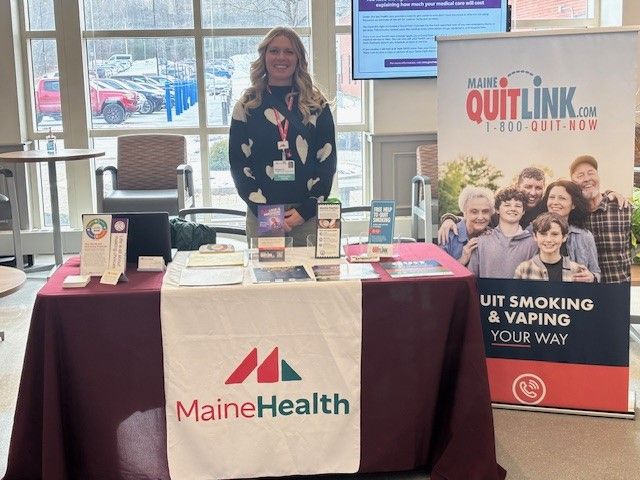
To help spread the word about free quit resources available to Mainers, the Tobacco Prevention Team tabled at MaineHealth Maine Medical Center’s Biddeford Campus throughout January, connecting with patients, families, and team members and sharing information about support options.
Interested in sharing these updates and resources with your team?
Please contact the Tobacco Prevention Team to learn more about available materials, including access to quit kits.
| | |
Substance Use Prevention
Our Substance Use Prevention Team focuses on the prevention and initiation of substance use and high-risk substance use, reducing the incidences of substance use disorder and drug-related overdose deaths by building collaborative community partnerships with youth, parents, schools, local law enforcement, workplaces, and other stakeholders.
| | |
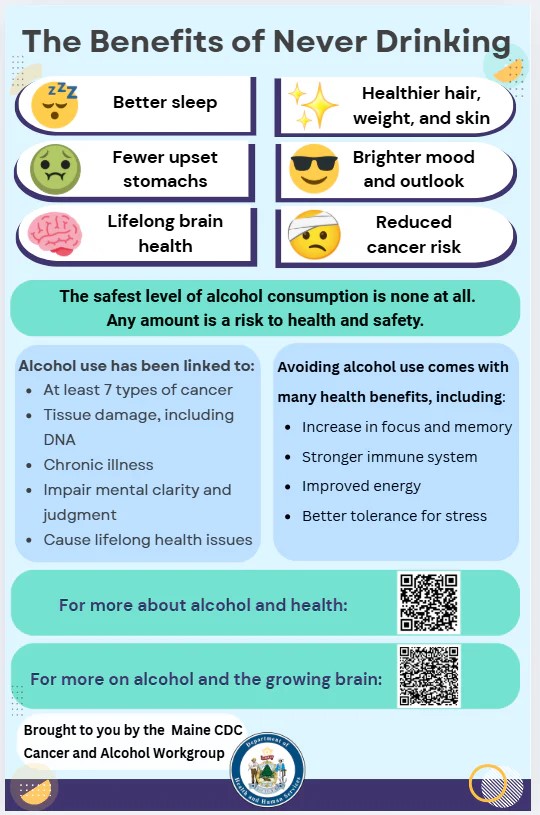
Limit Alcohol Consumption for Better Health Outcomes
February is National Cancer Prevention Month and a good time to remind you that the less alcohol you drink, the lower your risk of cancer. The Centers for Disease Control and Prevention state that ANY amount of alcohol consumption is linked with cancer. They recommend not drinking at all, but if you do, consume two drinks or less per day for men and one drink or less per day for women. Use this survey to check your drinking to see what your use looks like and get advice on how to make a plan if you want to drink less.
Additionally, in honor of American Heart Month, we also want to share some information from the American Heart Association (AHA) about alcohol and heart health. The AHA warns about listening to some of the popular headlines associating any amount of drinking with health benefits. Research has not proven a cause-and-effect link between drinking and better health, and it is unclear whether other factors are at play. Experts recommend the best way to keep your heart healthy is to eat a diet full of fruits and vegetables, exercise regularly, and keep your stress levels low. Is drinking alcohol part of a healthy lifestyle? | American Heart Association
| |
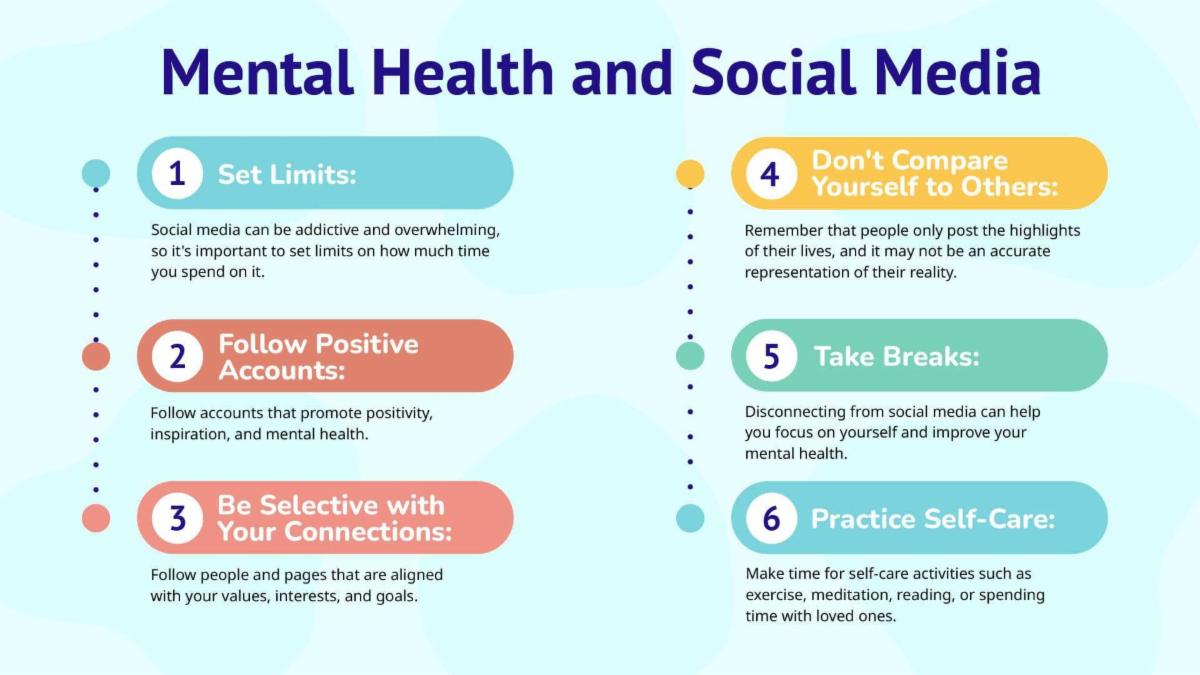
The Link Between Social Media, Mental Health, and Substance Use
Substance Use Disorders (SUDs) often occur alongside mental health challenges. In many cases, individuals use substances as a way to cope with overwhelming stress, anxiety, or emotional pain. Either condition can develop first, and when they occur together, they are referred to as co-occurring disorders.
Social media can contribute to existing mental health or substance use challenges—or make them worse. While anyone can be affected, adolescents and young adults are at higher risk because their developing brains are more sensitive to peer influence, social comparison, and reward-seeking behaviors.
Potential Health and Wellness Impacts of Social Media
- Negative mental health effects
- Increased anxiety, stress, and feelings of inadequacy can result from constant notifications, comparison, and pressure to keep up. These feelings may increase the likelihood of using substances as a coping mechanism and can also impact physical health.
- Social isolation
- Online interactions may replace in-person connections, leading to loneliness and reduced feelings of belonging.
- Cyberbullying and harassment
- Social media can increase exposure to bullying and harassment, often with limited parental awareness or oversight.
- Sleep disruption
- Excessive screen use—especially at night—can interfere with healthy sleep patterns, affecting mental health, emotional regulation, and even heart health.
- Normalization and visibility of substance use
- Substance use is often portrayed as fun, harmless, or glamorous online, which can be particularly dangerous for youth.
What Can We Do to Reduce These Risks?
There are practical steps families and communities can take to decrease screen time while increasing connection, mattering, and wellbeing. Explore the resources below for tools and guidance to support both youth and adults:
| |
Upcoming Events
This section of the newsletter is dedicated to highlighting upcoming events in York County.
| | |
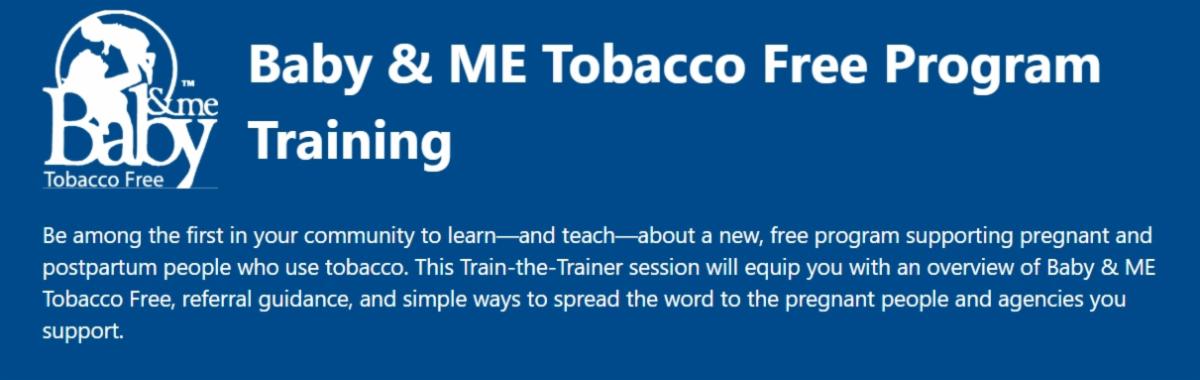
Upcoming Baby & ME Tobacco Free Program Training:
Baby & ME Tobacco Free Program Training – Fill out form
Learn how to bring Baby & ME Tobacco Free to your community! This Train-the-Trainer session will provide an overview of the program, referral guidance, and practical ways to share this free support with the pregnant people and agencies you serve. Offered in partnership with and funded by the Maine Department of Health and Human Services.
| | |
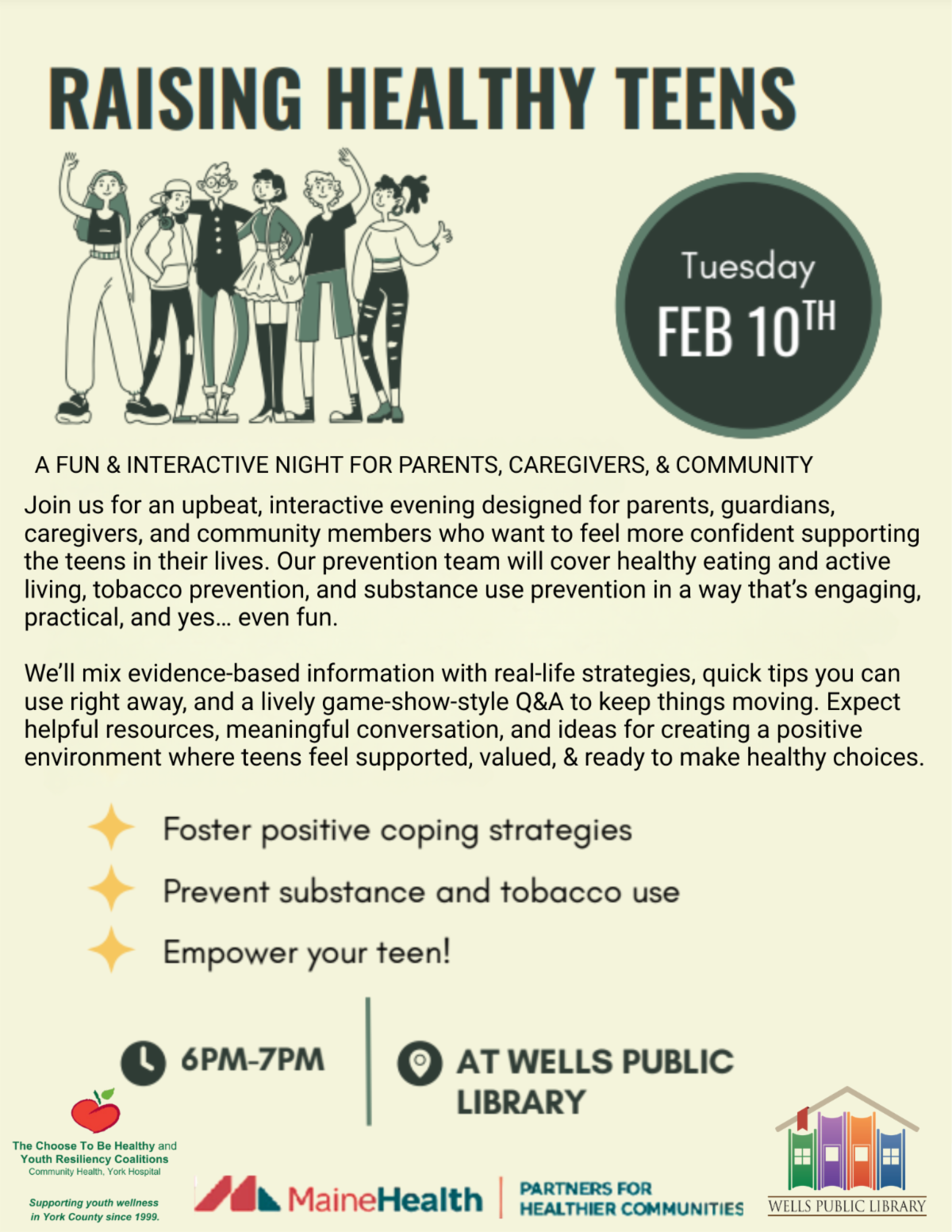
Join a Fun Interactive Night for Parents, Caregivers & Community
Join the Maine Prevention Network team at the Wells Public Library on February 10th from 6-7 pm for a night of interactive games, information, and tools to take home to help raise a healthy teen. We'll share evidence-based strategies, York County Maine Integrated Youth Health Survey data from 2025 regarding substance use, tobacco use, youth mattering, and more. This event is free and requires no registration.
| | |
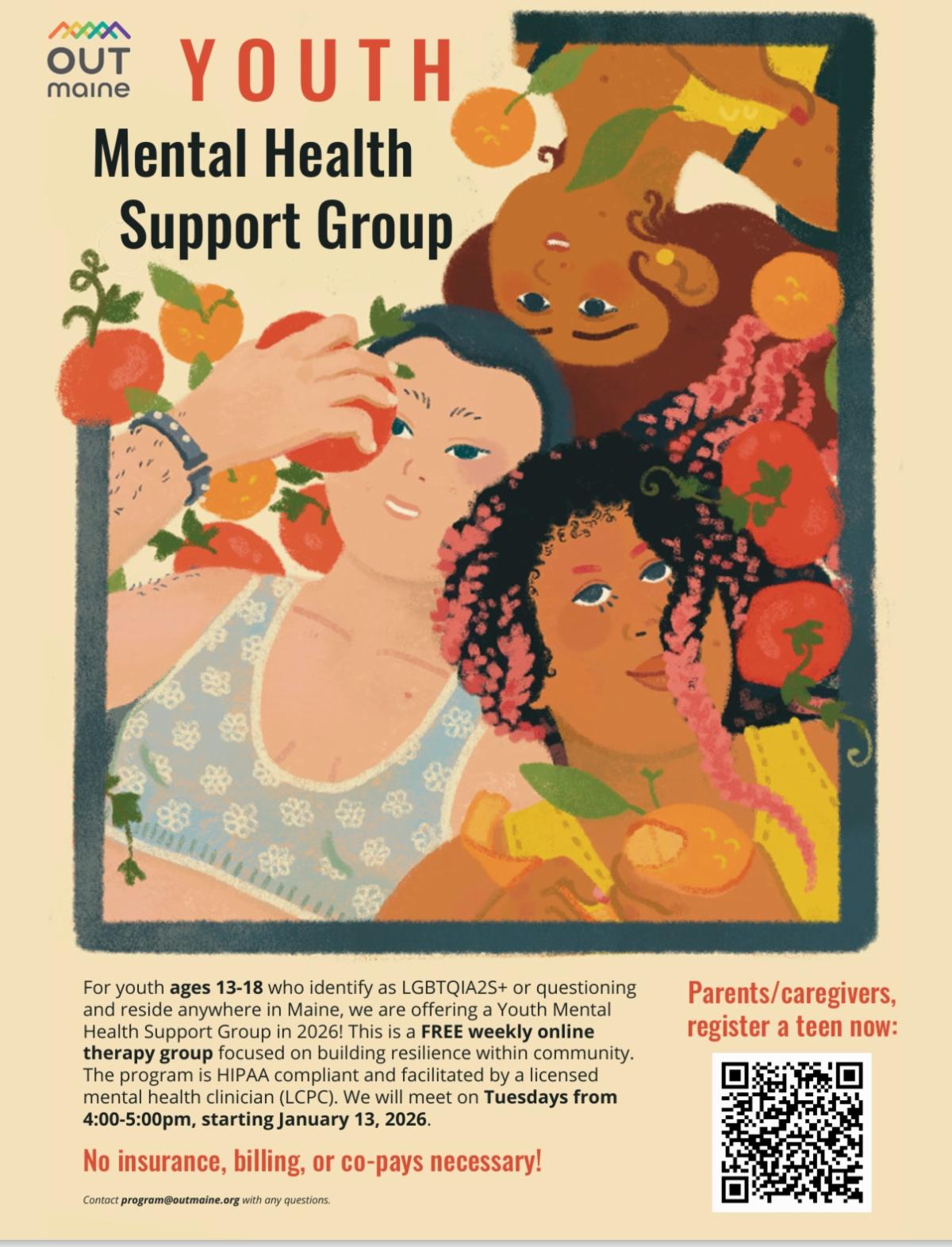
Youth Mental Health Support Group
OUTMaine has started a Youth Mental Health Support Group! This is a FREE weekly online therapy group focused on building resilience within community. This group is for youth ages 13-18 who identify as LGBTQIA2S+ or questioning and reside anywhere in Maine. No insurance, billing, or co-pays necessary! The program is HIPAA compliant and facilitated by a licensed mental health clinician (LCPC). The group will meet on Tuesdays from 4:00-5:00pm, starting January 13, 2026.
Scan the QR code on the flyer or click here to register!
Parents/caregivers should fill out the inquiry form on behalf of the teen seeking treatment, with that teen's information.
Please contact program@outmaine.org with any questions.
| | |
Mental Health Trainings and Courses
Our partners at National Alliance on Mental Illness(NAMI) in Maine have many upcoming courses including, Mental Health First Aid, De-escalation, Family-To-Family, Advanced Gatekeeper, Self-Care & Wellness and more. These offerings are designed for educators, youth serving organizations, healthcare professionals, parents, and the general community. We hope you take advantage of the great opportunities here for both prioritizing your own wellness and caring for those in your community. Don’t miss your chance to sign up for FREE today!
| |
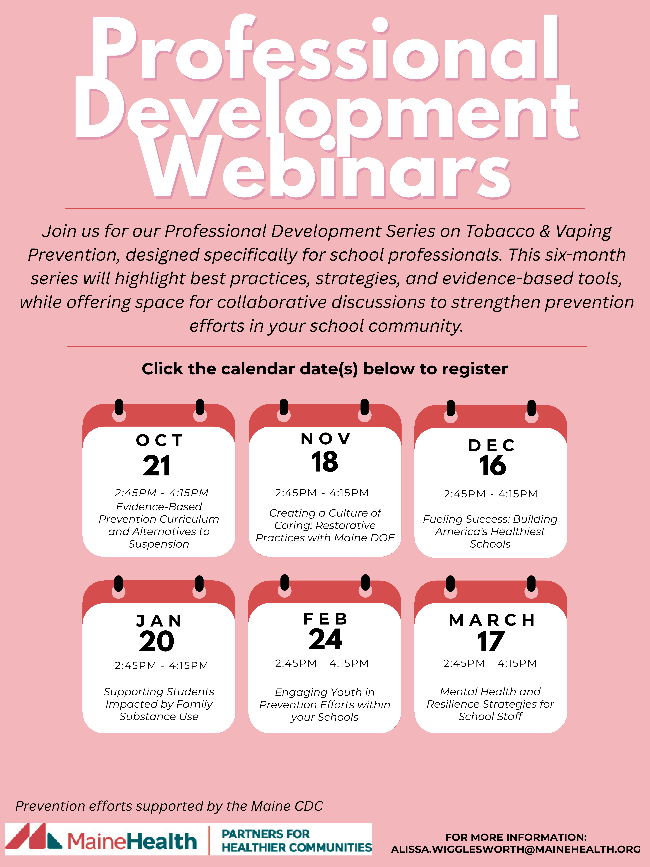
Tobacco & Vaping Professional Development for Schools
Join us for our Professional Development Series on Tobacco & Vaping Prevention, designed specifically for school professionals. This six-month series will highlight best practices, strategies, and evidence-based tools, while offering space for collaborative discussions to strengthen prevention efforts in your school community.
February 24th we will talk about engaging youth in prevention efforts.
REGISTER HERE
| | Stay Connected with Us & Invite Your Friends! | | | | |
Partners for Healthier Communities
207-490-7851
phc@mainehealth.org
| | | | |