View as Webpage


Substance Use Insights

The quarterly Health Department newsletter focusing on Substance Use Prevention, Treatment and Recovery

Fall 2026 Edition

Prevention Works. Treatment is Effective. People Recover.

 
undefined

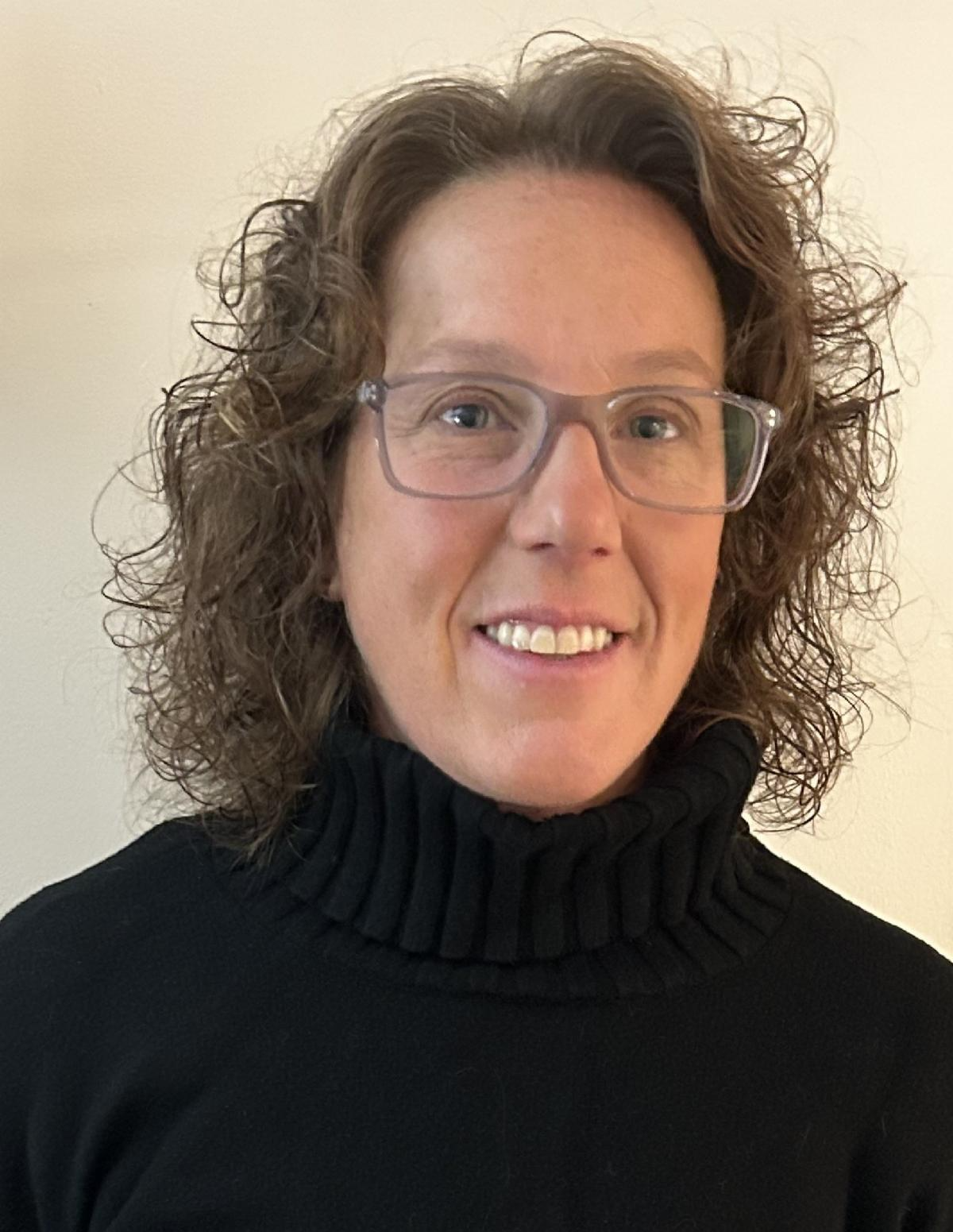
Jessie Hammond

Health Department Welcomes New Deputy Commissioner


We are pleased to share that we have a new Deputy Commissioner of Health, Jessie Hammond!


Jessie, who previously led the department’s division of Health Statistics and Informatics, is passionate about public health work and brings a wealth of experience to her new position, including improving data-driven decision-making and public health outcomes. She will have an integral role in shaping our substance use work now and in the future.


Jessie will be working closely with interim deputy commissioner Shayla Livingston and Division Director Emily Trutor in the coming weeks as she steps into her new role. Welcome, Jessie!

Workforce Development

 
dsu 2026 call for proposals

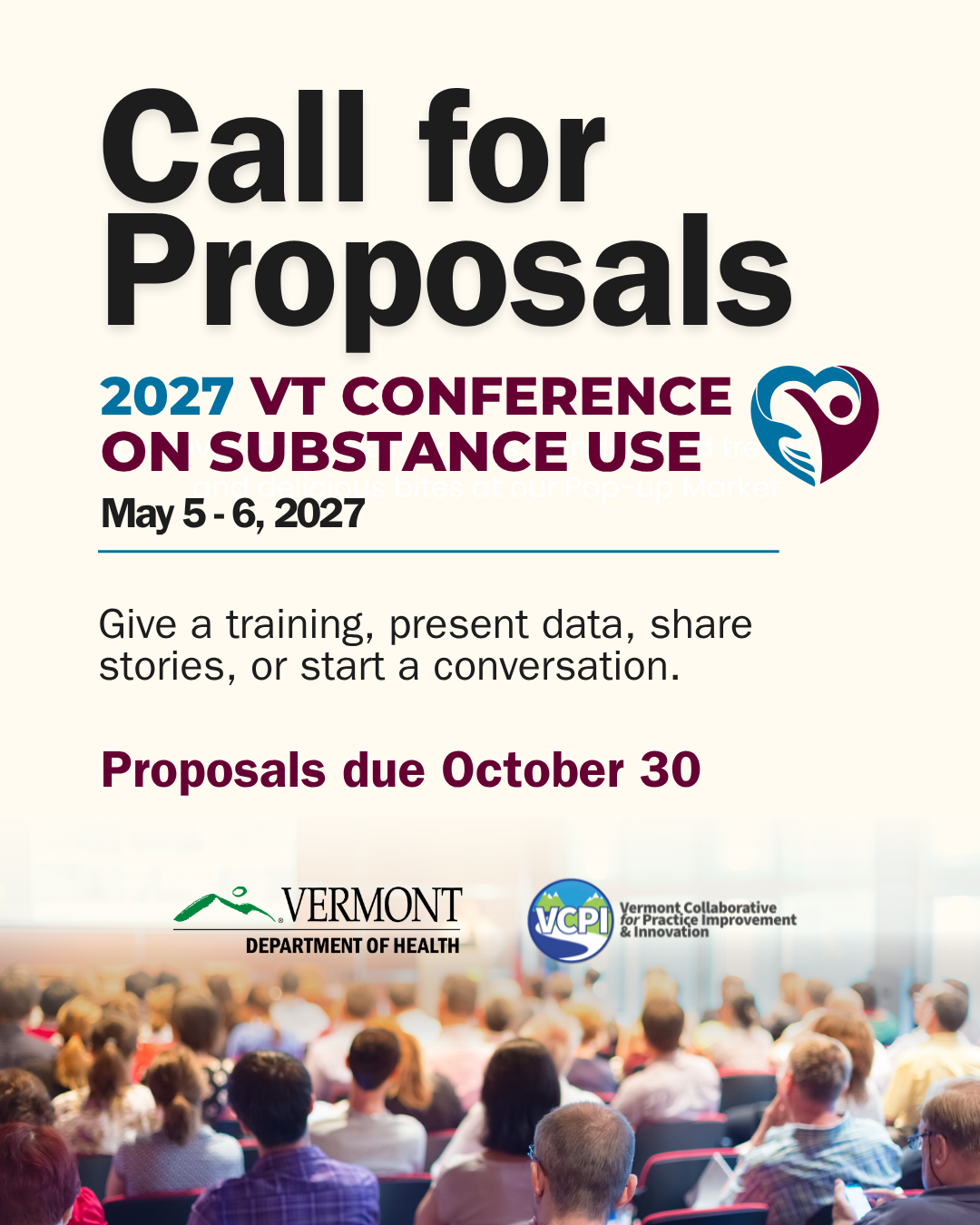
Save the Date for the 2027 Vermont Conference on Substance Use!


The Vermont Department of Health Division of Substance Use, in partnership with the Vermont Collaborative for Practice Improvement & Innovation, is pleased to announce that the Vermont Conference on Substance Use returns to Burlington on May 5 & 6, 2027.


Over two days, attendees will gather at the DoubleTree by Hilton to learn and connect with colleagues, practitioners, and experts from across the continuum of care. The schedule will include workshops, panels, and keynote presentations that highlight national and regional voices around today’s most critical issues in substance use treatment, prevention, policy, and more. Select sessions will be available via a virtual option for those not able to attend in-person. 


Call for Abstracts

Have a topic in mind for a presentation? We'd love to hear it! The Conference is a great opportunity to speak directly with Vermonters working or volunteering in substance use services.

Data


Substance use data and reports released this quarter


Find data briefs, reports, survey results, and other publications on alcohol, opioids, cannabis and overall substance use in Vermont.


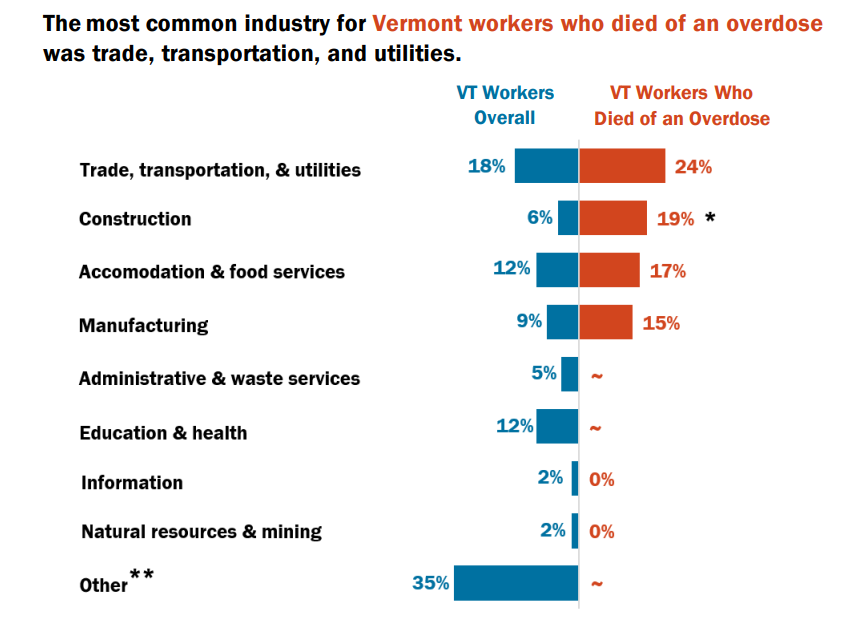
Data from Social Autopsy Brief: Employment & Financial Assistance

Prevention


Empowering Communities: VPLOs Take the Lead on Prevention Grants

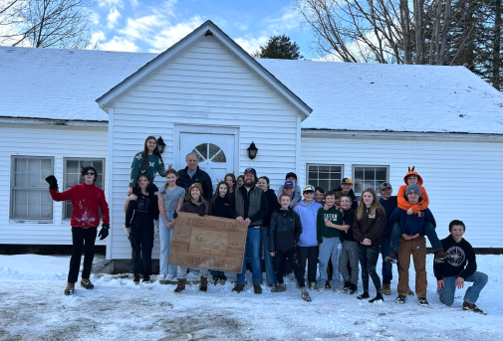
Lauren Ingersoll and Andrew Moore with area youth outside the new Chester Teen Center building.

The Health Department is transferring management of 29 grants to the four regional Vermont Prevention Lead Organizations (VPLOs) to ensure that Vermont's substance use prevention work remains community-driven and responsive to local needs.


Why the change?

  • VPLOs are uniquely equipped to coordinate and maximize the impact of these funds. Funding stays closer to the communities being served, with decisions made by regional advisory boards using local data.
  • This regional funding structure strengthens Vermont's prevention system by allowing for flexible and sustainable funding driven by each community’s unique needs.
  • The Health Department will continue to provide guidance and oversight for school-based prevention, focusing on maintaining proven programming and addressing gap areas.


Prevention in Action

This localized approach is already driving impactful work across the state. Examples of initiatives currently underway include:

  • In Schools: Grants are funding screenings for student substance use and mental health concerns. They also support the creation of educational groups, such as those helping students quit vaping, and the delivery of evidence-based curricula like Stanford REACH labs and Project SUCCESS. Additionally, the funding helps form peer leadership groups and supports observations for events like Red Ribbon Week.
  • In Communities: Grants are funding town efforts to restrict substance use in public parks; provide Division of Liquor Licensing Responsible Beverage Service trainings; partner with law enforcement for sobriety checkpoints; and educate both youth and parents on the dangers of substance misuse.


Stay up to date with Vermont's prevention efforts by joining the Vermont Prevention Community email listserv.

Treatment


Understanding Vermont’s Residential Treatment Care Options

Substance use treatment is personalized to fit each person’s unique needs. People whose recovery journey includes residential care often ask: what options are available here in Vermont?


There are three levels of residential treatment available in Vermont that align with the American Society of Addiction Medicine (ASAM) levels of care. People often require higher intensity levels of care when first starting treatment before transitioning to greater degrees of independence in their recovery.

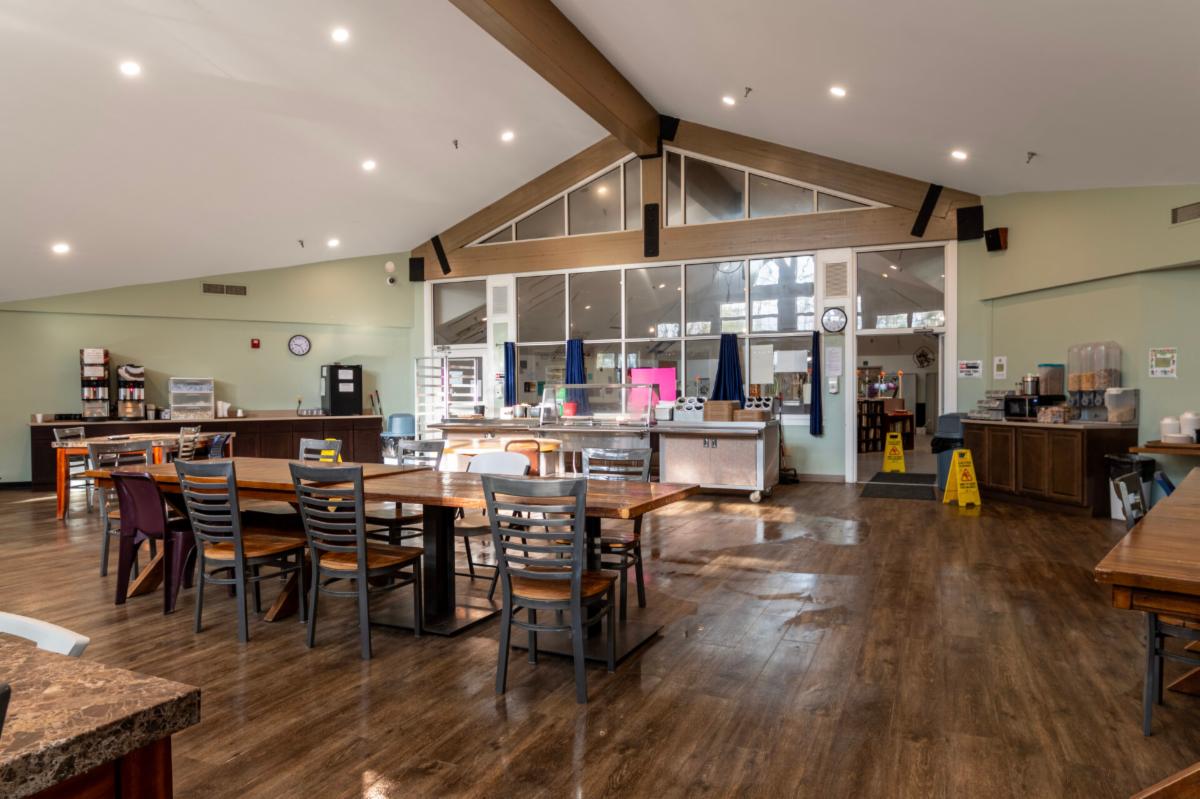
Dining area at Valley Vista's residential treatment center

High-Intensity Medically Managed Residential Treatment (ASAM levels 3.5 and 3.7): While treatment length can vary and is based on medical necessity, people most often spend two to three weeks at residential programs offering these highest levels of care.

  • These services are designed for people with an active substance use disorder who require full-day oversight to remain abstinent and safe.
  • High-intensity treatment provides 24-hour care with trained counselors. People with intensive medical or mental health needs are closely monitored by nursing and medical staff.


Low-Intensity Clinically Managed Residential Treatment (ASAM level 3.1): This level of care typically provides services in a residential, home-like setting with personnel available 24/7.

  • People stay for longer periods than the high-intensity treatment settings, and are required to engage in individual and group counseling, relapse prevention planning, and other co-occurring mental health supports.
  • In response to demand for this level of care, the Health Department has worked with Vermont’s service providers to significantly expand availability over the last two years, with 55 beds now available.


Analyzing and supporting the system statewide

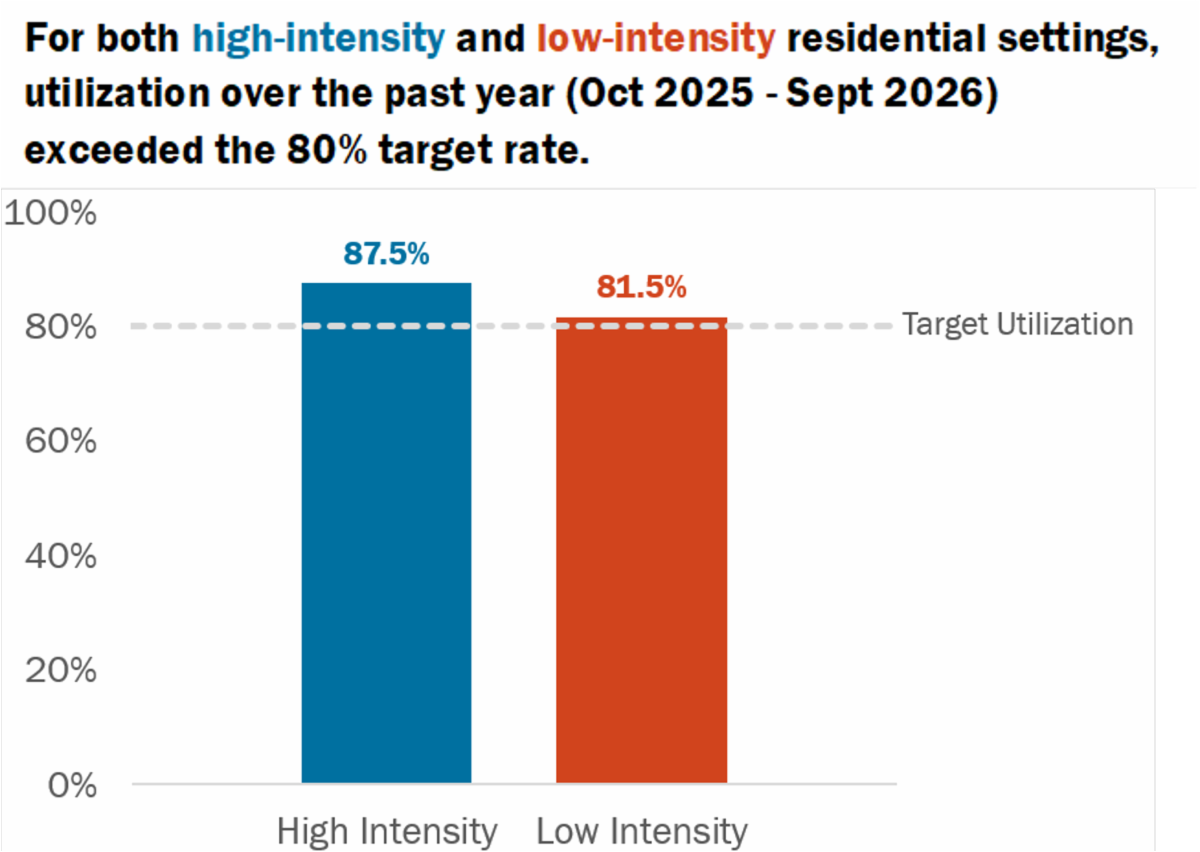
The Department of Health strives to help our treatment provider partners maintain an 80% occupancy rate of their available treatment beds. This goal rate aims to balance the staffing and budget efficiencies of high occupancy rates while also making treatment beds available as quickly as possible for Vermonters seeking help.


We’re proud that over the past year, our providers have maintained or exceeded the 80% goal utilization rate in both high-intensity and low-intensity residential settings.

With VT Helplink, accessing treatment is just one call away

VT Helplink works to make substance use care equitable, consistent, and available to all, ensuring every Vermonter has access to care that’s right for them.

If you would like to learn about treatment options for you or a loved one, call or text “LINK” to 802-565-LINK (5465) or visit VTHelplink.org for free, confidential support 24/7.

Modernizing Crisis Care: Statewide Rollout of the Virtual Public Inebriate Screening Tool


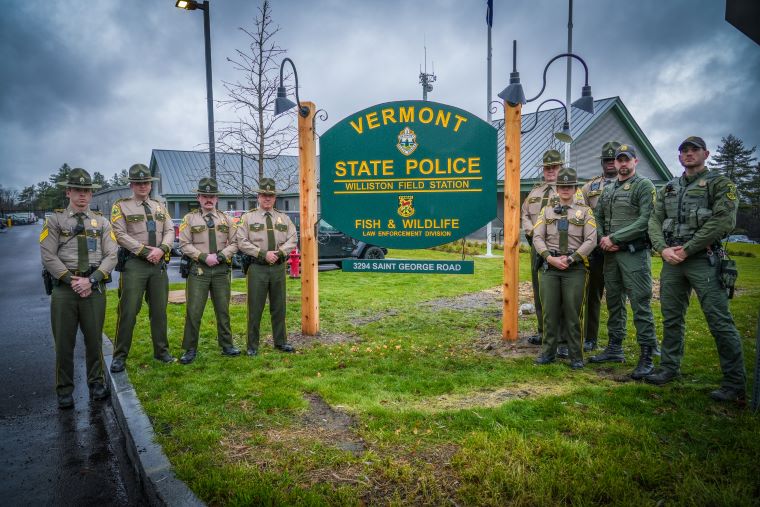
The Health Department, in collaboration with Mental Health and Public Safety Departments, has focused on improving support for people who are incapacitated due to their use of substances. As of July 1, the Public Inebriate Program (PIP) virtual screening tool became available statewide after a successful pilot this spring.


Operated 24/7 by Recovery House Inc., this centralized virtual screening system helps people experiencing substance-induced incapacitation access the right care quickly, reducing time requirements of responding law enforcement and preventing unnecessary burden on emergency departments. 


Between the launch in March and August,114 people were screened through the virtual process.


Benefits of the New Virtual Process


Relieving Hospital and Police Strain: Before the virtual process, law enforcement officers had to bring people to emergency departments for screening, leading to long waits for law enforcement and hospital staff. Virtual screenings through Recovery House, Inc. can be conducted anywhere and at any time, keeping officers in the field and reserving emergency rooms for acute medical needs.


Expanding Law Enforcement Partnerships: The Department of Health is meeting individually with local law enforcement teams to answer questions and ensure seamless implementation, reaching 64% of agencies statewide as of September 4.


Coordinating with Integrated Crisis Beds: Integrated crisis beds offer short-term, community-based settings where someone can go if they need more support than can be provided at home but do not require hospitalization. As of August 19, all Designated Agencies that offer integrated crisis beds have signed agreements with Recovery House Inc. to facilitate appropriate referrals.


Since the statewide expansion of the PIP virtual screening tool on July 1st, 10 people have been placed directly into community-based crisis beds rather than correctional facilities—maximizing crisis bed capacity and optimizing Vermont’s limited crisis workforce.


Want to learn more? Contact the PIP team.

Harm Reduction and Syringe Services Program (SSP)


“Nearly thirty years of research show that comprehensive SSPs are safe, effective, and cost saving. They do not increase illegal drug use or crime, and they play an important role in reducing the transmission of viral hepatitis, human immunodeficiency virus (HIV), and other infections.” -Centers for Disease Control and Prevention (CDC)


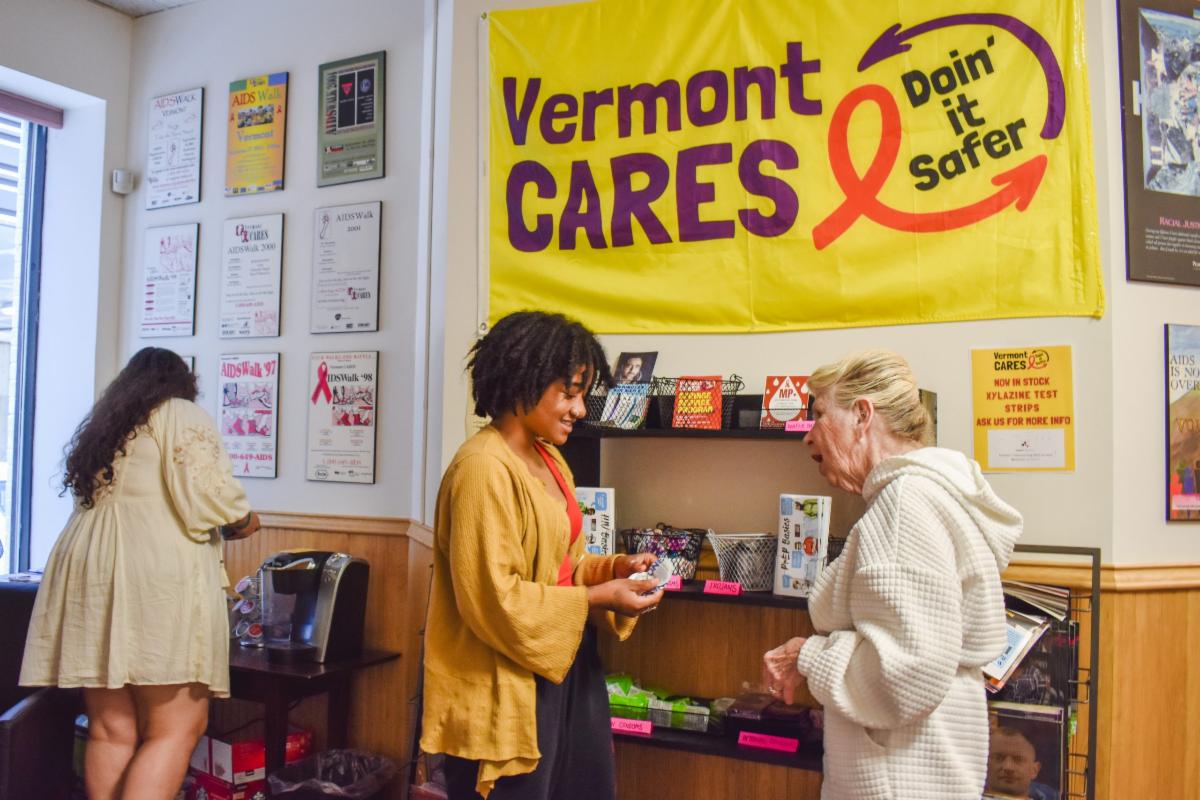
Harm reduction strategies like syringe services programs have existed in Vermont for over 30 years and play an important role in Vermont’s public health response to substance use in our communities. The Health Department continues to strongly support this approach.


Syringe services programs are a valuable public health resource because they help reduce the spread of infectious diseases, provide access to sterile supplies, and connect people with healthcare, substance use treatment, and other supportive services. Thirty years of CDC research links SSPs with an estimated 50% reduction in HIV and hepatitis C incidence.


The Division of Substance Use Programs is actively working to address community concerns around SSPs through increased engagement with our harm reduction partners and the communities they serve. We are also implementing performance improvement benchmarks for syringe collection and innovative ways to engage SSP clients in that work.

Recovery


Celebrating Recovery Month

Rck at coming together summit

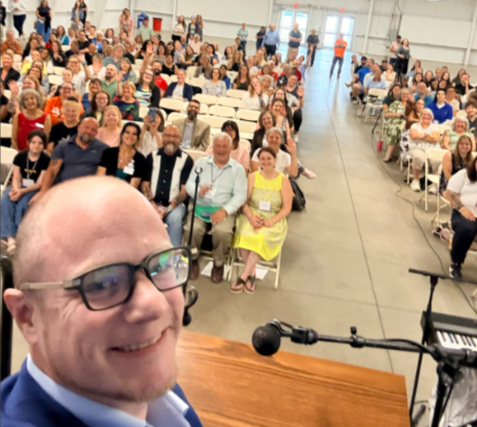
Commissioner Dr. Hildebrandt taking the stage at the Coming Together Summit

September is Recovery Month! We're celebrating the resilience of Vermonters in recovery, the dedication of the community partners who support them, and the belief that recovery is for everyone.


Reflecting on Our Progress

At this year’s Coming Together Summit, Health Department Commissioner Dr. Hildebrandt took the stage to highlight several recent milestones that are strengthening Vermont’s system of care. Key successes include:

  • Expanding access to residential treatment and critical investments in recovery housing.
  • Certifying all 12 of the state's Recovery Service Organizations and establishing official standards for Peer Recovery Support Specialists.
  • Successfully launching the virtual Public Inebriate Program (PIP) screening tool, which is connecting people to appropriate care far more quickly.
  • Empowering our Prevention Lead Organizations (VPLOs) to respond directly to local needs.

Join the Celebration!

From community barbecues to speaker panels and resource fairs, incredible events are taking place all across Vermont. Visit our directory at: healthvermont.gov/find-recovery (under the "September is Recovery Month!" section).

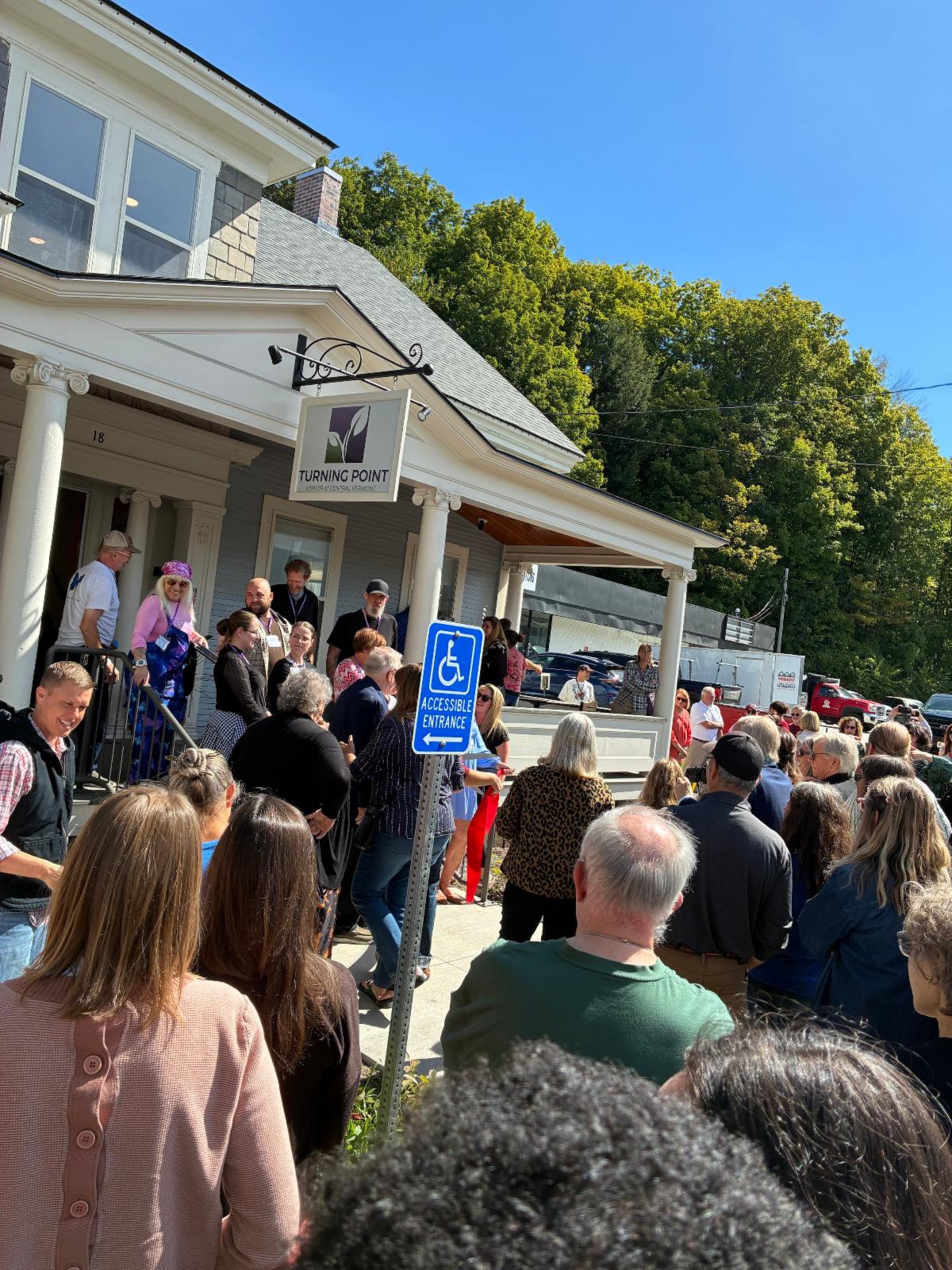
The grand opening celebration of Turning Point Center of Central Vermont's new building in Barre. 


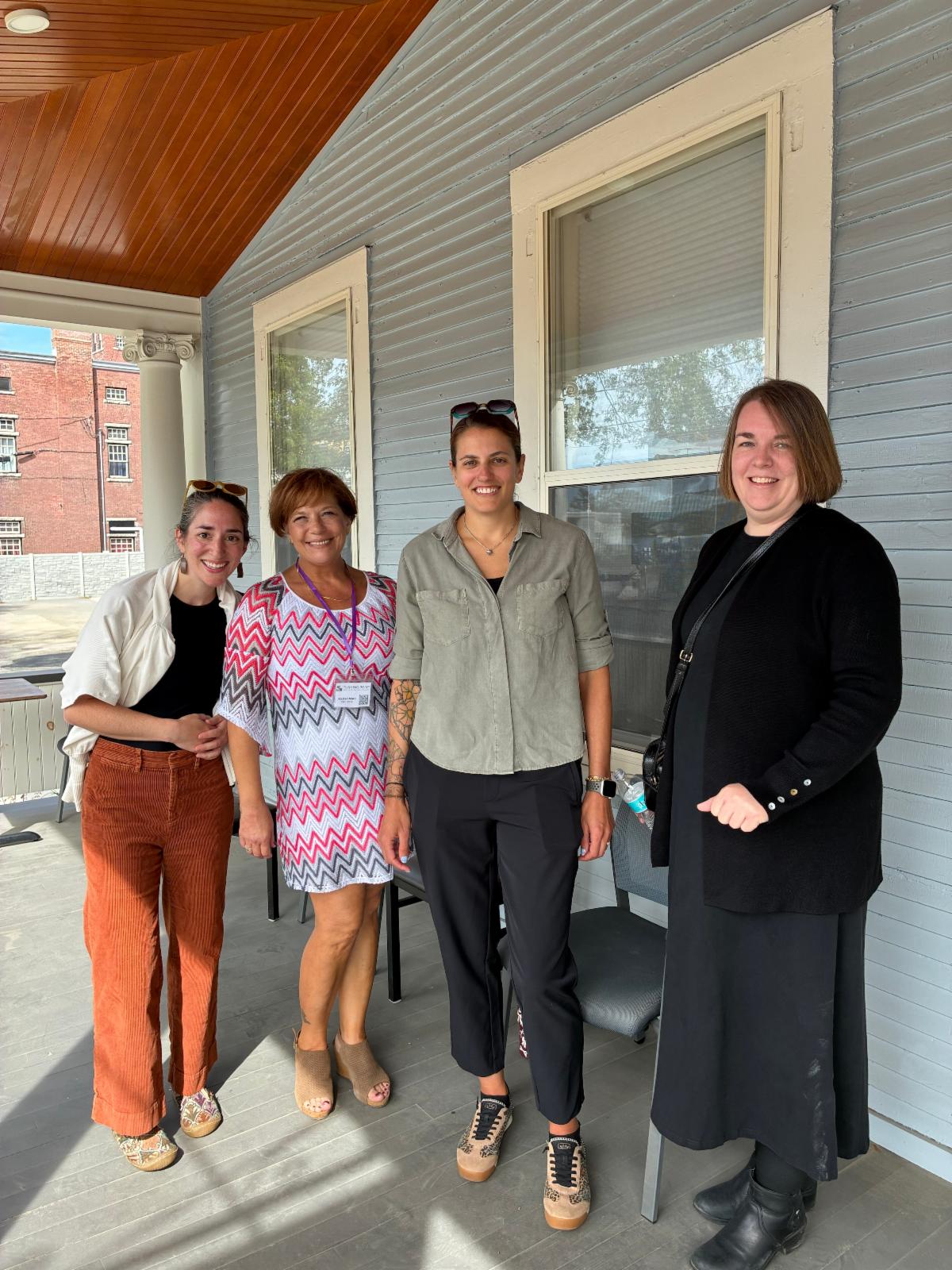
Health Department staff with Kristen Moro (center-left), a Certified Recovery Coach with Turning Point Center of Central Vermont.

How did you like this newsletter? We'd love your feedback!

👉 Did someone forward this message to you? Stay connected - sign up to get our newsletters directly: 

Subscribe here

Data & Reports

Programs & Services

Workforce Development

VT Helplink

 
VDH_LogoPrimary-01.png

280 State Drive, Waterbury, VT 05671-8300 

ahs.vdhdsu@vermont.gov

802-651-1550


Facebook  Instagram  YouTube