August 2025
Succession Planning: More Than a Spreadsheet Exercise
| | |
What happens when one of the most admired companies in the world stumbles at the most important leadership transition of all: naming its next CEO? The Walt Disney Company’s story is a tale that all CHROs should know.
When Bob Iger stepped down as CEO in 2020, the board and shareholders expected a smooth handoff. Iger was one of the most admired executives in the world, credited with acquisitions like Pixar, Marvel, and Lucasfilm, and with transforming Disney into a global entertainment powerhouse. His chosen successor, Bob Chapek, seemed capable on paper: a seasoned executive with decades inside the company.
But less than three years later, Chapek was out. Disney was struggling financially, morale was shaky, and relationships with creative talent and political leaders were frayed. The board called Iger back, essentially admitting that their succession plan had failed.
Disney’s experience is a cautionary tale: even iconic companies stumble when succession planning is treated as a handoff event rather than a long-term, disciplined process.
| | President & CEO, Turknett Leadership Group | |
EXCLUSIVE INTERVIEW WITH CHRISTINE MAYFIELD
Why do you think succession planning often gets deprioritized, even in organizations that value long-term strategy?
It often gets deprioritized because it’s complex—it requires quite an investment, and yet the roles are still getting filled. The roles themselves are also changing very quickly. With restructuring, redefining positions, and a very fluid talent pool, people are in and out of organizations faster than they used to be. That all adds to the dynamic nature of it, which makes it very challenging. It can feel like a moving target sometimes.
Whether there’s a formal succession planning process or not, roles are still getting filled, and that makes it easy for the process to get deprioritized. It requires a lot of information gathering, and it means getting busy leaders together to have real conversations. And it requires candor—which is something that can be difficult for people to prioritize.
If no one is clearly responsible for it, it can easily go by the wayside. There has to be someone dedicated to making it happen. It’s a big deal, and it requires a lot of effort. Sometimes it’s just really difficult to initially get your arms and your mind around it, so it gets put off.
| |
EXCLUSIVE INTERVIEW WITH TOMMY CHAN
Can you share an example from your work where succession planning was done really well - or where it went off track? What made the difference?
Well, what goes well in most cases I’ve seen is when senior leaders [...] start that process early on—let’s say if they’re about to retire in five years—they need to start thinking ahead: who could be the one replacing them or be their successor? And those tend to fare very well.
The ones who don’t succeed are the ones who don’t plan. It has to be very intentional, even when there’s no perceived immediate reward. But this again is one of those things—you cannot kick it down the road. It’ll bite when it happens, and that often ends up in a bad situation
| |
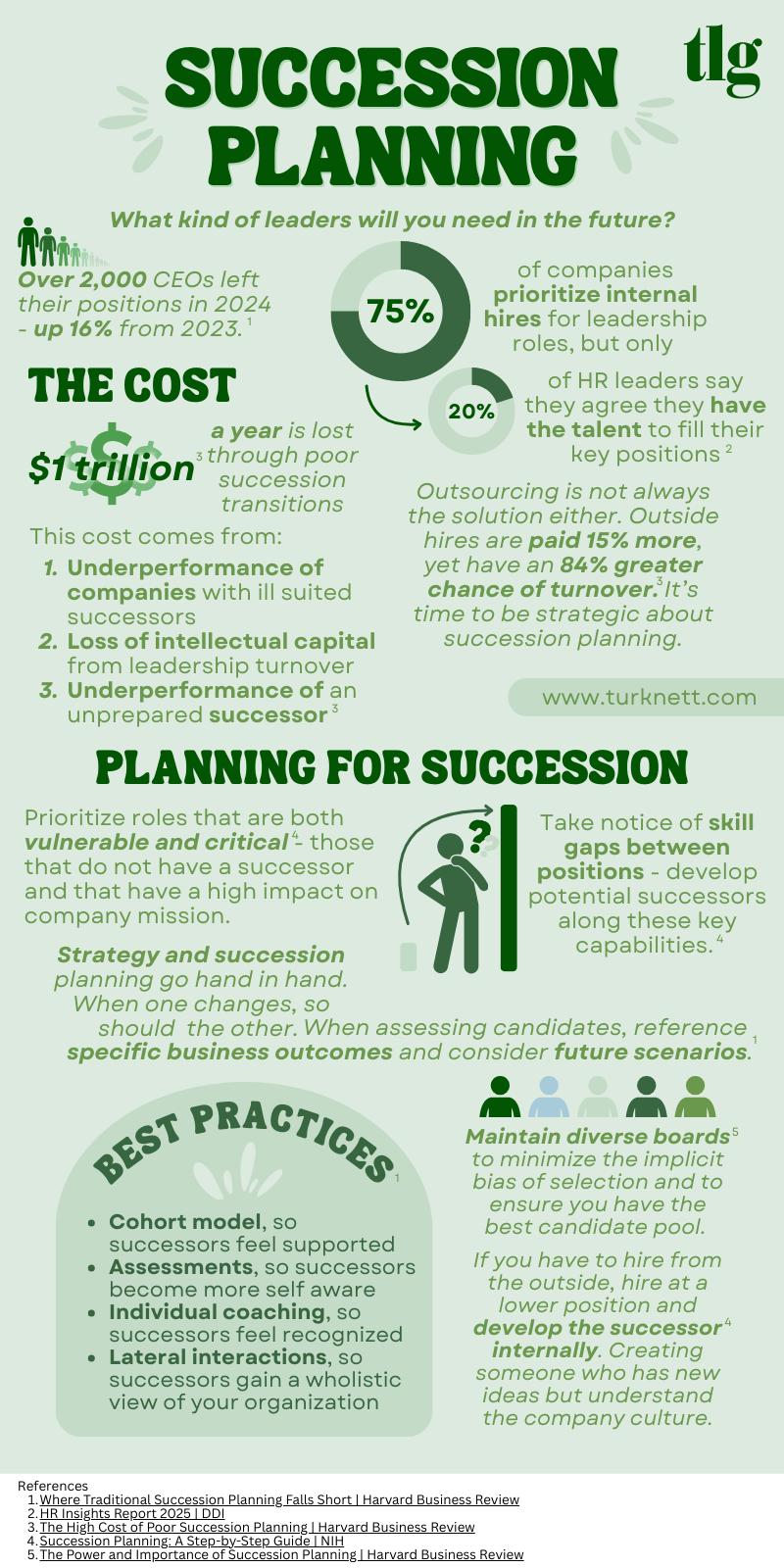
The Power and Importance of Succession Planning
Joseph L. Bower | Harvard Business School Executive Insight
Succession planning and strategy are critical to the long-term success of an organization. By focusing on leadership pipeline and implementing robust leadership development programs, organizations build the foundation on which all future growth rests. David Ager, senior fellow for executive education at Harvard Business School, puts it this way: “Having a succession strategy is as important as, if not more important than, having a corporate strategy.”
| | | |
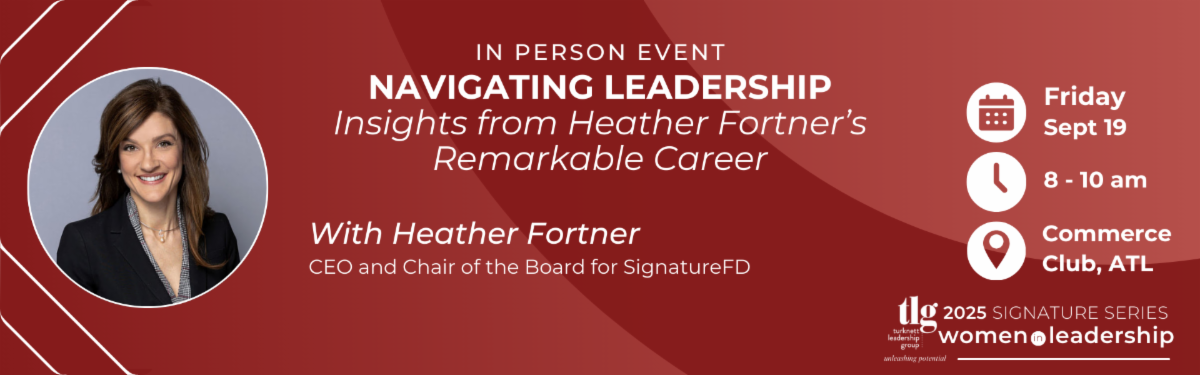
We are thrilled to announce our next live in person event!
Join us at the Commerce Club for what’s sure to be an enlightening interview with one of the finance industry’s trailblazers. This conversation promises to be a rich exploration of personal growth, leadership success, and the transformative power of combining a background in counseling with financial expertise. Heather Fortner has been repeatedly recognized for her commitment to being of service to something greater than herself, leading with purpose, and leadership character. Join us for an engaging discussion that promises to provide valuable lessons and encouragement for women aspiring to make their mark in their respective fields.
Listen in as our speaker shares her unique experiences and insights.
| | | | |
Facilitated by Anne Quiello, M.S., PCC
Senior Consultant & Host of Women in Leadership
| |
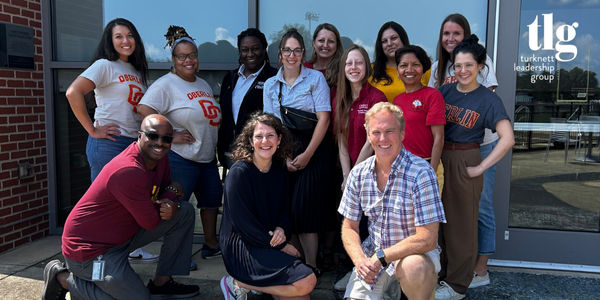
Vicki Abelson at Oberlin!
At Oberlin College’s staff retreat, our Vice President of Leadership Development, Vicki Abelson, MBA, MSIMC, PCC, led a workshop focused on one of the most important skills in today’s workplace: navigating change.
Vicki created a space for open dialogue, guiding participants through practical tools and reflective exercises on managing transitions, building resilience, and leading others with clarity and compassion.
The conversations were candid and energizing—staff explored not just how to adapt to change, but how to help others feel supported and confident along the way.
We’re grateful to Oberlin College for inviting us to be part of this important conversation and to Vicki for bringing her expertise, warmth, and actionable strategies to the retreat.
|
|
The First 90 Days: Proven Strategies for Getting Up to Speed Faster and Smarter
Transitions are a critical time for leaders. In fact, most agree that moving into a new role is the biggest challenge a manager will face. While transitions offer a chance to start fresh and make needed changes in an organization, they also place leaders in a position of acute vulnerability. Missteps made during the crucial first three months in a new role can jeopardize or even derail your success.
By walking you through every aspect of the transition scenario, Watkins identifies the most common pitfalls new leaders encounter and provides the tools and strategies you need to avoid them. You’ll learn how to secure critical early wins, an important first step in establishing yourself in your new role. Each chapter also includes checklists, practical tools, and self-assessments to help you assimilate key lessons and apply them to your own situation.
| |
Who Comes Next? Leadership Succession Planning Made Easy
Leaders leave. It's inevitable. It might even happen today. Are you prepared?
Every organization needs a plan for leadership succession, but few leaders know how to start the process. WHO COMES NEXT? solves that problem and easily guides you through the steps of creating and implementing a viable succession plan.
This essential guidebook simplifies the process and gives you the tools you need to build and activate your leadership succession. You’ll find a comprehensive action plan, a library of all the tools needed to develop and sustain your plan, and a resource guide.
| | | |  | |
Corporate Headquarters
100 Crescent Center Pkwy
Suite 600
Atlanta, GA 30084
(770) 270-1723
Tim Huff
President & CEO, TLG
thuff@turknett.com
(770) 270-1723
| | | | |