A Message from the Director
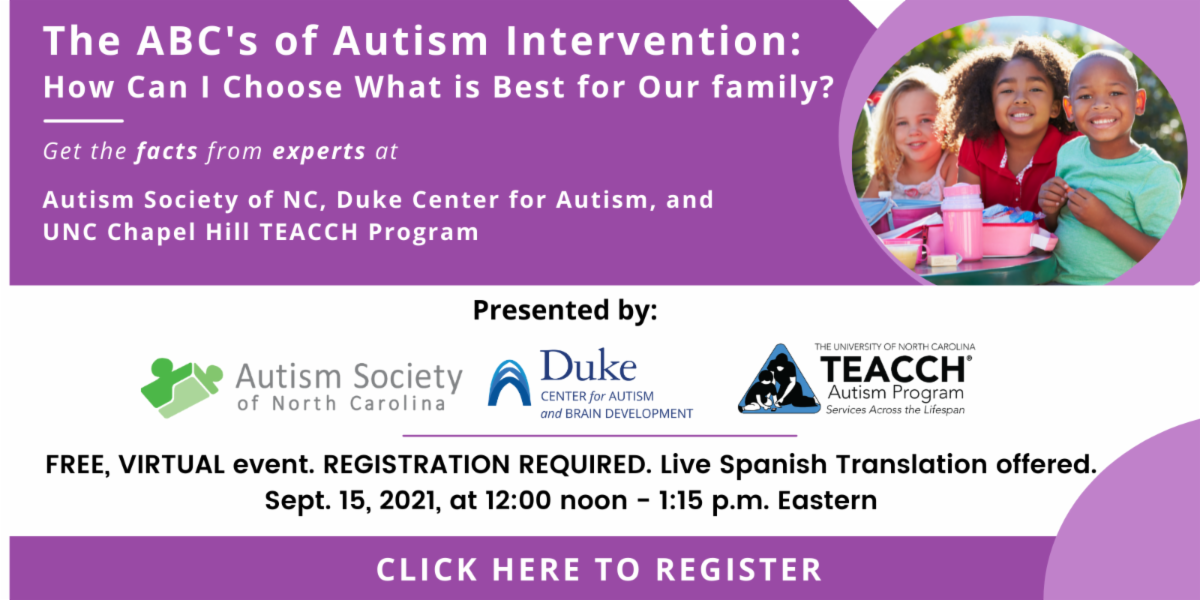
In the eight years since we began the Duke Center for Autism, it has been a pleasure to meet thousands of parents, caregivers, family members, and autistic individuals in person – at our clinic, as participants in our studies, and during our educational and community events. Over the summer, as face-to-face interactions continue to be somewhat limited, I have been reminded, again, about the significance of connection and community, and the power of creativity and innovation. While adhering to pandemic safety protocols for in-person visits and using telehealth in innovative ways, our faculty, students, and staff have shown resilience and creativity, allowing us to continue our research and our clinical assessment, evaluation and intervention services. We have updated many of our resources, created by our psychiatrists, psychologists, and child development experts, to address issues specific to this unique time. Our monthly Autism Speaker Series recently returned with a fantastic line-up. We will join the Autism Society of North Carolina and the UNC Chapel Hill TEACCH Program to present an informative webinar for parents and caregivers, “The ABCs of Autism Intervention: How Can I Choose What is Best for Our Family?," on Sept. 15th. Please stay tuned! Additional special events are planned for later this year.
As always, I want to thank you for your support and partnership. Even though we are not in person nearly as often as we would like, our connection and commitment to the autism community remains strong. We look forward to the future, with better ways to serve autistic individuals and their families.
Sincerely,
|
|
Geraldine Dawson, Ph.D.
Director, Duke Center for Autism and Brain Development
|
|
Center Investigators Publish Research Comparing Telehealth Adaptations of Behavioral Interventions
Dr. Lauren Franz and a team of center investigators have published research to help document and track adaptations being made to the way interventions are delivered during the pandemic, focusing on a caregiver-coaching intervention, which is now provided via telehealth. COVID-19-related telehealth adaptations of behavioral interventions could lead to the development of new strategies that open doors to access and increase diversity within research participants, especially for those living in remote areas. Read the study, published in the journal Autism.
|
|
New Research Suggests Early Intervention Based on the Early Start Denver Model May Have a Unique Impact on Brain Activity
Children who receive an autism intervention called the Early Start Denver Model (ESDM) show changes in brain activity measurements related to social information processing, according to new research published in the Journal of Autism and Developmental Disorders. It is well known that some autistic children have difficulty imitating other people. Imitation is important because it is one way we learn how to interact with others. There is a part of the brain that is dedicated to imitation, called the “Mirror Neuron System.” In this part of the brain, brain cells “light up” when we imitate other people. This study used EEG (measures of brain waves) to measure activity of the Mirror Neuron System in young children. The investigators found that autistic children who received the ESDM intervention learned to imitate others and also showed increased activity of the Mirror Neuron System. At the Duke Center for Autism and Brain Development, including the Duke Autism Clinic, we offer a range of behavioral health services, which include naturalistic developmental behavioral interventions, such as caregiver coaching in the use of EDSM intervention strategies. At our center, we use intervention strategies supported by science, meaning they are shown to be helpful in improving the quality of life for persons on the autism spectrum and their families. You can read more about the Duke Center for Autism Philosophy and Services here. Online ESDM caregiver-coaching modules are publicly available to all families and providers and can be found on our website.
|
|
NC PAL – Free Mental Health Consultations Connect Rural Providers
The NC Psychiatry Access Line (NC PAL) is a free telephone consultation and education program helping rural health care providers address the behavioral health needs of their patients, including those on the autism spectrum. NC PAL consultants connect primary care providers to on-call behavioral health providers, such as the Duke Center for Autism's Child and Adolescent Psychiatrist Dr. Nathan Copeland, who assist with diagnostic clarification and medication management. Listen to Dr. Copeland tell the story of NC PAL in an interview with the NC Healthcare Association.
"Crucial Conversations" Series Features Autism & ADHD with Center Director Dr. Geraldine Dawson
The Bridges 2e Center for Research presents monthly webcasts, “Crucial Conversations about Cognitive Diversity,” featuring in-depth conversations with the top minds in gifted and twice-exceptional education. The Season 2 finale featured Duke Center for Autism and Brain Development Director Dr. Geraldine Dawson discussing autistic children with ADHD. Watch the recording on YouTube here.
|
|
There is no “one-size-fits-all” intervention therapy option for autistic children. Each is different in the way it is structured, time commitment, location, and goals. Understanding and choosing what’s best for your child and family can be challenging. Get the facts from experts at the Autism Society of NC, the Duke Center for Autism and Brain Development, and the UNC TEACCH Autism Program. This webinar discussion will help you evaluate your options and make an informed decision. Join us for an overview of scientifically proven, state of the art intervention services available in North Carolina, such as Applied Behavior Analysis (ABA), TEACCH Structured Teaching, and Naturalistic Developmental Behavioral Intervention (the Early Start Denver Model). Sept. 15th, 12:00 -1:15 p.m. Eastern. Registration REQUIRED. Click here to register.
|
|
|
|
Our Popular Autism Speaker Series Returns!
Are you interested in learning more about the science of autism?
Join us for the Duke Center for Autism 2021-2022 Autism Speaker Series, our monthly, virtual sessions featuring leading investigators, clinicians, and practitioners impacting autism research, interventions, and treatments. Registration in advance required. Free and open to the public. Our Oct 6th session features Maya Corneille, PhD, co-director of Collective Health and Education Equity Research, presenting “Approaches for Building Equity and Empowerment for Families with Autistic Children.”
|
|
|
|
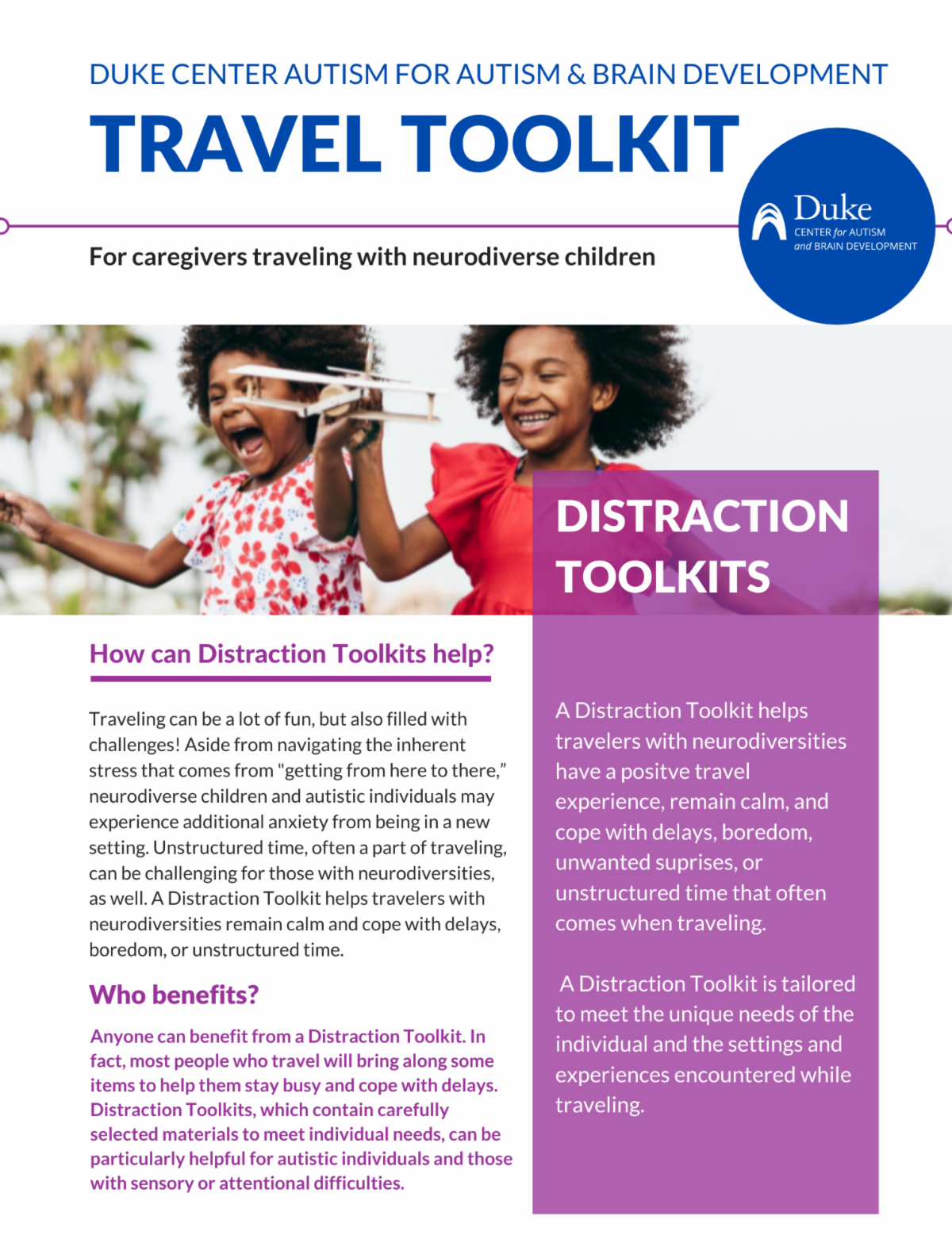
Planning a Fall Getaway? Ease Planning & Prep with our Travel Toolkit
NEW! Distraction Toolkit samples & tips just added!
Traveling can be a lot of fun, but also filled with challenges, especially in today's environment. Aside from navigating the inherent stress that comes from "getting from here to there,” neurodiverse children and autistic individuals may experience additional anxiety from being in a new setting. The Travel Toolkit, created by Duke Center for Autism and Brain Development clinicians, is loaded with info, tips, and samples to ease planning and help caregivers support the sensory needs of autistic individuals. JUST ADDED - NEW Distraction Toolkits! Help those with neurodiversities cope with delays, boredom, or unstructured time on your trip. Get all the Travel Toolkit resources here.
Got 3 Minutes? Get 4 Practical Tips for Individuals on the Spectrum!
Check out the new episode of Here’s an Idea!, our “mini-video” series featuring Duke Center for Autism Clinic psychiatrists and psychologists sharing practical tips in response to challenging situations facing autistic individuals and those who care for them. Our latest episode provides advice for parents and caregivers seeking high-quality intervention services for their child. See it – and all our Here’s an Idea! episodes - on the Duke Center for Autism YouTube Channel here.
|
|
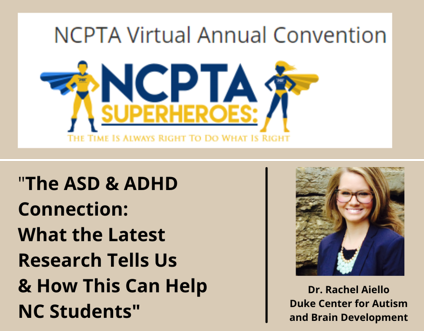
In partnership with the NC Parent Teacher Association Special Education Committee, Duke Center for Autism Clinician and Investigator Dr. Rachel Aiello presented “The ASD & ADHD Connection: What the Latest Research Tells Us & How this Can Help NC Students,” at the 2021 NCPTA Annual Convention.
Missed the event?
Listen to the session audio here!
|
|
Connect with us on social media! |
|
|
|
|
|
|
|