SUMMER 2025


Dear friends and alumni,


This spring ELC pressed forward with two matters designed to hold the U.S. military accountable for leaving a wake of contamination at former bases and naval stations, including an insufficiently remediated Superfund site. From an Alaska matter brought to a United Nations Special Rapporteur in Washington, D.C., to a San Francisco case brought in federal court, attorney Steve Castleman and ELC students sought to maneuver through the limited statutory openings available for citizens to pressure for adequate cleanup of hazardous waste sites — especially where the government is the polluter.


Meanwhile, my sabbatical took an unexpected turn after the Presidential Inauguration, when unlawful Trump executive orders and Department of Governmental Efficiency staff were turned against universities and their enterprise of knowledge production. Deciding to shelve a nascent book project in favor of fighting back against scores of unfair and illegal terminations of grants to UC researchers has been a great privilege: working with those engaged in critical research on climate change, water supply, environmental justice, public health, and more has been an immersive course in the very best a mission-driven public university has to offer. It has also raised triage questions familiar to all activists: with so many threats to environmental laws and process norms, where can one best deploy one’s training and time, and also avoid burnout?


Here, as always, the answer lies in community. Law school and campus colleagues, current and former students, Berkeley Law alumni, and even our own Law School Dean are working together to staff the resistance, primarily through high-stakes litigation. At press time, our lawsuit has restored more than $200 million to the UC system.


Read on for more about both our planned and our impromptu, democracy’s-at-stake docket! 


With gratitude for your support,

Claudia Polsky
Director, Environmental Law Clinic

CLINIC NEWS

UN Petition Filed on Behalf of Alaska Community Action on Toxics and Sivuqaq Island Yupik Residents

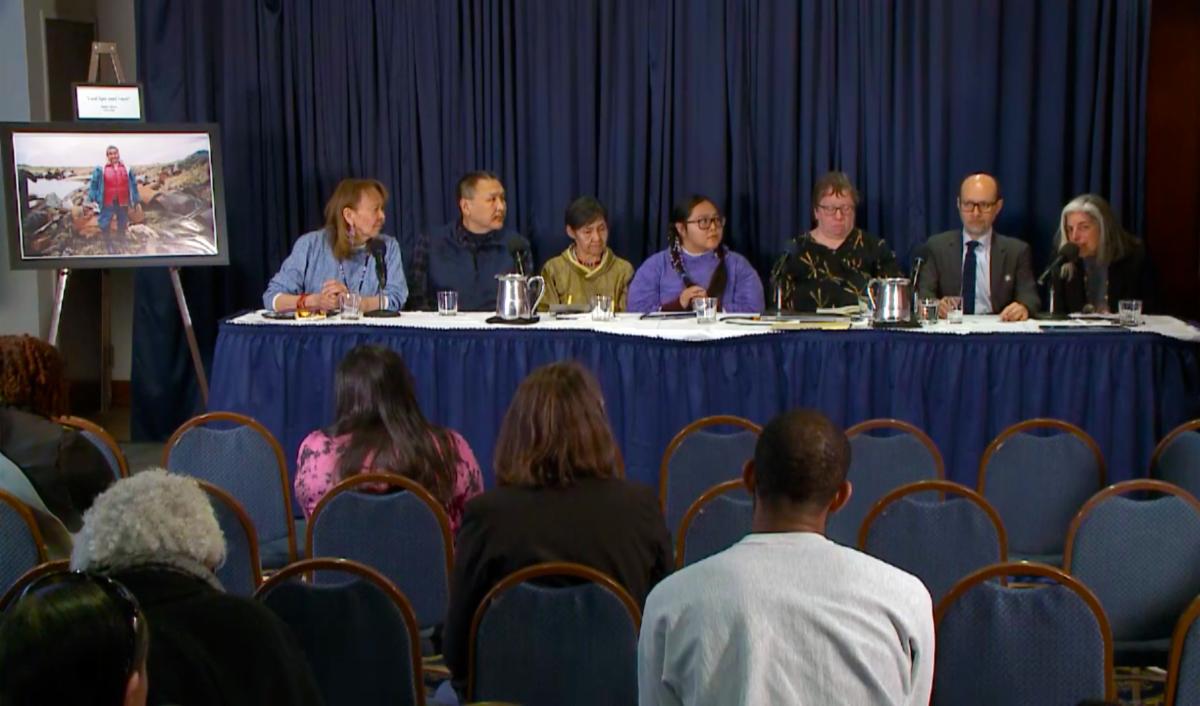
Left to Right: Sivuqaq delegation members Vi Waghiyi, Merle Apassingok, Sandra Gologergen, and Trisha Waghiyi; Alaska Community Action on Toxics Executive Director Pam Miller; United Nations Special Rapporteur for Toxics Dr. Marcos Orellana; and Environmental Law Clinic Director Claudia Polsky at the press conference in Washington, D.C.

Sivuqaq (aka St. Lawrence Island) is an island in the Bering Sea that hosted two military bases during the Cold War. After the bases closed, the U.S. Army Corps of Engineers conducted a partial cleanup of the hazardous and toxic materials the military left behind. The Indigenous Sivuqaq communities have long criticized the cleanup for not adequately remediating the contaminants, endangering their health and safety: cancer and other diseases that never afflicted their health before the military presence have become commonplace. This past year, the Environmental Law Clinic continued its investigation of cleanup deficiencies and associated health harms to Indigenous residents, and assisted the client, Alaska Community Action on Toxics (ACAT), in filing a complaint with the United Nations Special Rapporteur for Toxics seeking a U.N. investigation into human rights violations associated with remaining site contamination.


At a March 2025 press conference in Washington, D.C., Yupik community delegates found a receptive listener in the Special Rapporteur, who attended in person, spoke passionately about the problem of military toxics worldwide, and met with the clients thereafter. “The injustices against my people by the military have been devastating to our health and well-being,” said Vi Waghiyi, Native Village of Savoogna Tribal Citizen and Environmental

Health and Justice Director with ACAT. “This is very personal to me with the deaths in my immediate family and loved ones in the communities due to cancer. We are here to hold the military accountable and to seek justice for the violations of our human rights.” Merle Apassingok, elder and leader from the Native Village of Gambell, added: “Sivuqaq was always known as a place of wellness prior to the contamination by the military and we

are working to restore it again as a place of wellness.” We look forward to continued work with ACAT through and beyond U.N. mechanisms to redress the tragic situation on Sivuqaq.

Litigation Against the U.S. Navy and EPA, Seeking a Health-Protective Cleanup of the former Hunters Point Naval Shipyard

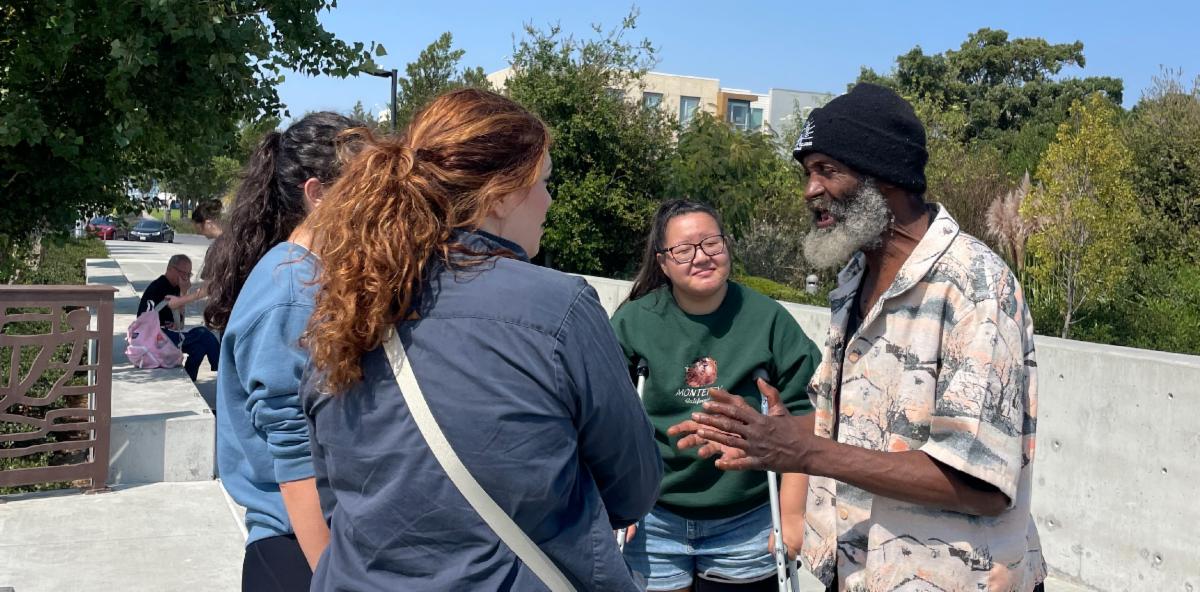
Community organizer Leaotis Martin (right) discussing shipyard pollution with ELC students

For several years, the Environmental Law Clinic has represented Greenaction for Health and Environmental Justice (Greenaction) — a San Francisco-based community group — in an investigation into the U.S. Navy’s radiological cleanup of the Hunters Point

Naval Shipyard, aiming to protect the health of Bayview Hunters Point residents. Bayview Hunters Point is a low-income, historically Black neighborhood that abuts the shipyard and is affected by local pollution from numerous sources. The clinic sued the Navy and EPA in spring 2024, alleging violations of the Superfund cleanup law. This past year, clinicians continued to advance the case. Among other things, they successfully defended the suit from the government’s motion to dismiss; amended the complaint to comport with the judge’s order on the motion; and defended the suit from the government’s second motion to dismiss, a decision on which is pending as of the time of this report. Students also helped prepare for a motion for summary judgment to be heard in fall 2025.

Students Pivot to Fight Defunding of UC Research

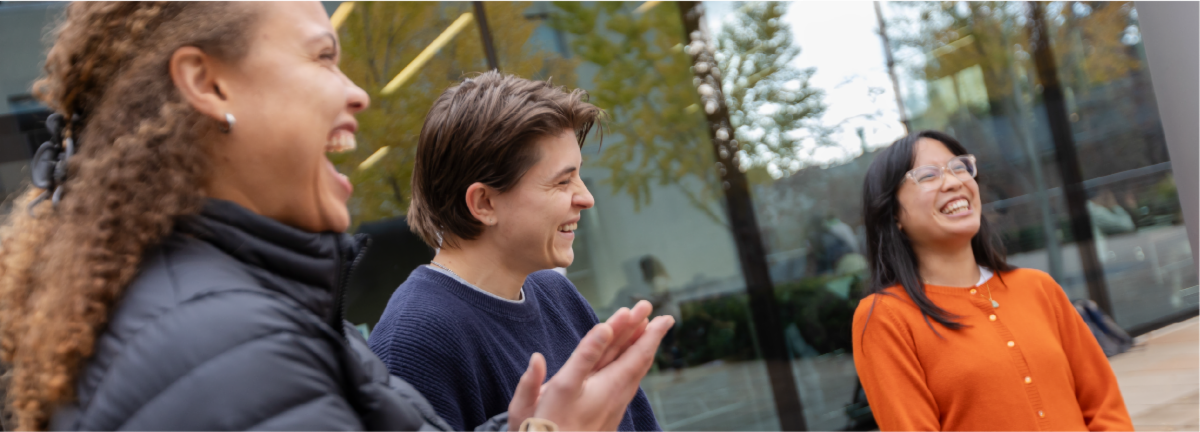
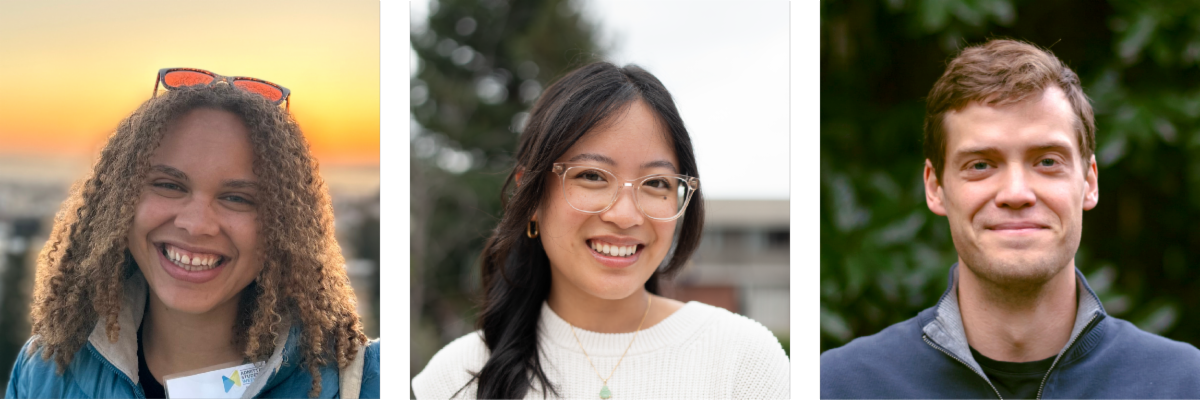
Left to Right: 3L Jordan Perry, 3L Cindy Nguyen, and Connor Hughes ‘25

This spring, three Environmental Law Clinic alumni — two still enrolled in law

school, one recently graduated — took on an unexpected emergency task in helping Director Claudia Polsky file litigation against the Trump Administration (Thakur v. Trump, Northern District of California, filed May 2025). This lawsuit, for which

the alumni research help was critical, challenges unconstitutional and otherwise

unlawful executive orders and administrative agency actions that abruptly

terminated hundreds of University of California research grants. Many of these relate to climate change, access to safe drinking water, air pollution reduction, and other environmental topics. Indeed, lead plaintiff Neeta Thakur, MD, is a UCSF pulmonologist whose illegally terminated EPA grant research explored how best to protect vulnerable communities from health effects of wildfire smoke. 


Our core pro bono litigation team consists of partners and other attorneys from Lieff, Cabraser, Heimann and Bernstein, and Farella, Braun, Martell (including many UC Berkeley Law alums!); UC Berkeley Law’s Dean (who has argued our motions) and ELC’s Director; additional pro bono counsel; and associates at other law firms actively fighting to preserve the rule of law. But given the velocity of Fast Fascism, we’ve also leaned heavily on ELC alumi. On short deadlines, these former ELCers prepared top-notch legal memos and other work products to assist the lawsuit. In June, the suit yielded a preliminary injunction requiring reinstatement of hundreds of grants across the 10-campus UC system, and restoring tens of millions of dollars to UCs! And in mid-August, we were able to restore 300 National Science Foundation grants worth $81 million to UCLA.  


Environmental Law Clinic alums reflect on their litigation tasks, and how the work connected to their clinic experience: 


3L Jordan Perry

“I wrote a memo on whether the National Science Foundation could refuse to dispense money appropriated by Congress for reasons specified by Congress. The Environmental Law Clinic helped me prepare for this by providing practice with quickly tackling research tasks on a deadline. When you really care about the people and causes you’re fighting for, it makes the law feel tangible, relevant, and urgent in a way that reading torts cases from the 1800s does not. I worked in the clinic for three semesters — two for credit and one for about 70 pro bono hours. Each semester required responding to different circumstances. Whether it’s a new Navy report or an unconstitutional executive order, I hope to face current and future challenges with the ‘Bring it on!’ attitude I learned in the Environmental Law Clinic."


3L Cindy Nguyen

“For the lawsuit, I researched the purpose and structure of the Department of Government Efficiency, as well as its constitutionality. Given the project’s tight timeline, I relied on my ability to quickly research complex questions and understand nuanced legal arguments — all honed in the Environmental Law Clinic. I’ve participated in the clinic for three semesters since 1L, spending my entire 2L on the Hunters Point litigation. The Environmental Law Clinic has been my most defining experience in law school, and the best foundation for an environmental justice career. It has taught me how to continually advocate and fight for your community, even when the odds are stacked against you.”


Connor Hughes ’25

“I worked on research assignments related to canceled grants — specifically, identifying the different language used in termination letters, and if AI was a part of the termination process. Additionally, I was able to draft a declaration for one of the researchers who lost grant funding. Having gained research skills in the legal and non-legal context in the Environmental Law Clinic was definitely beneficial. Sometimes you need to look for evidence and answers outside of a court system — articles, blogs, social media —

and that was true in the clinic and on this task. I was in the clinic for a full year. My takeaways include: putting your client’s needs first, understanding where your work/labor is part of the bigger picture, and communicating as a team. Most of all, it’s easier to work on hard projects when you believe in them.”


The case has been extensively covered by NBC News, Science, the LA Times, CalMatters, and elsewhere. It’s now on appeal to the Ninth Circuit, where we hope to preserve our victory.  

Thank you for your support!