|
The Explorer Newsletter Summer 2026
| The Explorers LLI is ever-grateful to Salem State University for being our generous sponsor. | |
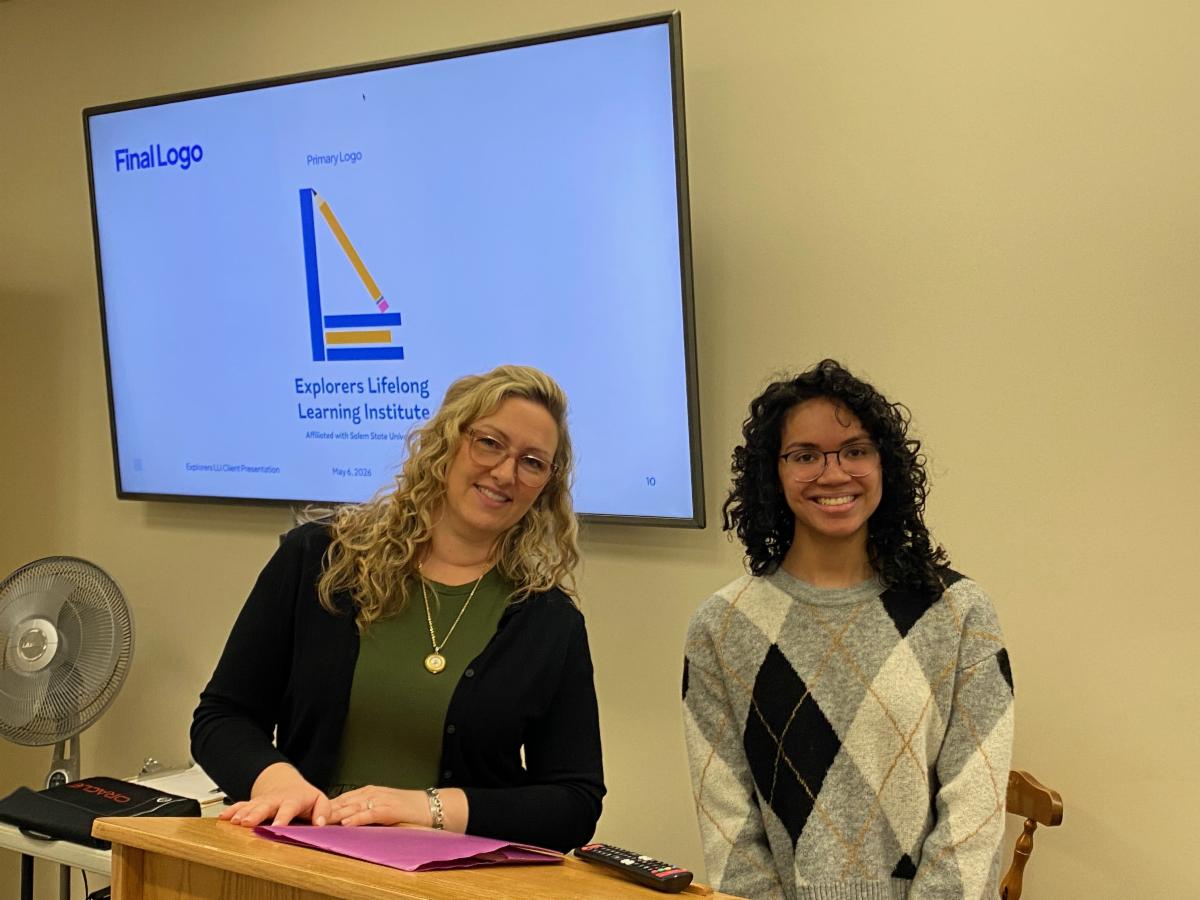
Welcome to our Summer 2026 Explorers newsletter, renamed The Explorer, name change courtesy of Gay Porter. We hope you enjoy reading this. You may have noticed our wonderful new sailboat with pencil and books logo. The new newsletter name The Explorer goes best with the new sailing logo. See the photos of the Salem State University design team below.
Of course, SUMMER is the perfect time to sail into learning!
| |
THANKS FOR YOUR SUPPORT
I would like to extend my sincere appreciation to our directors, presenters and members for your patience and support over the years of my presidency. I have learned and experienced a great deal and met and made friends who have all enriched my life. Now, with Jon Leamon as president, I am assured that wonderful things will be happening at Explorers.
Thank you for the privilege and honor of serving.
As always,
Gay
| |
President’s Message
Welcome to Summer, 2026!
Intersession has begun and we have had three wonderful speakers. Many thanks to Ted Novakowski and the entire Intersession Committee for arranging for eight consecutive weeks of guest speakers!
Our Fall Catalogs were mailed at the end of June and we have already had a number of enrollments by mail as well as on the Explorers website. Special thanks to Gay Porter and her entire Curriculum Committee for the fantastic line up of fall classes. Under Gay’s direction, Explorers’ curriculum has evolved to meet the ever-changing focus of Lifelong Learning. I greatly appreciate Gay’s leadership and unprecedented six years of service as President. I am delighted that Gay will continue to serve the critical role of Curriculum Chair.
The Fall Catalog introduces Explorers’ new logo. In an effort to enhance our brand recognition and help our best marketing team (traditionally all of our members!) introduce Explorers to their friends, we partnered with Salem State University in our logo redesign.
We are grateful that Katelyn Adams, Associate Director of Salem State University’s (SSU) Center for Civic Engagement introduced us to Professor Amy Kunberger of SSUs Art and Graphic Design Department. Professor Kunberger, who has been a professional graphic designer since 2005, partnered with Explorers on a semester-long logo and marketing project that began in January 2026 and brought us a wonderful presentation by a number of talented senior students of her class. Gay Porter and Ann Buchanan joined me at the presentation and following a review of all of the designs, our new logo was selected for presentation to the Board.
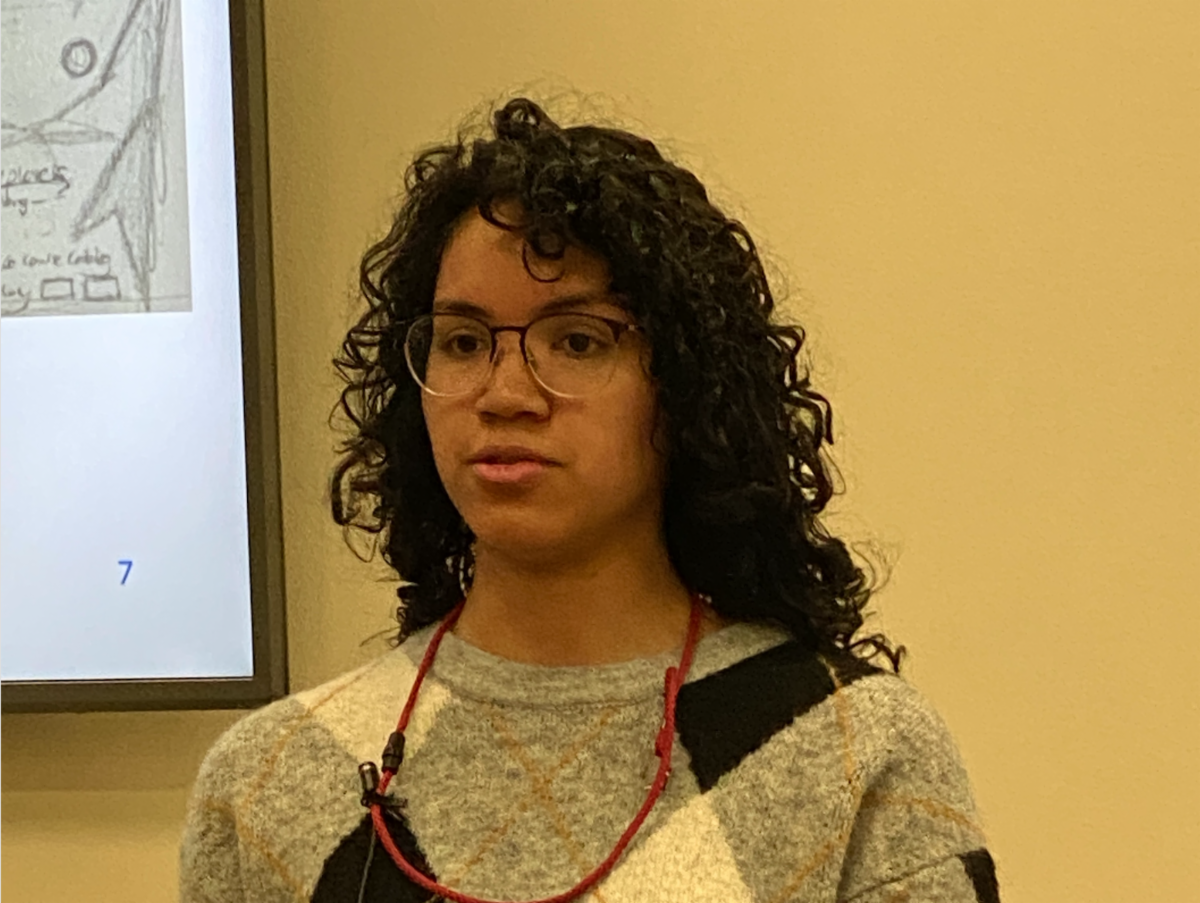
The new Explorers logo was designed by talented artist Jhuli Verdeiro, a Media & Communications major with a minor in Graphic Design, as well as a Commonwealth Honors Program Student. Under the leadership of Professor Kunberger, Jhuli developed all of the communications material and artwork necessary for the introduction of a new branding campaign. Included with that were detailed instructions in the use of the logo, which is a standard tool in the Marketing industry. It has been a pleasure working with Amy and Jhuli, and we look forward to continued collaboration on various aspects of the project. Jhuli presented her design as well as the process that she followed in creating the new logo for Explorers. We are grateful to Jhuli and Amy for providing Explorers with a critical tool to market what we do best; Lifelong Learning. Our ability to offer superb programming each semester as well as a great lineup of intersession speakers is enhanced by membership growth.
The photograph, [below at right] shows Professor Amy Kunberger and Jhuli Verdeiro presenting our new logo at a meeting open to all Explorers on May 6, 2026. Jhuli Verdeiro is shown at the left.
Our Brand Recognition effort has impacted the newsletter as well, and the Explorers Board of Directors approved the name change at the July meeting. With this issue, the newsletter will now be called “The Explorer.” Many thanks to Sami Lawler for her tireless efforts coordinating articles for each edition.
Additional course catalogs have been printed and are available at Explorers. Please pick them up along with an intersession flyer and encourage your friends to join. While the Course Catalog with great fall offerings offers a wonderful marketing tool, YOU are the best marketing team for Explorers!
Have a wonderful summer and I’ll see you at Explorers!
Jonathan Leamon President
| SUMMER is a perfect time for many treasured activities. |
| | | Amy Kunberger and Jhuli Verdeiro | | |
SUMMER is also a perfect time for a refreshing beverage;
perhaps a delightful glass of wine?
| | | |
Meet Bert Wolf
(Explorers Board Member, Course Instructor, and Wine Aficionado)
| |
You can tell by his smile, Bert enjoys a glass of wine and especially sharing his extensive knowledge of wines. He has kindly offered to share wine info with us in our Explorers newsletters.
If you want to learn even more about wines this fall, sign up for Bert's Explorers course on Mondays 109 Appreciating and Tasting Wines.
| | |
Raise a Glass and Enjoy the Wine! by Bert Wolf
It is thought that 7500 years ago wine was being made and consumed in the country of Georgia. The ancient technique has been rediscovered and is today increasingly used. Millennia ago, wine was made very simply in large clay amphorae, called qvevri, which were sunken below ground with only the neck on the surface and then lightly covered. The juice from crushed grapes was left to ferment and mature for consumption.
Today many wineries are experimenting and using egg shaped vessels of varying sizes for fermentation and maturation with great success. These egg-shaped vessels may be made from cement, clay or ceramic. The ovoid shape allows continuous circulation of the contents, permitting optimal contact with the lees to foster maximal flavor and complexity. Wines are matured for a few months to several years before bottling and, even then, are not always released but kept for further maturation.
The choice of which wine to buy depends on many things but primarily on what occasion or food it is to accompany. The wine which is amenable to pair with most is Riesling. Rieslings can range from truly dry to sweet and all degrees between. The grape is grown primarily in Germany, Austria, Australia and the U.S., with some quite nearby in the Finger Lakes region of New York and on the North Fork of Long Island.
| | |
SUMMER is a perfect time for a walk on the beach;
or is it?
| | | | |
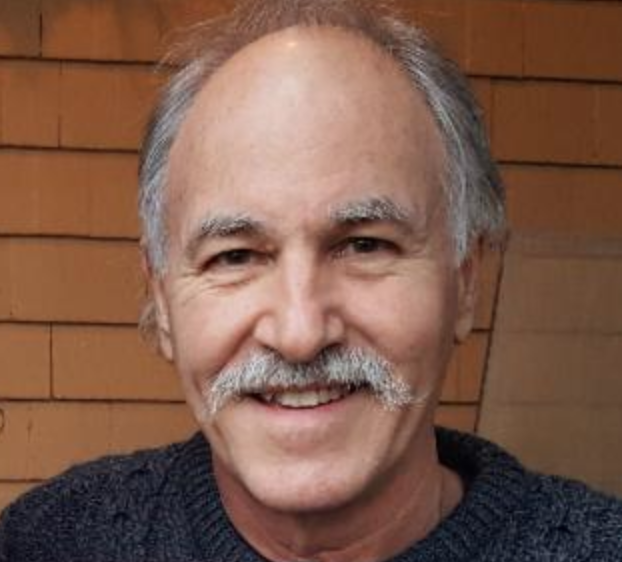
Professor Steve Young, PhD
Salem State University
| | | |
What’s That on the Beach?
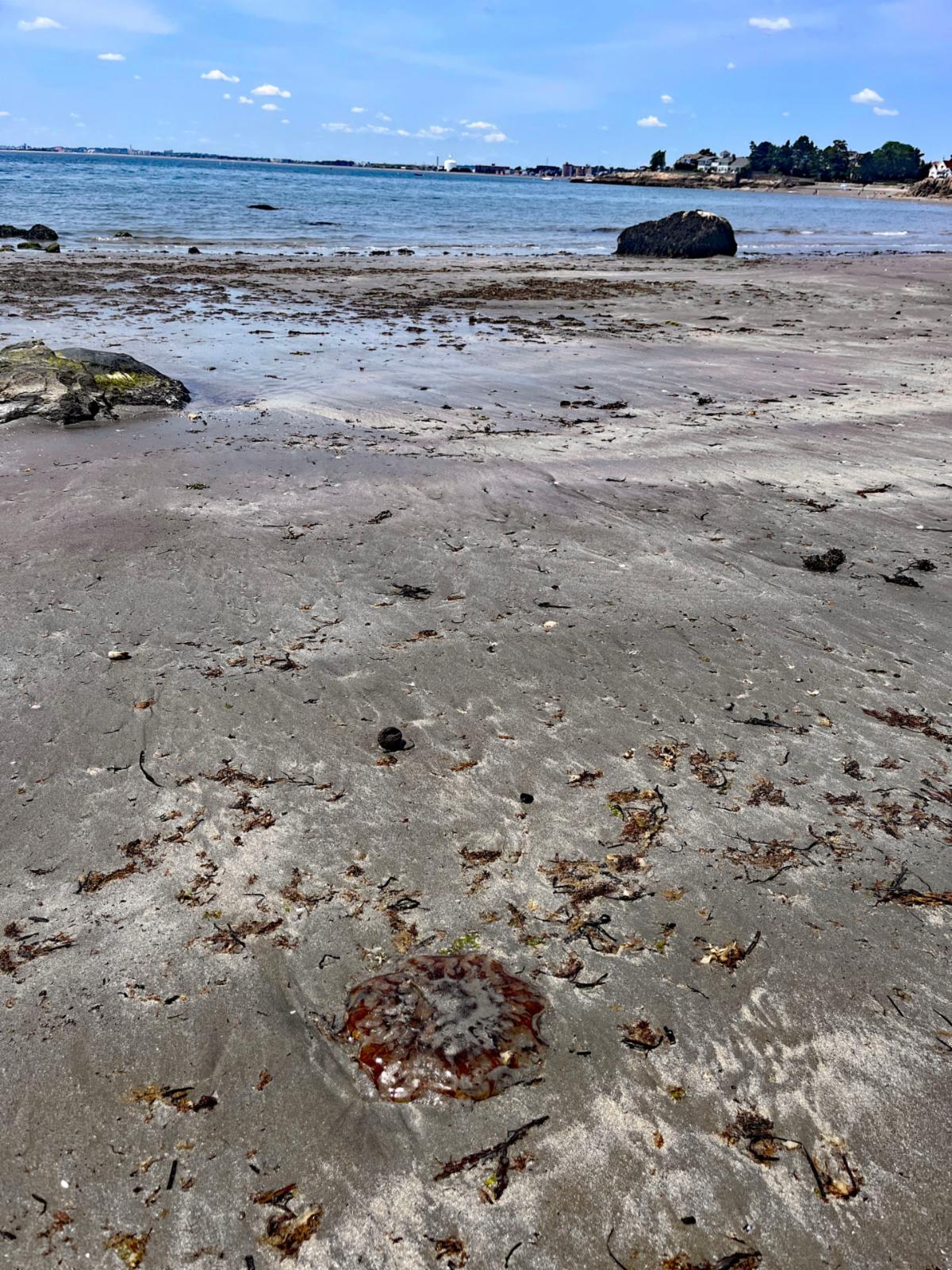
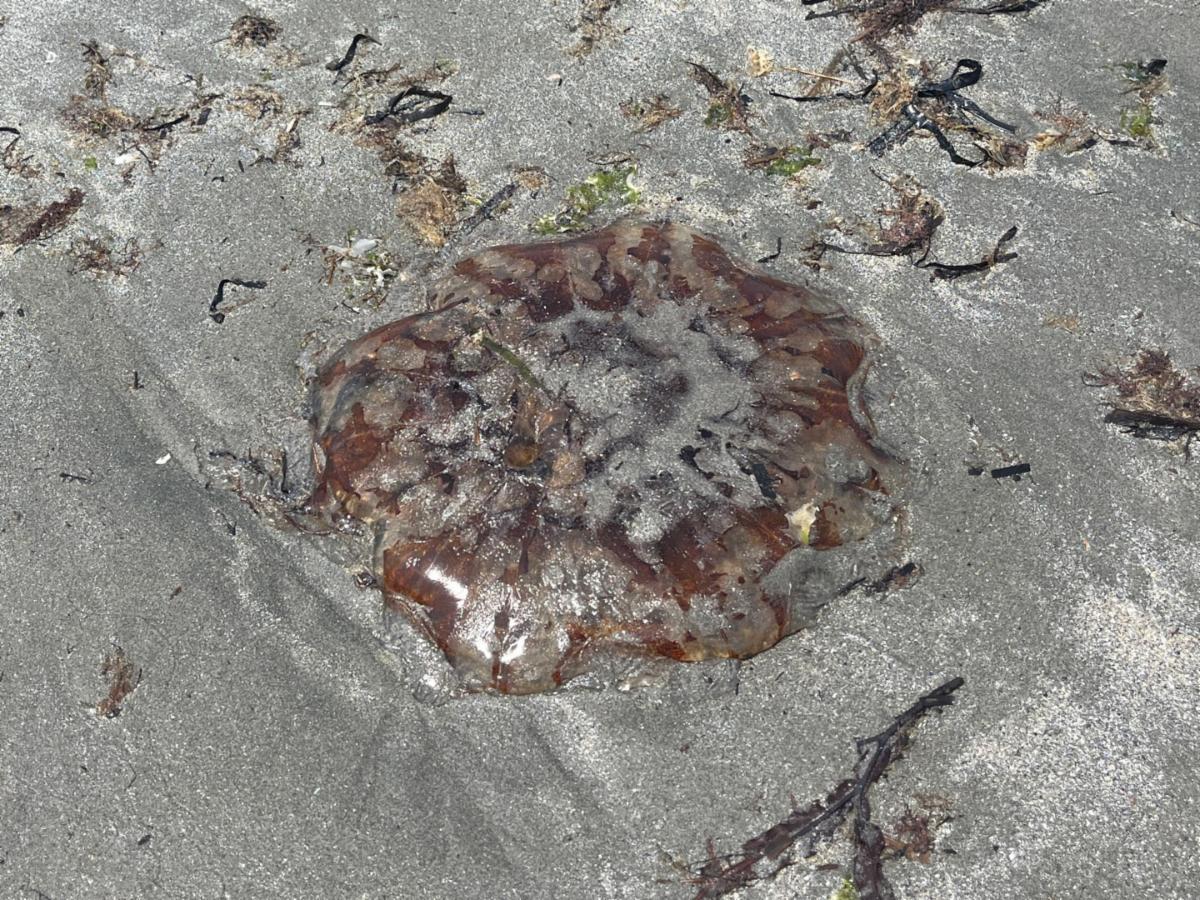
Earlier this summer in late June, I was walking on King’s Beach, which is shared by Swampscott and Lynn, and saw what looked like clumps of wet seaweed. Being curious I went over to take a look and “Oh no they are back – Jellyfish!”
One of the pleasures for me living on the North Shore is swimming in the cold water off one of the many beautiful beaches in the area. Getting stung by a jellyfish is not one of the pleasures…
If you have been walking on one of the North Shore beaches this summer, you might have noticed the Lion’s Mane Jellyfish either lying on the beach or floating in the near-by waters. According to the Boston Globe, at times this summer many beaches on both the South Shore and North Shore have been inundated by these jellyfish. Jellyfish don’t appear on the beaches of Eastern Massachusetts every summer, with the last major inundation being in 2020.
The Lion's Mane Jellyfish, known for its enormous size and long, flowing tentacles, is an intriguing creature found off New England in the cold waters of the North Atlantic. Its scientific name, Cyanea capillata, reflects its hair-like tentacles that resemble the mane of a lion. “Cyanea” is the Latin genus name for a group of large jellyfish and "capillata" is a Latin-derived word that means "having long hair". The Lion's Mane Jellyfish is considered the largest known species of jellyfish in the world. Some individuals have bells measuring more than 7 feet (2 meters) across, while their tentacles can extend over 120 feet (36 meters). This makes the jellyfish longer than a blue whale, the largest animal on Earth. Most of these jellyfish are much smaller, but they are still impressive in size. This summer I have learned to swim close to shore and keep a watchful eye out to avoid the jellyfish. They are fascinating to watch in the water; at first, they appear to just float, and then, they puff their way to the seafloor and back up again to float aimlessly. Their tentacles drift gracefully through the water, giving them a majestic appearance.
The Lion's Mane Jellyfish lives mainly in the cold waters of the North Atlantic, Arctic, and North Pacific Oceans. It prefers temperatures below 68 degrees Fahrenheit (20 degrees Celsius), making it especially common along the coasts of Canada, New England, Greenland, Norway, and the United Kingdom. During the summer months, sometimes winds and ocean currents carry these jellyfish closer to shore, as has happened this summer. As ocean temperatures change with the seasons, the jellyfish migrate to different depths to maintain their temperature.
Despite having no brain, heart, bones, or lungs, the Lion's Mane Jellyfish is an efficient predator. It relies on a simple network of nerves called a nerve net to detect movement and respond to its environment. Thousands of tiny stinging cells, known as nematocysts, line its tentacles. When small fish, shrimp, or plankton brush against these tentacles, the stinging cells release microscopic barbs loaded with venom that quickly paralyze the prey. The jellyfish then uses its tentacles to move the captured food toward its mouth, located beneath the center of its bell. Although its sting is powerful enough to capture prey, the Lion's Mane Jellyfish is usually not deadly to humans. Most people experience pain, redness, swelling, or a burning sensation after contact with the tentacles. Even detached tentacles washed up on the beach can still sting because the stinging cells remain active for some time after the jellyfish dies. Luckily, I have yet to test the power of their tentacles this summer.
Although we don’t like to swim with jellyfish, there are several marine animals that do. Small fish often shelter among its tentacles for protection from predators. These fish have developed a tolerance to the jellyfish's venom, allowing them to hide safely where larger predators cannot follow. This unusual relationship benefits the fish while generally causing little harm to the jellyfish. Despite their stinging tentacles, they are preyed upon by sea turtles, ocean sunfish, and some seabirds, making them an important link in the food web. Even after death, the jellyfish provides food for scavengers living on the ocean floor and for those that end up dying on our beaches; sand fleas and small crustaceans (amphipods and isopods) descend on the jellyfish and consume them. Various species of crabs use their pincers to tear pieces from beached jellyfish, safely bypassing most of the stinging cells. In some coastal regions, opportunistic scavengers such as foxes and raccoons will consume washed-up jellyfish. Gulls and other coastal birds will scavenge and feed on the decaying flesh of stranded jellies. While some species of jellyfish are popular delicacies in parts of Asia, people generally do not eat Lion’s Mane Jellyfish. This is because they deliver an intensely painful, venomous sting, and they do not have the right texture or commercial value found in edible varieties.
Each summer I swim out to the “Swim Zone” buoys off Philips beach in Swampscott. I don’t think I will be going out there this summer. Although I think the Lion's Mane Jellyfish are absolutely fascinating, I don’t want to tangle with one, no matter its size. The buoy swim will have to happen next year, unless we get inundated with Sharks…
| | |
SUMMER is a perfect time for writing;
perhaps poetry?
| | Photo by Rod Kessler (Claire's colleague from Salem State University) | | |
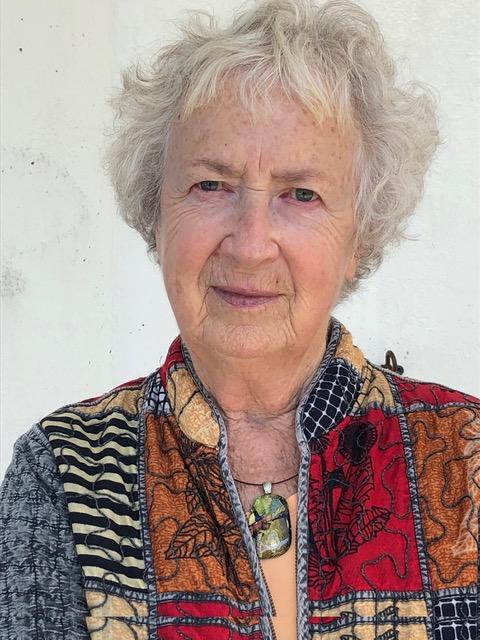
We are honored to include another poem for this summer issue by our Explorers presenter, Claire Keyes. She chose this poem from her chapbook, One Port, published by Derby Wharf Light Box, a small press in Salem. Javy Awan, the publisher, has been a past member of the Explorers. Claire attests he’s a wonderful poet. I, too, am so happy to know Javy from the Tin Box Poets, a Swampscott area poetry group, meeting monthly.
| | | |
Detour, Jefferson Avenue
by Claire Keyes
A neighbor hears gunshots and calls 911.
Squad cars swarm, sirens wilding the neighborhood.
Police cordon off the street. Downhill
from the church, it’s an ordinary house,
stairs leading up to a front porch like normal stairs
on a normal street. Inside, a woman sobs,
her head between her hands, her lover sprawled
in a pool of blood, shot in the groin.
Her husband turned the gun on himself,
love and death marrying in this room,
the surcharge of passion almost too much
to bear; the ceiling and walls expanding
then contracting, fractures caked with pain.
Commuters fume at the barriers blocking
their ordinary route to work or the gym.
What the hell! But hell’s no mystery
on Jefferson Ave. Pigeons on the church roof
bask in the sun, feathers cleaned and fluffed.
They dislike the noise, rise up, then resume
their perch on the sunny roof.
| | |
Where do poets often find their inspiration? As they experience the little and big things life shares each day, something needing to be expressed echoes within. For this particular poem, Claire offers, “it’s a scene (mostly imaginary) that has stuck with me. Maybe it will haunt others as well.”
I asked Claire what compelled her to write about such a tragedy. She explained, “My poem arose out of being caught in a detour and having to go to some trouble to get where I was going. All I could think of, of course, was my trouble. When I found out about the murder, I felt a colossal selfishness. That feeling led me to the poem.”
Writing poetry, writing in a journal, writing anything, can help us process and heal when difficult situations arise. Writing can help us navigate some of the personal trauma the days may send our way. Claire Keyes has been writing poetry for fifty years. Many thanks to Claire for sharing this with us.
If you'd like to sign up for Claire's fall Explorers course, here are the particulars:
108 Shakespeare’s Macbeth:
A Study in Power Limited to 35 Monday 2–4 pm
| | |
SUMMER is the perfect time
for one-time complimentary lectures we offer to all.
| | |
SUMMER INTERSESSION 2026
When: Wednesdays from 10:00 AM to 11:00 AM at Explorers, Suite 10
All but one of our summer 2026 speaker events will take place in-person at our Salem headquarters and will also be simulcast over Zoom. The general public is invited at no charge. To access these meetings over Zoom, control/click or copy/paste this link into your web browser: https://bit.ly/summer26talks
July 22 – The Case For A Universal Basic Income - Richard Frenkel, economist & author. Our guest will discuss his book: "Shares in America: The Case for Universal Basic Income" that asks a simple question: if rising productivity made the nation so wealthy, why aren’t most people sharing that prosperity?
July 29 – My Return Visit To China": How Things Have Changed - Robert Hooker, Explorers’ class presenter. Having taught courses in a number of Chinese universities over a number of years, Mr. Hooker reflects on how the economic conditions and way of life in that country have changed during his most recent visit.
August 5 – Old Salem In Ballad and Song – Bob & Jennifer Strom, local folk musicians and music historians. Our guests will entertain the group on fiddle and guitar, paying tribute to Salem's lengthy and diverse musical heritage. They will use primary source material to provide the historical significance to Salem for each song.
August 12 – Inspired By Italy - How Heritage Enhances Creativity (and living In Italy for part of the year doesn't hurt either!) - Linda Dini Jenkins, author and long-time Salem resident. Ms. Jenkins will share stories from her 3 books which highlight her discovery of "Italian-ness"- her experiences from being a part-time resident of the small Italian city of Abruzzo.
August 19 (ZOOM ONLY) - Why Can't We Have Health Care For All?- Dean Wasserman, M.D. , Our guest is a retired former chief medical officer at a local hospital. During his Zoom presentation he will make the case that, given the current situation in this country, is universal health care necessary, inevitable, workable, or even possible?
August 26 – The Situation In Venezuela Today - Dr. Ernesto DaSilva, M.D. Since the major news media has shifted its attention from the President’s invasion of Venezuela to the war in Iran, our speaker, a local gerontologist and native of Venezuela, will talk about the history of the country, how it changed for the worst, and his views on the current social and political state of the country.
| | SUMMER is the perfect time for planning for family visiting a summer home (and possibly planning for the home itself). | | |
Welcome to our new regular column from our Monday Everyday Law course leader,
Andrea A. J. Witt, Esq., CELA
Everyday Law for Successful Living
Happy summer, Explorers! Some of you may recognize my name and the course title (with good thoughts, I hope.) The goal for this corner is to provide some insights and legal tips similar to those shared in class. Let’s get started!
The hot sun of July and August brings quieter days to our law office, as families enjoy lazy afternoons and vacation homes with loved ones. These happy memories carry into the fall when clients call seeking our advice on how to protect the summer home for future generations. “Asset protection” is a phrase we hear daily as a purported goal, though most often there is little to no understanding of the strategy and consequences. The media is filled with misleading advertising about how irrevocable trusts operate and clients often execute documents without understanding the consequences.
Did you know…
1. To successfully accomplish the goal of protecting an asset, such as your summer home, by transferring it to an irrevocable trust, you have, in effect, given the asset away. You no longer own the home, don’t have any authority to sell or refinance the property, and if the property is sold you can’t use or direct the proceeds for your benefit.
2. The Trustee (not you) controls the Trust and manages the assets for the benefit of the beneficiaries (also not you.) Anyone who suggests your children as beneficiaries will listen to and respect your wishes, despite what the trust language dictates, hasn’t spent much time in Probate and Family Court!
3. An irrevocable trust, by definition, cannot be changed other than by Court decree. Sure, there are some minor provisions that may be altered, but the core of the trust is set in stone unless a Court orders otherwise. This process is always more time-consuming and expensive than creating the trust itself.
4. While the dream of your children and grandchildren sharing a family summer home and making beautiful memories for generations to come is a lovely thought, reality is rarely this rosy. Adult siblings may be in very different financial situations, making joint ownership of real estate very tricky. Too often relationships are destroyed over disagreements about shared expenses.
It’s true: most clients want to leave a legacy for the next generation. But when asked, most clients also want to maintain control of their assets to use for any necessary future care, leaving any remainder to those they love. They don’t want to risk needing care in a skilled nursing facility rather than aging in place in their own home.
If your goal is to age in place, with your choice of care options, an irrevocable trust is rarely the right tool for you.
| | SUMMER is the perfect time for dreaming about travel. Perhaps China? | | Photo taken in Kaifeng, China, in 2006 with a Chinese friend’s little daughter. | | |
Meet Bob Hooker
Explorers member and China course presenter
| | |
Bob, you have taught a popular, well-attended Explorers course on China. Tell us about what you may present in the future (hopefully!).
I have some ideas for future courses but I put so much work into the China course each year that teaching others might not be feasible.
What first drew you to consider teaching a class at the Explorers?
Having lived and taught in China for seven years I felt that I have a unique perspective on life there that needs to be shared because there is so little accurate information about modern China in the West. This is especially important because of China’s rise to superpower status and misunderstandings can lead to unnecessary conflicts.
You have been a student at Explorers as well. How long have you been attending classes here? How did you learn about Explorers Lifelong Learning as a great place to expand and learn? Were/Are there particular classes that you really enjoyed?
I started with Explorers about 4-5 years ago. The classes I have particularly enjoyed have included the Book Club, Film Club, Current Events discussions and all of Peter Sheckman’s classes on classical music as well as Tom Mela and Lee Bromberg’s Supreme Court classes.
Bob, you are an amazing traveler and teacher. Tell us about some of your travel experiences and why you went where you went?
Ever since I was very young I’ve had a strong urge to travel, an urge that grew stronger as I grew older and morphed into a desire not only to travel but to live in a distant land where the primary language was not English. But it took many years to make it happen. I finally got a transfer from my stateside company to the company’s European headquarters in Brussels, Belgium. With my family, I settled into the Flemish (Dutch) speaking community of Flanders, enrolled my daughter in the local Flemish-speaking school, joined some town bands and did my best to learn Flemish. We stayed for 2.5 years until the company went bankrupt and we had to return to the States. My next opportunity came a decade and a half later when I took early retirement and headed to China to teach English and stayed for seven years. Both were life-changing experiences, but especially China. I got to know China on the ground in a way that few Westerners do in a time of its phenomenal transformation from a poor and backward country to the superpower that it is today. Understanding and sharing China and Chinese civilization has been my obsession for the last 20 years and I feel as though I am just scratching the surface.
We are grateful to you, Bob, for your wisdom and sharing of your experiences in China. We look forward to your next class.
| | |
SUMMER is the perfect time for a good book;
perhaps our Book Group selections?
| | |
Explorers Book Corner by Roz Eschelbacher
Every Explorer member is invited to join our Book Group discussions which take place the first or second Monday of the month at 10:00 am. We ask our members for suggestions and each semester select from the rich and varied choices submitted. All Explorers members are welcome to join the discussion, whether they signed specifically up for the Book Group class or not. Sending your email to Roz will help keep you in the book group communication loop.
| | | | | |
August 3
The Psychology of Money: Timeless Lessons On Wealth, Greed, and Happiness
by Morgan Housel
Nonfiction, 2020, 256 pages
“Through 19 short stories, this book explores how human behavior and psychology influences financial decisions, challenges the traditional math-based approach to money management and investing.”
| | | | | |
September 14
The Tiger’s Wife: A Novel
by Tea Orbreht
Fiction, 2011, 384 pages
“A beguiling blend of realism, myth and legend”
“In this National book Award Finalist novel, a young doctor investigating her grandfather’s mysterious death in a Balkan country uncovers family legends, including tales of an immortal man and a tiger stalking a wartime village.”
| | |
| | |
October 5
Genghis Khan and the Making of the Modern World
by Jack Weatherford
Biography, 2004, 312 pages
“Reclaims Genghis Khan from the ‘savage hordes’ stereotype, presenting him as a visionary leader who unifed the Mongols and built a powerful, interconnected empire.”
| | | |
| | |
November 2
The Shipping News
by Annie E. Proulx
Fiction, 1993, 352 pages
Pulitzer Prize-winning novel. Unique writing style, placed in Newfoundland, characters change by environment and culture.
| | | |
| | |
December 7
Persepolis
by Marjane Satrapi
Graphic novel, Memoir, 2004, 160 pages
"Funny and heartbreaking memoir of growing up in Iran during the Islamic Revolution. In powerful black-and-white comic strip images...”
| | | |
| | |
January 4
The Art Thief
by Michael Finkel
Non-fiction true crime, 2023, 240 pages
“A great read about art thefts that actually happened. Set in Belgium and neighboring countries, it tells the tale of a young man, his passion for art, his collaborating girlfriend and his misguided mother.”
| | | |
| | |
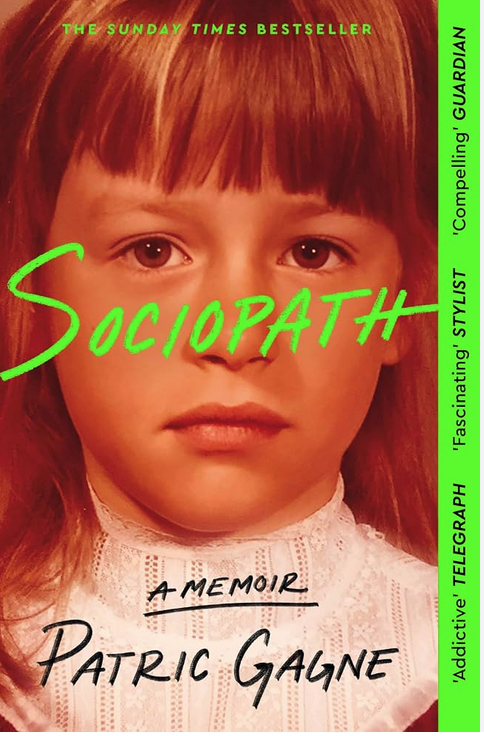
February 1
Sociopath: A Memoir
by Patric Gagne
Memoir, 2024, 368 pages
“Summary: A sociopath reflects on her life with brutal honesty and surprising empathy.”
| | | |
| | |
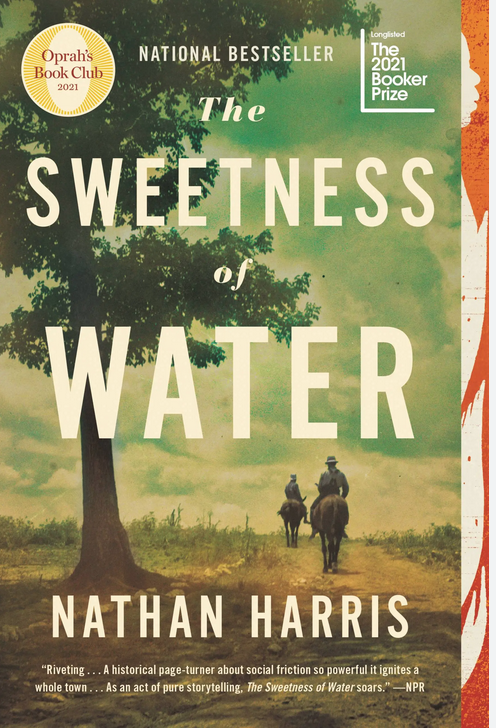
March 1
The Sweetness of Water
by Nathan Harris
Historical Fiction, 2022, 368 pages
“Two brothers, newly free from slavery, start to make their way in the rural South. Strong characters, authentic voices and personal insight into what they might have experienced.”
| | | | |
SUMMER is the perfect time
for enjoying sunrises and sunsets.
| | |
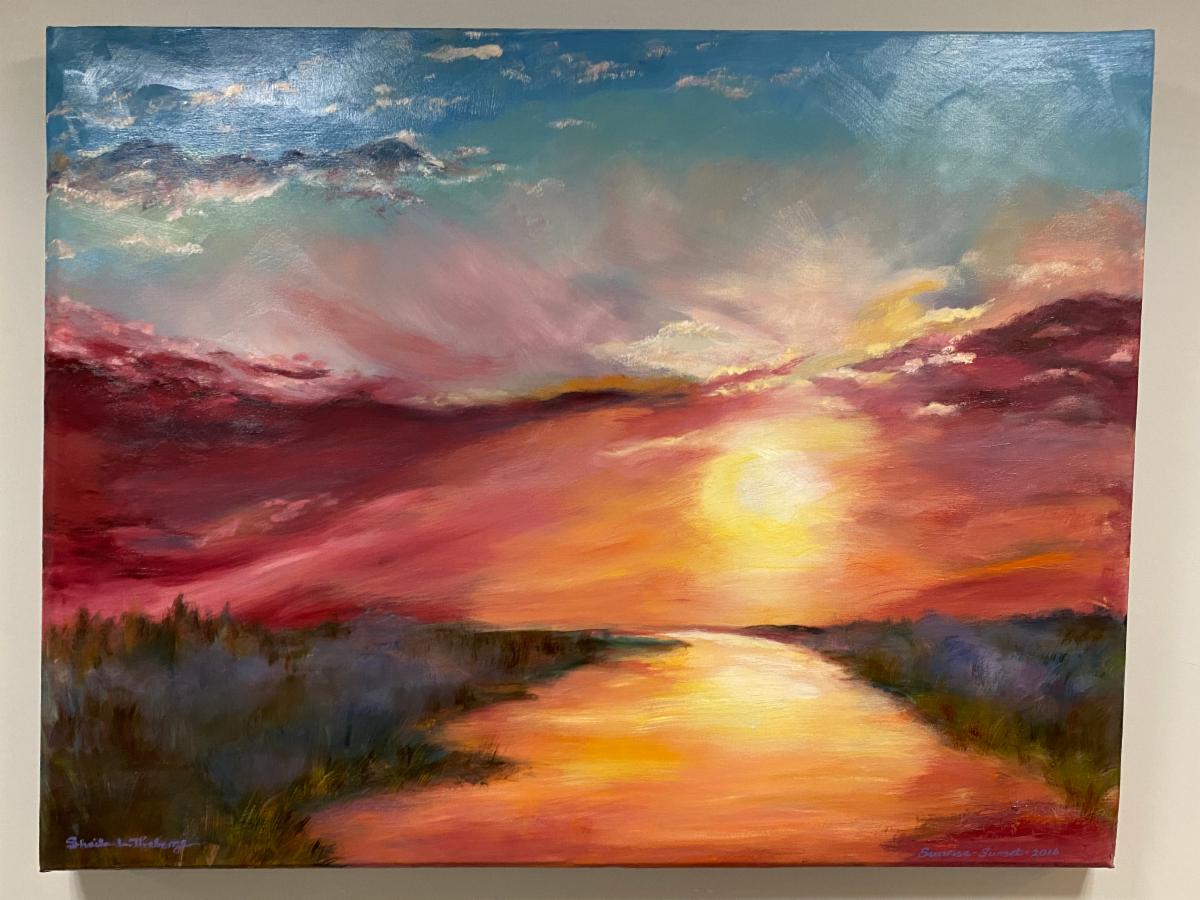
What an honor and a joy it was for me to meet Sheila Theberge, who has kindly loaned us the painting shown below to grace the walls of our common room at Explorers. Such a talented person she is! I enjoyed an hour and half visit to her home recently and saw so many more of her beautiful oil paintings; some portraits, some landscapes, some pictures of homes and farms, French city streets, etc. We were so fortunate to have Sheila as an Explorer member. Twice, she offered beautiful art exhibits of her paintings at the Explorers for all to enjoy, as well as the gift of her participation and enthusiasm in the classes, Writing and French, Book Group and more. A few years back, she mentioned to Elliot that she’d love to donate one of her works of art to cover a small window in the wall which led to another room. Imagine looking through the window at the beautiful sunset or sunrise she provided! Shelia’s son did up the frame in preparation for the arrival of the picture. This fine painting will eventually go to her son. How lucky we are to be able to view such a gift of nature for hopefully many years.
Why did Sheila join the Explorers? Like so many of us, Sheila was looking for friendships with people like her; those who love learning and exploring new topics. Before joining the Explorers, Sheila had accomplished many varied tasks. She was an art teacher for the Salem Public Schools, teaching art to many ages of students, K-12. The team at the Horace Mann Laboratory School was close, helping make the school a place of excellence and comradery for all. Teaching Adults in Salem after school while still teaching Salem HS students kept Sheila ultra-busy but very happy to be doing so. Sheila studied painting and other visual arts at Massachusetts College of Art. She has been painting for many years and was ready to work on a commission for the next painting when she unfortunately broke her elbow.
Painting isn’t Sheila’s only talented endeavor. Singing in the Paul Madore Chorale was a fantastic experience for her. A trip to France as the only American choral group was a meaningful experience, while singing with other international groups in honor of the opening of a Peace Museum. Sheila has also written personal mini stories (one published in the Boston Globe). That tale was about the creative and unique Salem home she and her husband built totally themselves starting in the early 50s (before they were married). Sheila has written poetry to accompany her great-grandchild’s drawings. Sheila was a founding member of Art Salem, and also a volunteer working to save the land for Camp Naumkeag at Salem Willows (used for the Girl Scouts who rented the land from the City of Salem for next to nothing.) A source of pride and hard work for Sheila was to organize several family reunions. Through her lovely painting and participation in Explorers classes, we are so glad Sheila Theberge has been a part of our Explorers family. Stop by soon to appreciate the painting and enjoy peaceful reflection.
| | |
Sunrise Sunset by Sheila Theberge
(This inspiring painting can be found in the Explorers Lobby.)
| | |
Now that you met Jon (our new president), Bert (our wine course instructor), Bob (our China course instructor), Claire (our language arts course instructor), Andrea (our legal guru) and Steve (our science and My Favorite Lecture course instructor), Roz (our book group organizer), and Sheila (our Sunrise Sunset painter) are you wanting to further Explore (pun intended!) our intriguing list of classes and books to read and share?
Click here for the Explorers fall catalog. Click here to register for courses.
| |
| |
In Memoriam
We are saddened to share the names of those Explorers who have passed away:
Barry Poretsky
Richard Sides
Nordy Halber - past Explorers president
| | | | |
We hope you enjoyed our on-line The Explorer newsletter. The editor is grateful to the kind people who allowed themselves to be interviewed to share their stories with the Explorers readers, to Gay Porter and Michael Eschelbacher, who had the vision to re-create the newsletter as an on-line communication with our Explorers community, and to Roz Eschelbacher, who assisted with lots of great ideas (such as providing helpful links for resources) during our brainstorming sessions, and also preparing the Book Corner writing. Liz Curtin and Tom Mela are our talented dedicated proofreaders. If you have any ideas/thoughts for items you’d care to see introduced or expanded in our future newsletters, please let us know. Our newsletter is an evolving creation designed to be meaningful to you.
Summer 2026, Sami Lawler (editor/interviewer)
| | |
EXPLORERS LIFELONG LEARNING INSTITUTE
978-744-0804
explorers@verizon.net
explorerslli.org
The Explorers Lifelong Learning Institute is a nonprofit organization under IRS Section 501(c)(3).
Contributions are appreciated and tax-deductible to the extent allowed by law.
|
| | | |