|
Summer Snapshots with the Friends and the Palo Alto Art Center
October 15, 2024
| |
|
Hello Friends,
Last fall, the Friends introduced the Friends’ Animal Encounters Program, during which Friends Ambassadors guide visitors through the JMZ on a journey of discovery. Led by Friends Ambassador Lee Harper, this program enriches the visitor experience with the animals, igniting curiosity and fostering a deeper understanding of the natural world. Animal encounters are typically hosted Thursday through Sunday, offering families a unique opportunity to connect with wildlife. Programs hosted in the zoo are free with admission.
This summer, Lee collaborated with Cathy Gregory, a photography teacher at the Palo Alto Art Center, to host animal encounters for her students. Cathy brought her students to the JMZ to photograph the amazing animals who call the zoo home, while Lee interpreted and elevated the experience for them, weaving together science and art. You can learn more about this exciting collaboration in this month’s feature article below.
Tickets are still available for the Friends’ Halloween at the JMZ event on Friday, October 25, from 5-7 p.m. – get yours while they last! Proceeds from this fundraiser will benefit the Friends’ Annual Giving Fund, which includes support for programs that expand access to science education in the community. I hope to see you there!
Lauren Angelo
President, Friends of the Palo Alto Junior Museum & Zoo
| |
|
Summer Highlight: Zoo Safaris with the Palo Alto Art Center
Conversation with Lee Harper and Cathy Gregory
For years, Cathy Gregory, who teaches classes that include photography, watercolors, and sculpture for young artists at the Palo Alto Art Center, has brought her students to the Palo Alto Junior Museum & Zoo. Captivated by the environment and the animals who live at the JMZ, Cathy encourages her students—usually between the ages of 10 and 16—to draw inspiration from the natural world. Recognizing the JMZ as a resource, she fosters an appreciation and respect for animals while helping students connect their artistic skills to real-life subjects.
During one of Cathy’s visits this past spring, Lee Harper noticed a group of curious students paying special attention to the anatomy and behavior of each animal as they captured photographs. Lee, an artist herself, saw the immense potential for collaboration and decided to lead the students on a “safari” experience, sharing her knowledge of animal behavior along the way. Together, Lee and Cathy aimed to inspire students’ creativity and deepen their understanding of the natural world.
Throughout the summer, Cathy brought all thirteen of her Plein Air “classes without a classroom” to the JMZ for a safari morning with Lee. Each of the students had become proficient with their Canon cameras while exploring the outdoors around the Art Center.
| |
|
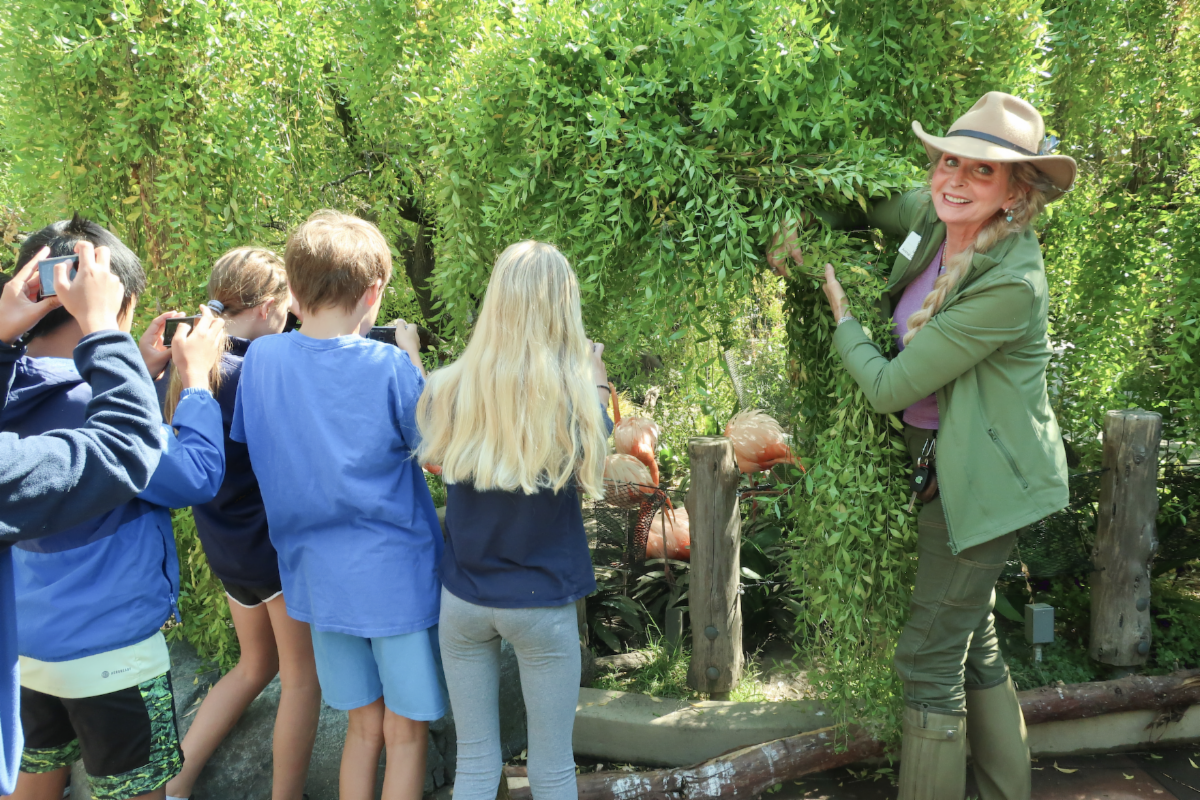
Lee Harper sets up a special shot for students to capture the flamingos on camera.
Photo courtesy of Cathy Gregory.
| |
|
At 10 a.m., Cathy and her class would arrive at the JMZ, ready for an adventure. Lee began the safaris by releasing the raccoons, who eagerly foraged for breakfast in their enclosure. Capturing animals on camera can be tricky, but Lee was there to share her secrets. Morty and Bobby, the raccoons, followed their breakfast ritual—snacking on easily accessible food before searching for hidden treats. Excitedly, Lee guided the students to anticipate the raccoons' next moves. A key part of the Animal Encounters Program is using the Socratic style of teaching, which encourages students to collaboratively explore the why behind animal behavior. As the sun rose higher, Morty and Bobby climbed a tall log, providing the students with an incredible photo opportunity. Cathy and Lee coached the students on working with the natural light which illuminated the raccoons and their fur.
Cathy noted that the JMZ experience transformed significantly once Lee became involved. The students learned valuable techniques, like getting on their knees to capture the meerkats at eye level. But the deeper understanding and connection with the animals—made possible by a Friends Ambassador and the Animal Encounters Program—was truly remarkable.
| |
|
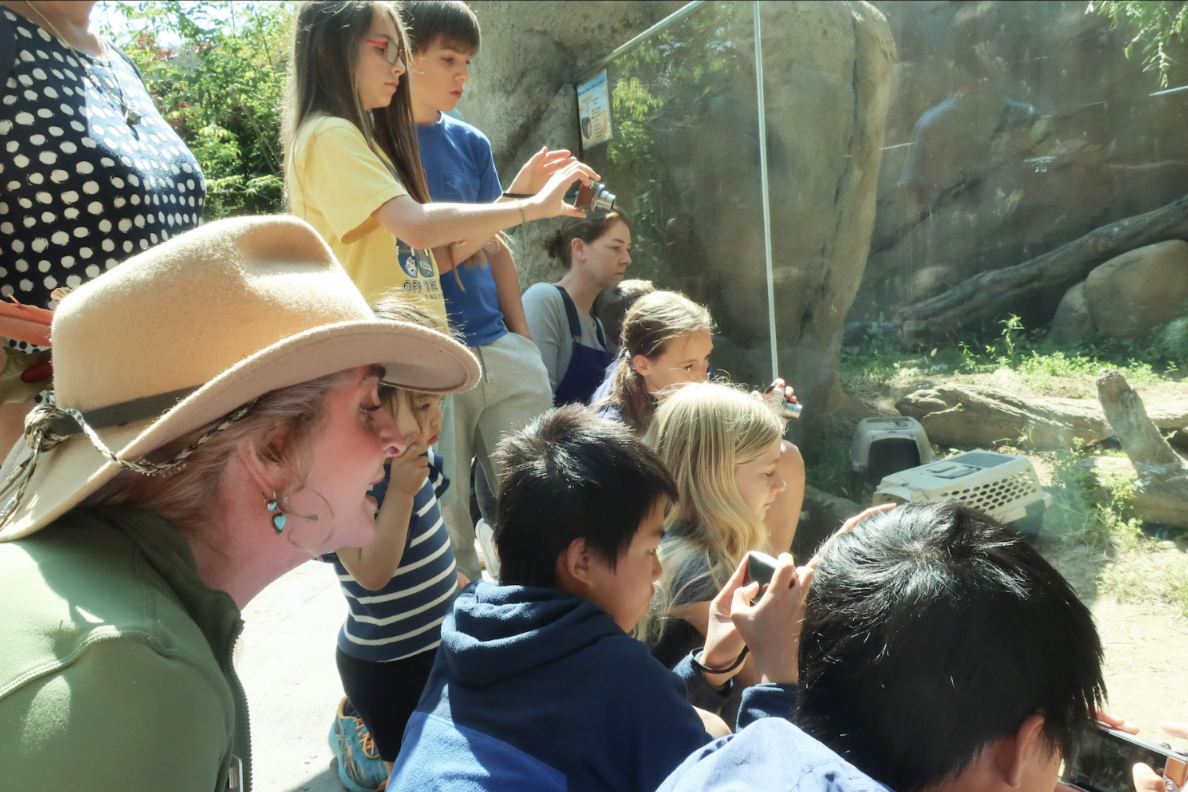
Students use the tip that Lee gave them and excitedly crouch down to take
photos of the meerkats. Photo courtesy of Cathy Gregory.
| |
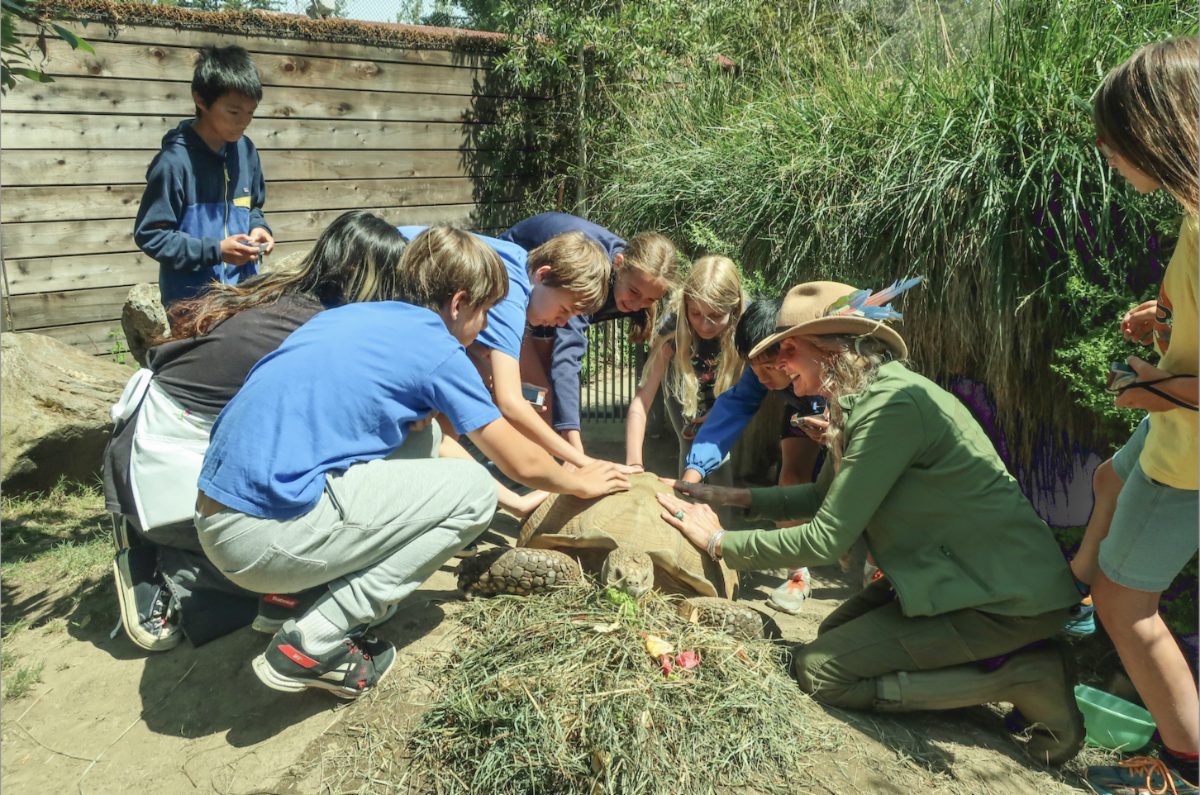
One of the highlights of the program was Edward, the JMZ’s African spurred tortoise, who became a favorite among the students with his large shell, gentle demeanor, and perpetual smile. During visits, Lee would guide Edward to take a swim in his pond, much to the delight of the students. After a dip, Edward emerged refreshed, his shell and skin changing colors, and the texture of his scales becoming more defined. “There are a lot of doors that a Giant Tortoise can open,” Lee joked, highlighting how each encounter opens pathways for learning. | |
Lee introduces Edward the Tortoise to a group of photography students.
Photo courtesy of Cathy Gregory.
| |
|
Today in the zoo, Lee is frequently approached by Cathy’s students, who proudly share the photos they’ve taken and the artwork inspired by their experiences—sculptures, paintings, sketches. Parents join in the excitement, eager to share what their children learned during the adventures they heard about at home. Cathy noted that some students while walking back to the Art Center would say, “That was the best experience I’ve ever had.”
Lee and Cathy are already brainstorming ways to continue elevating these experiences for future photography safari class opportunities. Lee hosts animal encounters typically Thursday through Sunday, sometimes in classrooms and during events, in addition to the zoo. Stop by the JMZ to get a taste of the magic that Ambassador Lee brings to your visit. With each encounter, you'll be inspired to look at nature through a new lens, making every visit an adventure that sparks curiosity and creativity.
| |
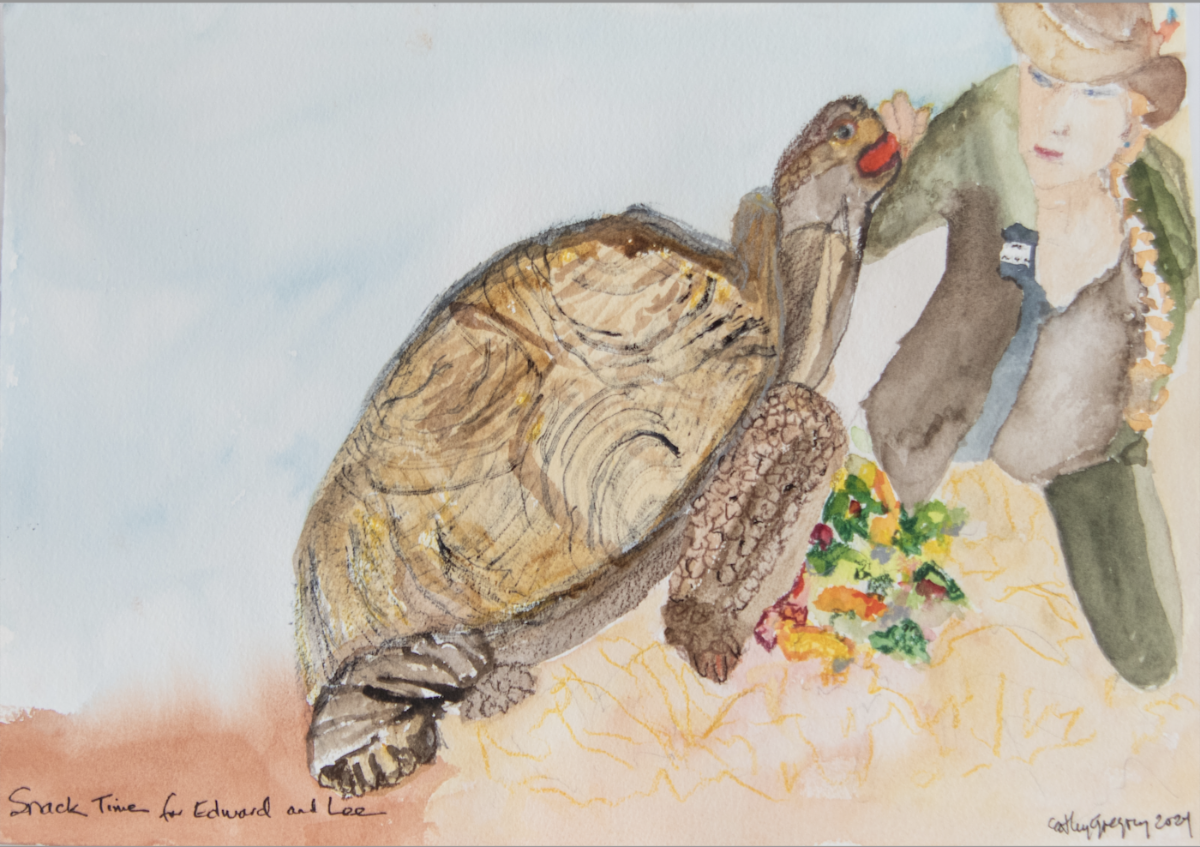
Inspired by her photos, Cathy created a watercolor painting of Lee feeding Edward, paying special attention to the details of his shell and skin. Courtesy of Cathy Gregory. | | | | |