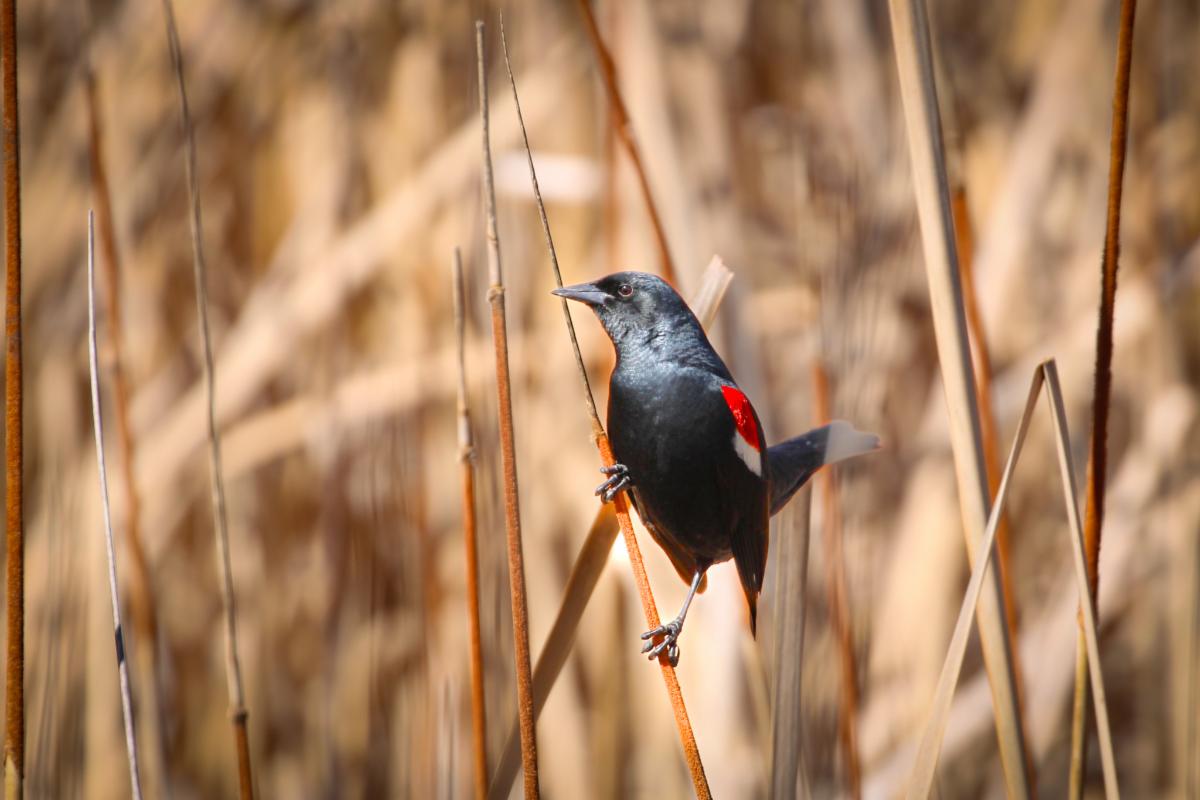
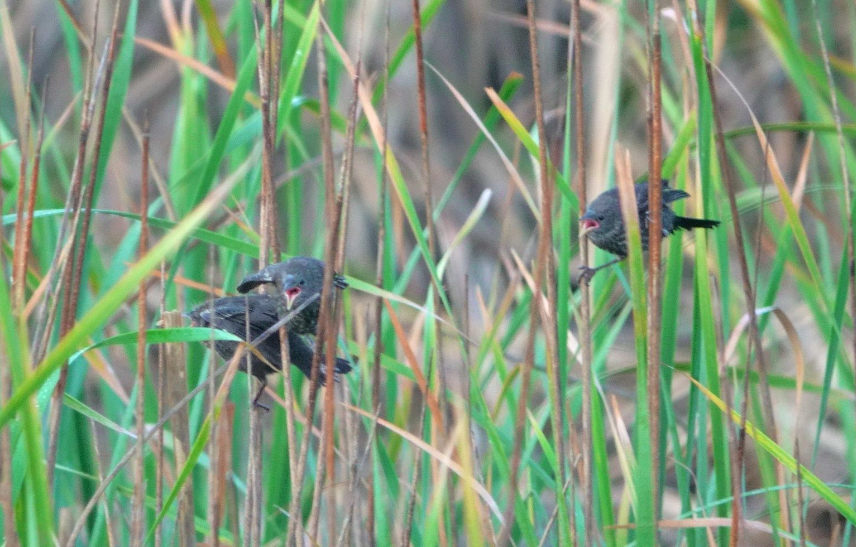
Image 1: State threatened Triolored Blackbird at Sedgwick pond. Image by Nikki Evans | |
|
In this newsletter:
Reserve Highlight
Public Programs Year-in-Review
Researcher Highlight
Underground Climate Resilience: PhD student Jacob Weverka looks at carbon storage in Sedgwick's grasslands
Reserve Highlight
Friends of Sedgwick Sign Gets New Life
Docent Highlight
Regrowth: Citizen scientists capture the dynamics of regrowth after prescribed burns
Natural History Highlight
Critter Recap: Wildlife from Spring
| |
|
Reserve Highlight
Public Programs Year-in-Review
| |
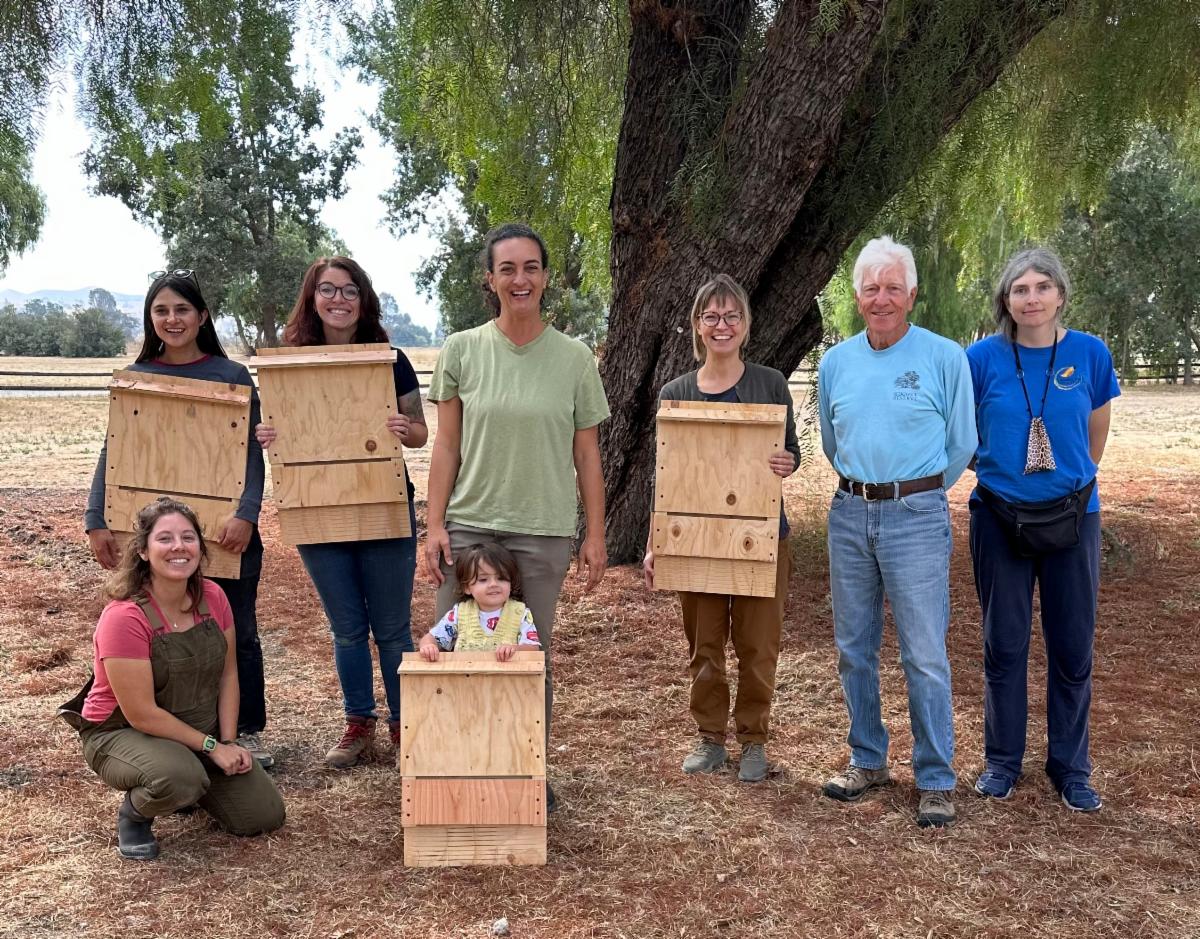
Image 1: Staff and friends building practice bat boxes to prepare for the Build-a-Bat-Box program | |
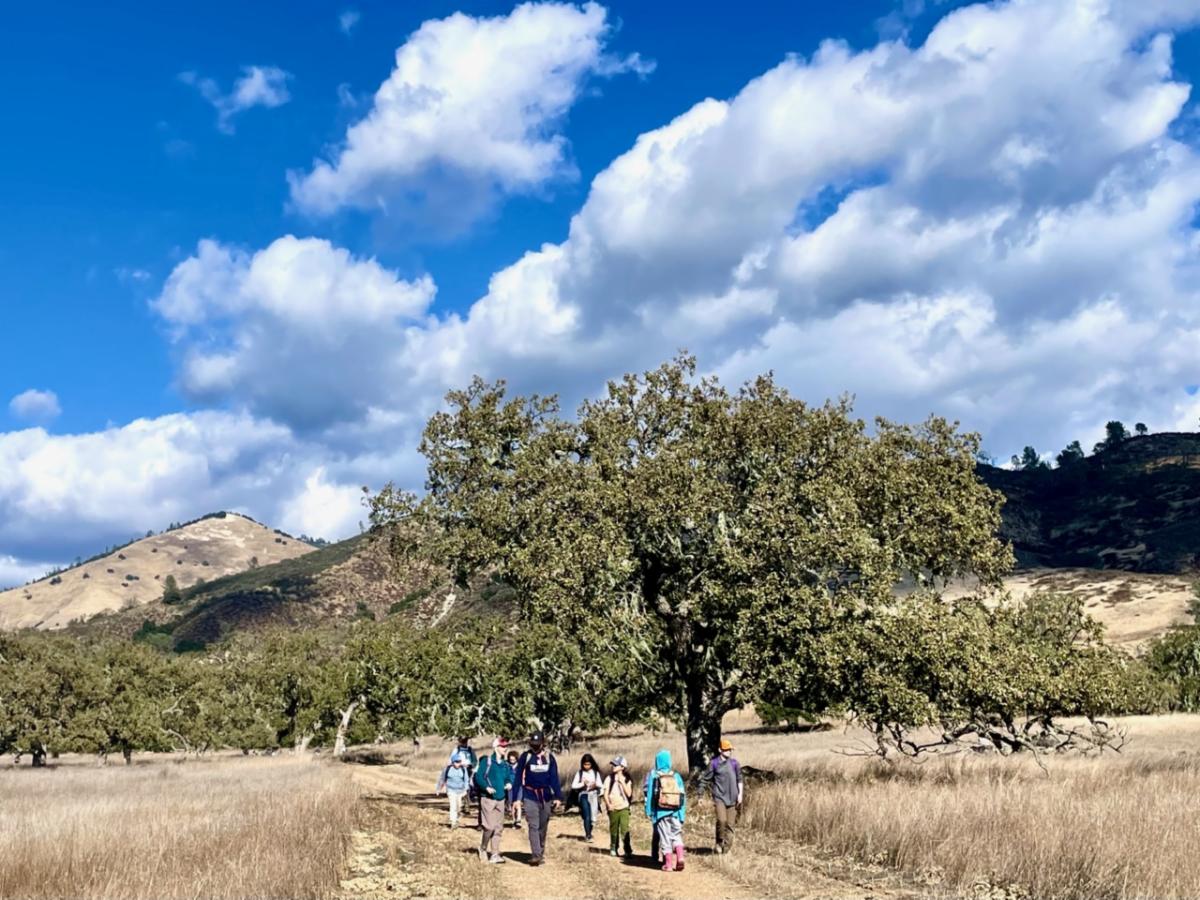
Image 2: Students from the Family School on an epic adventure with Sedgwick Docents, hiking from Figueroa Mountain Road through the heart of the Reserve into the field station. The students spent a night at Sedgwick camping under the stars. Image by John Evarts | |
"What would our lives be like if our days and nights were as immersed in nature as they are in technology?" ~Richard Louv | |
|
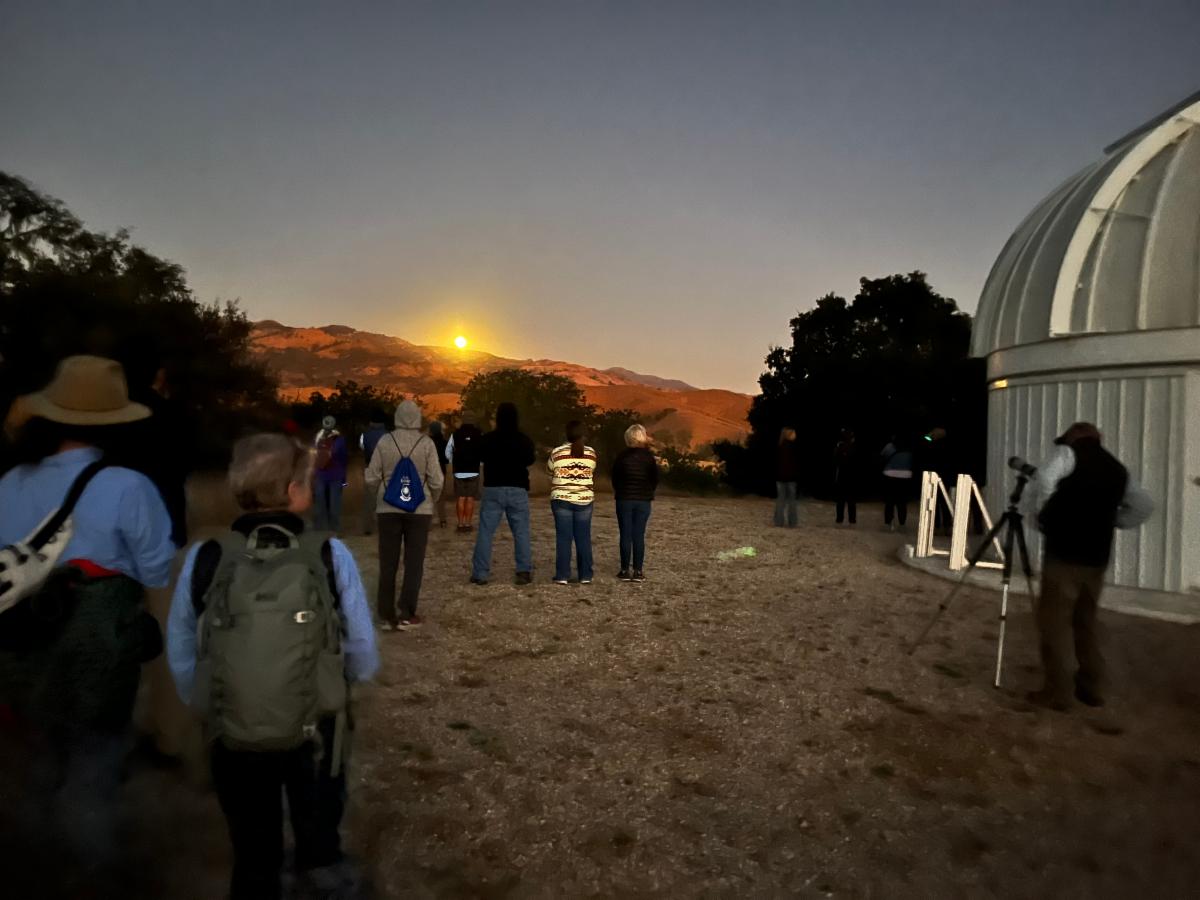
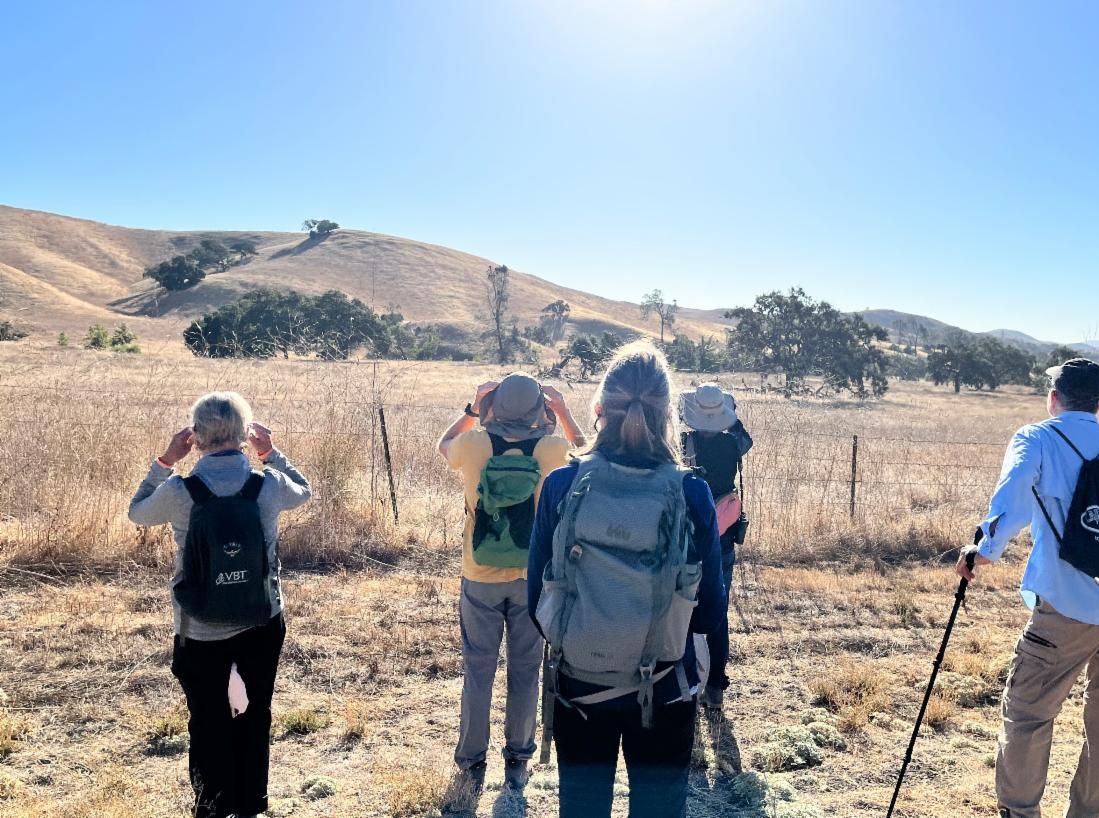
We are grateful to have shared with you in many experiences of natural wonder this year, from marveling at birds to watching the moonrise!
This fiscal year, Sedgwick Reserve was able to offer a diverse range of opportunities to be immersed in nature including seven Second Saturday Public Hikes, the annual the Barn Dance, and a suite of new family programs. Our family programs included Build-a-Bat-House in September, Full Moon Hike in October, Family Birding Adventure in February, and a Family Hike in May. This summer, while the weather is hot, we will offer a series of lectures that include the opportunity to enjoy lunch under the oaks. In addition to public programs, we also provided docent-led programs to schools and nonprofits including the Family School, Santa Barbara Middle School, Dunn School, Edify Homeschool, the California Native Plant Society, the Santa Ynez Valley Women Hikers, the Channel Island Nature Journalers, and Atterdag Retirement Village. Each of these programs were filled with joyous moments of appreciating and learning about nature together.
All of our programs are informed by the idea that time in nature is critical for the wellbeing of people and the planet.
As part of our commitment to this, we hope to provide another exciting year of programs in 2024-2025! Your feedback is always welcome. If you have feedback on a program you attended, ideas for a public program, or an identified community need, please write Outreach and Communication Specialist, Nikki Evans, at nevans@ucsb.edu.
We couldn't do it without your support! Thank you!
| 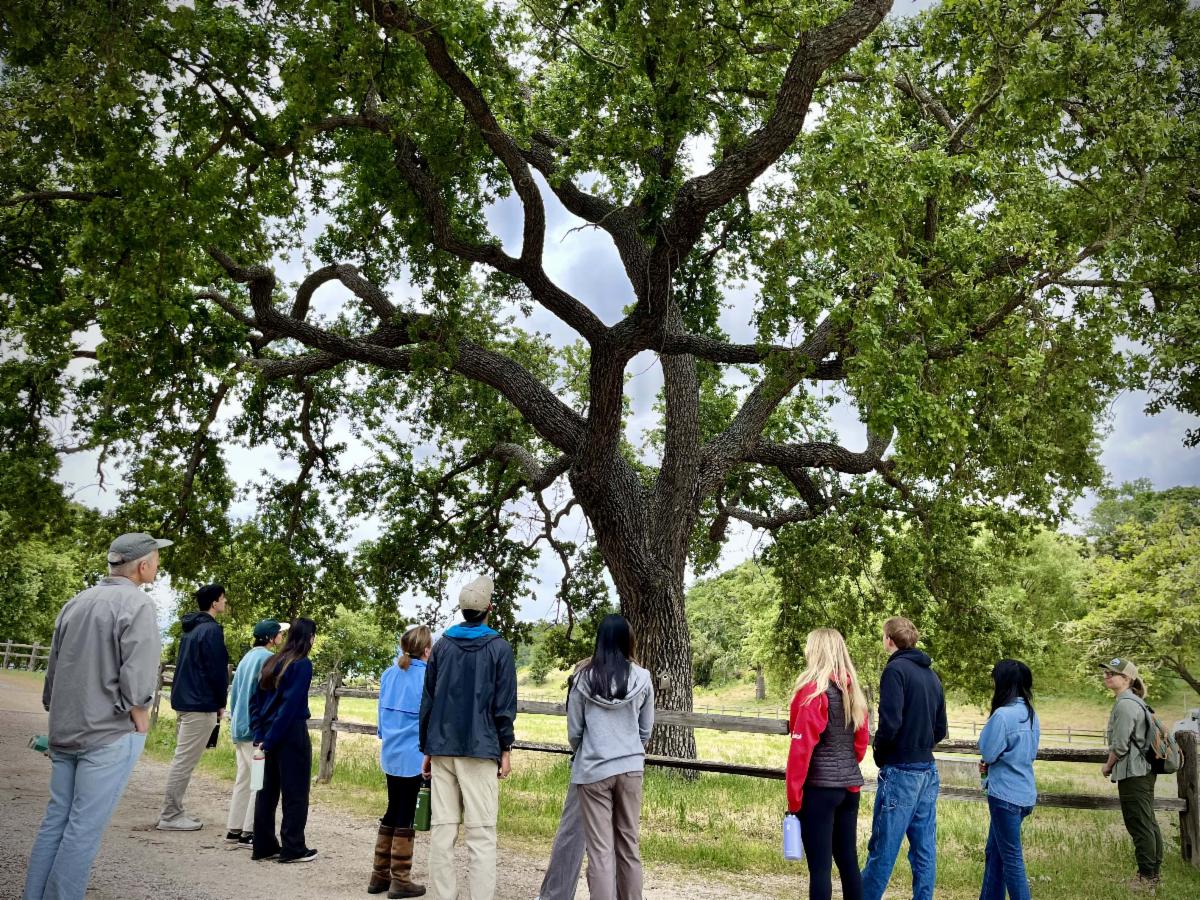 | Image 3: University of California-Santa Barbara freshmen pausing to admire the oak trees with Docent and Staff Brenda Juarez | |
Image 4: Watching the moon rise over the mountains during October's Full Moon Hike | |
Image 5: Watching the solar eclipse with special viewing glasses during the Eclipse Hike | |
|
Researcher Highlight
Underground Climate Resilience:
PhD student Jacob Weverka looks at carbon storage in Sedgwick's grasslands
| |
Image 1: Jacob Weverka inserts a plexiglass tube into a grassland at Sedgwick Reserve | |
|
Some of the answers to climate change lie beneath our feet. "Globally, soil is a major reservoir of carbon, which means that maintaining and increasing soil carbon is an important part of the fight against climate change," says Jacob Weverka, a PhD student in the department of Ecology, Evolution, and Marine Biology at University California-Santa Barbara. Weverka has spent the last two years conducting fieldwork at Sedgwick Reserve. His research aims to understand how grazing affects soil organic carbon in different grassland communities. "In California and globally, grazing management is widespread," he notes, "so finding management strategies that increase soil carbon on grazed lands could help sequester a lot of soil carbon."
We got together with Jacob to learn more about his research on grazing and soil carbon, the challenges and rewards of fieldwork, and what it's like to be a graduate student in ecology. Read on to learn more!
1. Would you provide us with an overview of your research at Sedgwick?
There are many facets to this research, but this project in particular focuses on understanding how different grassland species modify grazing effects on soil carbon. Soil carbon stocks refer to the quantity of carbon contained in soil. Soil carbon ultimately originates from plants, so grazing could influence soil carbon stocks by changing plant growth.
Specifically, I suspect that many plant species change their root growth after being grazed. Based on past experiments conducted in the lab and greenhouse, I suspect that species that need high quantities of nutrients and water maintain their root systems after grazing. Conversely, species that use nutrients and water more efficiently may decrease root growth or allow some of their roots to die after grazing. While we have observed this in individual plants growing in the greenhouse, my project at Sedgwick seeks to test this idea in more complex plant communities under field conditions.
2. How do you study this?
We study this by simulating grazing in grassland plots. To simulate grazing, we simply clipped plants with scissors! We went into plots and clipped all plant material over 5cm high. We then measure the responses of roots and soil microbes. Microbes are responsible for cycling carbon in soil, so we measure microbial biomass and enzyme production to get a sense of how carbon cycling is changing in response to grazing.
|  | |
3. Can you talk about the root observation windows you tested?
The idea of the root observation windows was to be able to photograph roots growing in the soil in our plots, so that we could track root growth and death through time. To do this, I followed an open-source design to build “mini-rhizotron” plexiglass root observation tubes and tested this method in the field in 2023. While we were able to photograph some roots in the observation tubes in 2023, we found that our measurements of roots in these photos correlated poorly with measurements of root biomass from soil samples, so we have stopped using this method in 2024. View an example image captured by the root observation tubes here.
| |
Image 3: Plexiglass tube inserted into the soil as part of a trial method used to image roots in a Sedgwick grassland | |
Image 4: Undergraduate Researcher Assistant, Maiya Romero, uses a board to cross the creek after a wet winter | |
|
4. Some readers may be wondering what it is like to do fieldwork. What do you like about fieldwork and what is something cool you’ve experienced in the field?
I like that fieldwork is an opportunity to use simple observation to ask questions and form hypotheses. Grad school involves so much reading and desk work, but spending time in the field always leaves me with new ideas and questions. I’ve always appreciated that aspect of fieldwork, and another thing that has been fun with this project has been taking undergraduates into the field and talking about their questions and observations.
So many cool things in the field! I spent many years as a field technician before I was a grad student so it’s hard to think of just one thing. But in this project at Sedgwick, one cool thing was after the heavy rains of 2023, there was a river bank that washed out to reveal the root system of a blue oak. It was cool to see its 20-foot taproot going all the way from the hillside to the creek, and gave me a new appreciation for those trees!
5. What is something you find challenging about fieldwork?
When the weather doesn’t cooperate! We tried to set this project up during the winter of 22-23 when there was record rainfall. I thought I’d be able to drive to my site most of the time, but ended up having to hike 2 miles out to the site most visits because the road was too muddy. This was tough when I had to bring equipment out there.
| |
|
6. How did you get interested in studying ecology? And do you have any advice for young people hoping to launch a career in ecology or related sciences?
I always thought biology was fascinating, and when I realized I could do it outdoors I was sold. Ecology is fun for me too because there are so many different sub-disciplines and ways of measuring the natural world, which I think leaves a lot of space for creative thinking by scientists.
There are a ton of different ways to study ecology, but the most important skills are always your powers of observation and your ability to ask questions. I think a lot of great science starts by going outside, noticing a pattern in the natural world, and asking why that pattern exists.
Thank you for sharing your research with us, Jacob!
| Image 5: Undergraduate Researcher Assistant, Rayna Ruggeri, conducting lab work | |
|
Reserve Highlight
Friends of Sedgwick Sign Gets New Life
| |
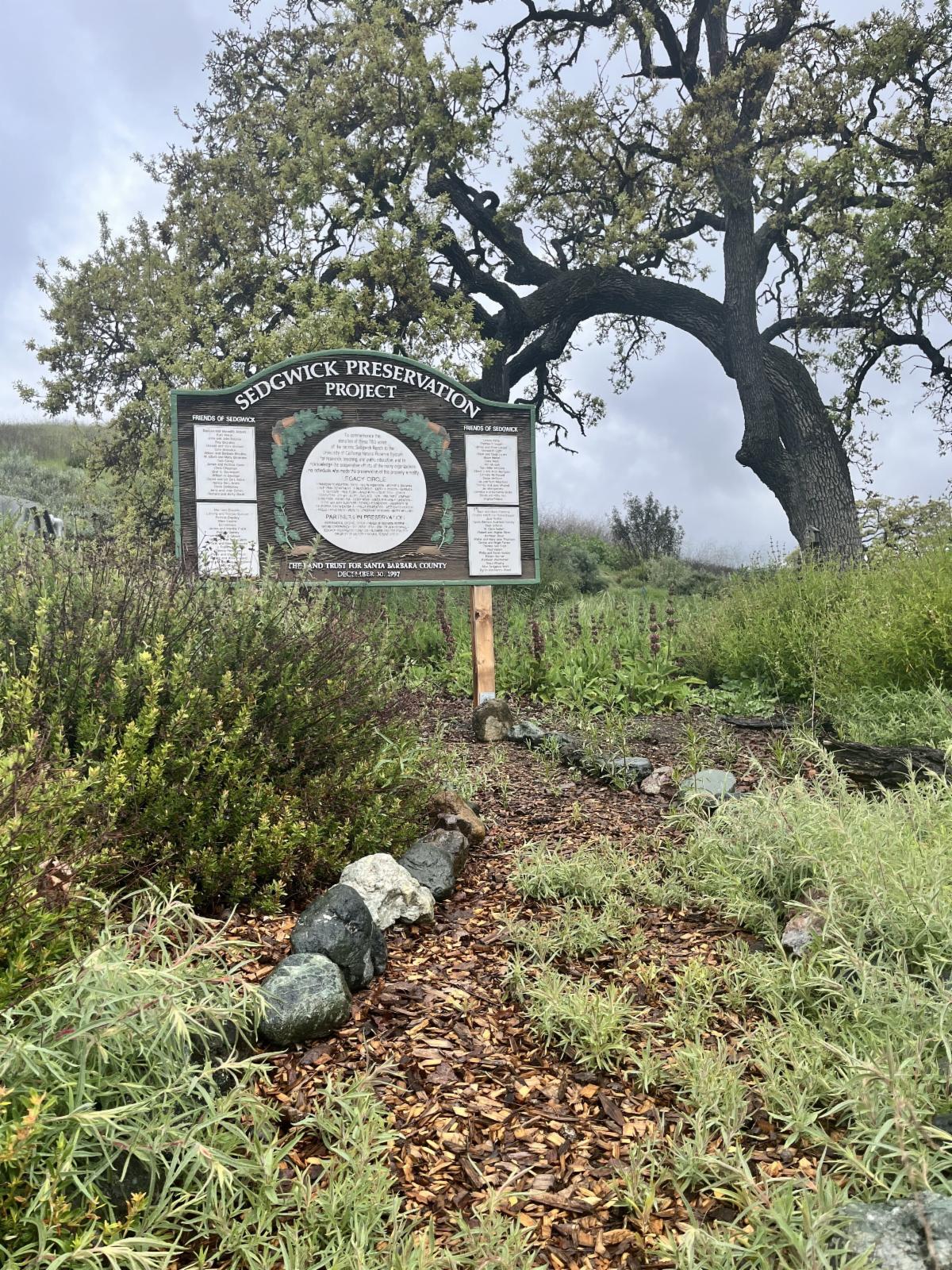
Image 1: The Friends of Sedgwick sign now stands in front of the Tipton Meeting House | |
|
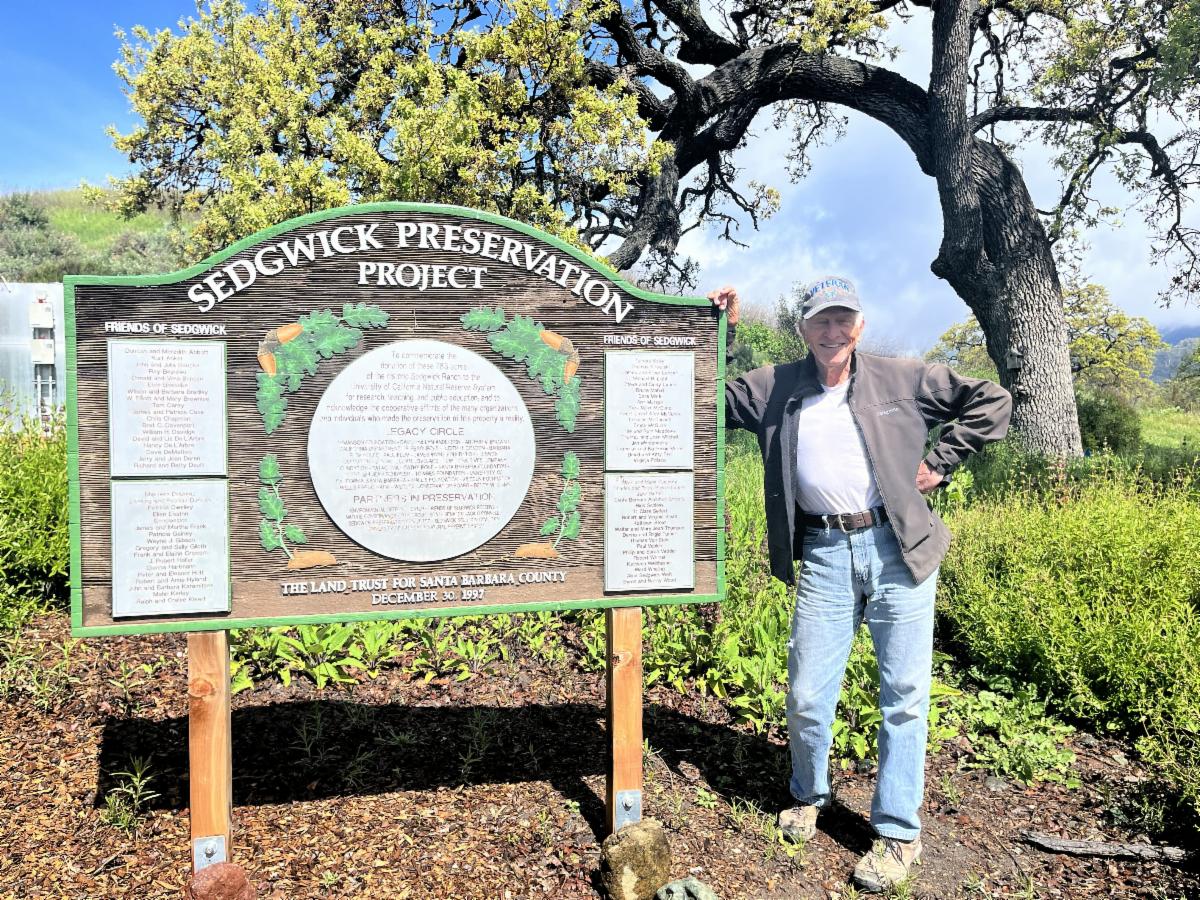
The Friends of Sedgwick sign has found a new home in front of the Tipton Meeting House. Created as a testament to the strength of community and stewardship, the sign lists the names of the original Friends of Sedgwick, Partners in Preservation, and the Legacy Circle.
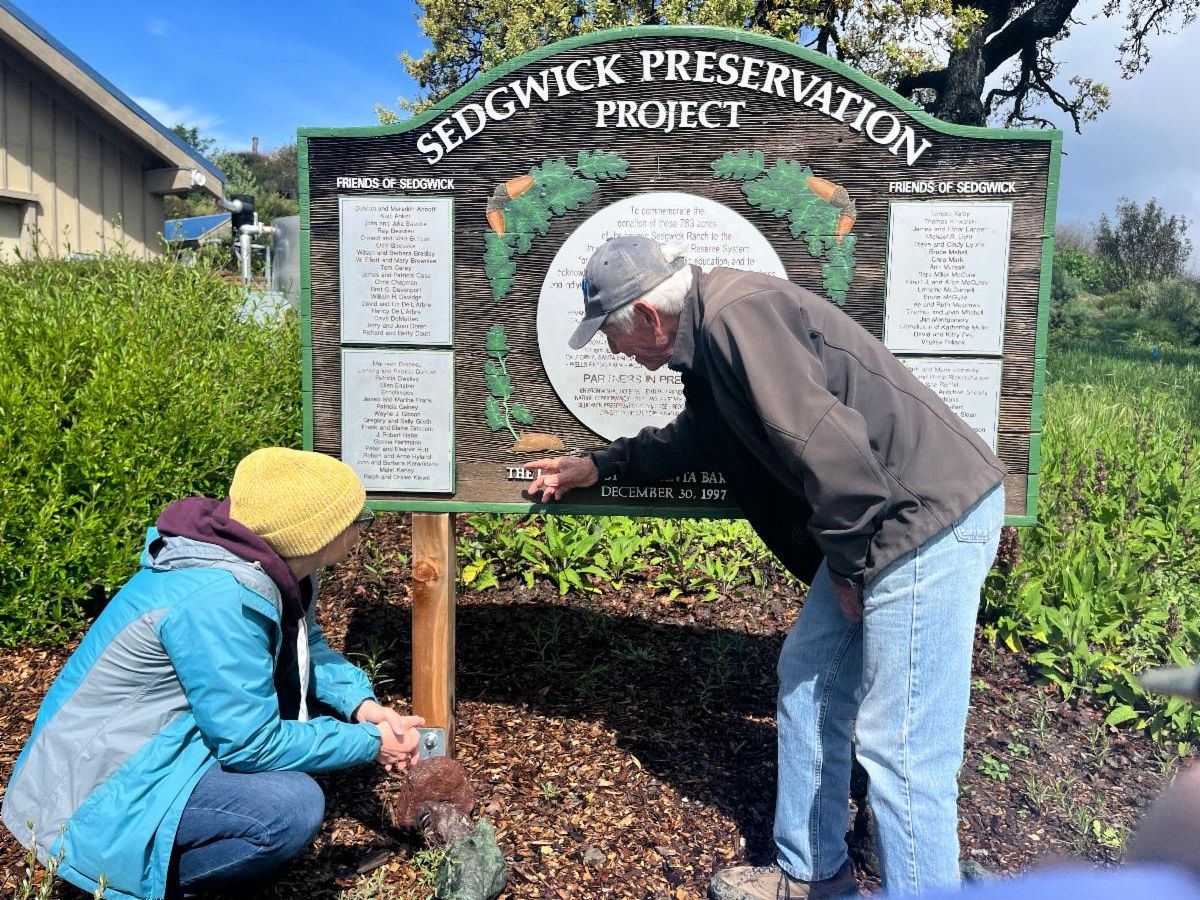
Before being installed, the sign was given a needed reboot by docent and staff Dennis Beebe and his daughter Jess Beebe. They filled acorn woodpecker holes, fixed broken lettering, reattached the three main pieces by creating special milling inserts, cleaned the placards, and repainted the sign. Land Steward, Angela Giordani conceived of and created a small walkway to the sign. The sign has been lovingly erected in front of the Tipton Meeting House so that visitors can stop by to learn the names of many of Sedgwick Reserve's original friends and contemplate the story of Sedgwick's origins.
When we look across Sedgwick and all the nature that has flourished (and served as the subjects of research) over the last 27 years, it is hard to believe that this land almost did not enter the Natural Reserve System. Yet, there was a time when the university considered dividing up and selling the land, donated by Duke Sedgwick, to support more initiatives on campus, including an art museum to house Duke's artwork. By this time, however, a handful of university researchers had begun using the property for field research and many artists were finding inspiration in the land’s scenic beauty. A grassroots movement, Friends of the Sedgwick Ranch, formed in the early 1990’s to help save the ranch from being sold and developed. The Friends of the Sedgwick Ranch were many and included neighbors, representatives from local nonprofit organizations, researchers, artists, environmentalists, and beyond.
This group donated their time and talents to promote and fundraise for the preservation of the property in its entirety. In 1997, Sedgwick Reserve became part of the University of California Natural Reserve System largely due to the efforts of this group. This story, and the sign that commemorates it, is a potent reminder of the power of people steeped in place.
To read the full text of the sign click here.
| |
Image 2: Docent and Staff Dennis Beebe poses proudly by the sign that he and his daughter, Jess, repaired | Image 3: Dennis shows Reserve Director, Heather Constable, some of the small detailing repairs done by the duo | |
|
Docent Highlight
Sedgwick Docents Lead Citizen Science Efforts to Detail the Plants and Birds of Prescribed Burns
| |
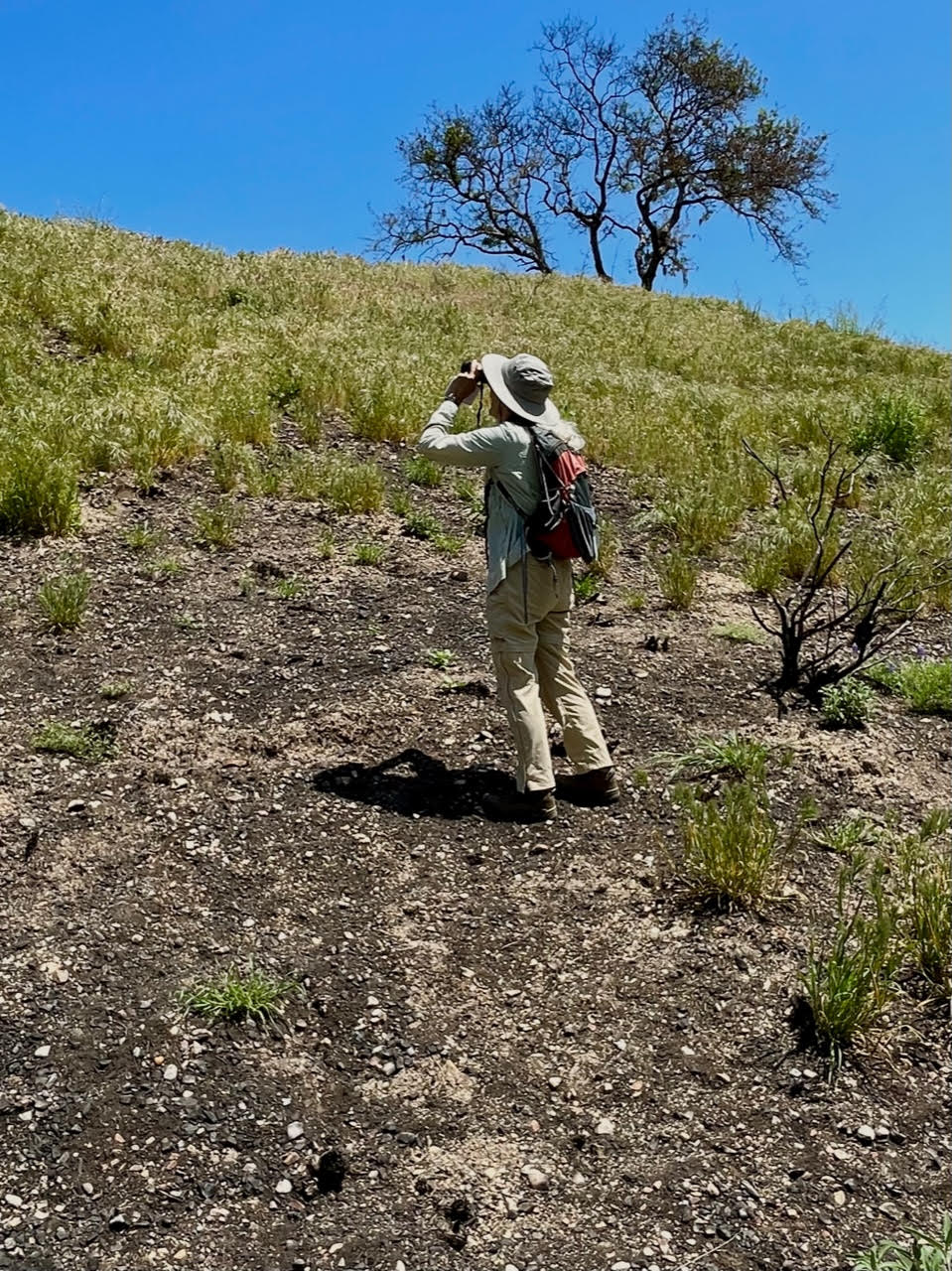
Image 1: Docent and Co-founder of Cachuma Press, Margie Popper, conducts an avian survey of the prescribed burn area. Image by John Evarts | |
Sedgwick Docents take on many roles Sedgwick, including serving as eyes and ears for the flora and fauna of the Reserve. Seeking to contribute to the growing body of knowledge around the effects of prescribed burns, they have been conducting avian and botanical surveys of the Reserve's prescribed burn sites. The group has catalogued plant regrowth patterns, finding many fire followers and at least one new plant species for the reserve list. In bi-weekly avian surveys, they have collectively documented 68 species of birds between the 2023 burned section and the 2024 to-be-burned section. Their work is helping staff and researchers to better understand the process of post-burn recovery in coastal sage scrub and among the oaks.
Docents who have participated in the surveys include Laura Baldwin, Ryanne Bee, Marge Erickson, John Evarts, Freda Iverson, Brenda Juarez, Tim Matthews, Dennis Nord, Margie Popper, and Mike Thomas. Sedgwick Docent and co-founder of Cachuma Press, John Evarts, has shared photos from their surveys, which can now be viewed on the Sedgwick website. Gain a sense of the burn area regrowth by viewing the album below.
| 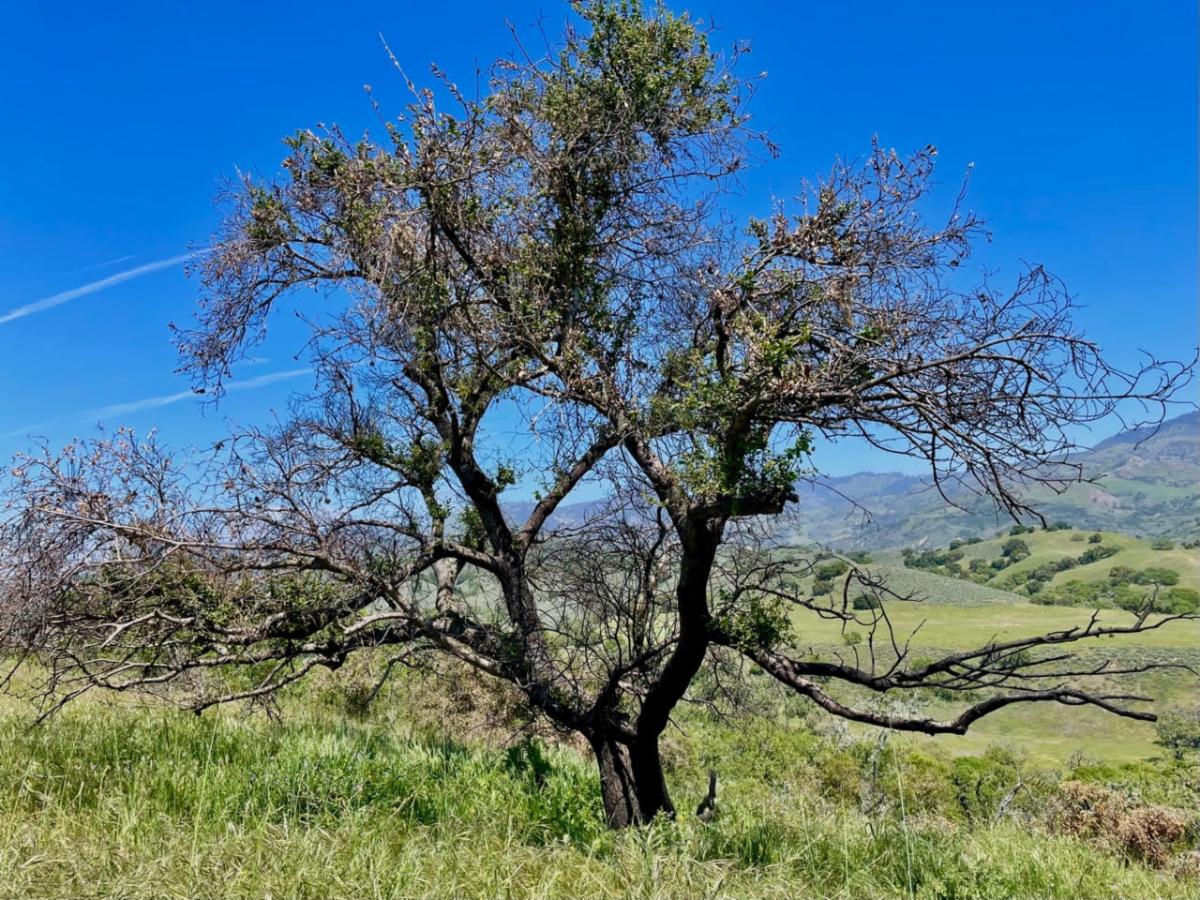 | Image 2: New growth from epicormic buds on Quercus agrifolia (coast live oak). Image by John Evarts | |
|
Natural History News
Critter Recap
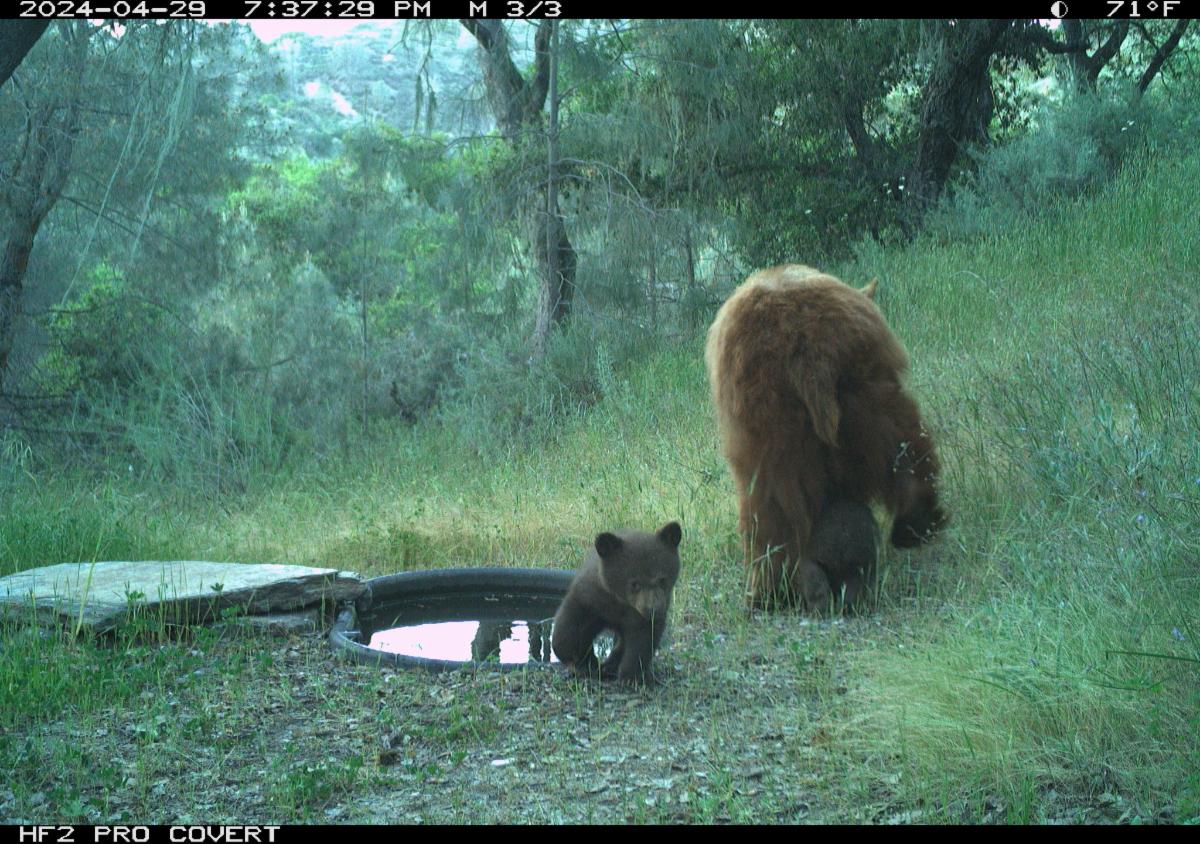
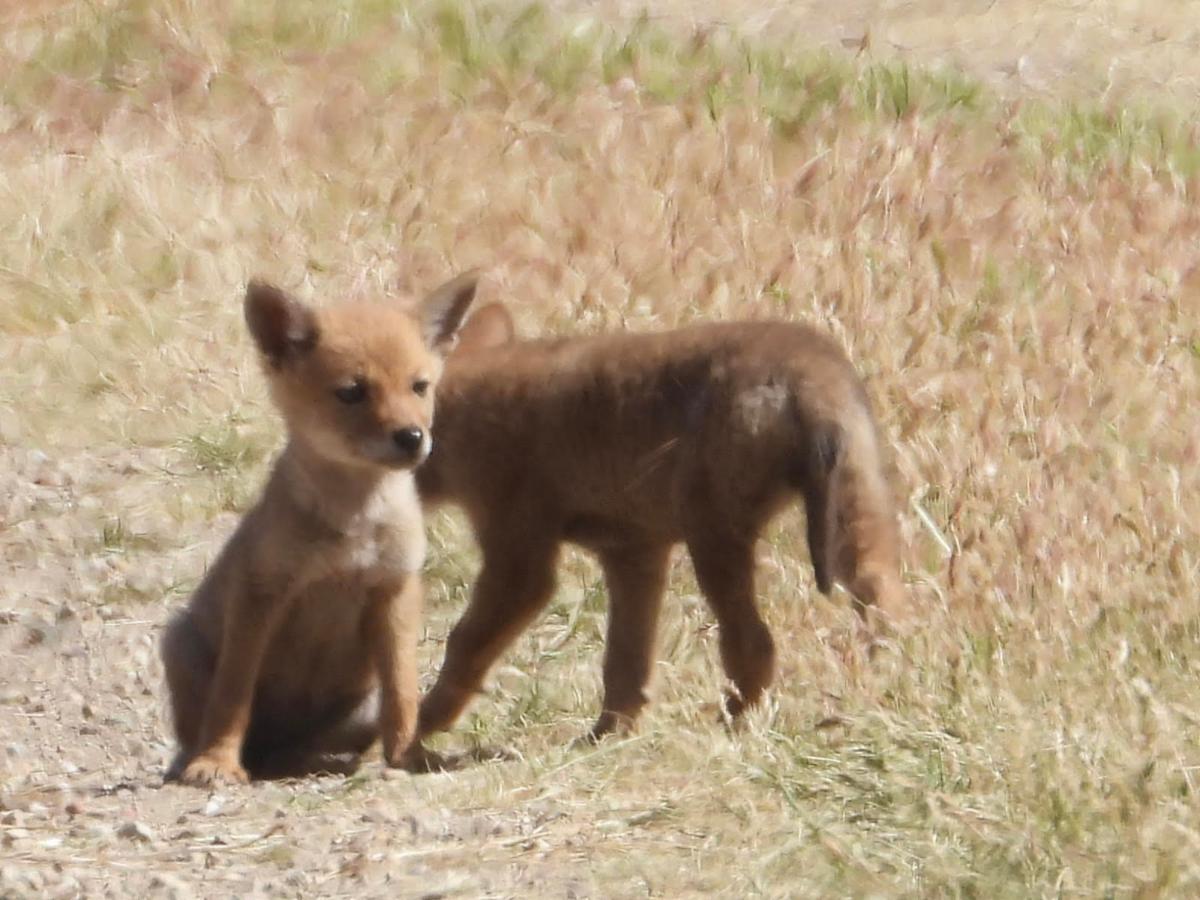
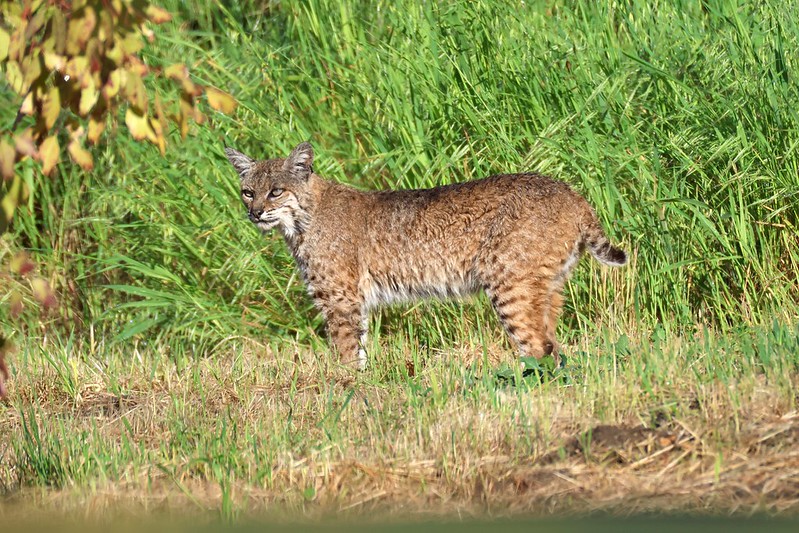
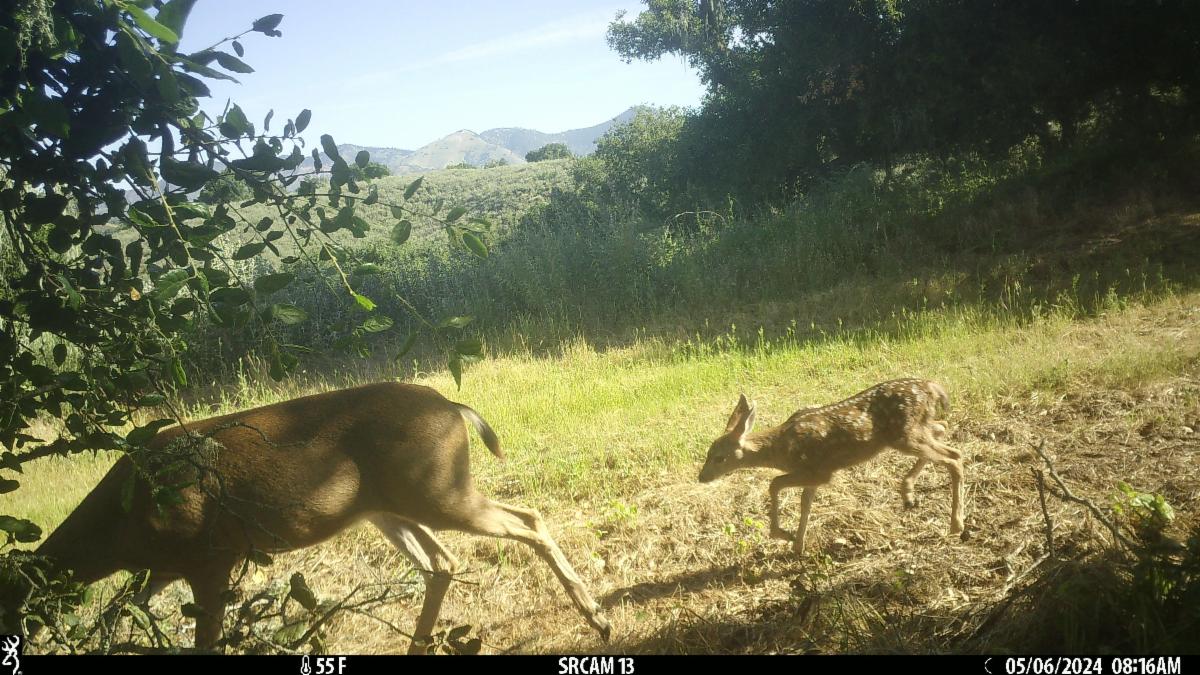
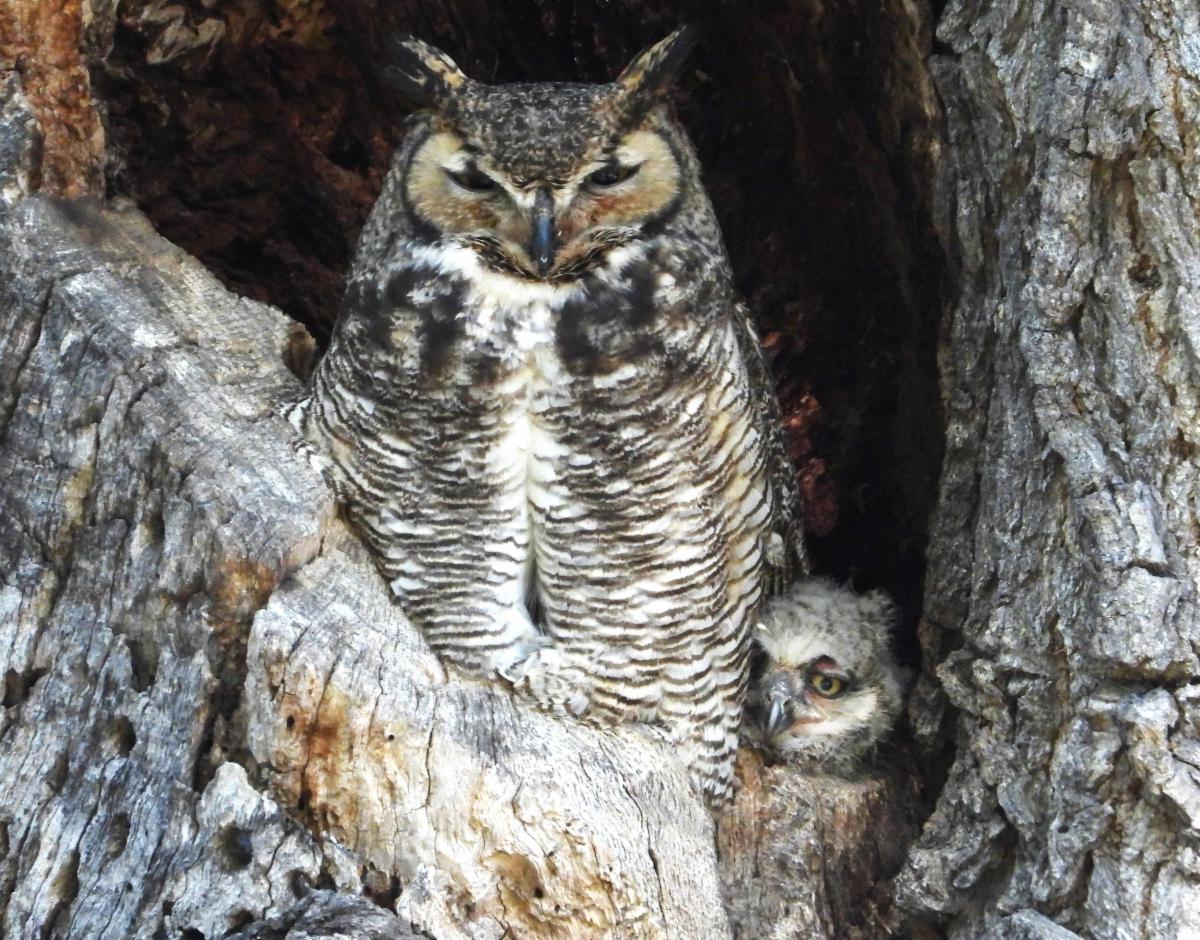
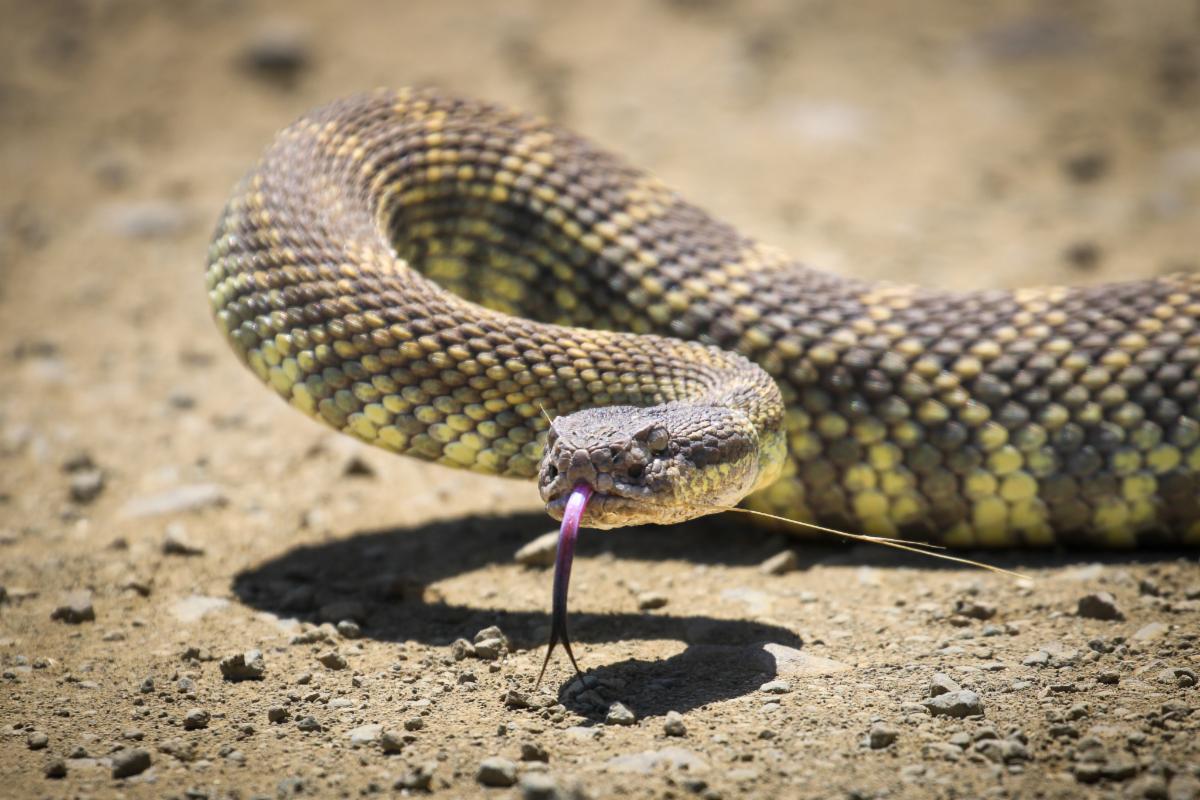
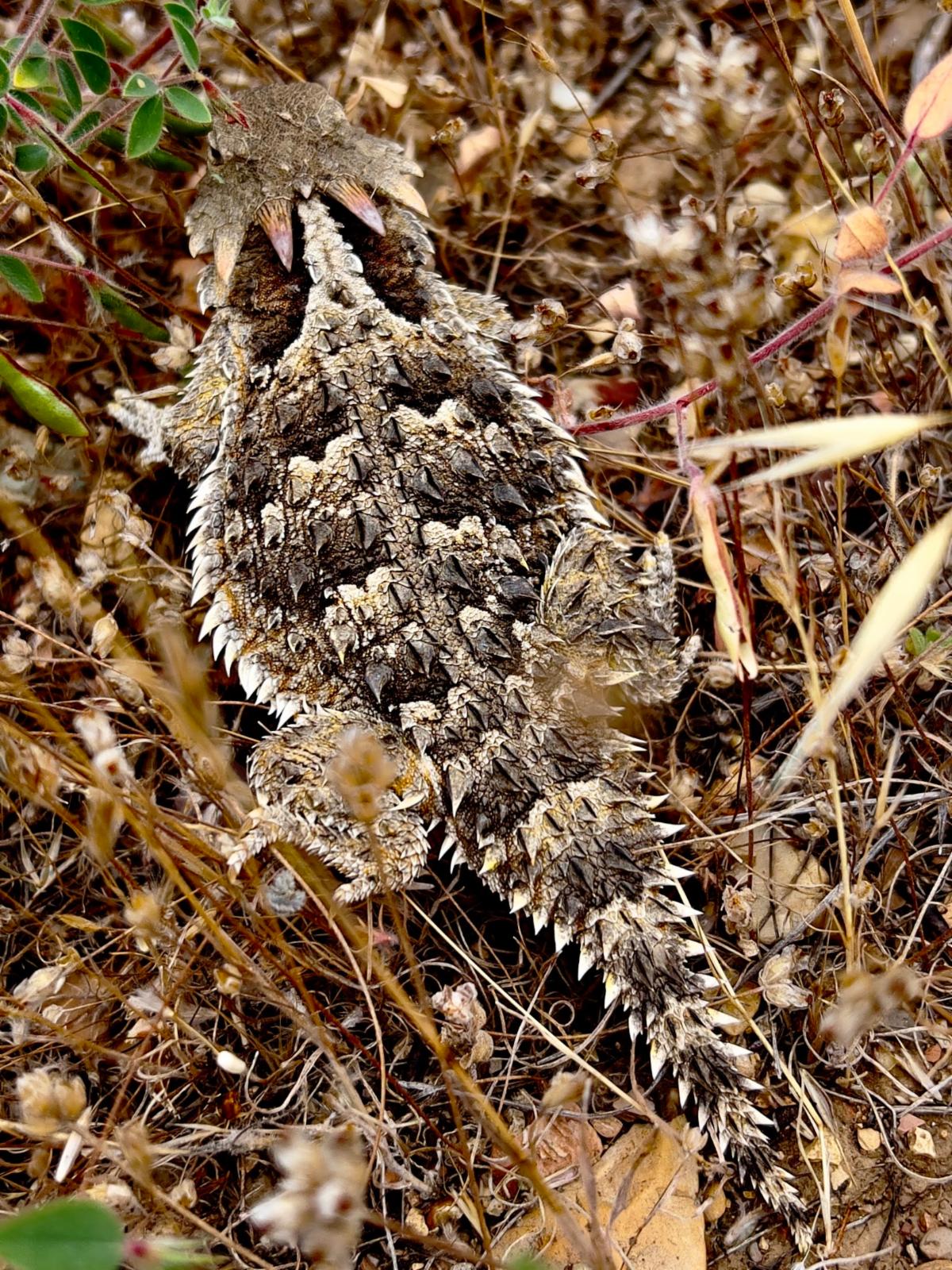
Wildlife was abundant this spring. Take a peek at some of Sedgwick's critters as captured by our wildlife cameras, docents, and staff!
| Image 1: Mama and Cubs (There are two cubs in this picture!) Image by Grant Canova-Parker | |
Image 2: Coyote pups. Image by Rick Skillin | |
Image 3: Bobcat. Image by Mike Thomas | |
Image 4: Mama and fawn. From the spots, we can tell this fawn is less than four months old. Image by Angela Giordani | |
Image 5: Great Horned Owl and owlet. Image by Douglas Long | |
Image 6: Southern Pacific Rattlesnake. Image by Nikki Evans | Image 7: Blainville's Horned Lizard. It was a first observation at Sedgwick! Image by Rick Skillin | |
Image 8: Tri-colored Blackbird fledglings. Image by Peter Schneekloth | |
Sedgwick Reserve depends on the support of our donors to fund our docent program, support researchers, and offer community-focused public events. Your gift ensures our ability to continue supporting world-class research and education with global impact. Support Sedgwick Reserve Today! | | | | |