Advancing Racial Equity in Emergency Medical Services. Summer 2026

Dear CARESTAR Community,


Summer brings unique joys, challenges, and opportunities for Californians.


One opportunity we’re excited about this year is California implementing Senate Bill 660—a long-overdue expansion of the Health and Human Services Data Exchange Framework to explicitly include EMS. By including EMS organizations in the statewide effort to share health data across providers, payers, and public agencies, California is elevating EMS’s value and importance in the healthcare field.


SB-660 empowers EMS agencies to collect and share more clinical data, having the potential to expose longtime racial disparities in patient care. We’re hopeful SB-660 will move the needle in the state’s understanding of EMS as one of the most critical and undervalued services in our public infrastructure


As a data-driven racial equity leader, CARESTAR is excited to see how the implementation of SB- 660 unfolds around the state, and whether the sharing of EMS data has the ability to improve health outcomes for Californians.


We are also watching and highlighting our grantee partners, the Steinberg Institute and Bonita House, as they both champion mental health services and alternative responses to law enforcement, despite our precarious political and financial climate.


Alongside our partners and through the state’s efforts with SB-660, we continue to move toward CARESTAR's North Star of reducing and eliminating racial disparities in EMS in California.


In community,

Tanir Ami

CEO, CARESTAR Foundation

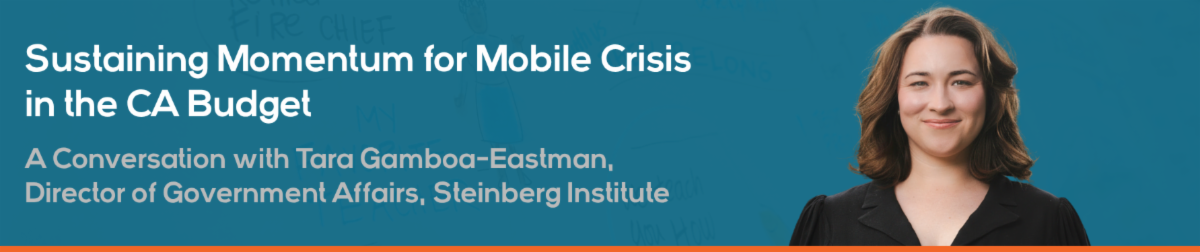
Q: In the Steinberg Institute's budget memo, you applauded both the Senate and Assembly for prioritizing funding for mobile crisis services. What will this continued funding make possible? What impact do you hope to see? 


For many Californians, their first interaction with the behavioral health system happens during a crisis. For too long, that has meant an unnecessary encounter with law enforcement or an emergency department leading to incarceration or hospitalization.


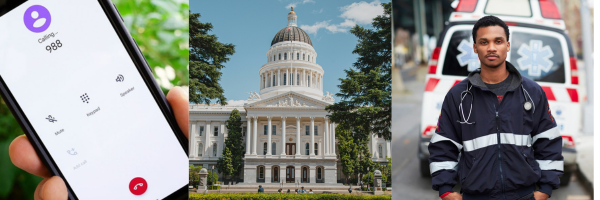
The Assembly proposal specifically directs 988 funding toward mobile crisis teams. These teams bring trained behavioral health professionals directly to people in crisis, allowing many crises to be resolved over the phone with 988 or safely stabilized in their homes or communities.


Mobile crisis teams also can connect people with ongoing treatment and support, setting them on a path toward long-term recovery. 


Q: As a contrast, if funding for mobile crisis benefits expire in 2027, what do you see happening? What is at stake for Californians, patients, and emergency responders? 


If California makes the Medi-Cal mobile crisis benefit optional, access to appropriate and life-saving care will become increasingly dependent on where someone lives. 


Larger or better-resourced counties may be able to sustain mobile crisis teams, but many smaller and rural counties are already struggling to make these programs financially viable even with state support.


Without continued funding, many communities will likely reduce or eliminate services altogether, resulting in greater reliance on law enforcement, emergency departments, and hospitals to respond to behavioral health crises.

That means higher costs, worse outcomes for patients, and increased strain on first responders.


Q: Could you share an example of how mobile crisis teams, community paramedicine, EMS systems, and behavioral health providers work together to create a more effective response for people experiencing a mental health or substance use crisis? 


California already has promising examples of what an integrated approach can look like.

One is the San Ramon Valley Fire Protection District, which has incorporated behavioral health screening questions into its emergency dispatch process. When appropriate, emergency dispatchers can redirect calls to 988 or prioritize an EMS-led response rather than a law enforcement response. 


Ultimately, 988, 911, and mobile crisis teams should function as one coordinated system. Regardless of how someone enters the system, there should be no wrong door into the care that best meets their needs. 


Q: Looking ahead, what are the most important opportunities or priorities you see for strengthening California's behavioral health crisis system over the coming years? 


California has enacted some of the most significant behavioral health reforms in the country over the past several years. Now, we must ensure those reforms achieve their intended impact through strong implementation.


By identifying and addressing operational barriers, improving coordination among 988, 911, and emergency responders, and continuing to invest in Medi-Cal mobile crisis services, California can fulfill the promise of a system where every community has access to high-quality crisis services, regardless of zip code. 

GRANTEES IN ACTION: BONITA HOUSE

Funding Crisis-Response Alternatives in Alameda County


As federal funding cuts continued to impact Alameda County's mental health services, Bonita House's Community Assessment and Transport Team (CATT) faced a lack of investment starting this July.


With the support of CARESTAR's financial backing of $300,000, Bonita House can now expand CATT to include Community Health Workers (CHWs) in their crisis response teams!


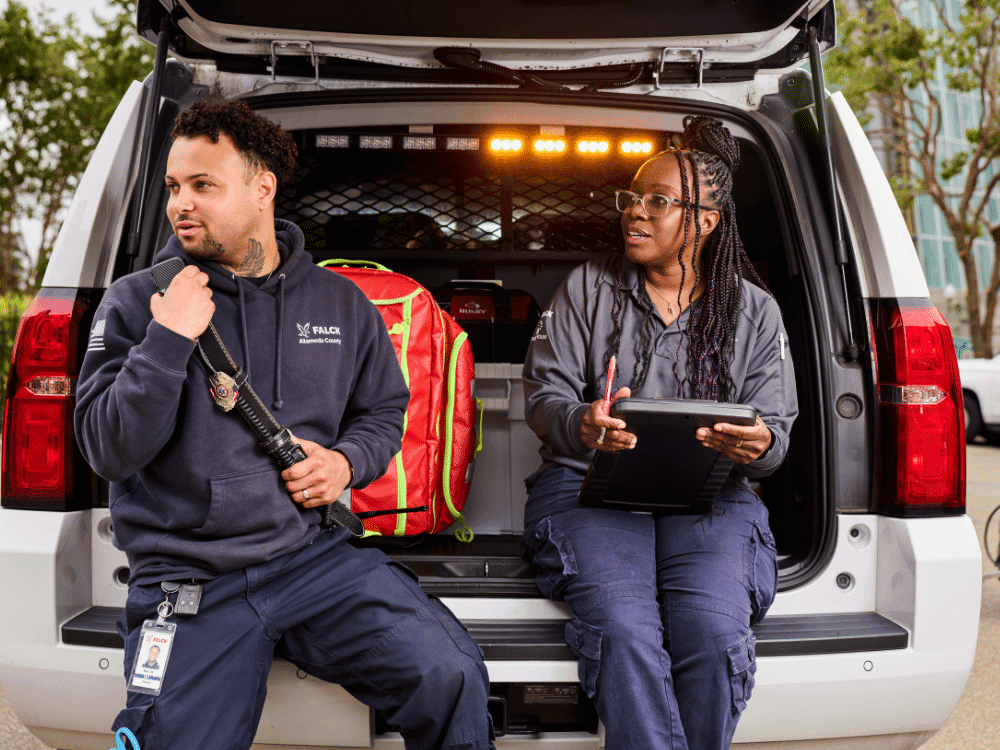
CATT—California's first co-response model of its kind—pairs Bonita House clinicians with Falck Northern California EMTs to respond 24/7 to 911, 988, and police-dispatched crisis calls. With an expected reach of 3,100 individuals in 2028-2029—disproportionately Black, Latinx, and people with low incomes—this model is critical for reducing racial disparities in crisis care.


The CATT model has reduced involuntary holds by 25% and repeat crisis encounters by 30%, demonstrating the value of community-based and clinician-led alternatives to law enforcement.

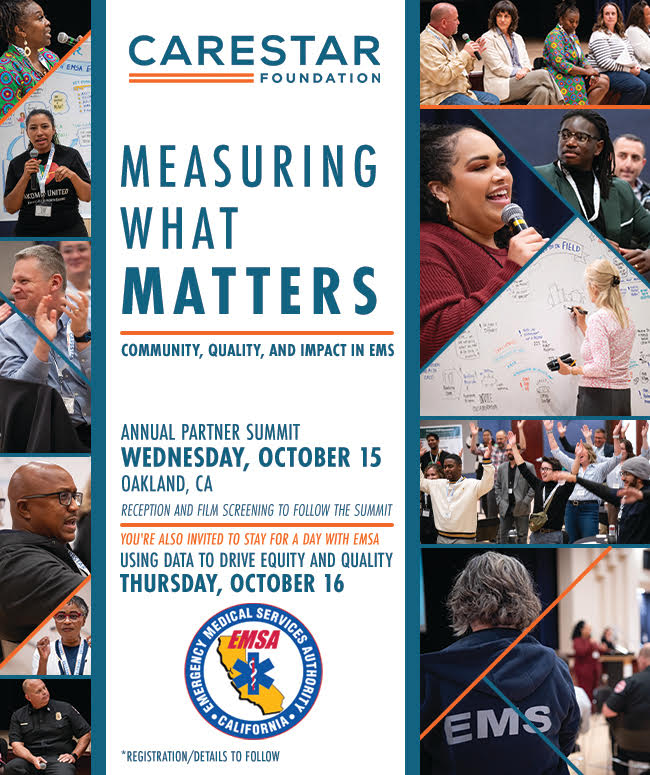
ANNUAL PARTNER SUMMIT

SAVE-THE-DATE: THURSDAY, OCTOBER 15

Mind the Gap: Data, Disparities, and the Future of EMS

Listen to CARESTAR's CEO, Tanir Ami, speak with Rob Lawrence on EMS1's "EMS One-Stop" podcast about the intersection of racial equity research, clinical implementation, and infrastructure change in California's EMS system. "When we disaggregate the data based on racial or ethnic populations, what we really don't want to see are gaps in how people are treated. And we certainly don't want to see a difference in health outcomes," said Tanir.

EMS One-Stop with Rob Lawrence


Barriers and Facilitators for Bystander CPR and AED Use in Diverse and Underserved Cities in Los Angeles County, California

Check out this CARESTAR-funded study highlighting major barriers leading to decreased rates in bystander CPR and AED use in racially diverse and underserved communities. Barriers included limited access to and low prioritization of CPR and AED training and trainers, institutional distrust, qualification misconceptions, and legal and welfare concerns.


Participants also identified community-specific training, preparedness to help family members, training incentives, and guidance from 911 dispatchers as helpful interventions and facilitators for CPR and AED usagereinforcing the importance of initiatives driven by a community's unique needs, culture, and experiences.

Journal of the American Heart Association


AMSA Talks with Jacob Rosen of Eureka CARE

Listen to Jacob Rosen of the Crisis Alternative Response of Eureka (CARE), one of CARESTAR's grantees, speak about the impact of the city-funded program he built from the ground up. CARE involves both co-response and alternative response models in partnership with Uplift, the Community Safety Engagement Team, and the Eureka Police Department. CARE data shows a promising diversion rate of calls not leading to higher levels of care, like ER.

Alternative Mobile Services Association


Disparities in Emergency Medical Services Intra-Arrest Transport by Neighborhood Socioeconomic Vulnerability

Research shows that demographic and workplace characteristics significantly influence whether an EMS clinician would recommend the profession—suggesting a further need to investigate professional promotion and workforce dynamics. JAMA Network Open


Reducing Racial Disparities in Bystander CPR: Psychological and Environmental Determinants of Hands-Only CPR Willingness in African American Communities

A recent study shows a powerful discrepancy in patient outcomes based on race. African Americans continue to experience significantly lower rates of bystander CPR and lower survival rates following out-of-hospital cardiac arrests than white individuals.

Journal of Racial and Ethnic Health Disparities


EMS Cannot Continue to Be Treated as a Transportation Services

Paramedics and EMTs act as emergency clinicians, public safety responders, crisis navigators, problem-solvers, and community healthcare partners, yet EMS is often managed as a transportation service. This article advocates for policy and funding to reflect the larger role EMS plays in the healthcare and public safety system.

EMS1

LinkedIn  YouTube

carestarfoundation.org