Good Morning


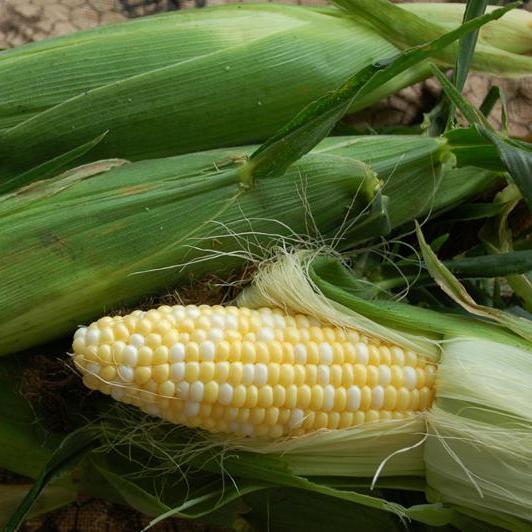
Another exciting bag this week. Summer staples like sweet corn and grape tomatoes add flavor and color to the plate!


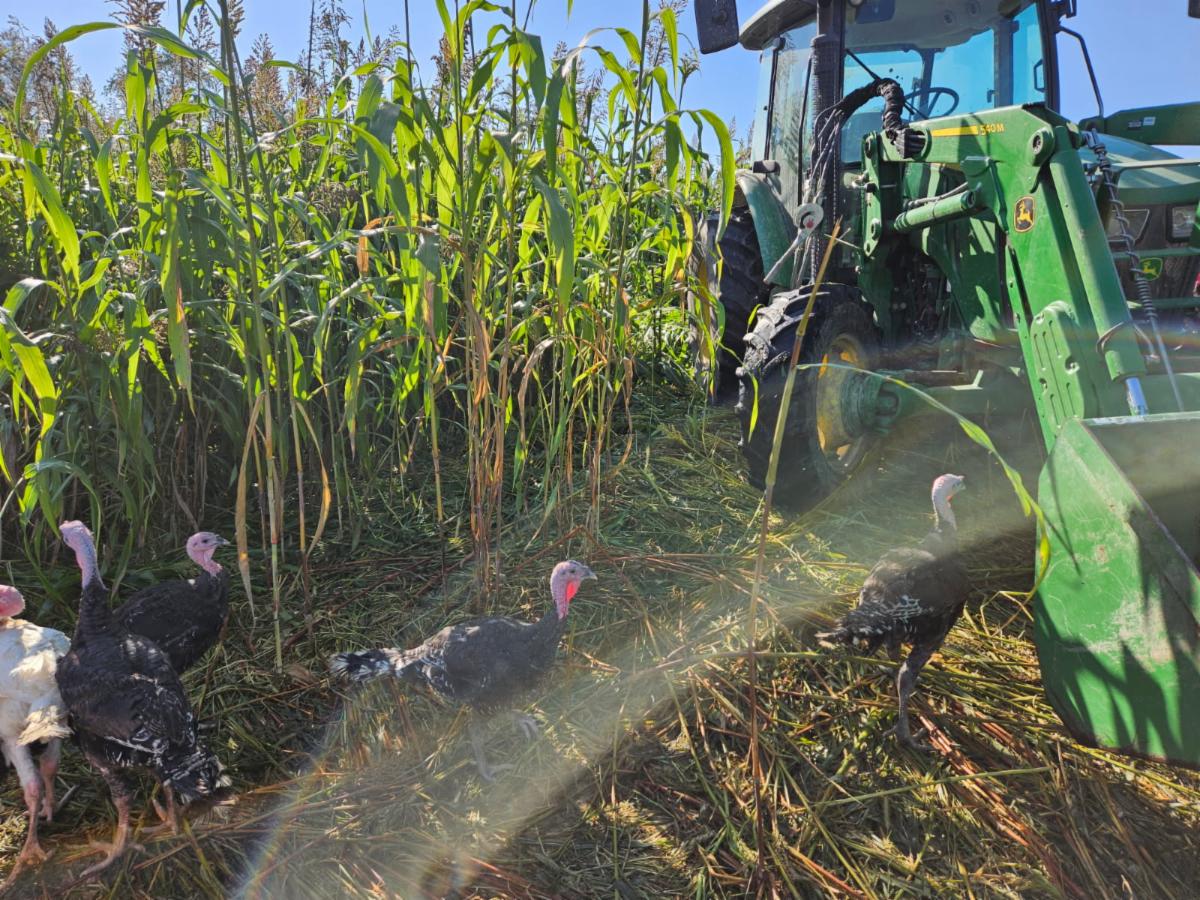
This week's bag also celebrates turkey. Why? Because they are everywhere right now on the farm. It's a reminder that fall is coming, and with that, Thanksgiving. For me as a farmer, I'd rather raise turkeys than meat chickens (broilers), but there isn't much of a market for them outside of Thanksgiving. Read below to learn about this week's Turkey Breast Lunchmeat and the economics of processing turkeys.


In this week's Newsletter

  • Fruit Choices - CANTALOUPE, YELLOW WATERMELON, PEACHES, BLACKBERRIES, and More
  • Peach and Blueberry Pie.
  • Warm Season Annuals for the Beef


Trevor

This Week's Fruits

This Week's Fruit Trio - $17.50

2# peaches, 1 pint blackberries, and 1 yellow watermelon


FRESH PICKED - NEW FRUITS THIS WEEK


Yellow Doll Watermelon

An early ripening, small seeded watermelon with bright yellow flesh and black seeds. This one cracks easily so you'll never find it at a grocery store as it is difficult to ship.


Red Haven Peaches - old fashioned free-stone peach


Cantaloupe, Aphrodite - larger, tender flesh and plenty sweet - a medium large sized muskmelon with a looser netting, tender flesh, and floral nose.


Blackberries - big, plump blackberries, just like last week's share fruit.

Peach and Blueberry Pie

& Zucchini Bread

Peach and Blueberry Pies


Gooey homemade peach filling lightly sweetened with plump blueberries folded in and topped with a decorative lattice top.


Served in our signature crust of house rendered lard, organic whole wheat flour, and local butter for a flakey and tasty double crust pie.

Zucchini Bread - Healthy and Delicious


A summer classic, our zucchini bread features organic flour, organic sugar, and homemade applesauce for a natural sweetness and moist texture. Great toasted and slathered in butter.


Just $6

Weekly Promotions

Turkey Breast Lunchmeat - 10% off


Turkey as a protein is most often associated with Thanksgiving. On the farm though, these birds better fit a pasture based operation than broilers (meat chickens). They forage better and are much hardier on pasture. And if it counts for anything, they have a personality. Every time tailgate of the truck slams or something unusual happens, they start gobbling away! It's comical at times.


Making Boneless Turkey Products

But making money off of a turkey is difficult. For any poultry, about 1/3 of the weight is in bones. So a 20# turkey has 6.5# of bones, about 5.5# of breast meat, 3# of thighs, and 4.5# of drumsticks and wings.


The biggest challenge is that a turkey drumsticks has what's called "pin bones." Those are those thin, flat bones that you pick out of the dark meat at Thanksgiving. They are impossible to de-bone for sausage. So the drums often go into the stockpot with the bones. Same with the wings.


I recently did an experiment with the processor to debone whole turkeys for grind. We kept good track of yields and costs. At the end, the challenge was we got less than 50% of the original meat back in boneless. And to get there, the processing cost was $4.61 per lb of finished product. So on every tube of ground turkey, before paying for the turkey, the processing was $4.61.


Back to a deli staple - Turkey Breast Lunchmeat

With the breasts, it was a shame to grind those into sausage or ground turkey. At our little butcher shop, we had perfected a great turkey breast lunchmeat, but it was very labor intensive. We used whole breasts and brined them for days, then tumbled them until the proteins started to extract. We then arranged two breasts fat end to skinny end and lacerated the bottom of each. We stick those two muscles together in an elastic net and cook until they are stuck together. A lot of work. It's a great product but not scalable.


So I worked with one of our processors to see what could work for him. He was not willing to do all the labor of the product listed above. There just wasn't enough labor available, and that was reasonable.


So we decided to experiment with a "reformed" turkey breast product. Most lunchmeats fall in this category. Essentially we cut the breast into big chunks and started the brining and tumbling process from there. The seasoned meat was then stuffed tightly into a large casing (like sausage) and smoked thru.


The result is a more uniform shape easier to smoke, slice, and package.


That's probably way more than you wanted to know about making turkey lunchmeat, but it really is a product I'm proud of and I think you'll enjoy it.

Warm Season Grasses

Getting Beef thru the Summer Slump


You probably see it in your lawn. This time of the year, the grass just kind of sits there while the weeds shoot to head quickly.


Most of our turf grasses and forage grasses are what's considered cool season grasses - rye, timothy, bluegrass, orchardgrass, etc.


These forages provide excellent palatability for livestock. Essentially, they are delicious and nutritious. When harvested at the right time, they are very high in protein, have enough starches, and are easily digested.


But when you get to July and August, the grazer faces some challenges:

1) The young, tender grass the beef like isn't growing

2) If you stockpile pasture, it's overripe, stemmy, and undesirable.


What to do? There are several management options, but one of the more interesting ones is warm season annuals.

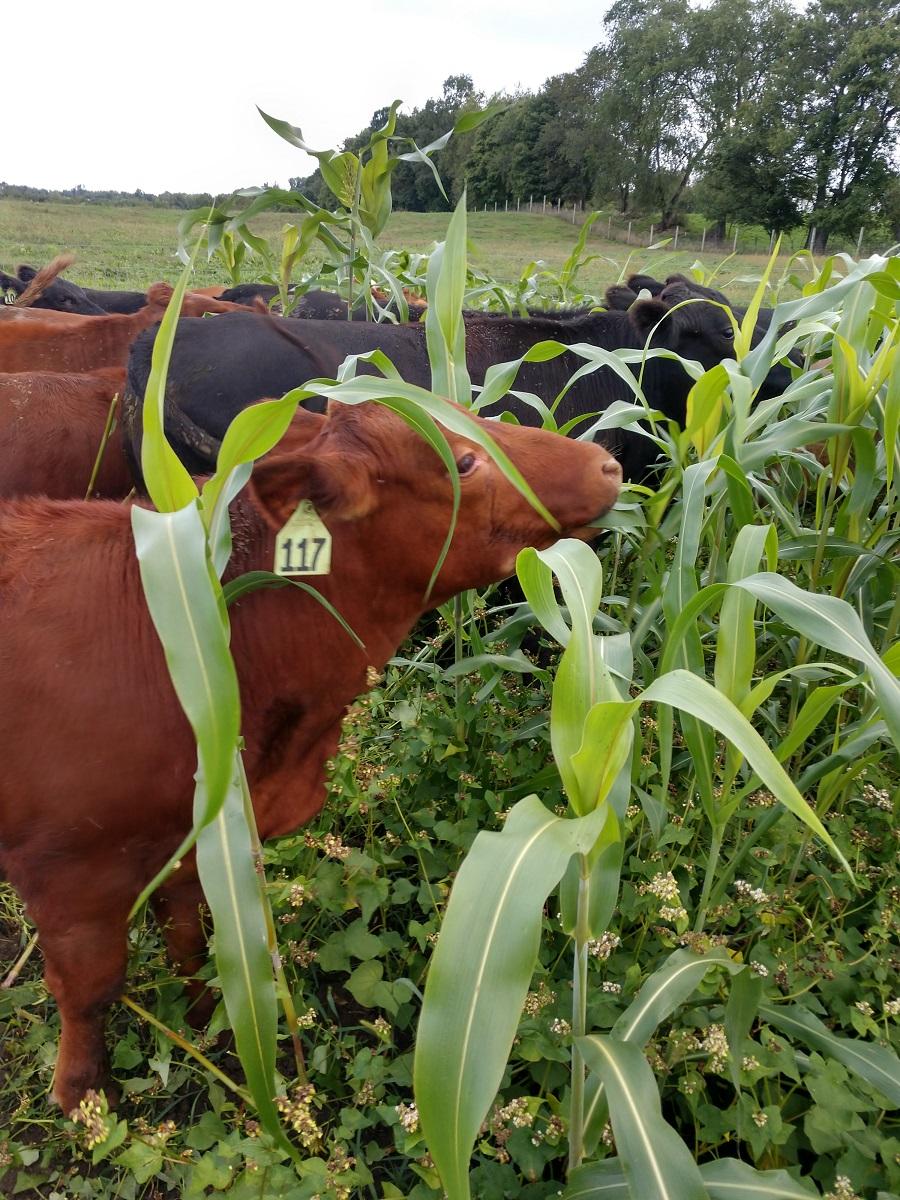
Sorghum Sudan


The photo above was my beef a few years ago grazing some sorghum sudan. That's a hybrid that crosses sorghum with sudan grass. Both are warm season annuals, meaning they must be planted each year and they die off with the frost. But they love heat and thrive in dry conditions.


Sorghum Sudan is planted in June or later when the soils are consistently above 60 degrees. It tolerates extreme heat and grows inches per day. Within 45 days, you can have a crop chest high.


The down side is you have to have the available acreage to plow up and plant the stuff. That same field must also be fenced in and have water for the beef.


So the practice of planting warm season grasses is less utilized than you would think. I've done it a few times, but currently with multiple species grazing the same fields, it isn't practical to have a field of sorghum sudan at this time.

Testing Sorghum for Winter Feed


Here is this year's Hail Mary move. I'm trying an experiment with sorghum silage.


Silage is when a crop - usually corn - is chopped and packed into a silo or bag to ferment, creating silage. It's very common in dairy operations as a high energy feed for the cows.


As a grassfed beef producer, I can't use corn silage as it has corn in it. It's a grain product. But beef producers who do use it get great results because it provides the energy that the hay can't.


I read a few years ago about doing forage sorghum (a grass) and chopping it for silage. It made sense to me as I knew the stalks of sorghum were packed with a sweet sap that can be boiled down into syrup. If you could get that into the cattle, they'd fatten up fast!


I had put feelers out with different crop guys in the neighborhood to see if anyone would grow it for me. No go. No one had done it and didn't know how. It was risky.


But one of them recently called me back and said his organic soybeans were a failure. The weed pressure was too much and he had to plow them down. He wanted to know if I wanted to do anything.


I figured, let's try this experiment. We might not have enough time left in the season, but we'll try it anyhow and see if we can figure out at least the planting of it.


So over the weekend he worked up the 10 acres and yesterday I went to plant it, just to get rained out by a surprise thunderstorm from no where. So today, when it dries off we'll try again. Stay tuned for late fall to see if this crop takes and how we feed it to the beef.

Bag Contents

Like the weather, subject to change.

Small Omnivore

Red Potatoes

Grape Tomatoes

Sweet Corn

Radish

Zucchini

Green Cabbage

Bell Peppers

Ground Chicken

Turkey Breast Lunchmeat

Small Vegetarian

Red Potatoes

Grape Tomatoes

Sweet Corn

Radish

Zucchini

Green Cabbage

Bell Peppers

Eggplant

Swiss Chard

Onion

Cantaloupe

Mini

Swiss Chard

Radish

Celery

Tomatoes

Candy Onion


Large Omnivore

Red Potatoes

Grape Tomatoes

Sweet Corn

Radish

Zucchini

Green Cabbage

Bell Peppers

Ground Chicken

Turkey Breast Lunchmeat

Hot Banana Peppers

Blackberries

Pickling Cukes

Ground Beef

Large Vegetarian

Red Potatoes

Grape Tomatoes

Sweet Corn

Radish

Zucchini

Green Cabbage

Bell Peppers

Eggplant

Swiss Chard

Onion

Cantaloupe

Hot Banana Peppers

Blackberries

Pickling Cukes

Green Beans

Slicing Tomatoes

Peaches

Small Vegan

Red Potatoes

Grape Tomatoes

Sweet Corn

Radish

Zucchini

Green Cabbage

Bell Peppers

Eggplant

Swiss Chard

Onion

Cantaloupe


OUR FAMILY OF COMPANIES
STAY CONNECTED
Facebook  Instagram  Pinterest