Vermillion River Watershed News - Fall 2026 | |
|
- Leave (some of) the leaves and other fall clean water tips
- What do people most like to do in the Vermillion River Watershed?
- Friends of the Mississippi River, City of Farmington awarded first VRWJPO Stewardship Grants since 2019
- Summer project roundup - and what comes next
- Upcoming events
| |
|
Leave (some of) the leaves and other fall clean water tips
Plus an Enhanced Street Sweeping Study!
It may be hot and dry still, but cooler days will come. We've been busy all summer with projects that protect and improve the Vermillion River Watershed's natural resources. Here's what you can do, too:
-
Only rain in the storm drain - keep yard waste out of the street. This ensures that leaves, grass clippings, trash, and other debris don’t get washed into storm drains and enter our streams and lakes, where they can spur algae blooms and harm aquatic habitat. Adopt your storm drain for extra motivation, then stencil your adopted drains with your friends and family before it's too cold.
-
Eight cities and two counties in the Vermillion River Watershed Joint Powers Organization (VRWJPO) run street sweepers that clear debris from roads, an effective way to reduce stormwater pollution at a larger scale. The VRWJPO, Dakota County, and the cities are conducting an Enhanced Street Sweeping Study to prioritize sweeping areas and improve sweeping schedules to maximize phosphorus and total suspended solids (TSS) pollution reduction. That said, please don't push your yard waste into the street for the sweepers.
-
Gather or mulch fallen leaves. You don’t have to rake every last leaf. You can mulch some of them with your lawn mower and let the diced slivers decompose between blades of grass as natural (and free!) fertilizer or act as overwintering habitat for some pollinators. Leaves can also be relocated to garden beds to provide even more pollinator overwintering habitat and a free nutrient boost for garden plants. Just be sure to keep leaves out of the streets and storm drains and follow local yard waste regulations.
-
Plant native grasses and plants. The deep, absorbent roots of native plants and grasses help hold soil in place and reduce stormwater runoff from your property. Lower fall temperatures help keep soil moist longer — perfect conditions for developing these roots. Not sure what to plant? Navigate to the Minnesota Board of Water and Soil Resources’ “Resources for Creating Pollinator Habitat” page for customizable gardening templates. It is best to give plants about 4-6 weeks to establish before temperatures are below freezing for long periods of time.
-
Use chemical fertilizer sparingly, if at all. Fall is the best time of year to repair dead spots in your lawn and strengthen root systems, which could mean using fertilizer. However, fertilizer is a source of excess nutrients that can get washed into storm drains if not applied properly. Before applying fertilizer, remember the following:
- Don’t spread fertilizer right before a large expected rain. It takes a couple days for grass to absorb fertilizer. Intense precipitation immediately following can wash it away without leaving enough time. That said, applying a small amount of water after spreading fertilizer helps dissolve the granules into the soil.
- Use zero-phosphorus fertilizers - it's the law.
- Sweep up any fertilizer that lands on concrete.
-
Consider non-chemical lawn care methods. Choosing the right grass seed and planting it properly, along with practices like mulching, aeration, and other smart lawn care techniques, may be as effective or better than fertilizers.
-
Winterize your rain barrel. Using a rain barrel is a great way to conserve water and reduce runoff from your property. Keep using it until winter hits and it’s at risk of freezing. Before that happens, empty the stored water into your yard (or use it to water trees) and store the barrel somewhere safe until spring. If storing outside, ensure it is upside down to prevent any pooling of water, which could freeze and lead to cracking.
| |
| | Friends of the Mississippi River, City of Farmington awarded first VRWJPO Stewardship Grants since 2019 | |
|
And accompanying volunteer opportunities!
The return of the VRWJPO Stewardship Grant program has been well-received. Of the $25K budgeted for 2026, about $16K has been allocated to two organizations, with another application in process as of this writing.
Friends of the Mississippi River (FMR) - Hastings Area Vermillion River Habitat Restoration
The nonprofit has dedicated significant volunteer time and resources to this reach of the Vermillion River. With this Stewardship Grant, they plan to remove invasive plant concentrations and plant native plants in the City of Hastings' Vermillion River Linear Park and the Dakota County Park Conservation Area (PCA) along the river at Co. Rd. 46 and General Sieben Drive.
Funds allocated to FMR for this project: $6,179.59
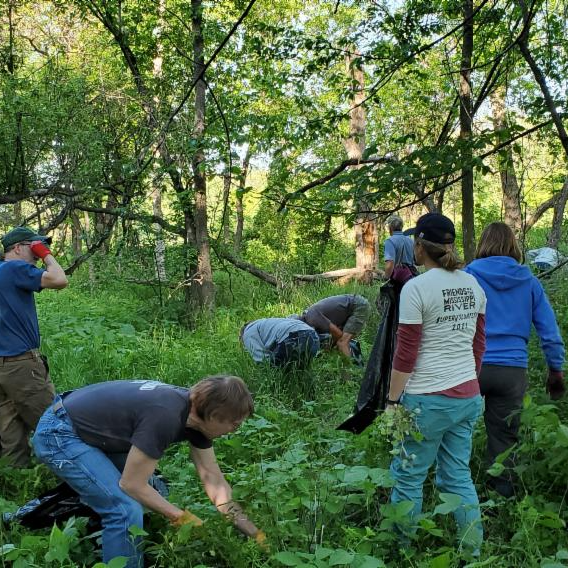
You can get involved, too! Join FMR at the Dakota County PCA on Tuesday, September 29, at 5 p.m. to plant native grassland plants and shrubs. Click the button below to sign up!
| |
|
Pictured above: Previous FMR volunteer event at Linear Park.
Stay posted for another volunteer event later in the autumn for native prairie seeding at Vermillion River Linear Park with FMR as part of their grant.
| |
|
City of Farmington - Native Wet Prairie Restoration on the Vermillion River Mainstem
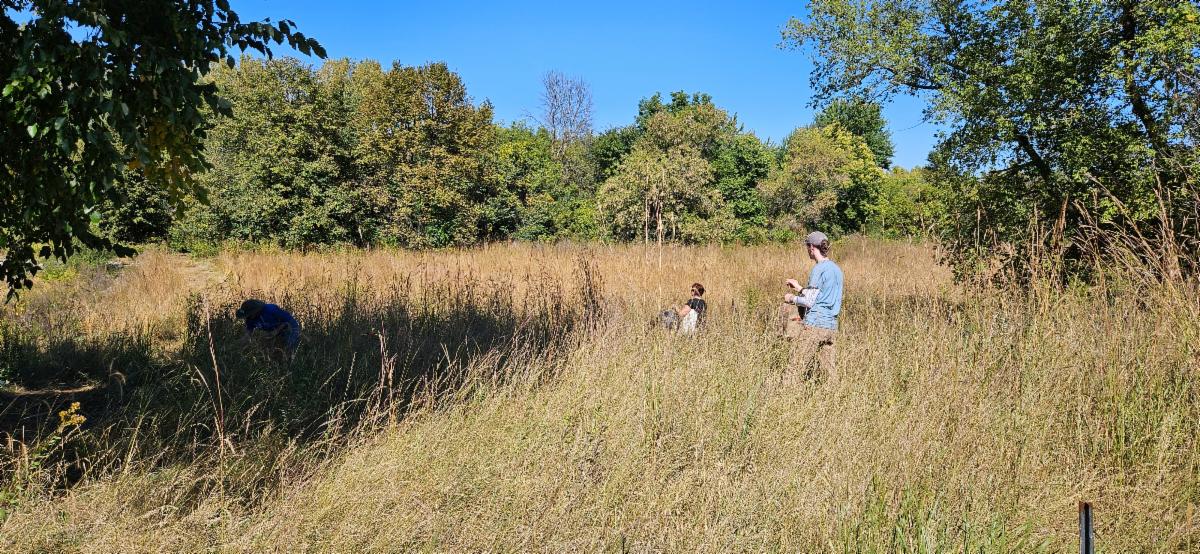
The City plans to mow, remove invasive plants, and seed native prairie plants on eight acres of Vermillion River floodplain just south of Spruce Street with their Stewardship Grant. Their goal is to reduce erosion and invasive plant species to prepare for future greenway development.
Together with support from Twin Cities Trout Unlimited, they will recruit volunteers to lay down the seed of the native wet prairie grasses and other plants at a date to be determined.
Stay tuned!
Funds allocated to Farmington for this project: $10,000
| |
|  |
What do people like to do most in the Vermillion River Watershed?
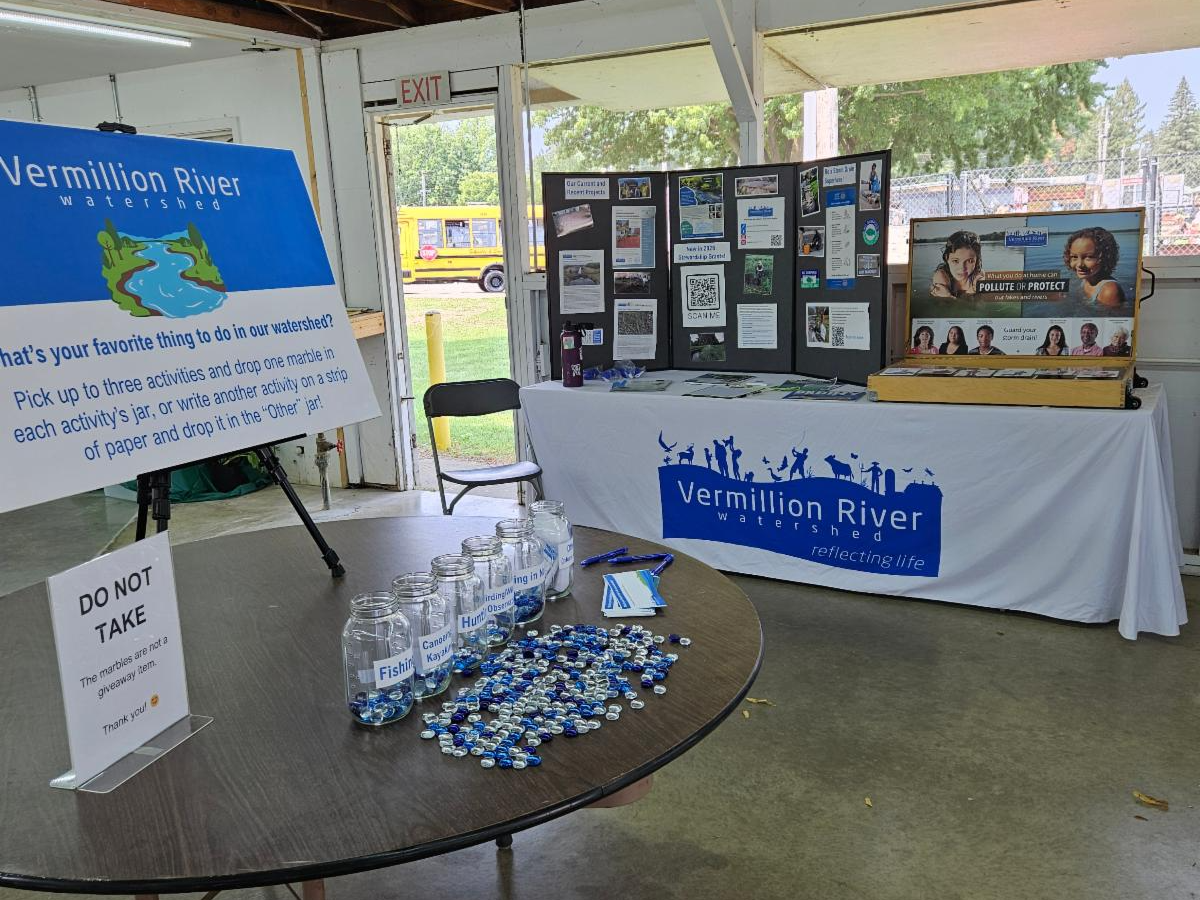
We added a new interactive feature to our Dakota County Fair exhibit this year!
To gauge what people value most about our watershed, we chose five outdoor activities, labeled mason jars with those activities along with one labeled "other", and got marbles for fairgoers to drop in the jars of their favorite activities. Those who chose "other" wrote their answers on slips of paper. Staff counted up the totals whenever the marbles ran out.
| |
|
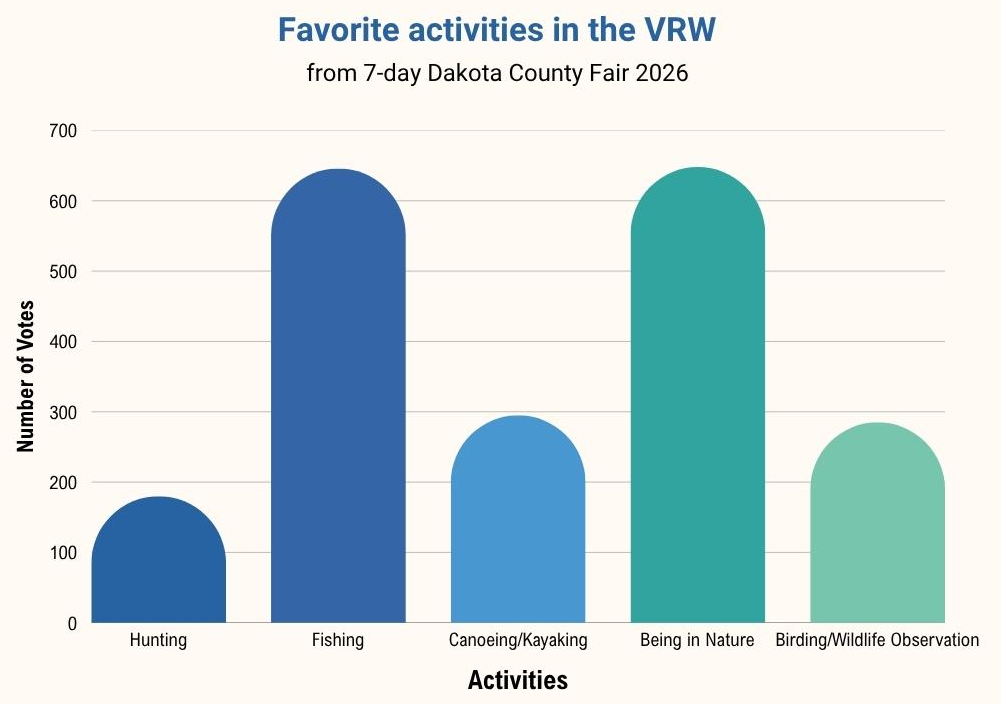
Being in Nature - 648
Fishing - 646
Canoeing/Kayaking - 295
Birding/Wildlife Observation - 285
Hunting - 180
"Other" answers: swimming, paddleboarding, horseback riding, biking, and hiking.
No matter how you enjoy life in our watershed, it's our mission to make it possible for generations to come.
| |
Summer project roundup - and what comes next
We made some big progress this summer on projects that reduce stormwater pollution and create healthier conditions in our waters for all who rely on them - plus, they go toward meeting our Watershed Management Plan goals!
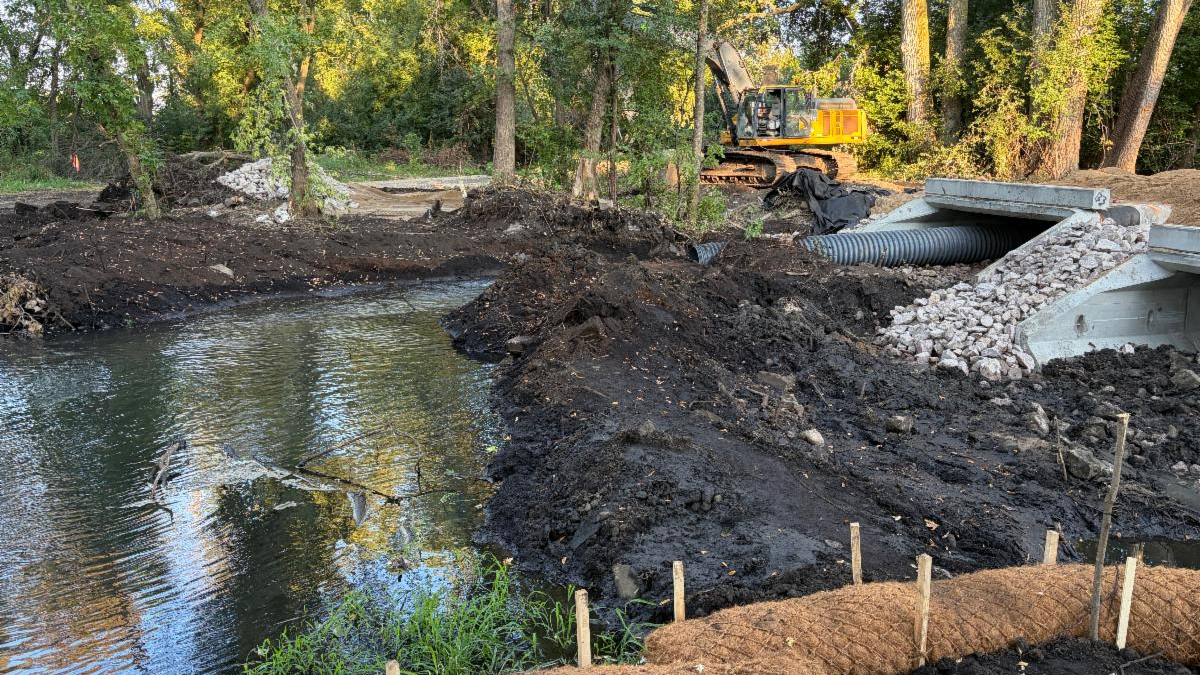
- Construction on the North Creek channel and culvert improvements in Farmington and Empire began in August (pictured below). Our contractor temporarily re-routed the creek while installing new, properly sized box culverts in the ground. The upgrades will improve and connect aquatic habitat and reduce erosion from high velocities, in turn improving overall water quality. Funded in part by a Conservation Partners Legacy (CPL) Grant from the Minnesota Department of Natural Resources.
| |
-
In Lakeville, the VRWJPO and City finished installing a hydrodynamic separator (HDS), an underground stormwater treatment device, on Firelight Way near Greenridge Park in June. This device will reduce TSS reaching North Creek by an estimated average of 1,868 lbs. per year. Funded in part by a Watershed-Based Implementation Funding (WBIF) Grant from the Minnesota Board of Water and Soil Resources (BWSR).
- A stormwater infiltration basin at the intersection of 15th St. and Bailly St. in Hastings was also completed in August. The basin provides stormwater treatment to a 43-acre drainage area with vegetation and filter soil media. The project is expected to reduce pollutant loading to the Vermillion River by an estimated 2.9 tons of total suspended solids (TSS) and 9.1 pounds of total phosphorus per year. Funded in part by a WBIF Grant from the BWSR.
After projects are complete, staff and partners continue monitoring and maintaining them. We use monitoring data to quantify how well our investments are performing and alleviate issues that arise due to weather or other unforeseen circumstances.
The CPL and WBIF grants are funded through the Minnesota Clean Water, Land, and Legacy Amendment approved by voters in 2008. Read more about it by clicking here.
| |
| | |
Thursday, September 24, 1 p.m. - Vermillion River Watershed Joint Powers Board Meeting, in-person at the Dakota County Extension and Conservation Center and online via Microsoft Teams
Saturday, September 26, 9 a.m. - National Public Lands Day Native Planting, Whitetail Woods Regional Park, Empire (click to register)
Tuesday, September 29, 5 p.m. - Volunteer Native Planting at Dakota County Park Conservation Area with Friends of the Mississippi River, part of a VRWJPO Stewardship Grant project (click to register)
Thursday, October 22, 1 p.m. - Vermillion River Watershed Joint Powers Board Meeting,in-person at the Dakota County Extension and Conservation Center and online via Microsoft Teams
Saturday, October 24, 9 a.m. - Kill the Buckthorn with Twin Cities Trout Unlimited at Cambodia Pond, 20001-20113 Cambodia Avenue, Farmington (click to register)
| |
| | | |