Economic Development Highlights | | |
Business Steering Committee: a newly formed subcommittee of the EDC that meets quarterly with representatives from retailers and restaurants in Town to improve communication and develop ways in which the EDC and other Town departments can support merchants to survive and thrive.
Plan of Conservation and Development (POCD): Connecticut General Statutes require each town to adopt or update its POCD at least once every ten years. The Town’s Planning & Zoning Commission, considering input from a survey of residents, property owners, business owners, as well as EDC and public comments, has prepared the draft 2025-2035 Deep River POCD, which is available for review prior to a public hearing. It outlines the town’s goals for organized economic growth, maintaining a balanced mix of residential, commercial, and industrial zones, and the proper use of open space and riverfront.
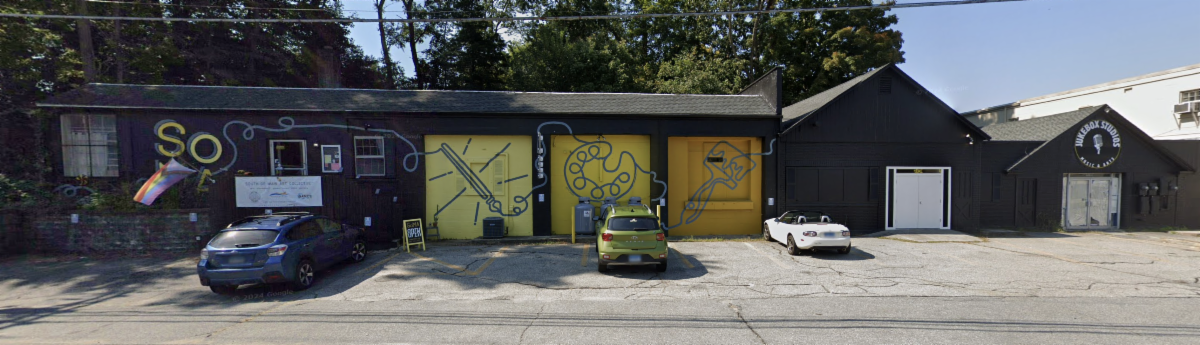
| | South Main Street Arts District: Following the success of SOMA (South of Main Art Collective) and the opening of Jukebox Studios and Face Arts Music in the South Main Street neighborhood, a proposal has been made to designate this area as an arts district to support and develop a community of visual and performance artists. The area currently features light industrial spaces, which are well-suited for studio conversions. Ideas for a public mural and a community performance space are gaining momentum. | | |
Economic Development in Deep River | | |
|
|
Economic Development Commission
The Deep River Economic Development Commission promotes economic growth and supports existing businesses while also attracting new retail, industrial, and cultural businesses that align with the community's character.
In addition to creating and maintaining the Town’s economic development plan, which is aligned with the POCD, the EDC implements strategies and tactics to achieve balanced economic growth within the Town. The goal is to foster a diverse, balanced, and sustainable economic base that provides a high quality of life for everyone who lives, works, or visits Deep River.
The Deep River Economic Development Commission is a seven-member volunteer, bipartisan group with current members Stacie DiNello (Chair), Jeremy Chase, Jennifer Gray-Roberts, Kathryn Kelly, Jessica Langston, Matthew Resnisky, and Frank Sotoro.
| | | Marketing & Branding Campaign | | |
The EDC has undertaken a marketing and branding campaign to be the first point of contact for all existing businesses and new or relocating businesses. From the perspective of being the Town’s “Customer Service Department,” the EDC is building a new website, separate from the Town’s, to provide information for real estate agents, developers, and businesses. Launching at the end of 2025, the website will promote businesses and other local activities on interactive maps, track economic development, and help to generate ideas to further build neighborhoods and enrich the community.
As part of this project, the EDC is using the Ginkgo platform to collect and monitor real estate data, map Town assets, vacancy rates, and developable land. Phase One involves mapping Main Street from the Chester Town line to the Route 9 interchange on South Main Street. As this process progresses, the new website will display public information to help developers, prospective business owners, and the Deep River community visualize the opportunities in Town. This will encourage public involvement in economic growth while preserving the unique character of Deep River.
| | |
Economic Development & Collaboration
An Economic Development Commission (EDC) collaborates with town departments and committees, including the board of selectmen, planning and zoning, housing, parks and recreation, public works, and the board of finance, to attract and retain businesses, improve the local economy, and enhance the quality of life through shared goals and projects. Key collaborations involve departments responsible for permits and licenses, infrastructure development, housing initiatives, and public services, ensuring a cohesive and supportive environment for economic growth.
Why Collaborate?
-
Comprehensive Growth: economic development impacts multiple facets of a town, requiring input from various departments to create effective and sustainable programs.
-
Streamlined Processes: collaboration helps align departmental functions, leading to more efficient processes for businesses seeking to establish or expand.
-
Holistic Community Vision: it ensures that economic development efforts are integrated with broader community planning, infrastructure, and quality-of-life goals.
Key Departments for Collaboration
-
Planning and Zoning Commission - works with the EDC on land use, development approvals, and zoning regulations to attract businesses to appropriate areas.
-
Building Department - facilitates the process for new construction and renovations, ensuring compliance with building codes and regulations.
-
Public Works Department -involved in infrastructure projects, such as road improvements and utility upgrades, that are essential for commercial districts.
-
Housing Committee - collaborates on initiatives to provide housing options for the workforce, a key factor in attracting and retaining businesses and residents.
Examples of Collaboration
-
Permitting and Licensing: streamlining permit applications to reduce wait times for new businesses, working closely with the building and planning departments.
-
Infrastructure Projects: coordinating on the planning and execution of infrastructure improvements, such as water, sewer, and gas lines, sidewalk construction, or dedicated bike lanes.
-
Workforce Development: partnering with local workforce development programs, community organizations, and educational institutions to create a skilled labor pool.
-
Business Attraction & Retention: jointly creating programs and policies to incentivize new businesses and support existing ones, ensuring they remain vital to the community.
| | |
|
Enriching the Quality of Life in
Deep River through Sustainability
Sustainable CT is a voluntary certification program to recognize thriving and resilient Connecticut municipalities. An independently funded, grassroots, municipal effort, Sustainable CT provides a wide-ranging menu of best practices. Municipalities choose Sustainable CT actions, implement them, and earn points toward certification.
Sustainable CT also provides opportunities for grant funding to help communities promote economic well-being and enhance equity while respecting the natural environment's finite capacity. The program is designed to support all Connecticut municipalities, regardless of size, geography, or resources. Sustainable CT empowers municipalities to create a high collective impact for current and future residents.
The Deep River Sustainable Committee was formed in March of 2020, and achieved Silver Certification in October, 2024.
| | | Connecticut Economic Development Organizations | | | | |