|
Anchorage Waterways Council
Streamline
May/June 2026
Kaitlan McLallen, Editor
| | | | |
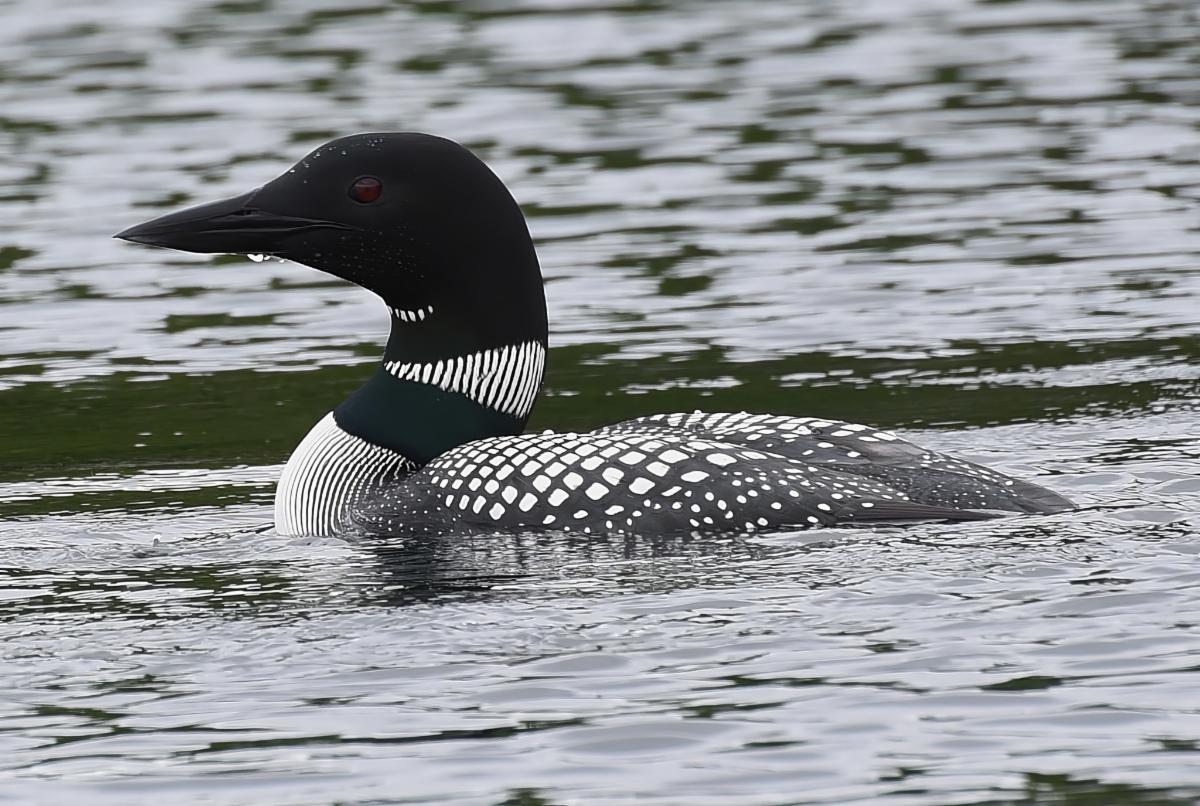
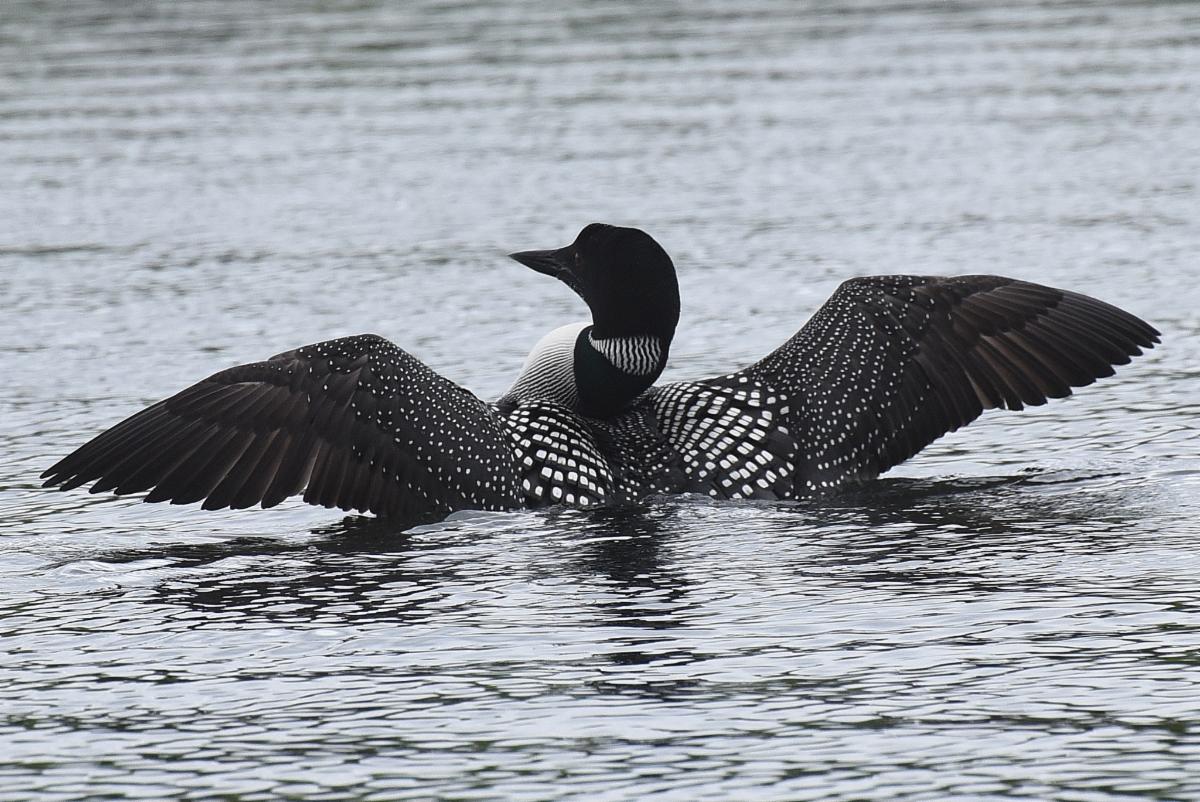
Loons are among Alaska’s most recognizable waterbirds, known for their haunting calls, strong diving ability, and close connection to lakes, wetlands, and coastal waters. Alaska is especially important for loons because all five loon species found in the world breed in the state: Common, Pacific, Red-throated, Arctic, and Yellow-billed loons. | | Photo Credit: Kaitlan McLallen | | |
Because loons depend on clean lakes for nesting and both freshwater and marine waters for food, loons can serve as indicators of environmental quality. When loon populations decline or nesting success drops, it may signal changes in water quality, fish availability, contaminants, shoreline disturbance, or broader shifts in climate and habitat conditions.
Anchorage holds a special significance to loons, as it is considered the last large city in North America where loons still nest and raise young. Of course, Anchorage's loons are not free from threat.
| | | | |
|
Discarded or broken fishing line can entangle fish, birds, mammals, and other wildlife. Animals may become wrapped in line around their legs, wings, beaks, fins, or necks, which can restrict movement, prevent feeding, cause deep cuts, lead to infection, or result in drowning or starvation.
Monofilament and fluorocarbon fishing lines are especially concerning because fluorocarbon is nearly invisible underwater, and both types of lines degrade very slowly. As they weather, they can also contribute to plastic pollution and smaller plastic fragments that may be ingested by aquatic organisms.
| | |
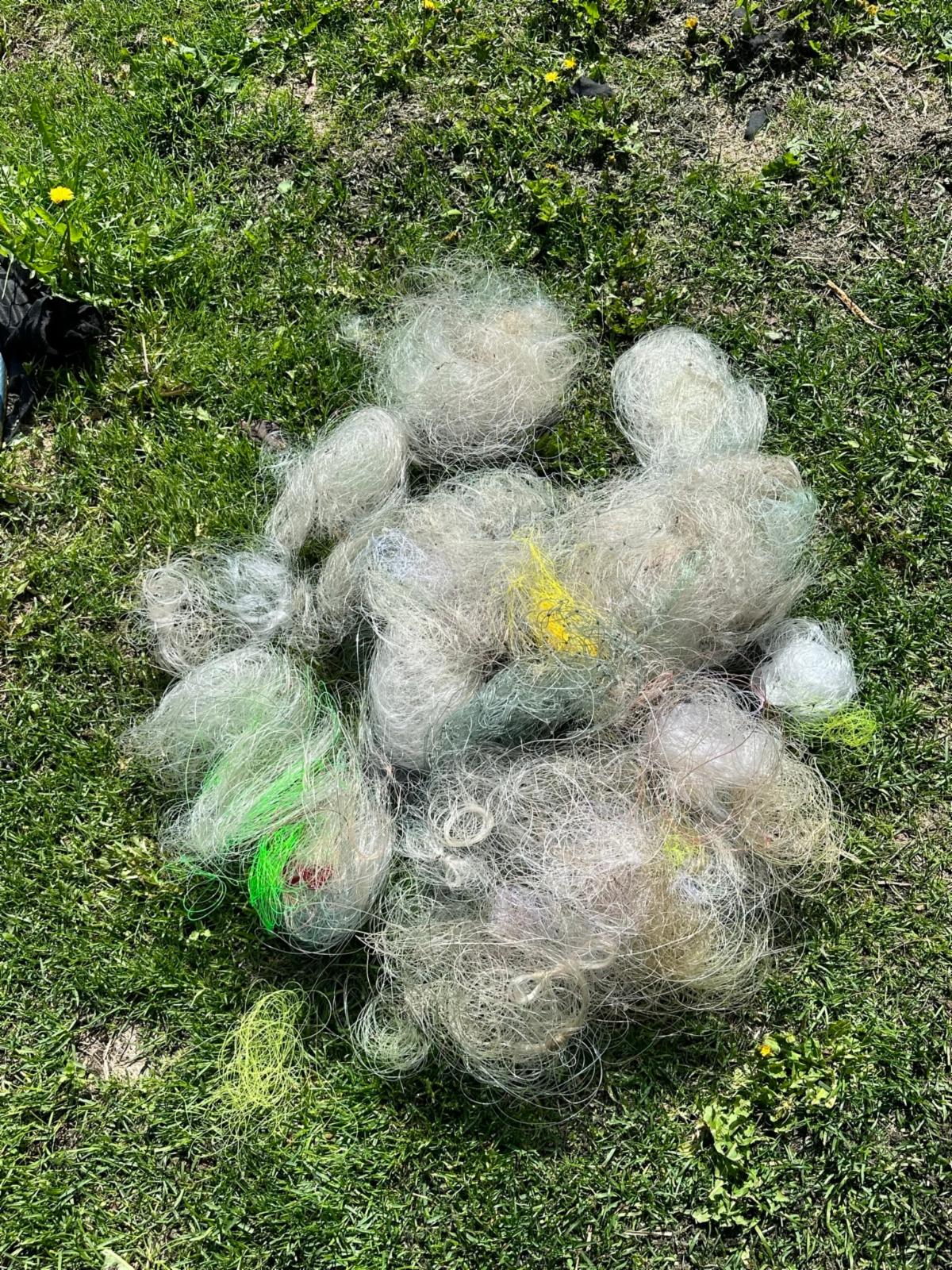
A tangle of discarded monofilament collected after being left behind by anglers.
Photo Credit: AWC
| | |
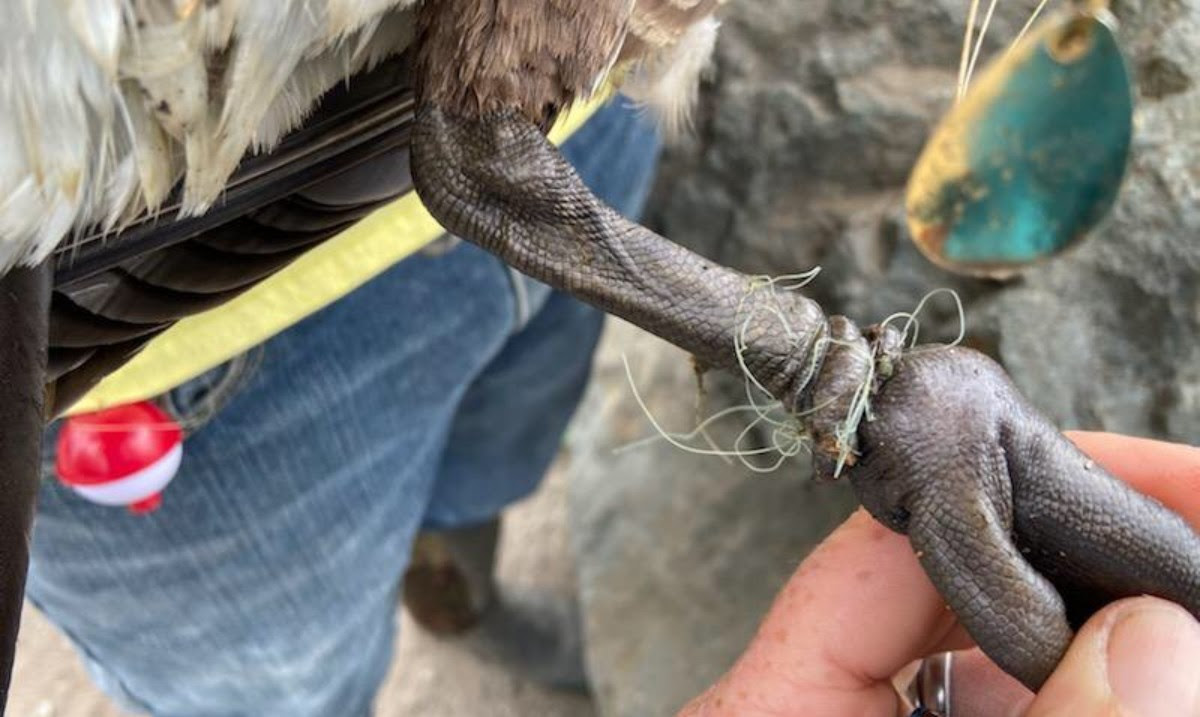
Fishing line wrapped around the leg of a Canada Goose. This goose was caught at Cheney Lake by ADF&G and fortunately was able to be de-tangled and released. Photo Credit: ADF&G
| | | | |
Lead Fishing Weights and Tackle | | |
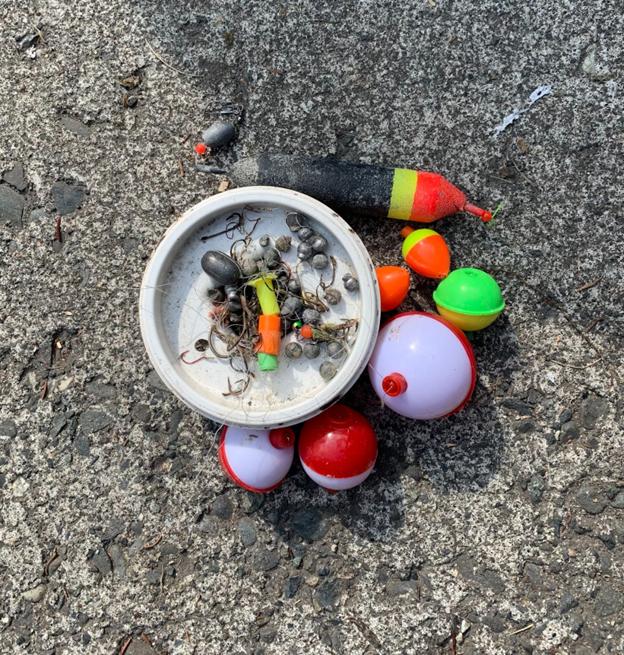
Lead sinkers, split shot, jigs, and other tackle can be highly toxic when swallowed by wildlife. Waterbirds such as loons, swans, ducks, and geese may mistake small lead weights for pebbles or grit used to grind food in the gizzard. Once ingested, lead can dissolve and enter the bloodstream, damaging organs and the nervous system.
Lead poisoning can cause weakness, loss of coordination, paralysis, poor feeding, weight loss, and death. Scavengers and predators may also be exposed by consuming contaminated prey.
| | |
Fishing tackle collected from Anchorage monofilament recycling bins.
Photo Credit: AWC
| | | | |
Risk to People and the Community | | Lead is also a human health concern. Handling lead tackle can leave lead residue on hands, and biting split shot onto a line can increase exposure. Children are especially vulnerable to lead because it can affect brain and nervous system development. Anglers should wash hands after handling lead tackle and avoid putting lead weights in their mouths. | | |
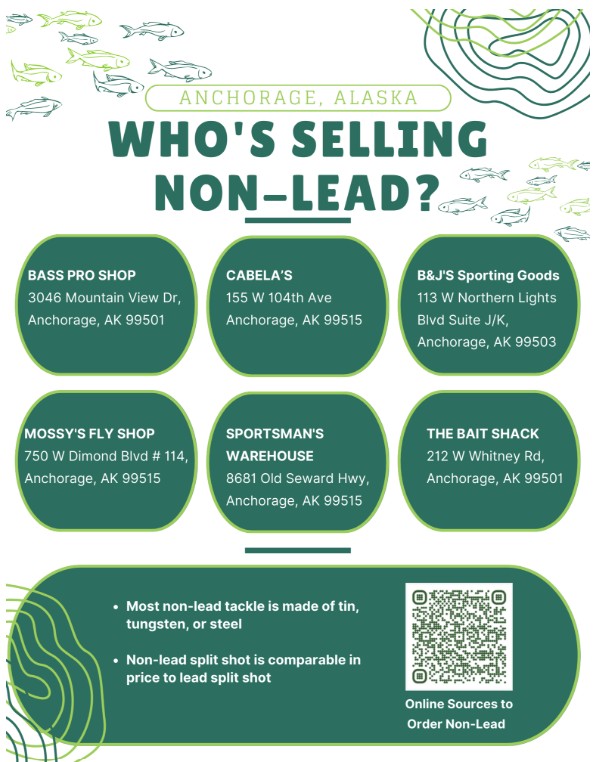
Graphic Credit: Chloe Hansen, Loons Lines and Lead Program.
Fortunately, a wide selection of non-lead fishing tackle made from materials including steel, tin, tungsten, bismuth, glass, ceramic, and more is available at local retailers.
| | | | |
A Look at the Loons, Line, and Lead Program | | A major foundation for Alaska loon conservation began at Connors Lake in Anchorage. In 2003, local loon advocates Jean Tam and Scott Christy, with support from Anchorage Audubon and other volunteers, built and launched a floating nesting platform for Pacific loons. Their effort helped bring public attention to the challenges loons face in urban lakes and demonstrated how community stewardship can directly support nesting birds. After Tam and Christy tragically died in 2019, their legacy continued through the Jean Tam Loon Conservation Endowment Fund, administered by the Alaska Conservation Foundation, which supports the Connors Lake raft project and broader loon conservation efforts across Alaska. | | Photo Credit: Kaitlan McLallen | | | | |
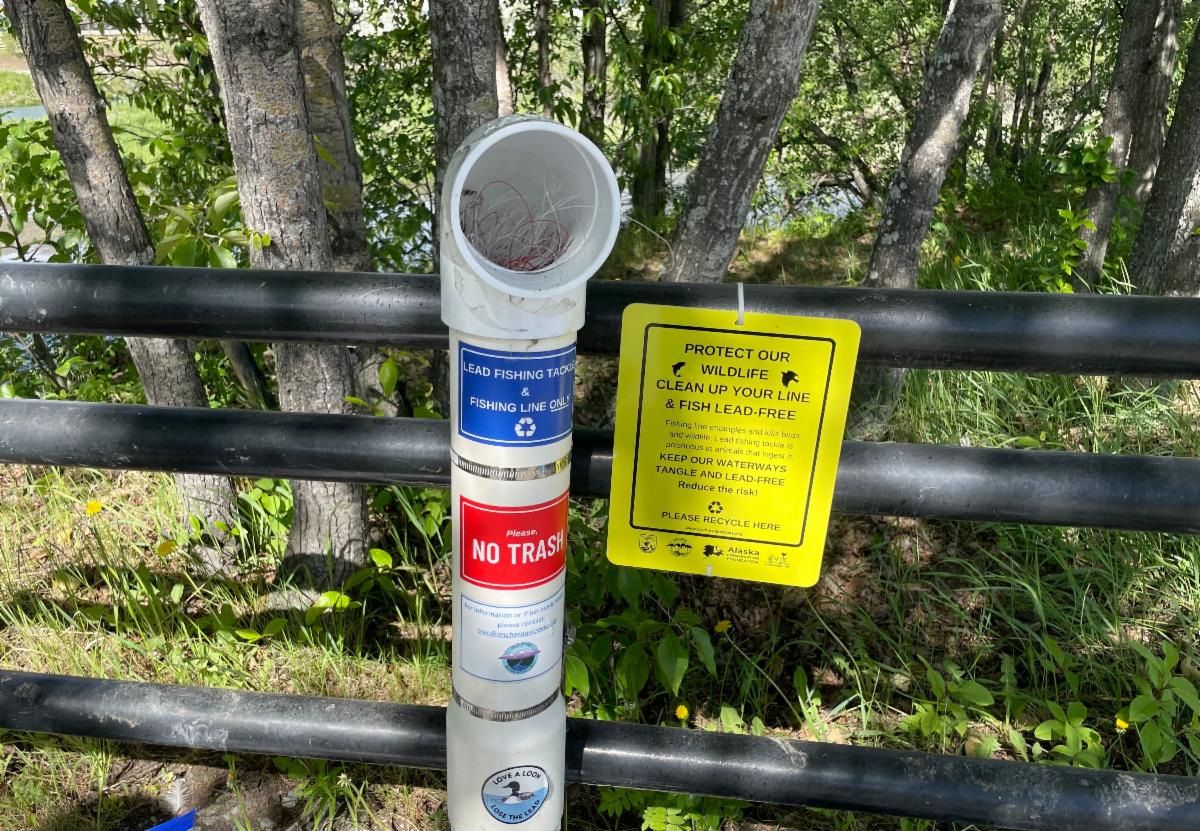
Monofilament Recycling Bins | | One of the campaign’s most notable impacts has been the placement of monofilament fishing line collection bins at popular fishing locations. in 2015, Anchorage Waterways Council helped establish bins in the Anchorage area, and outreach later expanded to places, such as the Joint Base Elmendorf-Richardson base and other sites where anglers and loons overlap. These bins give anglers a convenient way to dispose of line so it can be collected and recycled rather than left in the water or along shorelines where they pose hazards to wildlife. For more information and a map of bin locations, click here. | | A Monofiliament recyling bin along Ship Creek. Photo Credit Kaitlan McLallen | | | | |
|
Connecting Our Community Through
Loons, Line and Lead
This year, I (Kaitlan McLallen) have had a greater role in the Loons, Lines and Lead program as part of my work with AWC. So far this summer, I have talked with over 100 students of all ages and participated in many youth educational events.
| |
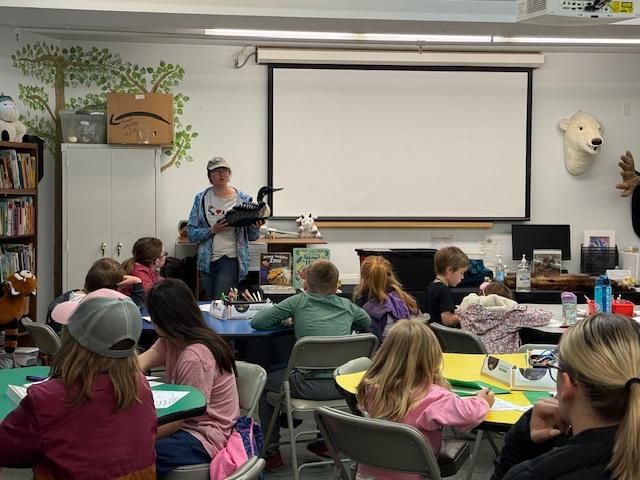
AWC's Outdoor Educator Kaitlan McLallen presenting to a group of kids at the Alaska Zoo Adventure Camp. Photo Credit: Tracy Lavin (Alaska Zoo)
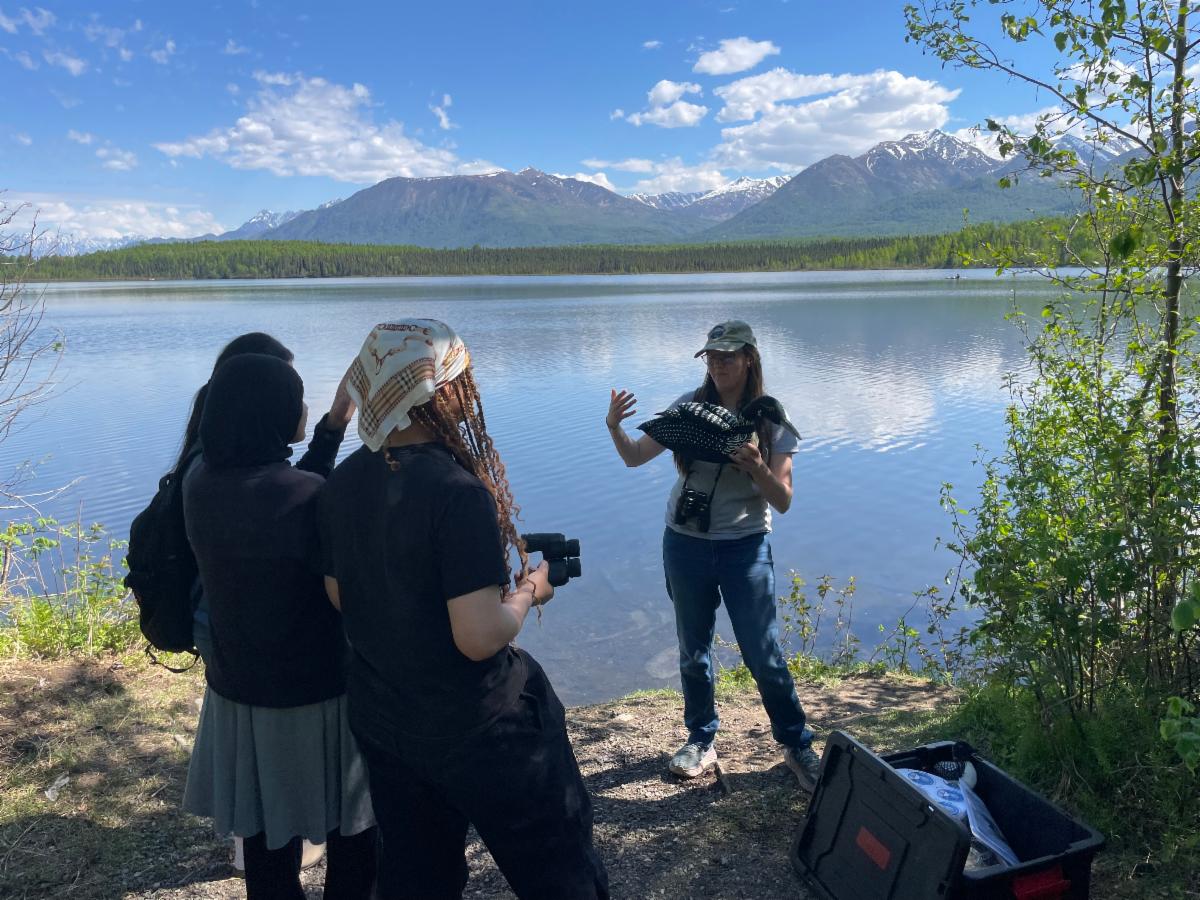
| Kaitlan discussing the Loons Lines and Lead Program with students at an Outdoor Education Day at Beach Lake. Photo Credit: Local Bartlett High School student | | |
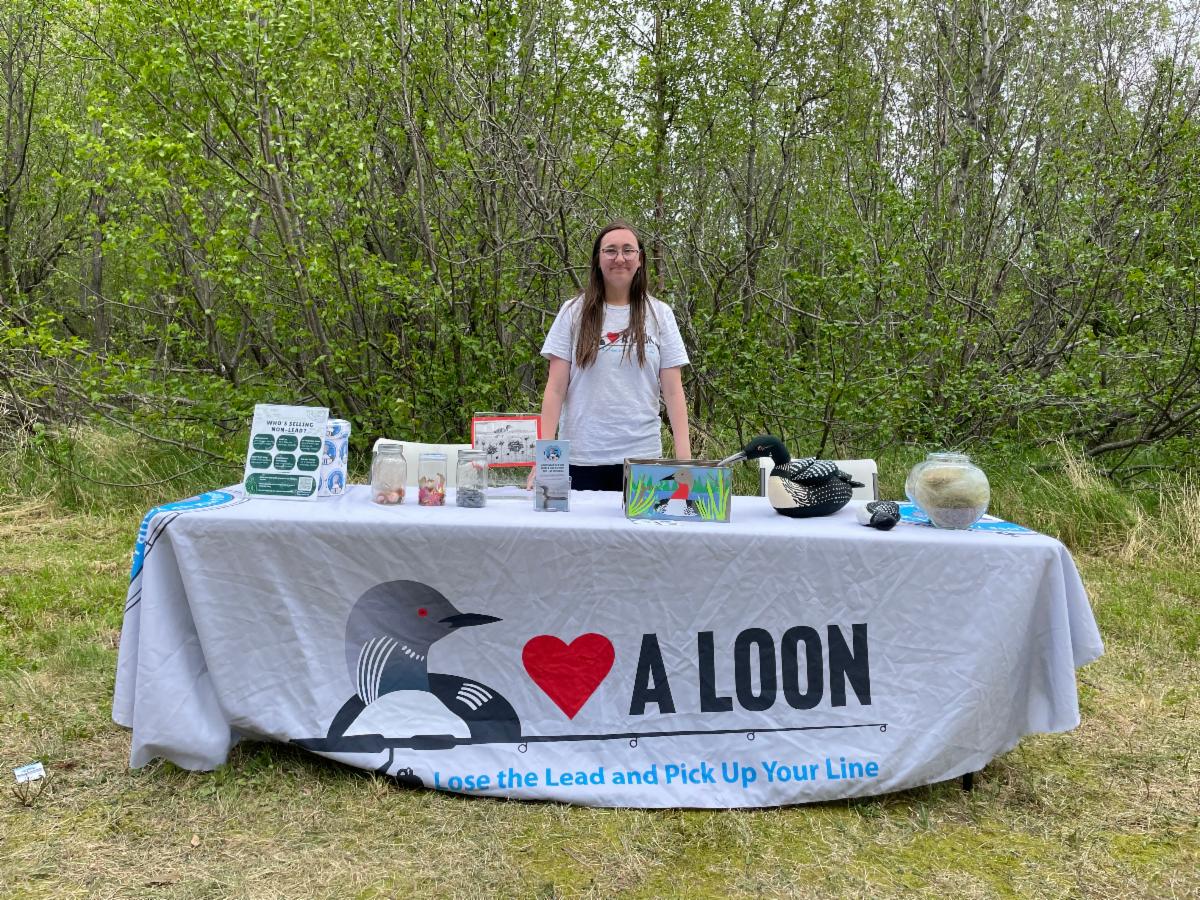
Despite the extremely windy conditions, this year’s Potter Marsh Discovery Day once again drew hundreds of visitors, many of whom stopped by the AWC booth to learn about the LLL program. Photo Credit: AWC
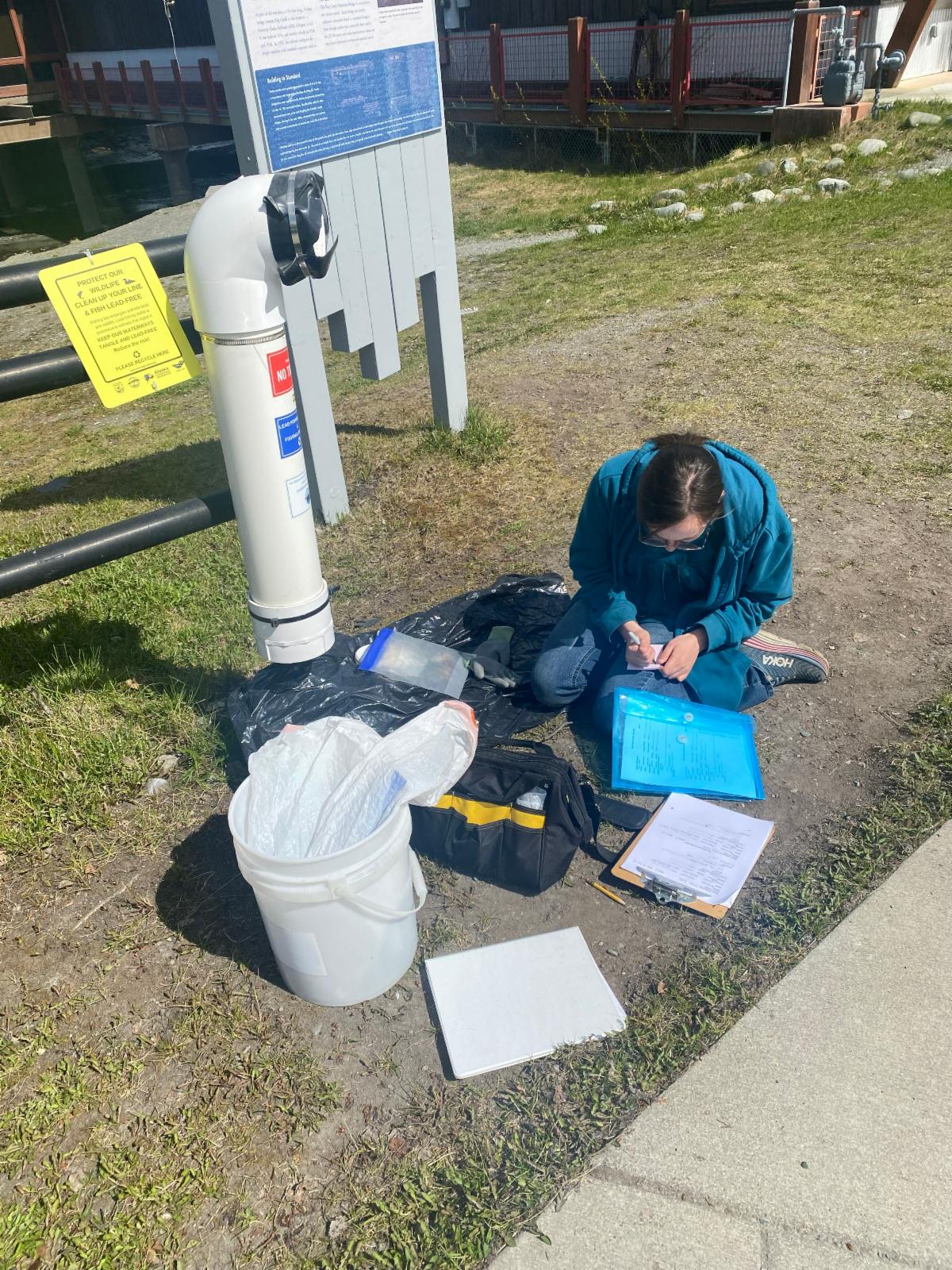
| | | AWC's Kaitlan documenting all the contents found in a monofilament recycling bin along Ship Creek. Photo Credit: AWC | | |
I have the exciting job of emptying and maintaining 18 monofilament recycling bins during the field season. Documenting the contents of each bin helps us better understand how they are being used and the positive impact they have on local waterways and wildlife.
| | |
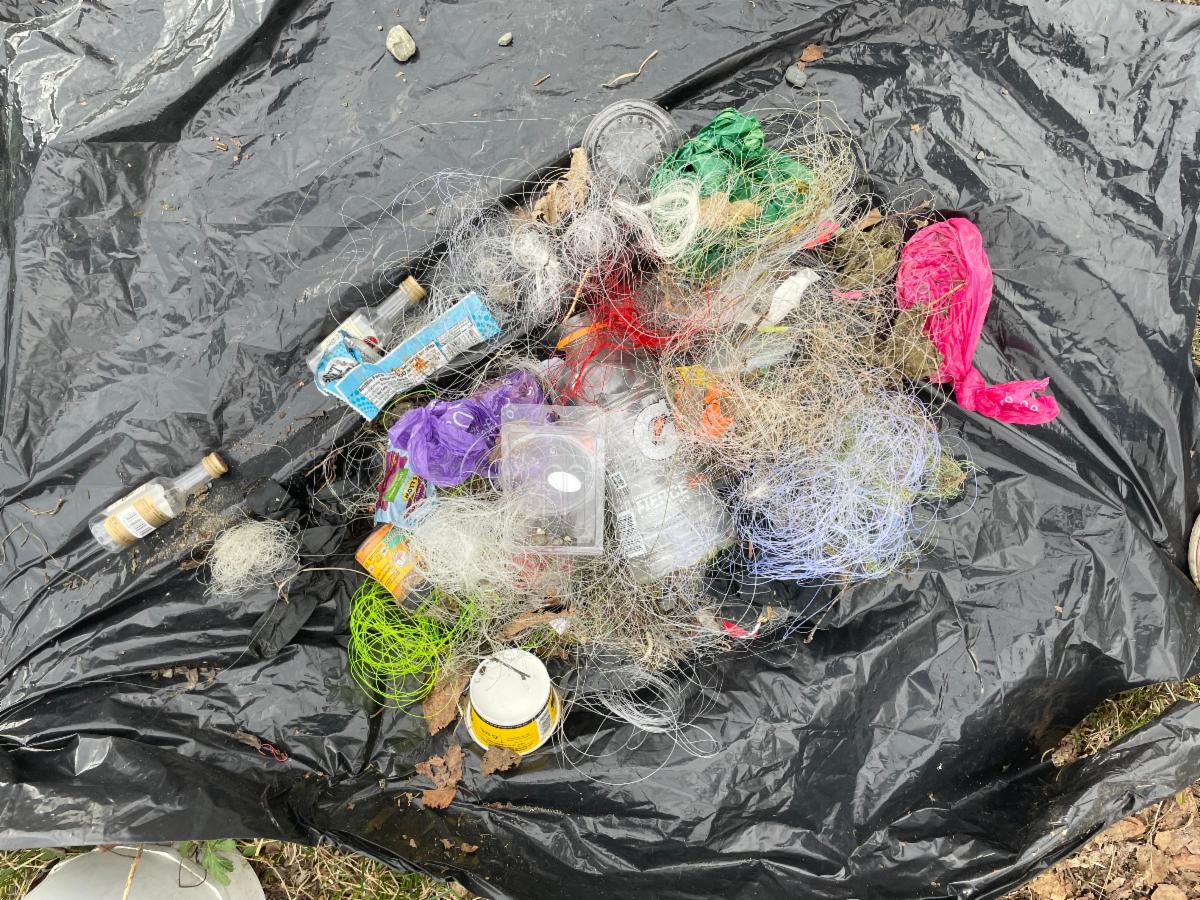
The contents from one monofilament recycling bin at Cheney Lake.
Photo Credit: Kaitlan McLallen
| | |
Today, LLL represents a community-driven approach to wildlife conservation in Alaska. Its history connects local citizen action, veterinary and wildlife expertise, federal and nonprofit partnerships, and angler education. The program’s central message remains simple: anglers can help protect loons and other wildlife by switching to non-lead tackle, picking up and recycling monofilament line, and spreading awareness about the risks of discarded gear.
| |
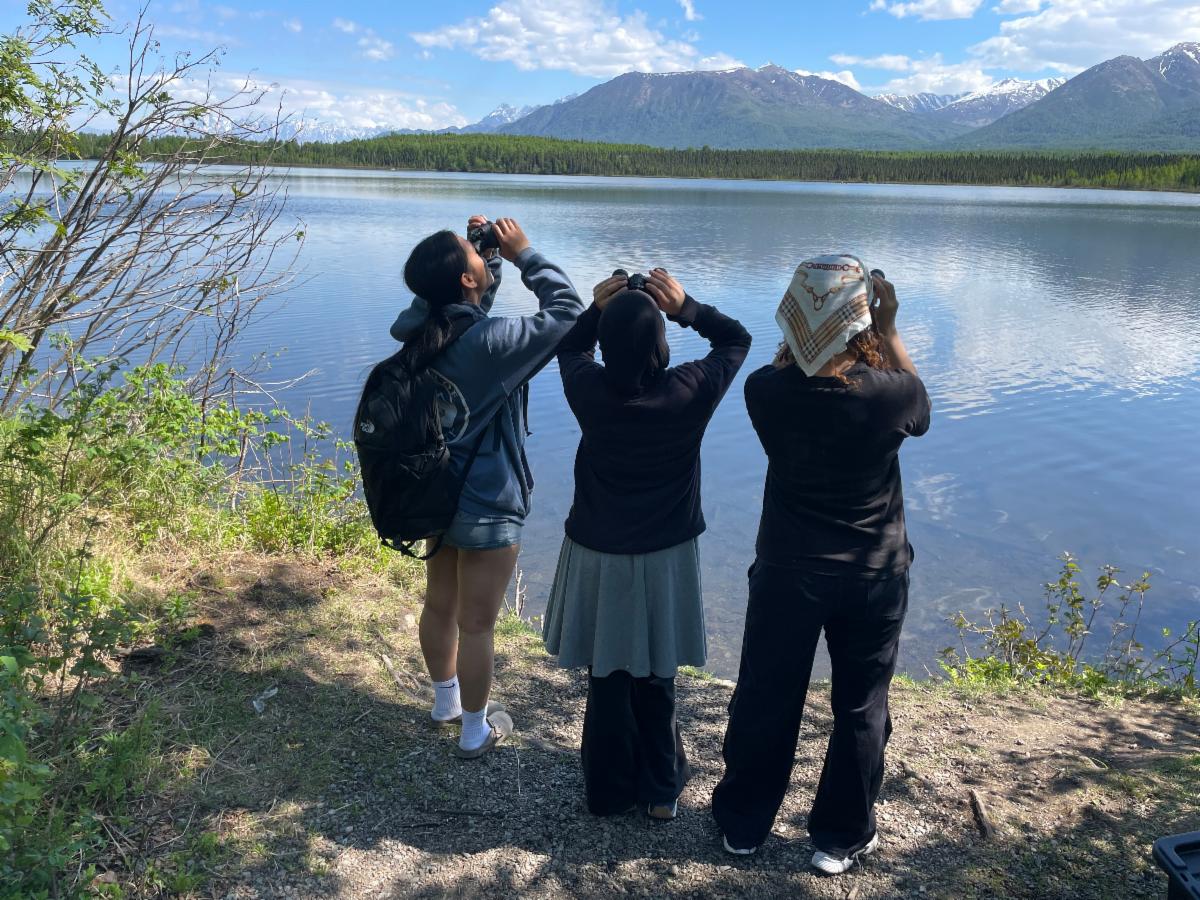
Students look for loons, eagles, ducks, and other birds at Beach Lake.
Photo Credit: Kaitlan McLallen
| |
Loons are often seen on Anchorage’s lakes as symbols of clean water and Alaska’s natural environment. Their calls are a familiar sound of summer across local waterways. They inspire and engage people of all ages, offering meaningful opportunities for education, birdwatching, and environmental stewardship.
Protecting loons also helps the broader lake and stream ecosystems on which they and many other species depend.
Please consider becoming an AWC member or making a one-time donation to support this work and help protect Anchorage’s loons and waterways.
| | | | |
|
MEMBERSHIPS AND DONATIONS
Starting at just $30 a year.
All memberships are tax-deductible.
Your support funds AWC programs, including monthly water quality monitoring, Creeks as Classrooms, Scoop the Poop outreach, Loons, Line, and Lead, our annual Creek Cleanup, and helps protect the health of local waterways.
| | |
SUPPORT AWC
Small commitment. Big impact.
One-time or monthly. Your choice.
| |  | |
$30-$99 Waterway Watcher
$100-$249 River Keeper
$250-$499 Habitat Protector
$500-$999 Watershed Steward
$1,000+ President's Circle
| | | | |
|
You can support Anchorage Waterways Council every time you shop—at no extra cost to you!
Your personal rewards, fuel points, and rebates are not affected. Once linked, Fred Meyer donates quarterly based on the total spending of members who support AWC.
Click here to learn more and get started.
Simply link your Fred Meyer card to AWC through the
Community Rewards program.
Organization number: GK663
| | | | | |
|
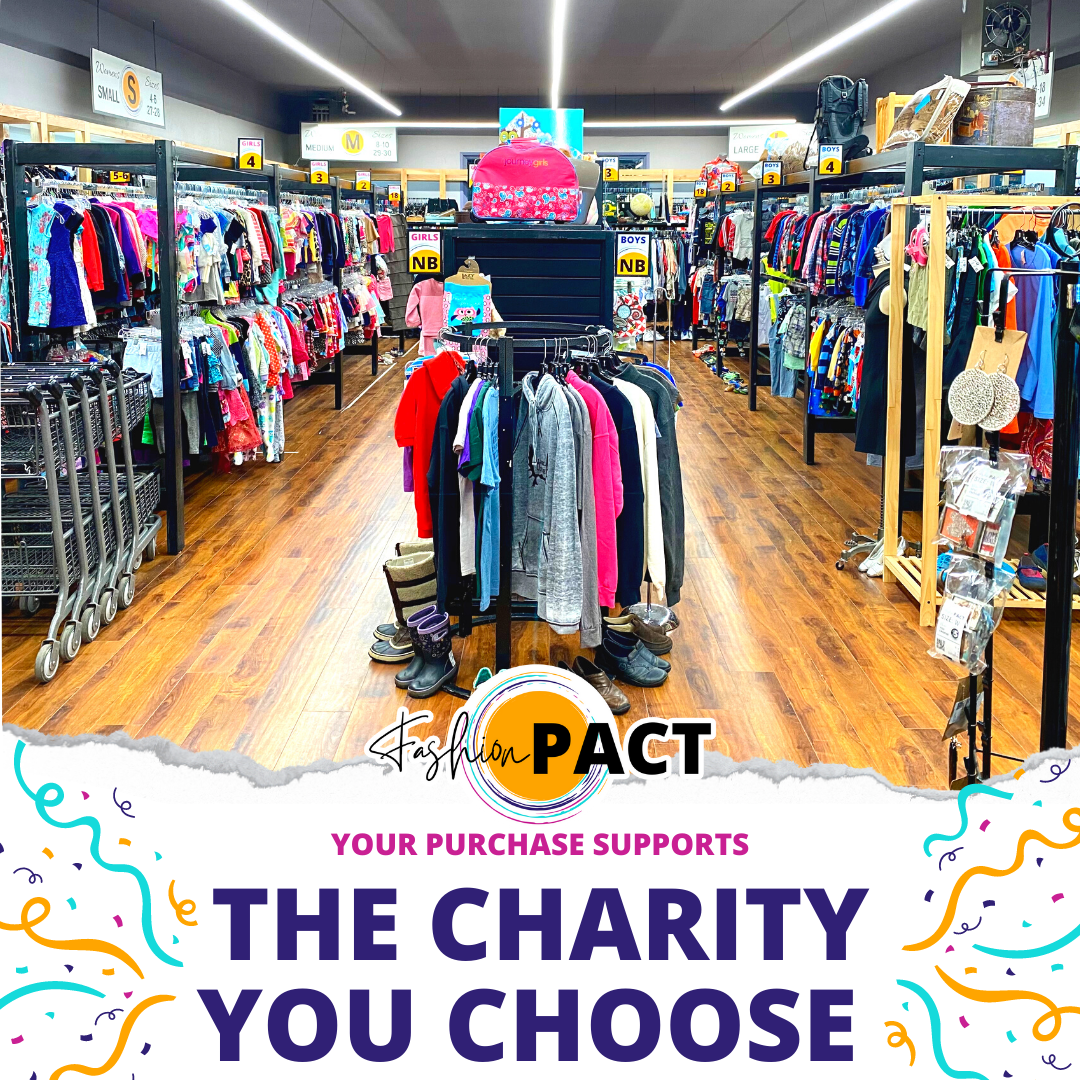
In July 2021, FashionPact launched its first thrift boutique to support local non-profits. Since then, AWC has received more than $5,000 through donated goods and shopper purchases designating AWC as the beneficiary.
SHOP OR DONATE AT THEIR LOCATIONS:
E. 68th & Lake Otis Pkwy or
221 E. Dimond Blvd.
You’ll be glad you did!
| | | | |
| |
| |