|
Hello Pamela,
Fall is one of my favorite times of the year as I love our Michigan cider mills, beautiful colors of the trees, and cool, crisp evenings outdoors by the fire pit. This month we are talking about a difficult topic in the hopes of bringing awareness and encouragement to have conversations with those you care about. We are here to help...please reach out.
Take care,
Dr. Pam McCaskill
office@mccaskillfamilyservices.com
734-416-9098
| |
|
McCaskill Family Services Newsletter
Term: Fall | Issue 57| September 30th, 2024
| |
Support for September
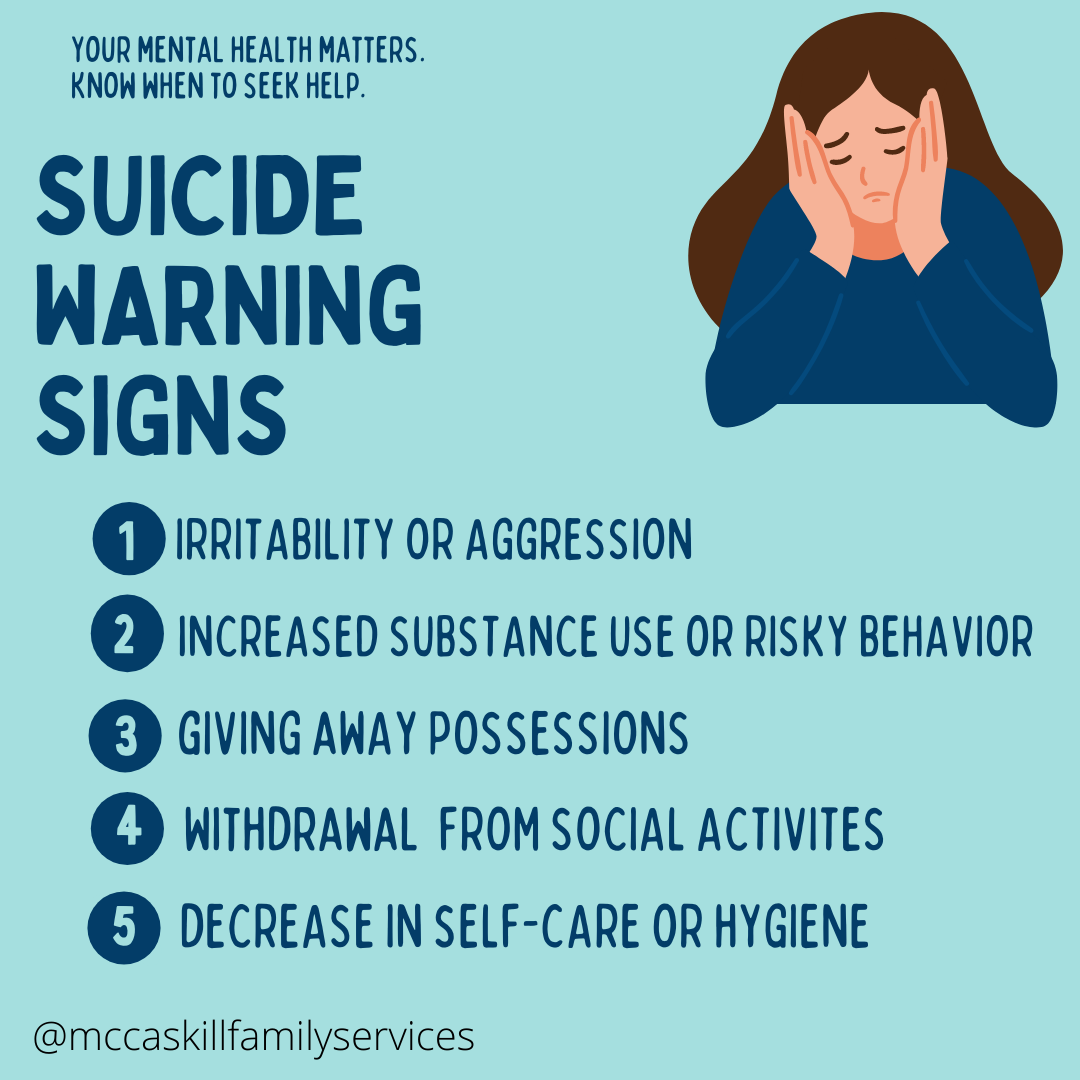
September is suicide awareness month. Although this is always a tough topic to talk about, at MFS we believe that knowledge about suicide, its risk factors, and its protective factors, are vital in helping decreasing suicide statistics. Our very own Jaclyn Rink, MSCP, helps debunk some common misconceptions about suicide and how to help those you love. Please give it a read.
| |
At McCaskill Family Services, we specialize in working with children and adults who are struggling with all kinds of presenting mental health issues. If your family or someone you know could benefit from our services, please contact us. Our clinicians are trained and experienced in empirically-based techniques, and would be happy to promptly schedule an appointment in person or via tele-health. We can be reached by phone at 734-416-9098 or by email at office@mccaskillfamilyservices.com.
| |
It can be confusing and scary to figure out when and how to help yourself or someone that you love in the midst of a mental health crisis. Here are some resources at a glance. | |
Simply call or text "988" to be connected to immediate support. | |
A monthly newsletter addition from our Dietitian and Eating Disorder Recovery Team.
Controversial Topic: Processed Foods
It is not uncommon to hear advice regarding the danger of processed foods for our health. While it is true many of these foods contain higher levels of sodium, sugar, and fat, it doesn’t mean these foods should be off limits. According to the FDA, processed foods are foods that have been altered in some way from their original state. These alterations could include many different processes: washing, milling (grinding something into flour), cooking, chopping, canning, freezing, dehydrating, mixing, or pasteurizing. Some foods have undergone more processing than others. The foods that have gone through multiple kinds of processing are often called “ultra-processed” foods.
Processed foods provide a variety of benefits. They can be helpful for having on-the-go options, speeding up prep time when cooking, and allowing for a longer shelf life so foods stay fresh longer without going bad. Common processed foods include: pre-portioned snacks like chips, crackers, cookies, and bars; dried or cured meats; dried, canned, or frozen fruits and vegetables; canned beans or lentils; dry breakfast cereals; pre-cooked and ready to reheat rice and pastas; fully cooked and frozen meats; canned tuna, chicken or salmon; packaged dessert foods like cakes, cookies, or donuts; pre-chopped vegetables and fruit; and many others.
Processed foods don’t have to be scary! Include them in your diet if you enjoy them and find them convenient. As with any other kind of food, we feel our best when eating a wide variety each day. Variety can include food groups, colors, and sensory factors like texture, but also takes into account the way foods are prepared. While it is true that only eating chips all day wouldn’t make us feel our best, neither would eating only apples or chicken. When included as a part of a varied diet, processed foods can be a healthful part of our eating pattern!
| |
|
Kristie Wyler earned her Master’s degree in Clinical Psychology from the Michigan School of Psychology. Kristie specializes in eating disorders, body image, self-esteem, anxiety, adjustment concerns, trauma and interpersonal struggles. She is lead therapist for our new MFS Intensive Outpatient Program for Eating Disorders.
As a former dance teacher and studio director, Kristie has over 10 years of experience working with kids, teens and families. With her strong humanistic background and numerous evidence-based treatments including Dialectical Behavior Therapy, Trauma-Focused Cognitive Behavior Therapy, and mindfulness-based interventions, Kristie is able to evaluate each client where they are and personalize treatment to their specific goals and needs.
Additionally, Kristie is a member of the International Association of Eating Disorder Professionals, and in 2021 earned her designation of Associate, (iaedp) with the Institute on Eating Disorders. She works closely with Dr. Nicole Wozniak of MFS, integrating eating disorder treatment with equine therapy.
Kristie is an avid traveler and has been to 6 continents, she loves any occasion that calls for dressing up, dessert, Broadway shows, U of M, fun shoes, and snuggling her sweet kitties at home.
| |
|
|
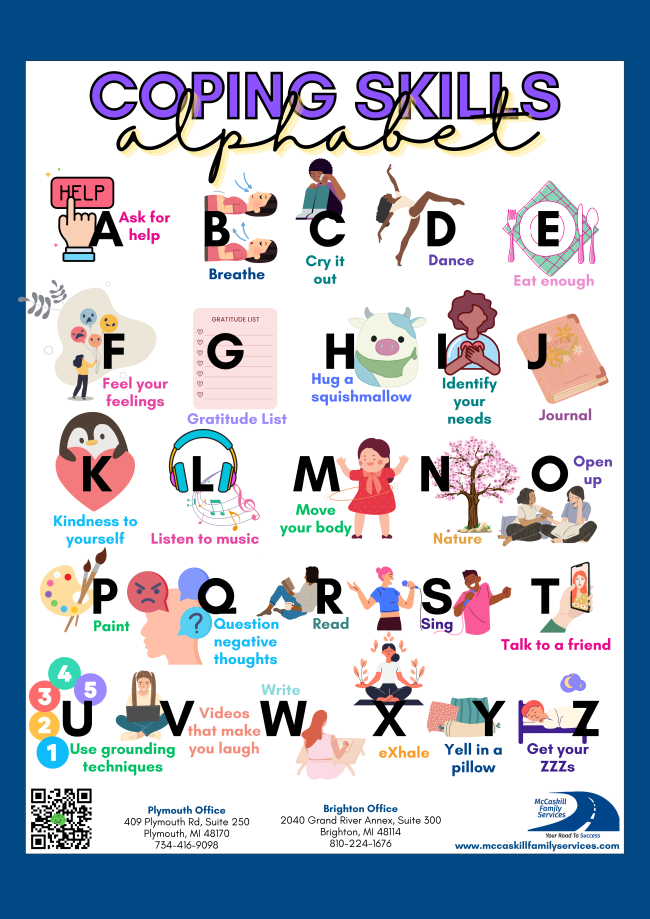
Having a variety of healthy coping skills can greatly reduce our vulnerability to depression, anxiety and many other mental health struggles.
Here are some of therapist Kristie's favorites from A-Z
| |
How to Spot the Difference | |
|
Parent Question: How am I suppose to tell the difference between normal teen moodiness and depression, anxiety or even something more?
Therapist Answer: This is sometimes difficult to decipher. What is normal, moody, teen behavior and when should a parent be more concerned? The biggest sign a parent can look for is a big change in your teen’s behavior. If your child is spending 60% of their time in their room, and this has always been the case, there is rarely cause for concern. If your child is generally active with the family, and suddenly shifts to spending 60% of their time in their room; something may be happening. Additionally, if they jump from 60% to 90%, this is a concerning behavior to notice. Whenever you see a big change in behavior, it’s a nonverbal sign that something may be going on. Also, your teen (most likely) doesn’t want to talk with you about things going on in their lives. Despite how frustrating and hurtful this can be, know that this is normal throughout the teenage years, as teens begin to experiment with healthy separation individuation. However, your teen SHOULD be wanting to talk to someone; friends, siblings etc. If they are not talking to anyone, then this could be a red flag warning sign.
Click Here for a Helpful Handout on this Topic!
| |
Follow us on Instagram and Facebook for weekly psychology tips, support, and encouragement from your MFS team!
| |
|
|
I hope everyone has had an easy back to school transition! I'm Jaclyn, a clinician at McCaskill Family Services who specializes in the treatment of OCD, anxiety, phobias, self-harm, and eating disorders for all ages. I co-run the McCaskill Family Services DBT groups for teens and adults, and specialize in psychological assessment. I am also our monthly newsletter editor and social media manager!
I'd like to personally thank you for staying in touch with our practice, and hope you find this newsletter inspirational and informative. If you or someone you know would like to schedule an appointment with me, please contact our office at 734-416-9098 or email us at office@mccaskillfamilyservices.com. I look forward to working with you!
| |
|
409 Plymouth Road, Suite 250, Plymouth, MI 48170 • 734.416.9098
| |
|
| | | |