The University of Chicago Center for Practical Wisdom is committed to the scientific study of wisdom. We apply science to understand wisdom and its role in the decisions and choices that affect everyday life. | |
WISDOM LIVESTREAM LECTURE: Dr. Emma Levine
| |
Join us for our next Wisdom Livestream Lecture
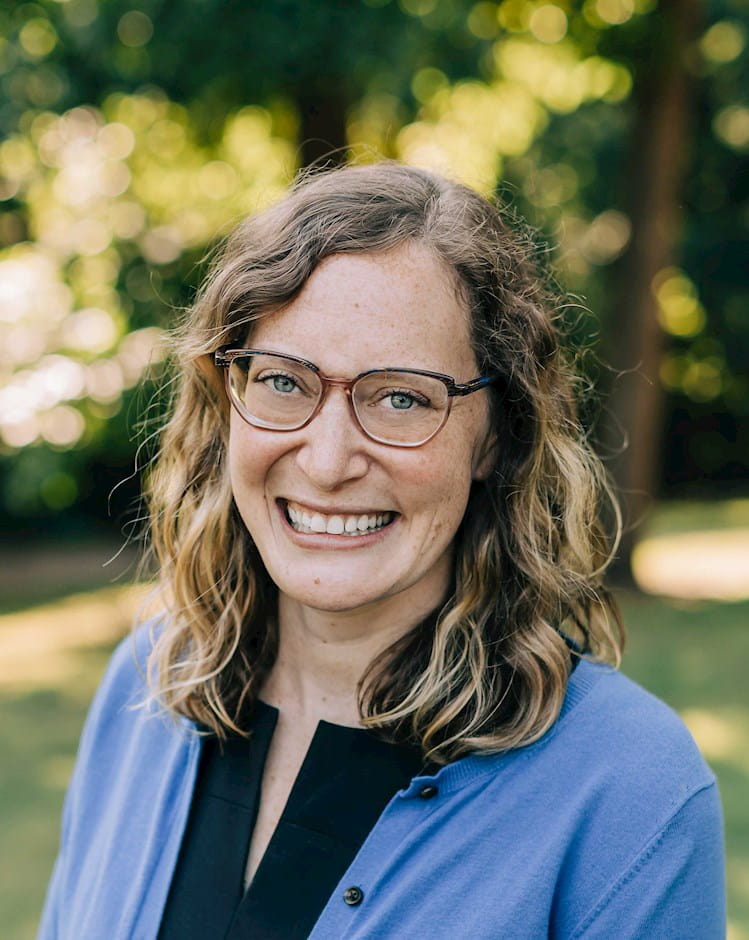
on Friday Nov 13, 2026 at 3:30 pm CST by Dr. Emma Levine, the Charles M. Harper Professor of Behavioral Science at the University of Chicago Booth School of Business.
About the speaker:
Emma Edelman Levine studies the psychology of altruism, trust, and ethical dilemmas. Her research seeks to understand how individuals make trade-offs between different values, and how this influences decision-making and social perception. Her main stream of research investigates the tension between honesty and benevolence. Using a variety of research methods, in both the laboratory and the field, Levine studies how individuals navigate this tension. Her research unearths specific circumstances in which people welcome and appreciate deception, as well as circumstances in which they underestimate the benefits of honesty.
About this wisdom livestream lecture:
A fruitful literature has examined the consequences of lying. However, lying is only one source of false information. Communicators engage in a broad set of complex behaviors that stretch the boundaries of honesty, including strategically avoiding information and presenting real, but misrepresentative information as truth. Though not lies per se, these are nonetheless deviations from honesty that have serious costs to organizations, consumers, and society broadly. In the present talk, I introduce a multidimensional framework of honesty that highlights how honesty encompasses more than the absence of lies—it has relational elements (e.g., fostering an accurate understanding in others through what we disclose and how we communicate) and intellectual elements (e.g., evaluating information for accuracy, searching for accurate information, and updating our beliefs accordingly; Cooper, Huppert, Cohen, Levine, & Fleeson, 2023). Then I present results from two ongoing empirical papers that examine how people make social judgments of these different facets of (dis)honesty. In the first paper (Wallace & Levine, under review), we examine reactions to false information stemming from biased beliefs (“bias”) versus lying (“dishonesty”). Five studies find that people are less likely to punish falsehoods from biased versus dishonest communicators, even when these processes are intentional and lead to identical harms. Increased punishment of dishonesty is driven, in part, by the belief that dishonest actors are less constrained by moral norms than (even intentionally) biased actors. In the second paper (Duncan, Levine, & Small, in progress), we examine reactions to marketing tactics that involve fabrication (inventing or producing false information) versus cherry-picking. Three studies find that people find fabrication to be more morally problematic than cherry-picking, even when cherry-picking misleads the audience to a greater extent. This work deepens our understanding of multiple facets of dishonesty, broadens the field’s understanding of reactions to corporate and consumer fraud, and sheds light on the challenges associated with punishing misinformation.
Register for the online event here.
| | SAVE THE DATE: WISDOM IN THE PULPIT |
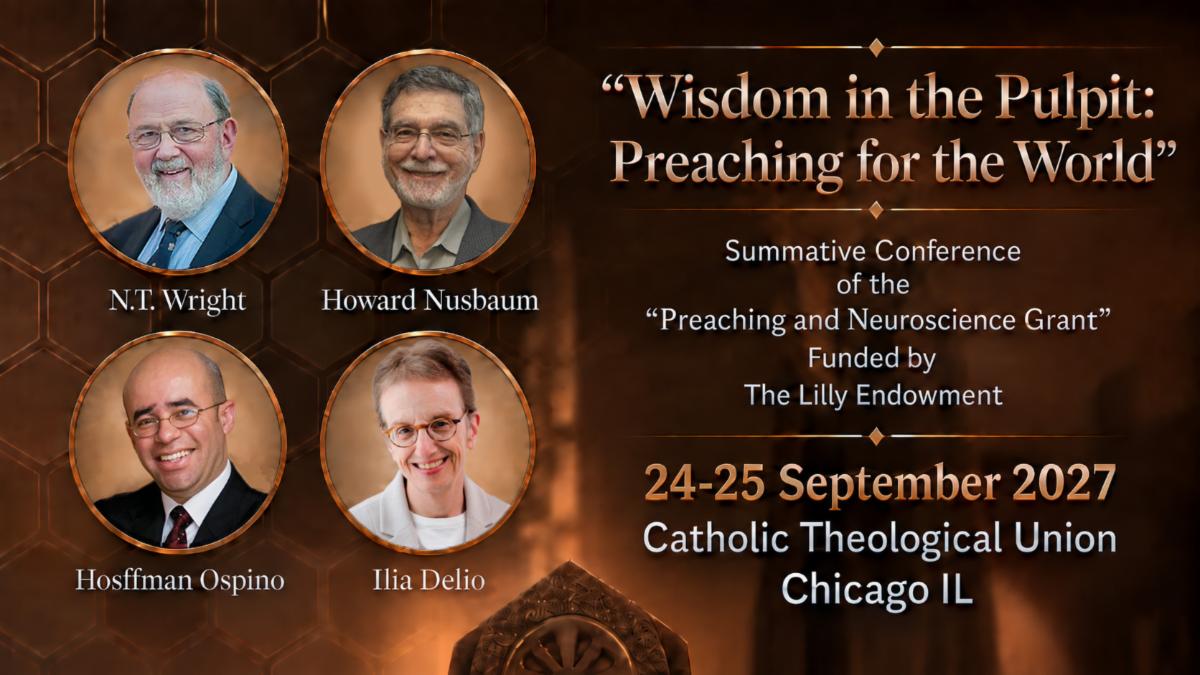
Join us for the summative conference of the "Preaching and Neuroscience" grant in September 2027!
Attend the final conference of the "Preaching and Neuroscience" grant with plenary speakers including our own Howard C. Nusbaum and John Veillette. Invited plenary speakers include N. T. Wright, Hoffman Ospino, and Ilia Delio.
This free conference is open to the public and will be hosted at the Catholic Theological Union, Chicago.
Registration opens in April 2027.
Read more here.
| |
CAMPAIGN TO SUPPORT WISDOM RESEARCH STUDENTS!
| |
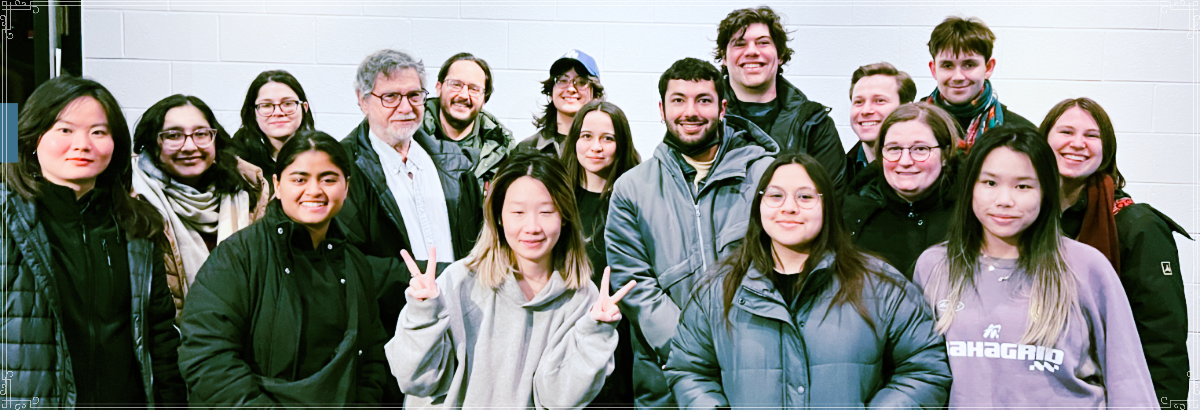
This year, we’re strengthening our efforts to support student researchers in the Center for Practical Wisdom—and we’re launching a campaign to help fund their important work.
We know you value the work we do at the Center for Practical Wisdom. This campaign is one small but meaningful way to support our mission while helping train the next generation of researchers interested in understanding wisdom from a psychological and scientific perspective.
For the next six weeks, through the end of November, you can make a donation of any amount to the Center for Practical Wisdom. Every dollar raised will directly support our student researchers by helping cover the costs of their research, from participant fees and lab supplies to other essential research expenses.
Your donations will also help us provide hourly wages for our student researchers, allowing them to gain valuable research experience without having to choose between working in our labs and taking on other jobs to help cover their educational expenses.
And here’s how much your support can make a difference: If every person who receives our newsletter donated just $1 today, we would have enough to fund our student researchers for two years! That’s the power of a community coming together to support our students.
Make a Difference Today!
To donate directly to the Center for Practical Wisdom, visit the UChicago giving page and enter “Wisdom” in the “Area of Support” box.
Thank you for supporting our students and helping us advance the scientific study of wisdom!
Click here to donate today!
| | |
IT'S THE SMALL THINGS: Treating something as even slightly significant affects motivation
by Teal Burrell, Association for Psychological Science
| |
When Fan Yang’s children came home complaining about a crafting class, they had a particularly strong advocate.
“They said, ‘They don’t let us take home our creations,’” Yang, a research associate professor at the University of Chicago recalled. “I almost emailed the teachers to send them our paper.”
Her paper, published in 2026 in Psychological Science, revealed how even something minimal—like saving artwork—makes a meaningful difference to motivation.
A lack of motivation in work or life can move from languishing and quitting to more serious issues like depression, suicidal ideations, and antisocial behavior. Having a sense of significance—that one’s life, work, or activities have value—can help provide meaning and incentive. However, because most research on significance focuses on careers and life as a whole, little is known about the impact of significance on small, everyday activities. Additionally, the need for meaning is often considered a luxury concern that is only relevant for some people and only later in life. But Yang thinks it’s more fundamental than that.
“It’s almost like air. We actually really need it,” she said. “In a lot of situations we don’t really notice because it’s already there.”
For the paper, Yang and Yilin Liu, now a doctoral student at the University of Texas at Dallas, performed four studies on 4–9-year-olds and adults to see if significance is a deeply rooted need starting early in life and whether minimal significance can have an effect...
Read more here.
| |
MOVED BY THE LIGHTEST TOUCH OF MEANING: Even minimal significance matters for motivation from childhood
by Yilin Liu and Fan Yang
| |
Abstract: How essential is a sense of significance for motivation—the feeling that our efforts matter beyond the trivial or momentary? Four studies (N = 604, children aged 4–9 years of age and 582 adults) show that no amount of significance is too small to matter, even for small actions from early in life. Children and adults strongly preferred artistic activities with minimal significance (i.e., where their work would be saved) over activities with no lasting existence. This preference held for both repetitive and one-time tasks and was specific to creating artwork, not just observing it. Anticipating even minimal significance motivated participants to engage in productive rather than effortless activities...
Read more here.
| |
TRANSFORMATIONAL WISDOM
by Robert J. Sternberg and Arezoo Soleimani Dashtaki
| |
Abstract: Transformational wisdom involves the application of knowledge, abilities, and attitudes to achieve a common good that makes a positive, paradigm-defying, meaningful, and potentially enduring transformative difference to the world for multitudes of people. There are various kinds of transformational wisdom, all of which can be contrasted with transactional wisdom, which is acting wisely merely in exchange for some kind of compensation. Pseudo-transformational wisdom is the appearance of transformational wisdom that disguises...
Read more here.
| |
NAVIGATING THE UNKNOWN: The sociocultural and metacognitive architecture of wisdom
by Igor Grossmann and Nic M. Weststrate
| |
Abstract: Psychological wisdom research has shifted from characterizing rare exemplars and desired outcomes to specifying processes that support sound judgment under uncertainty. Yet it has advanced along two siloed research tracks: one on folk theories—cultural tools such as exemplars, narratives, heuristics (including proverbs and maxims), and standards of judgment—and the other on the mechanisms involved in wise judgment. This review bridges these research tracks using a situated metacognitive lens: Folk theories provide candidate attributes or strategies for action, whereas perspectival metacognition—the capacity to recognize epistemic limits, coordinate viewpoints, and track uncertainty and change—regulates their context-sensitive selection and use. We synthesize evidence connecting wisdom-related processes...
Read more here.
| |
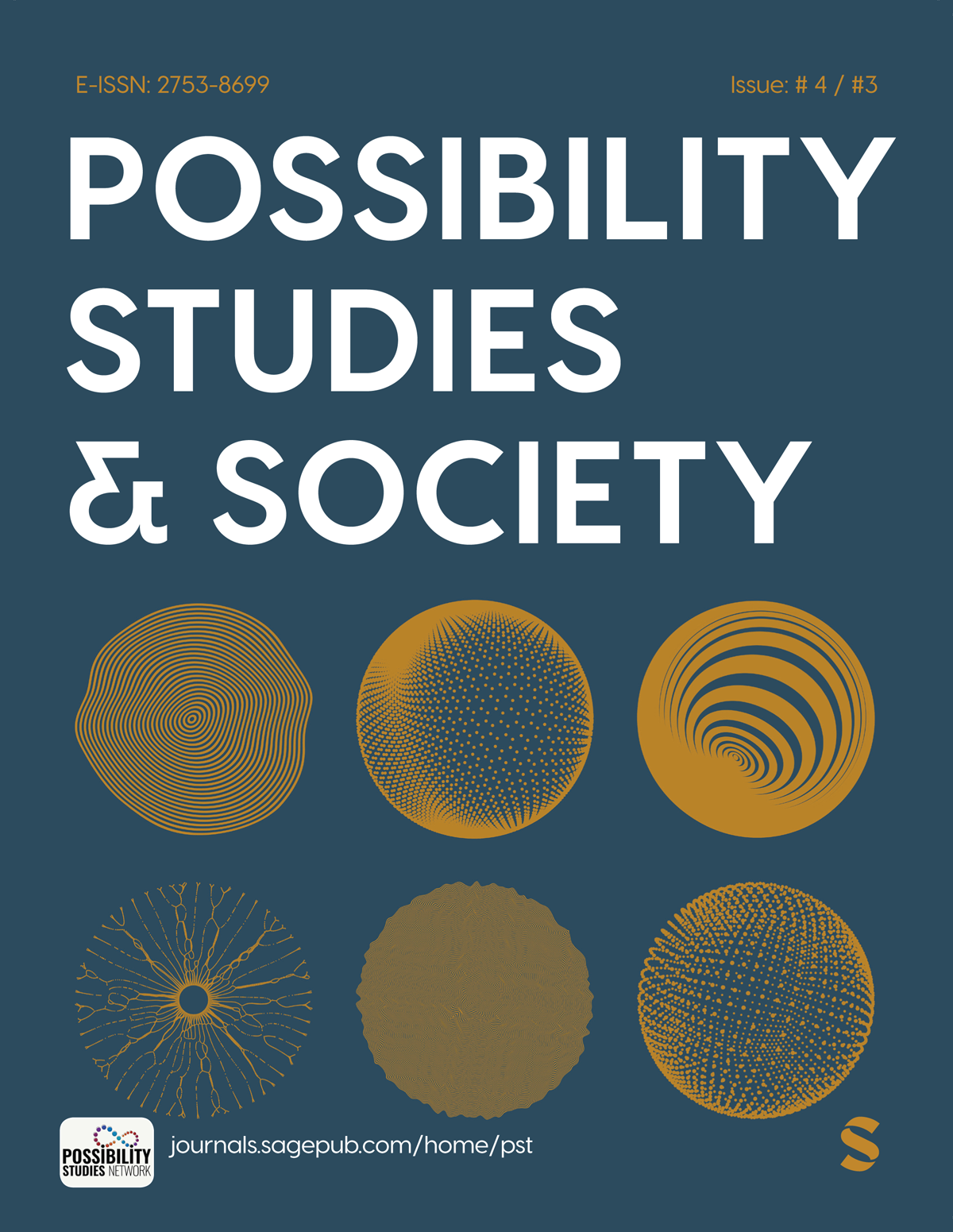
CALL FOR PAPERS | ADVANCING WISER CONSUMPTION AND INNOVATION: Consumer wisdom, wiser innovation, and public policy for flourishing
Journal of Public Policy & Marketing
|
 | | Description: Rapid technological, market, and societal changes are reshaping consumption in ways that profoundly influence well-being. For example, AI-enabled tools increasingly guide financial, health, and purchasing decisions; digital platforms structure how consumers connect, learn, and spend their time; and innovations in products and services—from personalized recommendations to on-demand consumption—reconfigure everyday choices and usage behaviors. These examples are illustrative of a much broader set of transformations that are reshaping how consumption is experienced and enacted across contexts. Building on prior work, such as the Transformative Consumer Research (TCR) movement, this special issue introduces wisdom as a distinct lens for understanding these phenomena. Rather than viewing consumption primarily in terms of trade-offs or isolated outcomes, a wisdom perspective emphasizes how individuals, firms, and institutions can engage in more reflective, ethically grounded, and context-sensitive processes that support individual and collective flourishing.
This special issue advances this perspective by drawing on research that conceptualizes wisdom as a process integrating metacognitive capacities (e.g., reflection, perspective-taking, intellectual humility) with moral reasoning oriented toward the well-being of oneself and others (Grossmann et al. 2020). In consumer contexts, this builds on emerging work defining consumer wisdom as the pursuit of well-being through mindful management of consumption-related choices and behaviors (Luchs and Mick 2018; Luchs, Mick, and Haws 2021).
Special Issue Editors: Michael G. Luchs, Varun Nagaraj, Jason Stornelli, and ShabbirHusain R.V.
Submission window: January 1, 2027–April 5, 2027
Read more and submit here.
| | |
JOIN THE EMBODIED NEURAL COMPUTATION AND AWARENESS LAB (ENCAL)
University of Montana
| |
Description: The Embodied Neural Computation and Awareness Lab (ENCAL) at the University of Montana, directed by Dr. John Veillette is seeking PhD candidate applications.
Deadline: Dec 1, 2026
About ENCAL: Most cognitive neuroscience research, especially concerning humans, treats the brain as if it were a standalone computer. In reality, neural “computation” both influences and is itself influenced by biological processes throughout the body. At the ENCAL, we study how the brain-body axis shapes our conscious subjective experience of ourselves and of the world around us. To this end, we integrate computational and empirical experimental approaches to concretely link biological mechanisms with downstream psychological manifestations (e.g., what we see or hear, whether we feel a sense of agency over an action, etc.). Our lab space is located in the basement of the Skaggs Research Building, where we host (or are about to… the lab is brand new!) a state-of-the-art facility for behavioral/psychophysical testing, non-invasive brain measurements (electroencephalography, a.k.a. EEG), cardiography, beat-to-beat blood pressure monitoring, electrical stimulation (e.g., muscle or nerve stimulation, galvanic vestibular stimulation, transcranial brain stimulation), and more!
Read more and apply here.
| |
If you have any questions, or would like to contribute a blog post, news item, or publication, please contact Jean Matelski Boulware at wisdom@uchicago.edu.
Center for Practical Wisdom
University of Chicago
| | | | |