We are excited to welcome Laura Berry, Sustainability and Resilience Senior Planner! Laura joins SMPDC after several years working with Maine municipalities, including the City of South Portland and the Town of Bar Harbor, to advance community-wide sustainability and climate planning efforts. With a background in environmental advocacy, she brings skills in ordinance development, land use planning, and community engagement. Laura holds a BA in Human Ecology with a focus in Community Planning from College of the Atlantic and an MSc in Global Environment, Policy and Society from the University of Edinburgh. Outside of work, Laura enjoys hiking, gardening, and spending time with her partner and their two cats at home in Portland. | | | $1 million in Community Action Grants Awarded to SMPDC Region | | |
Last month, the Governor’s Office of Policy Innovation and the Future announced the recipients of the latest round of Community Action Grants. Of the roughly $7.3 million awarded across the state, over $1 million was awarded to communities in our region. Fourteen municipalities in SMPDC’s region received grant awards: Acton, Alfred, Biddeford, Fryeburg, Hollis, Kennebunk, Kennebunkport, Ogunquit, Old Orchard Beach, Parsonsfield, Saco, Shapleigh, South Berwick, and York.
The Sustainability and Resilience Division will be supporting several of the newly funded projects, including Parsonsfield’s Municipal Energy Plan and Hollis’ Open Space Plan.
| | | New Community Action Grant Round Now Open | | |
The sixth round of Community Action Grants is now open! The maximum award amount for an individual community is $75,000 and the maximum for joint/partnered grants is $175,000. The deadline for grant applications is August 29th. All communities enrolled in the Community Resilience Partnership (CRP) are eligible to apply for this round of funding. To download the program statement for this round of Community Action Grants, click here.
The CRP has updated and expanded the List of Community Actions that align with the Maine Won’t Wait 2024 recommendations. The List covers all no-match CAG activities that communities may apply for and includes new actions related to: materials management (waste reduction and diversion); land use strategies that reduce emissions and build resilience, additional community resilience measures, and more.
SMPDC is available as your Regional Coordinator to assist with grant applications and answer your questions. If you would like to discuss a possible project with SMPDC or have questions about this grant round, please reach out to Melanie Nash, mnash@smpdc.org.
| | | Energy Resilience Assessment: Annual Meeting Discussion & Preliminary Findings | | |
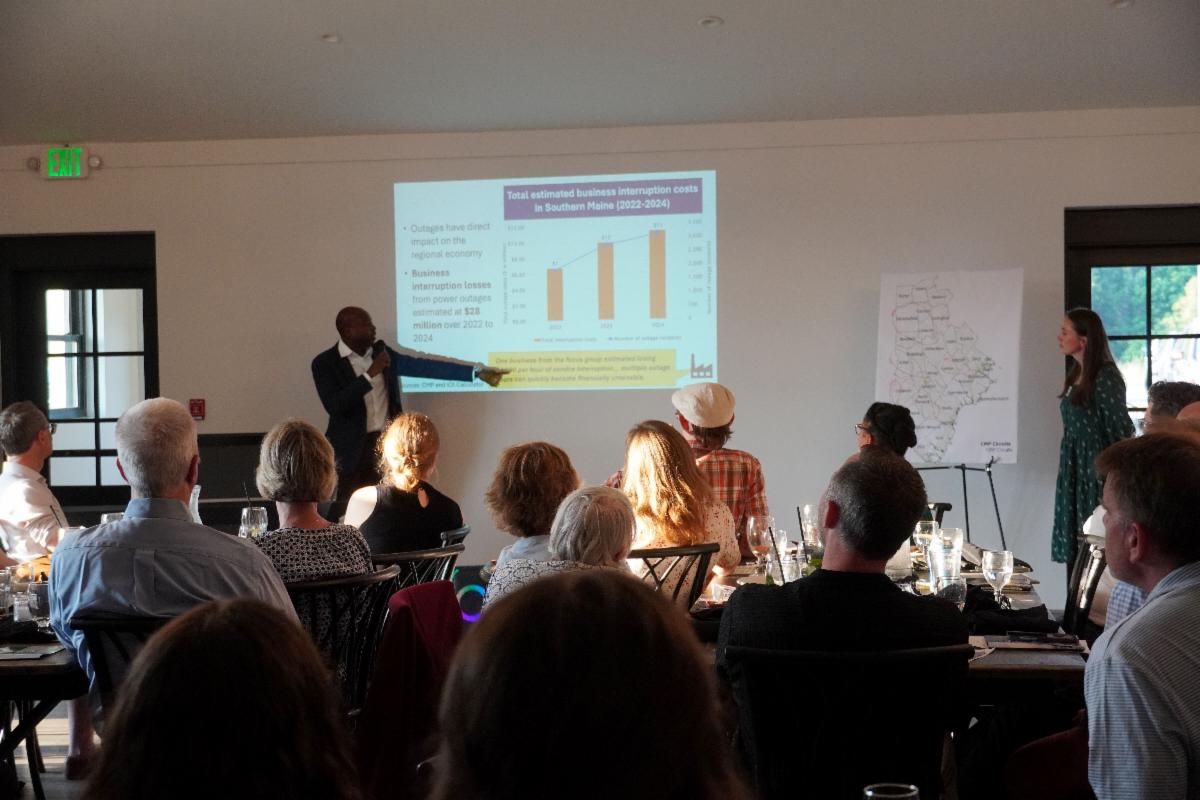
The topic for SMPDC’s annual meeting earlier this month was Bright Ideas for a Stormy Future: Strengthening Southern Maine’s Electrical Grid. The team leading the Southern Maine Energy Resilience Plan project presented preliminary results from their assessment of power outages in the region and led a lively discussion about the impacts these have on our communities and the ways this plan could help build energy resilience.
Below are a few preliminary findings from the assessment:
-
Outage frequency has more than tripled in Maine over the past 20 years.
-
Trees hitting and damaging infrastructure is the leading cause of weather-related outages in our region.
-
Our rural, inland regions are especially vulnerable to weather-related outages because their circuit lines are longer and surrounded by forests.
-
Weather-related outages in southern Maine are 19 hours long on average.
-
Outages have significant economic costs. One business from a focus group estimated losing $4,000 per hour of service interruption.
-
Outages are a health risk for our community members. Several focus group members shared their fear for their and their loved ones' safety without access to heat, medication, transportation and medical devices.
| | | Staff Attends New England Municipal Sustainability Network Meeting | | |
This month our two fellows, Kaya Williams and Owen Miller, attended the New England Municipal Sustainability (NEMS) Network summer meeting in New Bedford, Massachusetts. This meeting allows municipalities from across New England to gather and discuss their ongoing work, successes, and challenges.
Many municipalities discussed their interest in growing their electric vehicle fleets and charging infrastructure, establishing energy coaching programs, and combatting coastal issues such as flooding. Numerous communities also brought up struggles with federal funding cuts and political barriers to implementing sustainable initiatives.
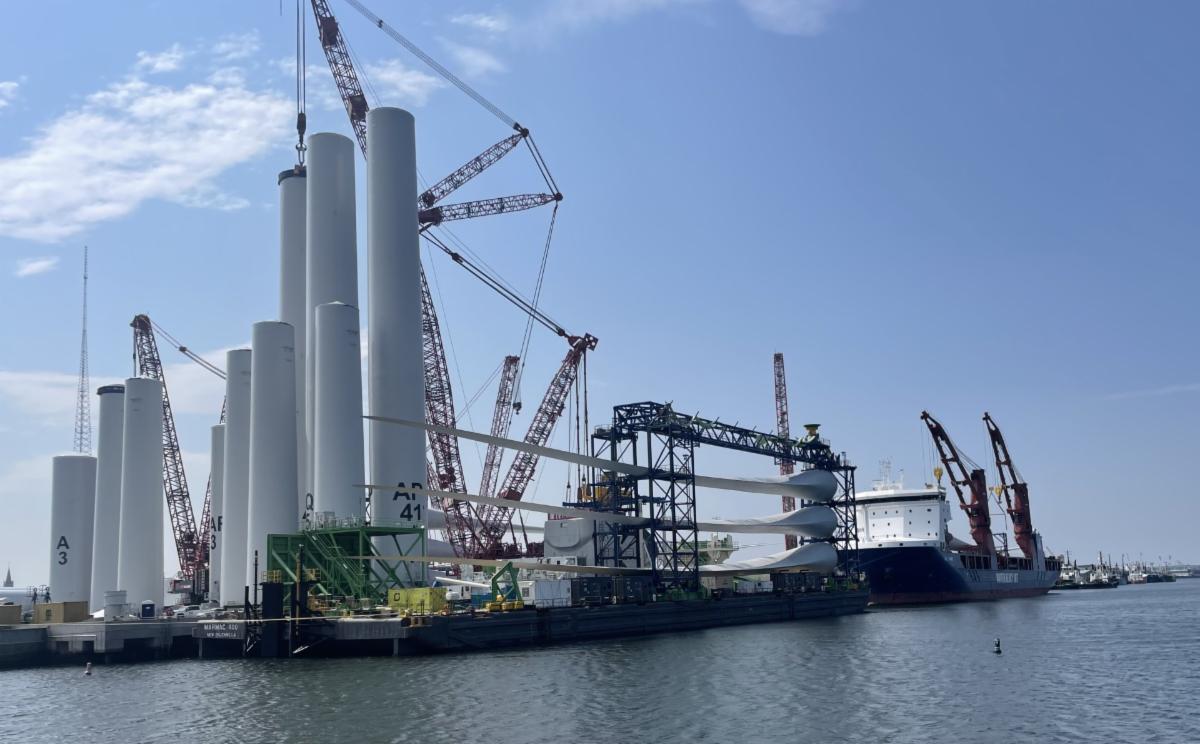
Additionally, the City of New Bedford gave a presentation on how the port is planning to adapt to rising sea levels and a changing fishing industry. They highlighted how the town is working to build trust between fisherman and wind developments, as they continue to lease area for offshore wind.
| | | New Funding Opportunity: Maine Trails Program | | |
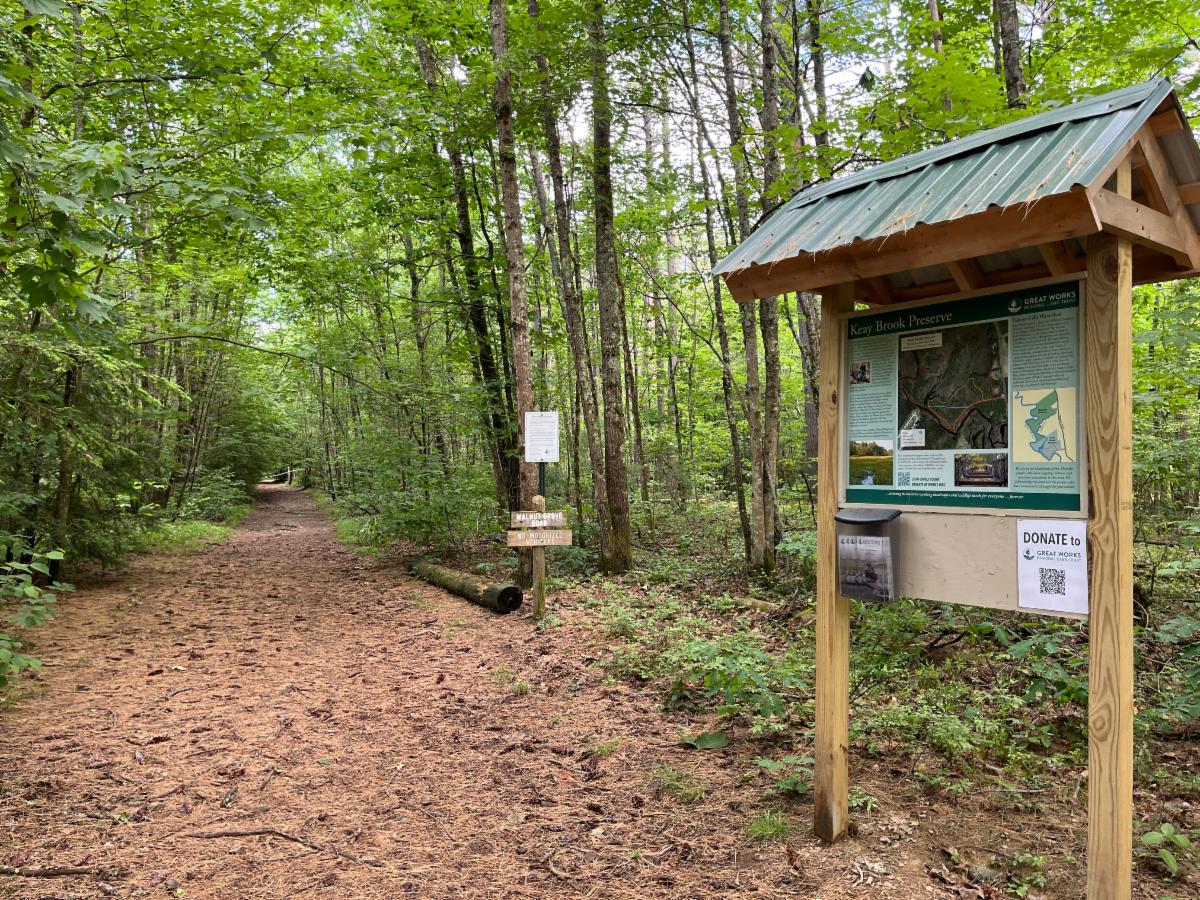
The Maine Trails Program is a new statewide initiative supporting trail design and development for outdoor recreation and active transportation. With $30 million in state funding available through 2034, the program supports motorized, nonmotorized, and multi-use trails across Maine. Up to $7.5 million per year may be awarded to trail projects. The program is administered by the Maine Bureau of Parks and Lands within the Department of Agriculture and Forestry.
Applications are currently being accepted, with a deadline of Friday, September 26, 2025.
| | | Southern Maine Energy Navigator Program: Website & Resource Hub | | |
The Southern Maine Energy Navigator program has launched! The program offers free technical and financial support to homeowners in Kennebunk, Kennebunkport, Kittery, Wells, and Ogunquit who are interested in making energy upgrades.
To learn more about the program, visit energynavigatorme.org. Be sure to check out the Resource Hub for information on a variety of home energy upgrades, as well as links to local organizations and additional resources.
| | | Upcoming Trainings & Resources | | |
Community Resilience Partnership Webinar: Updated List of Community Actions – Tuesday, July 8, 1:00 – 2:00 PM
Join this webinar to learn more about the Community Resilience Partnership's List of Community Actions, which has been updated to align with Maine Won't Wait 2024 strategies and recommendations. This list serves as a self-assessment for enrolling communities to identify climate action priorities, and as a list of community actions eligible for no-match Community Action Grant funds. The list has been expanded to include waste management, land use policy development, and more. Register for the webinar here.
Coming Soon: Training for Residential Energy Contractors
The Governor’s Energy Office (GEO) is launching the Training for Residential Energy Contractors (TREC) program, aimed at growing Maine’s energy efficiency workforce. Funded by a $1.3 million award from the U.S. Department of Energy, TREC will support recruitment, workforce development, business growth, and training in underserved communities. GEO anticipates issuing a Request for Applications later this year. A kickoff meeting of the program's Advisory Committee occurred last month. Find meeting slides and more information about the program here.
| | | |
The Rural Climate Partnership offers grant funding to organizations who support rural-led and rural-serving organizations. The program prioritizes communities smaller than 50 thousand acres with population density under 10,000. Awards range from $20,000 - $100,000 for project work and from $75,000 - $150,000 for general operating support. Letter of Inquiry forms are being accepted and reviewed on a rolling basis. Learn more here.
The Maine Natural Resource Conservation Program (MNRCP) provides grants for projects that protect vulnerable aquatic resources throughout the state. MNRCP can provide funding for land acquisition, closing costs, restoration site selection, project design, construction, monitoring, and long-term management. Letters of Intent are due June 26. Learn more here.
Land for Maine’s Future Public Access to Maine Waters Fund helps municipalities, nonprofits, and land trusts purchase access rights on small parcels of land to create or enhance aquatic access points. Projects can support facilities for trailered boats or small, hand-launched craft (canoes, kayaks), and provide bank fishing, swimming, clamming, worming, or other aquatic activities for the general public. Learn more here.
The Maine Outdoor Heritage Fund (MOHF) provides grants to nonprofit organizations, municipalities, and educational institutions for projects that support conservation efforts, public land management, and natural resources education. Applicants must first submit a Summary Application Form by July 15. Learn more here.
| | | Thanks for reading! Follow us on social media for more news and updates, or reach out to learn more. | |
Southern Maine Planning & Development Commission | Website
| | | | | |