|
Hello Synapse Spotlight readers,
Welcome to the fifth edition of Synapse Spotlight! We're delighted to connect with you in your inbox. We hope you had a restful holiday break and we wish you a happy and healthy New Year! At the Society of Biological Psychiatry (SOBP), one of our main goals is to make neuroscience accessible to everyone. Please feel free to share this newsletter with your students, colleagues, family members, neighbors, and beyond!
In this issue, we delve into fascinating new research from all three Biological Psychiatry journals. From strategies to regulate emotions, vitamin D as a potential therapy for mental health disorders, and how stress alters your brain’s ability to communicate—there is plenty to discover!
This issue also highlights an early career SOBP member and researcher who is using neuroimaging to better understand mental disorders. Additionally, don’t miss “Balancing Both”, an insightful commentary on managing the challenges of parenting and a career.
We’re kicking things off with a look at how giant squids have contributed to the history of neuroscience. Finally, be sure to test your knowledge with our brain teaser, “Around the Brain in MCQ’s”, designed to challenge your understanding of different brain regions!
Happy reading!
The Synapse Spotlight Team
| History and Mystery of the Axon—And Giant Squids | |
Axons are essential parts of brain cells, or “neurons”, sending electrical signals to enable communication. But did you know that our understanding of these signals owes much to the giant squid? | |
|
European Squid (Loligo vulgaris) Credit: Sylvian Le Bris, iNaturalist
www.inaturalist.org/photos/316512512
| |
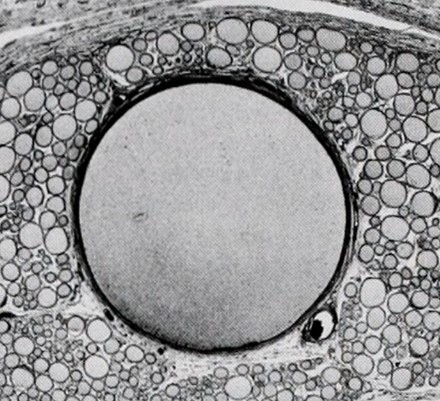
Diameter of the giant squid axon Credit: A companion guide to the Hodkins-Huxley papers | |
|
In the 1950s, researchers Hodgkin, Huxley, and Eccles used the giant axon of a squid—1,000 times larger than a human's—to uncover how tiny particles like sodium and potassium generate electrical signals when neurons fire. These signals, now known as action potentials, are the foundation of neural communication. Thanks to the squid’s enormous axons, the researchers could observe how electrical signals travel quickly, revolutionizing our understanding of neural function.
While studies like these are now part of neuroscience’s history, they laid the groundwork for cutting-edge research in neuroscience and psychiatry. Today, we continue to explore how axons and axonal damage contribute to central nervous system diseases like multiple sclerosis or complications following bacterial or viral infections.
| |
Balancing Both: Parents Navigating Careers | |
|
Juggling a career and parenthood is one of life’s toughest challenges. While work often brings its own stressors—deadlines, promotions, workplace dynamics—parenting introduces unique pressures, known as parenting stress. This stress stems from factors like parenting competence, parent-child interactions, socioeconomic status, single parenthood, and mental health issues, and it can affect the well-being of both parents and children.
Dr. Annmarie MacNamara, an SOBP member and researcher in Austin, TX, describes the experience as “a bit like having two jobs. It’s hard to feel like you’re doing good enough at either!”
Her advice for finding balance:
• Be flexible. Use the time you have wisely and adjust expectations. “Instead of thinking, ‘I can no longer exercise,’ try, ‘I can fit in three jogs a week and a weekend gym session.’”
• Rely on your support system. Lean on family, friends, or partners for help.
• Lower your standards. “Cut yourself some slack. Aim to do your best and learn as you go.”
• Enjoy the moment. “It’s okay to feel frustrated or disappointed sometimes. Just do what you can—it won’t last forever.”
Balancing both roles may not feel perfect, but with flexibility and support, it’s possible to find joy.
| |
Hot topics in Biological Psychiatry | |
Rethinking emotional regulation: New insights on reappraisal | |
|
SUMMARY: Dr. Sarah Herzog, a researcher from Columbia University’s MIND Research Clinic, explored how emotion regulation affects brain function and suicidal ideation in adults with depression. Her team focused on reappraisal—a strategy that involves refraining your interpretation of a situation to be more positive. Surprisingly, they found that when depressed individuals used reappraisal on their own (without instruction), it increased prefrontal cortex activity but also led to greater suicidal ideation after stress.
“Flexible emotion regulation is typically seen as a marker of mental health, but this study suggests it’s not universally effective,” Dr. Herzog noted. For people with depression, misusing reappraisal or avoiding negative emotions entirely can worsen stress and symptoms.
| |
Why it matters: This research challenges the idea that all emotion regulation is inherently good. It highlights how immediate reappraisal might hinder those with depression from processing emotions and stress. By combining brain imaging with daily assessments of emotions (ecological momentary assessment), the study provides a nuanced understanding of emotion regulation’s role in mental health. | | | |
The Dopamine Boost: Vitamin D’s role in dopamine regulation and emerging therapies | |
|
SUMMARY: Dr. Gustavo Angarita and his team at Yale University School of Medicine explored vitamin D’s potential to increase dopamine, a key chemical messenger, in humans for the first time. While previous studies showed vitamin D regulates dopamine in rodents, this is the first human study to investigate this connection. Using PET imaging, the researchers measured dopamine receptors before and after amphetamine stimulation. Participants given vitamin D the night before showed increased dopamine receptor availability and greater dopamine release following stimulation compared to those given a placebo
Dr. Angarita notes, “Vitamin D is a safe intervention, but we need more research on optimal dosing and regimens for clinical benefits.”
| |
Why it matters: This study highlights vitamin D’s potential as a therapeutic for conditions with dysregulated dopamine, such as cocaine use disorder and ADHD. It opens new avenues for clinical research and raises important questions about its broader applications. | | | |
From stress to solutions: Exosome research unlocks new paths for depression diagnosis | |
|
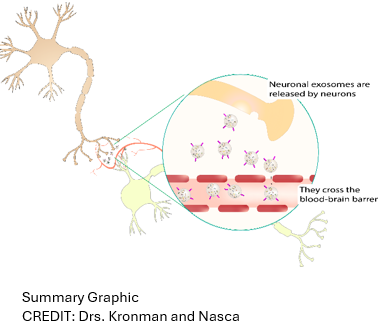
SUMMARY: Drs. Hope Kronman and Carla Nasca led their New York-based team to investigate how stress impacts brain communication by examining neuronal exosomes—tiny molecules that carry information to maintain brain flexibility. They found stress increases exosome levels in the blood and hippocampus, a brain region involved in cognition and stress responses. Additionally, they found the new antidepressant candidate acetyl-L-carnitine (LAC) helped regulate stress-induced exosome release.
| |
Why it matters: Drs. Kronman and Nasca were excited about these findings, telling us that these data could lead to new, accessible biomarkers for depression. Linking brain molecule changes to blood levels offers a promising path for diagnosing depression and monitoring treatment responses with simple lab tests. | | | |
SOBP member spotlight: Dr. Ju-Chi Yu | |
|
Meet Dr. Ju-Chi Yu, a postdoctoral research fellow at Centre for Addiction and Mental Health in Toronto, Canada. As an interdisciplinary researcher, she focuses on enhancing methodological rigor in neuroimaging research for complex mental health disorders. Using fMRI and advanced statistical methods, Dr. Yu explores how functional brain configurations relate to cognitive performance and transdiagnostic brain features in schizophrenia spectrum disorders (SSDs) and autism spectrum disorder (autism). Her work uncovers the mechanisms behind atypical social cognitive behaviors in these disorders, informing the development of individualized interventions.
Beyond her research, Dr. Yu is a leader in promoting Open Science. As Chair of the Open Science Room (2023-2025) at the Organization for Human Brain Mapping and a participant in Canada’s Controlled Access Management (CAM) Initiative, she fosters national and international collaborations to advance open science.
Learn more about Ju-Chi’s research and the TIGRLAB here!
| | |
Around the brain in MCQs! | |
|
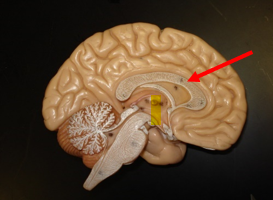
Which brain region makes sure the right and left sides of the brain work together and communicate effectively?
a. Occipital cortex
b. Corpus callosum
c. Amygdala
d. Hippocampus
Scroll to the bottom of the newsletter to find the answer!
| |
|
To learn more about the Society of Biological Psychiatry (SOBP), or to become a professional member, visit https://sobp.org/
To subscribe to our newsletter, click here: Newsletter sign-up
To reach out to an expert, or for topic suggestions, email sobp@sobp.org
To learn more about SOBP journals, click here: https://sobp.org/publications/journals/
Press releases: https://sobp.org/publications/journal-press-releases/
To learn more about the brain and brain disorders, listen to the BrainSTEM podcast, hosted by SOBP members. Available on Spotify, Apple Podcasts, and more.
| |
How can I get involved?
SOBP is a proud Associate Member of the American Brain Coalition. Visit the website for the American Brain Coalition to learn more about their vision and how together we can advocate for increased support of research that will lead to better treatments for our patients as well as a national commitment towards finding cures for individuals with disabling neurological and psychiatric disorders.
| |
How can I get help?
We can all help prevent suicide. The 988 Lifeline provides 24/7, free and confidential support for people in distress, prevention and crisis resources for you or your loved ones, and best practices for professionals in the United States.
Call or text 988; Llama al 988 (para ayuda en español)
| |
|
Find a therapist in your area with the Psychology Today’s Find a Therapist Tool: www.psychologytoday.com
Visit the National Alliance on Mental Illness (NAMI) website
Visit the National Institute of Mental Health (NIMH) website
| |
Brain teaser answer: B- Corpus callosum
The corpus callosum is the brain’s superhighway, connecting the two halves of the brain to enable communication and coordination. Notice its c-shaped curves in the model, showing center of the brain where the two halves connect. In Latin, corpus means "body," and callosum means "thick texture," referring to the thick bundle of nerve fibers that link the left and right sides of the brain. Without it, your right hand wouldn't know what your left hand was doing—total chaos!
Photo Credit: Brain Model with Corpus Callusom
Adapted from www.flickr.com/photos/biologycorner/4160835158
| | | | |