|
Hello Synapse Spotlight readers,
Welcome to the latest edition of Synapse Spotlight! As we reach the halfway point of 2025, we’re excited to share new discoveries in neuroscience and highlight the incredible work of our community. At the Society of Biological Psychiatry (SOBP), we remain dedicated to making neuroscience accessible to all. Please feel free to share this newsletter with your students, colleagues, family, and friends!
In this issue, we explore how both human and animal research are advancing our understanding of brain health in mood disorders. One featured study examines how monitoring brainwaves can help track treatment response. Another recently published review highlights the role of biological rhythms – and their disruption – in the development and treatment of conditions like depression and bipolar disorder.
You’ll also find a brief overview of the history of mood disorder research and treatment, as well as a recap of our second public engagement event at the SOBP Annual Meeting this past May in Toronto, Canada.
This month’s Member Spotlight features Dr. Madeleine F. Dwortz, a researcher at the University of Texas at Austin. Dr. Dwort’z research explores how molecular and cellular changes in the brain contribute to complex behaviors and psychiatric illnesses.
Lastly, test your knowledge with our “Around the Brain in MCQs” quiz—answer at the end!
For even more groundbreaking new research, explore the latest issues of our three journals: Biological Psychiatry, Biological Psychiatry: Cognitive Neuroscience and Neuroimaging, and Biological Psychiatry: Global Open Science.
Happy Reading!
The Synapse Spotlight Team
| | Sadness, Science, and the Spleen? | | |
Mood symptoms—such as persistent sadness, suicidal thoughts, and emotional highs and lows—have been observed throughout human history. It wasn’t until the time of the Greek physician Hippocrates (460-379 B.C.) that these symptoms were formally categorized as disease states. Hippocrates proposed that mental and physical health were governed by an internal balance of four bodily fluids, or “humours”: yellow bile, black bile, phlegm, and blood. He believed that melancholia—a condition marked by sadness, insomnia, and irritability—was caused by an excess of black bile in the spleen. Treatments at the time included bloodletting, dietary and lifestyle changes, exercise, and bathing. While our scientific understanding and treatment of mood disorders like depression have advanced tremendously since Hippocrates’ time, there is still much to discover.
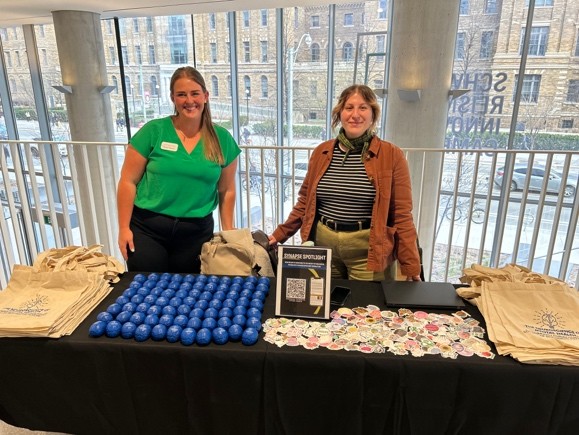
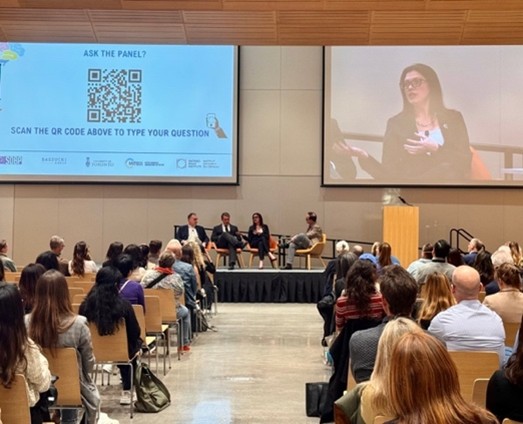
| | Powering the Brain: Metabolism and Mental Health | | At the 2025 SOBP Annual Meeting in Toronto, we hosted our second annual public engagement event: Powering the Brain: Metabolism and Mental Health. This free pre-conference talk brought together leading experts to explore how brain metabolism influences mental health, highlighting cutting-edge research in an accessible and engaging way. Held in partnership with the Mitochondrial Innovation Initiative, the Baszucki Group, the University of Toronto, and the Ontario Brain Institute, the event welcomed a diverse audience—including community members, scientists, and individuals with lived experience. The event built on the success of our 2024 public talk in Austin, Texas, and continues SOBP’s commitment to connecting science and society. | | Hot topics in Biological Psychiatry | | New Brainwave Biomarkers Could Advance Depression Treatments | | A new study from Dr. Etay Hay’s lab at the University of Toronto, led by Dr. Frank Mazza, has uncovered brainwave patterns that may help track the effectiveness of a novel treatment for depression. The research focused on GL-II-73, a compound that enhances activity at the α5-GABAA receptor—known for its role in calming brain activity, which is often disrupted in depression, anxiety, and aging. Unlike traditional drugs like diazepam, which broadly affect the brain and can cause side effects like drowsiness or dependence, GL-II-73 works more selectively. | Using electroencephalography (EEG) in rats, the researchers found that the compound consistently reduced the strength of theta oscillations—a specific type of brainwave. This produced a distinct and trackable brainwave “signature” of the drug’s action. “The EEG signatures of the targeted pharmacology were nicely distinguished from those of non-specific pharmacology,” said Dr. Hay. | |
Why it matters: These findings suggest that EEG recordings could offer a simple, noninvasive way to monitor treatment response—particularly useful in clinical trials. Dr. Hay’s long-term goal is to use EEG biomarkers to guide dosing and track effectiveness in patients with depression. | | | | The Role of Circadian Rhythm in Depression and Bipolar Disorder | | |
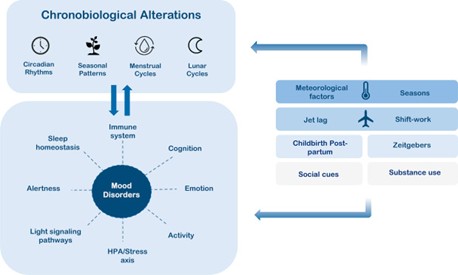
A new review paper by Dr. Pierre A. Geoffroy and Dr. Julia Maruani at Bichat-Beaujon AP-HP University Hospitals explores how biological rhythm disruptions—such as those caused by seasonal changes, jet lag, childbirth, or shift work—may play a causal role in depression and bipolar disorder. “Biological rhythm disruptions are not just symptoms of mood disorders, but early and predictive markers of mood episodes,” explains Dr. Geoffroy. “Recognizing and tracking these disturbances can help identify individuals at risk and guide personalized interventions before a full episode develops.”
One of the most striking insights from this work is the identification of Chronos Syndrome—a constellation of early circadian and sleep-wake disturbances that consistently precede mood episodes in both unipolar and bipolar depression. This concept provides a promising clinical framework for early detection and preventive care.
The long-term goal of this research is to develop real-time, individualized circadian and sleep profiles using wearable sensors, actigraphy, and digital tools to predict and prevent mood episodes. “Ultimately, we want to integrate sleep and circadian biomarkers into precision psychiatry and tailor chronotherapeutic treatments—such as light therapy or sleep stabilization—to each person’s physiopathology,” Dr. Geoffroy adds.
| |
Why it matters: This paper highlights the potential of circadian biomarkers to interact with broader physiological systems that influence mood disorders. Incorporating these markers into diagnostic and treatment frameworks may significantly improve the ability to predict, prevent, and personalize care for conditions like depression and bipolar disorder. | | | | SOBP member spotlight: Dr. Madeleine F. Dwortz | | |
Dr. Madeleine F. Dwortz, Ph.D., is a postdoctoral researcher in the Laboratory of Affective Neurogenetics at the University of Texas at Austin. Dr. Dwortz’s research investigates how molecular and cellular changes in the brain underlie complex behaviors and psychiatric illnesses. She focuses on how stress, social experiences, and affective states shape gene expression and neural circuit function in brain regions linked to mood disorders. She uses tools such as gene expression profiling in human postmortem brain tissue and computational analyses to uncover molecular pathways and biomarkers associated with psychiatric conditions. In a recent publication, Dr. Dwortz introduced novel methods to study neural activity and gene expression at the level of single neurons in preclinical models—specifically related to how the brain encodes social experience.
Dr. Dwortz hopes that her work will help bridge molecular neuroscience and psychiatry by uncovering gene networks and biological signatures that inform new targets for prevention or treatment of mood disorders.
| | | Around the brain in MCQs! | | |
Which part of the brain is often implicated in depression due to its role in emotion processing ?
A. Visual Cortex
B. Amygdala
C. Medial Prefrontal Cortex
D. Hippocampus
Scroll to the bottom of the newsletter to find the answer!
| | |
To learn more about the Society of Biological Psychiatry (SOBP), or to become a professional member, visit https://sobp.org/
To subscribe to our newsletter, click here: Newsletter sign-up
To reach out to an expert, or for topic suggestions, email sobp@sobp.org
To learn more about SOBP journals, click here: https://sobp.org/publications/journals/
Press releases: https://sobp.org/publications/journal-press-releases/
To learn more about the brain and brain disorders, listen to the BrainSTEM podcast, hosted by SOBP members. Available on Spotify, Apple Podcasts, and more.
| |
How can I get involved?
SOBP is a proud Associate Member of the American Brain Coalition. Visit the website for the American Brain Coalition to learn more about their vision and how together we can advocate for increased support of research that will lead to better treatments for our patients as well as a national commitment towards finding cures for individuals with disabling neurological and psychiatric disorders.
| |
How can I get help?
We can all help prevent suicide. The 988 Lifeline provides 24/7, free and confidential support for people in distress, prevention and crisis resources for you or your loved ones, and best practices for professionals in the United States.
Call or text 988; Llama al 988 (para ayuda en español)
| | |
Find a therapist in your area with the Psychology Today’s Find a Therapist Tool: www.psychologytoday.com
Visit the National Alliance on Mental Illness (NAMI) website
Visit the National Institute of Mental Health (NIMH) website
| |
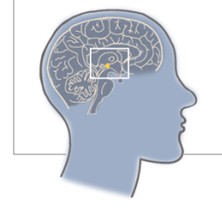
Brain teaser answer: B! - Amygdala
The amygdala is a small, almond-shaped structure (fun fact: amygdala literally means “almond” in Greek!) and a key part of the brian’s limbic system—a network of regions involved in emotion, behavior, and memory. It plays a central role in processing emotional experiences, especially those related to fear. Research suggests that overactivity in the amygdala may contribute to depression, where individuals can become overly sensitive to perceived threats.
Image adapted from AbuHasan, Q., Reddy, V., & Siddiqui, W. (2023). Neuroanatomy, amygdala. In StatPearls[Internet]. StatPearls Publishing.
| | | | |