|
Wednesday, November 25, 2026 | | In observance of the Thanksgiving holiday, this week's Movement Disorders Research News is being published one day earlier than usual. We wish our readers a happy and healthy Thanksgiving and are grateful for your continued interest and support. | | Synthetic DNA molecule shows promise in protecting cells against Parkinson’s-related damage | | | | Researchers at Norway’s SINTEF research organization are investigating a potential new approach to protecting brain cells from damage associated with Parkinson’s disease. Building on earlier findings that suppressing a specific DNA-repair gene protected vulnerable nerve cells in roundworms, researchers developed synthetic DNA molecules called antisense oligonucleotides (ASOs) to reduce production of the enzyme encoded by that gene. | | |
In laboratory experiments, human cells exposed to MPP+, a chemical used to model Parkinson’s-related mitochondrial damage, experienced approximately 40% cell death. When an experimental ASO was added, all cells survived. The approach targets messenger RNA rather than altering DNA itself, allowing researchers to fine-tune protein production.
Artem Komissarov, a SINTEF research scientist, explains, “Think of genes like a book in a library. Instead of taking out the entire book, you make a copy of the specific ’recipe’ that you’re interested in. This copy is RNA. In other words, the DNA remains inside the cell nucleus, while the RNA carries the recipe out to create the protein.” Click here to learn more.
| | Huntington’s disease clinical trials: a decade of progress and lessons learned | | A new review of Huntington’s disease (HD) clinical trials highlights a major shift toward treatments targeting the disease’s underlying biology. Since the first trials began in the 1990s, research has evolved from primarily addressing symptoms to exploring disease-modifying approaches, including therapies designed to lower mutant huntingtin protein and prevent harmful genetic changes. Decades of research and advances in genetic medicine have made these strategies possible. | | | |
However, setbacks, including the discontinuation of Roche’s tominersen program, have demonstrated that successfully targeting a biological mechanism does not necessarily translate into clinical improvement. Researchers also emphasize the importance of identifying reliable biomarkers, improving trial design, and treating patients at appropriate disease stages.
One encouraging finding: no trials in the study were discontinued because of insufficient volunteers, reflecting the Huntington’s community’s extraordinary commitment to research. Although no disease-modifying treatment has yet been approved, an increasingly diverse pipeline offers renewed hope for future therapies. Click here to learn more.
| | Novel algorithm predicts brain surgery outcomes in dystonia patients | | | | |
Deep brain stimulation (DBS) can significantly improve symptoms for some people with dystonia, but identifying patients most likely to benefit before surgery remains a major challenge. Researchers have developed DystoniaDBSNet, a deep learning algorithm designed to predict treatment outcomes using routinely acquired preoperative brain MRI scans.
The system was developed, tested and externally validated using MRI data from 175 patients at five international clinical centers. It identified patterns in brain regions and neural pathways associated with treatment response and achieved 95.5% overall accuracy, with predictions generated in an average of 36 seconds per patient.
| | |
DBS remains underused in dystonia, partly because the procedure is invasive and clinicians lack objective tools to guide candidate selection. DystoniaDBSNet could help physicians better identify patients likely to benefit and inform treatment planning. Further studies will evaluate its performance in real-world clinical settings and determine how it can be incorporated into practice.
According to Kristina Simonyan, MD, PhD, DrMed, senior author of the paper DystoniaDBSNet as a novel deep learning biomarker of predictive deep brain stimulation outcome in dystonia, “Currently, no neural biomarkers exist that help clinicians predict whether a patient with dystonia will benefit from DBS. Therefore, we set out to develop an automated platform that could objectively predict DBS treatment response by identifying relevant patterns in a patient’s brain MRI.” Click here to read the abstract.
| | Wearable sensors identify distinctive motor impairments in Parkinson’s disease subtypes | | A study involving 120 individuals with Parkinson’s disease has demonstrated that wearable sensor technology can objectively distinguish motor impairments associated with more severe disease subtypes. Researchers combined surface electromyography and motion sensors to measure tremor and voluntary movements, comparing patients classified as mild motor-predominant, intermediate, or diffuse malignant. | | | |
The findings, published from a cross-sectional investigation, revealed that reduced movement amplitude and speed were the most consistent distinguishing features of the diffuse malignant subtype. These impairments were particularly evident during repetitive hand opening and closing and forearm rotation. Other measures, including tremor frequency, movement coordination, and smoothness, did not show significant differences across subtypes after statistical adjustments.
Using movement amplitude and speed measurements, researchers could distinguish diffuse malignant cases from milder subtypes with an area under the curve of 0.84. The findings support the potential of wearable digital measurements as objective tools for characterizing Parkinson’s disease severity and monitoring motor function. Click here to learn more.
| | Make an impact this GivingTuesday | | | | |
This GivingTuesday, join millions of people around the world in supporting causes that make a difference.
Your generosity can help Movement Disorders Foundation (MDF) advance innovative research and give promising young scientists the opportunity to pursue new approaches to treating movement disorders.
Through December 8, every gift to MDF through Colorado Gives is eligible to benefit from the $1 million-plus Colorado Gives Incentive Fund, while giving MDF opportunities to earn additional prizes.
| | |
Your contribution does more than support a global day of giving. It helps fund high-risk, high-reward research by early-career investigators working to develop disease-modifying treatments for Parkinson’s, Huntington’s disease, dystonia, ataxia and other movement disorders. You can also designate your gift to support MDF’s Movement Disorders Research News!
Click here to visit our Colorado Gives page, click “Donate,” and select your preferred giving amount and designation. Thank you for believing in MDF’s mission and helping turn promising scientific discoveries into tomorrow’s treatments for movement disorders.
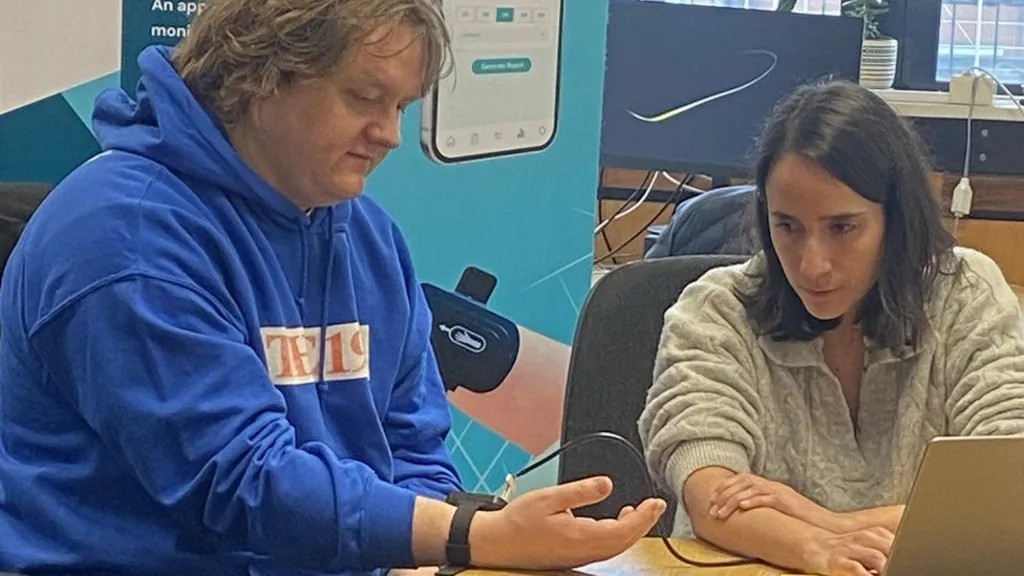
| | Wearable wrist device offers new hope for people with Tourette’s syndrome | | A wearable wrist device developed by researchers at the University of Nottingham is offering promising relief for people living with Tourette’s syndrome. The Neupulse device delivers rhythmic electrical stimulation to the median nerve at the wrist, influencing brain activity involved in movement control and helping reduce the frequency and intensity of involuntary tics. | | | |
In a 2023 UK clinical trial involving 121 participants, users experienced an average 25% reduction in tic frequency while using a prototype. Among the first users was 15-year-old Katie, who described the effect as immediate and life-changing after years of debilitating symptoms that interfered with sleep, eating, and school attendance.
The consumer wellness version, Neupulse-C, is already available, while the medical version, Neupulse-M, is undergoing regulatory review before potential NHS adoption. Researchers are also investigating whether the technology could help reduce tremors in people with Parkinson’s, potentially expanding its applications to other movement disorders. Click here to learn more.
| |
| |
Missed an issue? Click here to access our online archive of eNewsletters.
Forward MDF eNews to friends and family. Click here to receive future issues and learn more about MDF!
| | | | | | |