{View as Webpage}

White Banner with black and bright green text "TA Spotlight: Highlights from the ICADV TA Team." Series of colorful icon squares on the left side featuring various symbols, including the Illinois Coalition Against Domestic Violence logo.

This is a continuation of ICADV’s technical assistance communications spotlighting information that helps to inform domestic violence services providers how they can maximize the resources available to them.


TOPIC: Follow-up from Know Your Rights Webinar

TIMELINE: 1 Week

White banner with a black information icon and text 'HERE'S THE SCOOP' on a bright green background.

Know Your Rights

This Spotlight is intended to be follow-up guidance to the webinar ICADV put out on January 28, 2025. The questions (and answers) asked during the presentation are linked here. If you have any questions about this, please email the TA Team at ta@ilcadv.org.


DISCLAIMER:

  • This Know Your Rights resource provides general educational information. It is not legal advice, and the staff at ICADV are not your agency’s attorney(s). No attorney-client relationship is created by preparing, delivering, viewing, or asking/answering educational questions during this training.
  • This Know Your Rights resource is not tailored to your agency’s situation. Your agency is advised to retain its own legal counsel who is knowledgeable in immigration law. Please talk to an immigration lawyer for legal advice about your specific situation. 

Guidance for Domestic Violence Shelters on Immigration Enforcement

As the Domestic Violence Movement enters another year of work under a new administration, the Illinois Coalition Against Domestic Violence is providing guidance based on information sent from the Illinois Department of Human Services and the National Network to End Domestic Violence. The rulings set forth this week will undoubtedly impact services and staff in the membership. This information is of utmost importance as it aligns with our shared goal of ensuring the safety of survivors who receive services. Nothing in this guidance is intended to prohibit, or in any way restrict, compliance with 8 U.S.C. § 1373.


It is important that advocates and programs alike are familiar with and have on hand the "Know Your Rights" legal info for immigrants and programs as that information has not changed.


Programs have a duty to warn all those impacted that there is a risk of detention anywhere now, including churches, hospitals, schools, grocery stores, etc. as this ruling will undoubtedly have an impact on services due to rescinding of "sensitive locations." “Sensitive locations” were defined as schools, healthcare facilities, places of worship, social services establishments (includes GBV programs), disaster response sites, weddings, funerals, and religious ceremonies, and parades, demonstrations, and rallies.

Directions for...

Security and Community Support Staff

>>  If an immigration enforcement officer requests to access shelter facilities, clients, or records, staff should immediately notify their onsite supervisors

>> Officers should be asked to wait before security and not be allowed entrance to shelter lobby. 

>> Staff should ask the officer to wait to speak to onsite supervisors.

>> If staff receive questions from officers, they should inform them that before responding, they must receive direction from a supervisor. Staff should direct all questions from officers to supervisors. 

>> Staff should not disclose any personal information about residents to officers unless instructed by their Supervisor/Shelter Administrator to do so. 

>> If there is criminal behavior or activity involved, or if there is a threat of danger, or imminent threat of harm to any person or property involved, immediately call 911.

Supervisors

>> Supervisors should contact the Shelter Administrators, named below, as soon as possible. (If Shelter Administrators are not onsite, one Administrator will immediately travel to the site). 


While supervisors wait for the shelter administrators to arrive, they should take the following actions:

1.     Advise the officer that before proceeding with the request, the supervisor must receive direction from their Shelter Administrator.

2.     Ask to see and make a copy of or note, the officer’s credentials (i.e., name and badge number). Also ask for and copy or note the phone number of the officer’s supervisor.

3.     Ask the officer to explain the purpose of the officer’s visit and note the response.

4.     Ask the officer to produce any documentation that authorizes access to shelter facilities. This is very important!

5.     Request to make copies of all documents provided by the officer. However, do NOT open the door, and do NOT let the officer inside.

6.     Decline to answer questions posed by the officer and direct them to speak to the Shelter Administrator. Explain to officers that we are moving to respond quickly and that there are protocols for ensuring authorized entry.

7.     If the officer orders staff to provide immediate access to facilities and says they will not wait for the Shelter Administrator to receive a response from legal counsel, shelter staff should restate that they are awaiting a response from the Shelter Administrator in accordance with their policies. If the officers break down the door and force themselves inside, you may legally record all their activities.

8.     Do not attempt to physically interfere with an officer, even if the officer appears to be acting without consent or exceeding the purported authority provided by a warrant or other document. This applies to recording all interactions.

9.     If able, document the officer’s actions while in shelter premises in as much detail as possible, but without interfering with the officer’s movements.

10. Complete an incident report that includes the information gathered as described above and the officer’s statements and actions.


Shelter Administrators

>> Upon arrival, Shelter Administrators should inform officers that the shelter policy does not allow entry unless officers are authorized to do so via signed court order.

>> Request to review any authorization documents officers have. 

>> After reviewing authorization documents, inform officers that your procedures require you to consult with legal counsel. Immediately contact counsel.

>> If counsel is unavailable or officers are unwilling to wait and insist on a response, Shelter Administrators may respond based on the documentation provided without expressing consent. If the officer has:

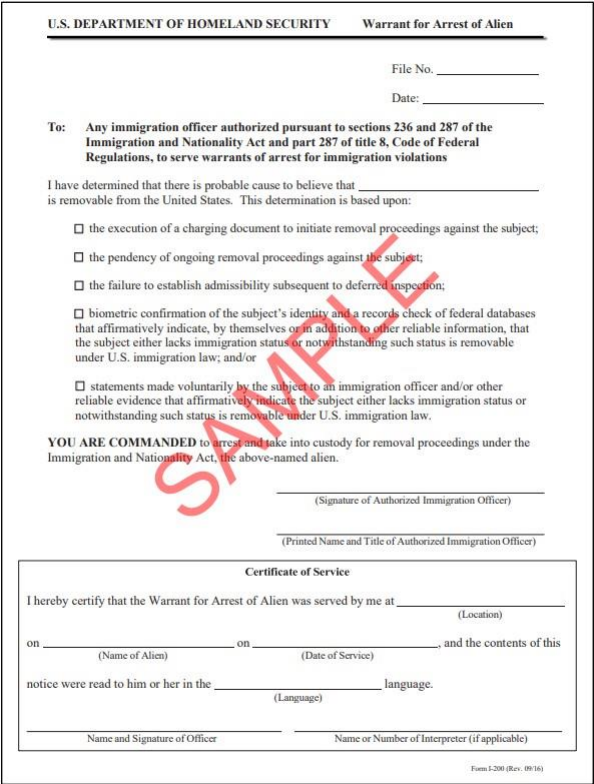
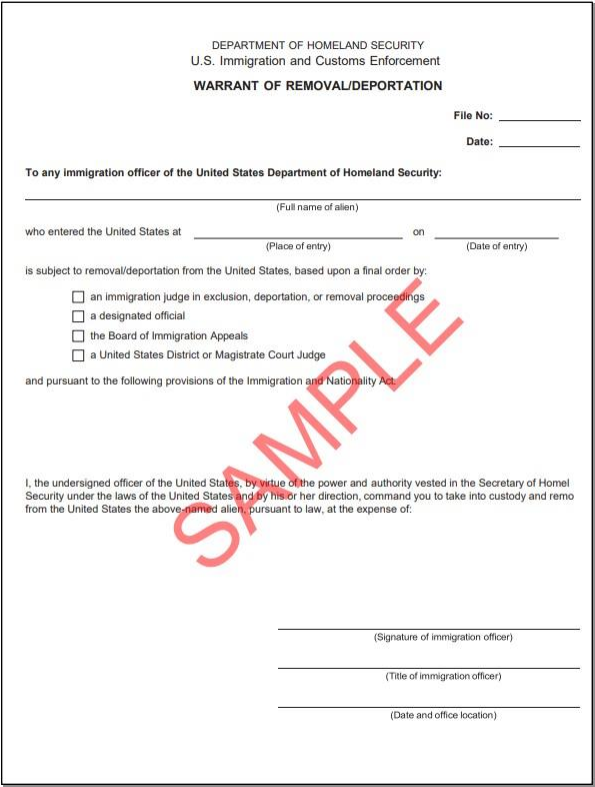
  • An ICE administrative “warrant” (see samples A & B): Immediate compliance is not required. Inform the officer that you cannot respond to the warrant until after it has been reviewed by your counsel. Provide copy of the warrant to counsel as soon as possible and submit incident report.

(L) SAMPLE A: ICE Arrest Warrant | (R) SAMPLE B: ICE Removal Warrant

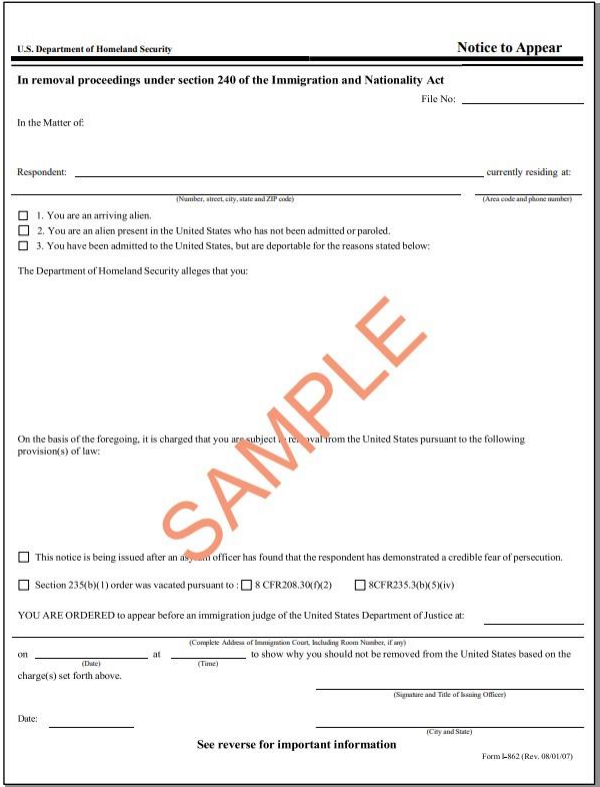
  • A “Notice to Appear” (see sample C): This document is not directed at shelter facilities and compliance from shelter staff is not required. Inform officer that shelter staff is under no obligation to deliver or facilitate service of this document to the person named in the document. If you receive a copy of the document, include in incident report and share with counsel.

(R) SAMPLE C:

Notice to Appear

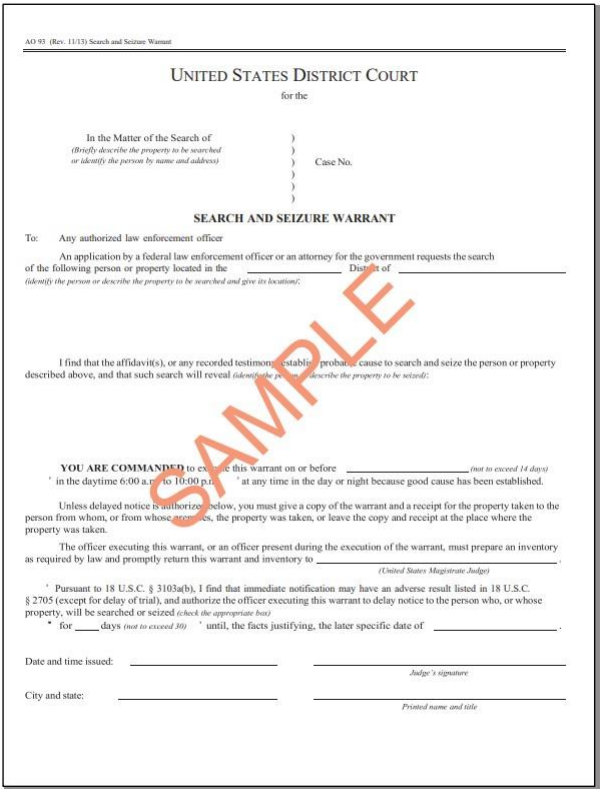
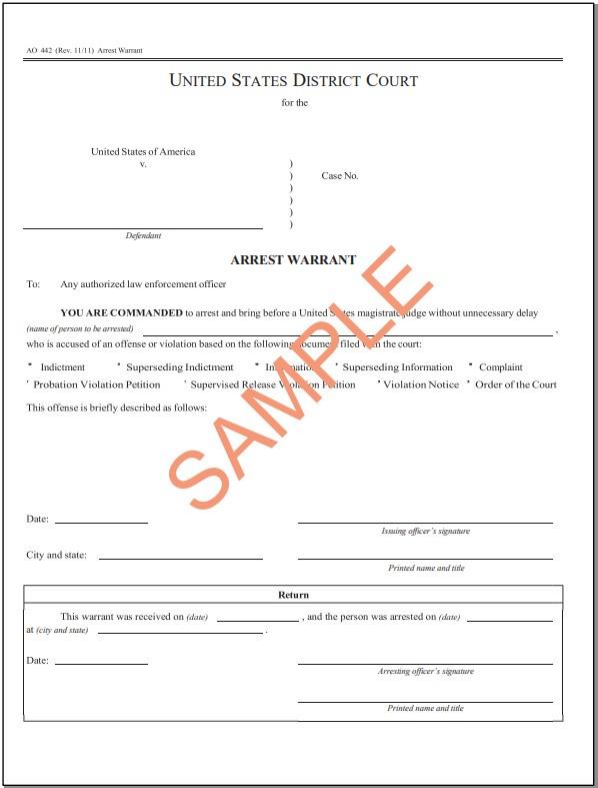
  • A federal judicial warrant (either a search-and-seizure warrant or an arrest warrant; see samples D & E): Prompt compliance usually is required, but where feasible, staff should consult with legal counsel before responding.

(L) SAMPLE D: Sesarch&Seizure Warrant | (R) SAMPLE E: Arrest Warrant

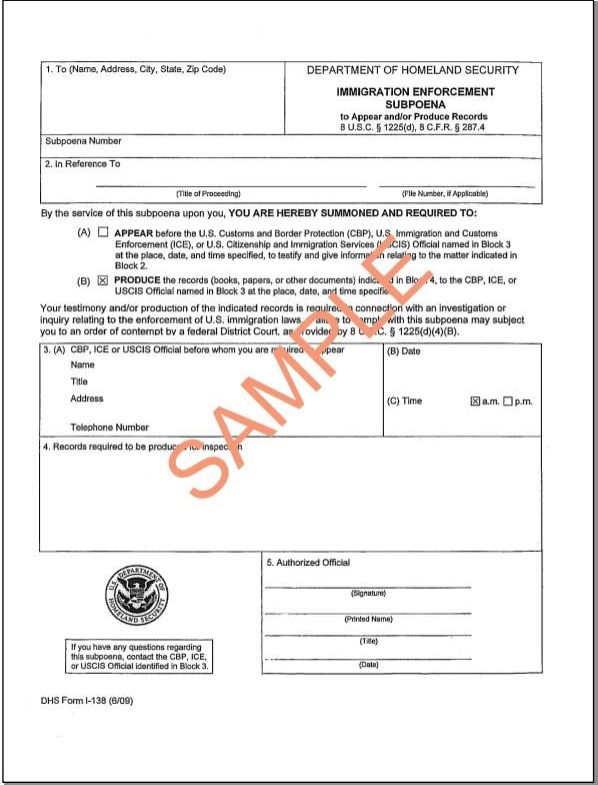
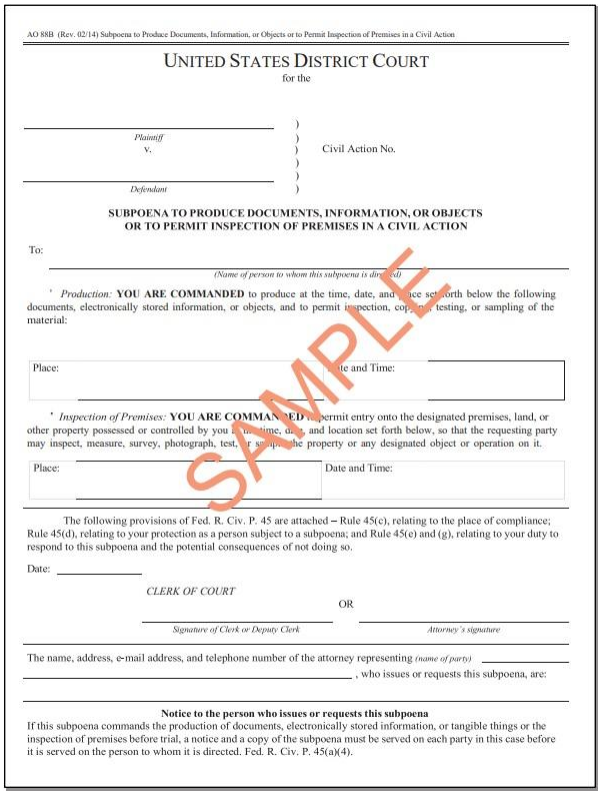
  • A subpoena for the production of documents or other evidence (see samples F & G). Immediate compliance is not required. Inform the officer that staff cannot respond to the subpoena until they have been advised by legal counsel. Provide a copy of the subpoena to legal counsel as soon as possible. 

(L) SAMPLE F: Subpoena | (R) SAMPLE G: Subpoena

What Types of Policies Programs Should Have

Direct service agencies should establish protocols for emergency situations, such as encounters with immigration and other law enforcement agents (including state/local law enforcement, or Child Protective Services) who are seeking to search, interview, investigate, arrest, or detain an individual. See sample practice tips in chapter 3 of BWJP’s Confidentiality: An Advocate’s Guide. Model policies and protocols as they relate to immigration enforcement should include:

  • Training for staff about informing program participants about their rights if they are approached by immigration officials, including the right to remain silent. Sample resources can be found from the American Civil Liberties Union or the Immigrant Legal Resource Center.
  • Protocols directing staff to immediately consult with a supervisor/program director before responding to immigration officers and informing immigration officers that they are not authorized to answer questions without first consulting with a supervisor.
  • Policies prohibiting the release of information about program participants to immigration officers unless they can provide the program with a signed judicial warrant (or subpoena) specifically requiring the release of that information or unless the client has provided written, informed consent to such release, for example, in order to help them with an immigration or other legal matter. (See template for limited release of information (ROI) in the SGM in Chapter 2, section 14 and NNEDV’s FAQ’s on Survivor Confidentiality Releases
  • Reminders to staff that they should not lie to immigration officers. For instance, if immigration agents are asking about an individual who is in the building, staff should not say the person is not there but should simply decline to answer questions about that individual, and they should consult with a supervisor. 

Protections Still in Place

Fourth Amendment: Protects all individuals from unreasonable searches and seizures.

  • These protections are reduced if the individual is within 100 miles of a land or sea border.
  • ICE will still need a judicial warrant to enter previously protected areas but only if they are considered “private”. Private spaces are spaces only accessible to certain people, like homes, businesses, and non-profit organizations. Lobbies, waiting areas, and parking lots are considered public spaces.
  • Individuals can only be arrested if ICE has a valid administrative warrant or if they have probable cause to believe the person is “removable” from the U.S.

Fifth Amendment: Ensures the right to remain silent when confronted with law enforcement.

  • Probable cause can be established if an individual voluntarily discloses their immigration status or presents documents indicating they are not a U.S. citizen during questioning. Therefore, remaining silent is vital!

Coalition Manager Finder

Webinars:

Resources for Advocates and Survivors:

Organizations:

Legislative Resources:


CEO, Carrie Boyd, also provided a vetted resource for Immigration Attorneys, Neil and Elizabeth Rambana. You can find their information here.

White banner with a black calendar icon and text 'UPCOMING SPOTLIGHTS' on a bright green background.

Black History Month: Redlining and the History of Homelessness in the Black Community


Technology for Good

White banner with a black checkmark icon and text 'WRAP UP' on a bright green background.

Stay calm and think clearly and intentionally. When in doubt, seek legal counsel.

Administrative warrants are often issued by immigration authorities and do not grant permission to enter private areas. They will say “Department of Homeland Security” and are on Forms I-200 or I-205. Judicial warrants, signed by a judge, are required for entry into private spaces and carry more authority

Have a policy and procedure in place for "what to do when..." and don't overthink it!

Did you enjoy this Spotlight? Have any questions or concerns? Have topics you'd like to see in future Spotlights? We would love to hear from you! Please take this brief survey to tell us about your experience: 

Complete the Survey HERE
Facebook  Instagram  LinkedIn  X  Web

Wait! Don't unsubscribe yet!

ICADV values timely and consistent communication with members. We ask that you carefully consider before unsubscribing to ICADV emails. Unsubscribing from a certain campaign might result in you not receiving important information and notifications that are sent using that same group in the future. If you have questions or wish to unsubscribe from a particular type of email campaign, please contact Christina.