Jan. 6, 2026

View as Webpage.

This is your biweekly update on the latest regulatory news and guidance from TABC.

Important Dates


  • Jan. 15: Excise tax reports for December due for monthly filers
  • Jan. 15: Excise tax reports for October-December due for quarterly filers
  • Jan. 19: TABC offices closed for Martin Luther King, Jr. Day
  • Jan. 20: TABC Commission Meeting

It’s time to file compliance reports

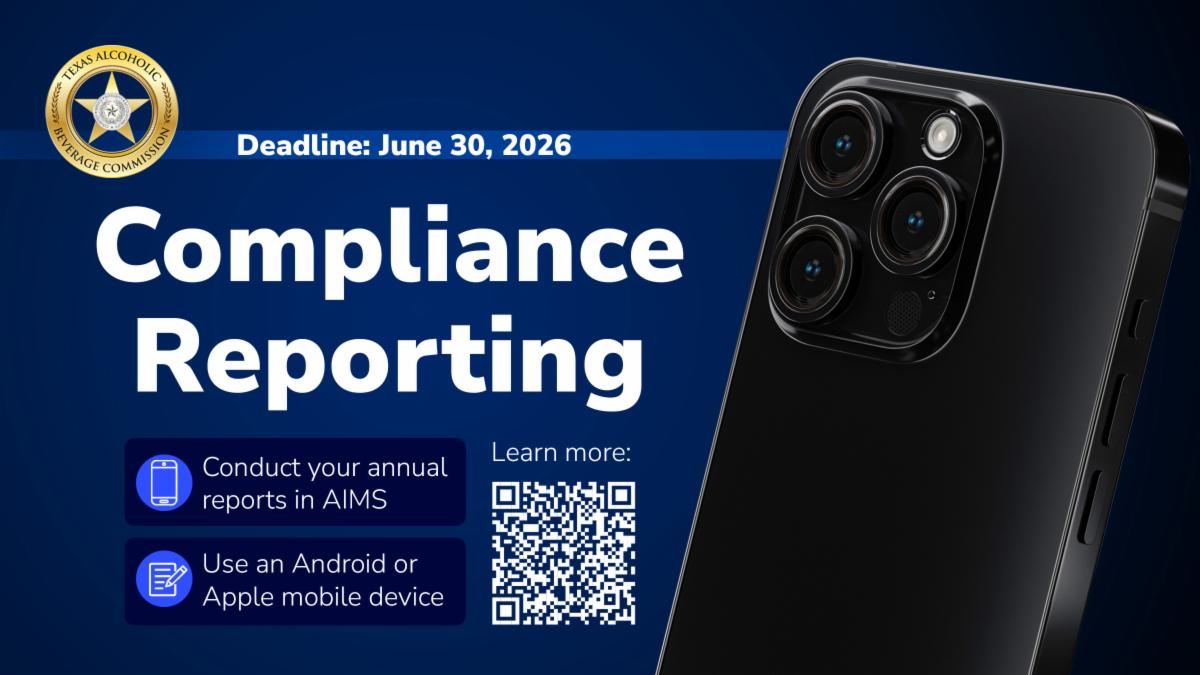
TABC license and permit holders with premises in Texas can now complete their required annual self-inspections — also known as compliance reports — in their Alcohol Industry Management System (AIMS) account. Reports must be submitted in AIMS between Jan. 1 and June 30, 2026.


Before filing, the primary AIMS user for each license and permit should log in to AIMS to verify that all contact information for the license or permit is up-to-date so that the right people get necessary notices from TABC. The primary AIMS user can also add and amend users who can access the license or permit in AIMS and assign them to complete compliance report(s). Watch the How to Add Additional Users to a TABC Compliance Report video to learn more.


When a user is ready to file a compliance report through AIMS, they must:


  • Use an Android or Apple mobile device.
  • Open the Google Chrome or Microsoft Edge web browser app. Download either app for free from the device’s app store. Do not use any other app.
  • Log in to AIMS.
  • Select the business entity for which you’re filing a compliance report.
  • From the entity’s dashboard, click the Compliance Reporting button.
  • Select the reporting year 2026.
  • Answer questions about the business’s operations. This part of the report can be done at or away from the premises.
  • Take certain photos at the premises. You must be physically present on the premises to complete this portion of the report. AIMS will not allow you to add photos that were previously taken.


Learn more on the Compliance Reporting page.

Age verification for consumable hemp sales

A TABC license or permit holder who sells consumable hemp products must — in addition to having appropriate authorization from the Texas Department of State Health Services (DSHS) and following their regulations — check a person’s ID and verify they’re at least 21 before completing the sale, service, or delivery of a consumable hemp product with that person.


These requirements are based on TABC Emergency Rules 51.1 and 51.2, which are TABC’s only regulations directly related to consumable hemp products. If you have questions about other consumable hemp regulations, please contact DSHS.


View TABC’s Consumable Hemp Products page.


Note: Non-intoxicating products containing hemp seed or hemp seed-derived ingredients that are generally recognized as safe by the FDA, including many lotions and shampoos containing hemp, are not subject to TABC’s emergency rules.

Age verification for certain alcohol retailers

Certain retail businesses must now scan a person’s ID before selling them an alcoholic beverage for off-premises consumption. Affected businesses include convenience, grocery, and liquor stores. The requirement comes from Senate Bill 650, known as the Deshawn Jagwan Act, which was passed by the Texas Legislature last year. Visit the Age Verification page to determine if your business must scan IDs.


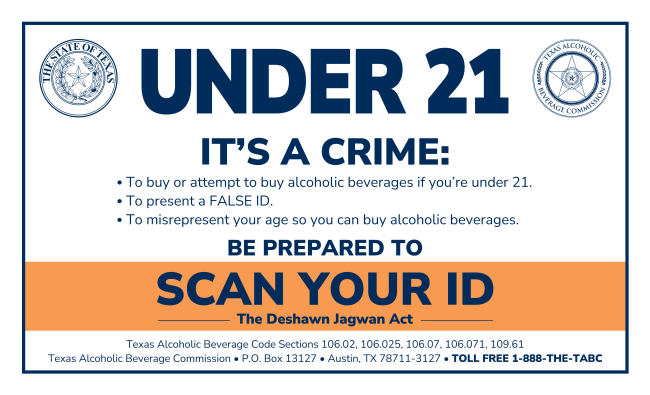
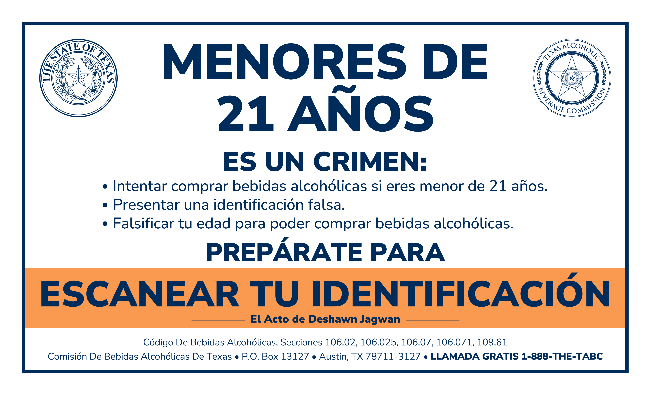
Businesses can print and display TABC’s new Under 21 – Scan ID sign, which tells customers about the ID-scanning requirement and discourages minors from trying to purchase alcoholic beverages. TABC created the sign in collaboration with the mother of Deshawn Jagwan.


Print the Under 21 – Scan ID sign in English.


Print the Under 21 – Scan ID sign in Spanish.

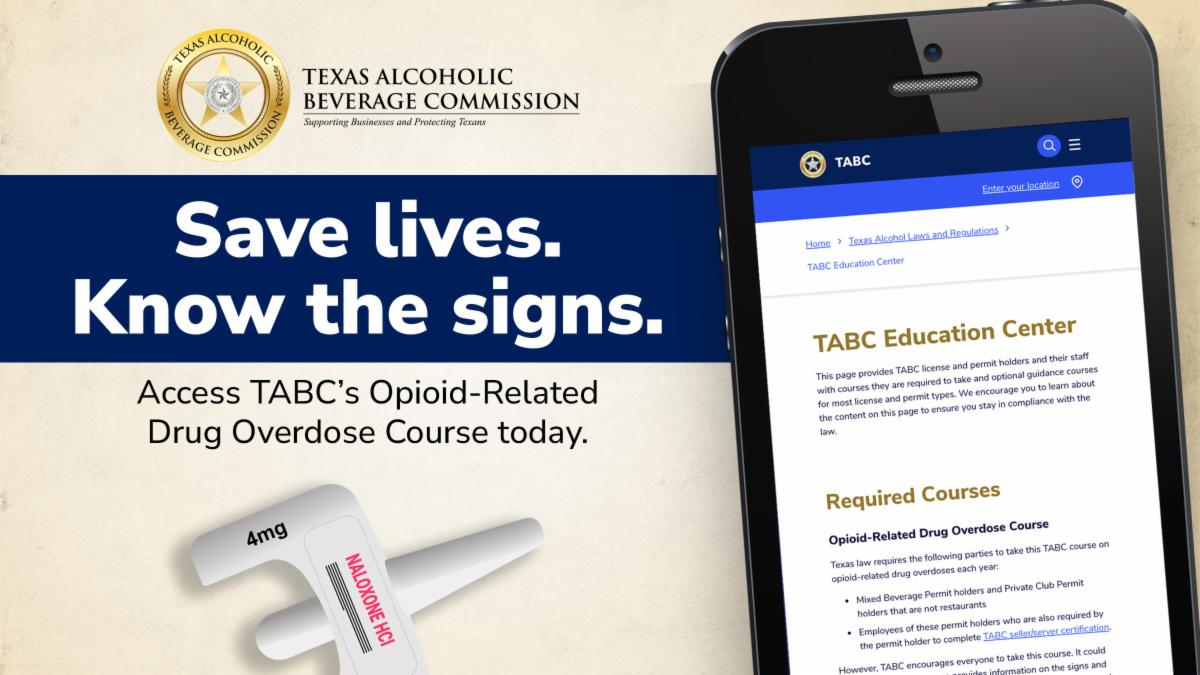
Reminder: Bar staff must take opioid course every year

Holders of a Mixed Beverage or Private Club permit and any employee required by the business to get TABC seller/server certification must take TABC’s course on opioid-related drug overdoses every year.


Visit the TABC Education Center to access the free Opioid-Related Drug Overdose Course and other optional courses to help you understand the alcohol laws in Texas.


This requirement does not apply to permit holders operating a restaurant and their employees.

Follow us on social media:

Facebook  X  Instagram  Youtube  LinkedIn