WisDOT Releases August TPC Report, Warns of Potential Two-Year Delay for I-94 East-West | |
Earlier this week, the Wisconsin Department of Transportation posted its semiannual report to the Transportation Projects Commission. This report provides updates on the status of the Major Highway Development Program (Major) and Southeast Wisconsin Freeway Megaprojects Program (SE Mega).
Key highlights include:
- The estimated cost to complete the seven ongoing Major projects and the SE Mega project (I-94 E-W) is approaching $7 billion.
- WisDOT plans to use the design-build delivery method on the I-39/90/94 Madison to Wisconsin Dells project. This approach will support earlier delivery of critical infrastructure replacements, such as the Mirror Lake Bridges.
- The report also warns of a potential two-year delay of the I-94 E-W Project due to significant utility relocations along the corridor. WisDOT is trying to reduce or eliminate the potential delay by reconfiguring let packages to deliver portions of the project earlier, avoiding conflicts. This effort would require shifting additional project funds into the 2027-2029 and 2029-2031 biennia from future years. Advancing these dollars would keep the project on schedule and avoid approximately $22 million in delay-related costs.
The I-94 East-West corridor is Wisconsin’s clearest example of how delay drives cost escalation. The project has already experienced significant setbacks that have increased its estimated price tag by more than $700 million.
Keeping these projects on schedule in the next budget cycle is critical, as delay-related costs ripple through the entire transportation program and limit the state’s ability to fund other needed improvements. These financial impacts are only part of the story, because delays also force businesses and residents to contend longer with aging infrastructure, ongoing safety concerns, and extended periods of construction disruption.
| | 600+ Local Funding Resolutions and Growing | | |
Momentum is building statewide for a sustainable transportation funding solution. Since early June, more than 100 Wisconsin local governments have forwarded resolutions supporting action, bringing the statewide total to more than 600 communities.
Together, these communities are calling on state leaders to provide a funding framework that delivers reliable revenue growth, responsibly uses available funding tools, preserves the value of transportation user fees, and ensures Wisconsin can maintain and improve its transportation infrastructure.
The resolution campaign will continue through next year's state budget process, with a goal of securing more than 1,000 resolutions from Wisconsin local governments to demonstrate the broad support for transportation investment.
| | Small Bridge Program Demand Highlights Continuing Infrastructure Needs | | |
A new one-time state grant program will deliver nearly $30 million to help about 100 Wisconsin communities replace aging small bridges and culverts. But the overwhelming demand for assistance underscores the magnitude of unmet transportation needs facing local governments across the state.
Created in the current state budget, the Local Small Structures Improvement Program (LSSIP) is Wisconsin’s first targeted effort to address deteriorating small bridges and culverts. The program prioritizes structures in the worst condition, yet requests far outstripped available funding. WisDOT received 430 applications totaling $133.7 million, more than quadruple the dollars available.
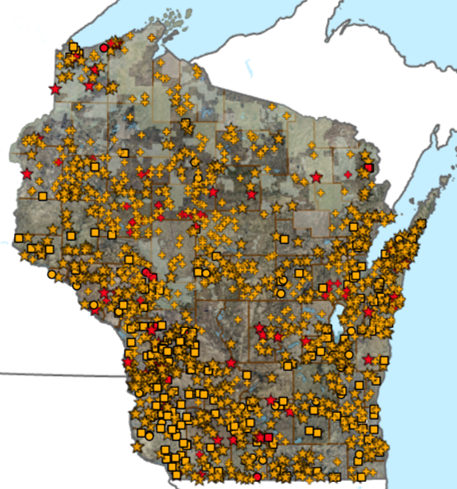
The challenge became clear after a first-of-its-kind statewide inventory and inspection of locally owned bridges and culverts spanning 6 to 20 feet was completed in 2025. The effort identified nearly 17,000 structures, including more than 1,600 rated in poor or worse condition and over 100 classified as severe. After the recently announced awards, there will still be roughly 1,500 structures awaiting timely replacement.
These small bridges may be modest in size, but their impact is anything but. When deterioration leads to lane restrictions, weight limits, or closures, communities can face significant detours affecting residents, businesses, agriculture, and emergency services. And the cost to replace these structures can far exceed annual road budgets.
The initial round of LSSIP awards marks meaningful progress. Still, sustained investment will be essential to reduce the backlog, keep local roads safe, support economic activity, and ensure reliable travel throughout Wisconsin.
See more about Wisconsin’s bridges at FixWIBriges.com.
| | New Passenger Cars Coming to Amtrak Hiawatha This Fall | | |
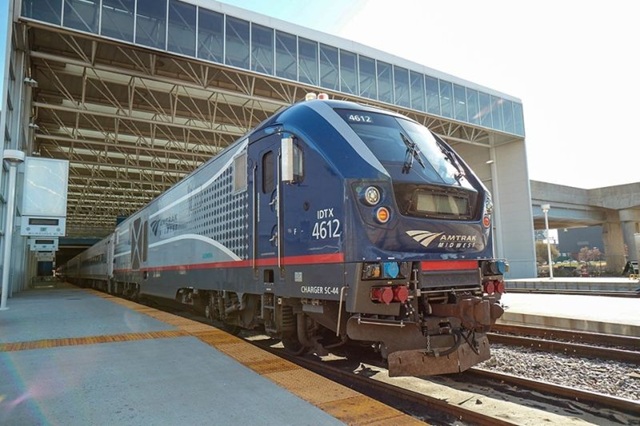
Nine new passenger cars are coming to the Amtrak Hiawatha line connecting Milwaukee and Chicago this fall. The Wisconsin Department of Transportation will receive six new coach cars and three cab-coach cars, allowing each of the route's two trainsets to expand from four cars to six. The addition increases total seating capacity to 388 passengers per train, up from the current maximum of 280, and adds space for up to nine checked bicycles per train.
The first two coach cars are expected to enter service in September, with the remaining cars added gradually through October and November. The new cab-coach cars, which include 56 passenger seats plus space for conductors to operate the train, are new equipment to the Midwest. They will replace older cab cars with no passenger seating and allow Amtrak to end the current practice of running the Hiawatha with a locomotive at each end of the train.
| | Madison Bus Ridership Tops 12M in First Full Year of BRT Service | | |
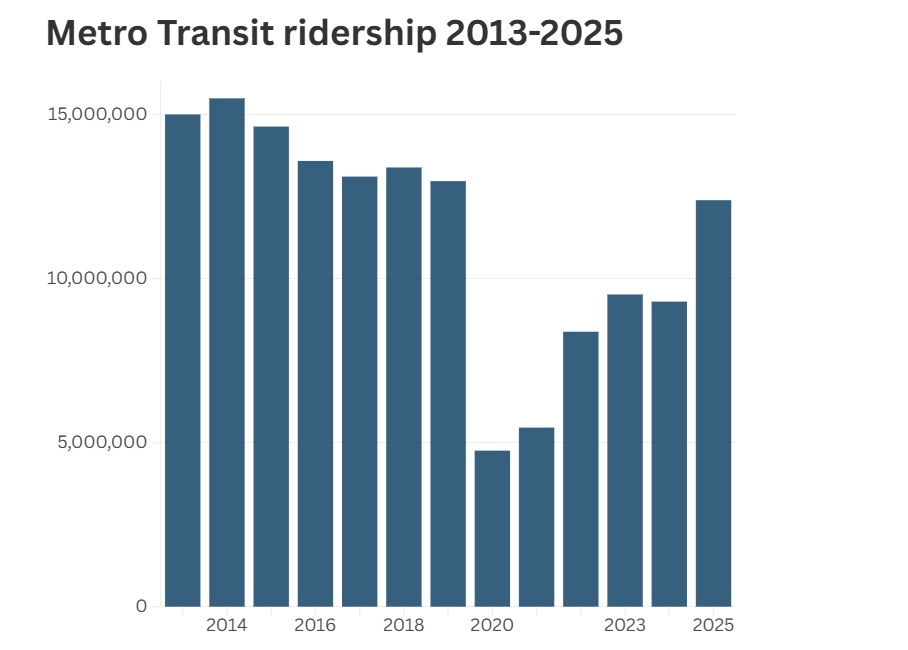
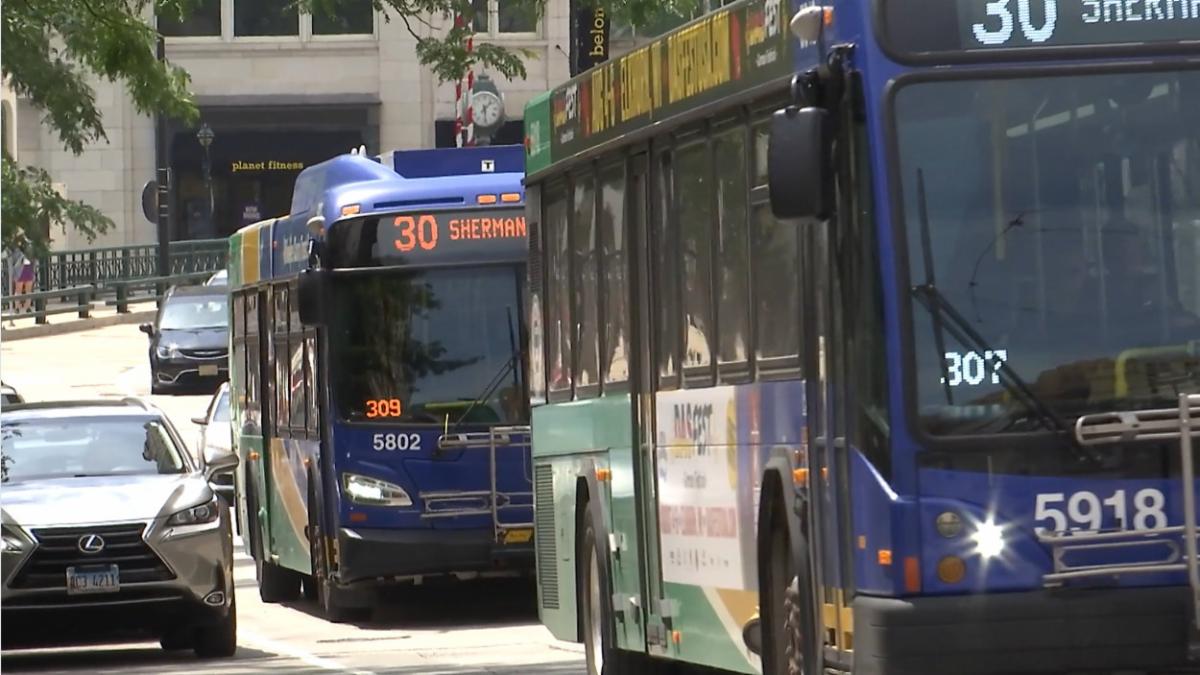
Madison's bus system recorded more than 12.3 million riders in 2025, the first full year of Bus Rapid Transit (BRT) service and a new payment system. The total represents a 28.5% increase over 2024 and a jump of more than 3 million passengers year over year.
Five of Metro's 29 routes accounted for more than half of all ridership in 2025. Route A, the system's only BRT line, topped the list with over 2.2 million annual passengers. At the same time, Route 80, which circles the UW-Madison campus, had the second-highest ridership with roughly 1.9 million.
Ridership has increased steadily in nearly every year since 2020.
| | House Leaves Town After Passing Short-Term FY 2027 CR, Senate to Act This Week | | |
Ahead of the August recess, the House cleared its schedule and adjourned until August 31 after passing a series of high-profile measures, including the annual defense authorization bill, a partial ban on stock trading by members of Congress, a budget blueprint intended to set the stage for another reconciliation bill, and a stopgap continuing resolution (CR) aimed at preventing a federal government shutdown on October 1.
While most of these actions fall outside the transportation sector, the CR, H.R. 9770, extends government operations through December 4, 2026. The measure is notable for being one of the "cleanest" CRs in recent memory. At approximately 15 pages, it contains few policy riders, funding adjustments, or special provisions. Under the bill, federal discretionary programs would operate at a 65-day proration rate, or 17.8 percent of their FY 2026 enacted funding levels.
Democratic leadership opposed the measure due to concerns about potential transfers of Homeland Security funding, but it ultimately passed the House by a vote of 220-205.
Importantly for transportation stakeholders, the CR does not extend Highway Trust Fund spending authority, which is often addressed separately when Trust Fund programs are nearing expiration. It also does not continue the advance appropriations provided under the 2021 Infrastructure Investment and Jobs Act (IIJA), including Division J funding that has supplied $36.8 billion annually to the U.S. Department of Transportation. Without congressional action, those advance appropriations will lapse at the start of FY 2027.
On Sunday afternoon, the Senate Appropriations Committee released the text of its bipartisan stopgap funding measure. Unlike the House-passed bill, which was limited largely to matters within the Appropriations Committee's jurisdiction, the Senate version is more comprehensive. It contains roughly twice as many pages of appropriations-related provisions, extends funding through December 11, and includes an additional 25 pages of program extensions from committees outside the Appropriations Committee. Among those provisions is a 72-day extension of the Highway Trust Fund and federal surface transportation programs.
However, like the House bill, the Senate proposal does not extend the IIJA's advance appropriations.
Last week, transportation organizations urged Congress to maintain FY 2026 transportation funding levels, including advance appropriations, and to avoid disruptions that could delay projects, postpone grant awards, or force agencies to scale back operations.
If the Senate passes its version of the CR, the House could consider the measure when lawmakers return the week of August 31. Otherwise, the two chambers will need to negotiate a compromise that can secure passage in both the House and Senate. Any final agreement must be completed and passed during a limited number of legislative days in September to prevent a federal government shutdown.
| USDOT Sends Surface Transportation Reauthorization Priorities to Senate | |
U.S. Transportation Secretary Sean Duffy recently sent a letter to key Senate committee leaders outlining the Department of Transportation's priorities for the next surface transportation reauthorization bill. The current authorization law, the Infrastructure Investment and Jobs Act (IIJA), is set to expire on September 30.
The letter highlights several major priorities, including transit safety and security, autonomous vehicle deployment, rail safety, infrastructure modernization, and restoring the Highway Trust Fund's long-term solvency by eliminating the Mass Transit Account. It also calls for consolidating federal grant programs, reducing support for bicycle infrastructure, expanding private-sector investment opportunities, and advancing some rail and highway initiatives.
Notably, USDOT indicated that if Congress adopts a short-term extension of the IIJA before a full reauthorization bill, it would still like some of these policy changes included. This would mark a departure from the traditional approach of using extensions simply to maintain existing programs.
The House Transportation and Infrastructure Committee has passed its version of a reauthorization bill, the BUILD America 250 Act, which is now awaiting consideration by the full House. Meanwhile, the Senate committees with jurisdiction over parts of the next reauthorization bill have not yet released their proposals. The letter is directed to the leadership of those committees. USDOT shared similar but less detailed priorities with the House Transportation & Infrastructure Committee earlier this year.
While the proposals are unlikely to be adopted in full, the letter provides insight into the Administration's transportation priorities and may help shape congressional discussions in the months ahead.
| House & Senate Committees Advance WRDA Legislation | |
Key House and Senate committees have approved their respective versions of the Water Resources Development Act (WRDA) of 2026, advancing legislation that supports the nation’s ports, harbors, inland waterways, flood and storm risk management projects, and other water resources infrastructure needs.
While the House and Senate still must reconcile differences before final passage, both versions include policy changes aimed at expanding the use of alternative project delivery methods and increasing opportunities for non-federal partners to participate in dredging and other water resource activities. Supporters view those changes as a way to reduce costs and improve project delivery efficiency.
On July 14, the House Transportation and Infrastructure Committee (T&I) unanimously approved H.R. 9497, authorizing 133 new feasibility studies for locally proposed projects and 14 U.S. Army Corps of Engineers projects ready for construction authorization. The bill also includes measures designed to strengthen alternative delivery programs, enhance non-federal participation in project development, encourage multi-year project contracts, and establish specialized Corps offices focused on inland navigation, water supply, technical assistance, and alternative delivery.
A day later, the Senate Environment and Public Works Committee (EPW) unanimously advanced S. 4949. The Senate measure authorizes 61 feasibility studies and 15 new or modified construction projects. It also reauthorizes key Environmental Protection Agency drinking water and wastewater infrastructure programs, providing $16.5 billion for the Drinking Water State Revolving Fund and $14 billion for the Clean Water State Revolving Fund, both covering 2027 through 2030, in addition to $260 million for the Water Infrastructure Finance and Innovation Act.
Enactment in 2026 will mark the seventh consecutive time WRDA has been approved on its biennial schedule.
| | EAA AirVenture Oshkosh 2026 Breaks Records | | |
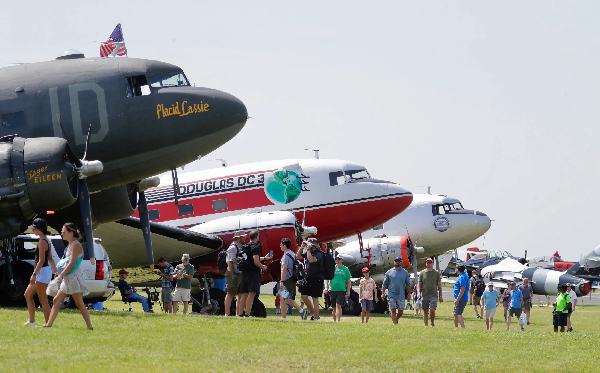
The 2026 EAA AirVenture Oshkosh fly-in convention wrapped up another record-breaking year, drawing visitors from around the world for seven days of aviation.
By the numbers:
- 734,000 attendees — up 4% from 2025 attendance
- Visitors from 98 countries
- 1,021 commercial exhibitors — a new record
- More than 10,000 aircraft on site
- 101 average takeoffs and landings per hour
- 1,600+ sessions including forums, presentations, and workshops
- 6,000 volunteers contributing nearly 300,000 hours
This year's event also served as a celebration of America 250. EAA is already looking ahead to 2027, which marks the 100th anniversary of Charles Lindbergh's historic trans-Atlantic solo flight.
| | Milwaukee County Transit System Secures $14.7 Million to Modernize Aging Facilities | | |
The Milwaukee County Transit System (MCTS) is preparing to modernize three maintenance facilities with a $14.7 million federal BUILD grant.
Planned improvements include replacing aging underground fuel and fluid tanks, installing new bus lifts, and upgrading lighting at maintenance facilities. The upgrades are intended to improve maintenance efficiency, reduce energy use and operating costs, and help prevent service disruptions for riders.
Implementation is expected to begin in 2027.
Read More
| | Thank You to Our 2026 Organizational Sponsors | | |
The Wisconsin Department of Transportation welcomes its many partners in traffic safety from across the state and nation to the Governor's Conference on Highway Safety.
This year's event will be held on August 24-25 at the Kalahari Convention Center in Wisconsin Dells.
To register, visit topslab.wisc.edu/gchs
| | |
The Wisconsin Department of Transportation and partners are hosting the Safer Together event to highlight transportation safety for drivers, passengers, pedestrians, transit riders, motorcyclists, and all transportation system users.
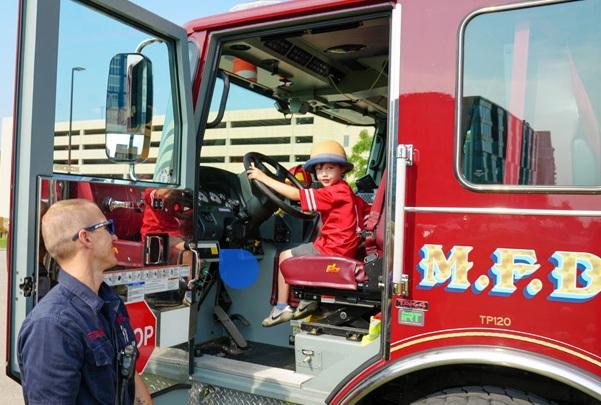
The event features children’s activities, educational booths, and demonstrations showcasing the technologies and programs that focus on transportation safety in Wisconsin.
Safer Together will be held on August 26 from 3-7 PM at Rennebohm Park in Madison.
More information is available here.
| | |
Save the date for the Wisconsin Commercial Ports Association (WCPA) Business and Annual Meeting, taking place on September 10-11 at the Bay Beach Wildlife Sanctuary in Green Bay.
Additional agenda details will be released in the weeks ahead.
Thursday, September 10, 2026
- 2:00 p.m. - 4:30 p.m. | Business Meeting (Bay Beach Wildlife Sanctuary, 1660 East Shore Drive, Green Bay, WI 54302)
- 6:00 p.m. - 8:00 p.m. | Hospitality & Networking (Titletown Brewery, 320 N Broadway, Green Bay, WI 54303)
Friday, September 11, 2026
- 8:00 a.m. - 1:00 p.m. | Annual Meeting (Bay Beach Wildlife Sanctuary, 1660 East Shore Drive, Green Bay, WI 54302)
Hotel Room Block (Government Rate) booking is available now.
| |
|
The Wisconsin Airport Management Association will hold the 70th annual Wisconsin Aviation Conference (WAC) on October 26-28 at the Chula Vista in Wisconsin Dells.
Looking to attend? Details and registration information are available here.
More information is available for those interested in exhibiting at or sponsoring the event.
| | If you would like TDA to consider including your organization's update or event in an upcoming newsletter, please forward information to Luke Pearson at luke.pearson@tdawisconsin.org. | |
Transportation Development Association of Wisconsin10 East Doty Street, Suite 201 | Madison, WI 53703
(608) 256-7044 | general@tdawisconsin.org
| |
| | | |