Summer Readings and Resources | |
- Year of Living Generously: The Stewardship of Preparation
- July lectionary Stewardship preaching and teaching tips
- Donor-Centric Fundraising Fliers for download
- Learn about the 2026/2027 Stewardship Package - Plenty Good Room
| | |
Greetings!
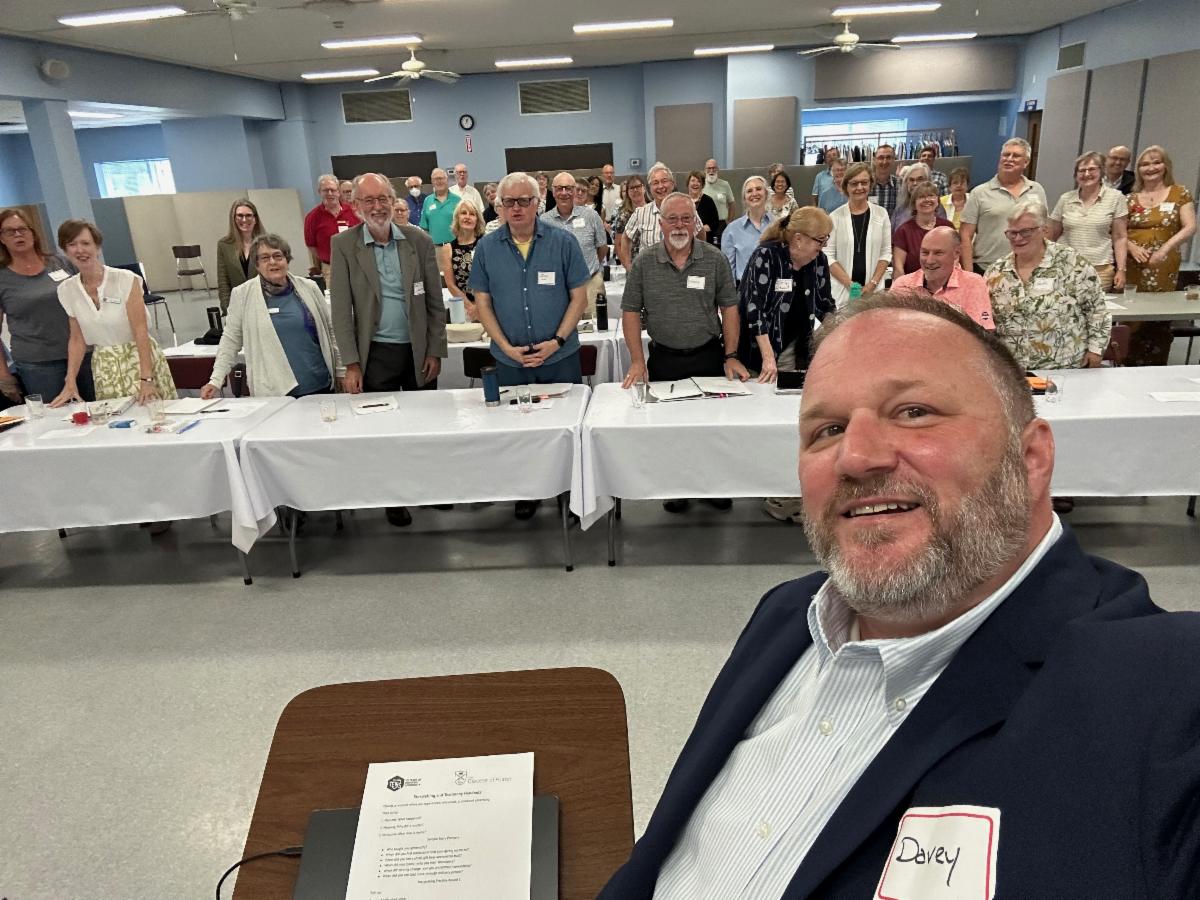
I was blessed to be able to visit the Diocese of Huron in the Anglican Church of Canada. Hugging the shores of Southeastern Lake Huron and Northwestern Lake Erie, this diocese serves an abundant mission field in the Church. Over the course of two days and six workshops and breakouts, I was able to meet nearly one hundred clergy and about sixty lay people who gathered at St. Jude's Anglican Church in London, Ontario.
Our work centered on the place and purpose of mission-focused fundraising ministry that funded budgets and created sustainable congregations, but also made disciples and instilled generosity in members. I found a great spirit of joy, hope, and enthusiasm in the people of the Diocese of Huron and a hunger for relevant, honest, theological practices of Stewardship.
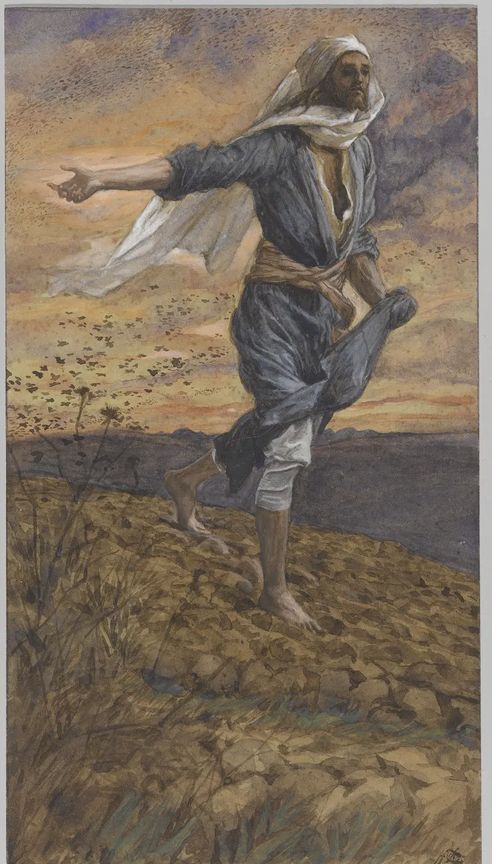
A recurring theme across our days was the parable of the sower, which we will read in July's lectionary. Stewardship calls us to spread the Good News with audacious abundance. Scattering seed as if there is no limit on the supply of it. Tossing it in every direction, no matter the quality of the surface on which it lands. God is in control of what will happen with our message of grace and abundance, and we might never anticipate what could spring from the most unlikely places.
So it is with our appeals, promises, and gifts. Once we gather them, and they are blessed, broken, and shared with the world, we lose control of where they will end up, who they might benefit, or what goodness might come about as a result of our generosity. What a gift it is to be a steward! Thank you to the good people of the Diocese of Huron who taught me about generosity, grace, and hospitality.
All good gifts,
J. Davey Gerhard, Executive Director
| | | |
Are you planning a campaign in 2027 for Capital, Feasibility, Legacy, or Annual Stewardship? We are opening up capacity for 2027 campaigns now. Let our experience and our theological approach to fundraising guide your congregation in a sustainable, successful campaign! Please give us a call!
TENS Consulting follows four core principles:
Transparency
Equal Accessibility
Need-Responsiveness
Sustainability
These values inform everything from our pricing ranges to our commitment to customize services for congregations with fewer resources. Our goal is to make campaign consulting affordable, accessible, and theologically grounded for Episcopal congregations of all sizes and budgets.
TENS Offers consulting to congregations, to institutions (schools, camps, special ministries), and to dioceses. Our experienced consultant team has completed successful campaigns across the Church.
We invite you to learn more on our website, and, as you imagine your program growth and capital needs for this year, to reach out to us for more information on how we can create a scalable, affordable initiative for your congregation or diocese.
Be sure to ask about Member Discounts
| | |
Year of Living Generously Tip of the Month: The Stewardship of Preparation
Summer is a season of rest, travel, and slower rhythms, but it can also be a season of quiet preparation. Fall annual giving campaigns often arrive quickly once September begins, and congregations that take a few small steps in July can enter the season with more confidence, clarity, and joy. Preparation is a form of stewardship: it honors the time, energy, and gifts of the people who will lead, participate, and respond.
1. Gather the stories.
Invite vestry members, ministry leaders, or longtime parishioners to name where they have seen generosity at work in the congregation this past year. These do not need to be polished testimonials yet — just short notes, examples, or moments of gratitude. A simple shared document or email thread can become the beginning of fall campaign storytelling.
2. Review the calendar gently.
Before everyone returns from summer schedules, identify the likely dates for campaign launch, ingathering, testimony Sundays, vestry conversations, and follow-up. This does not require a full committee meeting; even a clergy, warden, and chair conversation can prevent September scramble. A clear calendar is a gift to volunteers.
3. Pray for the campaign before planning it.
Set aside one Sunday in July to include a prayer for the congregation’s generosity, leadership, and shared ministry. Vestries or stewardship teams might also begin each summer meeting with a prayer of gratitude for the gifts already present in the community. Before a campaign is a task list, it is a spiritual invitation.
4. Make one thing easier.
Choose one practical item that can be prepared now: update the giving link, review pledge/promise card language, check mailing lists, refresh online donation instructions, or identify who will write campaign letters. Small administrative acts can be holy acts of preparation when they remove barriers and make generosity easier for the whole congregation.
The stewardship of preparation is not about rushing the fall. It is about tending what can be tended now, with gentleness and intention, so that when campaign season arrives, the congregation is ready to speak clearly, invite faithfully, and give thanks for all that God is already doing.
| | |
Download the 2026/27 Annual Campaign Materials and prepare for a successful Pledge Campaign!
In God’s house there is always room for more: more ideas, more people, more ways to share, more stories to tell. And in the world that God created, there is more needed: more love, more connection, more peace, more creativity. Plenty Good Room reminds us that there is always room in God’s house; we just need to make ourselves at home and invite others to join us. The ways we steward our relationships, resources, and responses to grow ministry and serve our neighbors are the ways we connect our gratitude to our generosity. There’s Plenty Good Room in God’s House; pull up a chair and sit down. Want to know the inspiration behind this year's theme? Here's the talented Lynda Randle singing the spiritual Plenty Good Room
Our theme for the annual campaign this year focuses on our hospitality and how, if we ask members to be generous, we can always find a way to increase our work in God's kingdom.
Our 2026/27 campaign materials are ready for download now.. As always, we offer our campaign materials in English and Spanish. This year's package includes:
- Seasonal Reflections and Questions - Advent through Christ the King
- Sample letters from clergy, wardens, and committee members
- Sample thank-you letter
- Logos and artwork for the Plenty Good Room / Invitados a la Mesa campaign
- Liturgical resources - Prayers of the People and Offertory blessings
- Pledge cards in Word and .pdf
- Campaign timeline for ideal implementation
| | |
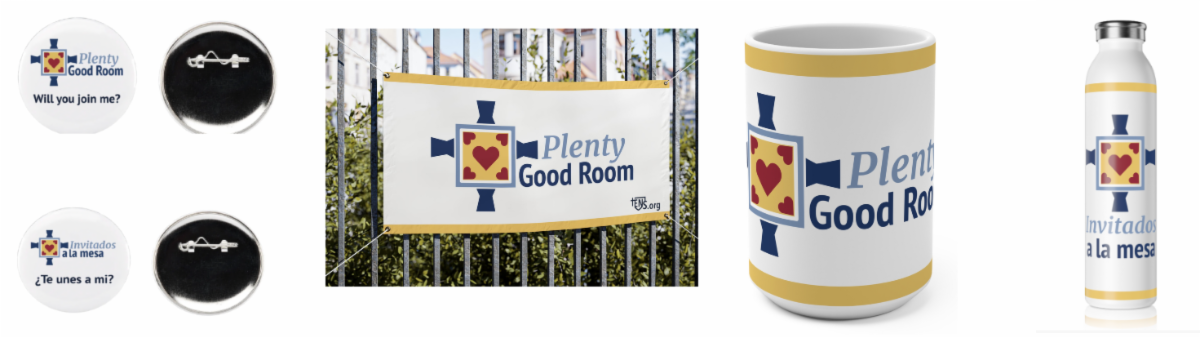
Zhuzh up your campaign with TENS Merchandise
Banners, buttons, and mugs! Looking for a gift for your campaign volunteers? How about inexpensive wearables and useful objects like pens, magnets, and buttons to invite people to fill out their pledge forms and to join them in making a gift to support the church this year? Check out these products to help you get out the word in your congregation.
| | |
Do you follow us on Facebook, Instagram, and YouTube?
TENS Shares inspiration, resources, and reflection materials on our social media every week.
On Tuesdays: A Year of Living Generously Tip so you don't have to search your inbox to find our newsletter every week!
On Thursdays: Reflections on the coming Gospel
On Feast Days: A reflection on stewardship and celebration
Seasons of the Church Year: Every time the color changes in church there is a seasonal reflection you may use for personal or congregational formation. We post these on social media along with including them in the campaign resources download.
| | |
Donor-Centric Stewardship helps Members make their Best Gifts
Today's giver does not just think about checks and envelopes when it comes to making a gift to support ministry in their church. They are looking at all the many ways that banking, tax law, and online tools can help make giving more convenient and advantageous. Please consider using these two new resources from TENS to help members understand the many ways they can express their generosity, and meet donors where they are.
| |
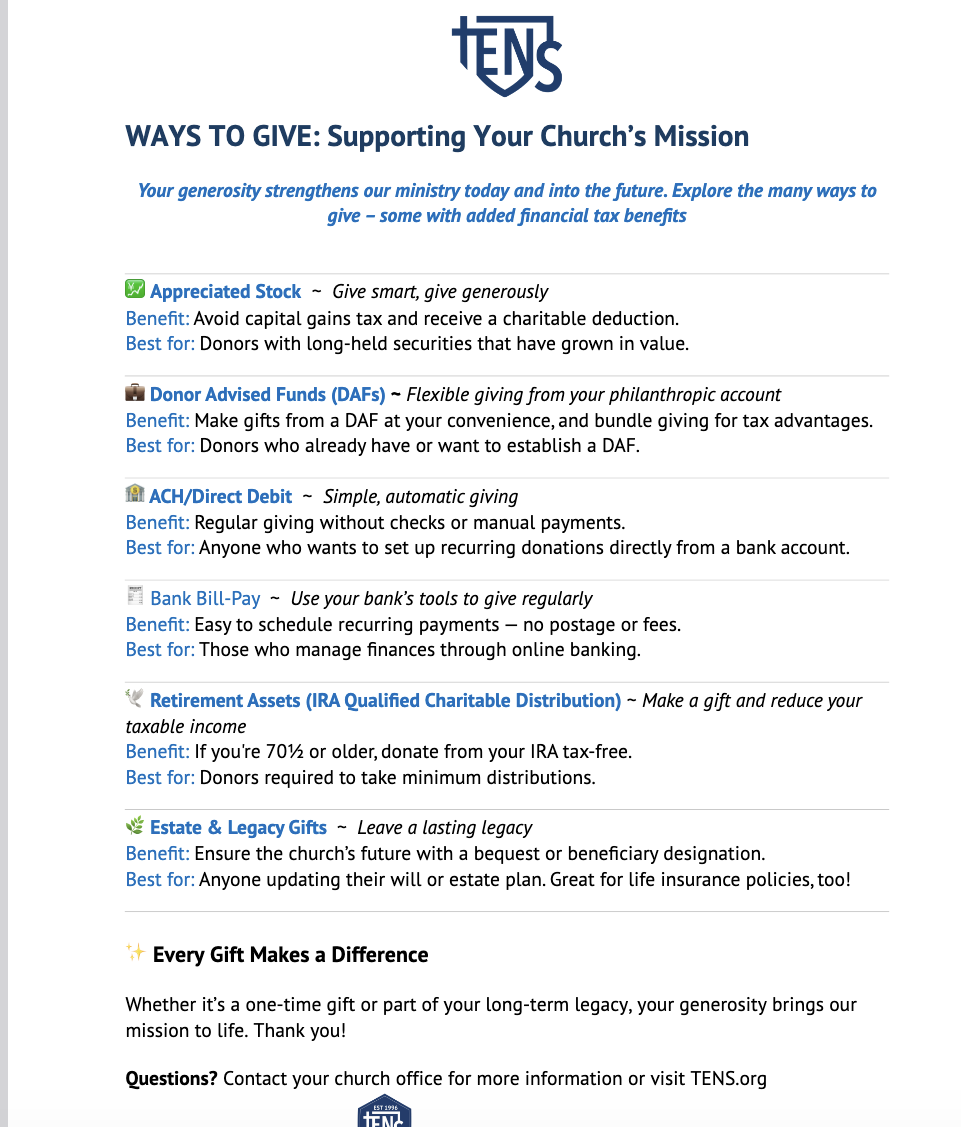
Sample "Ways to Give"
I was at the Symphony last year, and when I arrived at my seat there was a one-page flier lying on it that explained all the many ways I could make a gift to support music and arts in my community right now before the performance started, or later when I had more time to think about it. I was encouraged to take the flier home.
I thought ... "why aren't we making it this easy in church?" So we have created this handy one-page sheet which you may download in MS Word or in PDF to help your members understand how they might share their gifts with your community.
| |
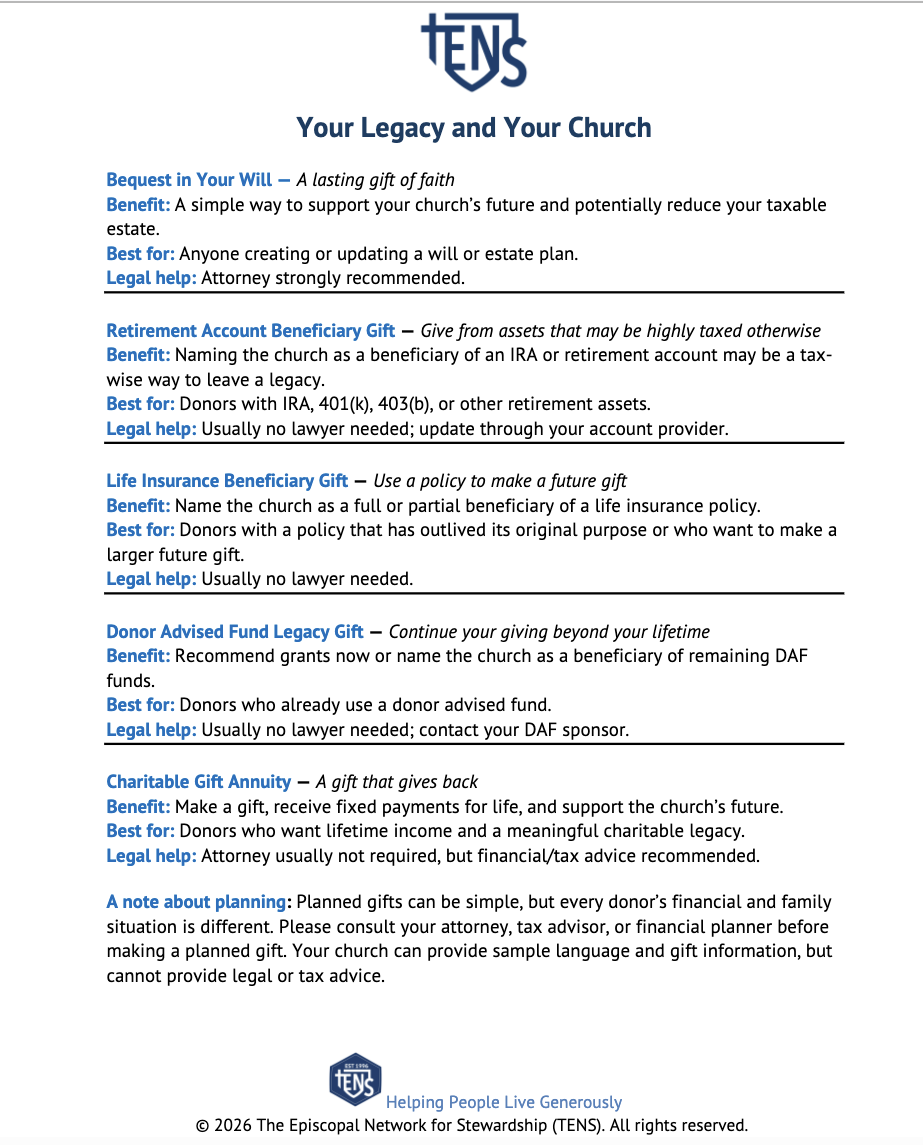
Sample "Legacy Giving Vehicles"
Members curious about legacy giving might want to see a easy-to-read summary of the most common planned giving methods. Each one of them have unique opportunities to make tax-wise gifts from an estate to benefit ministry. Some even provide a lifetime revenue stream to the donor that they cannot outlive.
Download this in PDF or in MS Word to include in your member information. Sample language that a donor may bring to their lawyer or financial advisor is included.
Remember, you do not need to be a tax expert or a financial planner to promote planned giving in your church - your role is to invite and introduce members into thinking about making an estate gift.
| |
Weekly Reflections on the July Lectionary for Preachers, Teachers, and Readers
Proper 9 - Year A
Matthew 11:16-19, 25-30
Jesus speaks to a weary and restless generation, one that cannot seem to receive the gifts of God in whatever form they come. John the Baptist comes fasting, and the people say he has a demon. Jesus comes eating and drinking, and they call him a glutton and a drunkard. Their criticism reveals a deeper spiritual exhaustion: they are so busy judging the messenger that they cannot receive the message. And then, in the same passage, Jesus turns with extraordinary tenderness: “Come to me, all you that are weary and are carrying heavy burdens, and I will give you rest.” He does not shame the weary. He does not demand that they first become stronger, wiser, or more faithful. He invites them to come close, to learn from him, and to discover a yoke that is easy and a burden that is light.
This is a rich word for stewardship because generosity is not meant to become one more heavy burden laid on tired shoulders. Faithful stewardship is not anxiety dressed up as discipleship, nor is it institutional pressure wrapped in spiritual language. The way of Jesus is different. His yoke is shared, gentle, and rooted in love. When we give, serve, pledge, volunteer, pray, and care for one another from a place of fear or scarcity, the work becomes exhausting. But when we respond to God’s abundance with gratitude, we begin to discover that generosity can be a form of rest: a release from the burden of self-protection, a loosening of our grip, a trust that we do not carry the ministry of the church alone. In Christ, stewardship becomes the shared work of a community learning to move together in grace.
Proper 10 - Year A
Matthew 13:1-9, 18-23
Jesus tells the crowd a parable about a sower who scatters seed with what looks like almost scandalous generosity. Some seed falls on the path and is eaten by birds. Some falls on rocky ground and springs up quickly, but withers because it has no root. Some falls among thorns and is choked by the cares of the world and the lure of wealth. But some falls on good soil and bears fruit beyond expectation: a hundredfold, sixtyfold, thirtyfold. The sower does not seem overly cautious or calculating. The seed is not reserved only for the most promising ground. It is cast widely, freely, and abundantly, trusting that fruitfulness will come.
This is a beautiful image for stewardship because God’s generosity always comes first. Before there is growth, harvest, pledge, ministry, or measurable impact, there is the seed: grace given freely and abundantly. Congregations often worry about whether they have enough good soil, enough willing volunteers, enough generous givers, enough energy, enough readiness. But Jesus invites us to notice the sower’s confidence. Stewardship begins not with scarcity, but with trust in the abundance of what God is already scattering among us. Our work is to tend the soil of our common life: to deepen roots, clear thorns, nurture faith, and make room for generosity to grow. We may not control the harvest, but we can become a community where grace has room to take root and bear fruit.
Proper 11 - Year A
Matthew 13:24-30, 36-43
There is something wonderfully honest about the disciples coming to Jesus and saying, “Explain to us the parable of the weeds of the field.” They have heard the story with the crowd: good seed sown in a field, weeds planted by an enemy, servants eager to pull the weeds up, and a householder who tells them to wait. But they do not fully understand, so they ask. That, too, is discipleship. The kingdom of heaven is not always obvious, and the life of faith does not always become clear the first time we hear it. Jesus gives them an image of a field where wheat and weeds grow side by side, where judgment is not rushed, and where the final harvest belongs to God.
For congregations, this is a deeply wise word. Every community is a mixed field: generosity and anxiety, hope and weariness, mission and maintenance, trust and fear, all growing together. The temptation is to fix the field quickly, to separate everything neatly, to pull out whatever seems troublesome before it has a chance to spread. But Jesus invites a different kind of stewardship: patient tending rather than anxious sorting. We do not pretend the weeds are not there, but neither do we make panic our spiritual practice. Instead, we nourish what is good. We water what is hopeful. We protect what is tender. We make room for generosity to grow. Faithful stewards trust that God sees the field more clearly than we do, and that the harvest, in the end, belongs to God.
Proper 12 - Year A
Matthew 13:31-33, 44-52
Jesus offers one image after another for the kingdom of heaven, as if no single parable can hold the fullness of what God is doing. The kingdom is like a mustard seed, small and easily overlooked, yet becoming a place where birds can make their nests. It is like yeast hidden in flour, quietly working until the whole loaf is transformed. It is like treasure buried in a field, worth joyfully selling everything to possess. It is like a pearl of great value, recognized by one who knows what true beauty is. It is like a net drawn through the sea, gathering more than anyone can sort at first glance. Each image stretches our imagination. The kingdom is tiny and expansive, hidden and powerful, costly and joyful, ordinary and astonishing.
That gives preachers and teachers a rich way to speak about stewardship as kingdom imagination. Congregations often look for signs of abundance in obvious places: full pews, balanced budgets, large gifts, successful programs, visible momentum. But Jesus points us toward smaller and quieter signs, too: the seed that becomes shelter, the yeast that changes the whole loaf, the treasure that reorders our priorities, the pearl that teaches us what is worth everything. Faithful stewardship begins when we learn to recognize the kingdom already at work among us and respond with joy. We give, serve, pray, teach, share, and sacrifice not because the church is desperate, but because we have glimpsed something of immeasurable worth. The question for every congregation is not only, “What do we need?” but “What treasure has God placed in this field, and what would it look like to joyfully invest our lives in it?”
| | |
Our Next Free Webinar: Pastor, Don't Panic: Stewardship Practices for a Changing Landscape Saturday, August 29, 9AM PDT
2026 is noisy, it is anxious, and inside of it we are seeking a path forward, a way through, and a plan for our generosity and gratitude ministries. Find hope, inspiration, support, and new ideas for your fundraising campaign this year focusing on our mission, our generosity, and the ways we are called to share our gifts. Sign up for our free webinar, and join us on August 29!
| | | | |