Summer Readings and Resources | |
- Year of Living Generously: Rest: A holy invitation
- Celebrating the Life of Tom Gossen, Founder of TENS
- Costly Grace and the Courage to be Sent: A meditation on Matthew 10
- June lectionary Stewardship preaching and teaching tips
- Learn about the 2026/2027 Stewardship Package - Plenty Good Room
- Pride Resources from Invite Welcome Connect
| | |
Greetings!
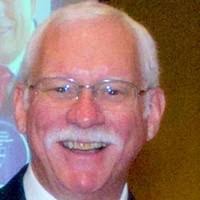
Tom Gossen, Steward
A Personal Reflection
In my over thirty years of stewardship formation work, I can say with great conviction that no group has had a greater impact on creating a spirit of generosity in the Church than The Episcopal Network for Stewardship. And TENS only came into being because of Tom Gossen. It was his vision, and his personal gifts and determination made TENS a reality.
Because of TENS and Tom’s work, there are people in the Episcopal Church today who have a deep abiding understanding of stewardship as a fundamental spiritual discipline, not just as a term for Christian fundraising. And through Tom’s leadership, many people have come to understand good stewardship as the way we are called to live as children of God and as disciples of Jesus Christ. Moreover, thanks to Tom, countless people have developed or deepened their spiritual understanding of generosity through which their lives have become both enriched and transformed.
Tom and I first met almost 30 years ago through a friend, a priest in the Church, who told me that I should get in touch with Tom Gossen since he felt Tom and I would be kindred spirits in our stewardship ministries. How right he was! First, we worked together on behalf of the stewardship department of the Episcopal Church (TEC).
When we learned that the funding for that work would no longer be available from TEC, it was Tom who first developed the vision for TENS. And his persistence and commitment led to the formation of TENS as a membership organization. It was Tom who reached out to the larger Church for initial funding for the creation of TENS. It was Christ Church Cathedral in Indianapolis that gave TENS a five-year grant which enabled TENS to get underway. That commitment came because the Cathedral’s Dean believed in Tom’s ability to give birth and life to this new stewardship body.
In addition to being a wonderful stewardship colleague, Tom and I became very good friends. His warmth of friendship were always present. I always knew I could count on him, that he would be there for me when I needed him. Once, he sent Cris flowers when the work of TENS was going to take me away from her on our wedding anniversary. Moreover, Diane and Tom became friends of both Cris and me. Even after we both “retired” from our active stewardship ministry, Tom and I kept in touch with one another because both of us valued the relationship we had with one another.
Now that Tom’s work on this earth is done, all we can say is, “Well done, good and faithful servant.” We will miss you, but you will be in our hearts forever.
Bruce Rockwell,
Ret. Financial Officer & Bishop's Assistant for Stewardship, Diocese of Western Massachusetts
| | | Tom passed away on Tuesday, May 19. Funeral Services will be held at St. James' Episcopal Church in Wichita, Kansas on Saturday, May 30 at 11AM. Diane Gossen and Bruce Rockwell invite those who are able and who desire to make a gift to the ministry of TENS in honor of Tom's prophetic vision and his founding work. | | |
Costly Grace and the Courage to Be Sent
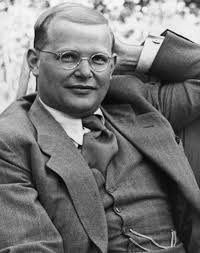
Matthew 10, Dietrich Bonhoeffer, and Stewardship after Comfort
Cn. J. Davey Gerhard
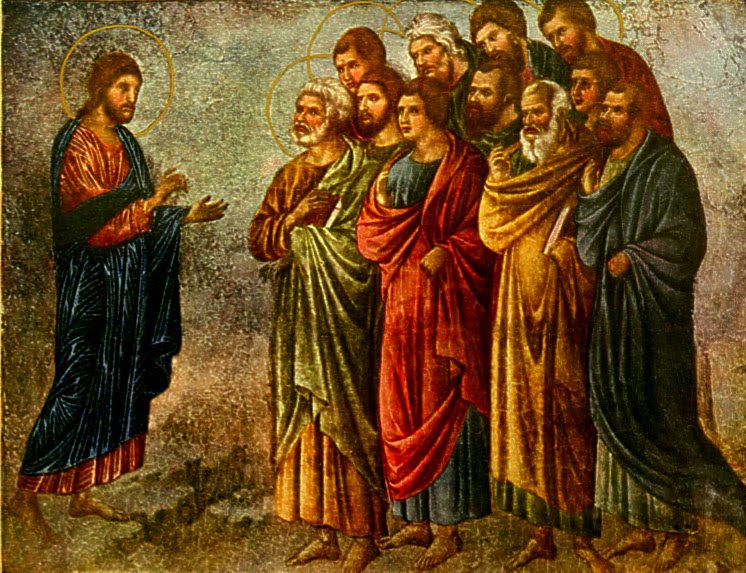
Matthew 10 is not an easy summer Gospel. Jesus does not send the disciples with a promise that faithfulness will make them admired, comfortable, or safe. He tells them that the work of the kingdom will expose hidden things, provoke resistance, and ask for courage deeper than politeness. “Have no fear of them,” Jesus says. “Do not fear those who kill the body but cannot kill the soul.” And then, almost tenderly, he reminds them that not even a sparrow falls apart from the Father, and that even the hairs of their heads are counted.
This is the strange mercy of Matthew 10. Jesus does not deny that discipleship has a cost. He names it. The disciple is not above the teacher. The household of faith may face division. The call to follow may unsettle loyalties, habits, assumptions, and relationships. But Jesus does not speak these words to terrify the disciples. He speaks them so fear will not become their master. They are sent into a difficult world as people already known, already beloved, already held by God.
That is where Dietrich Bonhoeffer can help the church hear this Gospel with fresh clarity. Bonhoeffer, the German Lutheran pastor and theologian, wrote about discipleship as the church in Germany was being tested by Nazism, nationalism, antisemitism, and the temptation to make peace with evil. The United States Holocaust Memorial Museum describes Bonhoeffer as one of the early critics of the Nazi regime and notes his involvement in the Confessing Church, the movement that resisted the nazification of the German Evangelical Church. He was arrested in 1943 and executed at Flossenbürg concentration camp in April 1945.
Bonhoeffer’s best-known language comes from The Cost of Discipleship, where he contrasts “cheap grace” with “costly grace.” In one of the book’s most quoted lines, he writes, “Cheap grace is grace without discipleship.” He goes on to describe it as grace without the cross and without the living Christ. Bonhoeffer’s warning is not that grace must be earned. Quite the opposite. Grace is God’s gift. But grace that never calls us to repentance, never reshapes our lives, never interrupts our loyalties, and never sends us toward our neighbor is not the grace of Jesus Christ. It is religious comfort with the sharp edges sanded off.
Matthew 10 will not allow that kind of comfort. Jesus sends the disciples into the world with authority to proclaim, heal, and bear witness, but he does not give them control over how they will be received. They are not promised success as the world measures it. They are not promised universal approval. They are not even promised peace in the ordinary sense of the word. Instead, they are promised the presence and knowledge of God. They are told that truth matters. They are told that courage matters. They are told that their lives are caught up in something larger than self-protection.
For Bonhoeffer, this was not an abstract theological principle. His life became an embodied commentary on the cost of discipleship in a time of crisis. He helped train pastors for the Confessing Church, resisted the capture of Christianity by Nazi ideology, and eventually became connected to the German resistance. The Flossenbürg Memorial records that Bonhoeffer was hanged by the SS on April 9, 1945, after a summary trial with other members of the resistance. The Buchenwald Memorial notes that he was forbidden to teach in 1936, forbidden to speak publicly in 1940, and forbidden to print or publish in 1941.
Still, it is important to say this carefully: Bonhoeffer’s witness does not mean Christians should seek suffering, romanticize persecution, or confuse pain with faithfulness. Jesus does not glorify suffering for its own sake. Matthew 10 is not a holy little flamethrower aimed at making disciples miserable. It is a truthful word about what happens when the kingdom of God meets the powers of fear, domination, respectability, and false peace. The cross is not a love of suffering. It is the shape of love when love refuses to abandon truth.
This matters deeply for stewardship. Stewardship is often treated as the polite part of church life: budgets, pledges, buildings, committees, campaigns, maintenance, and annual appeals. All of that matters. The church does need faithful administration of what has been entrusted to it. But Matthew 10 and Bonhoeffer press us to ask a deeper question: What kind of discipleship are our resources serving?
A church can practice cheap grace with its money. It can fund comfort while avoiding mission. It can preserve buildings while neglecting neighbors. It can ask people to give without asking what the Gospel requires. It can keep the peace by refusing to tell the truth. It can confuse survival with faithfulness, nostalgia with tradition, and institutional security with the kingdom of God.
Costly grace asks something more beautiful and more demanding. It asks us to place our resources where Christ has placed his heart. It asks whether our budgets reflect mercy, courage, formation, justice, hospitality, and care for the vulnerable. It asks whether our buildings are shelters for ministry or monuments to anxiety. It asks whether our giving is merely a transaction to keep things going, or a practice of discipleship that helps us follow Jesus more freely.
This does not mean every congregation is called to dramatic sacrifice or public conflict. Most stewardship decisions are quieter than that. They happen in vestry meetings, finance committees, annual campaigns, planned giving conversations, and coffee hour invitations. They happen when a church chooses formation over panic, mission over maintenance alone, transparency over avoidance, generosity over fear. They happen when leaders are willing to say: We are not simply here to keep the institution alive. We are here to follow Jesus.
That is why the repeated command in Matthew 10 matters so much: “Do not be afraid.” Fear is one of the great enemies of faithful stewardship. Fear tells congregations to cling tightly, speak vaguely, ask timidly, and spend defensively. Fear tells leaders that comfort is the same as peace. Fear tells communities that scarcity is the truest thing about them.
But Jesus tells the disciples another truth. The sparrows are seen. The hairs of their heads are counted. Their lives are known to God. This is not permission to be reckless. It is an invitation to be free. Free enough to tell the truth. Free enough to give generously. Free enough to risk mercy. Free enough to let go of the lesser peace that comes from keeping everyone comfortable, and receive the deeper peace that comes from belonging to Christ.
Bonhoeffer’s language of costly grace can sound severe, but at its heart it is still grace. It is not a moral invoice. It is not a demand that we prove ourselves worthy of God. It is the gift of being called by Christ into a life that is truer, braver, and more alive than fear can imagine. Grace is costly because it calls us to follow. Grace is grace because the one who calls us is Jesus.
For stewardship leaders, Matthew 10 offers both a warning and a promise. The warning is that the church cannot steward the gifts of God faithfully while avoiding the call of Christ. The promise is that we do not answer that call alone. The God who sees the sparrow sees the congregation balancing its budget. The God who counts the hairs of our heads knows the anxiety beneath our financial reports. The God who sends disciples into the world also gives them courage for the road.
Costly grace does not ask the church to be fearless because there is nothing at stake. It asks the church to be faithful because everything entrusted to us belongs to God, and everything God entrusts to us is meant for love. Amen.
| | |
TENS is hard at work with many different congregations across the Episcopal Church running programs for feasibility, discernment, capital campaigns, and planned giving campaigns. We still have some capacity for 2026 campaigns, and are beginning to open our pipeline for 2027. If you are thinking of annual, capital, planned giving, or strategic planning work in the coming year, please give us a call!
TENS Consulting follows four core principles:
Transparency
Equal Accessibility
Need-Responsiveness
Sustainability
These values inform everything from our pricing ranges to our commitment to customize services for congregations with fewer resources. Our goal is to make campaign consulting affordable, accessible, and theologically grounded for Episcopal congregations of all sizes and budgets.
TENS Offers consulting to congregations, to institutions (schools, camps, special ministries), and to dioceses. Our experienced consultant team has completed successful campaigns across the Church.
We invite you to learn more on our website, and, as you imagine your program growth and capital needs for this year, to reach out to us for more information on how we can create a scalable, affordable initiative for your congregation or diocese.
Be sure to ask about Member Discounts
| | |
Year of Living Generously Tip of the Month: The Stewardship of Rest
June is a good month for us to remember that we are also stewards of our time, and that rest is an important part of our summer (and, as it turns out, our theology!)
1. Hold a Sabbath Audit
Invite vestry members, ministry leaders, and staff to review the church calendar and ask: What gives life? What drains life? What have we kept doing simply because we have always done it? This is a stewardship activity because time is one of the congregation’s most precious shared resources, and faithful leadership means noticing where that time is being spent. A parish might dedicate 20 minutes of a June vestry meeting to identifying one meeting, event, or task that could be paused, simplified, or retired.
2. Bless the Summer Rest
Offer a brief prayer or blessing during Sunday worship for those entering a different summer rhythm: travelers, teachers, students, camp staff, seasonal workers, caregivers, and those who cannot take vacation. This reminds the congregation that rest is not an escape from faithfulness, but part of how God restores us for love and service. A church could include a “Blessing of Summer Rest” on the first Sunday after school lets out, with a simple prayer over calendars, backpacks, beach bags, walking shoes, or even tired hands.
3. Practice a Meeting-Free Week
Choose one week in June when no non-essential parish meetings are scheduled. This small act can become a powerful witness that the church values people’s time, families, bodies, and attention. Encourage ministry teams to use the week for prayer, reflection, or reconnection instead of business — and then ask what changed when the church made room to breathe.
4. Create a Gratitude Calendar
Invite members to spend the month noticing how they receive and give time: time shared with family, time spent in prayer, time offered in service, time saved by someone else’s generosity, or time restored through rest. This connects stewardship to gratitude by helping people see time not as something to manage anxiously, but as a gift entrusted to us by God. A congregation could share a simple June calendar with one daily prompt, such as “Notice one hour today that felt holy,” or “Thank someone whose time made your life easier.”
| | |
Download the 2026/27 Annual Campaign Materials and prepare for a successful Pledge Campaign!
In God’s house there is always room for more: more ideas, more people, more ways to share, more stories to tell. And in the world that God created, there is more needed: more love, more connection, more peace, more creativity. Plenty Good Room reminds us that there is always room in God’s house; we just need to make ourselves at home and invite others to join us. The ways we steward our relationships, resources, and responses to grow ministry and serve our neighbors are the ways we connect our gratitude to our generosity. There’s Plenty Good Room in God’s House; pull up a chair and sit down. Want to know the inspiration behind this year's theme? Here's the talented Lynda Randle singing the spiritual Plenty Good Room
Our theme for the annual campaign this year focuses on our hospitality and how, if we ask members to be generous, we can always find a way to increase our work in God's kingdom.
Our 2026/27 campaign materials are ready for download now.. As always, we offer our campaign materials in English and Spanish. This year's package includes:
- Seasonal Reflections and Questions - Advent through Christ the King
- Sample letters from clergy, wardens, and committee members
- Sample thank-you letter
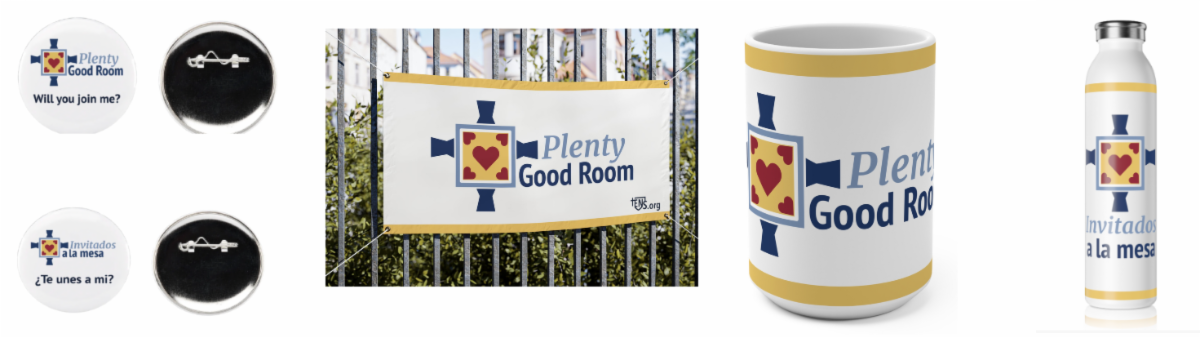
- Logos and artwork for the Plenty Good Room / Invitados a la Mesa campaign
- Liturgical resources - Prayers of the People and Offertory blessings
- Pledge cards in Word and .pdf
- Campaign timeline for ideal implementation
| | |
Zhuzh up your campaign with TENS Merchandise
Banners, buttons, and mugs! Looking for a gift for your campaign volunteers? How about inexpensive wearables and useful objects like pens, magnets, and buttons to invite people to fill out their pledge forms and to join them in making a gift to support the church this year? Check out these products to help you get out the word in your congregation.
| | |
Weekly Reflections on the May Lectionary for Preachers, Teachers, and Readers
Proper 5 - Year A
Matthew 9: 9-13; 18-26
In Matthew 9, Jesus moves through a world full of people who have been pushed to the margins: a tax collector at his booth, sinners at the table, a grieving leader pleading for his daughter, and a woman who has suffered for twelve years reaching out in desperation. The religious leaders are scandalized by the company Jesus keeps, but Jesus answers plainly: “Those who are well have no need of a physician, but those who are sick.” He has not come to reward the already-righteous or preserve the boundaries of respectability. He has come with mercy. Again and again in this passage, Jesus crosses lines others are afraid to cross. He eats with the wrong people, touches the untouchable, listens to the desperate, and restores life where hope seems already gone.
We hear a stewardship lesson as much as it is a healing story. Stewardship is not simply the careful management of what we already have; it is the faithful offering of our lives for the mercy-shaped mission of God. Jesus says, “I desire mercy, not sacrifice,” reminding us that our giving, our leadership, our budgets, and our ministries must be measured not only by what they preserve, but by whom they welcome, heal, and restore. The gifts entrusted to us are not meant to reinforce distance between “us” and “them.” They are meant to draw us closer to the places where Christ is already reaching out. Generous stewardship asks: Who is waiting at the edge of the crowd? Who has been overlooked at the table? Where is God calling us to spend our resources so that mercy may become visible?
Proper 6 - Year A
Proper 6 offers one of Jesus' difficult teachings. It gives us an important stewardship lens, and it is also hard for us to hear sometimes. For Proper 6, I would like to provide two reflections - one grounded in Welcome from the Book of Genesis, and one on the Harvest from the Gospel of Matthew.
Genesis 18: 1-15; 21: 1-7
In Genesis 18, Abraham and Sarah receive three mysterious visitors by the oaks of Mamre. Abraham runs to greet them, offers water, shade, bread, rest, and a feast. This is not casual hospitality; it is urgent, abundant, embodied welcome. And in the middle of that welcome, a promise is spoken: Sarah will have a son. The promise is so impossible, so far beyond expectation, that Sarah laughs from inside the tent. Her laughter carries all the ache of disappointment, age, waiting, and weary realism. But God’s question cuts through the ordinary limits of what seems possible: “Is anything too wonderful for the Lord?” By the time Isaac is born, Sarah’s laughter has been transformed from disbelief into joy.
This is a profound stewardship story because it begins not with scarcity, but with welcome. Abraham and Sarah do not know, at first, what these visitors carry. They simply open what they have: shade, food, water, attention, care. Their hospitality becomes the setting in which God’s promise is heard. Stewardship often works this way. We offer what is in our hands before we fully understand what God is bringing to birth. We make room at the table. We share bread. We practice generosity even when we are tired, uncertain, or unconvinced. And sometimes, in the very place where we thought the story was over, God begins again. Faithful stewardship trusts that our welcome, our resources, and our laughter can all become part of God’s impossible joy.
Matthew 9:35–10:8(9–23)
In Matthew’s Gospel, Jesus looks out over the crowds and sees them “harassed and helpless, like sheep without a shepherd.” His response is not irritation, blame, or retreat. His response is compassion. He sees the need clearly, and then he calls his disciples into the work. “The harvest is plentiful, but the laborers are few.” He gives them authority to heal, cleanse, raise, and cast out, and sends them first to the lost sheep of Israel with a simple proclamation: “The kingdom of heaven has come near.” This mission is beautiful, but it is not sentimental. Jesus is honest that the work will be difficult. The disciples will face rejection, conflict, fear, and vulnerability. They are sent out with power, but not with control.
This is a bracing but honest stewardship text. The gifts God gives are not entrusted to us so that we can remain safe, admired, or undisturbed. They are given for the sake of a world that is harassed and helpless, beloved and aching. Stewardship is the practice of joining Christ’s compassion with our own lives: our money, buildings, leadership, relationships, courage, and time. “You received without payment; give without payment,” Jesus says. This is not a call to depletion, but to trust. The mission belongs to God before it belongs to us. We are not asked to fix every wound or harvest every field. We are asked to go where Christ sends us, to offer what we have received, and to let generosity become a sign that the kingdom has come near.
Proper 7 - Year A
Matthew 10:24–39
In Matthew 10, Jesus continues preparing his disciples for the cost of being sent. He does not promise that faithfulness will make their lives easier, more admired, or free from conflict. Instead, he tells them the truth: the work of God’s kingdom will expose what is hidden, unsettle false peace, and ask for courage deeper than comfort. “Do not be afraid,” Jesus says again and again — not because there is nothing to fear, but because fear must not become the master of their lives. Even the sparrows are held in God’s care, and even the hairs of their heads are counted. The disciples are not sent because they are powerful. They are sent because they are known, beloved, and held by God.
We are exploring a demanding stewardship text, but a necessary one. Stewardship is not only about supporting what is familiar or funding what keeps everyone comfortable. It is about placing our lives, our resources, and our loyalties in service to the gospel, even when that service asks something costly of us. Jesus’ words about taking up the cross are not a celebration of suffering for its own sake; they are a call to live with holy clarity about what matters most. The gifts entrusted to us — money, influence, buildings, voice, courage, and care — are never neutral. They reveal what we love, what we fear, and whom we are willing to follow. Generous stewardship helps us loosen our grip on self-protection and live more freely for Christ’s mercy, justice, and truth.
Proper 8 - Year A
Matthew 10: 40-42
After the intensity of Jesus’ instructions to the disciples, these few verses feel tender and startlingly simple. “Whoever welcomes you welcomes me,” Jesus says, “and whoever welcomes me welcomes the one who sent me.” The mission of God is not only carried in grand gestures, dramatic courage, or public proclamation. It is also carried in welcome. It is carried in the one who receives the messenger, honors the prophet, makes room for the righteous, and offers even “a cup of cold water” to one of Christ’s little ones. Jesus draws a holy line of connection between God, Christ, the disciple, and the one who welcomes. No act of care is too small to participate in the life of God.
Do you find this to be a beautiful and grounding word for stewardship? We often imagine generosity in terms of scale: large gifts, major campaigns, visible leadership, measurable impact. Those things matter. But Jesus reminds us that the kingdom also comes near through simple, concrete acts of hospitality and care. A cup of cold water may not seem like much, but to the thirsty it is mercy. To the weary it is recognition. To the vulnerable it is protection. Stewardship begins when we notice what is needed and offer what is at hand. Our buildings, budgets, tables, kitchens, gardens, friendships, and daily choices can all become vessels of welcome. In God’s economy, nothing given in love is wasted; even the smallest gift can reveal the presence of Christ.
| | |
Our Next Free Webinar: Pastor, Don't Panic: Stewardship Practices for a Changing Landscape Saturday, August 29, 9AM PDT
2026 is noisy, it is anxious, and inside of it we are seeking a path forward, a way through, and a plan for our generosity and gratitude ministries. Find hope, inspiration, support, and new ideas for your fundraising campaign this year focusing on our mission, our generosity, and the ways we are called to share our gifts. Sign up for our free webinar, and join us on August 29!
| | |
Pride Resources to celebrate Pride Month from our friends at Invite Welcome Connect
IWC has created a useful toolkit for Episcopal Churches to create space and welcome for LGBTQ+ members and visitors. For the many communities that celebrate Pride, this is a wonderful way to have many resources at the ready. We are grateful for the fully inclusive ministry of Invite Welcome Connect.
| | | | |