Jeff Teter
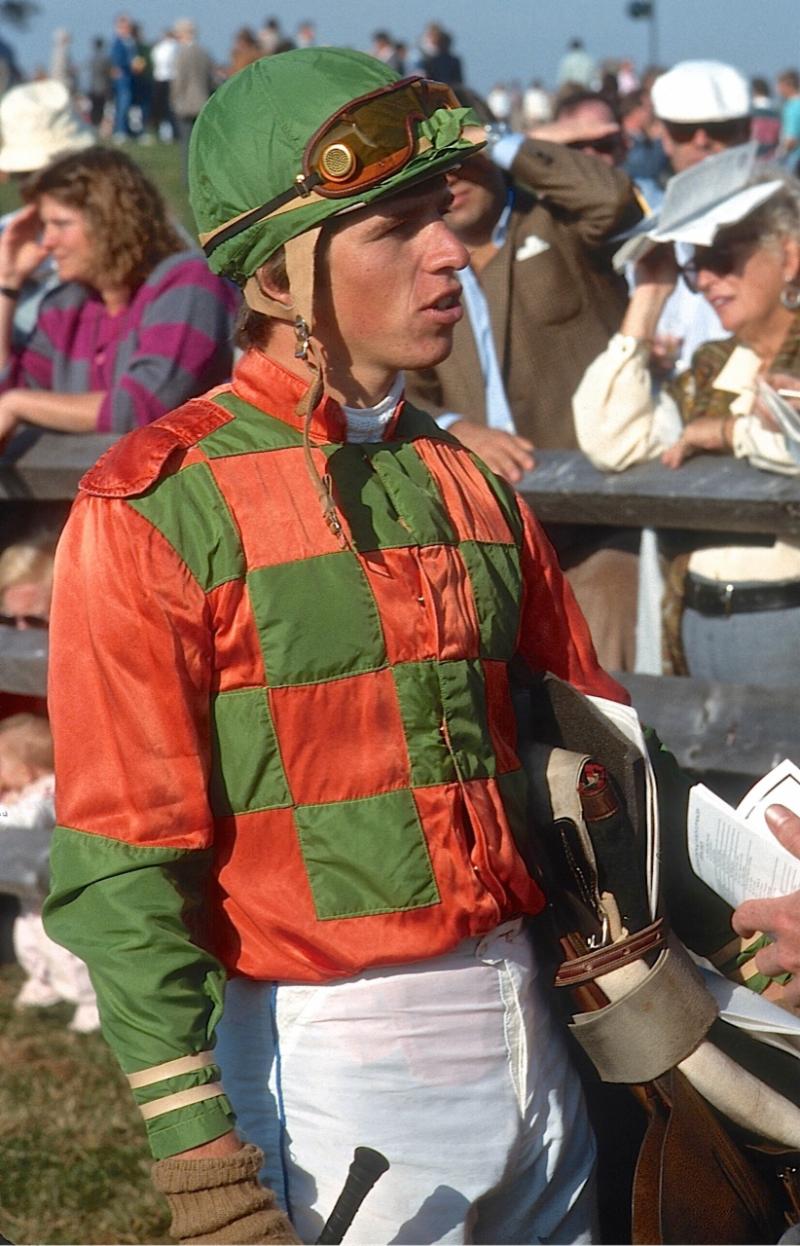
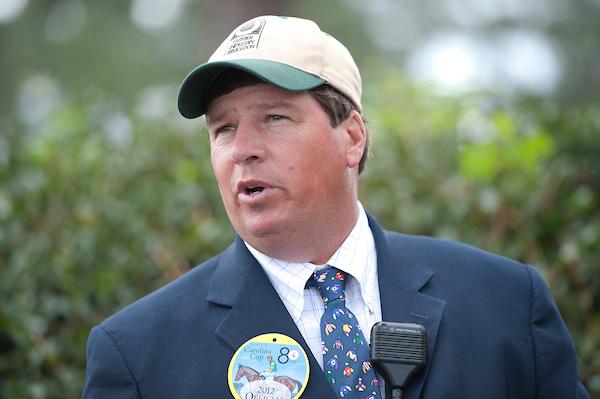
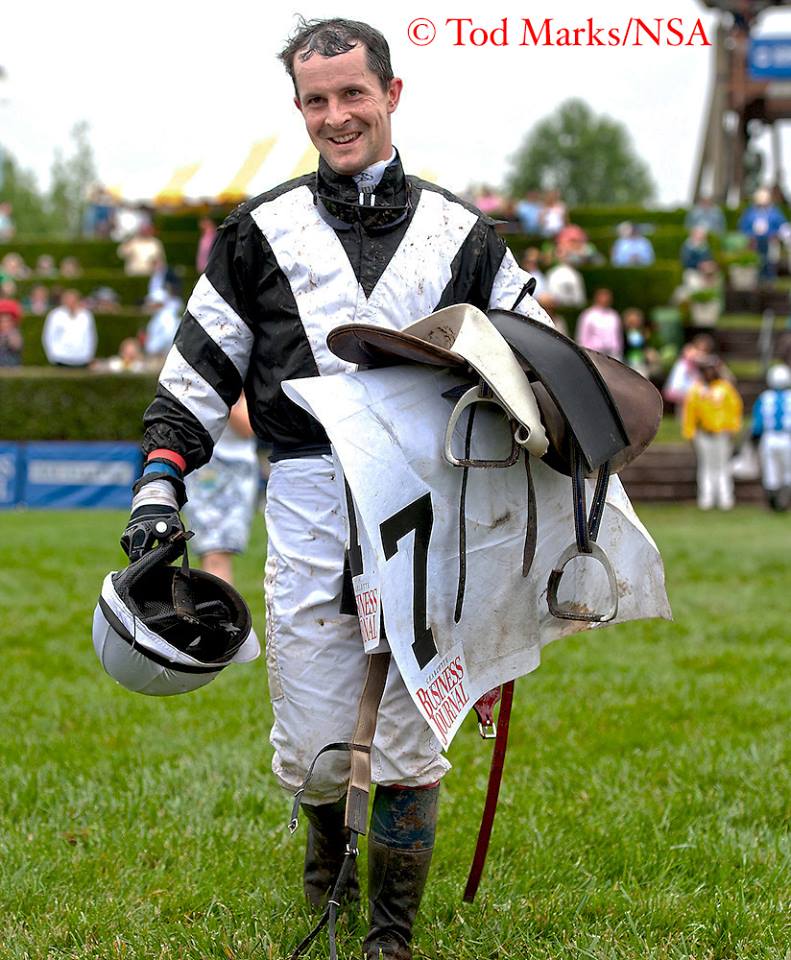
(Douglas Lees photo, left) spent his adolescent years like many of his contemporaries in rural eastern Pennsylvania. He played high school sports and worked at odd jobs, mowing grass and laboring at a dairy farm for spending money.
To be sure, he knew his way around a horse. His father, Bill, had trained as a hobby, and Jeff rode ponies in races in his early teens against Ricky Hendriks and Bernie Houghton. But the horses were in the background as he finished high school and contemplated college.
At that moment, though, he told his parents that he wanted to take a year and give horses a chance. “I decided I wanted to ride a race or two,” he said. “I had decent balance, and I could jump a fence.”
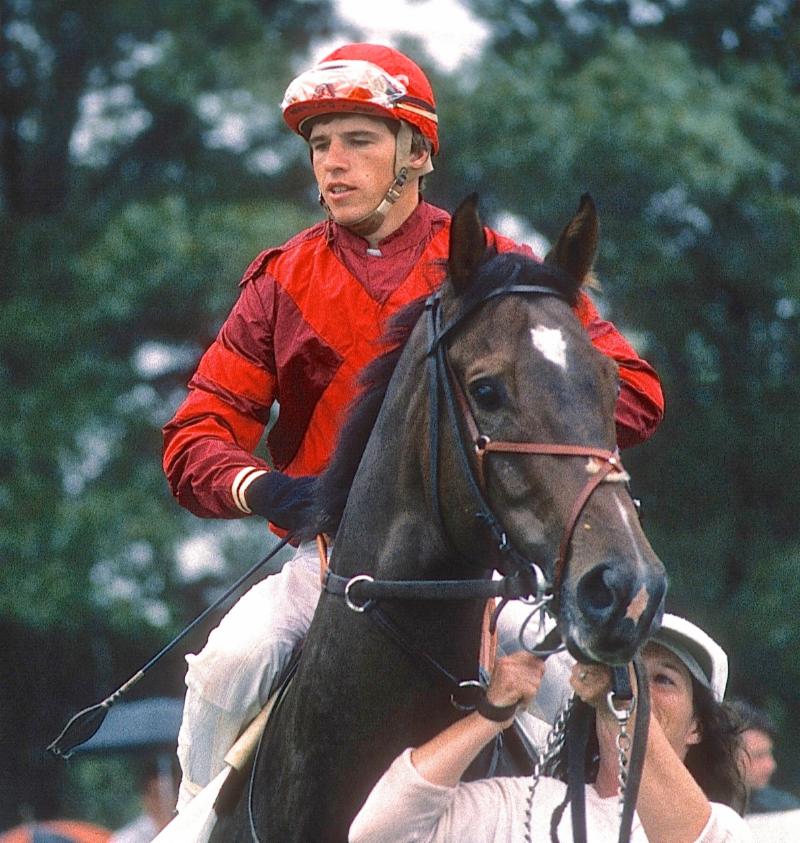
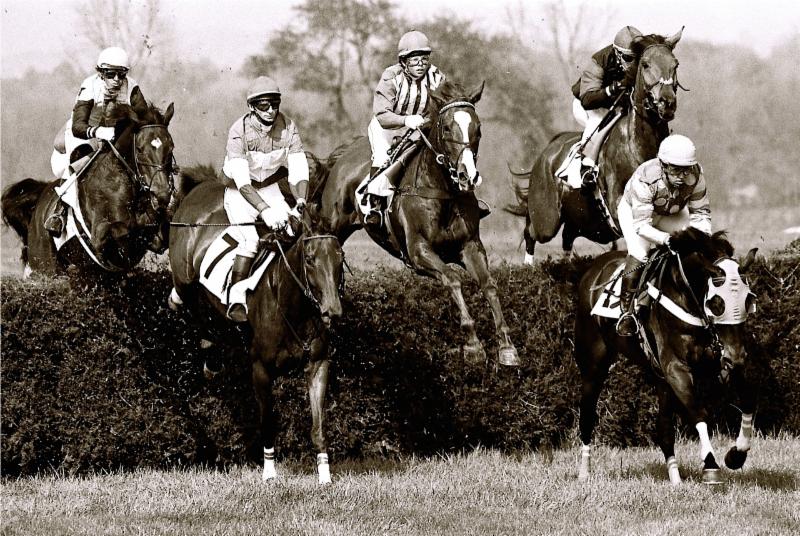
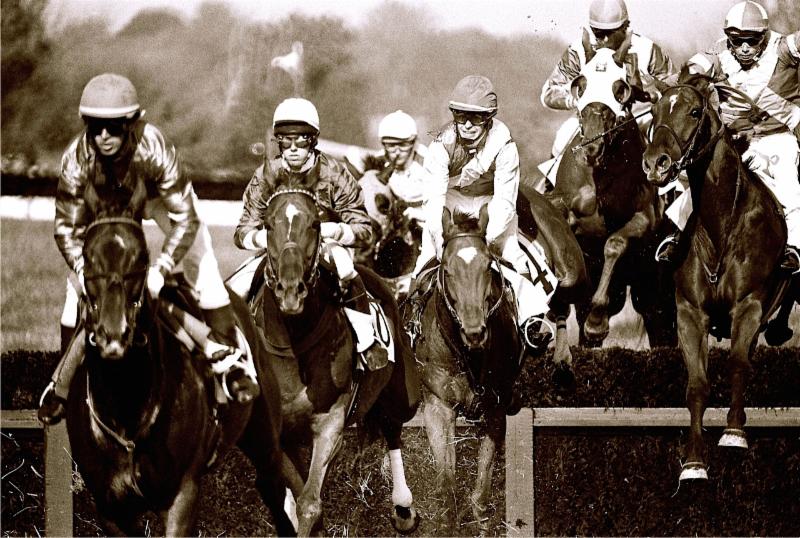
He went to work for Janet Elliot in 1980, and his one-year sabbatical blossomed into two highly successful careers. When his riding career concluded in 1996, he had won 231 National Steeplechase Association races, which places him sixth on the all-time list. The five jockeys with more wins are in Thoroughbred racing’s Hall of Fame.
After a two-year hiatus, he went to work for the Carolina Cup in Camden, S.C., where he has directed racing operations and tended the training facilities at the Springdale Course, which is highly regarded for preparing steeplechase horses and two-year-olds learning the ropes for their racing careers.
He didn’t get the chance to ride those one or two races until October 1981, when Paddy Neilson put him aboard Road to Freedom in a Rolling Rock timber race. Road to Freedom and Teter did not make it around. “If I knew then what I know now, I probably wouldn’t have ridden him,” he said.
Veteran jockeys say that knowledge grows exponentially from those first mounts and, as Teter noted, the first falls. Elliot provided invaluable guidance and advised Teter to ride farther back in the saddle, which increased his confidence and the confidence of his mounts.
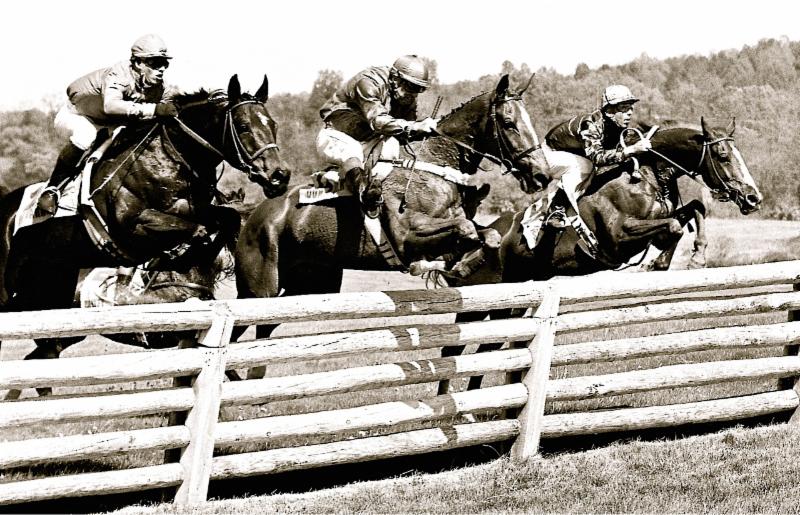
He also learned the skill of allowing the reins to glide through his hands over a fence. “When a horse makes a mistake, the first thing that happens is the head goes down,” Teter said. “When you allow the reins to slip through your fingers and get down to the knot, you’re not going to be launched over the horse’s head like a missile.”
Success followed his growing skills and experience. He won his first jockey championship in 1984, and two other titles by wins followed in 1990 and 1991. He also was the champion jockey by purse winnings in five years: 1984, 1986, and 1989-1991.
Along the way, he rode some of the best horses never to be crowned as steeplechase Eclipse Award winners. He and George Chase’s Census won the first Breeders’ Cup Steeplechase in 1986. Elliot also trained Bill Lickle’s Victorian Hill, who won 15 races and is sixth on the all-time leading earners list.
The good ones are easy to ride, Teter said. The challenge for a jockey is getting the most out of the ones who need to be tricked into training and those horses whose talents are limited and need the assistance of their rider to win. One of the latter was his father’s Exploding Fortune, who was trained by Elliot and was a multiple winner in the claiming ranks. “In the morning, he was very tough, but put a bridle on him for a race, and he gave you 110%,” Teter said.
Bill Teter, who died in June, quietly dispensed wisdom to his family, and he told his son the common-sense truth that race riding is not forever. Even the best jockeys need a second act. To be sure, Jeff Teter has had a most successful second act, a full and accomplished career at the Carolina Cup.
But first he had to bring down the curtain on the first act, and he did so with a flourish. Teter made clear early in 1996 that it would be his last season in the saddle. Making weight had become excruciating, and he was always dieting to answer the relentless demands of the scale.
His last mount would be Correggio in the Marion duPont Scott Colonial Cup at Camden. By then, Teter had won just about every major race except the Colonial Cup, but he didn’t expect to have the mount. Teter rode Lickle’s Correggio in his first start that fall, a win at Foxfield. Arch Kingsley Jr. had picked up the mount for a victory in the Breeders’ Cup Grand National at Far Hills, where Teter had had a bad fall in the first race.
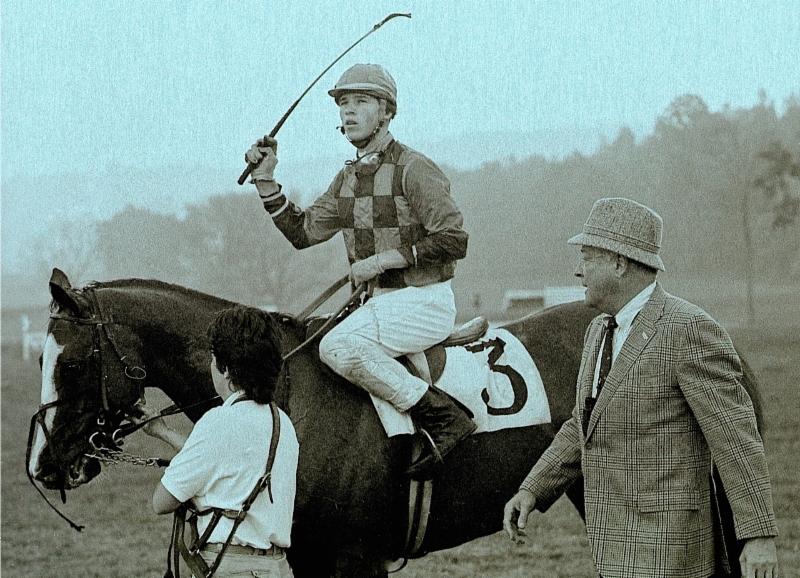
But Lickle and Elliot rewarded Teter with the Colonial Cup mount, and Correggio won by a length over Stop and Listen, ridden by Kingsley. Correggio, unbeaten in three 1996 starts, was voted the year’s Eclipse Award. Now, that’s the way to wrap up a stellar riding career.