Change is the only constant.
–
Hereclitus ca. 500 BCE
|
|
In the absence of racing, let’s look at Aiken
|
|
Meet longtime Aiken Steeplechase Association race chairman, the late Ford Conger
|
|
Greek philosopher Hereclitus declared with confidence 2,500 years ago that change is the only constant.
Today, Aiken’s Conger clan is proving him right.
Family patriarch, the late Ford Conger in 1967 was widely credited as part of the creative team that brought back the long-defunct Aiken Steeplechase, something he helped raise from the ashes in 1967 after 25 years dark for a world war and a spate of suburban development around the western South Carolina town.
When trainer Mackenzie Miller offered one of his turf gallops adjacent to the Aiken Training Center for a renewed Aiken hunt meet, Conger and a group of supporters jumped at the chance.
The
Aiken Spring Races – and Aiken Fall Races, which Conger helped establish in 1992, are still going strong today (
though the March 21 meet was canceled due to the ongoing coronavirus crisis.)
|
|
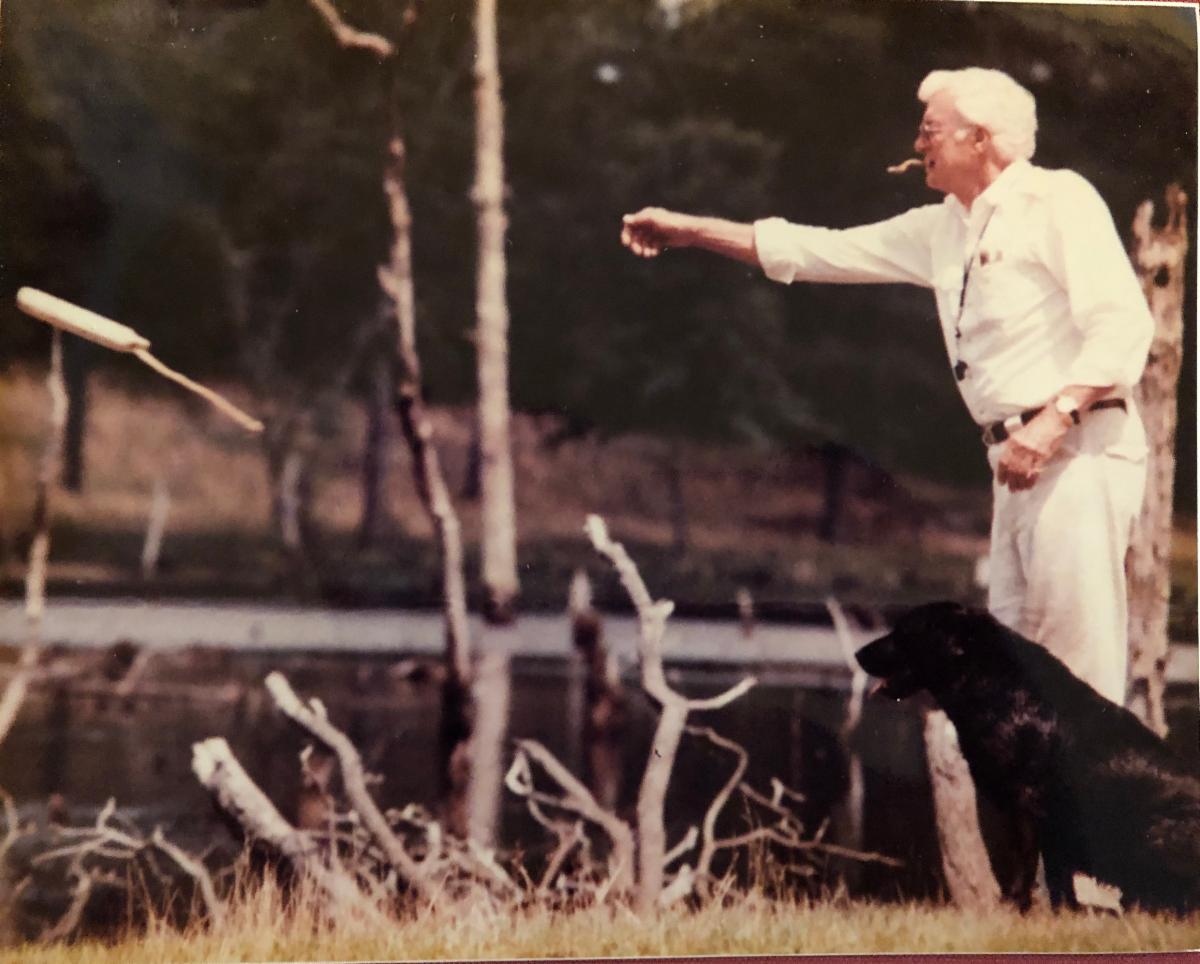
Ford Conger is remembered as a handsome, affable sporting enthusiast, as much a force of nature as a savvy businessman.
Daughter Georgianna “Girl” Conger-Wolcott recalls her father’s powerful personality and his role in reviving the Aiken races. “Those were the Camelot years for steeplechasing,” says Conger-Wolcott, 54. “My father was such a gentleman and such a sportsman. It was his incredible personality that helped bring back the long-abandoned race meet.
“He was larger than life.”
|
Ford Conger, photo courtesy of Girl Conger-Wolcott
|
A native of New Jersey, Ford Conger “wasn’t part of the horse world before he got married, but my mom (Aiken real estate agent Courtney Conger) was a horsewoman, and she brought him on board,” Conger-Wolcott explains. “They had racehorses in California while they were on the west coast” where Conger worked in Oregon’s lumber industry.
The family moved to Aiken in the mid-1960s, wanting an equestrian lifestyle and familiar with Aiken because both Courtney and Ford had lived in nearby Augusta, Georgia.
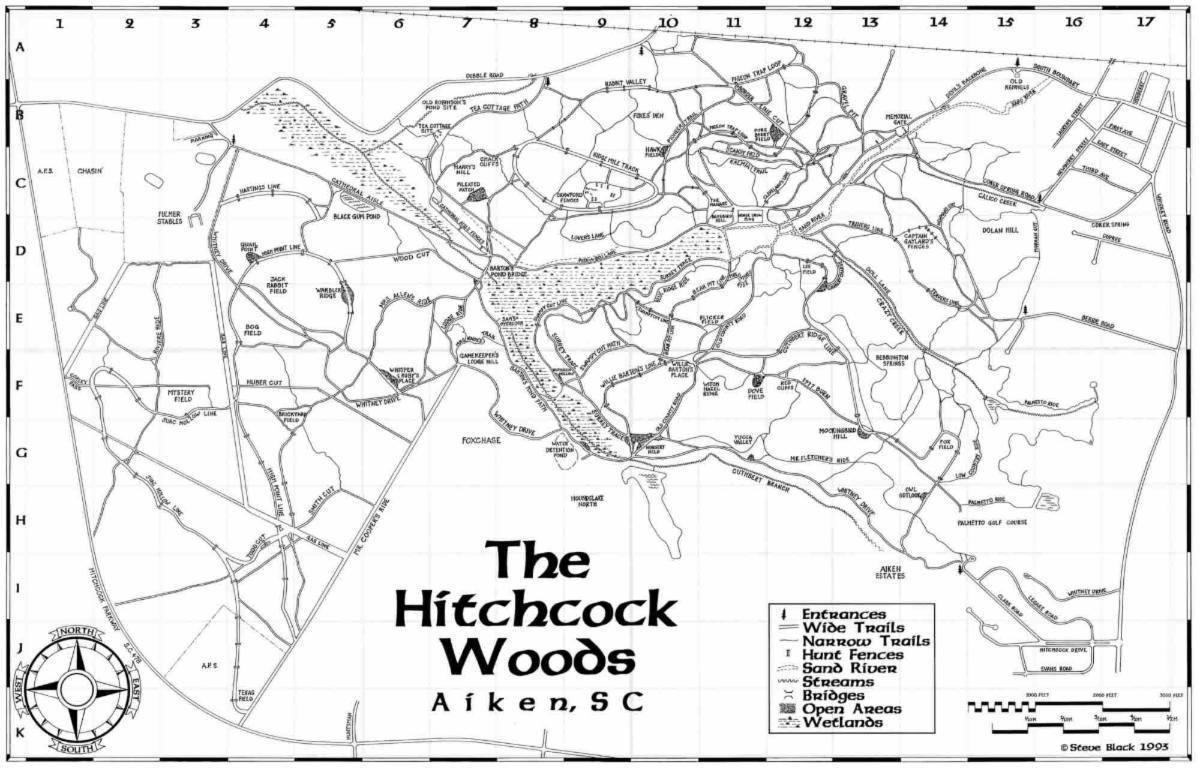
Around the same time the Congers arrived in Aiken, there was already a movement afoot to bring back the Aiken steeplechase, first run in the Hitchcock Woods in 1930 but abandoned during World War II and never restarted.
|
|
Aiken Steeplechase first ran in 1930
|
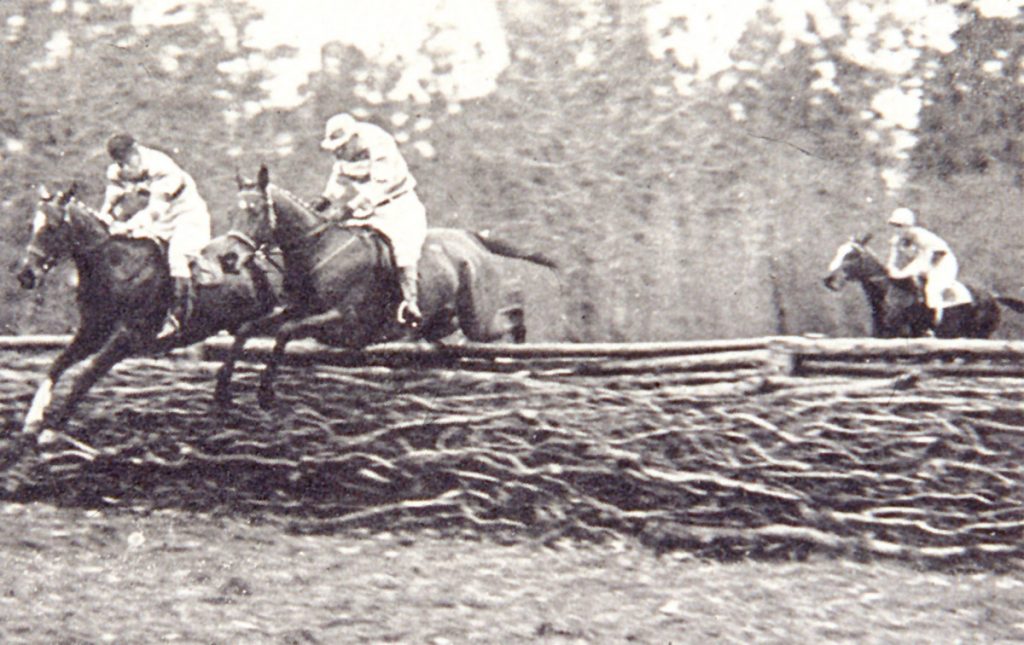
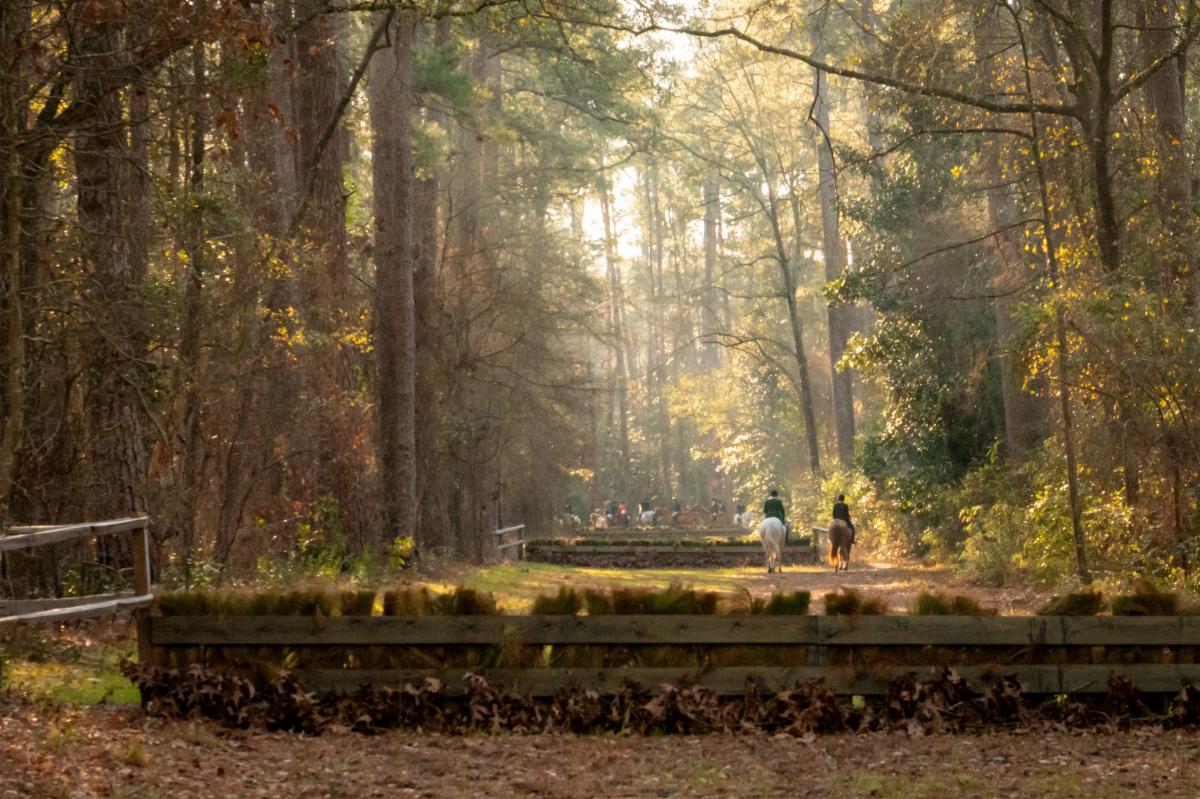
The Aiken Steeplechase Association formed in 1930, instituted by influential horseman Thomas Hitchcock, Temple Gwathmey and Harry Worcester Smith. Early spring meets were run in the Hitchcock Woods over the permanent “Aiken fences” used today as hunt jumps by the Aiken Hounds drag-pack.
|
World War II put the Aiken Spring Steeplechase on hold in 1941, and suburban development around the western South Carolina town extended the hiatus until Ford Conger and friends Charlie Bird III, G.H. Bostwick, Paul Mellon, Mack Miller and Willard Thompson breathed life back into it in 1967.
|
|
Ford Conger jumped in to help Charlie Bird, Willard Thompson, Skiddy von Stade, Ivor Stoddard and Fred Wright design a seven-race card and $11,000 in sponsored prize money – a lot in April, 1967. The Mickey Walsh-trained Sandhill Flight (Calvin Moore up) won the inaugural feature at the renewed meet, going on to win that summer’s Tom Roby Handicap at Delaware Park as one of the year’s top hurdlers.
“It was a community effort to put on the steeplechase back then, like it is today,” Conger-Wolcott says. “My dad was bigger than life, with this great booming voice and an incredible sense of humor. He didn’t hesitate to ask someone to help, and he had a way of bringing in lots of people to be part of it.”
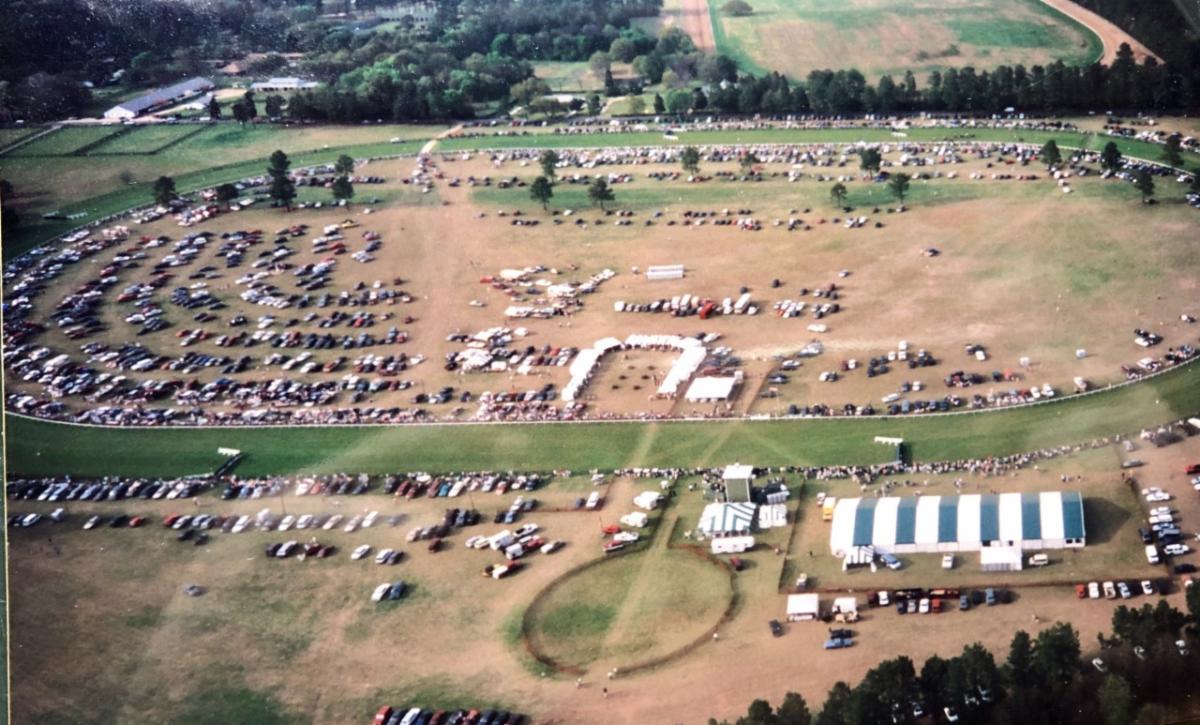
Conger eventually became race chairman for the Aiken Spring meet, and helped introduce the Aiken Fall meet in 1992. The meets grew and thrived, spring crowds swelling to 30,000 and more, and the spring meet became the touchstone spring opener on steeplechasing’s “Dixie Circuit.”
|
|
When Ford Conger died unexpectedly in August, 1993, his contemporaries said it left a huge hole in Aiken’s sporting community.
“I know the steeplechase people loved him,” Conger-Wolcott says. “He was adamant about Aiken remaining part of the spring calendar. It had been such an important part of the (southern circuit) back in the old days. Dad worked hard, wined and dined those sponsors, and even today, everyone says how much they love coming to Aiken.”
|
Photo courtesy of Girl Conger-Wolcott
|
Hall of Fame trainer Jonathan Sheppard, who won the Imperial Cup with such standouts as Tall Award (four times), Wustenchef and Thrice Worthy is a fan. “Jonathan Sheppard always used to tell me we have the best food (for horsemen) and that he loves coming here,” Conger-Wolcott says. “Dad liked to say ‘this is where the magic happens.’
“All of that was real important to dad. He knew the sporting event was enhanced by the social side.”
Retired jump rider Keith O’Brien won the Imperial Cup in March 1993, the last one Ford Conger witnessed. O’Brien says it’s like it was yesterday.
“I remember Dangerfield very well,” says O’Brien, now a New York-based actor. Dangerfield, owned by Virginia’s Ann Stern and trained in Maryland by Jack Fisher, had a speedster style that suited the nearly-level, always fast Conger Field course. “He was an awesome jumper and a real front runner. He wheeled at the start, and we were left about 10 lengths.
“We were back in front after jumping the third and were never headed.”
O’Brien’s father, Leo, partnered Tall Award to win the Imperial Cup in 1975 and ‘76; his uncle Michael O’Brien won in 1971 with Gaddo, 1974 with Wustenchef.
|
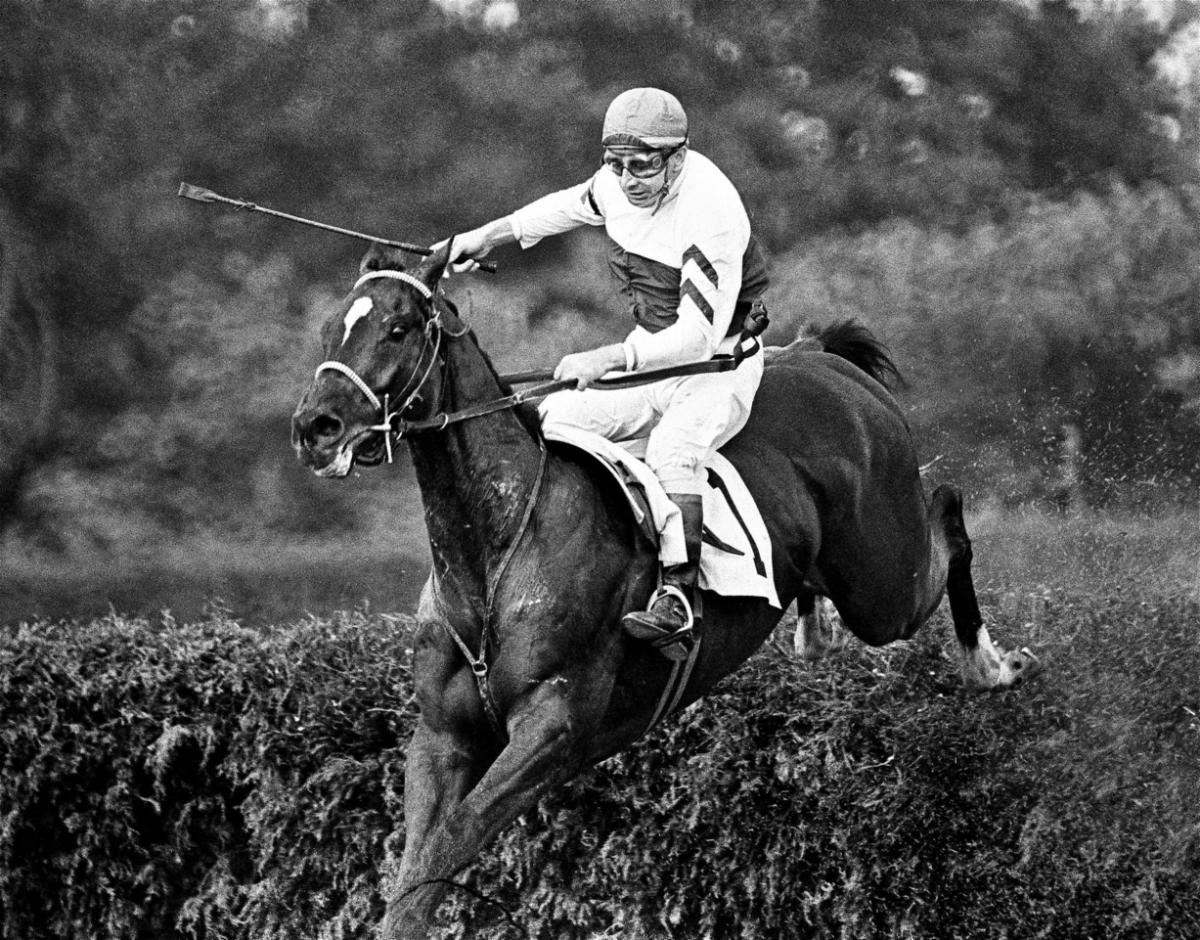
Wustenchef in June of 1971, winning the Indian River Hurdle Handicap at Delaware Park. Michael O'Brien rode him for Augustin Stables.
Douglas Lees photo
|
Conger-Wolcott stepped up with the Aiken Steeplechase Association following her father’s death, helping organize the meets, and the parties, until 2018. “Dad would be so pleased to see it continue to succeed like it has,” she says.
“I’m sad not to have a hand in the Aiken races any longer, but, on the other hand, I’m real busy with puppies (nine mixed-breed newborns and their mother she’s fostering for Aiken’s Friends of The Animal Shelter.) Plus the uncertainty of this wild world these days, and the committee having (to make) that awful decision to cancel – I’m certainly glad I didn’t have to deal with all that.”
|
Conger-Wolcott calls Aiken Spring’s decision to cancel “heart-breaking. It’ll be hard on the association, but they’ve weathered the years since my dad helped bring it back 25 years after the war.
“It was the right decision.”
With regards to the worldwide pandemic coronavirus driving daily life, increasingly, Conger-Wolcott is circumspect. “I made my own hand sanitizer last night,” she says. “Everclear and aloe gel, mixed in an old soap dispenser.
“This is better than store-bought since you can drink the extra.”
|
|
Sport through the artist’s eyes
|
Georgianna “Girl” Conger-Wolcott grew up in Aiken’s horse district, on a 3-acre farm near the Coker Springs entrance of the Hitchcock Woods.
Born to a family of avid sportsmen and animal advocates, the artist “grew up with countless dogs, horses, cats, chickens, ducks, geese and goats,” she says, an idyllic childhood that strongly influenced her chief choices of subject material when she began doodling as a young girl.
Conger-Wolcott says a favorite childhood memory was poring over her mother’s George Ford Morris, Munnings, Stubbs and other art books. She began formal art lessons at 11, later studying studio art at Virginia’s Sweet Briar, like her mother, and riding on the varsity team.
Conger married Hamilton, Massachusetts native Randy Wolcott in 1991. Daughter Caroline was born in 1998.
|
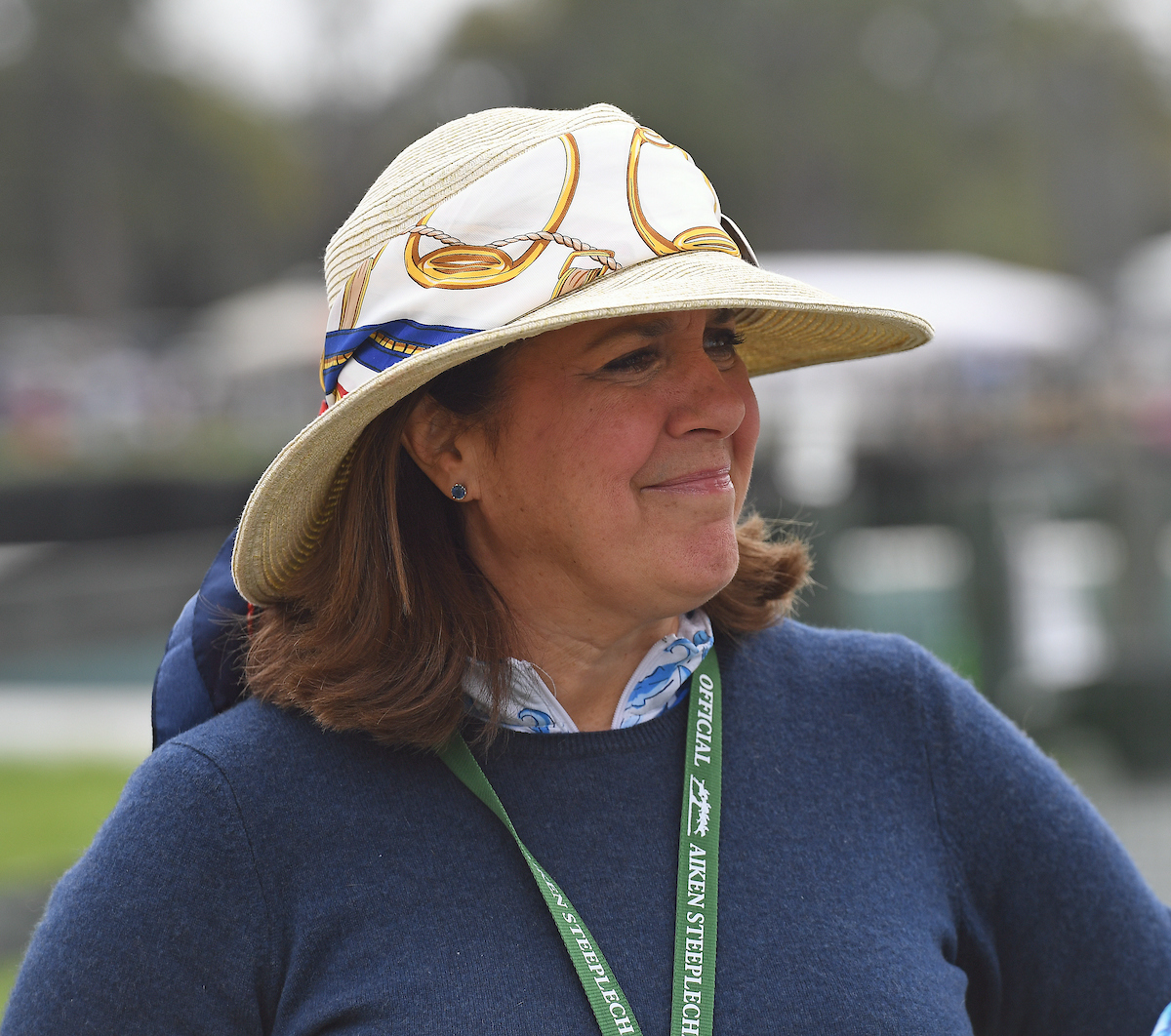
Girl Conger-Wolcott at the Spring Aiken Steeplechase in 2018.
Tod Marks
photo
|
A realist with a keen eye for her subjects’ individual characters, Conger-Wolcott works chiefly in oil, but also in pencil, acrylics and watercolor. She paints at her studio in the 100-year-old heart pine-paneled stable at her Twin Myrtle Stable, and teaches classes there and at the Aiken Art Annex.
In addition to three horses, Conger-Wolcott has a flock of laying hens and several dogs at the farm.
“I can’t imagine being more blessed to wake up and see my horses – and chickens – out the window,” she says. “In the studio in the barn has to be the best smells ever – leather and oil paint.”
|
|
So important to Aiken’s steeplechase revival was Ford Conger that the course – the old Clark Field next to the Aiken Training Center a half-mile from downtown, was renamed Ford Conger Field after his 1993 death.
Property owner Mack Miller, Hall of Fame trainer of 1993 Kentucky Derby winner Sea Hero for breeder Paul Mellon, had long referred to the big turf gallop as Clark Field after part-time Aiken resident F. Ambrose Clark. Clark was enamored of his “winter colony” seasonal home as an escape from his New York base. He named his mansion on Grace Avenue “Kellsboro House” after his 1933 English Grand National winner Kellsboro Jack.
|
|
In 1994, Miller renamed the 66-acre parcel in honor of of his longtime friend Conger, telling the
Aiken Standard he credited Conger for reinvigorating Aiken’s sporting world.
“It is safe to say that Ford, more than any other individual, has been responsible for the growth and development of the Aiken Hunt Meet since its revival in the late 1960s,” Miller was quoted as saying, calling Conger “a dear friend whose death last August touched me very deeply.
“In view of his contributions and our friendship over these past several years, today we announce Clark Field is being changed to ‘Ford Conger Field’.”
Then-race chair William Tucker called Miller’s decision “a magnificent gesture ... to honor someone who is greatly missed.
“We hope steeplechasing will continue for many years to come at Ford Conger Field as a lasting tribute to our friend and mentor.”
Change remained a constant with the site.
Miller sold Conger Field in 2000 to Bruce Duchessois, son of Arlington Park owner Richard Duchessois and himself a horse show Hall of Fame member and elite level three-day event owner. Bruce Duchessois said at the time he wanted to protect the site from residential development, instead carving out a multi-use horse facility.
At first, it embraced the region’s largest equestrian events, the two jump meets.
For 15 years, Conger-Wolcott says, the shows and races shared the space, but as permanent stabling and parking areas were installed for Duchessois’ envisioned Aiken Horse Park, there was less and less room for tailgate parking, and the racecourse started to get squeezed.
The Aiken Steeplechase Association looked for a new home, identifying a site east of town last year.
Conger Field was renamed Bruce’s Field after Duchessois died in 2014. His partner Jack Wetzel has continued to develop the showgrounds.
The 54
th running of the
Aiken Spring Races scheduled for March 21 was canceled, along with other spring meets due to the global pandemic coronavirus. The 29th Aiken Fall Steeplechase in October, and 2021 Aiken Spring Steeplechase are planned to be held at Bruce’s Field, with the new course ready next fall.
|
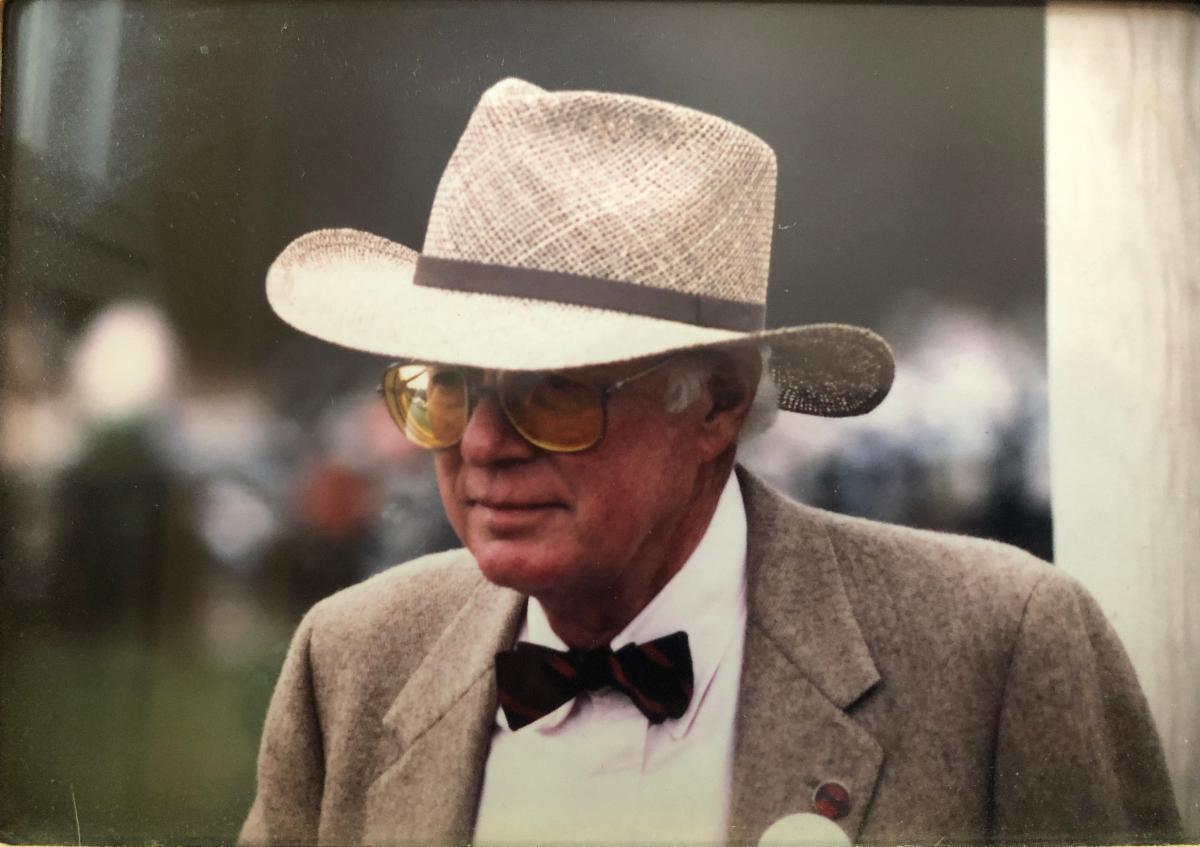
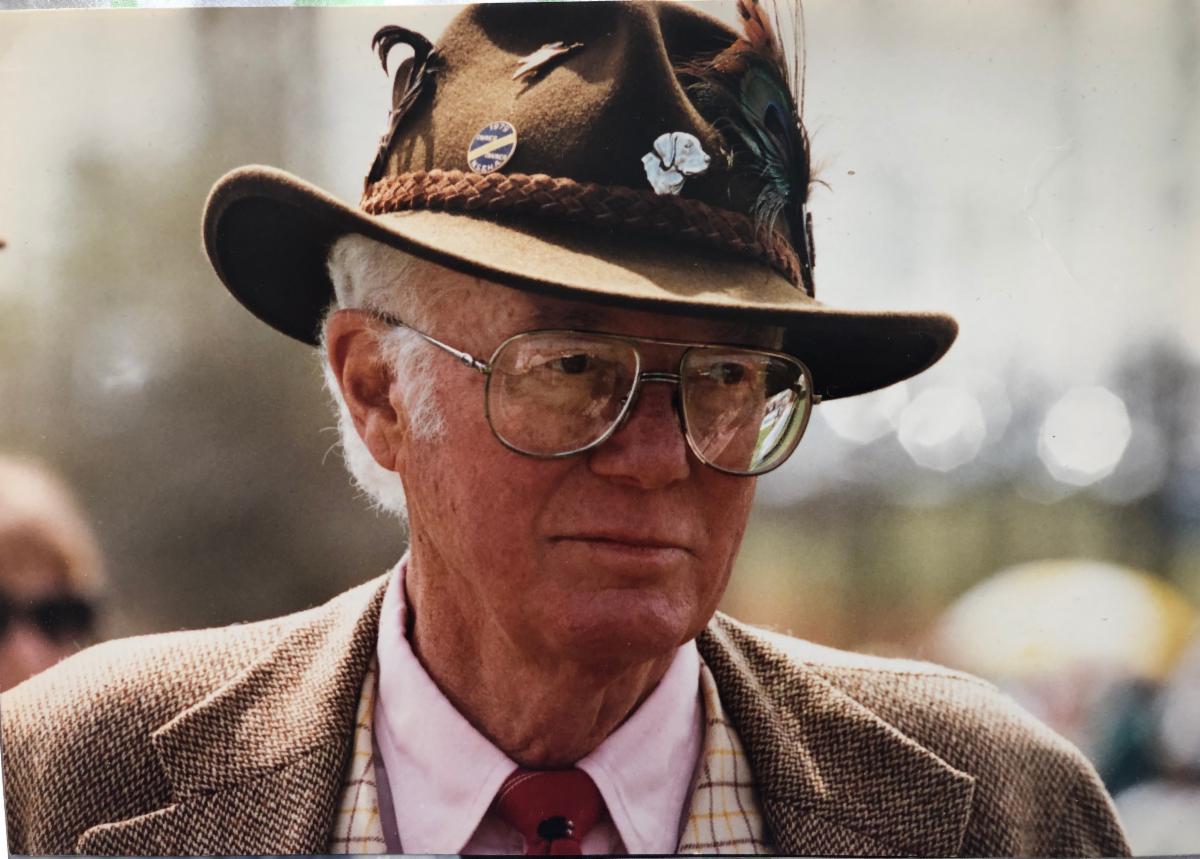
Georgianna Conger-Wolcott remembers her father as a handsome man, with a great head of white hair and the most fantastic, signature hats. Conger would tuck a feather from his most recent wing-shoot under the band, and load it up with race meet pins. “Seeing the tradition, seeing it go on and on, that … was important to dad,” she says.
|
Photo courtesy of Girl Conger-Wolcott
|
Ford Conger had many friends in the steeplechase world, from Brose Clark to Pete Bostwick, from Cot Campbell to photographer Catherine French. “Catherine and my father had a beautiful connection,” Conger-Wolcott says. “When she died (in 2019), I just know my dad was there to meet her in heaven. With his crooked cigar and his hat, he would have put his arm around her and welcomed her in.”
|
The races have long been a family affair for the entire Conger clan. Conger-Wolcott’s brother Allen works as a patrol judge, as does her husband, Randy Wolcott. Her mother, Courtney Conger’s Carolina Real Estate has been an event sponsor.
“Running a steeplechase is no easy task,” Conger-Wolcott maintains. “Usually there’s a core group of people who do everything. The job turns so stressful close to the meet, like being there ‘til 5 p.m. setting up so it’ll be perfect, when the party begins at 7.
“It’ll wear you out, but it’s worth it. My father always believed in that.”
|
|
Change is coming: Aiken meet to shift to new venue for fall, 2021
|
The Aiken Steeplechase Association is creating a new racecourse on the eastern edge of the Aiken, a project years in the making.
“This will be a track for the community,” said Aiken Steeplechase president Paul Sauerborn. “We have a real challenge on our hands, and we are committed to meeting that challenge.”
The race course is scheduled for completion in time for the 2021 Aiken Fall Steeplechase. The schedule will allow time for all necessary construction and for the turf to take root.
The new site is 140 acres located two miles from Aiken’s thriving downtown. In all likelihood, the new location will have a one-mile track so that the horses will be readily visible to the racegoers. “We plan on having a quarter-mile of railside parking,” Sauerborn said.
Of the 140 acres, 80 will be developed for the racecourse, remaining land maintained in its natural setting. “When you go onto the property, you’ll think you’re in the country,” he said.
The City of Aiken is assisting the project through a $1-million grant for the property purchase, with funds coming from tourism and open-space sources.
For several years, the Aiken races have been looking for a property to accommodate the large spring crowd and allow expansion of the fall meet.
The search ranged over a wide area around Aiken, but Sauerborn and his team settled on a site within the city that will provide easy access to Aiken residents and those coming from out of town.
The Aiken Horse Park Foundation has been developing Bruce’s Field into a show facility, with decreasing space for the racecourse and spectator parking.
“Our relationship with the Aiken Horse Park Foundation has always been amicable, but its growth has reduced parking and other amenities for our Aiken Steeplechase fans,” Sauerborn said. “I think it’s fair to say that both organizations knew that changes would occur, and those changes are under way.
“The Horse Park will be able to continue its development of Bruce’s Field, and the Aiken Steeplechase will have a brand-new home that will serve the needs of the community, our loyal patrons, and steeplechase racing.”
|
|
The entire steeplechasing community wishes there were racing at Aiken today. We look forward to the 29th running of the
Aiken Fall Steeplechase
on Halloween day.
Tod Marks
photo
|
|
|
Red-cockaded woodpecker makes strong comeback (with a little help)
|
|
Trustee of the
Hitchcock Woods Foundation since 1998, and board chair 2008-’13, Randy Wolcott has played a hand in protecting the endangered red-cockaded woodpecker’s natural habitat in the longleaf pine forest that covers the high hills in the woods.
Conservation matters, says Wolcott’s wife Georgianna, who often hears the woodpeckers calling when she hacks in the woods.
“It almost sounds like a squeaky toy announcing, I guess, that they just found a big old bug – it almost brings you to tears,” says Conger-Wolcott. “They were gone from the woods, but now they’re back.”
|
|
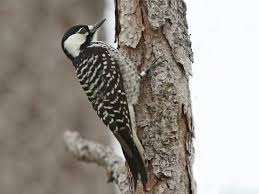
The red-cockaded woodpecker (
Leuconotopicus borealis) is intermediate in size between the downy and hairy woodpecker. The red-cockaded woodpecker has a black cap and nape that encircle large white cheek patches. Rarely visible except during the spring breeding season and periods of territorial defense, the male has a small red streak on each side of its black cap called a cockade, hence its name. The species is listed as threatened.
|
|
The non-migratory birds do the vast majority of foraging on pines, with a strong preference for large trees like the mature longleaf pines found in the uplands of the Hitchcock Woods.
Only about 12,500 birds are alive today because of habitat fragmentation due to development and because of inadvertent mismanagement of the woodlands. They live from Florida to Virginia and west to Oklahoma and eastern Texas, less than 1 percent of the woodpecker's original population. They have become locally extinct in Kentucky, Maryland, Missouri, New Jersey, and Tennessee.
|
|
The red-cockaded woodpecker makes its home in fire-dependent pine savannas, with longleaf pines preferred. Other woodpeckers bore out cavities in dead trees where the wood is rotten and soft, but the red-cockaded woodpecker excavates cavities exclusively in living pines.
The birds peck holes around their nest cavities in the trees to keep sap flowing as a defense against rat snakes and other predators which don’t like climbing on the sticky pine sap.
The problem that nearly extinguished the red-cockaded woodpecker was preventing all forest fires, some of which – scientists now recognize – are necessary to successfully manage woodland renewal.
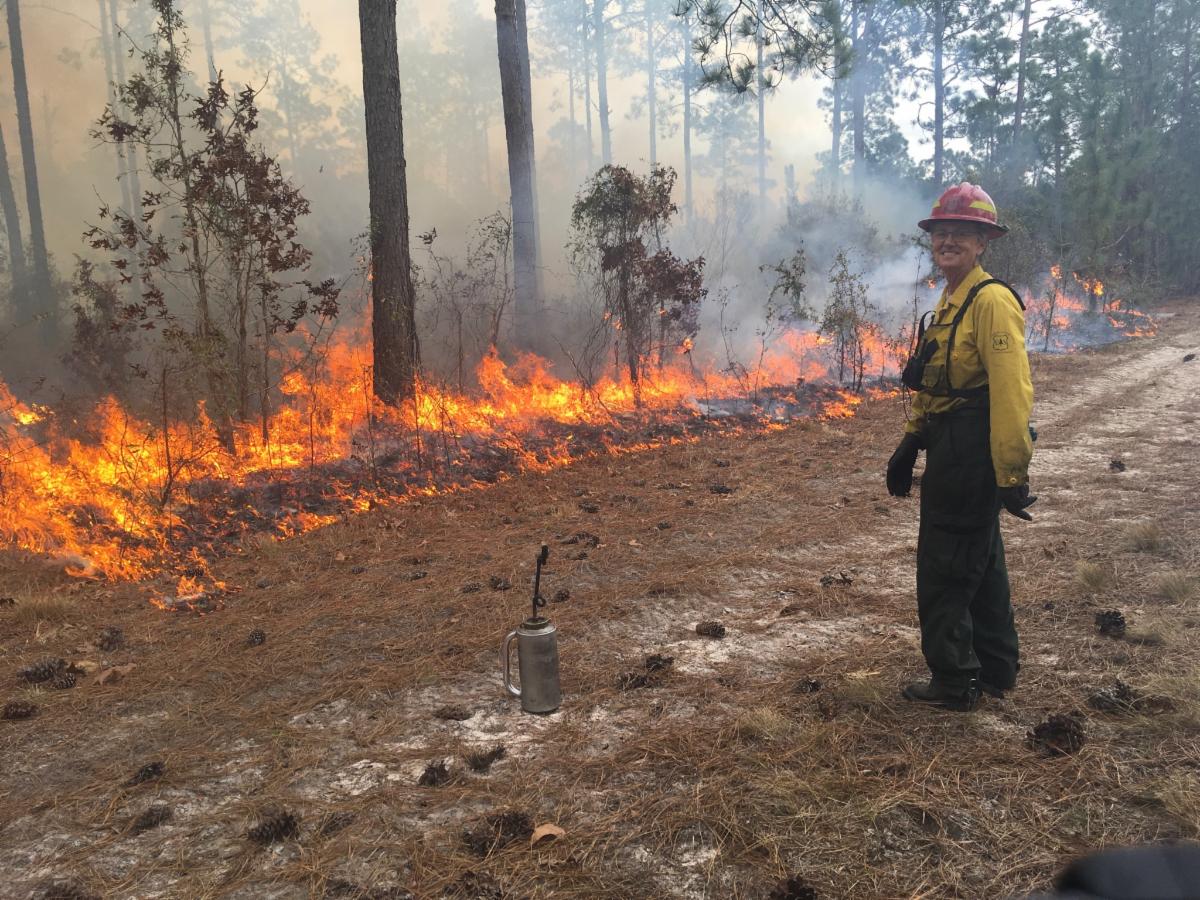
Controlled burns are now employed, in the Hitchcock Woods and elsewhere, allowing fire to diminish undergrowth competing for space among pine groves. Thusly, longleaf nesting sites are protected, and the red-cockaded woodpecker can nest successfully.
|
|
Curiously, National Steeplechase Association board member Robert Bonnie plays a role along with Aiken’s Randy Wolcott. When a grad student, Bonnie helped form the Safe Harbor program that paid landowners to protect habitat, something that has conserved tens of thousands of acres.
“The work (Randy Wolcott) and the Hitchcock Woods Foundation is leading at the Hitchcock woods is important,” Bonnie says. “Preserving the species requires a lot of populations across the south. The woodpecker has a lot of habitat along the southern coastal plain which is vulnerable to hurricanes. So, having secure populations in places like Aiken is an important part of conserving the red-cockaded woodpecker.”
|
|
See what's happening on our social sites:
|
|
|
|
|
|
|