Power couple potency --
Can you change the world just by doing your job?
Robert Bonnie and Julie Gomena are trying to make it happen.
Not only are their careers impressive, but their work has helped quite literally change the world. At the macro level, the Environmental Defense Fund practically embodies conservation integrity -- working diligently to sound the alarm about deforestation and degradation. and at the micro level, the Glenwood Park Trust, Virginia Fall Races and North American Field Hunter Championship strive to protect rural lands from the inevitable suburban creep.
While Bonnie and Gomena don't take up much space on the society pages or spew opinions on social media, their activist-centered work has made a tremendous impact on the mid-Atlantic region, and beyond.
The couple spent a recent rainy Monday morning talking to the TGSF from their Over Creek Farm north of Middleburg, Virginia. A rare timeslot when both Bonnie and Gomena have the time to pause their busy days, they pushed a Boykin Spaniel aside (they let the 9-week-old Border Terrier stay put) and settled in the comfortable family room overlooking a historic bank barn, pond and farm fields to discuss the legacy they hope to leave behind, locally and globally.
By Betsy Burke Parker
|
|
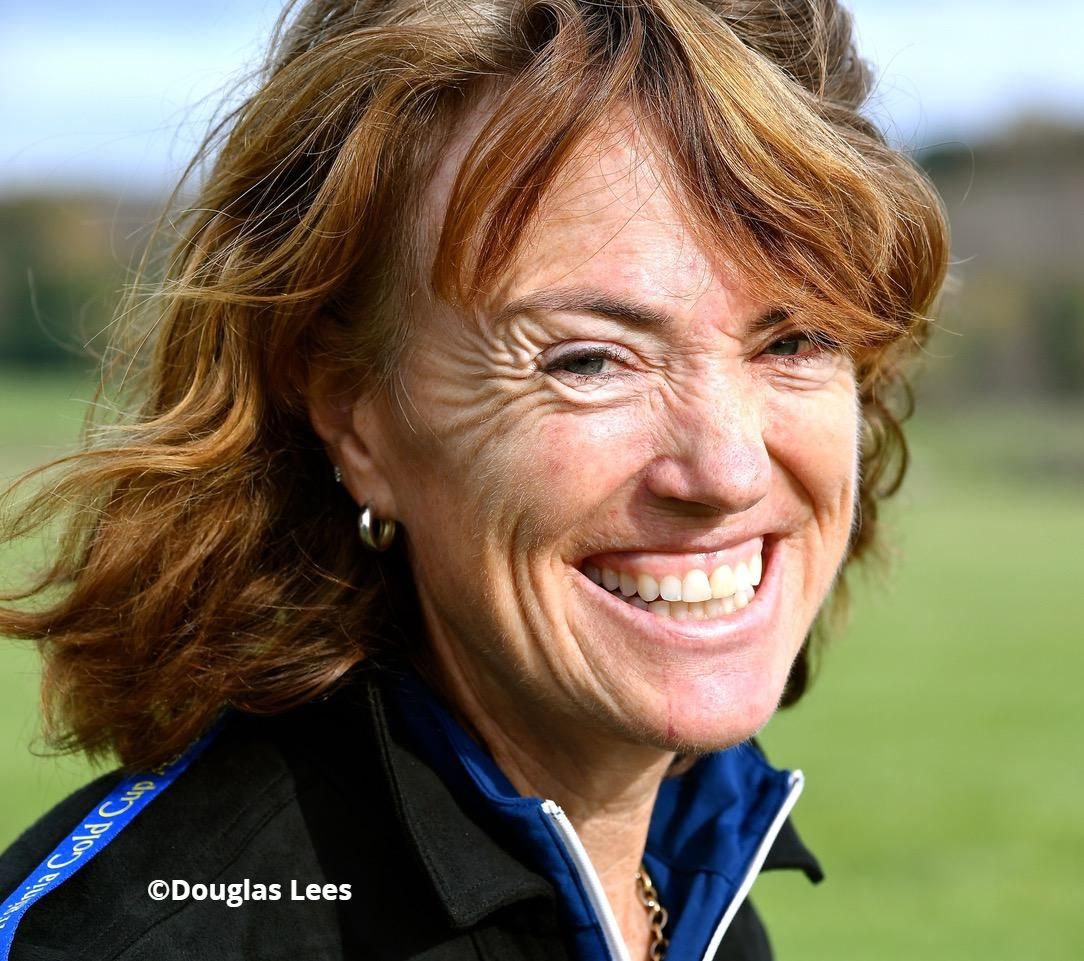
Julie Gomena and Robert Bonnie, together and separately, have been making waves in their respective pools for decades. Married since 2002, they’ve settled into a steady rhythm at their Over Creek Farm. From their base near Middleburg, Virginia, they're involved in jump racing at every level from executive to the grassroots base of the sport.
A lifelong civil servant with a penchant for conservation, Bonnie has spent decades in Washington, D.C., and around the nation, shepherding policy to protect open space and, by association, fragile wildlife populations and endangered species.
|
|
He once managed 193 million acres with the weight of the American forest system resting on his shoulders. By comparison, helping Gomena operate the 258-acre Over Creek is a breeze.
Bonnie recently was asked to sit on three National Steeplechase Association committees, chair of what many believe may be the way forward for the sport’s health and welfare – the futures committee.
At Over Creek, Gomena operates a busy public stable at the historic farm, creating an interlinking series of gallops in the enormous farm fields. The training grounds encircle what may be Gomena’s secret weapon – a huge schooling arena full of showjumps and cavaletti where she and her skillful riding staff put every one of the racehorses through a rigorous dressage and gridwork program.
The former top three-day eventer – she won Rolex in 1994 – believes that teaching racehorses at least the rudiments of classical dressage improves condition, increases athleticism and ups their chances of success both on the racecourse and off.
|
|
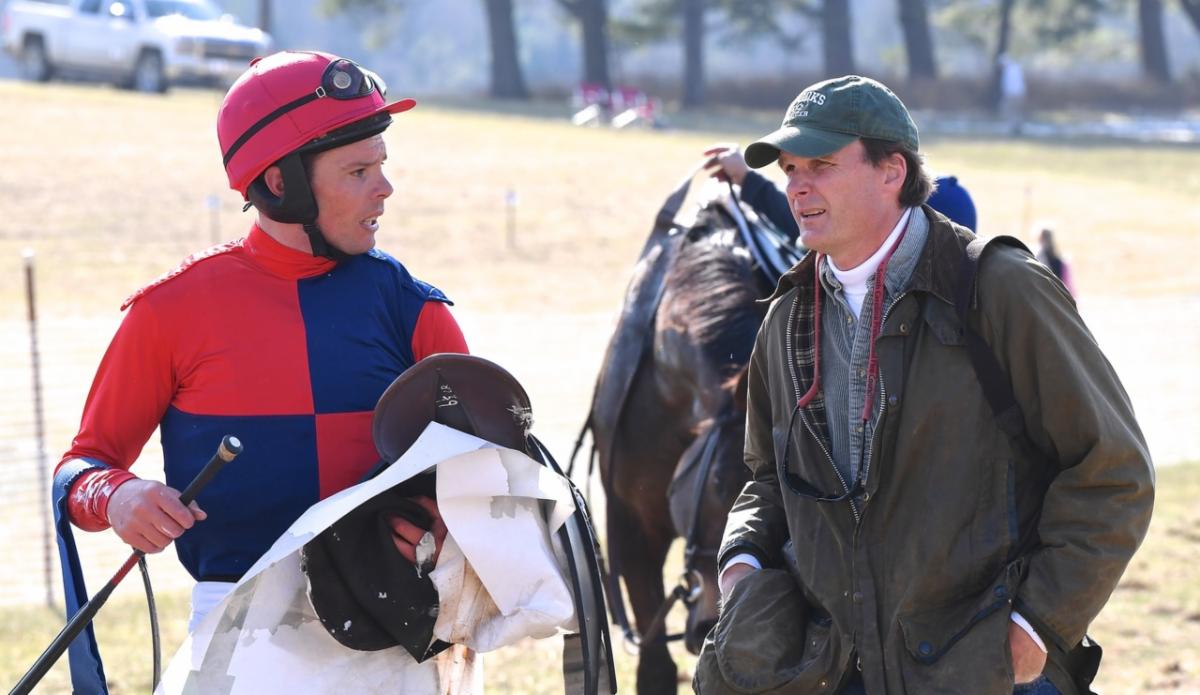
Robert Bonnie
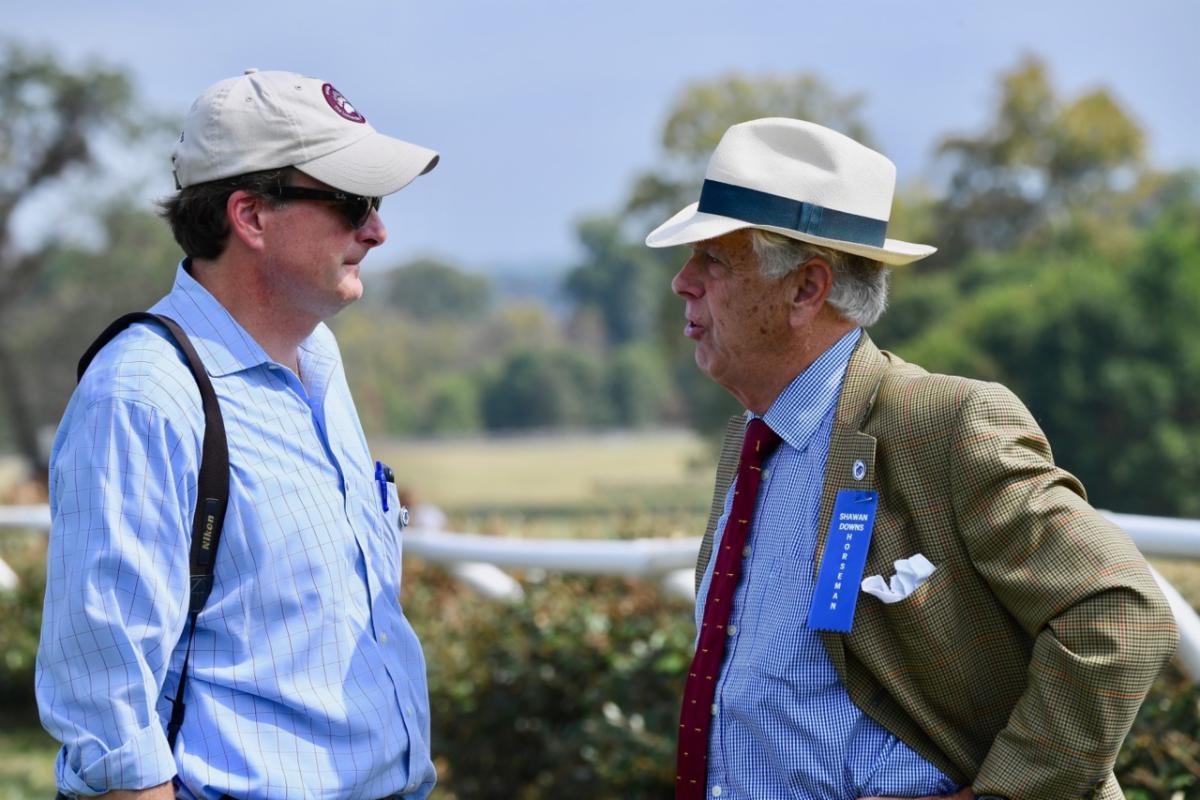
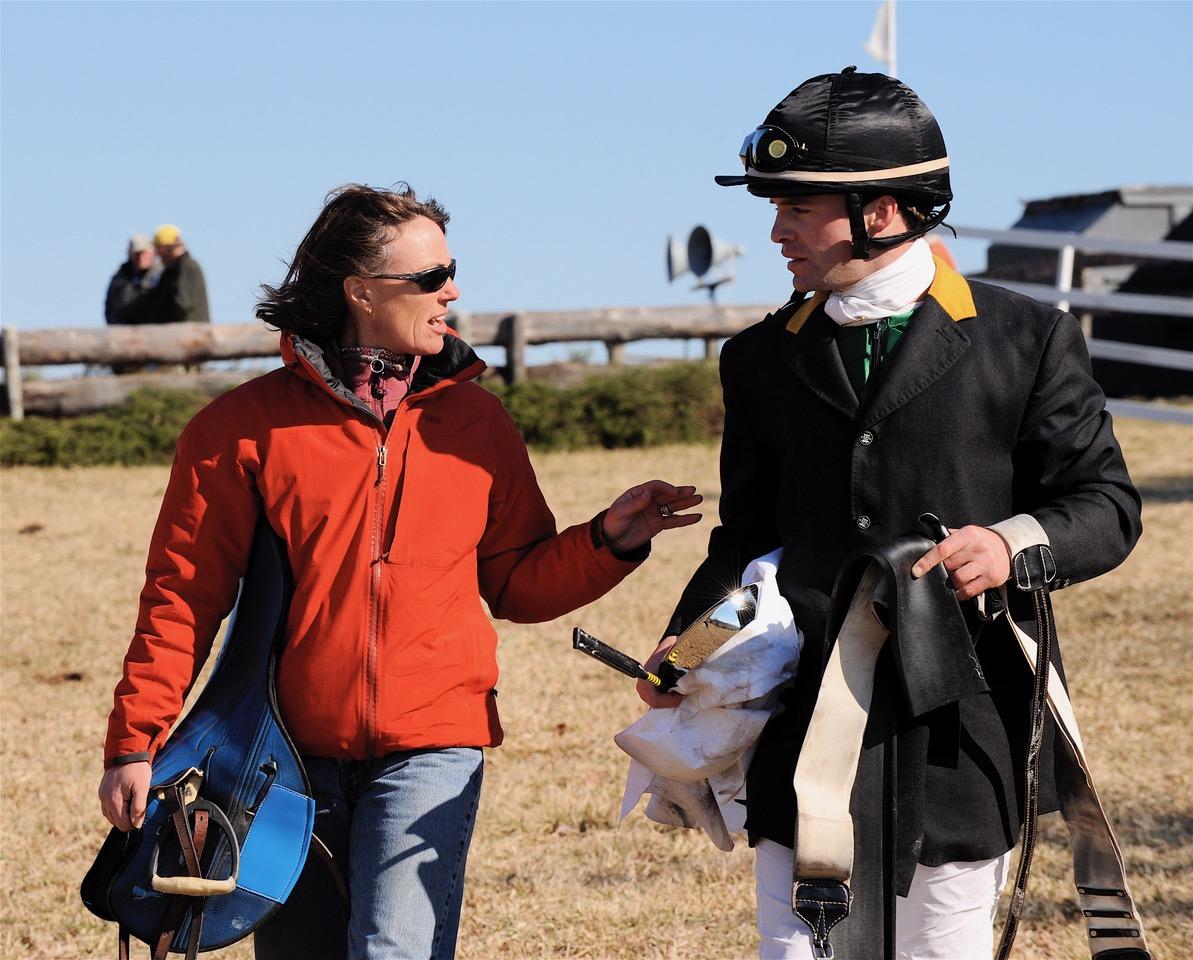
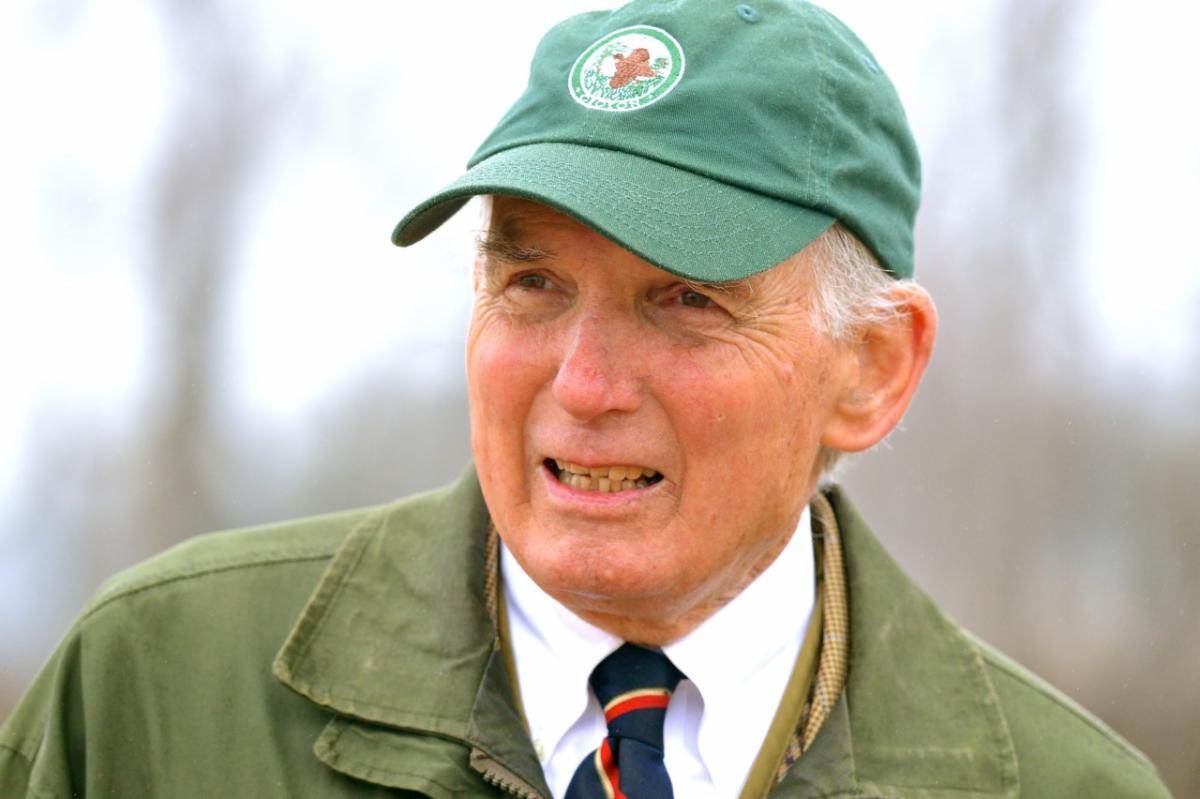
(pictured here with jockey Mark Beecher, Douglas Lees photo) was born into the horse world.
He grew up on his parents’ Stone Lea Farm in rural Prospect, Kentucky north of Louisville. Father Ned was an attorney specializing in equine law, joint-master of the local Long Run Hounds and an avid amateur owner-trainer-rider on the Midwest Hunt Race Association steeplechase circuit.
His mother, Nina Winthrop Bonnie, was a top show rider whose own mother was considered the doyenne of American jump racing and foxhunting. Older brother Shelby was a top junior rider.
Bonnie says he showed on the pony circuit, and hunted with Long Run, and though he liked, and likes, riding, it didn’t command his complete attention.
|
|
“Conservation and land management were background noise when I was growing up as much as the horses were,” he says. He took a special interest in forestry, spending a lot of time on 22,000 acres of forestland between Aiken and Savannah, South Carolina his family has owned for more than a century. He turned the childhood avocation into an adult vocation.
Bonnie went to Harvard, earning a history degree but “mostly majoring in soccer.” He played center back, captain of the All-Ivy squad that went to two NCAA championships during his undergrad years. He went on to get a masters degree in forestry and environmental management from Duke.
|
Bonnie moved to Washington when he worked for the Environmental Defense Fund, helping create an incentive-based program to reward farmers, ranchers and forest owners for stewardship activities on private lands.
He says collaborating with rural stakeholders on conservation solutions empowers landowners instead of shackling them through regulation and restriction.
“There’s a common line that runs through all the work I’ve been involved in, whether we’re trying to protect the climate, water, the Chesapeake Bay, longleaf pine or make lands more resilient to fire,” Bonnie says. “It’s a collaborative approach that’s not just about land, it’s about people.”
At EDF, Bonnie helped develop the Safe Harbor Agreements that now encompass more than 4 million acres across the U.S. Safe Harbor revolutionized approaches in conservation, restoration, land and wildlife management through incentives -- in other words, payment -- to private landowners who conserve rare species on their land.
|
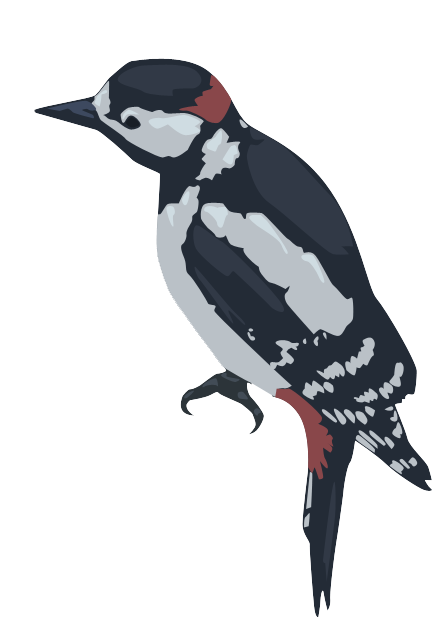
One of Bonnie’s most memorable projects was working with a team of conservationists focused on restoring the red-cockaded woodpecker in North Carolina, saving the handsome bird by rewarding private landowners who protected and improved its habitat.
He was senior advisor 2009 to 2013 to Secretary of Agriculture Tim Vilsack for environment and climate change, during President Barack Obama’s first term, From 2013 to 2017, Bonnie served as undersecretary for Natural Resources and Environment, overseeing the 193 million-acre National Forest and Grassland System and implementing Farm Bill conservation programs.
“You can’t regulate anybody into restoring habitat,” Bonnie maintains. “They’ve got to be partners. They’ve got to want to be part of the solution.”
|
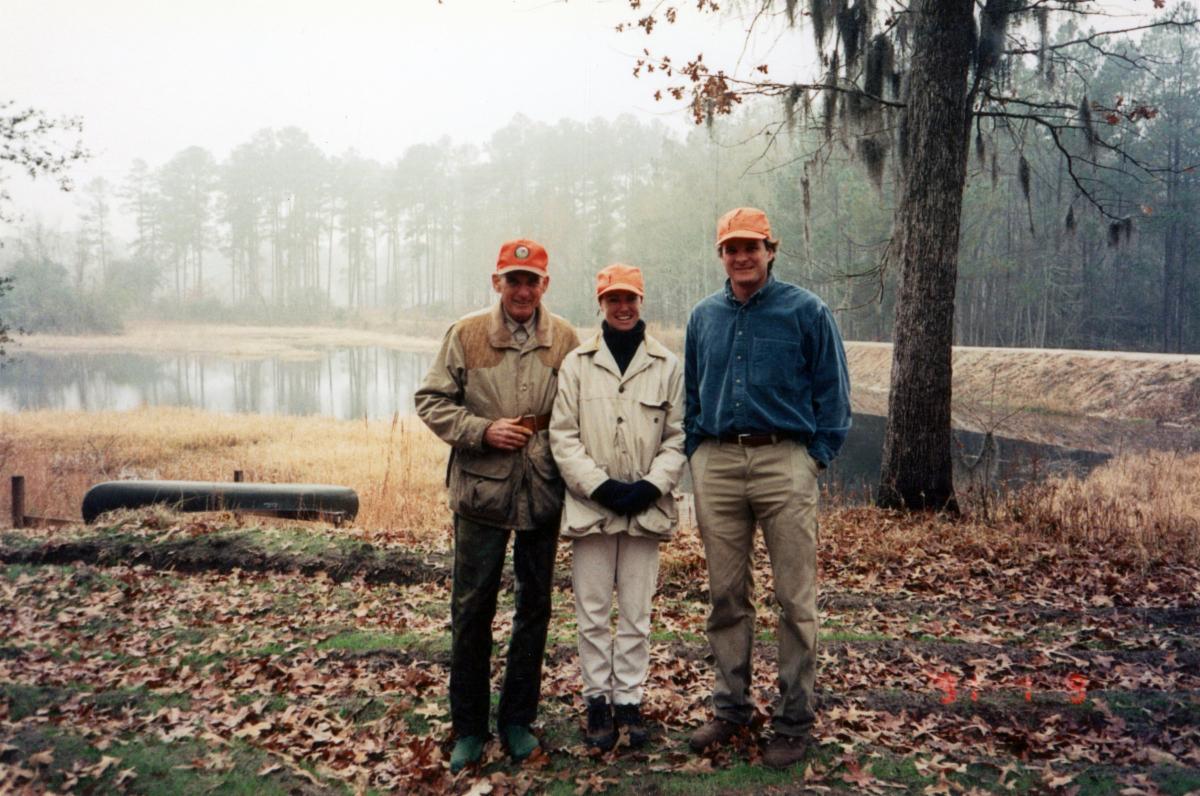
Ned Bonnie, Julie Gomena, and Robert Bonnie at their Groton forest plantation in South Carolina.. Photo courtesy of Robert Bonnie.
|
|
Robert Bonnie (left) with George Mahoney at last weekend's races at Shawan Downs. (Douglas Lees photo)
|
Pedigree query
Robert Bonnie:
|
1980 – Graduated St. Francis School in Kentucky
|
1990 – Graduated Harvard with a history degree
|
1994 – Graduated Duke University’s Nicholas School with master’s degrees in forestry and environmental management
|
1995 – Environmental Defense Fund, working on endangered species projects, climate change projects, and interaction between forestry and climate, ending as vice president for land conservation
|
2009 – Appointed by President Obama to the Department of Agriculture as senior advisor to the Secretary of Agriculture, Tom Vilsack, focus on environment and climate change
|
2013 – Named under secretary for Natural Resources and Environment
|
2015 – Conservation program to incentivize landowners with sage-grouse habitat keeps them off the Endangered Species list.
|
2019 – Appointed to the National Steeplechase Association futures committee, board and task force
|
Currently a Rubenstein Fellow at Duke, and teaching a grad level environmental course
|
|
As much as her future husband’s upbringing was steeped in equestrian pursuits, Julie Gomena grew up as far as you can get from the horse world.
Living in Oregon, in a non-horsey, non-athletic family, she says she sometimes felt like an outsider, an outlier growing up in an area with a mostly western equestrian focus where there were horses at all.
“I had wanted to ride always as a kid,” Gomena says. “I didn’t start until I was 12. I started taking once a week lessons, and the place happened to be an event barn.”
She quickly developed a passion for the sport that combines the discipline and elegance of dressage, the speed and endurance of a ‘chaser and the precision of a show jumper. “I loved it, and I just kept going. (But) Oregon isn’t the most English riding-friendly place. I knew if I wanted to get better, I needed to come to the east coast, so that’s what I did.”
|
|
Gomena moved to Unionville, Pennsylvania to train with and work for Olympian Bruce Davidson for three years before shifting a few hours south to work with Olympian and Olympic coach Jim Wofford. Davidson and Wofford encouraged her to get a morning gallop job, both of them touting their thoroughbred and race riding experiences as part of their own successes.
In the early 1990s, Gomena had a retired – failed – racehorse in training as an investment project. “I thought he’d be a good kids’ horse,” Gomena says of Pennsylvania-bred Treaty, who only managed a couple fifths, and $30 in earnings, in his nine-race career. “But he kept going on, jumping bigger jumps, better and faster.”
|
Gomena worked with Wofford and the late Wash Bishop to move Treaty up the levels, culminating with a win at the 1994 Rolex Three-Day Event in Kentucky
(left, photo courtesy of
Over Creek Farm
).
“When I look at Rolex I kind of think of the Maryland Hunt Cup,” Gomena later reflected in the Chronicle of the Horse. “There’s so much luck involved, and when things work out, it’s a great thing. I felt that way about Rolex that year. Everything fell in line for me.”
|
As eventing shifted from the long format that favored the speed and endurance of the thoroughbred athlete, to the short format, which favored the more expressive warmblood movement, Gomena's interest began to wane. The sport was a shadow of itself, she says, and when steeplechase trainer Dot Smithwick named her on a horse at the 1999 Casanova Hunt Point-to-Point, she had a new focus.
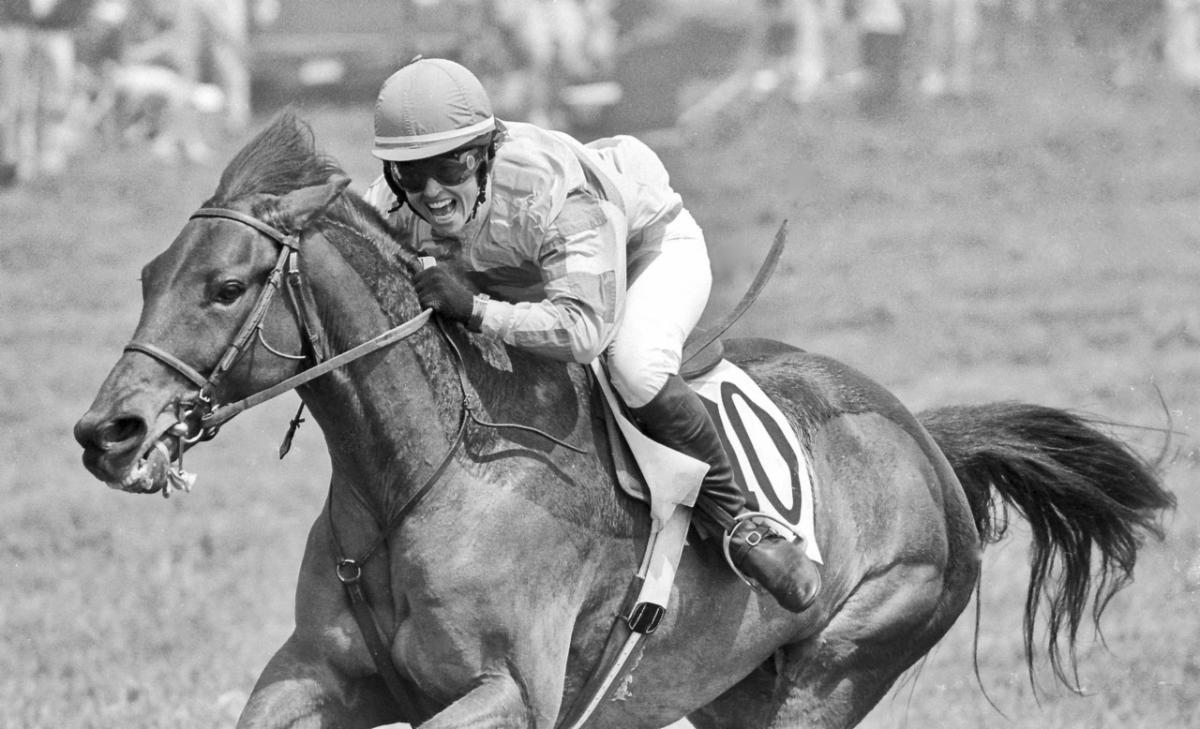
That first start – third with Gorfen Letch in the ladies timber
(shown above in 2000, winning at the Old Dominion Pt to Pt with Julie in the tack. Douglas Lees photo), and her second – a win a week later at Rappahannock – fired her passion for racing.
But it was a chance encounter after her third race – another win at Piedmont at the end of March – that changed Gomena’s trajectory forever.
|
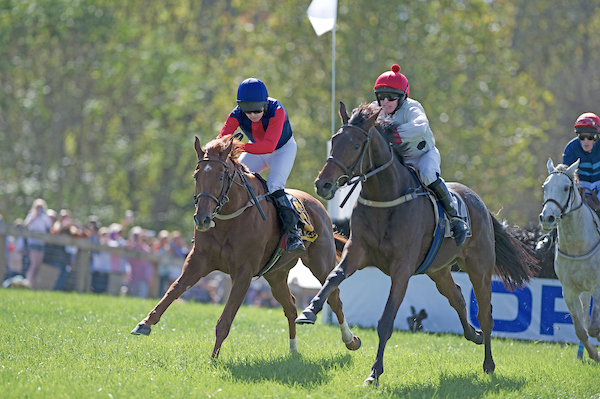
Menacing Dennis (left) duels Snuggling to the wire in the Gladstone 3 year old race at Far Hills in 2017. (
Tod Marks
photo)
|
|
Julie Gomena and Teddy Zimmerman after a win on Royal We in the Foxhunter Timber at Rappahannock Pt. to Pt. (Douglas Lees photo)
|
Pedigree Query
Julie Gomena:
|
1994 – Won Rolex Three-Day Event aboard Treaty, a thoroughbred that won $30 on the track
|
1999 – Rode her first steeplechase, and won her first championship – Virginia Point-to-Point Association ladies timber champion (she repeated in 2000.) Gomena rode some 69 races – 15 winners.
|
2004 – Retired from race riding after a hard fall and TBI at the Piedmont point-to-point in March; began training full-time
|
2006 – Trained Assembly to win the VPPA timber title, her first of a dozen
|
2017 – First NSA title, with 3-year-old hurdle champion Menacing Dennis
|
2018 – First grade 1 win, Balance The Budget in the Colonial Cup
|
2019 – Latest title, leading VPPA trainer
|
|
Gomena recalls first meeting Bonnie after her win at Piedmont on March 20, 1999. She’d dropped into the old Mosby’s Tavern in Middleburg to celebrate, and was introduced to Bonnie. “I never even knew Shelby had a younger brother,” Gomena says.
Bonnie remembers it more interview than conversation, not so surprising since at the time Gomena was writing a weekly horse column for the Washington Post.
“She asked me what I did,” he says. “I said ‘government, public service,’ and she said, ‘doing
what?’ So I said, ‘something-something conservation policy,’ and she said, ‘conserving
what?’
“So I said ‘the red-cockaded woodpecker,’ and she said, ‘the
what?’
“I think she thought I was full of it.”
|
|
Gomena relented enough to dance with Bonnie next time they met up at Mosby’s. The two had a lot in common – the horse background, political and world views and a steadfast dedication to conservation and protecting rural lands. They had a similarly dry, wry sense of humor, and the kind of quiet composure that sometimes comes across at first as shyness.
Bonnie says when they started dating seriously, telephone conversations with his mother back in Kentucky tended to turn into telephone conversations with Julie. “They spoke the same language. Horses, all horses,” he teases. “I joke that I’ve married the son my parents never had.”
|
|
They married in 2002, and for years it was a commuter marriage, with Bonnie working in Washington, across the nation and abroad. Gomena recalls he asked her not long after they moved to Over Creek about transitioning from race riding to race training. With nearly 300 acres and three barns in prime Piedmont territory, and with her broad horse experience, it seemed like a double-play for training.
“I told him I didn’t want to be an eff’ing trainer,” Gomena smiles at the memory of the long-ago argument. “I was a race-rider. That’s all I wanted to do.”
One mis-judged stride at a stone wall in 2004 changed everything.
|
|
Gomena doesn’t remember saddling King Eider for the timber race that day at Piedmont, and doesn’t remember the misstep that brought him down at the jump on the east end of the Salem Farm course the cool, blustery afternoon of March 20, 2004.
She doesn’t remember the helicopter ride to the trauma unit, the induced coma they kept her in for several days or the early days at the rehab hospital.
“It was scary,” Bonnie recalls the tense weeks that followed. Gomena’s brain swelled, doctors poised to operate to relieve pressure, though they never had to. She was feeble and unbalanced when she first came to, anxious and easily confused.
Bonnie took time off his job to stay by Gomena’s side. “I appreciate it so much,” Gomena says softly. “I had to learn to walk and talk again. It was tough.
“Robert was right there.”
|
Though doctors said, and friends and acquaintances agreed, that Gomena was good to go after six months, Bonnie knew better. “She just wasn’t quite right,” he recalls that simple things continued to frustrate her. Their move from a tenant house on their property to the newly remodeled farmhouse caused undue anxiety, he recalls, A horse in a different pasture drove her to distraction. “I knew when she was finally recovered because that finally stopped” a couple years later.
Gomena realized Bonnie’s suggestion of training full time was due to come true. In this way, and many others, she says Bonnie has been integral to the Over Creek team.
“We work well together, choosing horses,” she says. “I select a horse on his looks. Robert verifies them on paper. He’s the numbers guy. It’s a good balance.”
|
They’ve teamed up to buy or claim several horses off the flat track that have turned out to be winning steeplechasers, including grade 1 winner Balance The Budget and winners Virginia Minstrel and Country Cousin.
|
Balance the Budget won the 2017 David L. "Zeke" Ferguson Memorial Hurdle Stakes race at the International Gold Cup Races. Mark Watts had the ride for owner Stone Lea Stables LLC and trainer Julie Gomena. (Douglas Lees photo)
|
Recently, Gomena has been out of the saddle since a hip replacement in July. “I was so happy to get back on a horse,” Gomena returned to riding just last week. “I was so sore. Every muscle in my body was sore.
“But not my hip.”
|
Gomena has developed her own method of “training from the saddle,” she says, combining traditional gallops with flatwork and gridwork to develop a complete equine athlete. “I felt powerless on the ground,” she says, noting she relies on the help from rider Teresa Croce and several others in the barn, but she likes to get on most of her horses herself. “I don’t know how those flat guys do it. I like to feel what the horse is doing.”
|
|
Ned Bonnie in 2013. (Douglas Lees photo)
|
Pedigree Query
Robert’s father Ned Bonnie:
|
1968 -Represented owner Peter Fuller in the famous Kentucky Derby drug scandal that eventually resulted in Fuller’s Dancer’s Image becoming the first and only horse disqualified for a medication violation. Bonnie lost the case but was well on his way to becoming a world authority on equine medication and law.
|
1978 - Helped draft the Interstate Horseracing Act, which legalized cross-border betting on races and paved the way for simulcast and OTB
|
1967-1990 - Active owner-trainer-rider on the old Midwest circuit and NSA.
|
NSA steward, member of the Kentucky Horse Racing Commission and the University of Kentucky Equine Research Foundation
|
1988-2014 - Joint-master of Louisville’s Long Run Hounds
|
2002 - Ned and Nina Bonnie honored with the U.S. Equestrian Lifetime Achievement Award
|
2012 - Edward S. Bonnie Award established in his honor to recognize outstanding Kentucky equine lawyer
|
2016 - Inducted into the American College of Equine Attorneys Hall of Fame
|
March 17, 2018 - Ned Bonnie died at age 88
|
|
“Julie understands horses. That’s why she’s been successful at more than one branch of the horse business, because she’s such a good horsewoman,” Wofford told the Chronicle. “Some people are born with that. Julie didn’t have to ask anybody how to teach her how to think like a horse.”
|
|
Gomena has been working tirelessly for nearly a year on the board of directors for the Virginia Fall Races to bring off the Oct. 12 meet. From a horseman’s point of view, she recognizes the importance of race opportunities at all levels – in other words – prize money. From her position in meet management, she’s learned how hard it is to pull together sponsorships – in other words – prize money.
“It’s a real balance,” she says. “The sponsors are the key.”
Both are involved with the upcoming North American Field Hunter Championship; Bonnie's family gives cash prizes to the home hunt of the champion and reserve, and rider awards.
Bonnie’s involvement has reached the board level, too. He chairs the National Steeplechase Association’s futures committee (“yes, it’s just what it sounds like,” he says) and is on the board of directors, safety committee and the promotions and growth committee.
|
|
Bonnie is positive, almost upbeat, about how their work could revolutionize the game. Like opening the conservation conversation with rural landowners, jump racing’s future begins with dialogue.
“Obviously, we all want the calendar to start earlier, end later. We hope to expand the capacity of NSA to bring on new hunt meets, (and we’re) there to assist the existing meets.
|
“We definitely have some race meets that are glorious – Far Hills coming up, Iroquois. But it’s just as important to hold on to High Hope, and Foxfield, and bring on other ones.
“As a (racing) community, we need to create the capacity for new meets, and do a better job supporting and marketing them. It’s a struggle, especially for the small outfits.”
Futures committee member Al Griffin likes the addition of a frank and dispassionate observer in NSA’s ranks. “We brought Robert on to the NSA board because of his fresh perspective coupled with his marriage and partnership with Julie, and his family’s longstanding involvement in thoroughbred racing,” Griffin says. “We immediately posted him futures committee chair because we wanted fresh eyes on long-standing problems and our desire to move the sport forward.
|
“Robert’s expertise in dealing with complex issues and differing options has been invaluable.”
Trainer and futures committee member Doug Fout agrees. “I’d like to add how cordial Robert is when he is at the races always willing to help anyone and congratulate. (He’s a) great guy for the game.”
|
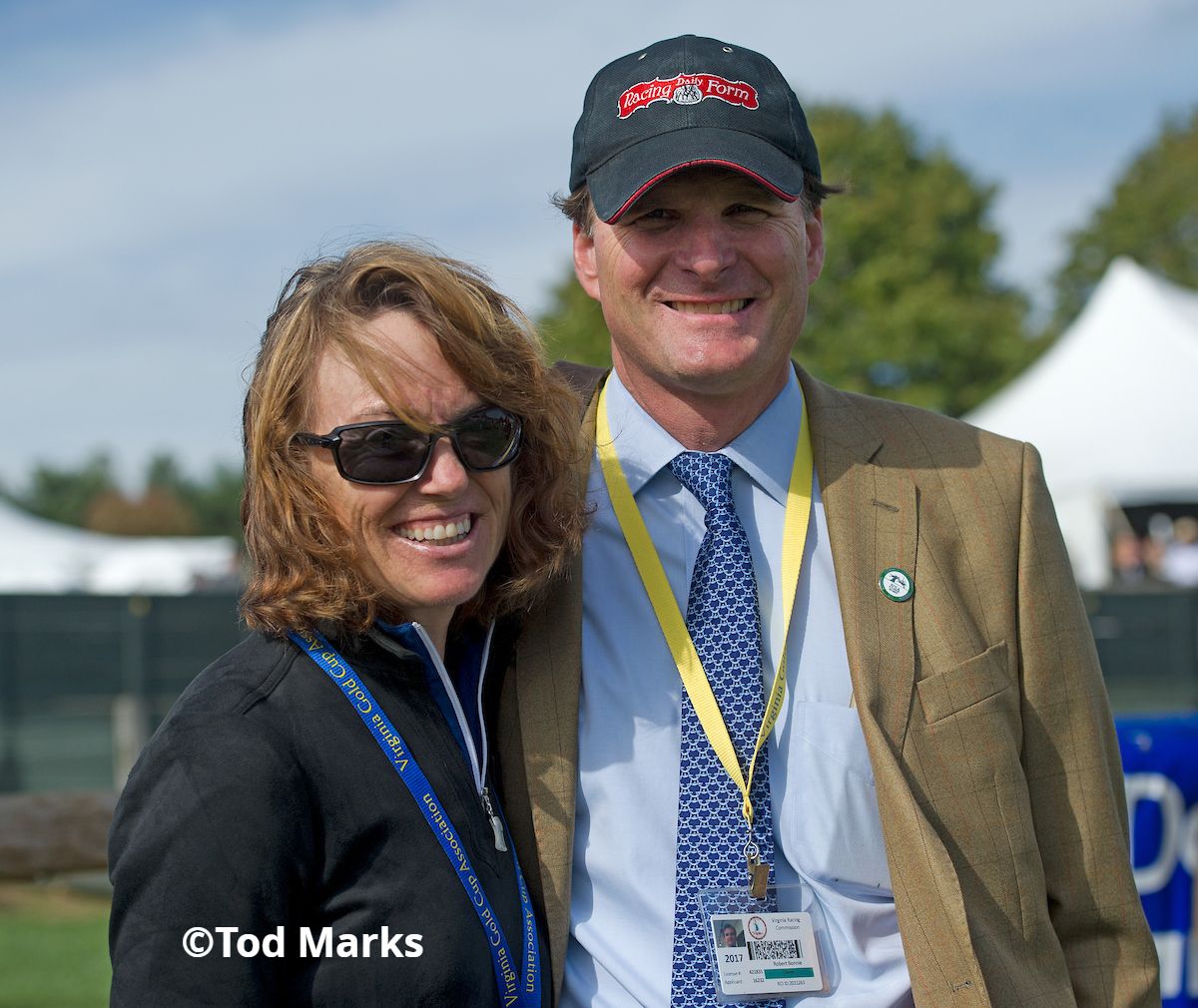
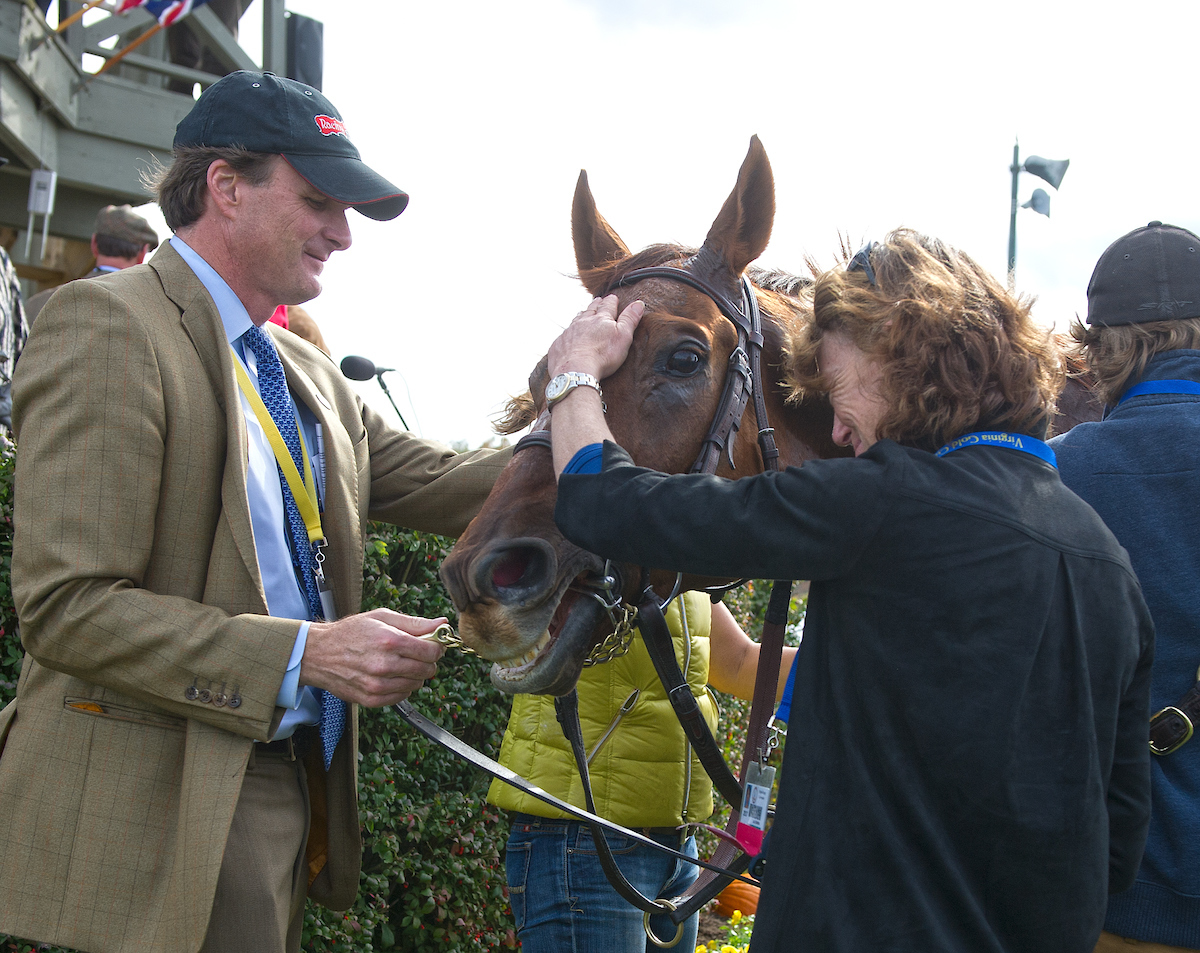
An emotional Julie Gomena hugs Balance the Budget after his 2017 David L. "Zeke" Ferguson Memorial Hurdle Stakes race win, while Robert Bonnie extends his congratulations. (
Tod Marks
photo)
|
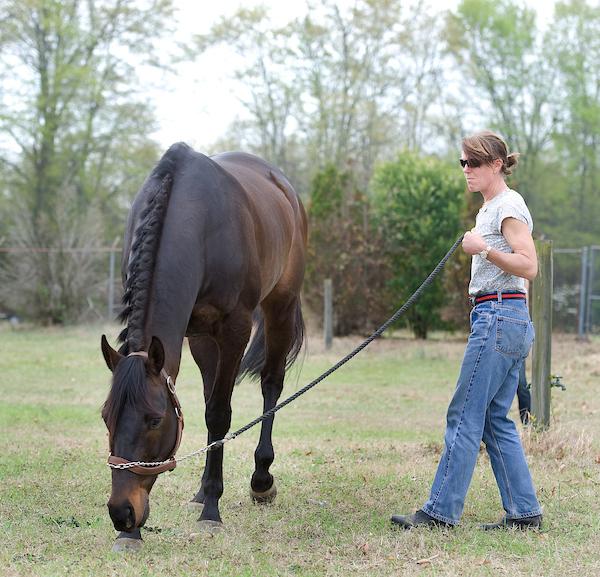
Country Cousin grazes with trainer Julie Gomena before the 2011 Imperial Cup in Aiken. (
Tod Marks
photo)
|
|
Nina Bonnie with her niece, Virginia, in 2016. (Betsy Burke Parker photo)
|
Pedigree Query
Robert’s mother Nina Winthrop Bonnie:
|
She once told a Nashville magazine – “I was teaching at Foxcroft School in Middleburg and I made a great friend who was also teaching there. She told me there was a gentleman that I needed to go meet who was from her hometown of Louisville, Kentucky. You know how blind dates go — they sometimes work and mostly not. So I traveled to the Iroquois Steeplechase in Tennessee.
“The first thing, watching the race, Ned’s horse fell and he went on his head. I thought, Boy, this is just lovely not to be involved with this guy, because I’d gone out with a few of the jump jocks who had fallen on their heads probably a few too many times.
“We got married 10 months later.”
|
1985 – Appointed chair of the Kentucky Horse Park Commission and founded the Kentucky Horse Park Foundation
|
2002 – Named Woman of Distinction in Louisville
|
2019 – Donated the Best Conditioned Award at the 2019 Thoroughbred Makeover
|
Bonnie has been chair and co-chair of the USEF hunter committee and on the Secretariat Center advisory committee
|
|
|
|
Robert’s maternal grandmother Theodora Ayer Randolph:
|
Sept. 27, 1905 – Born in Beverly Farms, Massachusetts, Randolph’s father was master of the Myopia Hunt. She’s recorded as saying her riding advanced under the supervision of her uncle, Gen. George S. Patton in Virginia’s hunt country where he hunted his own Cobbler Mountain Hounds around Markham. She rode with him when she was a pupil at Middleburg’s tony girls’ boarding school, Foxcroft, just past the Glenwood Park racecourse.
|
|
1954 – Succeeded her late husband Dr. A.C. Randolph as joint-master to the Piedmont Foxhounds, a position she held until her death in 1996. Theo’s father, Charles Ayer, was a member of the family that settled Ayer, Massachusetts, and made a considerable fortune in textiles and patent medicines, including the 19
th
century tonic, sarsaparilla.
|
|
Often called The Kingfish because of her position of uncontested authority, Randolph bred and campaigned many top horses including 1964, ‘65 and ‘68 NSA champion (and 1976 Hall of Fame inductee) Bon Nouvel, 1968 Virginia Gold Cup winner Walrus and top show hunter Quiet Flight.
|
|
Honorifics – Theodora Ayer Randolph professorship of equine surgery established to attract and retain eminent scholars to the Marion DuPont Scott Equine Medical Center in Leesburg, Virginia; Theodora Ayer Randolph sporting scholarship at the Upperville Colt and Horse Show; Theodora Ayer Randolph North American Field Hunter Championship, with a $2,500 prize to the home hunt of the winner; helped found the Washington International Horse Show
|
|
1995 – Awarded U.S. Equestrian’s lifetime achievement award
|
|
June 13, 1996 – Died at her beloved Oakley Farm just east of Upperville, Virginia at age 90
|
|
See what's happening on our social sites:
|
|
|
|
|
|
|