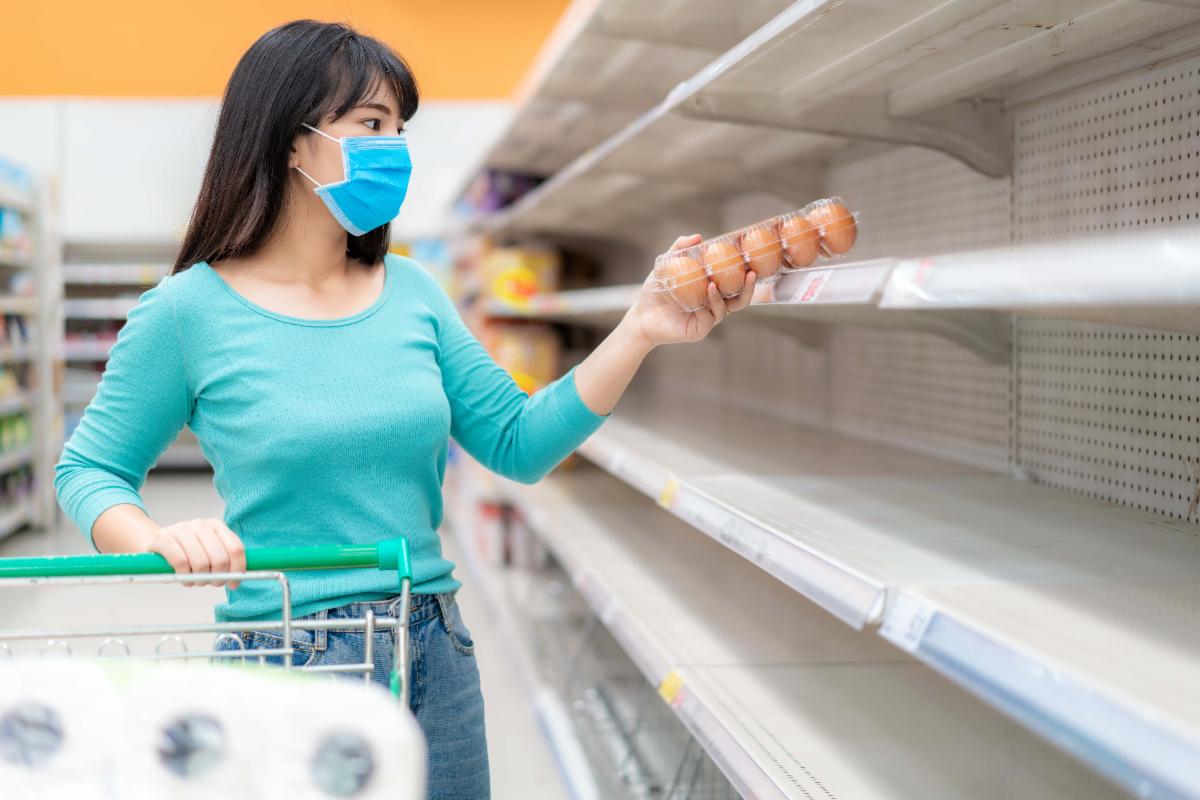
Americans eat a lot of eggs. By our very rough calculation, we are consuming 300 eggs a year each, though some of them in the form of processed foods rather than shelled eggs from the grocery story. According to the United Egg Producers, U.S. farmers – okay, their chickens – produced some 99.1 billion eggs last year. About 2.8 percent of those were exported, leaving some 96.4 billion for domestic consumption. That works out to just under 300 eggs a year per person for all 327 million of us. They are delicious. They are versatile – fried, scrambled, poached, omelettes, not to mention cakes, quiche, and custard. And, refrigerated, you can store them for weeks at a time. So, perhaps we shouldn’t be surprised if, like the shopper above, we occasionally find the egg supply rather limited when we make our allowed pilgrimages to the grocery store
But, for some anyway, grocery stores aren’t the only place you can buy eggs. Today’s quote is from a recent feature story in the Napa Valley Register in California that highlights egg sales at local farms. These are farms that used to sell their eggs to restaurants, wineries, and grocery stores. Because of the coronavirus, much of that business has dried up. Even so their eggs are selling like hotcakes to individual consumers who drive out to the farms to buy them.
Sheri Hurley
of Hurley Farms was joking about only selling her eggs for toilet paper. She does take cash, $6 a dozen according to the article in the Register. That’s a bit more than your editor paid the other day at a local grocery store, but then hers, Ms. Hurley’s, are farm fresh eggs.
***
There is a sense in which the real first line of today’s entry is not from the Napa Valley Register but from a report on the website of the American Farm Bureau Federation. U.S. agriculture has been hit hard by the coronavirus, especially the closing of so many restaurants, schools, and colleges. That report began:
From dairy farmers with nowhere to send their milk and cattle ranchers reeling from plummeting beef prices, the impact of the coronavirus is rippling through farm country.
It also contained this sentence, which particularly caught our attention:
The sometimes-empty supermarket milk coolers reflect supply chain adaptation challenges, not lack of supply.
We suspect that analysis – the emphasis on “supply chain adaptation” – is as true of eggs as it is of other agricultural commodities, but these are all issues to be revisited in future entries.