|
At about 3.30 p.m. in New York City on 15 January 2009, Janis Krums took a photo on his phone that changed the trajectory of world media.
Krums wasn't a journalist. Aged 23, he had an iPhone with which he would occasionally post tweets to his 170 Twitter followers. He enjoyed photography, and would use a service called Twitpic that allowed him to link photos to his tweets.
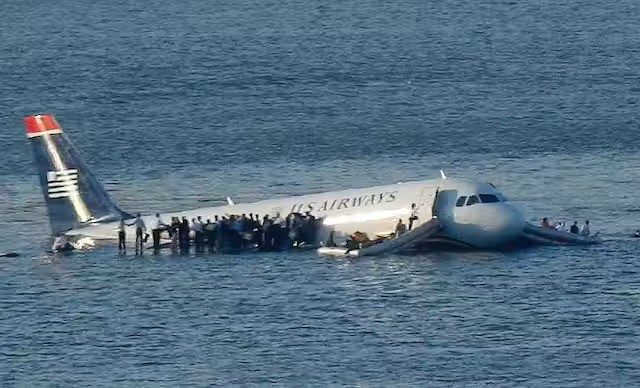
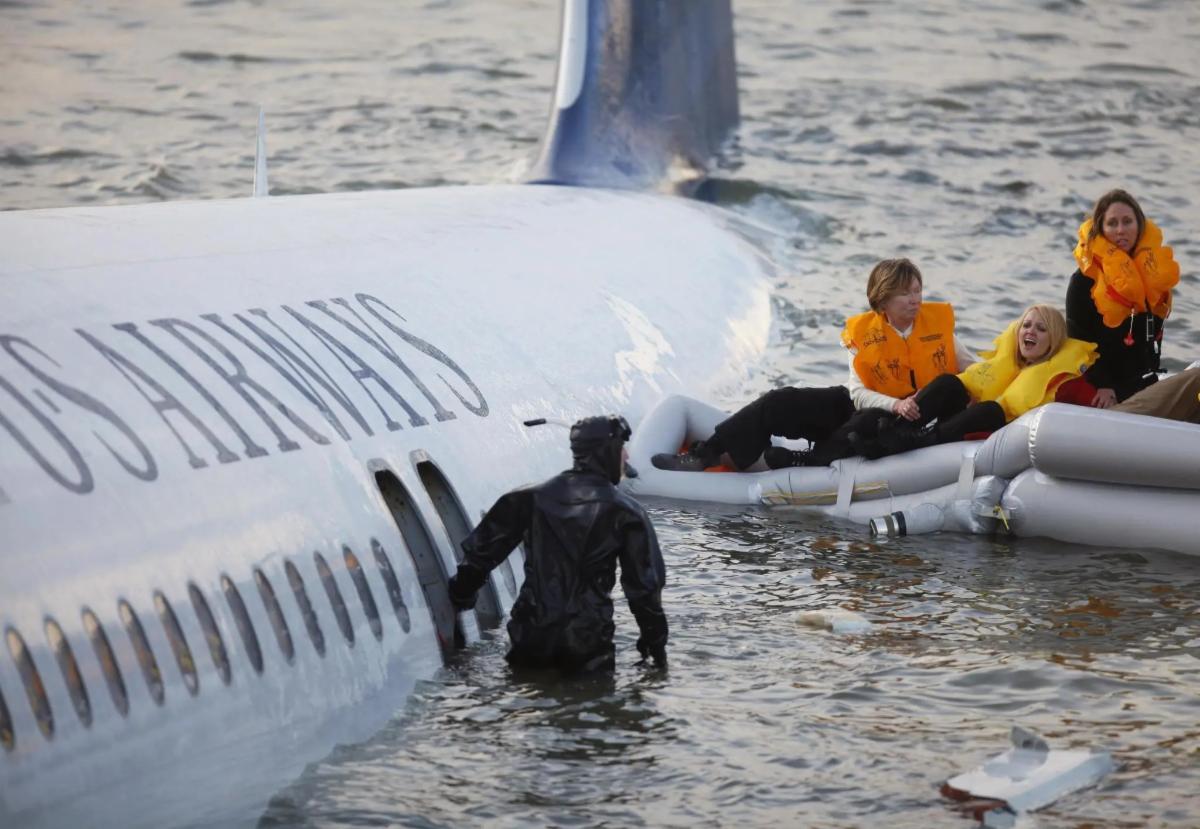
As Krums stood on the commuter ferry that Thursday afternoon, a U.S. Airways Airbus A320 passenger plane ditched in the river: both engines had been knocked out by geese soon after its take-off from the nearby LaGuardia airport. He snapped a picture and uploaded it to Twitpic and added a tweet:
There's a plane in the Hudson. I'm on the ferry going to pick up the people. Crazy!
There was no retweet function in 2009, but people copied the link to the photo, and took their own screenshots of the tweet, and spread it far and wide. Inside Twitter's offices, staff gathered around a TV screen showing the photograph, which was going viral. Twitter (founded in March 2006 by Jack Dorsey, Noah Glass, Biz Stone, and Evan Williams) had never seen anything like it. Jack Dorsey's mobile phone was swamped with calls. Krums's tweet echoed around the world, and suddenly made clear that Twitter, then less than three years old, had the power on its own to transmit news events to millions of people - and for free.
As it would transpire, Twitter users broke the news about 15 minutes ahead of all the normal media that day. In an interview Krums said:
I posted it because I thought "that's pretty newsworthy" and I wanted to share it with the people who follow me on Twitter. I had 10,000 followers in less than 5 hours.
That incident "changed everything", recalled Jack Dorsey, the Twitter co-founder, in a New York Times interview in 2012:
Suddenly the world turned its attention because we were the source of the news, and it wasn't even us, it was this person in the boat using the service. Which is even more amazing.
Twitter's importance as a news medium was reinforced in June 2009, following a disputed election in Iran. Protesters on the streets were met with violence from the police and paramilitaries. Many also took to Twitter to express their anger. The U.S. State Department viewed it as so important to keep their voices heard that it tasked Twitter to delay an upgrade that would have taken the service off-line.
But there was also misinformation and confusion: some got the mistaken impression that all of lran was against the result. Clay Shirky, the American writer, consultant and teacher on the social and economic effects of Internet technologies and journalism who would write the definitive analysis of what happened with Iran and social media, said:
You will trade speed for accuracy, and that will be a problem. Conflicting reports will emerge, some of which cannot even be verified as being in-country. But mistakes can quickly be corrected, and misinformation will evident. But I see difficulties in correcting misinformation in the future.
Media commentator Andrew Keen disagreed. He said Twitter would be terrific for distributing opinion - but in a crisis "the tweets from the street" couldn't take the place of proper, careful media coverage. At the Guardian, the reporter Matthew Weaver, who ran a liveblog from the London office as the Iran events unfurled, disagreed with Keen:
In Iran, when something happened, the tweets showed up first, then pictures, then video, then reports from journalists. What people are saying at one point in the day is then confirmed by more conventional sources - but six to seven hours later. The lag time is huge.
Twitter soon became accepted as the medium through which we could get closer to the truth of events. For fast-moving events in particular, it became a way for journalists to get little snippets of information, or a running commentary, out to an audience that increasingly wanted to know right now what was happening. This was great business for Twitter. For news organizations, the benefits would turn out to be a lot more mixed.
Before that plane crashed in the Hudson in 2009, during the early 2000s, there were scores of journalism related events trying to come up with an overarching definition of "news" in the age of the internet. I attended 3 such events in England, Italy and the U.S. - a motley collection of journalists, would-be politicians and businesspeople. All focused on forecasting the future of news.
All the familiar stuff floated by. News was "important events" and "the stuff somebody doesn't want you to print" and "things that you need to know".
But the question not answered at these events was the question of why fewer and fewer people wanted to get this "magical news product" from physical newspapers. Mass media was about the masses, and often showed a patrician view of what was good for you, in an eat-your-greens way: of course you should be interested in foreign policy; of course you should care about the effects of climate change on people far away. Of course you should care about the maximum betting limit of fixed-odds betting terminals in gambling dens. But do you?
Although online readership was ramping up, revenues were not compensating for the falling income from print. Nobody mentioned how mysterious it was that Google, which had gone public the year before, was making money hand over fist from sell ing ads online.
But one person nailed it. She wasn't a journalist, she explained apologetically, but a media content provider - looking to fill her company's morning "news sheet" which went out to all employees. She began describing her morning routine for finding news, which involved going to her computer, opening a few bookmarked web pages for topics she was interested in (computing, transatlantic news, a couple of other things), and working through them.
I'm looking for stuff I care about, stuff I want to pass on, stuff my fellow employees I think care about. It is more emotional, less newsy, if you get me.
For me, the phrase was like a lightning bolt. Stuff I care about. Stuff I want to pass on. It needs to be emotional. It's so simple. Some news is both (you won the lottery, perhaps?); some is just one. A change in tax rules that affects your income is probably "care about", while a cute puppy doing something silly, hardly important. But fun to share: pass it on.
The problem at the time was few, if anybody, at these conferences, could see her point. Remember: Facebook was still limited to Harvard students, and Twitter hadn't been invented. So how social networks would take both her ideas and turbocharge their effectiveness - and that news organizations would be left floundering in their wake - could not be envisioned. The individual nature of "stuff I care about", and "stuff I want to pass on" was not in news rooms. Nobody nobody nobody could possible envision how plentiful that content would become. How people were not keyed to the accuracy that news organisations care about, but to sharing - a process that would become easier and easier and easier.
The effects of this would take some time to become apparent - and involve news organisations sabotaging confidence in their own brands, capricious changes to Facebook's News Feed, algorithms and journalists coming into open conflict with managers - all concluding with distrust just when the opposite was most needed.
And the linear age (or linear thinking) still dominated. Publishers in the age of print, whether local, regional or national, all worked to a similar formula: package up lots of different content, some of which people would be interested in and a lot they might not, sell some adverts around it, and hope people wouldn't find any better way to distract themselves on their morning commute, or in their spare minutes.
Individualizing content to create the "Daily Me" was an idea often brought up in chin-stroking meetings about the future of publishing online, because the idea of delivering articles or programmes that people specifically wanted seemed vaguely possible with the online world. The reality, courtesy of Facebook andTwitter, turned out to be far less comfortable than they had expected.
What few grasped was how the internet would change the concept of news, and its inherent value - which is close to zero. In 1996, Shirky predicted the problems that traditional news organizations, would face. Consumer use of the internet had barely begun, yet he foresaw a colossal change corning that would disrupt the news business in the way that a runaway locomotive disrupts buffers.
In a blogpost titled "Help, the price of information has fallen and it can't get up", he dismissed the suggestion being made by traditional publishers that internet users would "eventually have to pay for content". Wrong, he said: the price of information was in free fall, because pretty much anyone could now generate and distribute content.The internet had utterly changed both the supply of content, turning scarcity into surplus, and its distribution, which for many forms of content was effectively free. He said:
One of the principal effects of the much-touted "Information Economy" is actually to devalue information more swiftly and more fully. Compare the potential rise of independent news sites to the end of the monopoly that the three US TV broadcast networks had enjoyed in the US from the 1950s to the 1980s. They had effectively had a licence to print money, until the arrival of cable networks fractured the audience among hundreds of channels all competing for attention. The internet would do the same, but on an even more precise scale: The internet is a massive medium, but it is not a mass medium.
When Shirky wrote his post, the threat of free-for-all information looked remote. In many American cities, newspapers enjoyed effective monopolies that made them highly profitable products.
But it was slowly changing. Matt Navarra, a fairly well-known social media industry expert, uses Craigslist in the U.S. as an example:
The first threat to this ecosystem was the arrival of Craigslist, which offered users the chance to list services or products they had for sale or hire, or that they wanted. From its beginnings as an email list in 1995, it quickly blossomed into a web service, initially for San Francisco in 1996 and then in 2000 for other parts of the US. Craigslist offered the internet equivalent of classified adverts - the sort of short ad that people had for decades paid substantial sums to insert into local papers. Craigslist was free; only in 2004 did it start charging for anything, and that was a flat $25 for job listings ($75 in San Francisco).
To thousands of newspapers across the US, Craigslist was an economic termite that slowly ate away at their foundations. In 2004, 36 percent of the $48 billion of US newspaper advertising, or about $17 billion, came from classified ads. A study found that in the same year Craigslist had leached away ads worth $50 million to the papers, but perhaps one-tenth of that to Craigslist. 'The media conglomerates are still extremely profitable,' the site's founder, Craig Newmark, told Fortune in 2005. He didn't want to see journalists' jobs hit, but he was sure that 'serious journalism' would still be in demand and well paid in the future. Still, $50 million out of $17 billion didn't seem like a lot to worry about.
Nor did Google's arrival on the stock market in summer 2004, when its total revenues were $3.2 billion. Newspapers were still a far bigger industry. In reality, the habitat that supported the newspaper industry was beginning to disintegrate. Advertising revenues in the US peaked at $49.4 billion in 2005, and again in 2006, and then collapsed as the combined effects of the financial crash, Google and Craigslist became evident. In 2008, they fell by 17 percent year-on-year to $37.8 billion, and then by nearly 30 percent as the Great Depression hit. Staff were cut just as heavily.
At the same time, social networks took off, and accelerated the competition to existing news organisations from newer publishers. Easily available advertising inventory and blogging templates meant anyone could put up a news website. And because the internet thrives on bringing together people with niche interests, you could run an advertising-supported site about nearly any topic. Social networks were also a great place to attract readers.
They essentially flattened the landscape: on Twitter or Facebook, a link to a deeply researched story from the biggest news organization could sit next to one from a lone blogger with an opinion about the news organization's piece, and then another with a picture taken from the scene of a breaking news event (such as Krums's). "Stuff I want to pass on" became the byword for everything.
Were such links an opportunity or a threat to the news organizations? The gigantic, and growing, number of people using social networks offered the chance to snag readers who had never seen a publication and capture their interest. But the competition for attention meant that once-loyal readers on paper could be distracted away on screens by rivals. However, the social networks definitely did bring people who otherwise wouldn't have come to the site. News organisations entered an uneasy symbiosis with social media.
And while older news organisations played by the rules that they understood, the new ones made up their own. They saw little point in trying to be the next New York Times or Guardian - established, monolithic news organisations covering the entire waterfront of content, from general news to politics to sport to fashion to leisure. In the case of Upworthy and Buzzfeed, the secr t to success was to write stories intended to go viral, so that hitting the jackpot with enough hits would make up for the misses.
The arrival of Twitter with its hubbub of news, large and small, transformed journalism. It was slowly making a footprint.
But that U.S. Airways crash in the Hudson River 15 years ago moved it from "the place where people talk about their breakfast" to "the place where news could be found, fully-or-half-digested".
It also quickly became the place where "uncensored" tales could be told by non-journalists. Often these were too good to ignore, and so were featured in the news. That feedback loop validated Twitter, making journalists even more eager to be there. And journalists, hating to be beaten to the punch by rivals (or amateurs), would compete to put out the early "take" on a breaking story.
Within a few years, the relationship was unbreakable. Matthew Panzarino, a technology journalist who has covered the rise of the internet and social media almost from the beginning, said in 2012:
Even if Twitter the company had gone under, or screwed up so badly that somebody had to step in and do something very similar in a different way, that particular firehose would need to exist. There was a global demand for a real-time channel of constant, continuous information available to us. We could never do without it again. We got hooked.
The new publishers ran incredibly lean operations using eager young staff who would scavenge the internet for news in whatever form they could find it: Facebook posts, celebrity tweets on Twitter, content from better-funded sites. The capitulation to Facebook, Twitter and Instagram was understandable: they were excellent sources of direct quotes from politicians, celebrities and ordinary people - the fodder that had fuelled journalism for centuries. If someone captioned a photo on lnstagram, or wrote a tweet, there was no need to ring them up and ask them to say something. Social networks functioned as press release and, often, photocall. With staff numbers at publications falling, the social networks that had once been seen as interesting means of picking up more readers instead became the tail that wagged the dog.
It also became evident that truth and accuracy were not essen tial to the output of a "news" organization. For decades the British and American tabloid press had thrived on publishing stories that often bore only a nodding acquaintance to real-life events. Now they were up against sites willing to write wildly partisan versions of what had happened in order to attract views. After all, "stuff I care about, stuff I want to pass on" makes no mention of accuracy.
The ferocious churn of social networks selected for attention, not truth. The incentives were around getting big traffic, having things go viral, getting a quick story that lots of people will read, and will climb up your Chartbeat or Parse.ly dashboard in the newsroom - referring to analytics packages that show how many views a story is getting. These incentives led to a lot of really bad behavior within native digital newsrooms and legacy newsrooms trying to become digital in that magical range of 2010 to 2016 or so.
Anything that was viral and had potential for big traffic, somebody was going to jump on and write about and not necessarily apply strong verification. You had entire news sites that were just built on finding the most viral stuff. Plus many sites, such as Gawker, paid journalists according to how many page views they got - a pressure entirely new to journalists working in text (though familiar to TV executives), who usually get a simple salary with no bonus structure and no output quota. That gave journalists another purely selfish reason for getting noticed on Twitter. Plus if they could show they were influential there, and direct traffic to their organisation, that might translate into leverage in future salary discussions.
I will stop there. Because the rest, as you know, is history.
Can Bluesky replicate that? We'll see.
|