|
To what extent this represented OpenAI’s own work was the condumdrm.
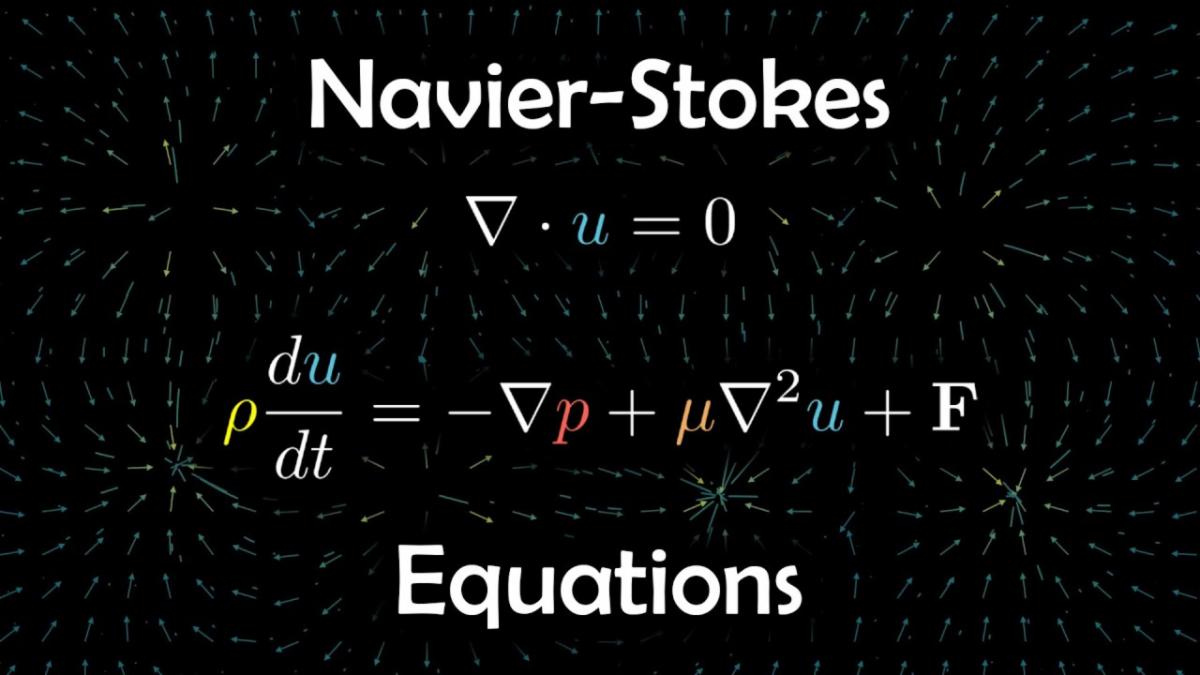
OpenAI says it achieved its solution using 10,000 agents that worked for 88 hours - 26 years after the Clay Mathematics Institute posted a $1 million bounty, and nearly a century after the problem was first identified. We are a long way from models that can’t count the number of R’s in “strawberry.” And we may be closer to the future that Pachocki describes than seems possible.
But OpenAI's claimed solution has been marked by controversy over authorship. And the company has acknowledge being "inspired" to try by a rival. In a statement, OpenAI researcher Sebastien Bubeck disclosed that “We began working on the Millennium problems due to viral twitter rumors that Anthropic had resolved 2 Millennium problems".
Jack Newberry and Carl Anderson (two AI researchers I often rely on) put together this summary:
The night before OpenAI announced its solution, NYU mathematics professor Tristan Buckmaster and Anthropic researcher Levent Alpöge made public three important intermediate results, including an important “blowup of the Euler equations,” for the problem. Buckmaster wrote that the results involved major help from LLMs, but human re-writing was necessary to make the results legible and verify them in proof software Lean.
In a statement, Buckmaster wrote that OpenAI, which had heard rumors he was close to a solution, suggested he author the final paper but leave Alpöge out of it.
In a response on X, Bubeck wrote that while the offer was “an option” that they discussed, “OpenAI's intention was to do everything possible to celebrate their mathematical achievements and the heroic efforts that they made on Euler".
A statement from OpenAI clarified that they hadn’t seen Buckmaster and Alpöge’s work until they published, but added: “While unlikely, we cannot rule out that de-identified data derived from their usage of our products helped improve our models.”
In other words, the model they used to solve the problem may have trained on Buckmaster and Alpöge’s chats.
Mark Chen, head of research at OpenAI, said at a press conference that OpenAI spent an amount “in the millions of dollars” to find the solution.
The Clay problem is significant one in fluid dynamics, and a bona fide big deal in the field of mathematics and for the larger question of whether large language models can produce net-new knowledge (with humans' help).
In this case, though, the models may not have gotten much help. “We collectively had no research-level expertise in fluid dynamics and the Navier-Stokes problem," Brubeck wrote, "and therefore were unable to meaningfully contribute to the mathematical content.” In other words, an OpenAI researcher says they found a solution basically by vibe-mathing, rather than working as mathematician collaborators with LLMs.
Last year, a group of mathematicians that included giants of the field Terrence Tao and Peter Scholze signed the Leiden Declaration on Artificial Intelligence and Mathematics. It asks that “credit and responsibility continue to belong to humans within the mathematical community and should not be given to automated systems.”
If OpenAI’s claims are true, and its results aren’t reliant on Buckmaster and Alpöge’s work, the development could present a challenge to traditional ideas of mathematical authorship. If a language model finds a new mathematical the humans involved truly couldn’t have found, or understood, on their own, who is responsible for that result?
Last month, Kai Williams (a reporter at Understanding AI) said mathematicians are thinking about math’s future in the age of AI. Many mathematicians envision AI as a tool that, like calculators, math would eventually evolve to incorporate. When one type of proof got easier with AI, they thought, mathematicians would evolve to work at a higher level of abstraction.
But this week’s results challenge that result: if humans can use AI to find a result previously considered important without adding much personal expertise, that could shift the AI’s effect from augmenting human ability to automating it.
On X, many academics were quite displeased with OpenAI’s behavior.
UIUC professor Talia Ringer, a researcher of proof automation, wrote, “Telling someone to drop an author just because he is a competitor with your company is pressuring him to commit academic fraud!” She added, “Rushing to get a result after you hear someone else has a result is also messed up. That is AI 'scooping' culture and goes against every academic norm that exists in reasonable fields like mathematics. This is how AI culture rots entire fields.”
UMass Boston math professor Joel Fish wrote that OpenAI’s choice to rush to complete the proof first using AI sends the message, “If we find out you are close to having completed something amazing, we’ll dump everything we have to beat you to the win.” He added “I guess this is what the math-for-profit model looks like?”
Fish ended with advice: “Word to the wise, young academics: Never ever tell anyone what you are working on. And if you have collaborators, then everyone needs to sign an NDA. Welcome to late-stage-mathematics.”
Hugging Face co-founder Thomas Wolf wrote, “wtf is this way to handle mathematicians work and scientific communication,” saying, “Hope this is not a glimpse of the future we’ll get in science research with these dominating players playing marketing games hurtful for the real scientific community.”
More later today on other AI developments.
|