|
To ensure that there are DCC and CCC staff available to support enrollment activities the week of Thanksgiving, please do not consent patients for randomization between Nov. 26-28. That's the day before Thanksgiving through the day after (Wed.-Fri.). If a patient is randomized on Nov. 25, please make sure a staff member is available on Nov. 26th for POD1 follow up. Randomizations may resume Mon. Dec. 1.
Over the winter holidays, please do not consent patients for randomization between Wed., Dec. 24 and Fri., Jan. 2. If patients are randomized on Tuesday, Dec. 23rd, please make sure a staff member is available on Dec. 24 for POD1 follow up. If your site would like to not randomize patients on Tues., Dec. 23 to avoid a POD1 on Dec. 24, we are completely supportive of that. Randomizations may resume Mon. Jan. 5.
If vacation schedules at your site mean you cannot randomize for a longer period of time that outlined above, that is also fine. We strongly encourage taking a break and taking adequate time to rest.
| | New Sites Are Making Progress! | | |
Our four new sites are making great progress! As the THRIVE teams know, it takes a lot of time and effort to get a study up and running and we are grateful for their dedication.
Temple University: Active
University of North Carolina: Finishing training, Site Initiation Visit complete
University of Texas Southwestern: SIV scheduled
Johns Hopkins: Completing regulatory and contracting processes
| |
Operational Update
Target Randomization: 13,000
Randomization counts as of November 20, 2025
| | | Institution | Total Randomized | Institution | Total Randomized | | Brigham and Women’s Hospital | 201 | University of California San Francisco | 1,509 | | Dartmouth-Hitchcock Medical Center | 130 | University of Michigan | 802 | | Duke University Hospital | 384 | University of Pennsylvania | 83 | | Henry Ford Detroit | 206 | University of Utah | 538 | | Massachusetts General Hospital | 137 | University of Virginia Health System | 213 | | MD Anderson | 842 | University of Washington | 179 | | NYU Langone Medical Center | 125 | Wake Forest School of Medicine | 204 | | Oregon Health Science University | 135 | Washington University | 939 | | Stanford University | 12 | Weill Cornell Medical College | 551 | | University of Arkansas | 163 | Yale New Haven Hospital | 716 | |
|
| TOTAL: | 8,069 | | | | |
99.4%
POD1 or POD30 Brice
| | Updated INVA Cognitive Aid for Providers | | |
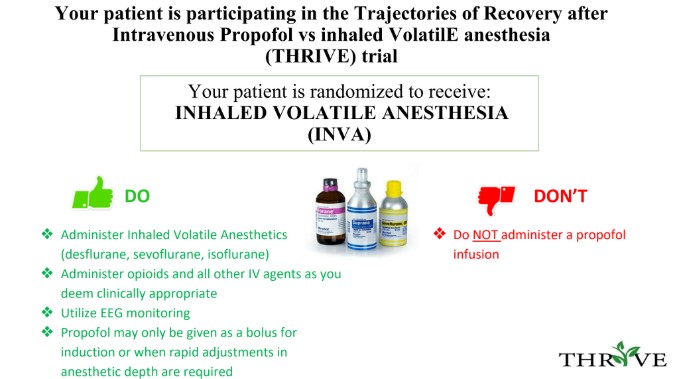
We updated the language on the INVA Reminder Card for in-OR providers to clarify the use of Propofol in the INVA arm. Please download and print the new cards to use in your ORs.
| | Refreshed Public-Facing THRIVE Website | | |
www.thrivetrial.org has recently undergone a refresh with the help and input of our Patient Partner Panel and communications experts. The audience of this website is broad and it is meant to be lay friendly. This is a good resource for patients who want to know more about the study before joining, or people who want to know more about the study in general.
For publicly available clinical resources, please see the existing THRIVE MPOG webpage.
| | To Withdraw or Not to Withdraw...After Randomization | | |
If a patient is already randomized, there are very few valid reason to withdraw the patient. Per clinical trial best practices, we MUST report the trial outcomes for all randomized patients in the final analysis.
Don't Withdraw!
If a patient is randomized, then the anesthesia clinician or surgeon decide they do not want the patient to receive the randomized result, DO NOT WITHDRAW the patient. Keep the patient in the study and complete follow up surveys as normal. The patient can still contribute valuable information to the study and receive compensation for their participation.
Other invalid reasons for withdrawing after randomization:
- Non-responsive to outreach
- PI Concern
- Research team logistics
- Post-consent screen fail
Withdraw!
Valid reasons to withdraw a patient after randomization:
- Patient request
- Deceased
- Case or general anesthesia cancelled
- Post-randomization screen fail
| | Getting to Know the Team - Duke University | |
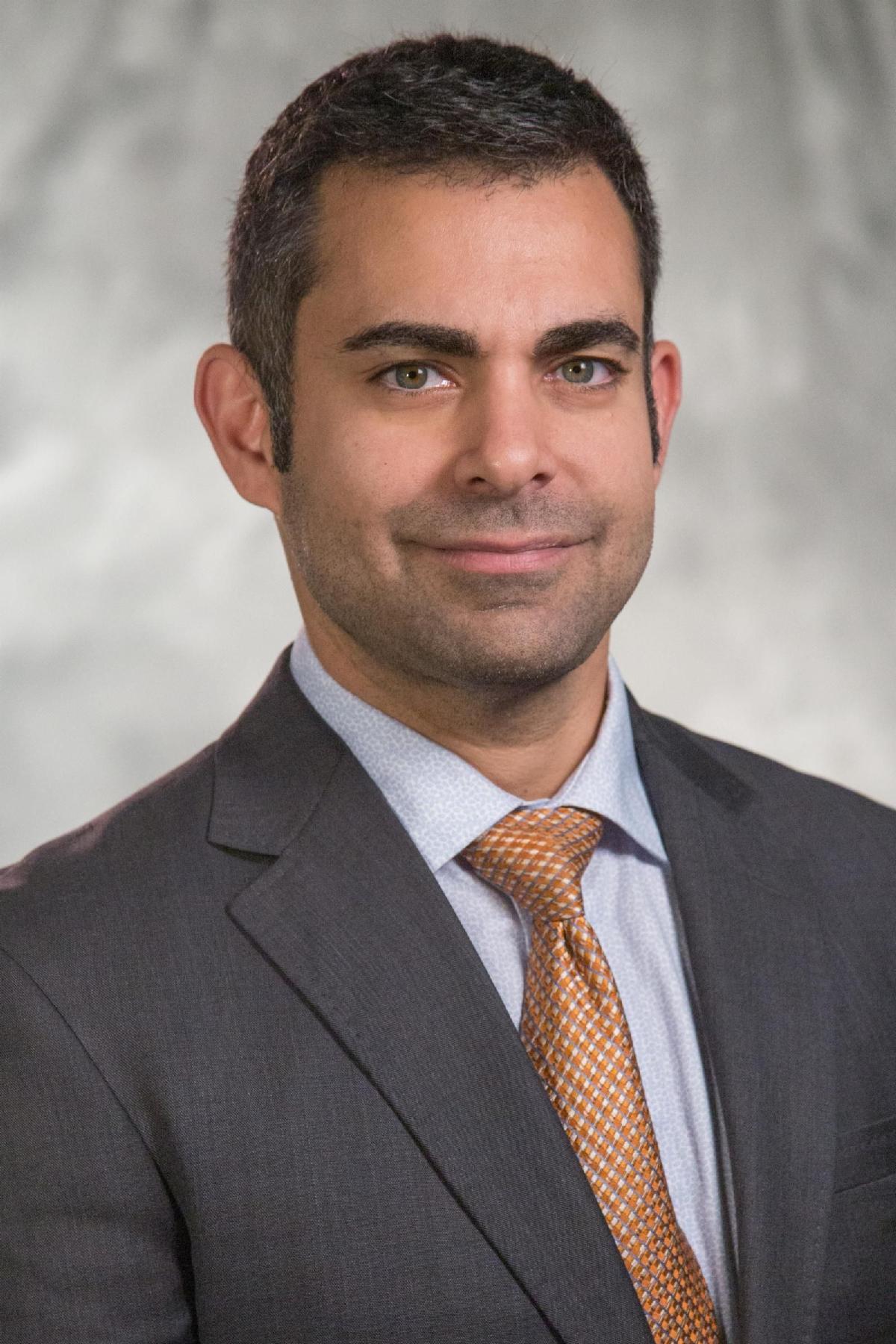
Kamrouz Ghadimi, MD
Duke University
Dr. Kamrouz (Kam) Ghadimi is an experienced cardiovascular acute care specialist (cardiovascular anesthesiology and intensive care), established investigator, physician leader, and associate professor of Anesthesiology and Critical Care at Duke Health. His clinical practice is rooted in the cardiothoracic surgical ICU and operating rooms. He has broad expertise in all topics involving perioperative cardiovascular medicine and intensive care, including the management of acutely ill patients after surgery or those receiving extracorporeal life support (ECLS/ECMO).
Dr. Ghadimi has published original research, invited reviews, and guidance documents in several high-impact multidisciplinary journals and networks. He is a selected task force and writing committee member of the 2024 American College of Cardiology and American Heart Association Perioperative Cardiovascular Guidelines. He has devoted the majority of his career to the service of patients requiring cardiovascular perioperative and surgical intensive care.
In addition to a doctorate in Medicine from Boston University, Dr. Ghadimi holds a Bachelor’s in Economics from BU and a Master’s in Clinical Research from Duke and the NIH. He is also an inventor with patents/patents pending, a medical consultant, a mentor, and an investor. He is a founding member and the original academic director of True Learn, an eLearning company focused on board exam preparation for multiple medical subspecialties. This resource is used by many physicians around the country.
Currently, Dr. Ghadimi serves as Director of the Clinical Research Unit for the Department of Anesthesiology at Duke Health, leading a cohesive, high-performing management team that oversees clinical research staff working with Anesthesiology faculty and faculty in other departments to operationalize more than 80 innovative research protocols annually. He was excited to be lead the THRIVE trial at Duke given the fundamental nature and broad impact of the research question, and to continue his working relationship with MPOG.
Fun fact: he almost became an economist!
| |
Mike Manning, MD
Duke University
Dr. Michael W. Manning, MD, Ph.D., is an Associate Professor at Duke University Medical Center, within the Divisions of Cardiothoracic and General, Vascular, and Transplant anesthesia. He serves as the director of Enhanced Recovery after Surgery programs and the director of research for the Perioperative Medicine Fellowship at Duke. His clinical practice focuses on high-risk cardiac surgery, Heart, Lung, and Liver transplantation.
Dr. Manning earned a Ph.D. in cardiovascular physiology from the University of Kentucky, where he studied the role of Angiotensin II-mediated inflammation in the development of abdominal aortic aneurysms. After graduate school, Dr. Manning remained at the University of Kentucky, where he earned his MD degree. He completed a year of general surgery residency before switching to anesthesia. Following residency, Dr.
Manning continued his clinical training at Duke University with a one-year clinical fellowship in Adult Cardiothoracic Anesthesiology and a 2-year research fellowship. He joined the Duke faculty in 2014.
His current research interests are ERAS-centered, specifically in the role of opioid-free anesthesia and goal-directed fluid therapy in cardiac surgery on renal outcomes.
| |
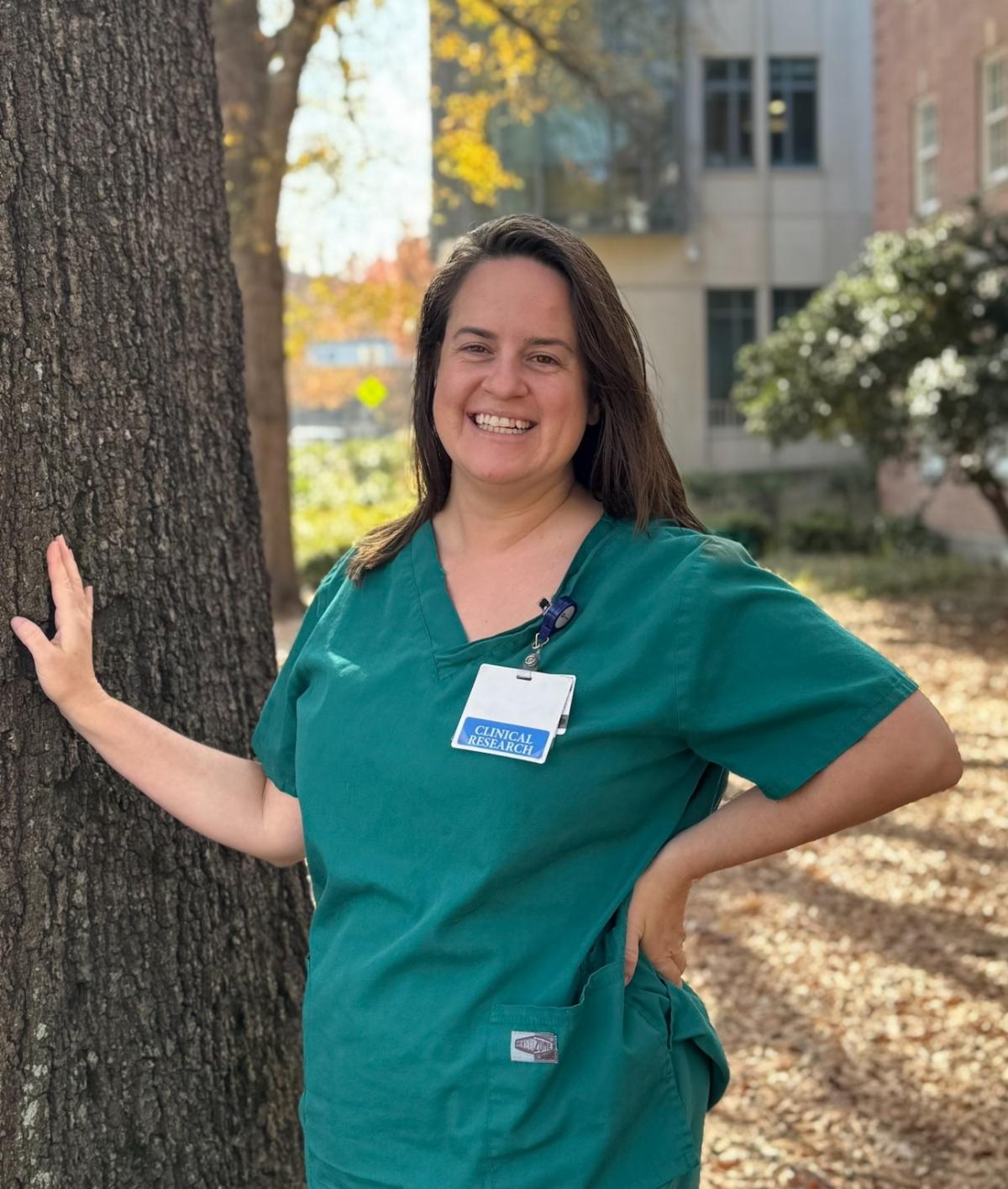
Kelly Rodden, RN, BSN
Duke University
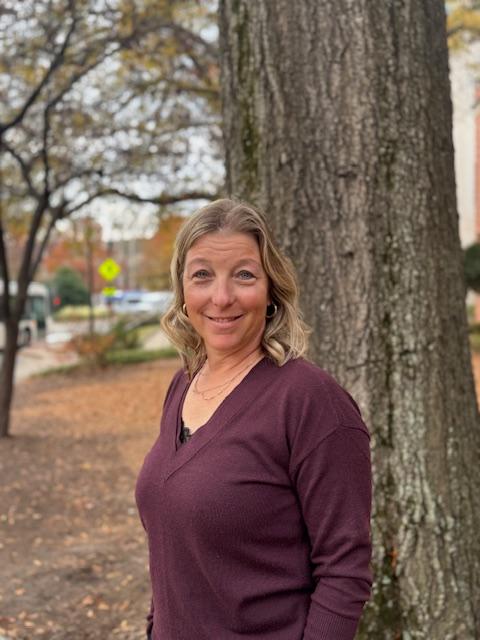
Kelly Rodden is a Clinical Research Nurse Coordinator Senior with Duke's Department of Anesthesiology. She has 28 years of nursing experience, working in 10 states, with a strong background in critical care. She moved to Duke and began her research career 5 years ago, which has been both rewarding and fulfilling. Since she has recovered patients from anesthesia and has been in the Anesthesia world for so long, she was excited to work on this study and can't wait for the outcomes of the study. She loves being active and especially playing sports. She likes to play soccer and also has a black belt in Tae Kwon Do.
|
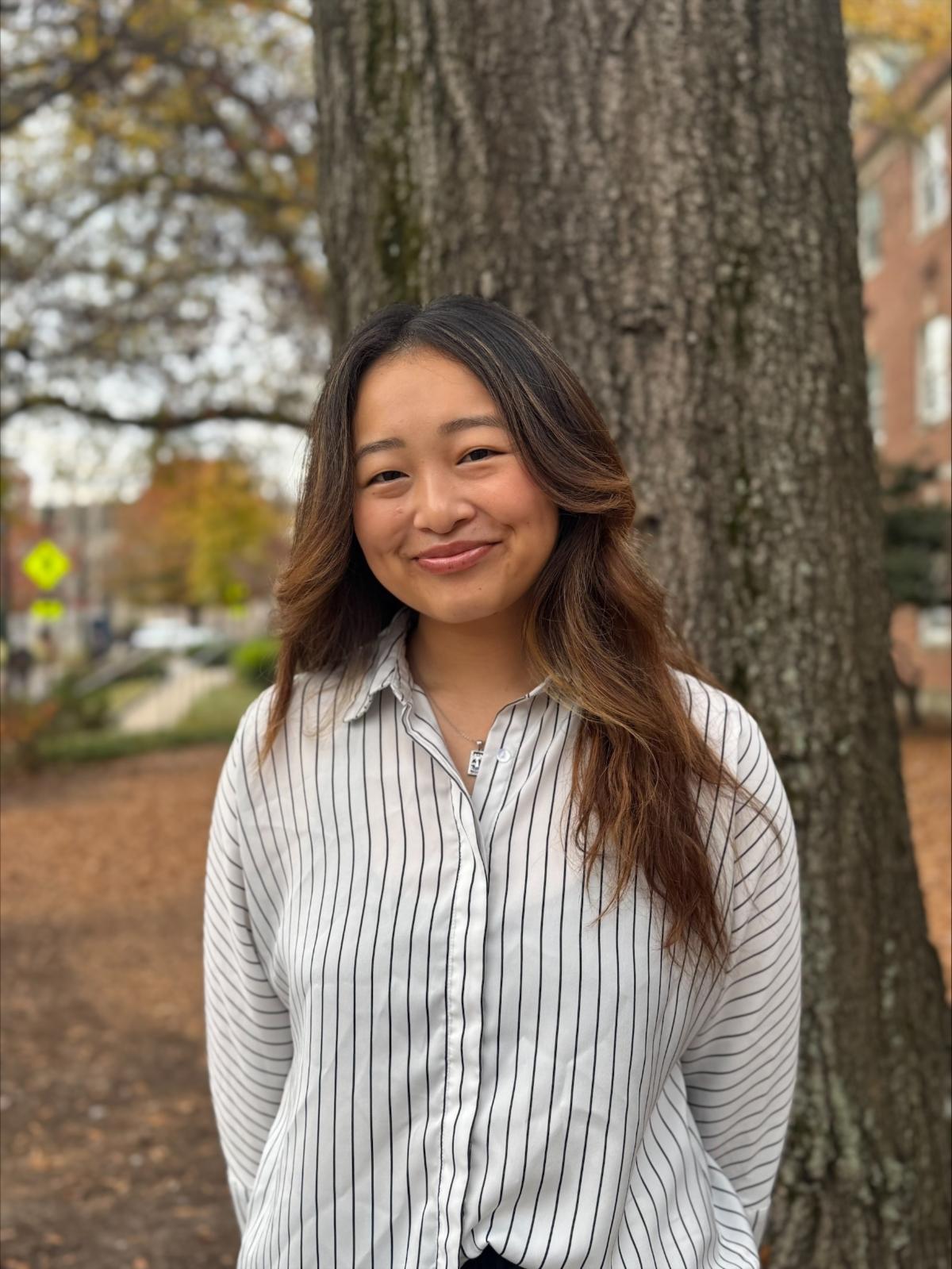
Angelina Xiong
Duke University
Angelina Xiong is the Clinical Research Coordinator for THRIVE within the Duke Anesthesiology Clinical Research Unit. She earned her Bachelor’s degree in Psychology with a minor in Nutrition from the University of North Carolina at Greensboro. Angelina is passionate about patient-facing research that drives improvements in future healthcare. Through her work with THRIVE, she has gained valuable insights into anesthesia and its effects on patients, while building strong connections with principal investigators and colleagues. This experience has deepened her understanding of advancing patient care in hospital settings and broadened her perspective on clinical research. Outside of work, Angelina enjoys spending time with her two cats, indulging in strength training, and trying new recipes.
|
Amy Patrylick
Duke University
Amy Patrylick serves as a Clinical Research Coordinator on the THRIVE study with the Duke Anesthesia Research Unit. She is an integral part of our team by facilitating communication with clinicians and patients while demonstrating exceptional teamwork for our team, here at Duke. Her dedication and efforts have been invaluable in ensuring the study runs smoothly and efficiently, and we truly appreciate her hard work. Amy enjoys participating in THRIVE because of its patient-centered approach. She is excited to learn about the results and how they may benefit future patients in their recovery after surgery. A fun fact about Amy: she once fed piranhas in Brazil!
| | |
Suggestion Box
We would love to hear from you! Please let us know if there is a team member you would like to recognize or celebrate in the next newsletter, or if there are other updates you would like to know about.
| | | |
Funded by
Contract 2020C3-21106
| | | | | |