Issue #14 | September 2026 | | |
As we near the end of the enrollment phase of the trial, the THRIVE Coordinating Centers wanted to take a moment to both reflect on our success so far and encourage everyone to keep up the incredible work. We have randomized over 90% of our target number of patients while maintaining exceptionally high levels of data completion and intervention adherence. This is no small feat. Most trials do not perform at such a high level for this many years. The work you all do on a daily basis is what generates this success. We are so grateful to work on this important trial with you, and we sincerely thank you for all your hard work.
The last 10% of any project can be one of the most challenging times in the project's life cycle. Burnout becomes a real risk, and motivation starts to wane. Given that we are ahead of schedule, we would encourage sites to be aware of these risks and to take time away from work as needed. We have the luxury of being able to prioritize data quality, rather than just trying to maximize enrollment numbers. So, let's use that to our advantage. Let’s aim for 100% adherence to randomization group (TIVA and INVA), and >99% data completion, especially for our primary outcomes (QOR on postoperative Day 1 and Modified Brice Questionnaires). Please reach out to the study leadership team with any concerns going into the last few months of enrollment.
|
Operational Update
Target Randomization: 13,000
Randomization counts as of September 23, 2026
| | | Institution | Total Randomized | Institution | Total Randomized | | Brigham and Women’s Hospital | 286 | University of California San Francisco | 1,950 | | Dartmouth-Hitchcock Medical Center | 189 | University of Michigan | 1,088 | | Duke University Hospital | 546 | University of North Carolina | 47 | | Henry Ford Detroit | 272 | University of Pennsylvania | 160 | | Johns Hopkins | 91 | University of Texas Southwestern | 26 | | Massachusetts General Hospital | 212 | University of Utah | 748 | | MD Anderson | 1,211 | University of Virginia Health System | 310 | | NYU Langone Medical Center | 189 | University of Washington | 306 | | Oregon Health Science University | 280 | Wake Forest School of Medicine | 328 | | Stanford University | 136 | Washington University | 1,296 | | Temple University | 64 | Weill Cornell Medical College | 764 | | University of Arkansas | 269 | Yale New Haven Hospital | 1,044 | |
|
| TOTAL: | 11,812 | | | | |
99.5%
POD1 or POD30 Brice
| |
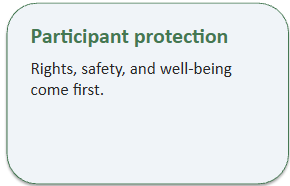
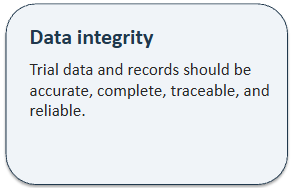
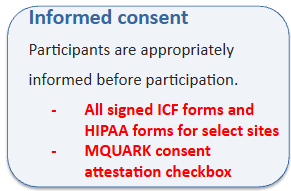
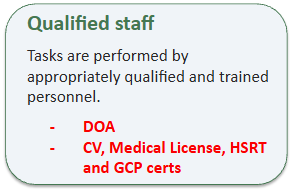
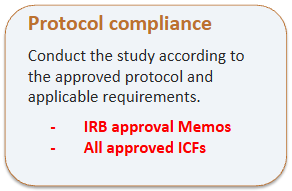
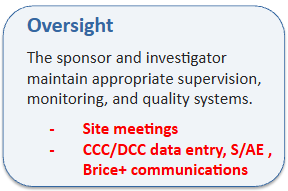
Core GCP Principles - The Big Picture | | Essential Documents to Save in Your Research Folder | |
Keep records organized, secure, retrievable, and accessible to authorized reviewers, for example, in the event of an audit.
Sites should save the following documents:
- Protocol and amendments - all versions
- IRB/IECE approvals - all approval memos (overall study, site specific, and local IRB)
- Informed consent materials - All approved versions of the ICF, all signed ICFs
- Delegation and training records - Updated and correct DOA (will include all team members who have been engaged on the study regardless of their active status), Signed and dated CVs, Medical Licenses, GCP and HSRT Certificates
- Monitoring correspondence - Site call meeting agendas and spreadsheets, emails from the DCC directing updates/data correction
- Safety documentation - All S/AE documentation beyond data entered into MQUARK, emails alerting you to S/AE entry, Adherence notifications
- Source records/CRFs - Clinician checklist, notes to file, completed downtime forms
- Close-out and archiving documentation - will come along in 2027
Helpful tips for finding essential documents:
| |
Source data are information in original records or certified copies that are necessary for reconstruction and evaluation of the trial.
Source documents are the records where source data are captured or from which source data are derived. “First place the data was entered”
Examples: medical records, clinic notes, laboratory reports, imaging reports, ECGs, medication administration records, questionnaires, diaries, and validated electronic systems.
The key question: “Can an independent reviewer reconstruct what happened to the participant and when?”
Source Documents in THRIVE include:
- Clinician Checklist
- Notes to file
- Downtime packets
| Study Procedure Reminders | | A number of new staff have joined our teams across the country so we are sharing refreshers on important study procedures. | | THRIVE does not allow consenting on the day of surgery | Complete survey attempt forms at the same time as the attempt | Review rescheduled surgeries (surgery date 2111-11-11) and withdraw as appropriate | Update Surgical Complexity on the POD1 tab if it changes. Not updating impacts site metrics. | |  | Talk to the attending anesthesiologist before randomizing the patient | Confirm whether patients are in-house or outpatient on DOS | Have a plan for follow-up before 9am for any patients who are in-house on POD1 | It is always ok to withdraw a patient before randomization if the clinical team is uncomfortable about adhering to the randomization result. | | Getting to Know the Team - University of Arkansas | |
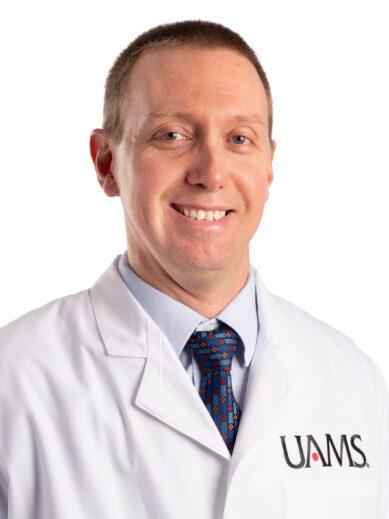
Geoff Muller
University of Arkansas
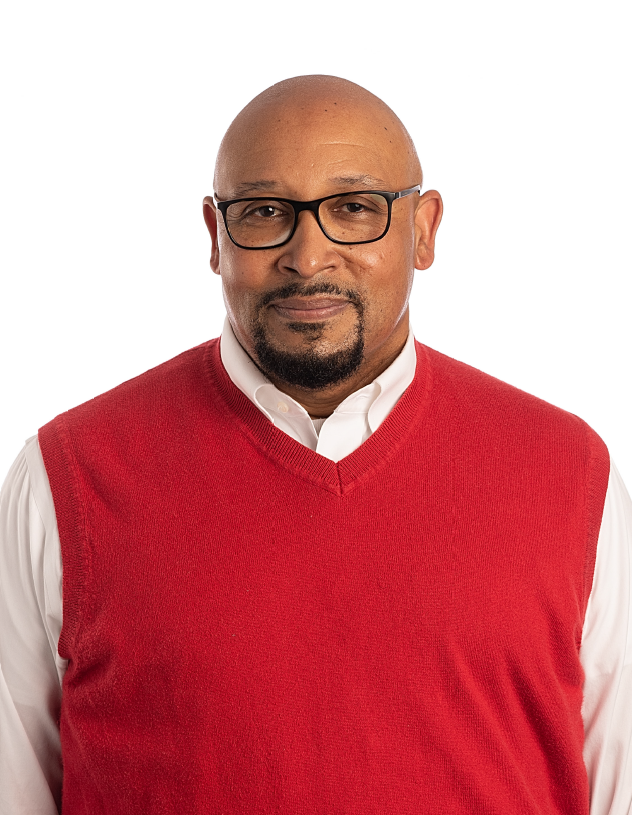
Dr. Geoffrey Muller received his medical degree from University of Pretoria Faculty of Medicine and has been in practice for more than 20 years. Before coming to UAMS in 2020, he worked as a Clinical Instructor in Anesthesiology at the University of Michigan, Ann Arbor, Michigan.
| |
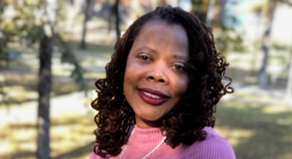
Gwendolyn Cobbs
University of Arkansas
Gwendolyn Cobbs serves as the RN Clinical Research Coordinator and Team Lead for the THRIVE study at UAMS. As a Certified Clinical Research Professional (CCRP) with a strong nursing background, Gwendolyn ensures the study runs smoothly with the highest standards of clinical excellence, patient safety, and data integrity.
For Gwendolyn, the highlights of the THRIVE study are the patients and the collaboration with the THRIVE DCC team. She has thoroughly enjoyed partnering with them on this study, noting that their support and shared vision make a tremendous difference. She shares a special appreciation for Chelsea, who is absolutely great to work with: “Whenever I call, she always has an answer for me, or she’ll dig in and find it out for me—even if it's an answer I might not always like! That kind of reliability is everything.”
Gwendolyn is also incredibly proud of her research team at UAMS, whose dedication, adaptability, and hard work drive their success every single day. She gives a special shout-out to their Principal Investigator, Dr. Muller. Working alongside Dr. Muller has been fantastic, as he is incredibly engaging and always available whenever the team has questions. Gwendolyn notes that she truly couldn't ask for a better research team.
True to Gwendolyn’s passion for health and wellness, she takes the concept of endurance from the clinic to the mud. Outside of work, she is a fitness enthusiast and an avid Spartan racer. Whether she is navigating complex clinical protocols or conquering obstacle courses, Gwendolyn brings unmatched energy and grit to everything she does!
|
Alperdis Keyes
University of Arkansas
Al is the Director of Clinical Trials at UAMS within the department of Translational Research Institute. He is involved with the planning, execution and oversight of clinical research studies (with the exception of cancer trials). He provides strategic and operational leadership across trial portfolios, ensuring regulatory compliance, data quality and patient safety. He collaborates with investigators, sponsors, and multidisciplinary teams to support efficient and ethical clinical trial conduct and the advancement of evidence-based therapies.
| Getting to Know the Team - New York University | | Dr. Simon Tom, Lola Franco, Avra Hammerschlag Ekow Commeh | | |
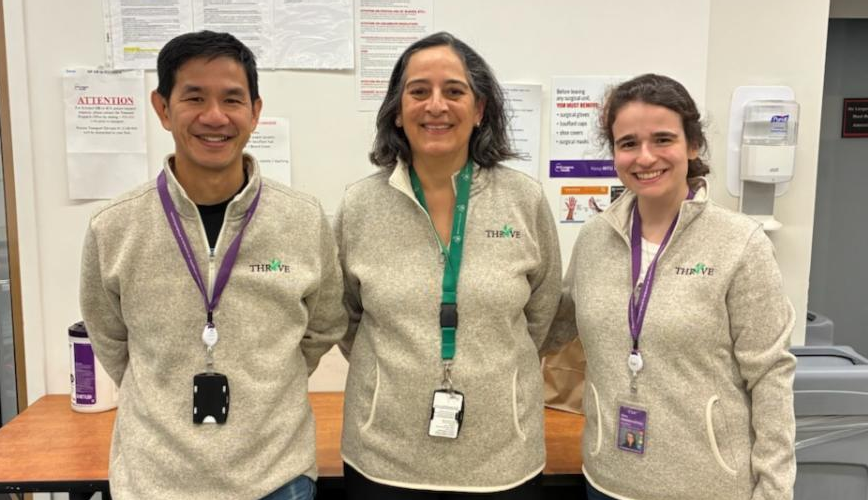
Dr. Simon Tom is Medical Director of the HCC2 Operating Rooms and Director of Anesthesia Informatics at NYU Langone Health. He sees THRIVE as a model for next-generation prospective clinical research, and has been impressed by how easy it is to plug into its well-designed infrastructure and trial design. He has also found the entire THRIVE team a pleasure to work with. Outside of work, he spends most of his time wrangling his two children, ages 6 and 8.
Lola Franco, CCRC, has been with the THRIVE team since pre-launch at NYULH. She really enjoys the interaction and follow-up with the subjects, maybe because she’s a mother and is used to nagging. When not at work she spends time with her family, walking around NYC, and enjoys knitting and needlepoint.
Avra Hammerschlag is a research coordinator and has been at NYU for 4.5 years. She likes helping people and has an appreciation for THRIVE because it allows her to build relationships with patients. In an alternate universe, she is an apiarist and lives in the countryside.
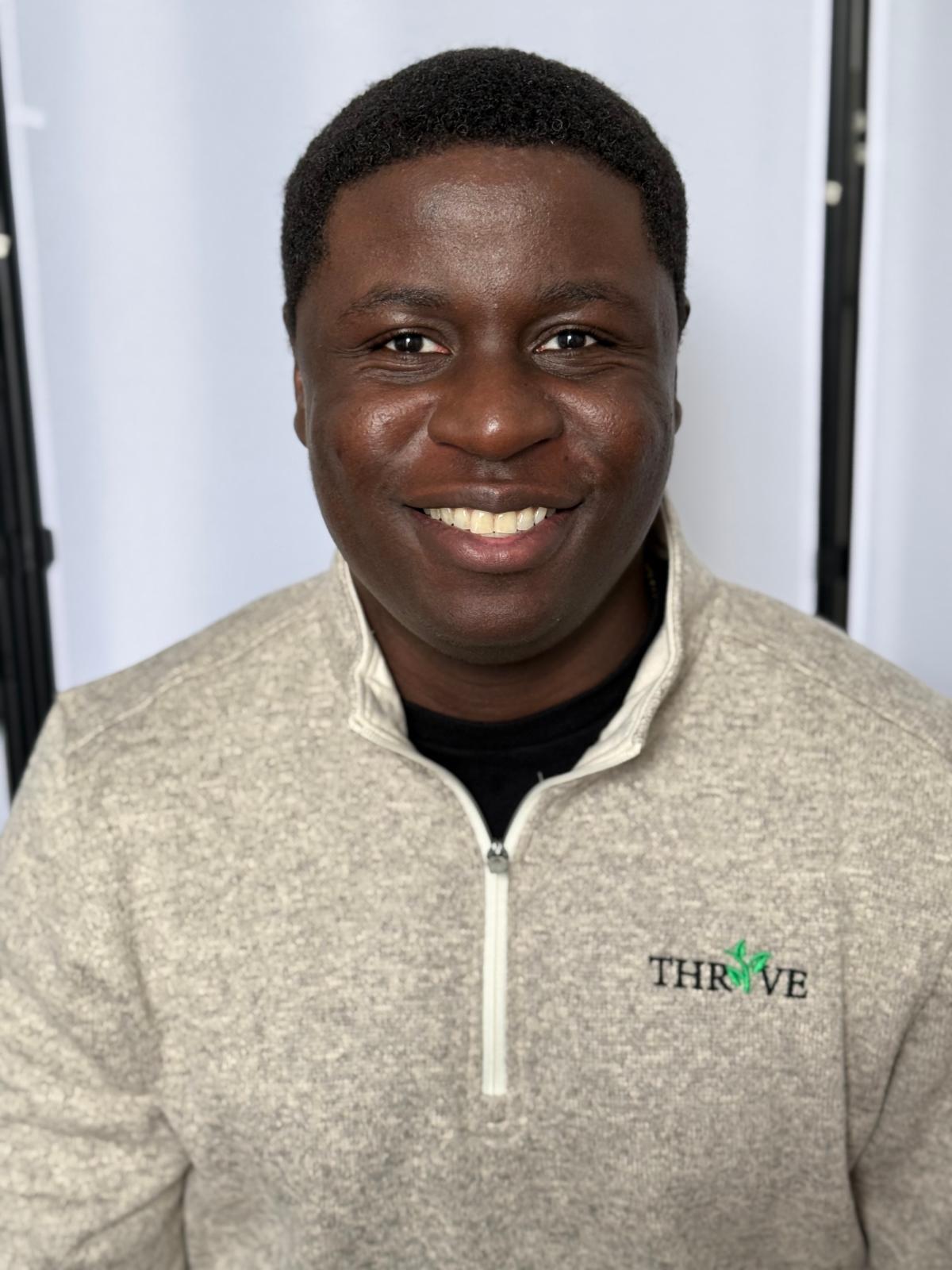
Ekow Commeh is a research coordinator at NYU and has been part of Team THRIVE since pre-launch. He likes how much he has learned from being on the THRIVE and uses it as a model when initiating new studies. Outside NYU, Ekow enjoys spending time with his family, his wife, and his awesome dog, Ace.
| | New team members joining? Current team members departing? Please make sure to complete the Personnel Change Form so new hires get the training information they need, and systems access for people no longer on the team can be removed. | | CCC and DCC Group Inboxes | | |
Suggestion Box
We would love to hear from you! Please let us know if there is a team member you would like to recognize or celebrate in the next newsletter, or if there are other updates you would like to know about.
| | | |
Funded by
Contract 2020C3-21106
| | | | | |