TEXAS LAWN COMPANION
FALL 2018 EDITION
|
|
While it's still pretty hot around the state, it's already time to start thinking ahead to turfgrass management for the fall. We often think of lawn care as more of a summer affair, but the truth is that
fall is a critical season
for maintaining the overall health of our turfgrass system. As temperatures drop and our grass becomes less active, there are new opportunities for the encroachment of winter weeds and the infestation of diseases that thrive in cool, wet conditions.
Here is what you'll find in this issue:
General Fall Management Recommendations
Dr. Becky Grubbs, Texas A&M AgriLife Extension
'Hey, what's that patch?': A Segment on Turfgrass Diseases
Dr. Lindsey Hoffman, Texas A&M AgriLife Extension
Fall Weed Management and Winter Weed Prevention
Dr. Becky Grubbs, Texas A&M AgriLife Extension
Student Showcase: Summer Internships
Dr. Benjamin Wherley, Texas A&M University
Cool-season Grass Management: Thoughts from the Panhandle
Dr. Joey Young, Texas Tech University
AggieTurf Research First Look: What Does Coffee Have to do with Turfgrass Management?
Garrett Flores, Texas A&M University
|
|
 |
Follow us @AggieTurf
Twitter | Instagram | Facebook
|
|
|
|
Questions about TLC?
Dr. Becky Grubbs
bgrubbs@tamu.edu | 979.845.0603
|
|
|
|
Planning to Copy/Paste from this Newsletter?
Hey, we're cool with it! Just please be sure to give our writers credit for their efforts. Plus, we want people to be able to know where to follow-up when they have questions. Thanks for sharing our information!
|
|
We would like to start this issue by congratulating Dr. Richard White on his retirement from the Department of Soil and Crop Science at Texas A&M University!
Dr. White is retiring officially on August 31
st
after 29 years of dedicated service. As a Professor of Turfgrass Physiology & Management, Dr. White’s research has focused on the development of information to understand mechanisms of stress resistance in perennial grasses used for turf and conservation program. His research has also contributed to applied programs in irrigation water management and conservation, resulting in the refinement of management strategies that reduce cultural inputs required to maintain turfgrass areas.
Dr. White has also served as an exemplary teacher and mentor to countless students. Over the years, he has taught a number of undergraduate and graduate courses including Introductory Turfgrass Management Laboratory, Turf Management Systems, and Turfgrass Maintenance.
Dr. White, thank you for all that you have done! We wish you all the best as you begin your next chapter!
|
|
Resources
Throughout this issue, you will find a number of references to other resources that we feel are beneficial to having a positive and productive outdoor experience with your lawn. Here are a few of those resources in one place for you to refer back to:
Aggie Turf Website
AgriLife Extension: Find Your County Agent
AgriLife Extension Service Soil, Water and Forage Testing Laboratory
Texas Plant Disease Diagnostic Laboratory
|
|
General Turfgrass Management Tips for Fall
|
|
|
|
Written by Dr. Becky Grubbs
|
Assistant Professor & Turfgrass Extension Specialist
Texas A&M AgriLife Extension
Dept. of Soil and Crop Sciences
College Station, TX
Twitter: @TXTurfGal
|
|
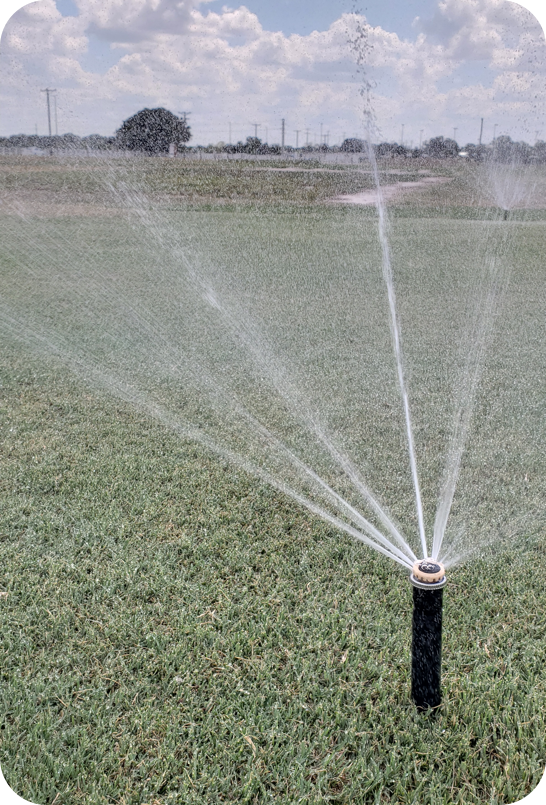
Moving into fall typically means a drop in temperatures and an increase in natural precipitation. As these changes occur, be sure to adjust your irrigation practices accordingly. Plants will gradually require less and less water as we proceed into the fall. Fall lawn water requirements are usually ½ to ¾ of those required during summer. One way to prevent overwatering during this period is to water only once visible leaf wilt occurs.
Irrigation should be turned off entirely on lawns once warm-season turfgrass has gone dormant for the winter and is no longer actively growing.
It is particularly important to
minimize leaf wetness
as cooler temperatures arise in order to prevent the onset of disease. Many of our common turfgrass diseases including large patch or brown patch disease (
Rhizoctonia solani
) prefer cool, wet conditions. As temperatures begin to drop below 70° F, these diseases are more likely to occur. In order to minimize the period of leaf wetness, it is strongly recommended that lawns be watered during nighttime or early morning hours. Watering too early in the evening extends the period of leaf wetness, increasing the likelihood of disease. Again, it is particularly important not to overwater during this critical time.
Dr. Lindsey Hoffman will share more about fall turfgrass diseases in a later section. Keep reading!
|
|
As temperatures begin to cool, warm-season grass will gradually require less frequent mowing as it will not be growing as aggressively as it does in summer months. If disease becomes a concern, mow when the lawn is dry, and consider cleaning mower blades between mowings and before moving from a suspected diseased to a non-diseased area.
Consider raising the mowing height slightly in the months leading up to dormancy. Do not exceed the recommended height of cut range for your grass species. A slightly higher mowing height can be beneficial in encouraging deep, below-ground growth that is beneficial for overwintering as well as shading out/preventing germination of winter weeds.
Once the grass becomes dormant, mowing is typically only recommended when it aids in the control of winter annual and perennial weeds. The timely removal of flowers and seed heads can prevent the spread of these weeds across an area. When mowing for this purpose, clippings should be bagged and physically removed from the site.
|
|
Additional input for this section provided by Dr. Tony Provin
Soil Chemistry Professor and Extension Specialist
and Director of the Soil, Water, and Forage Testing Laboratory
|
|
If possible, soil testing should be performed at least once annually, and fall is a great time to take soil samples. Several nutrients play a critical role in allowing plants to adequately prepare for winter months. For example, potassium (K) helps to facilitate starch synthesis, or the production of storage carbohydrates. A number of nutrient deficiencies, including potassium, phosphorous (P), calcium (Ca), and sulfur (S) have been associated with increased disease susceptibility. Before transitioning into a new season, it is beneficial to evaluate soil fertility and ensure that nutrients levels are balanced and appropriate.
To learn more about soil testing, contact your County Extension Agent
Nitrogen
Good nitrogen fertility practices become increasingly important during the fall months. Historically, fertilization of turfgrass with nitrogen was often considered a must-do requirement to maintain a strong stand of grass. In general, insufficient nitrogen reduces overall growth and density, and pre-dormancy deficiencies can deprive the plant of reserves that support growth as the turfgrass is coming out of dormancy the following spring.
However, late or excessive fall nitrogen applications can interfere with winter dormancy, increase the likelihood of winter injury, and exacerbate disease.
Soil testing in late summer/early fall can both confirm existing nutrient status and allow for an accurate evaluation of that year’s nitrogen utilization. Typically, 4-6 weeks after the last fertilization, nitrate-N, the dominant plant-available form of nitrogen in the soil, is often expected to be near-zero. The presence of elevated nitrates is a strong indicator of 1) over-fertilization or 2) other growth-limiting factors including pH, macro/micro-nutrient limitation, compaction, drought/water limitation, etc.
Applying additional nitrogen when current soil nitrates are elevated often results in increased disease pressure, winter weeds and the potential for localized water impairments.
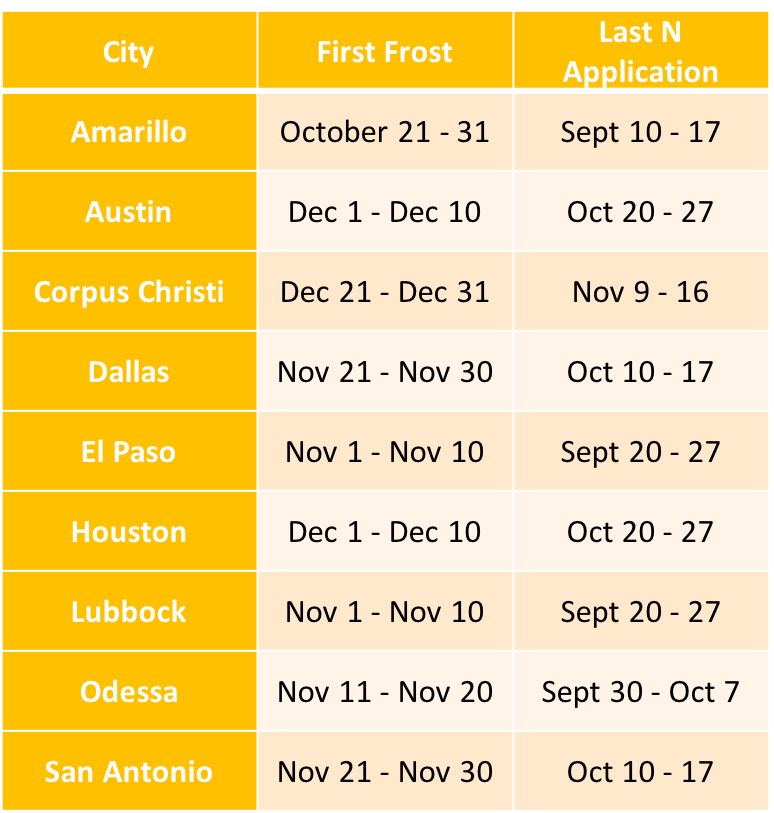
Our recommendation is to put out your final nitrogen application for the year
no later than 6 weeks
prior to the historical first frost date for your region of the state. Again, your fall soil test can help you determine whether a nitrogen application is appropriate, and approximately how much nitrogen is required. Close observations of grass growth in the weeks immediately prior to the proposed last seasonal nitrogen application can also be used to determine the need for the final application. If weekly growth is greater than ¾” in height for all but the dwarf turfgrass varieties, additional nitrogen may not be needed at all.
Remember that shaded areas will generally require less nitrogen than areas in full sun.
Shaded areas have an increased susceptibility to disease, as they are already under stress. Take particular care to not over-fertilize or over-water these areas.
|
|
To look up historic first frost dates for other areas in Texas, please follow the link below:
|
|
"Hey, what's that patch?"
A Segment on Turfgrass Diseases
|
|
|
|
Written by Dr. Lindsey Hoffman
|
Assistant Professor & Turfgrass Extension Specialist
Texas A&M AgriLife Extension
Dept. of Soil and Crop Sciences
Dallas, TX
Twitter: @lhoffman2578
|
|
It has been a hot and dry summer, but we are approaching the time of year when temperatures will start to decrease and moisture will become more available. Cool, moist conditions favor disease development and if your lawn is still experiencing stress from the summer, it may be more susceptible to infection by fungal pathogens. In addition, conditions such as soil pH, poor growing conditions, improper fertility and mowing height, along with moisture imbalances can make turfgrass more susceptible to fungal infection.
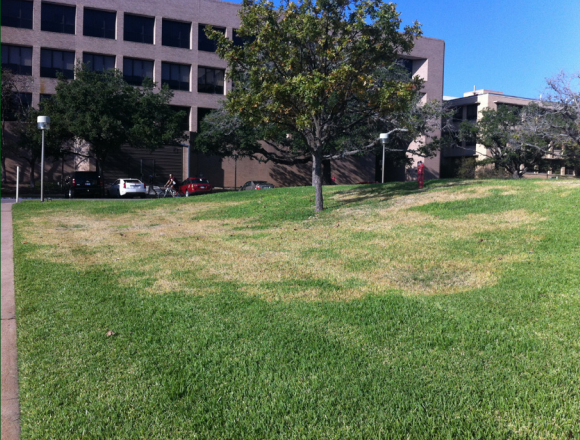
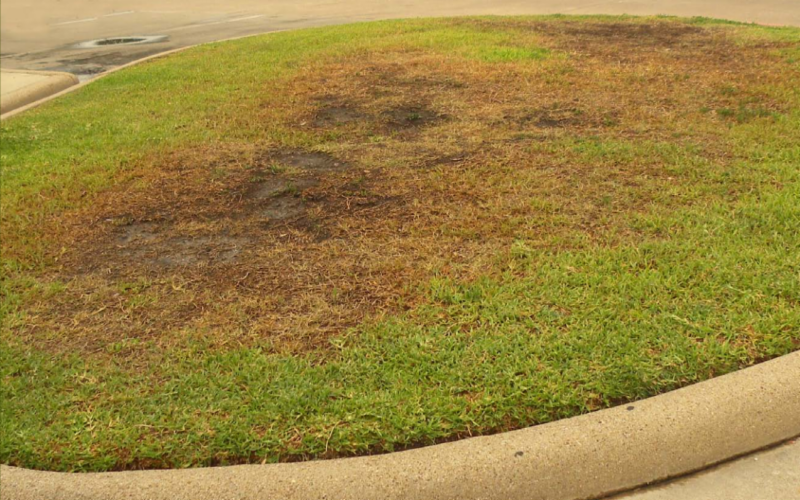
The most common turfgrass diseases that may be present in Texas home lawns during the fall are large patch (caused by
Rhizoctonia
spp. [Fig. 1]) and take-all root rot (caused by
Gaeumannomyces graminis
var.
graminis
[Fig. 2]). Large patch and take-all are classified as ‘patch diseases’ because of the irregular shaped patches of dead turfgrass that develop following infection. Both diseases, if left untreated, can cause widespread damage and loss of turfgrass surfaces.
|
|
Fig. 1
-
Large patch symptoms caused by
Rhizoctonia solani
in St. Augustinegrass
From Dr. Young-ki Jo's publication
How to Diagnose and Manage Large Patch Disease on Warm-Season Turfgrass
|
|
Fig. 2 -
Large, irregular patches of take-all root rot on St. Augustinegrass.
From Dr. Young-ki Jo's publication
Take-all Root Rot
|
|
Development of large patch is most common in St. Augustinegrass and zoysiagrass, and is favored by air temperatures ranging between 75 and 85 °F and moist conditions, but can occur anytime under cool-moist conditions. Initial symptoms of large patch include yellowing of leaf tissue at the edge of patches and leaf blades easily separate from the main portion of the plant if gently pulled. As the infection progresses, the turfgrass will look brown and wilted and will eventually develop into areas of blighted turfgrass. In comparison to large patch, take-all generally occurs during spring and early summer, but can occur during any time of the year if the turfgrass is being affected by other stresses. Take-all is a fungus that lives in the soil and causes root dieback, although yellowing of leaf tissue is one of the primary symptoms. As the infection progresses, turfgrass can easily be lifted from the soil and roots will appear black and wilted.
The most effective approach to preventing large patch and take-all is to use appropriate cultural practices to maintain a healthy turfgrass surface all year. Specifically, large patch is favored by conditions such as saturated soils and high nitrogen rates while high soil pH is more conducive to the development of take-all. Addressing the underlying issues utilizing proper cultural practices will help mitigate the potential for disease development in the future. Dr. Becky Grubbs has provided information on practices that promote a healthy turfgrass surface and those guidelines can be found above.
Chemical controls for both diseases do exist, but fungicides will only prevent the occurrence or spread of the disease and cannot fix already damaged areas. Prior to applying a fungicide, it will be necessary to confirm that large patch or take-all are the culprits for causing damage. In some cases, insects such as chinch bugs can actually cause damage that looks similar to both diseases. Therefore, it is necessary to confirm the presence of a fungal pathogen by consulting with an expert or sending samples to the Texas Plant Disease Diagnostic Lab (
https://plantclinic.tamu.edu/
) for diagnosis. If preventative fungicides are necessary for large patch, applications should begin in mid-late September and can be made monthly during fall and spring months.
Always remember when using any pesticide to read the label and wear the proper personal protective equipment.
In closing, keep in mind that a healthy lawn is a happy lawn. Texas lawns are subjected to multiple stresses throughout the year, but proper management and TLC can help prevent against disease development and can help reduce costs associated with treating and repairing affected areas. Don’t ever hesitate to contact your local County Extension Agent or Extension Specialist with questions or concerns; remember we are here to help!
|
|
Our turfgrass pathologist, Dr. Young-ki Jo, has written several factsheets with additional information on turfgrass diseases including the two discussed above. To view or download copies of Dr. Jo's publications on turfgrass diseases, please visit our
website
.
|
|
Texas A&M Turfgrass and Landscape
Field Day
October 10, 2018
|
|
Texas A&M Research and Extension Center at Dallas
Registration Opens in September
See the latest research | Earn CEUs
|
|
Fall Weed Management and Winter Weed Prevention
|
|
Written by Dr. Becky Grubbs
Assistant Professor & Turfgrass Extension Specialist
Texas A&M AgriLife Extension
Dept. of Soil and Crop Sciences
College Station, TX
@TXTurfGa
l
|
|
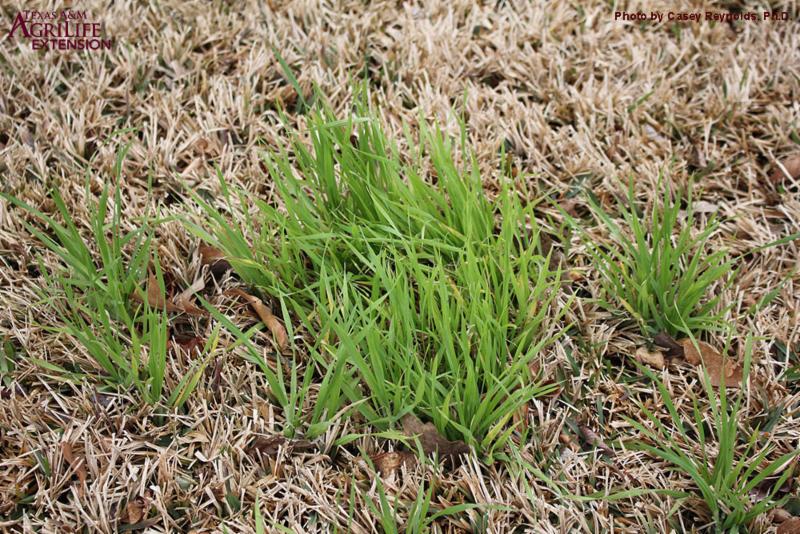
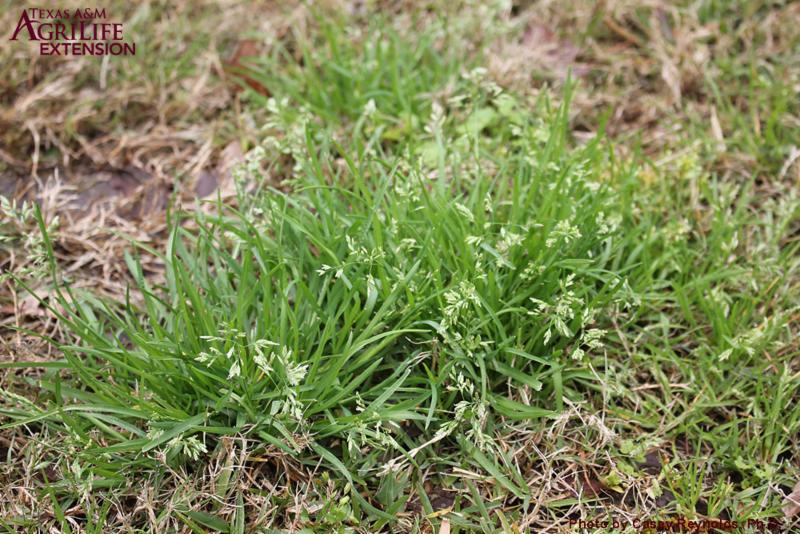
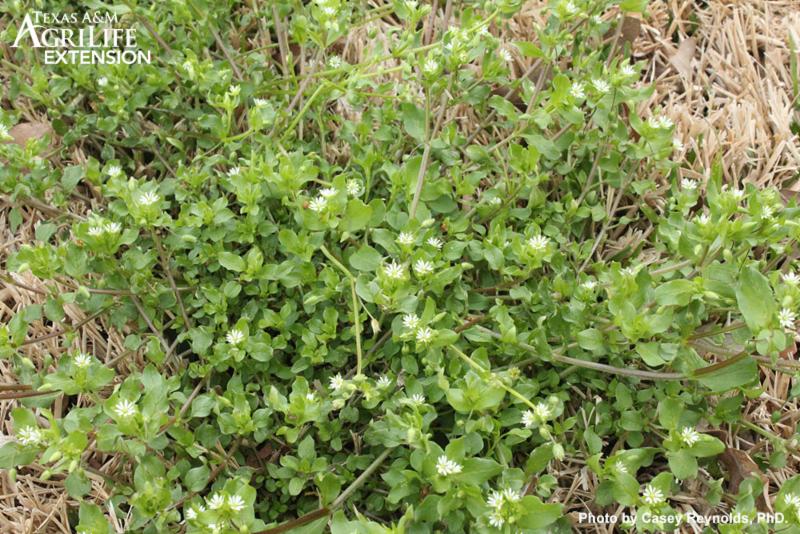
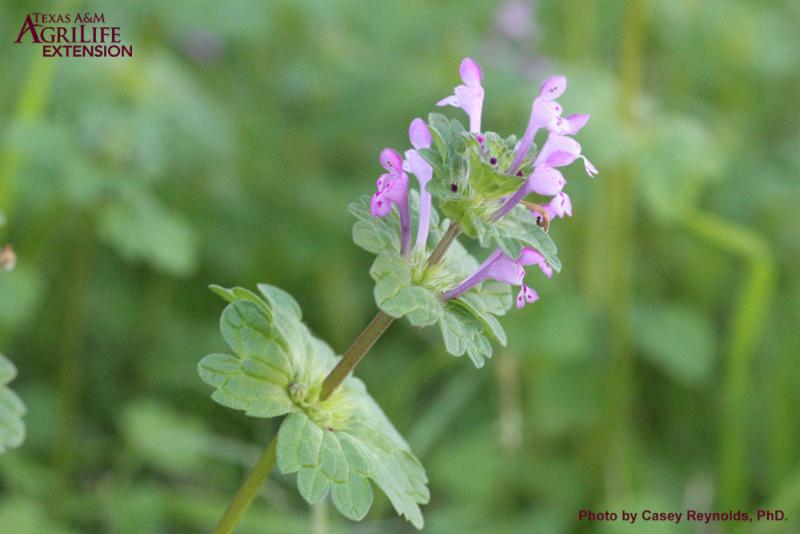
Cooler temperatures can mean the germination and growth of winter annual and perennial weeds on your lawn. Below, you will find images of a handful of common winter annual weeds.
|
|
To the best of your ability, always attempt to take an integrated approach to weed management.
Integrated weed management (IWM)
encompasses several methods of control:
preventative, biological, mechanical, cultural, and chemical control
. In utilizing IWM, you are more likely to prevent more severe weed problems from occurring or re-occurring on any given site.
Preventative Control
Use caution when bringing in materials that may contain weed seeds including compost, topsoil, or new grass in any form (sod, seeds, etc). Seeds may also be physically brought in by mowers that are being used on multiple sites without being cleaned.
Biological Control
Biological control is the utilization of “natural enemies” of the weed(s) to mitigate growth and attempt to curb populations. This may include the use of insects, microorganisms, nematodes, or even livestock including backyard chickens or guineas. Always conduct thorough research prior to introducing biological agents into your yard.
Mechanical Control
Mowing is one method of mechanical control. Mow frequently enough to help regulate weed growth. As was mentioned previously, the timely removal of seed heads can prevent the spread of weeds across your lawn. When there is a manageable number of weeds, consider physical removal of individual weeds either by hand or with the help of tools. Mechanical control is often one of the best methods of controlling mature or established weeds, as chemical control options are generally less effective during this stage.
Cultural Control
While turfgrass is still actively growing in the late summer and early fall, take steps to maintain a healthy, dense stand of turfgrass that is able to crowd out emerging weeds. Many of these steps are outlined in the previous management sections of this newsletter.
Cultural methods including thatch-removal and the collection of grass clippings or leaf litter can also play an important role in preparing an area for pre-emergent herbicide applications. More information below.
Chemical Control
Pre-emergence Herbicides
Pre-emergence herbicides are one way to prevent weed problems before they start.
These products need to be applied prior to the germination of annual weeds in order to be effective
. It is difficult to pinpoint specific dates for pre-emergence applications due to variability in environmental conditions, but typically, these products are applied between
mid-August and mid-September
. For a local opinion on appropriate timing, contact your AgriLife County Extension Agent. In general, it is better to be too early than too late with a pre-emergence application. A second application can always be made when necessary. Follow the label recommendations.
Pre-emergence products should not be used when you are planning to over-seed with cool-season grasses.
To improve efficacy of these products, remove any grass clippings or leaf litter prior to application in order to ensure that the product is able to get to the soil. You may also need to remove excess layers of thatch when the thatch layer exceeds 0.5” in thickness. For clarification on this, contact your County Extension Agent or Extension Turfgrass Specialist.
Always follow label instructions, as tolerant species/cultivars, appropriate rates, timing, and post-application practices (i.e. irrigation) may vary across products. Different varieties of a particular species, (e.g., some dwarf-type bermudagrasses or individual St. Augustinegrass varieties) may exhibit different levels of sensitivity to both pre- and post-emergence herbicide products.
|
|
This table was adapted from the
Weed, Insect, and Disease Control in Turfgrass Handbook
. To view this publication in its entirety or to view similar publications on turfgrass management and pest control, please visit our
website.
|
|
A quick word about combination products:
Combination products containing both herbicides and fertilizers (i.e., Weed and Feed) are commonly used as a means of “hitting two birds with one stone”. While there are appropriate times to use these products, be mindful of appropriate fertilizer and herbicide timings discussed throughout this newsletter. Remember that the application of fertilizer products, particularly nitrogen, too late or too early in the year can be detrimental to turfgrass health. During transition seasons such as spring and fall, individual, rather than dual, herbicide and fertilizer products can sometimes create the greatest opportunity to time applications appropriately and optimize lawn management practices.
|
|
Post-emergence Herbicides
Once weeds have successfully germinated and matured into established plants, you may have to use post-emergence herbicide products for control. There are a number of post-emergence products available for both grassy and broadleaf weeds. You should start by identifying the primary weeds you are trying to control in order to make sure that you purchase a product that is appropriate and labeled for those weeds. Then, you should also ensure that the product you select is appropriate for the species and variety of turfgrass that you have on your lawn. While St. Augustinegrass is more sensitive to products containing 2,4-D and Dicamba, bermudagrass is more sensitive to products containing Atrazine. What is appropriate for one species may not be appropriate for another.
Finally, you should make sure that the product you choose is approved for use in the state of Texas and is appropriate for the environment and time of year that you are using it. The best way to ensure that you are making the best choice is to ask an expert. Again, we suggest that you contact your AgriLife County Extension office for assistance in this matter.
When using any herbicide products, always read the label and wear the appropriate recommended personal protective equipment (PPE).
|
|
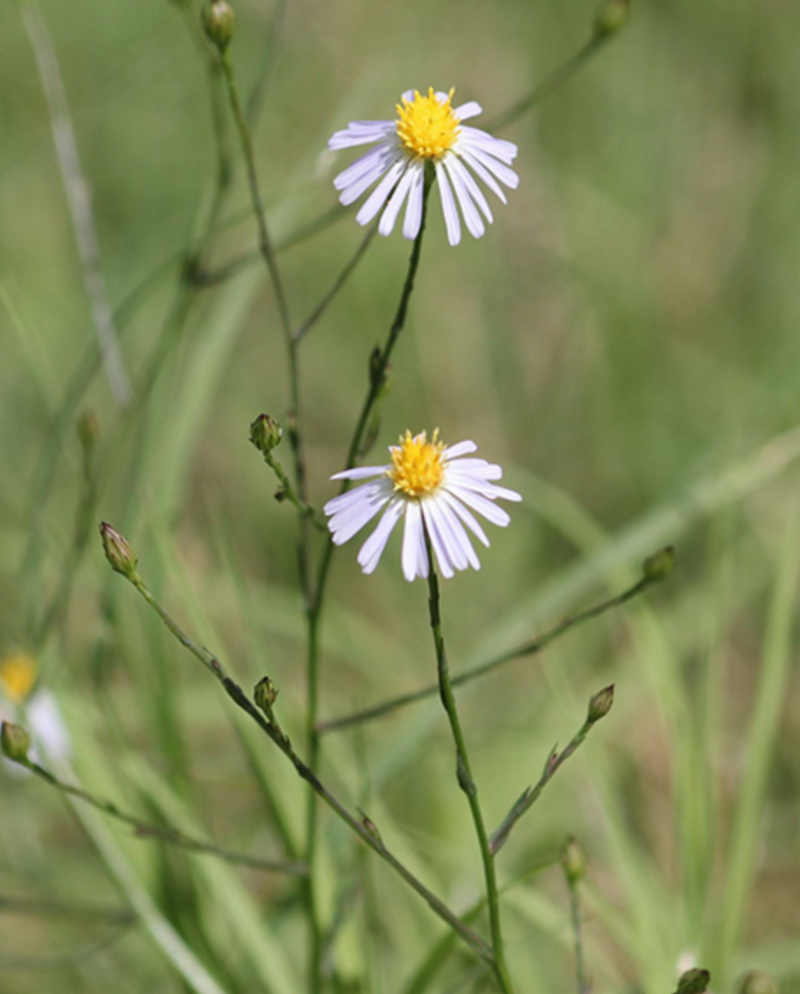
Slender Aster
Aster subulatus
Michx. var. ligulatus Shinners
|
|
Summer Annual Weed Control
in the Fall
|
Y
ou may still be seeing residual summer annual weed activity during the fall transition period including weeds such as slender aster (photo), goosegrass, and crabgrass. Once many of these weeds are established and mature, it can be especially difficult to control them. It is important to remember that in many parts of the state, these will only survive until the first frost. In areas where summer annuals are frequently troublesome, consider the application of a spring pre-emergent in February or March, once soil temperatures rise above 55F. Post-emergence herbicide applications for the control of summer annual weeds should be made when plants are immature to get the best results. The Winter and Spring editions of TLC will also cover this topic.
|
|
Student Showcase: Summer Internships
|
|
|
|
Written by Dr. Ben Wherley
|
Associate Professor
Turfgrass Science & Ecology
Texas A&M AgriLife University
Dept. of Soil and Crop Sciences
College Station, TX
|
|
The summer internship experience is a key component of the overall Turfgrass Science Student Education experience here at Texas A&M, and helps students gain experience and applied skills to compliment the classroom and lab training at Texas A&M. Upon their return, students will share about their internships through presentations during the fall semester at Aggie Turf Club. Congratulations to our many Aggie Turfgrass Science students who are returning to campus from summer internships across the country. Here are just a few of those students:
|
|
John Jordan
TPC Four Seasons
Los Colinas, TX
|
|
Ryan Earp
Lake Oconee Golf Club Georgia
|
|
Calvin Wilson
Davis Wagner
Chandler Simental
Bellerive Country Club St. Louis, MO
|
|
James Kimberly
Landscapes Unlimited UT Golf Course
|
|
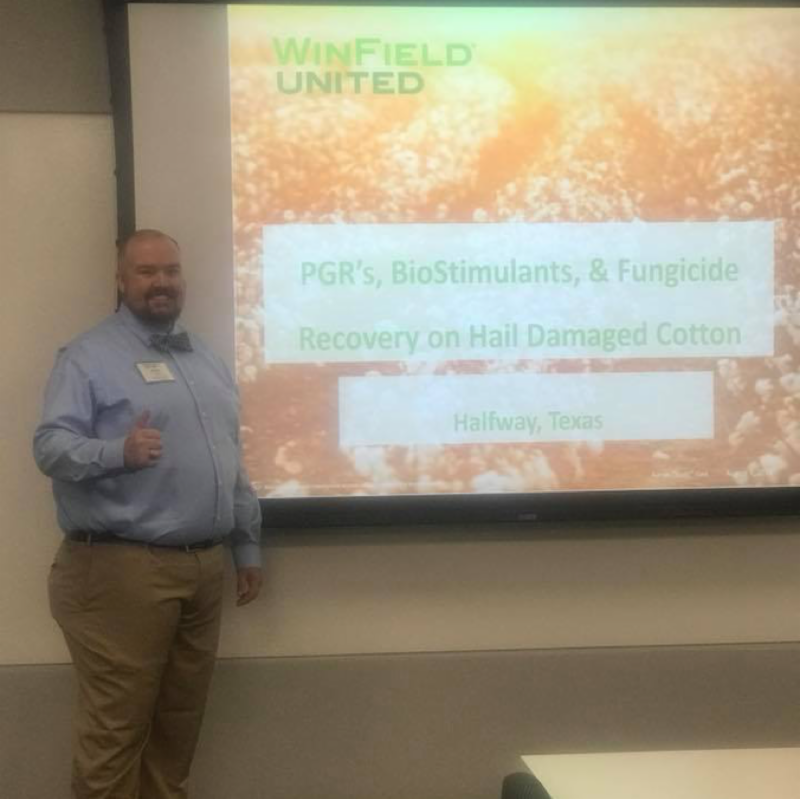
Scott Gee
Winfield United
West Texas
|
|
Brett Martin
Fenway Park - Boston Red Sox
Boston, MA
|
|
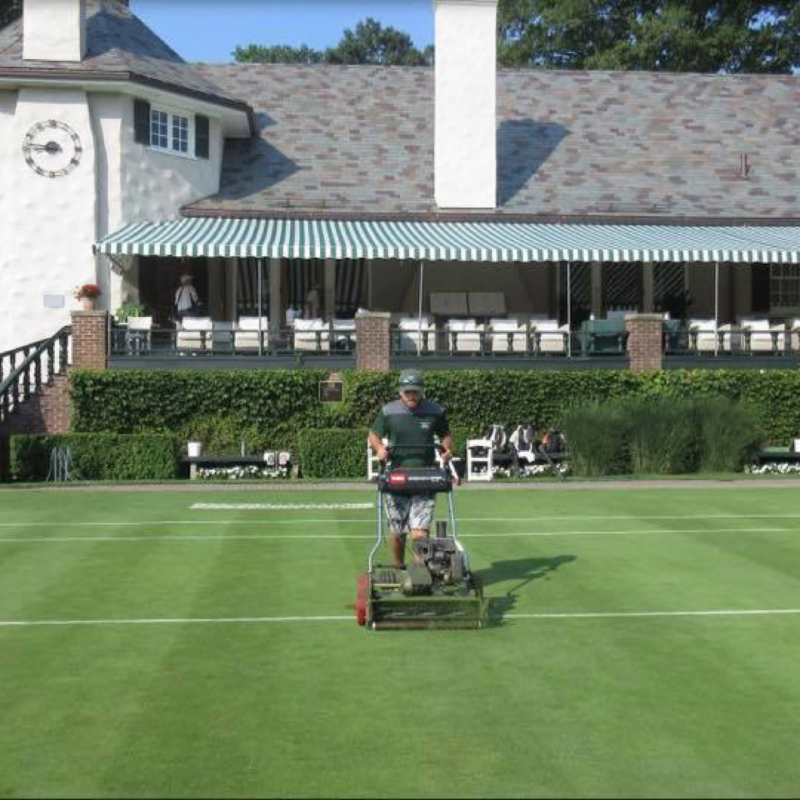
Johnathon Wolf
Longwood Cricket Club
Boston, MA
|
|
Jose Diaz
BBVA Compass Stadium
Houston, TX
|
|
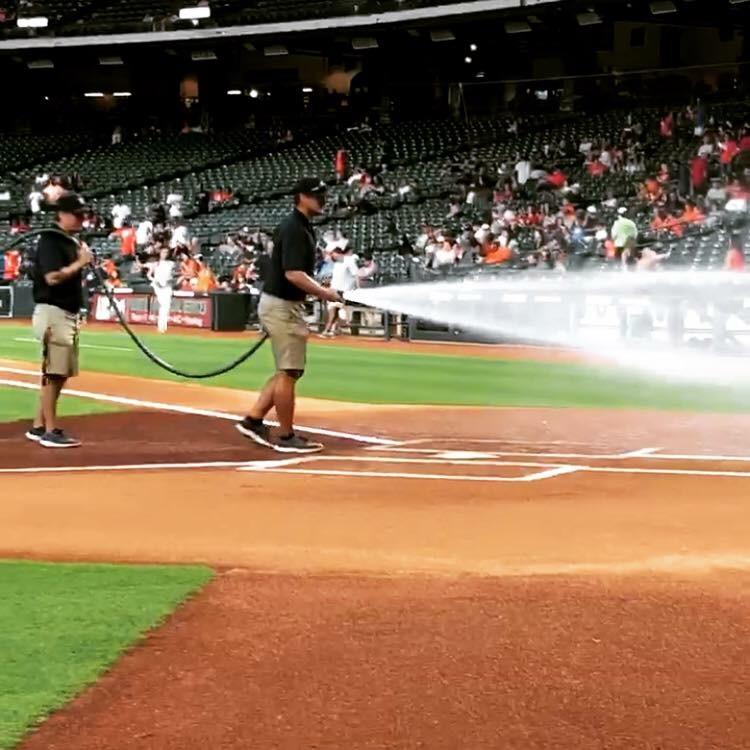
Andrew Healy
Minute Maid Park - Houston Astros
Houston, TX
|
|
Managing Cool-season Grass During the Fall:
Thoughts from the Panhandle
|
|
|
|
Written by Dr. Joey Young
|
Assistant Professor
Turfgrass Science
Texas Tech University
Dept. of Plant and Soil Sceince
Lubbock, TX
|
|
Drought continues to provide challenges throughout much of the Texas Panhandle. The heat has been a little less recently, but we all can see the finish line for summer approaching. Labor Day is a major holiday throughout the United States, and you may also want to think of it as a holiday for any of you managing cool-season grasses in Texas too. Temperatures generally begin to lessen and days begin to shorten a little reducing stress our cool-season grasses battle throughout the summer. There are some key practices that you want to put in place to ensure your cool-season grass is getting the most out of this Fall season.
If your lawn or cool-season turf didn’t fare well with the heat and drought conditions this summer, you are approaching your recovery period. Tall fescue is the primary cool-season grass used in many parts of Texas (DFW, Lubbock, and Amarillo) because it has better heat tolerance than any other cool-season grass (
https://aggieturf.tamu.edu/texas-turfgrasses/tall-fescue/
). One of the reasons tall fescue performs well in our climate is its deep rooting potential. Tall fescue is capable of sending roots deeper into the soil to find water that shallower rooting grasses couldn’t access. If you want your grass to grow deeper roots, irrigation management has to be a primary focus to force deeper root penetration. Soil textures are going to impact rooting depth, but watering the grass deep and infrequently will make the turf search for moisture deeper in the soil. Keep in mind that as temperatures decrease in the Fall and days become shorter, there will be less evaporative demand on water. Therefore, watering frequencies should be reduced.
|
|
Tall Fescue on the Texas Tech Campus in Lubbock, TX
|
|
Tall fescue is a bunch-type grass, so it does not grow laterally well at all. If you have larger areas that have been lost or thinned due to harsh weather conditions, now is the appropriate and best time to overseed your tall fescue lawn. Do your homework and choose cultivars that will grow well in your environment (
National Turfgrass Evaluation Program Tall Fescue Trials
). Kentucky bluegrass is a viable cool-season turf option in Amarillo or further north into the Panhandle because of the cooler temperatures and higher elevation than other cities (
https://aggieturf.tamu.edu/texas-turfgrasses/kentucky-bluegrass-and-hybrid-bluegrass/
). Kentucky bluegrass has rhizomes that help it spread laterally, so it may be more capable of filling in thin areas with good management.
Fertility is another key component of cool-season turf management during the fall. The majority of nitrogen fertility should be made during the fall. Most lawns containing tall fescue or Kentucky bluegrass should be fertilized with approximately 3-4 lbs nitrogen/1,000 sq ft each year with 75% applied in the fall. Labor Day is a great time to start your fertility applications. Making 2 to 3 applications 4 to 6 weeks apart during fall would be ideal. Applications should not be made after freezing temperatures that may lead to dormancy (browning) of the turf, but later season applications may keep your cool-season turf green a bit longer into winter. Tall fescue and Kentucky bluegrass will perform at its best when mowing at the highest possible mowing height. Lawns with either of these grasses would perform best at 2 to 3 inch mowing height. If you choose to aerify your lawn, fall is the most appropriate time to conduct those practices. It would be best to wait until late-September or October after an application or two of fertilizer to improve and speed up recovery from aerification. Putting time and effort into your cool-season grass areas during the Fall will help make next summer much easier.
|
|
AggieTurf Research First Look
|
|
We wanted to give you a glimpse at some of the interesting research being conducted here in the Texas A&M Turfgrass Program. Garrett Flores is a Master's student under Dr. Ben Wherley here in College Station, TX. We have asked Garrett to share a little about his research as we move into cooler weather and into prime coffee season.
|
|
What does coffee have to do with turfgrass management?
|
|
|
|
Written by Garrett Flores
|
Graduate Research Assistant (MS)
Turfgrass Science
Dept. of Soil and Crop Sciences
Texas A&M University
Major Professor: Dr. Ben Wherley
|
|
Coffee beans, ground or otherwise, are a common household commodity that are only increasing in popularity. With the amount of coffee that is being brewed either in your home or by a barista, literal tons of “spent coffee grounds” are being produced and are usually just thrown away. Here at Texas A&M University, we are trying to find new and innovative ways to repurpose this byproduct by removing it from the waste stream in order to generate useful products. The objective of these studies are to find applications for these spent grounds in the realm of turf management. Several studies are being conducted here at Texas A&M to test the efficacy of spent coffee in various applications for turfgrass management:
|
|
As a Fertilizer
A chemical analysis on coffee grounds revealed an N-P-K ratio of 2.3-0.1-0.5, respectively. A slightly acidic pH of 5.6 was also noted and a carbon-to-nitrogen (C:N) ratio of 20:1 all point to the possibility using grounds as an organic fertilizer in the field. In this study, the spent coffee is sprinkled on top of the turf as a “topdressing” fertilizer application three times per year and compared with control plots that have not been fertilized at all. Both the control and coffee treatments are tested against plots that are fertilized with common organic and synthetic fertilizers. Several measurements are taken in this field study to measure the effect of each treatment on properties such as water utilization, water-holding capacity, and turfgrass quality and overall health.
|
|
As an Alternative to Sphagnum Peat Moss
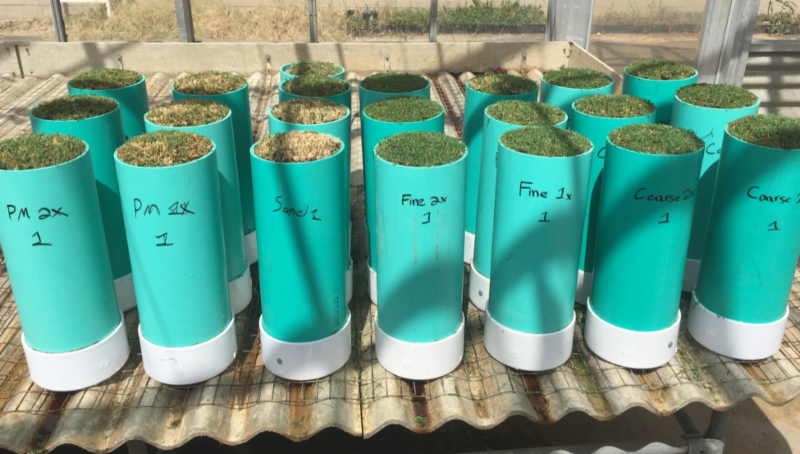
Sand-based root zones can be found in most putting greens as well as many sports fields today. The turf is grown over sand to allow for rapid drainage and firmer footing for athletes. However, one problem in using sand this way is that it holds very little water and retains very few nutrients compared with some other soil types. Historically, this issue has been remedied by adding amendments to the sand such as sphagnum peat moss, but the process of obtaining sphagnum peat moss is destructive and not sustainable. Peat bogs are drained and allowed to dry before mining the peat off of the land. It is our hope that spent coffee grounds can be used as a replacement for sphagnum moss in the future. Due to the incredible water holding capacity and the ability to adsorb nutrients, there is a strong possibility for grounds to be used in this manner.
Preliminary findings have been encouraging. The photo above shows spent coffee used in a coarse and a fine grind compared to sand alone and the industry standard, peat moss. All of the treatments are amended to replicate the industrial construction method of a sports field. In this study, grasses were watered twice per week. So far, the un-amended sand pots quickly exhibited signs of drought stress while grasses grown in soils amended with spent coffee seemed to respond well.
|
|
As a Pre-Emergence Herbicide
In this study, the effect of coffee grounds on seed germination is being compared to a control as well as other organic (corn gluten meal) and synthetic (dithiopyr) pre-emergence herbicides. This study is on-going with no results thus far.
|
|
Garrett's research is on-going. Look for future updates about findings from these studies as well as other research coming out of the Texas A&M Turfgrass program.
|
|
Thanks for Reading!
We appreciate you taking the time to read our newsletter. Tentative release dates for upcoming issues:
Winter - November 26, 2018
Spring - February 15, 2019
Summer - May 3, 2019
|
|
Special thanks to Dr. Ben Wherley and Dr. Tony Provin for their editorial contributions!
|
|
|
|
|
|
|