TMJ News Bites

Issue 6, 2025

Introducing the TMD IMPACT Grant Collaborative Teams

Over the next three issues of TMJ News Bites, we'll spotlight the research teams that were awarded NIH's TMD IMPACT grants - at the University of Pittsburgh, University of Michigan, and the University of Southern California - each working to advance understanding and care for people with temporomandibular disorders (TMD).


TMD IMPACT stands for "TMD Collaborative for IMproving PAtient-Centered Translational Research" and is funded by the National Institutes of Health (NIH).


This issue features the University of Pittsburgh team. Stay tuned for upcoming issues highlighting the Michigan and USC teams.

Pitt Researchers Launch $17 Million NIH-Funded Temporomandibular Disorders Study

The University of Pittsburgh - led by Dr. Alejandro Almarza (pictured) - aims to deepen our understanding of the complex conditions that constitute temporomandibular disorders (TMD). Called CREATE, for (Collaborative for REsearch to Advance TMD Evidence) is a $17 million National Institutes of Health (NIH) funded project that will study over 1,000 TMD patients and 300 controls across five U.S. sites. Researchers will collect biological samples and clinical data to detail the mechanisms of TMD pain and identify disorder subtypes that could lead to more personalized treatments.


Importantly, The TMJ Association (TMJA) is a key partner in this effort, ensuring that patients’ lived experiences inform the research. As project lead, Dr. Almarza emphasized, “One of the things that is important here is the patient advocacy group. They are a key component to every decision we make.”


This landmark project represents a significant step toward more precise diagnostics, better pain predictors, and targeted therapies for those with TMD.


Read the full article on our website

November is TMJ Awareness Month!

Every day, we hear from patients whose lives have been turned upside down by Temporomandibular Disorders (TMD) - stories of misdiagnosis, costly and ineffective treatments, and relentless pain that too often leaves them worse, not better. Yet through it all, they continue to show remarkable courage, hope, and resilience.


This month, we’re shining a light on their voices. One young patient, living with years of TMD pain, dreams of becoming a physician so she can help others. Stories like hers remind us why our work is so urgent.


While women make up the majority of chronic TMD cases, men also live with the pain and challenges of these conditions, often silently. We want to better understand their experiences, too. If you’re a man living with TMD, or if you know someone who is, we invite you to share your story with us. Your perspective can help break the silence and shed new light on how TMD affects all patients. If you'd like to share your experience, please email us at info@tmj.org.


At The TMJ Association, we’re determined to change this story. Through research advocacy, initiatives like the TMD IMPACT Collaborative, and amplifying patient voices, we’re driving progress toward better understanding, treatments, and care.


Stand with TMJ patients this November. Together, we can create a future where no one has to suffer in silence. Click here to learn more and join us!

Patient Spotlight - Meet A.W.

How It Started

My TMJ story began in 7th grade, when my jaw started popping out of nowhere. At first, it was just a strange sound. I didn’t think much of it, but slowly, week after week, it got worse. It wasn’t just noise anymore—it became pain.


When I finally told my dentist, she brushed it off. “It’ll go away,” she said.

But it didn’t - it got worse.


This is the reality for so many people living with temporomandibular disorders (TMD). Because of the lack of research and awareness, most dentists, doctors, and even orthodontists either don’t know how to help—or worse, they take advantage of desperate patients who just want answers. That’s what happened to me.


A Series of Missteps

I was referred to an orthodontist, but instead of addressing the pain, he focused on cosmetic issues like a tiny tooth gap. I’ve always had pretty straight teeth, but trusting that “the doctor knows best,” I went along with it. My parents started a treatment plan that cost several thousand dollars.


The orthodontist told us the Herbst appliance and expander would help my TMJ. I believed him. When I told him I was feeling pain not just in my palate but deep in my jaw joint, he seemed worried—but instead of referring me to someone more qualified, he simply told me to turn the appliance key less often and promised we could “make up for it later.”


Looking back, this really meant I’d have to wear the appliance longer—more appointments, more bills.


Then came braces. I hoped they would finally help. Instead, my jaw pain only got worse.


Finally, Someone Listened

After months of frustration and endless online research, my dad found a tiny note on a cosmetic dentist’s website: “We treat TMJ.” That was the first time I even heard the term “TMJ”—until then, every dentist had just called it “jaw pain.”


We scheduled an appointment and, after a long wait, they took two CT scans. The cosmetic dentist was honest—he admitted my case was out of his scope and referred me to a TMJ specialist. That referral changed everything. The TMJ specialist ordered MRIs and officially diagnosed me with Stage 5 "TMJ disorder" on the Piper Scale—the worst stage. Both of my jaw discs were fully displaced.


While searching for treatment options, I also tried chiropractic care for pain relief. It helped for a little while, but when I told the specialist, he warned me about “distraction techniques”—a short-term solution that can actually worsen inflammation in the long run. I immediately stopped chiropractic treatments.


The specialist strongly warned me against surgery and instead recommended a custom TMJ splint. The cost? $8,000. I hated the splint. It painfully stretched my jaw, made talking difficult, and felt awful to wear. After just two weeks, I lost it. When we asked to cancel the payment plan, the specialist refused. To this day, my dad is still paying for it.


So far, we’ve spent over $10,000 trying to find relief for my TMD—and unfortunately, I’m still in pain.


Searching for Real Answers

We later saw a TMD surgeon, hoping for a different perspective. He barely examined me and quickly pushed me toward the last conservative option: physical therapy. I gave it my all—physical therapy, dry needling, every non-invasive option I could find. Nothing worked.


Right now, I'm in high school and feel I am in limbo, still searching for something that will truly help. Yet along the way, this journey has given me something I didn’t expect—it helped me discover my passion for medicine.


I’ve seen firsthand what it’s like to be a patient searching for answers in a system that doesn’t always have them. I’ve met caring doctors, but I’ve also seen what happens when patients are treated like a checklist.


TMD Isn't Rare—But Ignored

TMD isn’t rare. They affect 5 to 12% of people—that’s about 35 million Americans. Some studies suggest up to 34% of people globally experience TMJ symptoms. TMD is actually the second most common musculoskeletal pain disorder after lower back pain. And it affects women four times more often than men. (Sources: NIH, Mayo Clinic, The TMJ Association)


But despite how common TMD is, research funding is shockingly low. The treatments many of us are offered aren’t strongly supported by evidence. Patients spend thousands chasing solutions that may never work.


Why The TMJ Association Matters to Me

The TMJ Association is one of the few organizations truly fighting for patients like me. Their work has shown me I’m not alone—and the new research initiative, the TMD IMPACT Collaborative, could finally change the way TMD is understood and treated.

How Chronic TMD Impacts Patients' Daily Lives

A recent study of six patients with chronic TMD (defined here as lasting at least six months) explores how their TMD affects their daily functioning and overall quality of life. Researchers conducted in-depth interviews with the goal of better understanding the lived experience of chronic TMD and its impact beyond physical pain.


Participants described ongoing fatigue and reduced energy as constant challenges. Many struggled to keep up with daily responsibilities, often feeling frustrated by their physical limitations. Pain also interfered with communication and social interaction, making it difficult to maintain relationships or fulfill professional roles.


The study identified four major themes describing how chronic TMD affects life:


  • Limited functioning and energy: Constant fatigue and physical strain make daily tasks more difficult and emotionally taxing.


  • Communication and social challenges: Jaw pain hinders speaking and social engagement, often leading to feelings of isolation.


  • Impact on social and professional life: Many participants needed to adjust work schedules or social commitments to manage their condition.


  • Seeking medical assistance and coping strategies: Participants tried various treatments—such as medication, physical therapy, and alternative therapies—but results were mixed, with some experiencing added fatigue or side effects.


Overall, the study highlights that chronic TMD is far more than a jaw disorder; it affects physical energy, emotional well-being, and social connection. The authors emphasize the importance of holistic, patient-centered care that considers these complex challenges and integrates both physical and emotional support into treatment approaches.


Source: Safour W, Hovey R. The Impact of Chronic Temporomandibular Disorders on Fatigue and Daily Life: A Qualitative Phenomenological Study. JDR Clin Trans Res. 2025 Oct;10(4):398-405. doi: 10.1177/23800844241302064. Epub 2025 Jan 6. PMID: 39760311; PMCID: PMC12402515.


Why TMD Pain Hurts Emotionally as Well as Physically

A groundbreaking study led by Sukjae J. Kang and colleagues, published in PNAS on July 15, 2025, sheds light on mechanisms by which certain brain circuits shape how pain feels emotionally as well as physically.


Researchers found a special group of brain cells called calcitonin gene-related peptide (CGRP) neurons in the thalamus, a deep part of the cerebral hemispheres of the brain, that seem to act like a “switchboard” for the emotional side of pain.


These brain cells respond strongly to different types of painful signals, such as pressure, heat, and inflammation. When scientists “turned off” these cells in animal studies, the animals showed much less pain-related distress. When the cells were activated, the animals developed negative emotional memories linked to pain.


Key Discoveries


  • The researchers pinpointed CGRP neurons located in a part of the thalamus called the parvicellular subparafascicular nucleus (SPFp) that actively process pain signals coming from the spinal cord.


  • These CGRP-SPFp neurons respond robustly to mechanical, heat, and inflammatory pain stimuli—marking them as key players in transmitting not just pain signals, but the emotional distress linked to pain.


  • Crucially, when these neurons were genetically silenced in animal models, pain-related behaviors significantly decreased—demonstrating their role in affective (emotional) pain response.


  • Using optogenetics to activate these neurons induced aversive memory, though it did not change basic pain thresholds, reinforcing the idea that these circuits influence the emotional interpretation of pain rather than its raw intensity.


Why This Matters for Patients?


  • Pain is more than physical: This study shows that the emotional suffering many people feel with chronic jaw pain is not “all in your head”—it’s built into how the brain processes pain.


  • New treatment possibilities: If future therapies could target these pain circuits, they may help ease the emotional burden of TMD pain without dulling necessary physical sensations.


  • Whole-person care is essential: These findings remind us that effective TMD treatment must address both the body and the mind. Pain affects how we feel emotionally, and emotional distress can make pain worse.


This new research brings hope for better, more compassionate approaches to treating chronic pain conditions like TMD.

Newly Approved Fibromyalgia Treatment Targets Sleep to Reduce Pain

For the first time in more than 15 years, the FDA has approved a new medication for fibromyalgia, a condition that causes widespread pain, poor sleep, and fatigue. The drug, called Tonmya (a sublingual tablet form of cyclobenzaprine), is designed to be taken at bedtime and dissolve under the tongue for improved absorption.


What the Research Shows

Tonmya’s approval was based on results from a large phase 3 clinical trial published in Pain Medicine (July 2025). In the study, patients taking Tonmya reported:

  • Greater reductions in pain compared to those taking placebo
  • Improved sleep quality, less fatigue, and better daily function
  • Overall improvements in how patients rated their fibromyalgia symptoms


Researchers believe the drug works by targeting nonrestorative sleep—the type of sleep that leaves people feeling unrefreshed—helping to break the cycle of poor sleep and chronic pain.


Safety and Side Effects

The most common side effects were temporary mouth numbness or changes in taste, along with mild sleepiness. Rare but more serious issues may occur, especially with certain drug interactions (such as MAO inhibitors). Tonmya should not be taken within two weeks of conception or during the first trimester of pregnancy.


Why this Matters?

First in 15 years: Tonmya is the first new FDA-approved fibromyalgia drug since Savella (2009), following Cymbalta (2008) and Lyrica (2007).


Old drug, new approach: Cyclobenzaprine has been around for decades, but this new formulation allows the body to absorb more of the active drug and less of its weaker byproduct, making it potentially more effective.


Potential Relevance for TMD Patients

Many people with TMD also experience fibromyalgia. For them, Tonmya’s ability to improve sleep quality and reduce fibromyalgia-related pain could directly benefit TMD as well, since fibromyalgia often amplifies pain perception and daily discomfort.


TONIX Pharmaceuticals, the drug’s manufacturer, says Tonmya will be available in pharmacies by the end of this year.

The TMJ Association is the ONLY patient advocacy organization fighting for the best science that will lead to a greater understanding of TMD and related conditions, as well as treatments that will help and not harm patients.


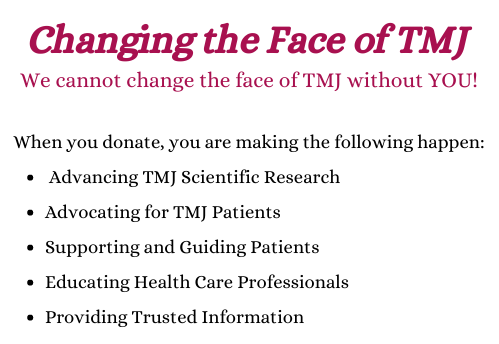
We cannot change the face of TMJ without YOU. Make a tax-deductible contribution today! Your contribution is more than a donation. It is how we will ensure that patients with TMD have a voice — through education, patient support and advocacy.


We cannot do this important work without you! Thank you for your generosity.


About The TMJ Association ... Changing the Face of TMJ


The TMJ Association, Ltd., is a nonprofit, patient advocacy organization whose mission is to improve the quality of health care and lives of everyone affected by Temporomandibular Disorders (TMDs, aka "TMJ"). For 35 years, we have shared reliable information on TMDs with people like you. We invite you to visit our website, www.tmj.org.

 
Facebook  Linkedin  Instagram

The TMJ Association, Ltd., P.O. Box 26770, Milwaukee, WI 53226 

info@tmj.org | www.tmj.org 

The TMJ Association, Ltd., is a nonprofit 501(c)(3) tax-exempt organization.

Copyright © 2025. All Rights Reserved.