|
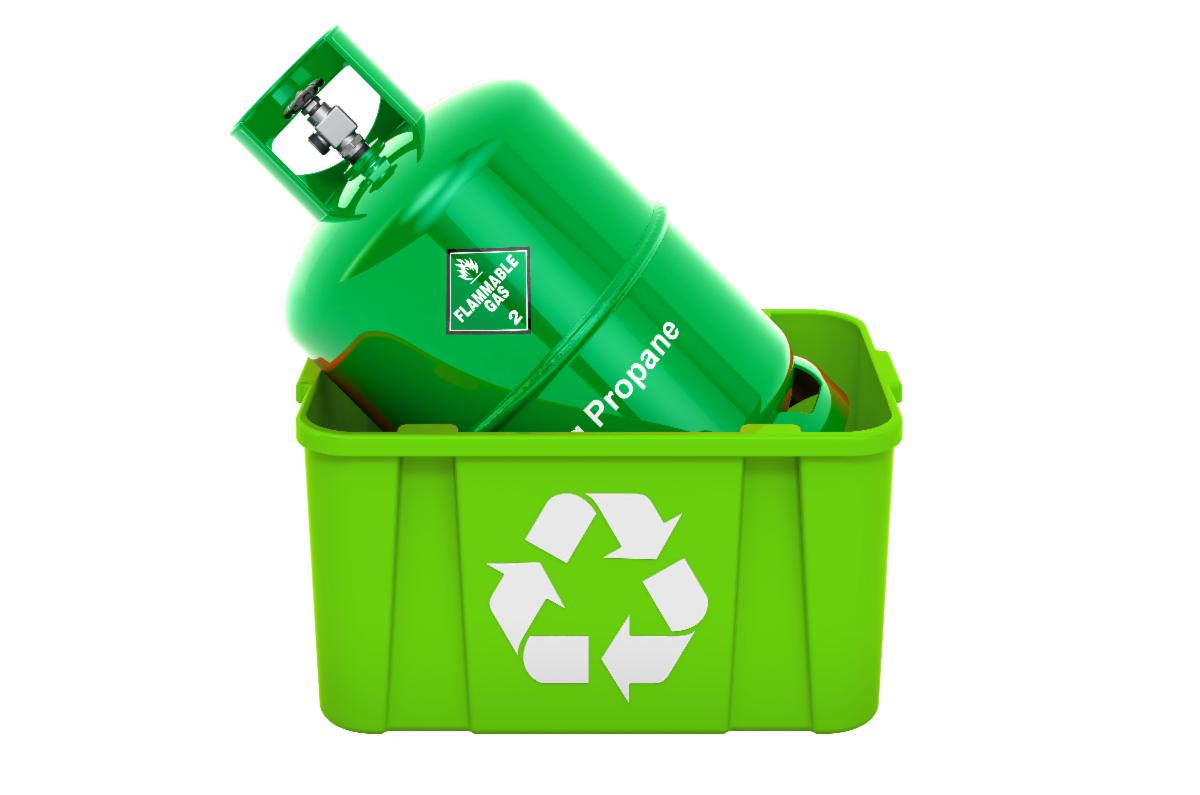
Extended Producer Responsibility (EPR) is a policy that assigns producers and manufacturers responsibility for the end-of-life of products that would be propane cylinders in the case of the propane industry. According to the Sustainable Packaging Coalition, this can include financial and operational responsibility to manage products after the use phase.
Sixteen states have introduced legislation on Extended Producer Responsibility (EPR). At least four states have passed EPR bills, and at least one state specific to propane cylinders. In 2022, Connecticut became one of the first states in the U.S. to regulate fuel cylinders (including propane) in the solid waste stream with an Extended Producer Responsibility (EPR) law. The law was introduced related to the concern with residual fuel cylinders as a fire risk at recyclable and waste management facilities.
The new Connecticut law requires producer responsibility for propane cylinders, including nonrefillable and refillable cylinders between 0.5 and 50 lbs., that are supplied to a consumer for personal, family, or household use.
Under the law, producers will also have to educate consumers about the proper end-of-life management and locations of collection sites. One major propane cylinder manufacturer plans to work with other gas cylinder producers to arrange for the pick-up, transportation, and recycling of cylinders in Connecticut.
The National Propane Gas Association has brought this matter to the attention of the state propane gas associations and will be helping to educate states more about this type of legislation in case it is introduced in their respective state, in our case Texas.
TPGA will be keeping a watchful eye on any legislation introduced like this in Texas during the Texas Legislative Session.
|