|
On 12 October 2024, Ukrainian security forces apprehended an Islamic State (IS) militant at a temporary residence in Kyiv. The suspect, a Central Asian national wanted by Interpol since 2017, reportedly entered Ukraine using a false identity and foreign passport prior to the Russian invasion of Ukraine in February 2022. The arrested individual was previously active in the Middle East, where he facilitated the smuggling of IS militants into Syria. After illegally entering Ukraine, he became involved in assisting other jihadists with legalizing their status within the country. Efforts to extradite him to his country of origin are currently underway.
Exploitation of Ukraine’s Porous Borders by Jihadists
This arrest underscores the broader issue of jihadist foreign fighters exploiting Ukraine’s porous borders amid the ongoing conflict with Russia. Ukraine’s foreign legion, formed after the invasion, has attracted various militants from extremist groups, including members of IS, seeking to gain combat experience and access to Europe. The IS militant detained in Kyiv is part of a larger trend of radical fighters utilizing Ukraine as a transit hub, which presents a significant security risk not only to the region but also to Europe.
In recent years, TRAC has traced several routes used by jihadists, particularly those of Central Asian origin, such as Tajik nationals, who have entered Europe through Ukraine. In 2023, German security forces arrested multiple Central Asians linked to IS for plotting attacks, following their infiltration through Ukraine. This growing trend demonstrates how jihadists are leveraging Ukraine's conflict environment as a stepping stone into Europe.
Role of Tajik Foreign Fighters in Islamic State
Tajik foreign fighters have become a prominent group within IS ranks, particularly valued for their guerrilla warfare skills and operational experience. Many Tajik nationals are drawn into jihadist activities due to economic hardships, unemployment, and a history of religious repression in their homeland. Once recruited, these fighters are often deployed to conflict zones such as Syria, Iraq, and Afghanistan, where they play a vital role in IS operations. Furthermore, their advanced combat skills and networks facilitate the smuggling of other fighters across regions.
Security Threat Posed by Foreign Fighters in Ukraine
The use of Ukraine as a gateway for foreign fighters represents a shift in jihadist strategies, especially as groups like IS seek to exploit ongoing global conflicts to infiltrate Europe. Tajik fighters, in particular, are central to these networks. With the arrest of these individuals in Germany and Austria, it is evident that the movement of Tajik foreign fighters poses a serious threat to European security. Their involvement in the Ukrainian conflict and subsequent attempts to enter Europe raise concerns about the long-term security challenges posed by these militants.
Conclusion: The Threat to European Security
The arrest of the IS militant in Kyiv illustrates how foreign jihadist fighters, particularly from Central Asia, are using Ukraine’s conflict as an opportunity to gain access to Europe. This trend, which includes Tajik fighters playing a key role in these smuggling routes, highlights the need for enhanced security measures across borders, as these experienced and radicalized individuals pose a serious threat to the stability of Europe and beyond.
| | |
TRAC Incident Report: Islamic State Central Africa (ISCA/Wilayat Wasat Afriqiyah) Captured and Executed an Intelligence Officer and Two Christians in Mugona, Bugiri Region, Uganda | |
|
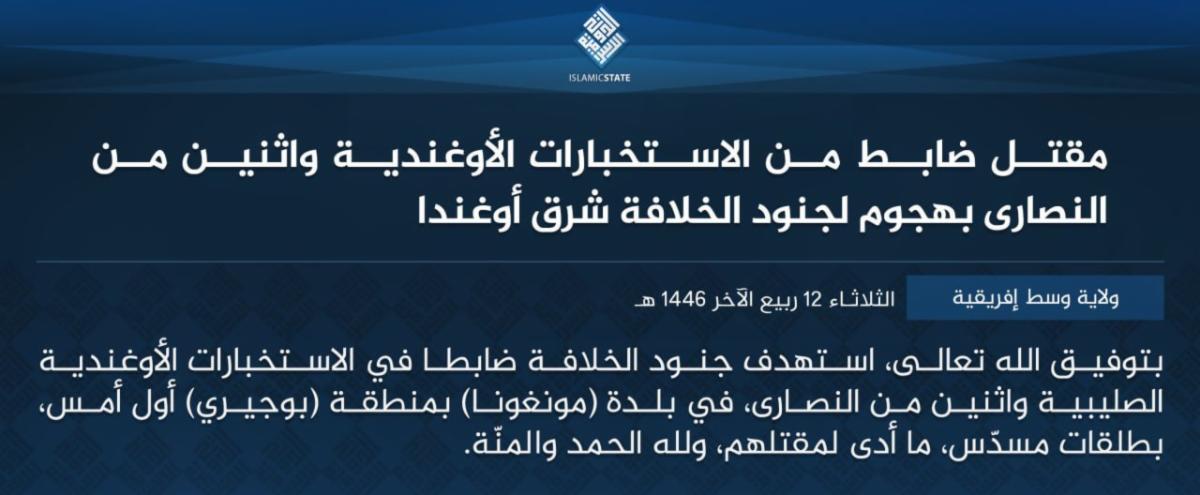
On 13 October 2024, Islamic State Central Africa (ISCA) militants executed an intelligence officer and two Christian civilians in Mugona, Bugiri Region, Uganda. The victims were reportedly shot with a pistol, marking a significant escalation in ISCA’s operational reach within the country. Historically, ISCA’s activities have primarily been concentrated near Uganda's western border with the Democratic Republic of Congo (DRC), where the group maintains a stronghold in the eastern DRC. This attack, however, occurred deep within Ugandan territory, near the Kenyan border in Bugiri, an area that had previously seen little ISCA activity.
Although ISCA attacks in Uganda tend to be sporadic, this incident underscores the group's enduring capacity to strike in previously unaffected areas. The attack demonstrates ISCA's ability to either infiltrate the country or operate undetected within it. Either scenario reflects poorly on the Ugandan security forces' ability to prevent militant incursions. The fact that these militants managed to either travel undetected or embed themselves in the region for a significant time suggests major gaps in Uganda's internal security mechanisms.
This specific attack is alarming not only because of the location but also because it may indicate a shift in ISCA’s strategy, expanding further into Uganda and potentially threatening neighboring Kenya. The Bugiri district lies near the Kenyan border, and while ISCA activity has not yet been reported in Kenya, the group's reach into Bugiri could indicate that militants are testing Uganda’s defenses in preparation for further regional expansion.
The Ugandan government's inability to prevent or detect this incursion could create broader regional implications, as it points to security vulnerabilities that may be exploited by ISCA or other militant groups in the future. Moreover, while this may have been carried out by a rogue ISCA cell, the failure to address these security lapses in Uganda could destabilize the broader East African region, increasing the likelihood of attacks in neighboring Kenya.
The timing of this attack—following a relatively quiet period of ISCA activity in Uganda—serves as a reminder of the group's continued influence and the unpredictability of its attacks, further highlighting the need for increased vigilance from regional security forces.
| |
TRAC Incident Report: Tehreek-e-Taliban Pakistan (TTP) Suicide Bombers Complex Armed Assault using Sophisticated Weapons & Rocket Launchers on the Police Headquarters, in the Police Lines of Bannu, in Bannu District, Khyber Pakhtunkhwa, Pakistan | |
|
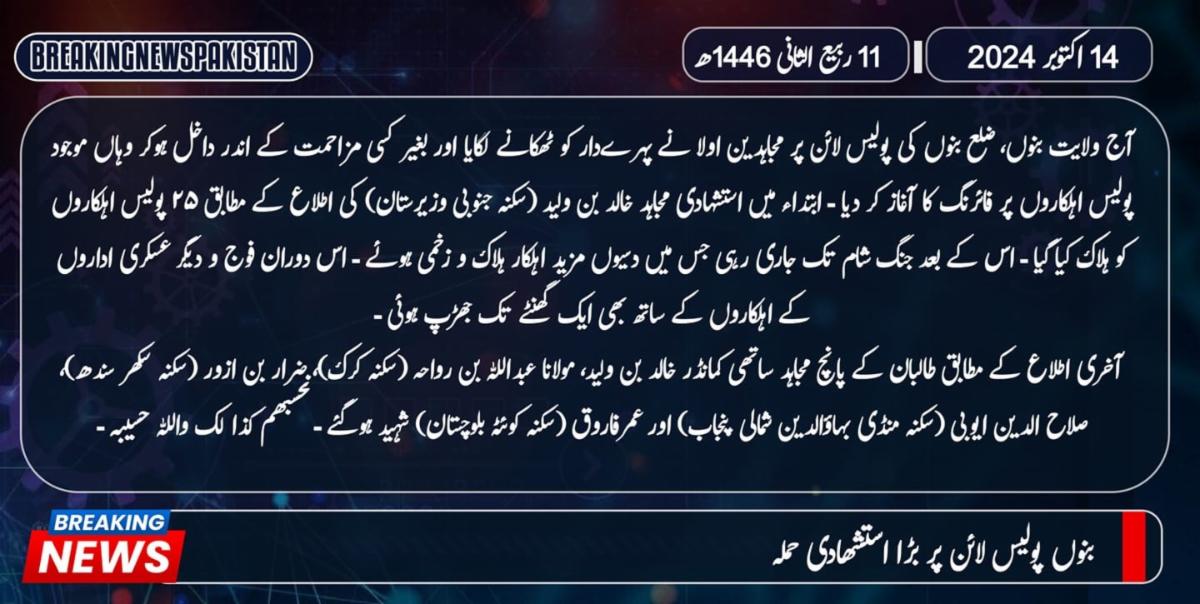
On 14 October 2024, Tehreek-e-Taliban Pakistan (TTP) militants launched a coordinated assault on the Iqbal Shaheed Police Lines using sophisticated weapons, rocket launchers, and hand grenades, killing four police personnel. The attack, which resulted in a six-hour standoff, ended with all five militants being killed by security forces. Notably, the militants were disguised as women in traditional burqas and wore suicide vests underneath, a tactic TTP has used before to mask the identity of attackers and gain entry to high-security zones.
The attackers reached the police lines via a rickshaw and motorcycle, opening fire at the main gate upon arrival. They were heavily armed with advanced weaponry, indicating a well-coordinated and planned operation. The attack occurred shortly after the funeral prayers of Head Constable Shaista Khan, who had been killed in a previous gun attack in Bakkakhel, further emphasizing the targeted nature of the assault.
Khyber Pakhtunkhwa, particularly the region where this attack occurred, has seen a significant rise in militant activity over the past two years, primarily from TTP and affiliates of Islamic State Khurasan Province (ISK). The increasing frequency of attacks, including ambushes like the one in Tehra last month where several Pakistani soldiers were killed, highlights the resurgence of these militant groups in the region. The TTP's use of burqas as disguises and their reliance on sophisticated weapons, such as rocket launchers and suicide vests, underscores their evolving strategies to maximize casualties and challenge the state’s security apparatus.
This attack is emblematic of the broader destabilization that Islamist extremist groups are causing across Khyber Pakhtunkhwa. The infiltration of these militants into high-security zones and the increasing boldness of their attacks suggest a well-organized network and a failure of the state to suppress the resurgence of militancy in the region. TRAC has recorded similar incidents where attackers disguise themselves as female suicide bombers to evade detection, indicating that TTP and ISK are adapting their tactics to remain effective despite counter-terrorism efforts.
The attack also illustrates the broader issue of TTP's resurgence, with the group targeting not only military personnel but also police forces and infrastructure, thus broadening their operational scope. As Pakistan continues to face internal security threats, the government's ability to counter these increasingly complex attacks will be critical in stabilizing the region.
| |
TRAC Incident Report: Jama’at Nusrat al-Islam wa al-Muslimin (JNIM) Releases a Photoset, Featuring a Propaganda Tour in the Border Villages with Niger, Burkina Faso | |
|
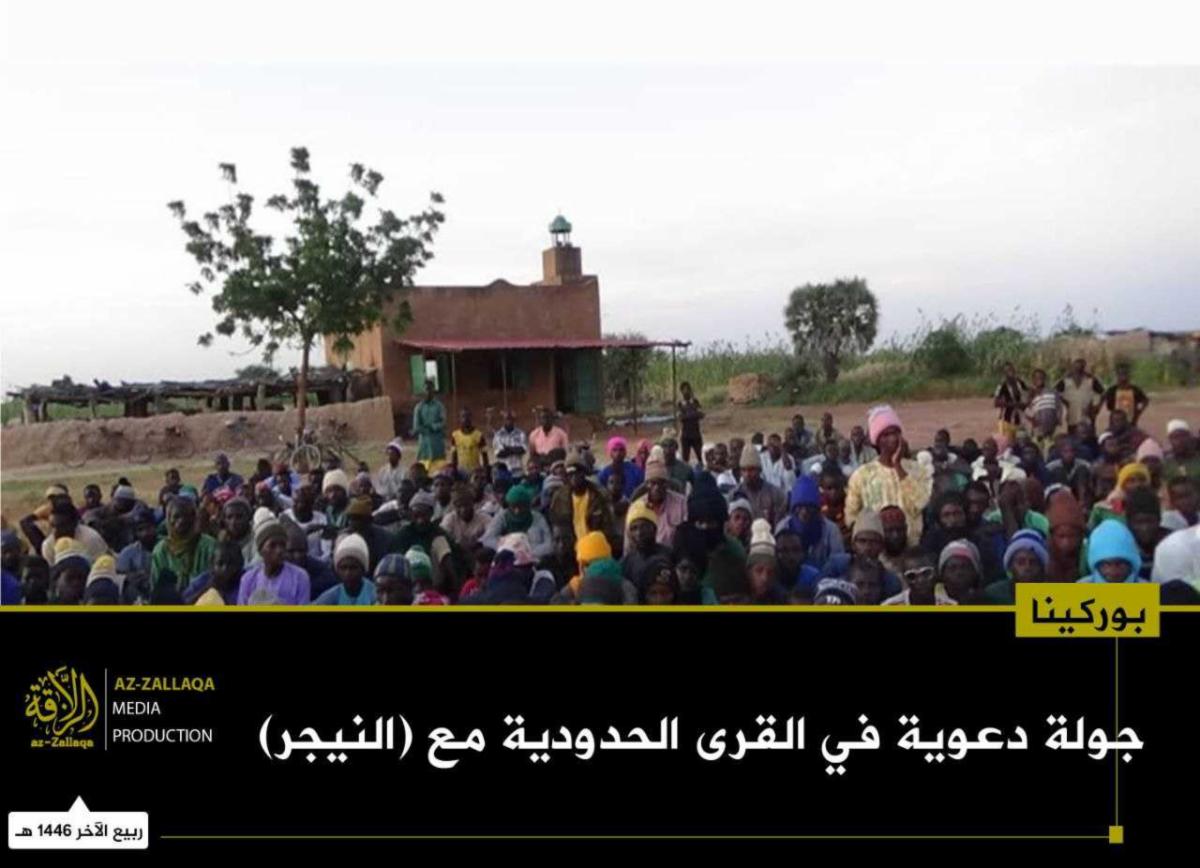
On 18 October 2024, Jama’at Nusrat al-Islam wa al-Muslimin (JNIM) published a propaganda photoset on social media showcasing several of its leaders engaging in dawa (preaching) activities. The photos depicted these leaders spreading al-Qaeda’s ideology to representatives of local communities across several villages near the Niger border. While the exact locations of the preaching tour were not disclosed, TRAC's analysis strongly suggests that the initiative took place in Burkinabe border areas adjacent to Niger. This region has seen frequent cross-border operations by JNIM, especially from the Kantchari area in Tapoa province, a known JNIM stronghold.
JNIM’s decision to engage in dawa in these border regions is part of its broader strategy to spread radical Islamist ideologies, particularly in rural, underserved areas where state presence is minimal. The group seeks to indoctrinate local populations and secure a base of support by offering services and food, likely enticing or coercing people to attend these meetings. The overarching goal is not just to win hearts and minds but to recruit new fighters and collaborators while advancing the group’s objective of expanding their interpretation of Sharia law and consolidating control over key territories.
Furthermore, this incident mirrors a similar outreach initiative that JNIM carried out on 04 October 2024 in Mali’s Kayes region, showcasing a sustained effort by the group to consolidate its influence across the broader Sahel region. These campaigns, which blur the lines between ideological indoctrination and coercion, are crucial for maintaining the group’s operational strength and territorial influence as they continue to challenge local governments and international counterterrorism efforts.
JNIM's frequent presence in border areas is indicative of their strategy to operate in regions where state governance is weak, leveraging local grievances and providing services as a way to ingratiate themselves with communities and expand their recruitment base. Such activities also serve as propaganda tools, reinforcing their control and expanding their influence across the Sahel.
| |
(Video/ Right Wing Extremism): Patriot Front (PF) Leader Thomas Rousseau Addressing Organizational Expansion in United States | |
|
On 16 October 2024, Patriot Front (PF) leader Thomas Rousseau released a carefully staged propaganda video that presented him in a white suit, symbolizing an attempt to cultivate a polished and professional image for the group. The video focuses on the status of PF's expansion efforts across the United States, with Rousseau initially posing the rhetorical question, “Is the organization in my area?” This question serves as a hook, enticing viewers to consider their connection to PF and its presence in their community.
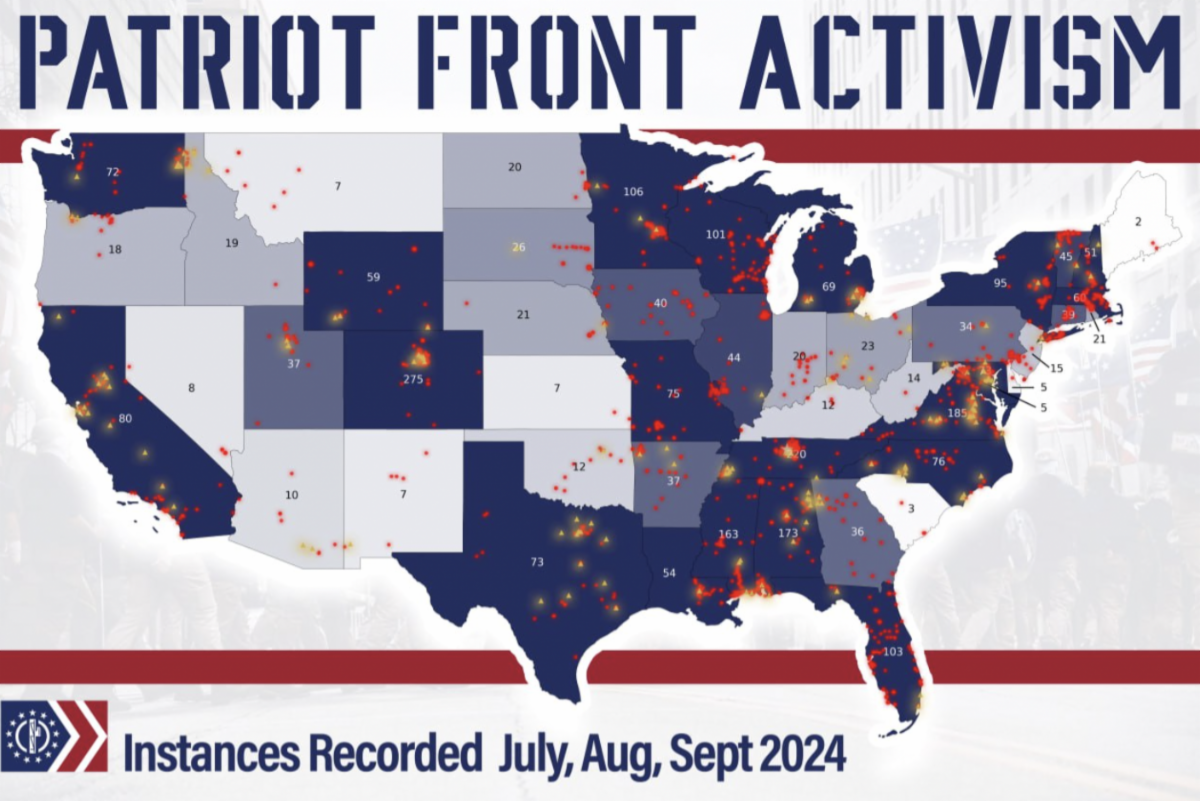
Using visual aids, Rousseau displays a blue map of the United States, sarcastically implying that if one lives anywhere in the country, PF is likely operational there. This is followed by a second map covered with red dots, marking Patriot Front's operational activities, thereby conveying the group's claim of widespread influence across the nation. Though analysts have documented PF's community projects in regions like Florida and North Carolina, particularly focusing on hurricane relief, Rousseau makes it clear that PF’s ambitions extend far beyond these areas, targeting the Midwest and West Coast as part of a concerted effort to grow their footprint throughout 2024/2025.
Rousseau introduces the concept of "productive works" in the video, which he frames as essential community service projects intended to establish a future for their "people." This language mirrors that of far-right groups that aim to combine local activism with their supremacist ideology. Despite PF’s local operations not being immediately visible in certain regions, Rousseau assures his viewers that PF members are ubiquitous and capable of operating globally, citing international examples of PF members active in Scotland, Rome, and Boer communities in South Africa. This reference to international expansion is part of a broader narrative that seeks to position Patriot Front not just as a domestic U.S. entity, but as a global movement of white nationalism.
The video concludes with a motivational call to action, encouraging members to "be the trailblazers" and “the leader you want to see,” tapping into a common far-right theme of individual initiative. Rousseau emphasizes that their ideology is not rare and that individuals with "patriotic sentiment" are all around them, reinforcing the idea that supporters are part of a larger, covert network. Analysts note that this rhetoric of collaboration and proactive engagement echoes similar calls made by Rob Rundo, leader of the Rise Above Movement (RAM), particularly regarding the formation of "active clubs." These clubs aim to recruit and physically train new members for involvement in extremist activities. By adopting this appeal, Rousseau is attempting to further expand Patriot Front's base by attracting individuals eager to engage in community-level activism and, potentially, violent extremism.
This video showcases Patriot Front's intent to amplify its message and presence while encouraging a decentralized, grassroots approach that enables the group to adapt and thrive in diverse regions and even internationally. Through this messaging, Rousseau seeks to galvanize support and inspire action, further embedding PF’s extremist ideology into the fabric of communities across the U.S. and beyond.
| |
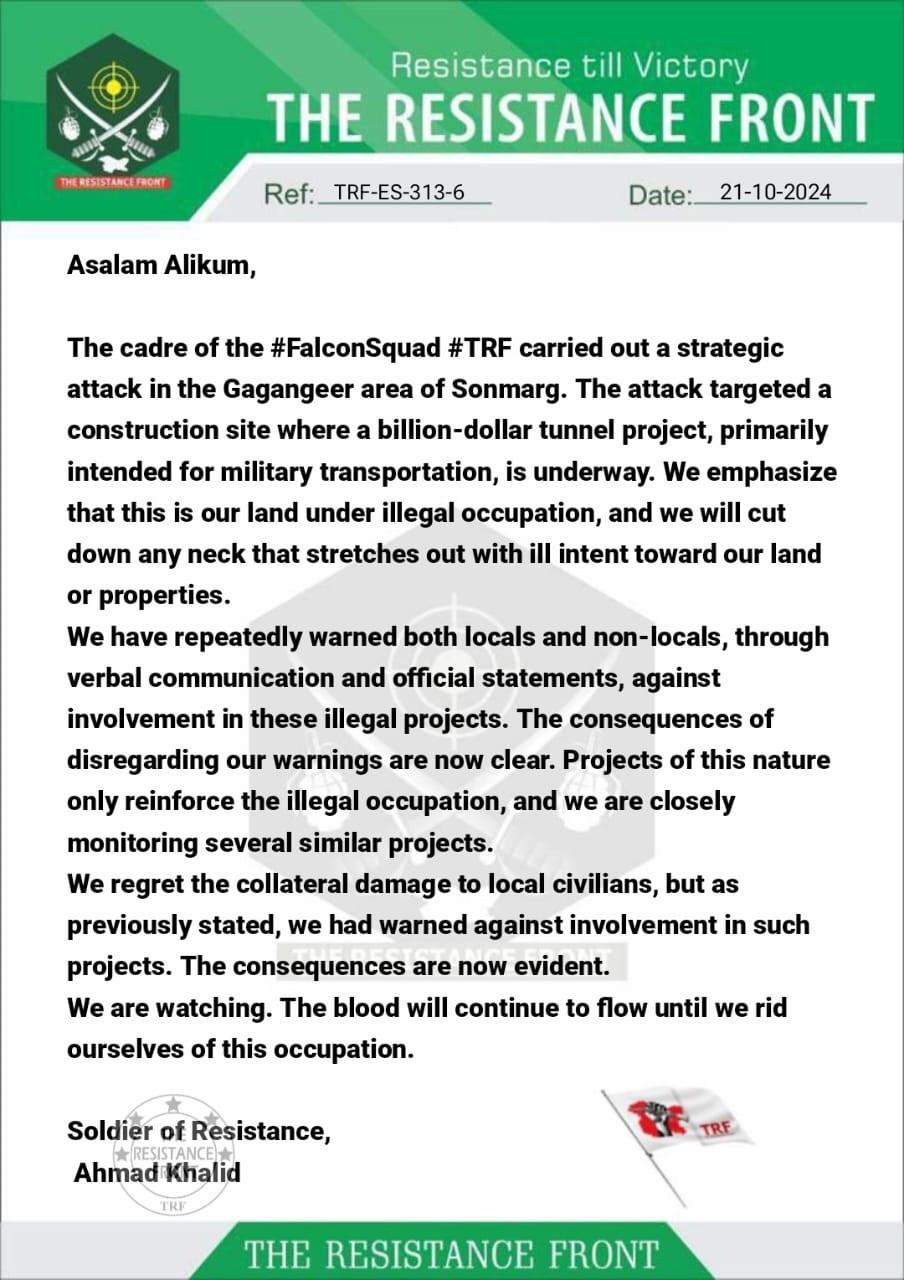
TRAC Incident Report: The Resistance Front (TRF) Targets Construction Site of APCO Infratech’s Z-Morh Tunnel Project in Gagangir, Sonamarg, Ganderbal District, Jammu & Kashmir, India & Pakistan | |
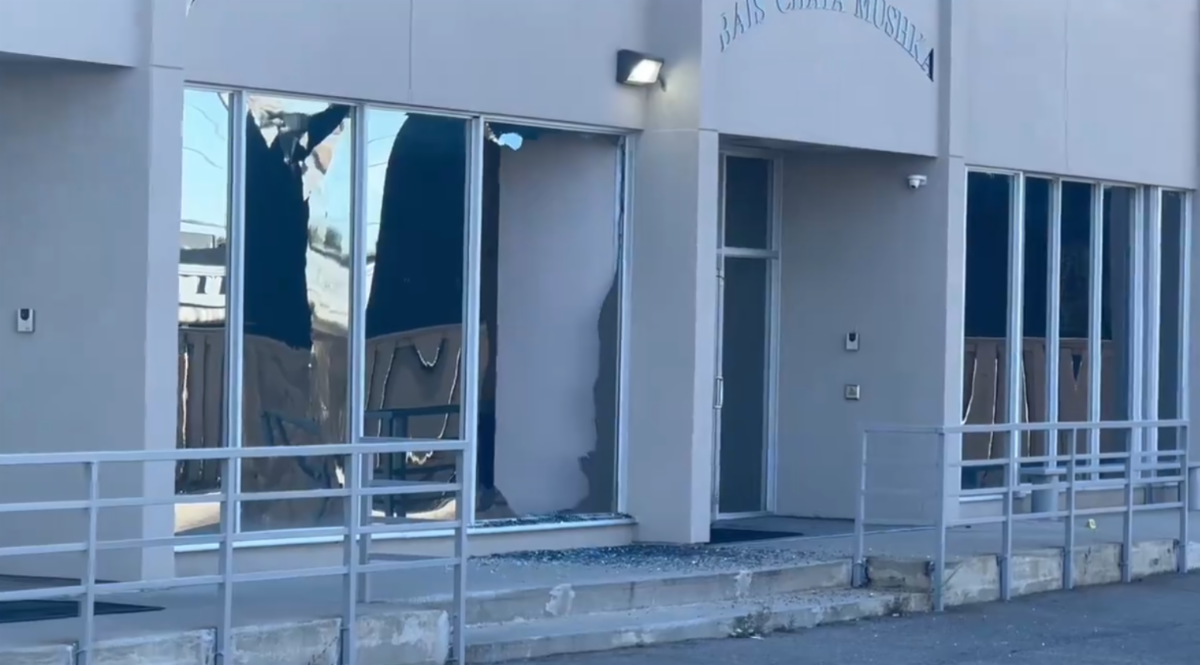
TRAC Incident Report: Gunmen Target the Jewish Bais Chaya Mushka Girls School During Yom Kippur Celebrations, Toronto, Canada
| |
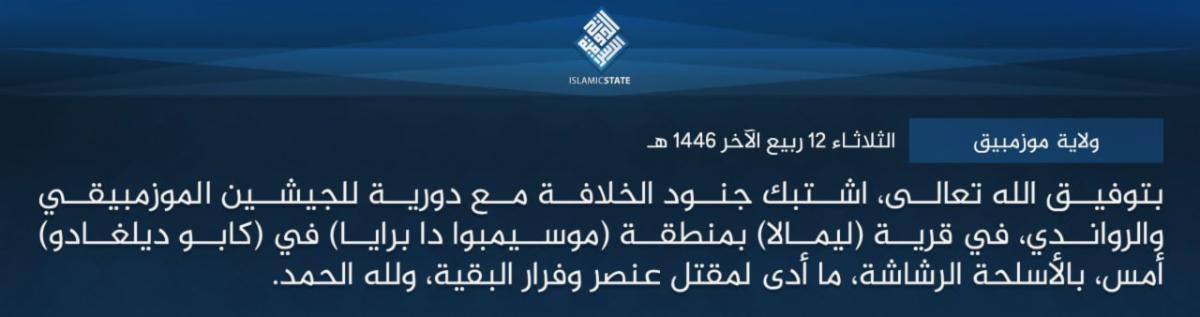
TRAC Incident Report: Islamic State Mozambique (IS-M/Shabaab Cult) Militants Clashed with Mozambican and Rwandan Army Forces in Limala, Mocímboa da Praia, Cabo Delgado, Mozambique | | | | |