|
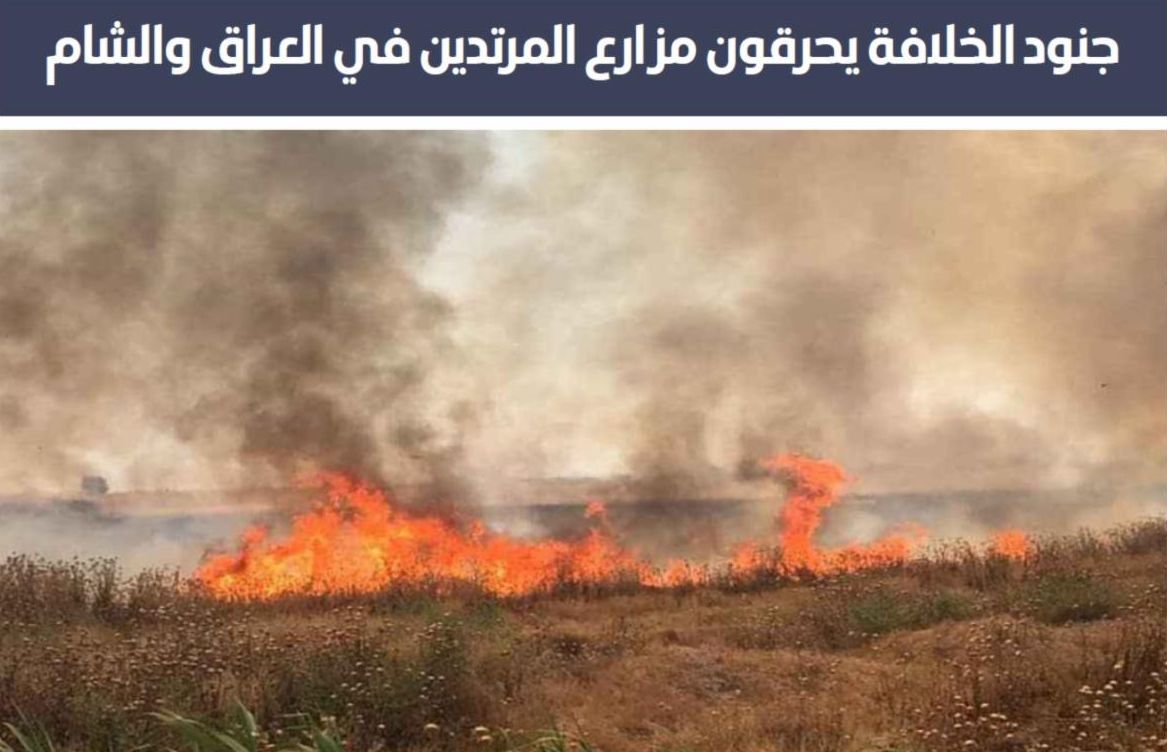
Almost exactly four years ago today, Islamic State’s weekly publication, al-Naba, featured an article that not only highlighted claims of the arson attacks taking place around Iraq at the time, but also promised what they coined as a 'Hot Summer,' which meant the burning of the farmlands of non-supporters (Shi'a) in Syria and Iraq. Since that time there have been several arson attacks throughout the Iraqi countryside.
On 18 May 2023, suspected Islamic State militants set fire to several fields of wheat crops belonging to Shi'a farmers in Tuz Khurmatu, Salahuddin. In just four short days later, six more arson attacks on wheat fields and farms have taken place the regions in and around Kirkuk, Diyala, Salahuddin, and Sulaymaniyah, seemingly kicking off another 'Hot Summer' campaign and already outpacing the last three summers, even if not officially announced by Islamic State Central Command.
Though Islamic State has not officially laid claim to these arson attacks, each has the hallmarks of their 'hot summer' efforts from previous years. These fires largely target Shi’a farmers, a favored enemy of the Islamic State. Additionally, while it may seem counterintuitive, another key indicator is the absence of IS militants around the fires.
| 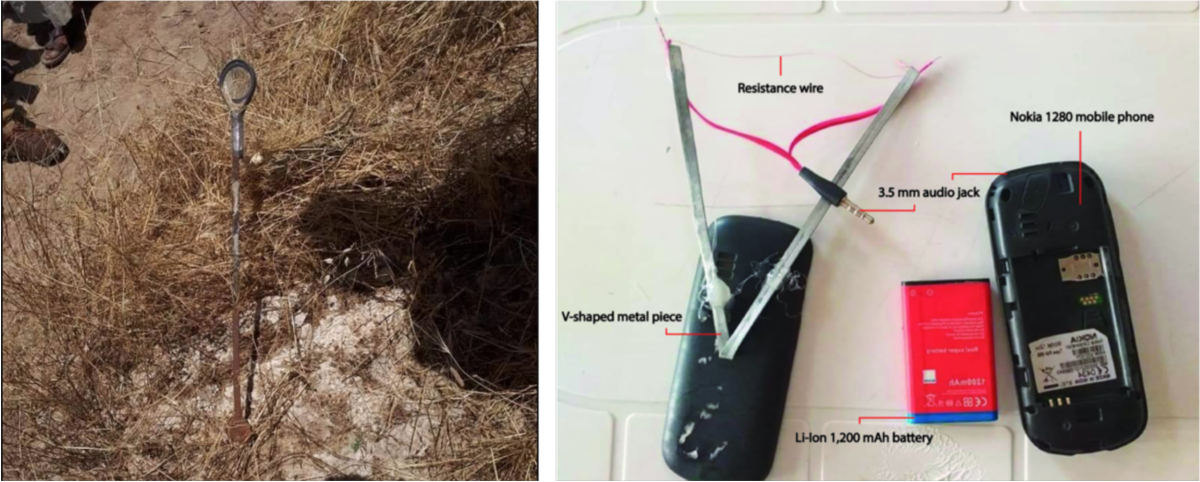 | |
(L) Magnifying Glass and (R) Improvised Incendiary Device used by IS to set fires
in “Hot Summer” arson campaigns in 2019
| |
The methods used for starting these fires are designed to keep preventative measures wholly ineffective, so it is not surprising IS militants are not found near the fires. One such method is the use of magnifying glasses, while another tactic is to use an Improvised Incendiary Device (IED), such as a cell phone that has been rigged to ignite when called.
In previous summers, Islamic State had demanded extortion money from the wealthier farmer class in exchange for not razing their crops. Iraq's food insecurity coupled with the extreme drought conditions makes this year's "Hot Summer" especially precarious for Iraq.
| | |
|
TRAC Insight:
The Impact of Moroccan Drone Warfare Against
Polisario Front in Western Sahara
| |
|
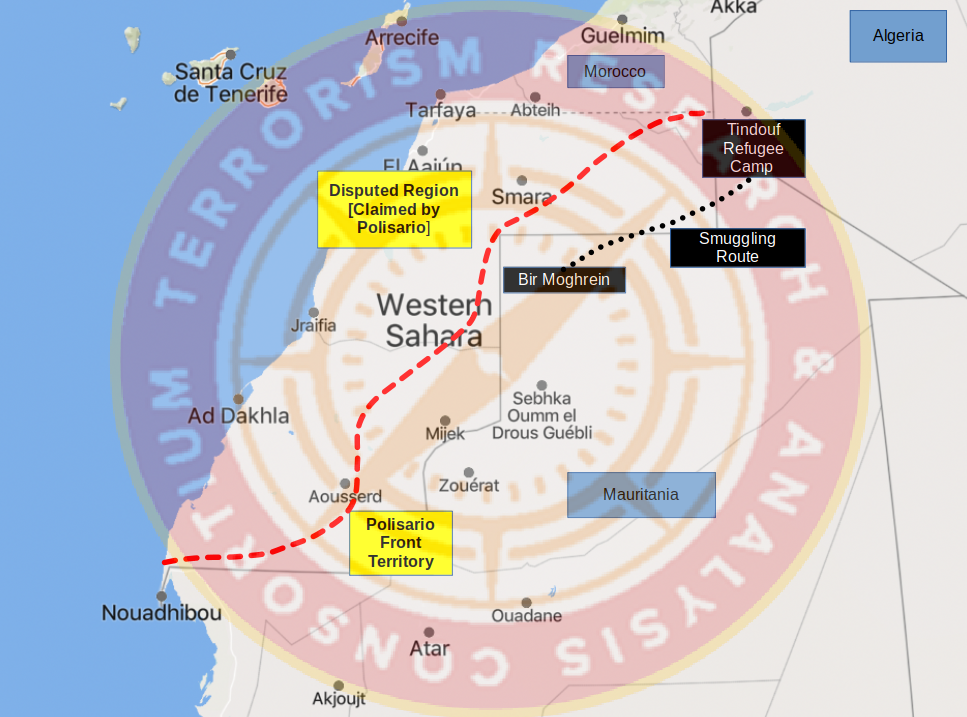
Morrocco carries out a deadly and frequent drone warfare campaign against Polisario Front fighters in Western Sahara. This campaign has proven deadly and highly dangerous to the local Sahrawi people. The Polisario front is made up of ethnic Sahrawis and as such, the Moroccan campaign against the Polisario Front is an excuse to depopulate Polisario-held areas in the area.
The Moroccan drone program not only targets cars and homes owned by the Sahrawi people, but also their camel herds, which are the most valuable commodity in Western Sahara and the economy relies completely upon their trade.
Although the conflict originated 50 years ago, today, the conflict is dominated by unarmed civil campaigns of the Polisario Front and their self-proclaimed Sahrawi Arab Democratic Republic state to gain fully recognized independence for Western Sahara. Western Sahara is divided into two areas: the resource-rich coastal area and the arid interior on the Algerian and Mauritanian borders. The latter is under Polisario control, while the former, which includes the main cities, is disputed territory and under no specific control. Polisario’s ultimate goal is to have full control of Western Sahara under the banner of the Sahrawi Arab Democratic Republic.
The indiscriminate drone strikes by Morocco have caused an insurmountable refugee exodus of Sahrawi people into Tindouf, Algeria. The camp is divided into five sections and houses an estimated 175,000 refugees, all of whom are living in dire conditions. Additionally, aid from abroad has been limited to protect political interests in Morocco and Algeria. However, it should be noted that the refugee crisis is more than just a humanitarian issue, as it well known that the grim outlook offered by refugee camps often makes them fertile ground for recruitment by terrorist groups, in this case specifically by jihadist extremist groups.
| |
|
TRAC Incident Report:
People’s Anti-Fascist Front (PAFF) Releases Video Revealing its Capability and Statements Threatening the G20 Meeting in Srinagar, Jammu and Kashmir
| |
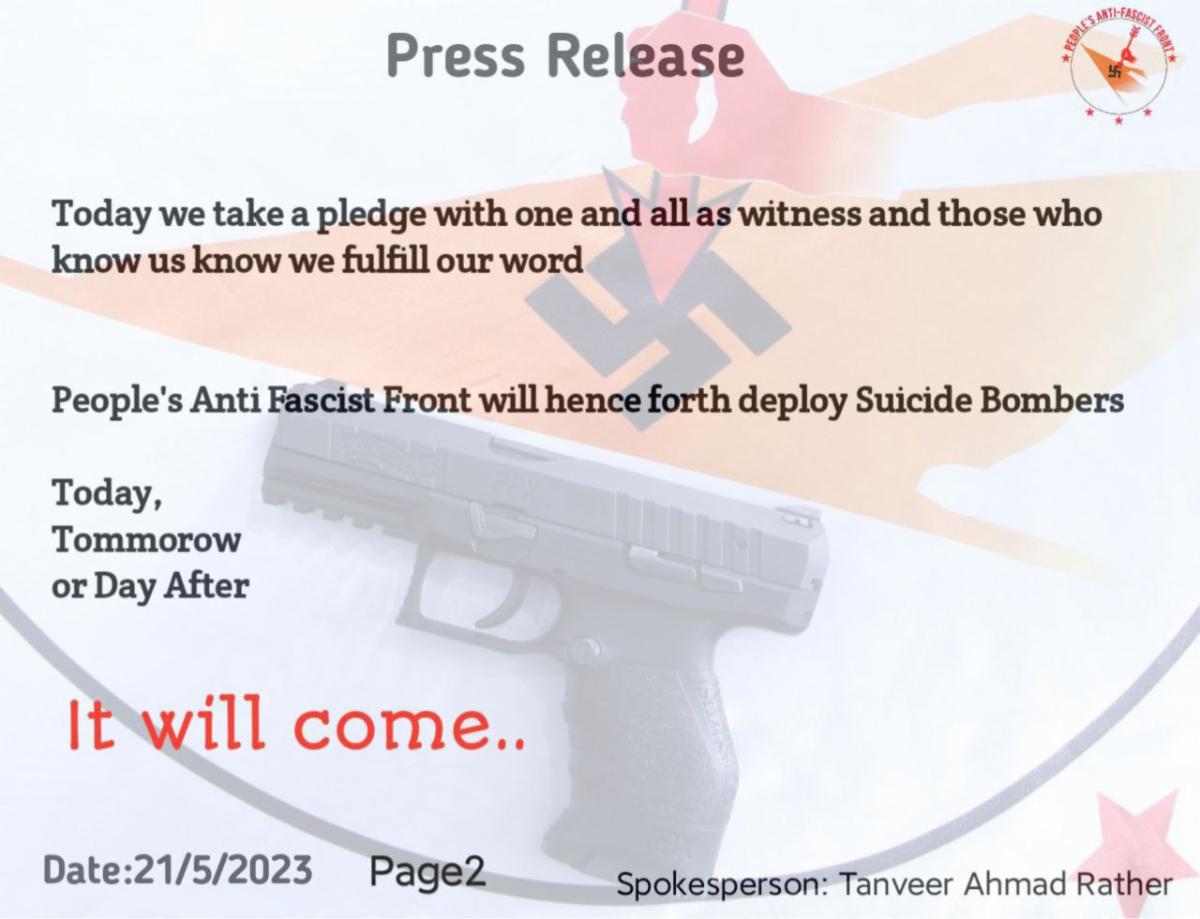
Second page of the PAFF statement with a clear threat of a suicide bomb. | |
|
On 21 May 2023, People’s Anti-Fascist Front (PAFF) released posters threatening suicide bombings during G20 meetings in Jammu and Kashmir, trespassing the newly added extra security.
In the video, PAFF revealed their capability of using "9 Para Gun Battle" and 'thanked' retired, low ranking Indian Army Officers who inadvertently provided support through their social media activity. Additionally, TRAC contends that the weapons seen in the video, which appear to be Israeli, were looted from the Indian army.
Even as the G20 meeting is nearing its end at the time of this writing, it must be noted that PAFF continued its attacks targeting the security of G20 meetings. The G20 meeting addresses tourism and cooperation over tourism; the expected list of participants include Ministers from India and other high-level officials related to the area of tourism.
| |
|
TRAC Incident Report:
President Petro Ends Ceasefire with Central General Staff (EMC) Dissidents of Revolutionary Armed Forces of Colombia (FARC), Bogotá, Colombia
| |
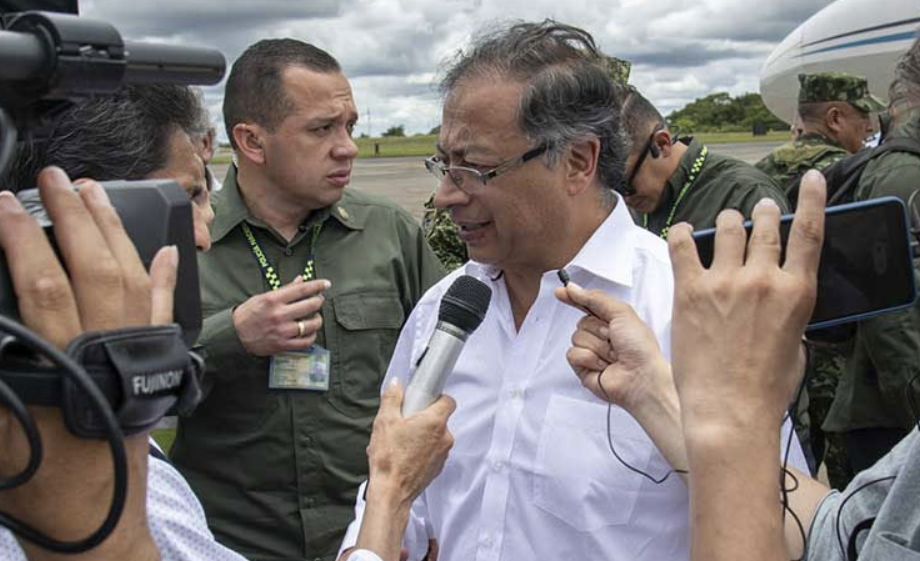
President Petro speaking with reporters regarding the end of the ceasefire. | |
|
In March 2022, four minors belonging to the indigenous community of Murui, which lies on the border between Caquetá and Amazonas, were forcibly recruited by the Central General Staff (EMC). After having escaped, on 17 May 2023, the Central General Staff (EMC) Dissidents of Revolutionary Armed Forces of Colombia (FARC) caught up with the minors, then shot and killed them.
In February 2023, the Colombian government signed a bilateral ceasefire agreement with EMC, following the 01 January 2023 announcement by President Petro of a ceasefire agreed upon with the five major paramilitary groups in the country, to include the Central General Staff (EMC) Dissidents of the Revolutionary Armed Forces of Colombia (FARC), led by Nestor Gregorio Vera Fernández, alias ‘Iván Mordisco.’
However, in response to the 17 May massacre of the four youths, President Petro unilaterally suspended the ceasefire with the said paramilitary group. The suspension allows the Colombian Army to resume military operations in the area where EMC operates. EMC responded to Petro’s decision by warning that the ceasefire suspension will lead to further deaths and violence.
| |
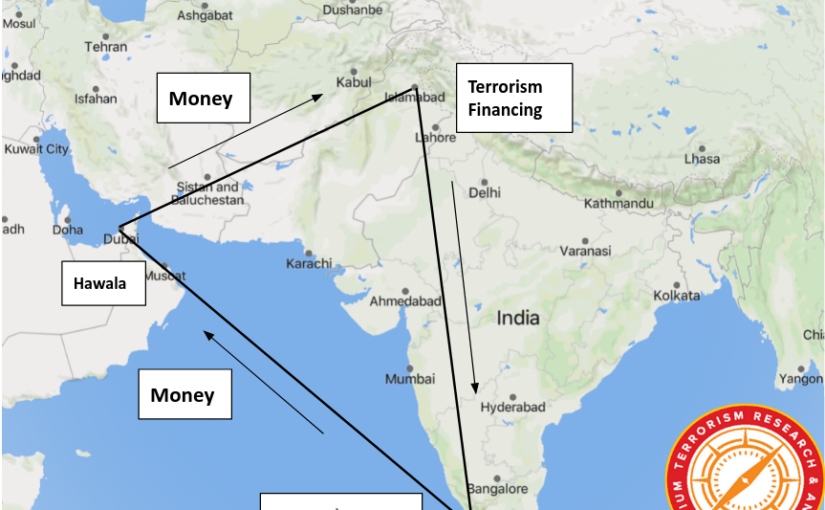
TRAC Incident Report: Narcotics Control Bureau (NCB) Reveals Involvement of Laskhar-e-Taiba (LeT) and Dawood Ibrahim [D-Company] in 120 Billion INR Drug Smuggling Case in Kochi, Kerala, India | |
|
Instructional Manual:
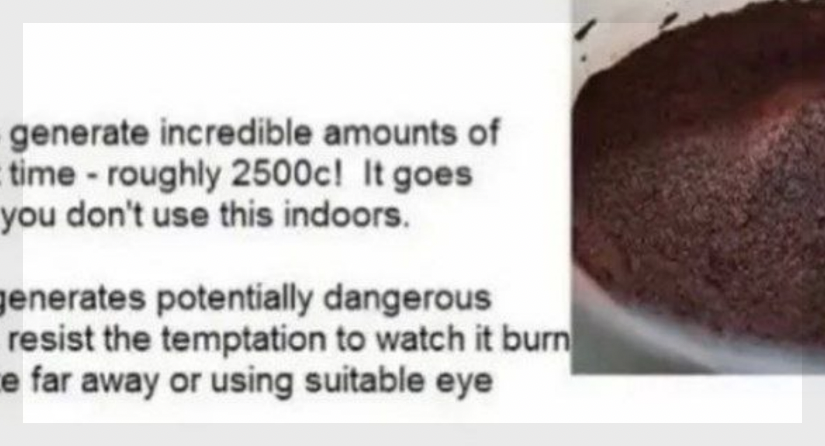
Eco-Fascists Circulate Instructional Guide
on 'DIY Thermite'
| |
|
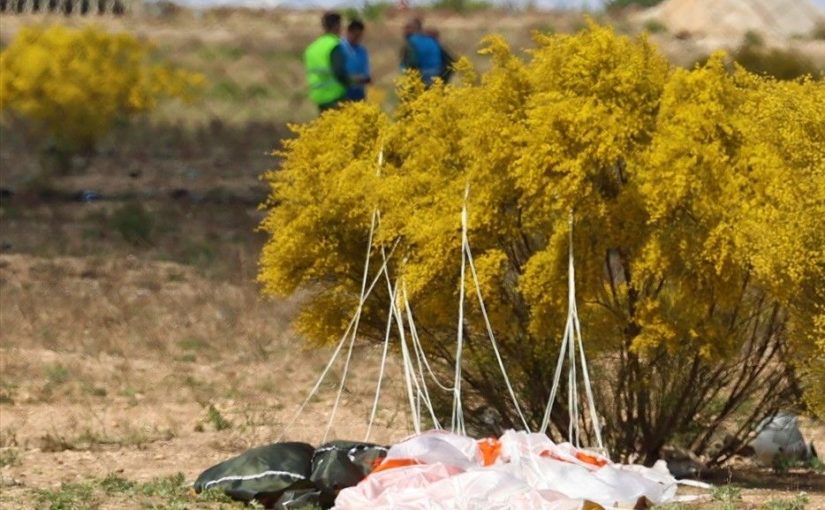
Photo & Video Report: Spanish F-18 Hornet
Jet Fighter Suspiciously Crashes During Training Flight, Zaragoza,
Aragon, Spain
| | | | |