|
Coordinated JNIM Assaults Shake Timbuktu
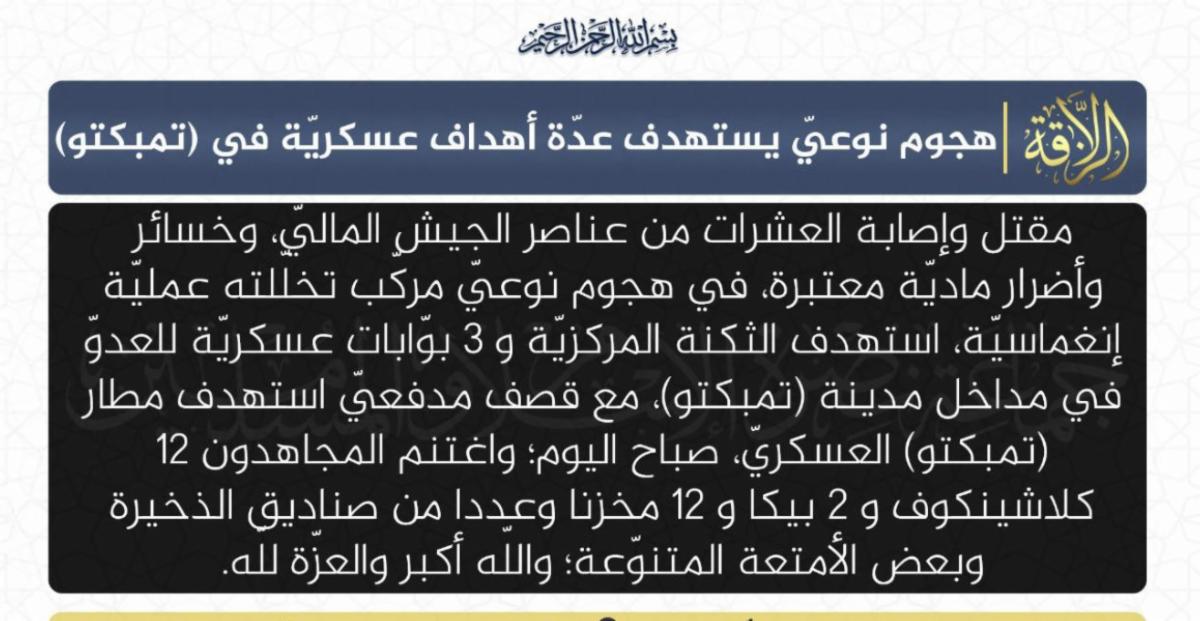
On the morning of 02 June 2025, around 10 a.m. local time, Jama’at Nusrat al-Islam wa al-Muslimin (JNIM) militants launched a highly coordinated suicide attack on a military base in the centre of Timbuktu City. The operation began with the detonation of a Vehicle-Borne Improvised Explosive Device (VBIED) at the base entrance, intended to breach defences. Malian authorities reported that the attack was repelled, resulting in the deaths of 13 jihadists and the capture of vehicles and weapons. However, further reports indicated that a sustained gunfight at both the military camp and the adjacent military airport followed the explosion.
Simultaneous Assaults in the Wider Region
Subsequent claims by JNIM confirmed the intensity of the operation. The group claimed responsibility not only for the VBIED attack at the military base but also for a parallel assault on the Timbuktu military airport, where Turkish-made TB2 drones are reportedly stationed. This coordinated multi-site strike suggests that at least two JNIM cells operated in unison, aiming to overwhelm Malian forces and target key defence infrastructure in the city.
In an apparent effort to stretch Malian security resources and maximise confusion, JNIM also mounted a series of simultaneous attacks outside Timbuktu. These included an armed assault on a military outpost in Ber, near Timbuktu, and the capture of another military post in northern Timbuktu. Satellite images operations likely served to create diversions, weaken coordinated responses, and reinforce JNIM's operational reach.
Casualties, Aftermath, and Strategic Implications
Updated figures from the Malian military raised the number of neutralised militants to 14 and confirmed the arrest of 31 suspected jihadists. Authorities also instituted and extended a curfew in Timbuktu to stabilise the situation. JNIM, however, claimed far greater casualties among security forces and released a second detailed statement featuring photos of their fighters bombarding the Timbuktu military airport with mortars. These releases aim not only to assert operational success but also to boost jihadist morale and recruitment.
The 02 June attacks demonstrate a renewed level of coordination, sophistication, and ambition by JNIM. By targeting multiple high-value locations within and around Timbuktu simultaneously, they showcased their strategic intent to undermine state control, degrade military capabilities, particularly drone operations, and spread psychological fear. In TRAC’s assessment, this is part of a larger campaign aimed at consolidating territorial influence in northern Mali while projecting strength across the Sahel.
| | | TRAC Incident Report: Al-Shabaab Militants Shoot Down an AUSSOM Helicopter and Capture the Town of Xawaadley (Hawadley), Middle Shabelle, Somalia | | |
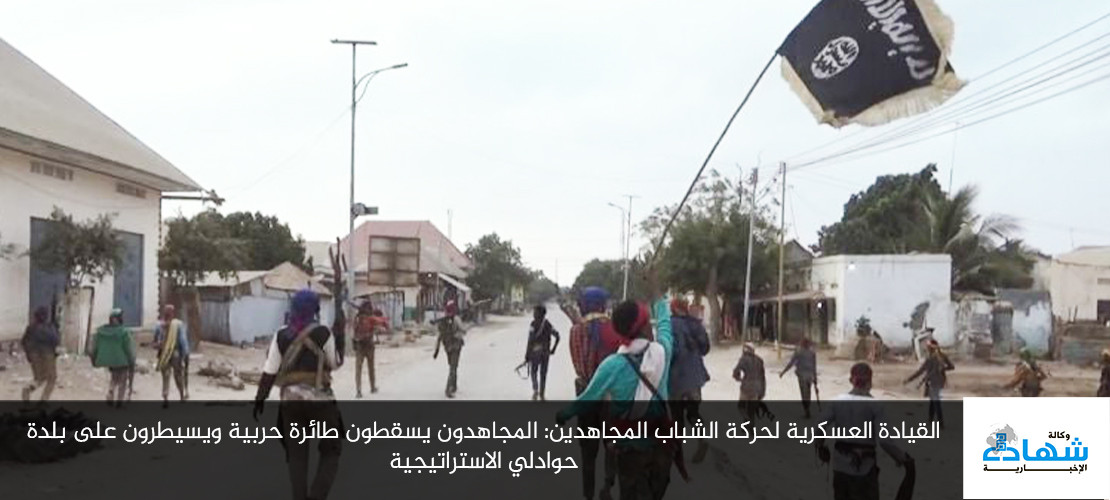
On 02 June 2025, al-Shabaab militants launched a coordinated armed assault on the village of Xawaadley (also spelt Hawadley) in Middle Shabelle, successfully seizing control of the area. In a related development, the same day, the group shot down a Uganda-registered helicopter operating under the African Union Support and Stabilisation Mission in Somalia (AUSSOM). The aircraft was allegedly engaged in the emergency evacuation of retreating AU peacekeepers from Xawaadley following the militant incursion.
This marks al-Shabaab's most significant activity in Middle Shabelle since 13 May 2025, and represents a critical escalation in their operational tempo. Xawaadley’s geographical location, roughly 40 kilometres northeast of Mogadishu, adds to the significance of this assault. The town is strategically positioned near a key bridge linking the Lower and Middle Shabelle regions with the Somali capital and central Somalia. Control of this area enables al-Shabaab to facilitate the movement of logistics, arms, explosives, and personnel between their strongholds in southern and central Somalia.
The ability to target and down a military helicopter further signals a concerning increase in al-Shabaab’s anti-air capabilities. While Somali authorities claimed the helicopter crash was due to mechanical failure and rising floodwaters necessitated the evacuation, the operational success of the militant takeover contradicts these narratives. TRAC is certain that the flooding had little impact on the group, which was still able to launch a high-impact offensive and score a propaganda victory.
The incident also comes during a critical phase of the African Union’s newly restructured mission, AUSSOM, which replaced the older AMISOM framework. AUSSOM is tasked with supporting Somali government forces in combating the persistent al-Shabaab threat. The downing of one of its aircraft and the loss of a strategically vital town highlight the ongoing challenges to regional stabilisation and underscore the group’s enduring ability to strike near the capital, disrupting both military operations and civilian infrastructure.
| | TRAC Incident Report: Two Suspected Islamic State Central Africa (ISCA/Wilayat Wasat Afriqiyah) Militants (One Potential Female Suicide Bomber) Killed in Blast Near the Munyonyo Martyrs Shrine, in Munyonyo, Kampala, Uganda | | |
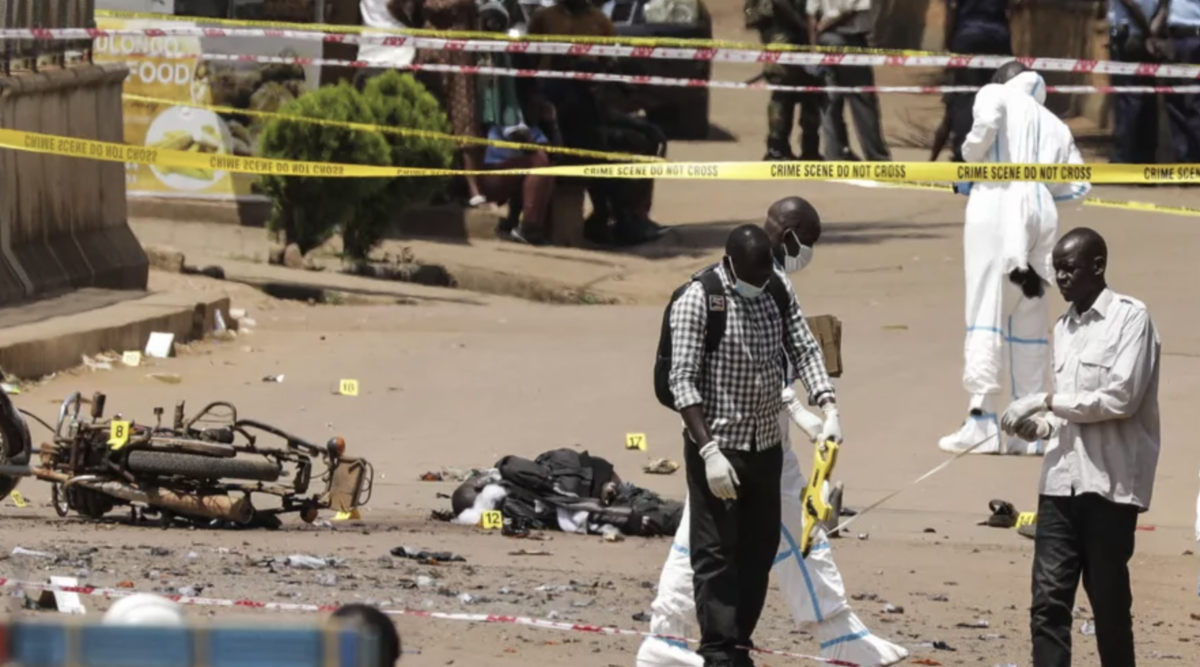
On 3 June 2025, Ugandan security forces successfully intercepted two suspected militants affiliated with Islamic State Central Africa Province (ISCA) just 600 meters from the Munyonyo Martyrs Shrine in Kampala. During the interception, the female militant detonated the explosive device she was carrying, believed to be either a suicide vest or a planted IED, killing herself and the motorcycle driver accompanying her. The operation prevented what could have been a devastating attack targeting thousands of Christian pilgrims and high-profile attendees, including Ugandan President Yoweri Museveni, gathered at the site for an annual national holiday.
The target of the attempted bombing was highly symbolic: the Martyrs Day commemorations, honouring Ugandan Christian martyrs executed between 1885 and 1887. The event is not only a significant religious occasion in Uganda but also a moment of national unity, drawing massive crowds from across the country and neighbouring states.
The bomber was later identified as Aisha Katshabe, also known by her aliases Sumaya Byaruhanga and Kabonesa. In her early twenties, Katshabe reportedly came from a family with deep ties to extremist networks. Her father, Abudu Shakur, died in a 2021 Islamic State-linked suicide bombing at the Central Police Station (CPS) in Kampala, and her husband, Muzaffaru, was killed in a foiled assassination attempt on then-Deputy Inspector General of Police, Lt. Gen. Paul Lokech, the same year. Her radical lineage and operational intent suggest deliberate grooming by ISCA.
This attempted bombing is especially notable given the nature of ISCA attacks in Uganda’s urban centres. Historically, ISCA has focused on remote Christian villages in eastern Democratic Republic of Congo (DRC), rarely striking outside its usual geographic theatre. This operation instead mirrors the tactics of al-Shabaab, particularly suicide bombings in densely populated civilian areas, which suggests an evolving operational blueprint for ISCA, or at least cross-inspiration between jihadist groups in East and Central Africa.
TRAC Context
Islamic State Central Africa first broke on the scene in Uganda on 08 October 2021 with a bombing outside the Police Barracks in Kampala. Initially, ISCA was able to keep up an operational tempo of sustained bombing campaigns over the next few months. Still, after twin suicide bombings both on a police station and at the Parliament entrance in Kampala, much of ISCA's attention was focused on Congo rather than Uganda. TRAC had long maintained that ISCA's bomb maker was located inside Uganda, likely near the border with Congo and was also supplying bombs to the Islamic State in Mozambique.
| | TRAC Incident Report: Afghan Dragons Hacker Group Claims Responsibility for a Cyberattack on Taliban (IEA)’s Government Websites, Afghanistan | | |
On 30 May 2025, the hacker collective known as Afghan Dragons claimed responsibility for a large-scale cyberattack that crippled the online services of at least 20 Taliban (Islamic Emirate of Afghanistan)-led ministries and several affiliated agencies. In a statement shared with a local media outlet, the group declared the attack as a protest against the Taliban’s repressive policies toward women and girls, particularly its systematic exclusion of females from education.
The timing and messaging of the attack directly correlate with mounting domestic and international outrage over the Taliban's gender policies. Following the Taliban’s return to power in August 2021, the regime swiftly dismantled institutional frameworks supporting women’s rights, most notably abolishing the Ministry of Women’s Affairs and reinstating the Ministry for the Promotion of Virtue and Prevention of Vice, notorious for enforcing ultraconservative gender restrictions.
A significant inflexion point came on 2 December 2024, when Taliban leader Mullah Hibatullah issued a decree barring women from attending higher education and semi-medical training institutions. This policy, implemented by the Taliban’s Ministry of Public Health, ended the last remaining avenues for Afghan women and girls to participate in health-related studies, including midwifery, pharmacy, and physiotherapy fields in which women played essential roles, particularly in treating female patients.
The Afghan Dragons cyberattack is part of a growing digital resistance movement within Afghanistan and beyond. This is not the first time Taliban-controlled digital infrastructure has come under fire. In February 2025, a separate hacker entity, known as TalibanLeaks, infiltrated Taliban networks, leaking thousands of internal emails and sensitive documents. These cyber offensives reveal a strategic evolution in opposition to the Taliban, where physical protest is no longer feasible due to repression, and digital sabotage becomes a powerful form of dissent.
| | (Right Wing Extremism / Poster) Neo-Nazi Accelerationist Telegram Channels Memewaffen Shares Poster: ‘Brace Yourselves the Fаggоts are Coming’ | |
(Video) Unofficial Islamic State (IS) Media Al-Dhiab Al-Munfarida: Incitement to Fierce Strikes by Lone Wolves Across Enemy Lands
| |
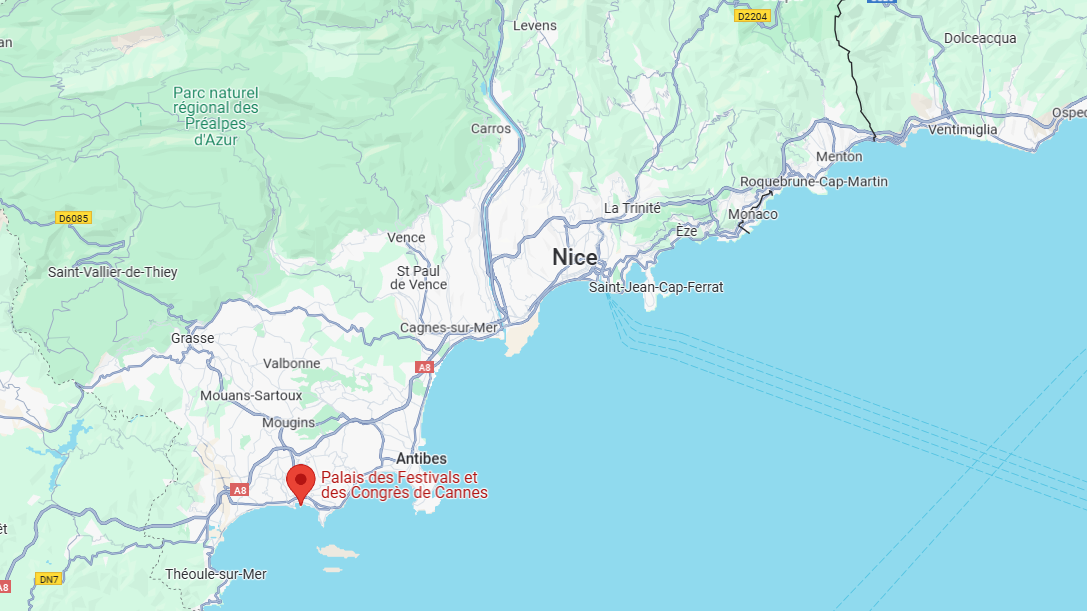
(Claim / Anonymous Anarchists) Anarchist Group Claims Sabotage of Electrical Infrastructure Ahead of Film Festival Gala Cannes, Côte d’Azur Bureau, France
| | | | |