|
Wazalendo Forces Train Child Soldiers Ahead of Clashes with M23
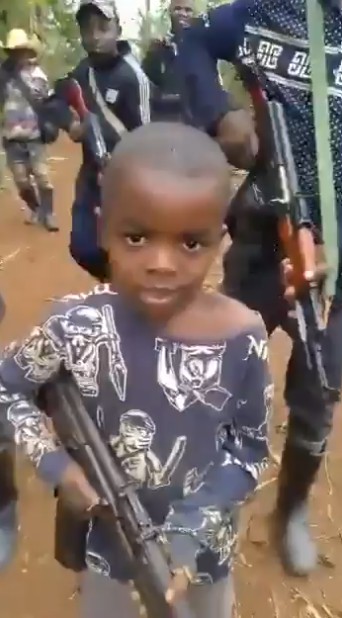
On 13 August 2025, a video circulated on social media showing a group of heavily armed Wazalendo Forces accompanied by a child soldier, estimated to be around 7–8 years old, in an unspecified location in the Democratic Republic of Congo (DRC). The footage depicts the child visibly struggling to carry a loaded AK-47 assault rifle, a weapon that weighs approximately 8.5 pounds (3.9 kg) unloaded and close to 9.5 pounds (4.3 kg) when equipped with a 30-round magazine. The difficulty with which the child holds the weapon underscores both the inappropriateness and the gravity of the situation.
The use of child soldiers by pro-government militias is particularly alarming, as it not only violates international humanitarian law but also highlights the extent of desperation and militarisation within local defence groups. The Wazalendo Forces, who position themselves as community defence militias aligned with the Congolese government, have been increasingly mobilised against the March 23 (M23) rebel movement. The inclusion of children in their ranks suggests both recruitment pressures and the normalisation of child participation in armed conflict, a practice that has plagued eastern Congo for decades.
This development takes place against the backdrop of intensifying clashes between Wazalendo and M23 forces, particularly in South Kivu and Mulamba (Maniema Province), where fighting has escalated since 8 August 2025. The video, therefore, not only documents Wazalendo’s tactics but also serves as evidence of the deteriorating humanitarian situation in the region, where entire communities, including children, are being drawn into a grinding war.
The circulation of such footage will inflame further criticism of Kinshasa’s reliance on local militias to counter M23, as it exposes both weak state control and the high human cost of the conflict. The normalisation of child fighters within the Wazalendo ranks underscores how the protracted conflict continues to erode social and moral boundaries, reinforcing cycles of violence that will reverberate long after current clashes subside.
| | | TRAC Incident Report: Syrian Democratic Forces (SDF) Clashes with Tribal Fighters After Possible Islamic State (IS) Kidnapping Incident, Gharanij, Deir Ezzor Governorate, Syria | | |
On 13 August 2025, suspected Islamic State (IS) militants kidnapped four Syrian Democratic Forces (SDF) members while they were passing through the market in Gharanij, Deir Ezzor. In response, on 14 August, the Deir Ezzor Military Council (DeZMC) launched sweeping security operations in Gharanij, particularly in the al-Mahidi and al-Hais neighbourhoods, and in surrounding villages. These sweeps quickly escalated into clashes with armed tribesmen, leaving one dead and three wounded, according to SDF sources. What began as an alleged IS operation has instead risked igniting broader tribal unrest against the SDF.
The timing and location of the clashes are significant. Deir Ezzor has been a long-standing flashpoint where multiple actors, IS remnants, Damascus-aligned forces, Turkish-backed militias, and the SDF, compete for influence. The DeZMC, an Arab-majority military council led by Abu Hatisha, has historically been granted wide latitude to maintain fragile tribal alliances in the region. Yet its heavy-handed tactics and prior mutinies have often fueled resentment. The recent fighting centred on the al-Hais family compound underscores how quickly local grievances can escalate into tribal confrontation. This is particularly notable given that many of the involved fighters come from the al-Shaitat clan of the al-Uqaydat tribe, one of the SDF’s earliest allies after IS massacred members of their clan in 2014. That the al-Shaitat are now in conflict with SDF units highlights how fragile these alliances have become.
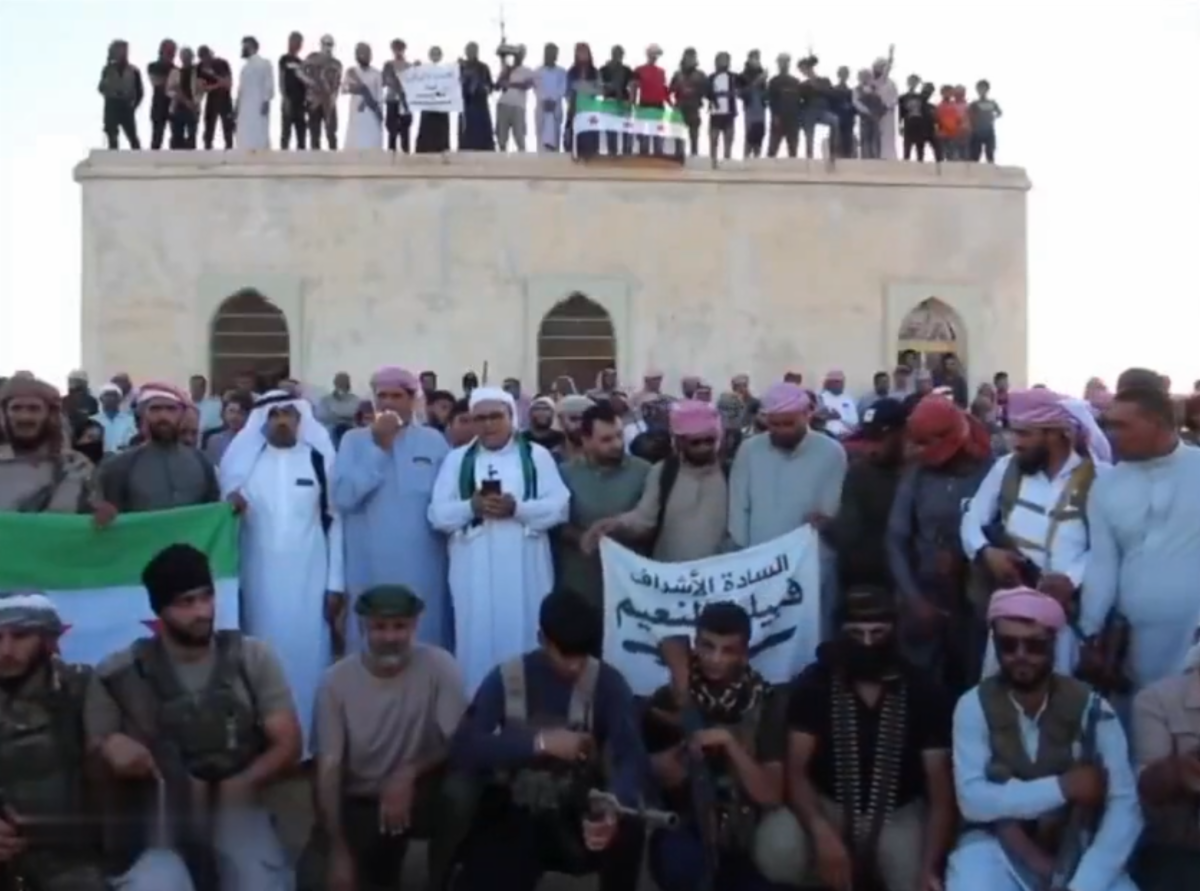
The fallout has already extended beyond the skirmish itself. Three tribes, the al-Baggara, al-Naim, and Busheban, have released videos calling for mobilisation against the SDF, with dozens of armed men declaring readiness to fight. The al-Baggara, one of the largest tribes in Deir Ezzor, carries particular weight. At the same time, the al-Naim and Busheban maintain ties to Turkish-controlled areas such as Tell Abyad, suggesting a cross-border dimension. This aligns with Kurdish think tank Lekolin’s June 2025 reporting that Turkish and Syrian intelligence had begun cultivating tribal discontent as a tool to weaken the SDF. Even if IS was behind the initial kidnapping, Damascus and Ankara are poised to exploit it as a pretext for a broader tribal uprising against Kurdish-led forces.
Strategically, this confrontation highlights the SDF’s growing vulnerability in its Arab-majority territories. Unlike in Suwayda, where Israeli intervention shielded Druze militias from government pressure, the SDF cannot count on similar foreign backing. While it has historically relied on U.S. support, Washington’s warming ties with Damascus and long-standing accommodation of Turkey suggest it may not intervene if Ankara and its allies escalate militarily. Hayy’at Tahrir al-Sham (HTS), meanwhile, has avoided confrontation with the SDF, instead working to exploit sectarian and tribal fractures as it did in Suwayda. The outcome of this crisis will hinge on whether the SDF can stabilise its tribal alliances in Deir Ezzor, or whether Damascus and Turkey succeed in weaponising Arab discontent to fracture the group from within.
| | (Poster) White Australia & National Socialist Network (NSN) Call for an Anti-Immigration Rally Across Multiple Major Cities in Australia on 31 August 2025 | | |
White Australia and the National Socialist Network (NSN) have issued a joint call-to-action for a coordinated nationwide anti-immigration rally scheduled for 31 August 2025, targeting six major cities: Sydney, Melbourne, Brisbane, Perth, Adelaide, and Canberra. Marketed under the banner of defending Australia’s “way of life” and “culture,” the rallies explicitly demand an end to “mass immigration.” Attendees are urged to carry Australian flags while being told “No foreign flags,” a directive designed to reinforce exclusionary nationalism and visually frame the rallies as a symbolic reclaiming of Australian identity.
The timing of this mobilisation is no coincidence. It comes as a direct reaction to the high-profile burning of the Australian flag during pro-Palestine demonstrations and the temporary shutdown of the Sydney Harbour Bridge. Far-right organisers have seized upon these incidents as rallying cries, framed as evidence of cultural erosion and national humiliation. Leveraging this outrage, the movement has rapidly gained momentum online, with rally promotion videos and posts circulating widely across social media platforms, garnering thousands of pledges of support. Organisers have launched an official March for Australia website and issued confident updates, positioning the rallies as the most significant coordinated far-right mobilisation in Australia in recent years.
The rhetoric accompanying the call-to-action reveals deeper ideological underpinnings. Organisers accuse vague “foreign fifth columns”, including Israeli, Palestinian, Chinese, and Indian interests, of attempting to hijack the movement. By invoking this broad array of supposed enemies, the narrative combines anti-immigrant xenophobia with conspiratorial, anti-multicultural themes. This frames immigrant communities not simply as outsiders but as deliberate agents of subversion against the Australian nation-state. Such rhetoric mirrors longstanding far-right conspiracies like the “Great Replacement” theory, adapted here to an Australian context.
The coordinated rallies represent an escalation in the public-facing strategy of Australia’s far-right networks. By linking their mobilisation to mainstream nationalist outrage over recent protests, NSN and allied groups seek to broaden their appeal beyond the fringe, normalising exclusionary and xenophobic positions under the guise of patriotic unity.
| | TRAC Incident Report: Suspected Tehreek-e-Taliban Pakistan (TTP) Militants Conduct Drone Attack on Pakistan Army Checkpoint in Takhti Khel Village, Bannu District, Khyber Pakhtunkhwa, Pakistan | | |
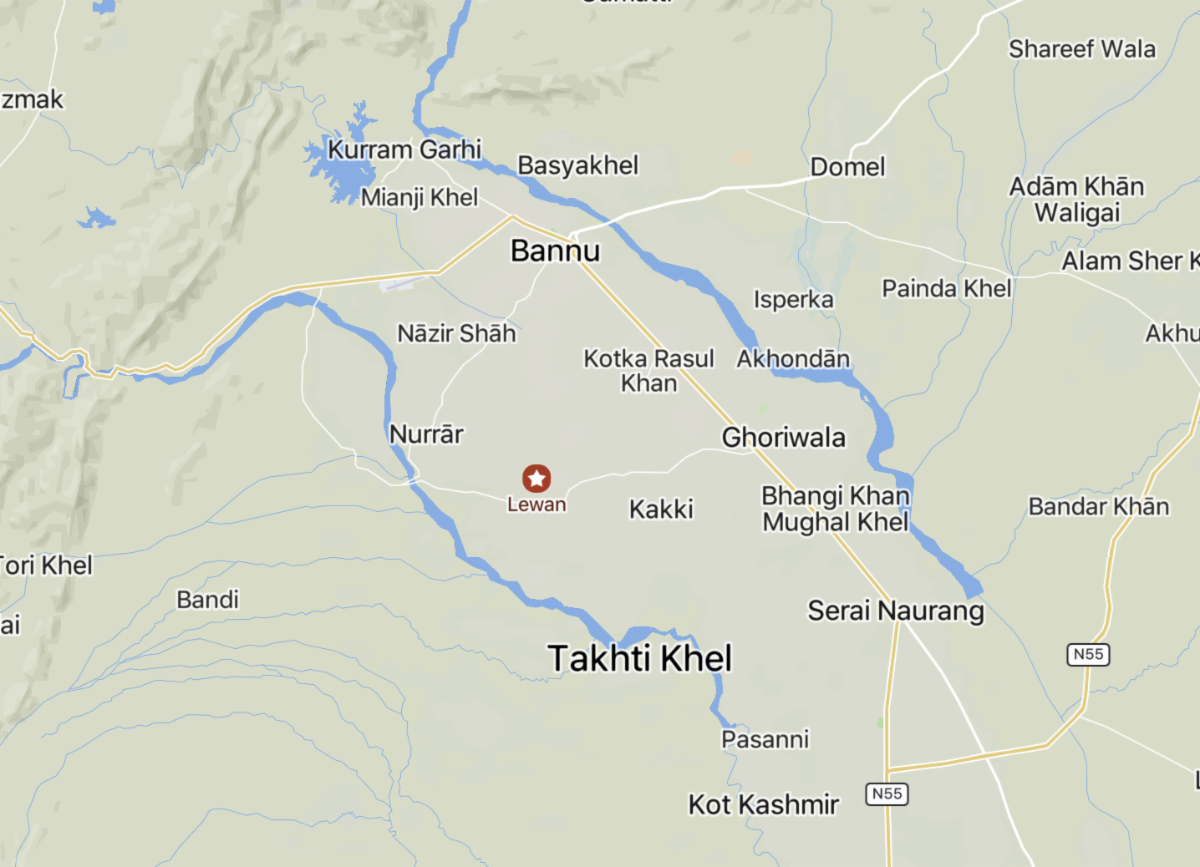
On 12 August 2025, suspected Tehreek-e-Taliban Pakistan (TTP) militants conducted a drone strike on a Pakistani Army checkpoint in Takhti Khel Village, Bannu District. The strike injured four Pakistani military elements: Lance Naik Naeem, Lance Naik Usman, Sepoy Inayat, and a cook identified as Ziyabat.
Takhti Khel Village lies in a volatile stretch of Bannu District, Khyber Pakhtunkhwa, an area that has long been plagued by militant activity due to its rugged terrain, porous borders, and proximity to the former Federally Administered Tribal Areas (FATA). The location has historically served as a staging ground for cross-border movement of militants and arms, complicating counterterrorism operations. Despite ongoing military campaigns, including frequent targeted raids, Bannu remains a highly contested space where militants exploit rural isolation and weak state presence to sustain their networks.
While no group has officially claimed responsibility, TRAC assesses the TTP as the most likely perpetrator, given their operational history and previous use of drones against Pakistani forces. Over the past year, TTP has steadily incorporated small drones into its arsenal, often repurposing them to deliver grenades or improvised explosive devices onto checkpoints and convoys. This adaptation mirrors tactics seen among militant groups in Afghanistan, Syria, and Iraq, and reflects the TTP’s intent to increase its operational reach while minimising militant casualties.
The timing of the strike also appears deliberate. Just two weeks prior, police forces carried out a targeted raid on the home of TTP commander Qari Niyaz, followed the same day by a larger security operation in the Miryan area. The drone attack in Takhti Khel may therefore represent retaliation for these operations, underscoring the cyclical nature of violence in Khyber Pakhtunkhwa.
| | TRAC Incident Report: 43 Malian Soldiers and Two Generals Arrested Over a Coup Attempt Against the Military Junta, Mali | | (Poster/Video) Extreme Right Insiders Share Propaganda Poster and Footage, Encouraging Social Media Followers to Attack Power Lines, United States | | (Photos) Los Chapitos (Sinaloa Cartel)-Linked Illegal Drug Laboratory Discovered by the Mexican Navy and Dismantled, San Blas, Nayarit State, Mexico | | | | |