|
Bottle IEDs Employed by JNIM along the Bandiagara–Bankass Axis, Mali
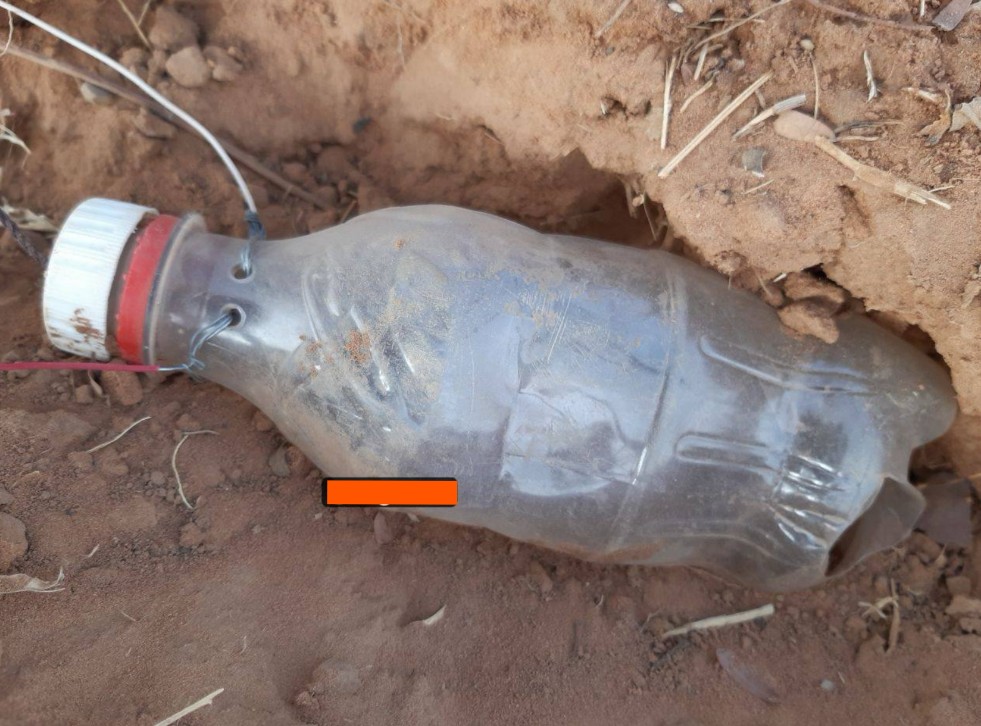
In a significant development revealing both tactical evolution and transregional knowledge transfer, Jama’a Nusrat ul-Islam wa al-Muslimin (JNIM) militants have been confirmed to be using bottle-style Improvised Explosive Devices (IEDs) to target security forces in central Mali’s volatile Mopti region. The discovery of one such device in January 2022, near the village of Mandali, made by engineers from Wagner Private Military Company (PMC), offers insights into both the technical sophistication of local insurgents and possible cross-theatre jihadist collaboration.
Technical Overview of the Bottle IED Design
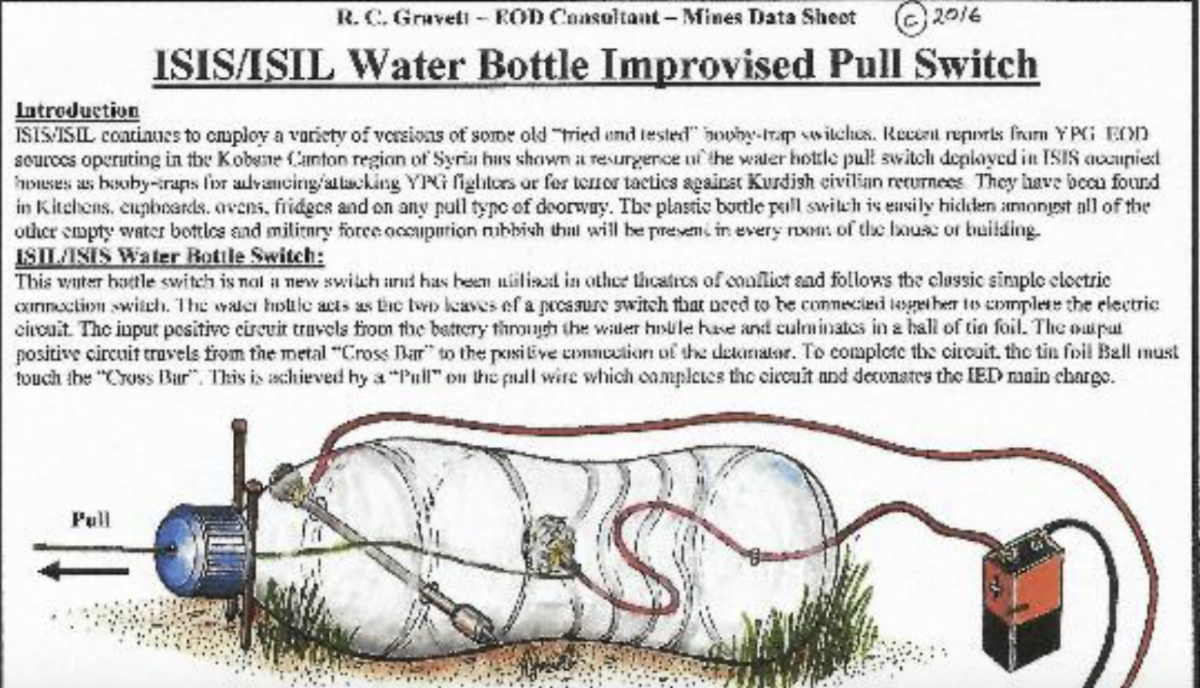
The device was triggered via a rudimentary yet effective tripwire mechanism. A wire was stretched across a road and anchored to both sides, with one end connected to a plastic bottle containing two metal contacts. A rubber band counterbalanced the wire to prevent premature detonation. Upon activation—when a vehicle compressed the wire—the metal contacts connected, completing the circuit and initiating an electric detonator via a power source. A detonating cord attached to the main charge ensured lethal blast force.
Despite its low-tech appearance, the design demonstrates a clear understanding of electrical circuits and pressure-based detonation—traits associated with experienced bomb-makers.
Origins and Transregional Connections
TRAC assesses that this bottle IED design is not indigenous to Mali but was imported from Syria and Iraq, where Islamic State (IS) militants extensively deployed similar devices during the height of their insurgency. This specific variant was first documented in 2014 by Bobo Gravet, a consultant for Mines Advisory Group (MAG), during IS’s siege of Kobani in Syrian Kurdistan. Gravet’s schematic, which later became publicly available as an educational poster, matches the exact design discovered in Mopti.
This suggests a deliberate knowledge transfer from IS operatives in the Middle East to jihadist factions in the Sahel. Given the historical friction but also occasional crossover between IS and al-Qaeda affiliates, TRAC speculates that the bomb-maker who introduced this technology in Mali may be a former IS operative who defected, either ideologically or for operational opportunities, to JNIM.
Defections and Capability Amplification
Such speculation gains traction in the current context, where defections from the Islamic State in the Greater Sahara (ISGS) to JNIM have become increasingly common. JNIM's growing dominance in Mali and Burkina Faso has allowed it to attract disillusioned fighters and experts, especially as ISGS faces mounting battlefield losses and internal fragmentation.
Moreover, JNIM is known to possess some of the region’s most technically proficient experts in explosives. These individuals have enabled JNIM to stage increasingly effective attacks against security forces, particularly along major roadways like the RN15, which links Bandiagara and Bankass—an axis frequently targeted for IED ambushes. The choice of location is strategic: the road bisects terrain favourable to insurgents and is routinely used by Malian and allied forces for logistical movements.
Implications
The emergence of such advanced and externally sourced IED technology in Mali significantly elevates the threat level posed by JNIM. It not only reflects the porous nature of jihadist knowledge sharing but also signals a maturation of JNIM's tactical playbook. The group’s ability to integrate battlefield-tested bomb designs into local insurgencies indicates its growing operational sophistication and underscores its central role in the broader West African jihadist threat matrix.
TRAC will continue monitoring for signs of further technical convergence between Middle Eastern and Sahelian jihadist factions, particularly in the realm of explosives, which could portend even deadlier forms of asymmetric warfare in the region.
| | | TRAC Incident Report: Tehreek-e-Taliban Pakistan (TTP) Affiliate Hafiz Gul Bahadur (HGB) Conducts Suicide Attack Targeting Army Convoy in Mir Ali, North Waziristan, Khyber Pakhtunkhwa, Pakistan | | |
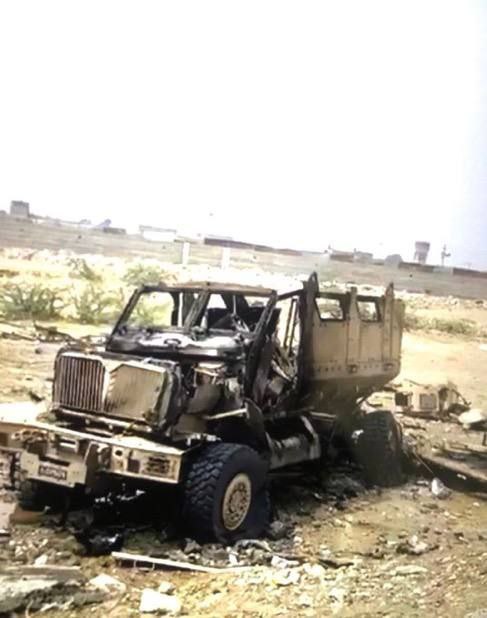
On 28 June 2025, a Hafiz Gul Bahadur (HGB) militant conducted a suicide vehicle-borne improvised explosive device (SVBIED) attack targeting a Pakistani military convoy in Mir Ali, North Waziristan. The blast killed 13 soldiers and injured over 20 others, including at least 14 civilians. In addition to striking military vehicles, the explosion damaged nearby residential buildings, underscoring the collateral human cost often associated with such high-yield attacks in densely inhabited areas.
This incident marks HGB’s first confirmed use of a suicide bomber since March 2025, suggesting a calculated return to one of the group’s most lethal and symbolically potent tactics. Although the operation was not part of a synchronised multi-pronged assault, the choice of method, timing, and location strongly implies strategic signalling. Far from being an isolated incident, the bombing serves as a message to both Pakistani authorities and rival jihadist factions of HGB’s continued relevance and operational capability.
Mir Ali, located in a persistently volatile region near the Afghan border, is a strategic hub for various jihadist entities due to its rugged terrain, tribal affiliations, and access to transnational networks. The town has historically served as a logistical and recruitment base for both al-Qaeda-linked and Taliban-aligned factions. The attack occurred just one day before the Ittehad-ul-Mujahideen Pakistan (IMP) coalition, of which HGB is a core member along with Lashkar-e-Islam (LI) and Harkat Inqilab-e-Islami Pakistan (HIIP), issued statements claiming responsibility for 26 coordinated attacks across North Waziristan. This temporal proximity suggests a deliberate escalation by the coalition, with the SVBIED attack serving as a dramatic kickoff or morale booster for subsequent operations.
This is not the first time HGB has displayed complex attack capabilities. In March 2025, its Jaish-e-Fursan Muhammad (JFM) wing carried out a coordinated raid in Bannu involving 16 militants, including four suicide bombers. That attack demonstrated the group’s capacity for operational synchronisation, recruitment of suicide operatives, and likely access to cross-border logistical support. While the 28 June bombing was less complex in scale, it fits into HGB’s broader strategy of high-impact operations designed to signal resilience, sow fear, and maintain relevance amid shifting dynamics in the tribal belt.
The attack also sheds light on the evolving factional rivalries within Pakistan’s militant landscape. Although both HGB and the Tehreek-e-Taliban Pakistan (TTP) emerged from the same ideological umbrella, they now function as de facto rivals. Following the March Bannu attack, TTP leader Noor Wali Mehsud openly condemned HGB, accusing the group of causing civilian deaths, including children, in a mosque. This public rebuke underscores a competition not just for territorial control but also for public legitimacy and narrative supremacy, especially in contested recruitment zones like Waziristan.
| | TRAC Incident Report: Authorities Warn of Old Cars Potentially Used as Vehicle-Borne Improvised Explosive Devices (VBIEDs) in Terror-Related Attacks Across Phuket, Southern Thailand | | |
On 01 July 2025, Thai authorities ordered a sweeping security crackdown across Phuket, directing local forces to inspect all old cars and motorcycles due to heightened concerns over militant insurgents weaponising unattended vehicles with Improvised Explosive Devices (IEDs). The directive specifically emphasised the need to closely monitor vehicles parked near sensitive locations such as government buildings, tourist areas, parks, and other public venues, where the risk of mass casualties is highest.
This elevated alert level follows the 24 June arrest of two individuals in Phang Nga Province who were found transporting a timer-activated bomb in their vehicle. According to security officials, the suspects were en route to Phuket, presumably to carry out an attack. Their interrogation led to the discovery and safe detonation of several other IEDs planted in strategic public locations, including a beach, a park, the airport, and a police station across Phuket and neighbouring Krabi Provinces.
While multiple arrests have since been made in connection with this foiled bombing campaign, Thai officials stress that the investigation remains ongoing. Authorities are treating the case as an active threat, with intelligence suggesting that further incidents may be imminent. This raises the likelihood of a larger, coordinated network operating in southern Thailand with a clear intent to destabilise the region, particularly by undermining the vital tourism economy that Phuket and Krabi heavily rely on.
State-run media and military sources have attributed these plots to local separatist groups, particularly those linked to the Barisan Revolusi Nasional (BRN), a long-standing Malay-Muslim insurgency movement active in Thailand's southern provinces. However, TRAC assesses that elements affiliated with the Islamic State East Asia (ISEA)-Pattani cell may also be involved, potentially operating in collaboration with BRN operatives. This convergence of ideologies and tactics could represent an evolving threat matrix, where locally-rooted insurgents adopt transnational jihadist methods and objectives.
Of particular concern is the Islamic State’s known strategy of economic warfare, whereby its affiliates deliberately target tourism, infrastructure, and economic lifelines to weaken state control and attract media attention. Should this link be substantiated, the current campaign in southern Thailand could mark a significant tactical escalation, moving beyond traditional insurgency to a more complex, asymmetric form of terrorism with broader geopolitical implications.
| | TRAC Incident Report: Cártel del Noreste (CDN) Released Drone Footage of Confrontation against Cártel del Golfo (CDG) With Monster Trucks in Los Guerra, Tamaulipas, México | | |
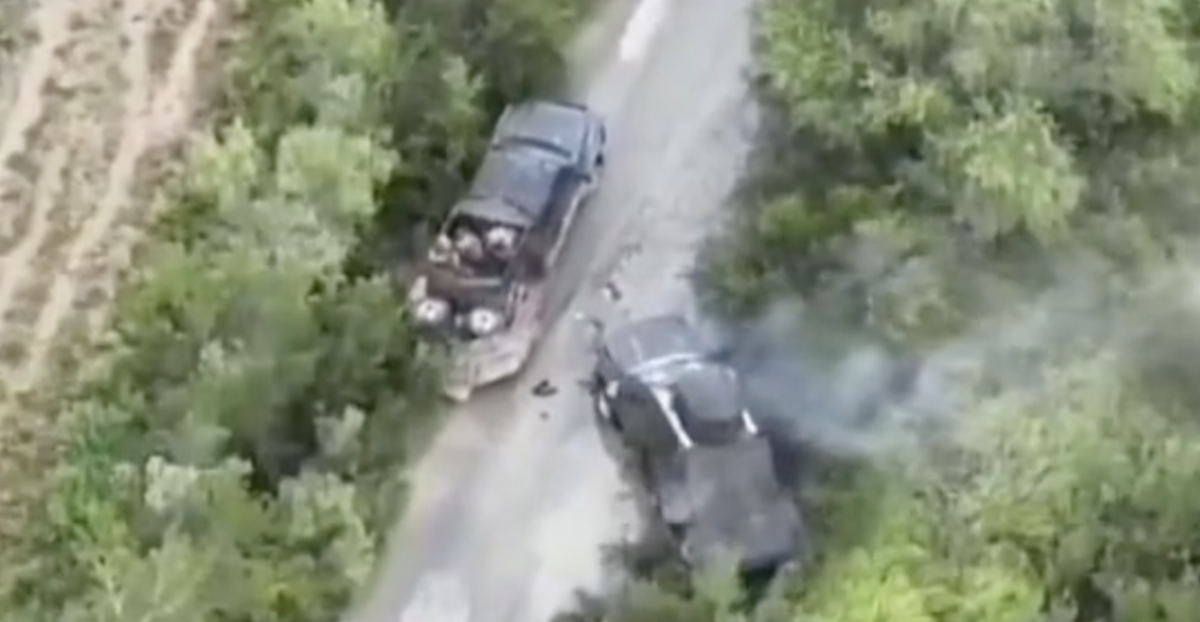
On 26 June 2025, the Cártel del Noreste (CDN) publicly released drone footage capturing a violent confrontation with rival cartel Cártel del Golfo (CDG) that occurred on 23 June in the rural area of Los Guerra, near the municipality of Miguel Alemán, Tamaulipas. The video depicts a heavily armoured tactical vehicle, colloquially known as a monster truck, equipped with a mounted .50-calibre heavy machine gun, engaging a similarly fortified CDG vehicle at extremely close range. The drone footage shows point-blank gunfire exchanged between the two armoured convoys, highlighting the increasingly militarised nature of inter-cartel warfare.
The clash is part of the ongoing territorial conflict between CDN and CDG, two long-standing rivals vying for control over critical smuggling routes in northeastern Mexico. Although recent media and policy attention has focused mainly on the broader power struggle between Cártel de Sinaloa (CDS) factions and the Cártel Jalisco Nueva Generación (CJNG), the CDN–CDG rivalry continues to pose a persistent and acute threat to public safety and governance in Tamaulipas, one of the most strategically important states for cross-border narcotics and weapons trafficking.
This latest incident not only underscores the escalating firepower involved in cartel battles but also demonstrates the growing tactical sophistication of these groups. The use of military-style armoured vehicles, once considered exceptional, has now become standard in certain cartel arsenals. TRAC assesses that these monster trucks, often custom-built with steel plating and mounted heavy weapons, serve not only as offensive platforms but also as psychological tools of intimidation and dominance over rivals and law enforcement alike.
TRAC anticipates an increase in the deployment of these armoured vehicles in future confrontations, especially in contested rural zones where the state presence is weak or compromised. The public release of drone footage also indicates an evolving propaganda strategy, aimed at demonstrating battlefield superiority and deterring rivals, while simultaneously glorifying the group’s capabilities to potential recruits and sympathisers.
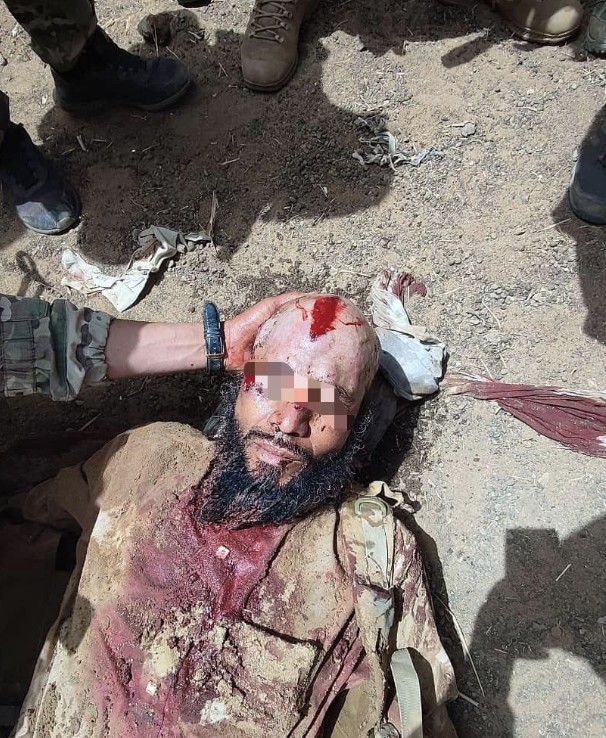
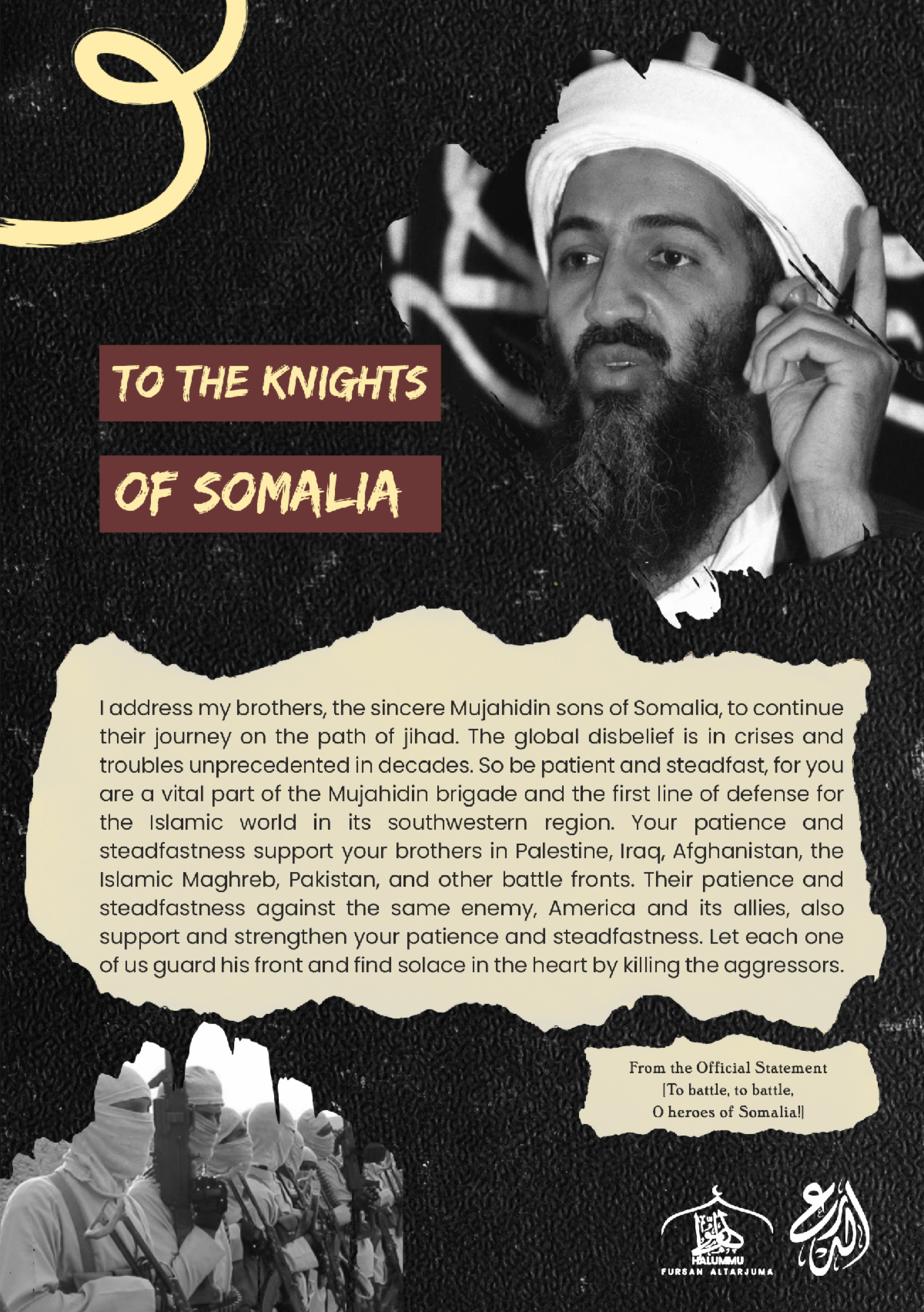
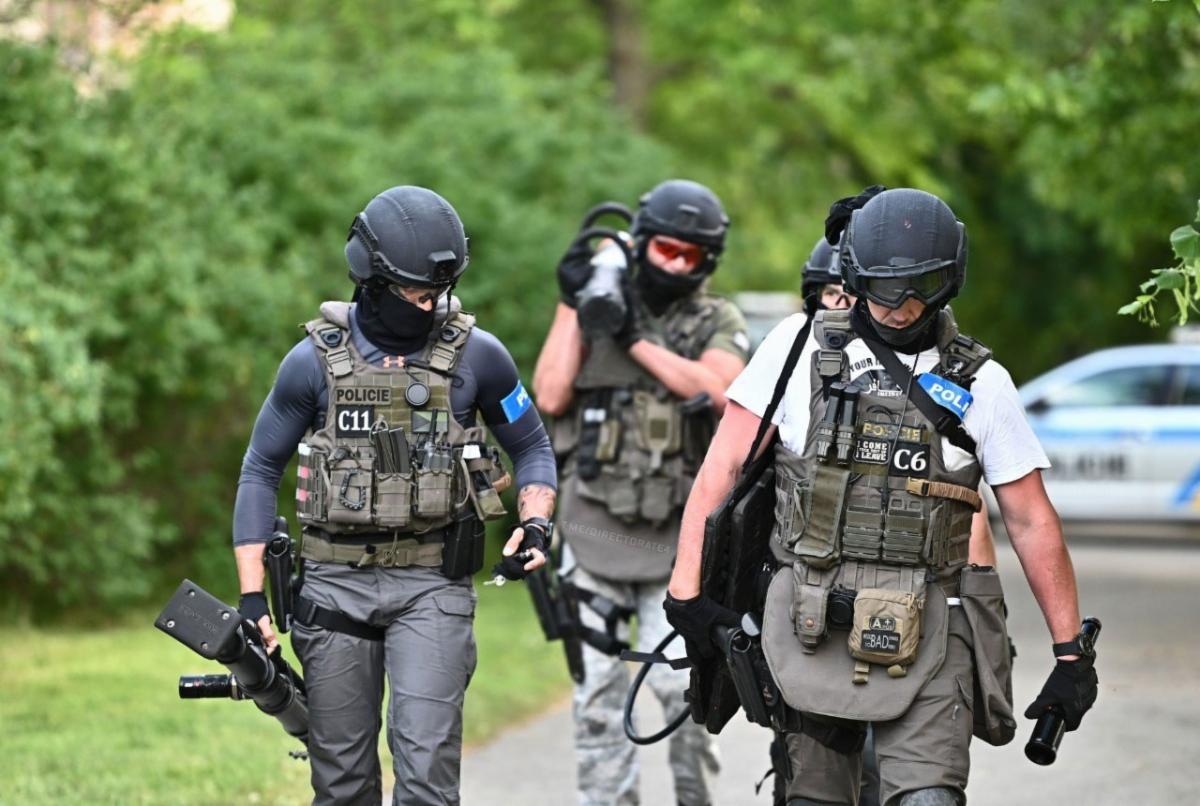
| | TRAC Incident Report: Malian Authorities Announce the Elimination of Alias Abu Dahdah, a Senior Leader of the Islamic State Greater Sahara (ISGS), Ménaka Area, Ménaka Region, Mali | | (Poster) Halummu Media (Unofficial Islamic State): “To The Knights of Somalia” | | TRAC Incident Report: Two Firefighters Killed & One Other Injured by a Sniper (Ambushed) While Responding to a Brush Fire in Coeur d’Alene, Kootenai County, Idaho, United States | | | | |