|
Mass Dispersal & Successful Escape of Detainees at al-Hol Camp, Syria
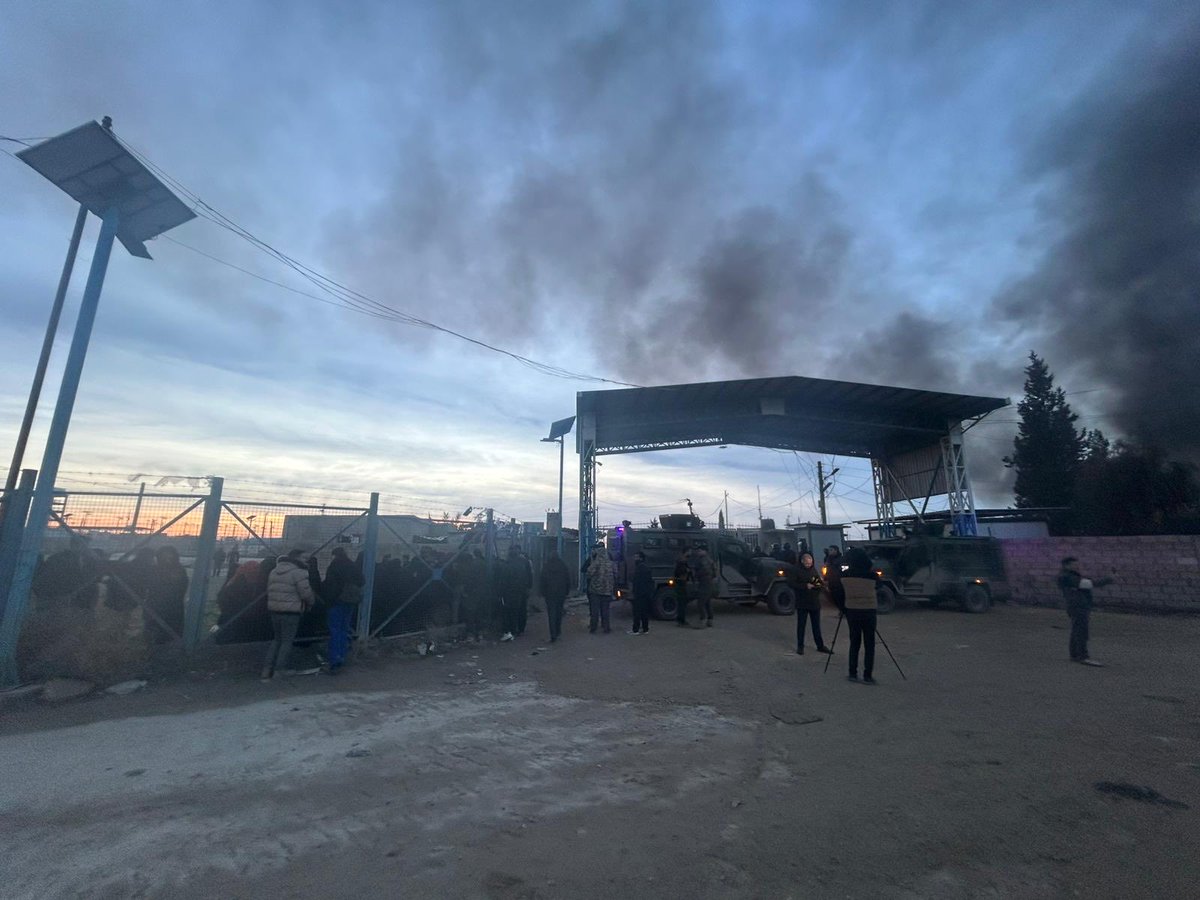
On 15 February 2026, intelligence indicated that fewer than 5,000 detainees remained at al-Hol camp following a wave of escapes over a three-week period. The remaining population is slated for transfer to Akhtarin camp in northern Aleppo, a move that would pave the way for the permanent closure of al-Hol. This dramatic reduction marks a major shift for what was once one of the largest detention hubs for Islamic State (IS) affiliates and their families.
The HTS Offensive & Security Breakdown (Timeline)
The dispersal appears closely tied to last month’s Hayy’at Tahrir al-Sham (HTS) offensive against Syrian Democratic Forces (SDF)-held territory, which triggered widespread instability across the region. At its peak, al-Hol housed roughly 23,000 individuals, including an estimated 8,400 IS-affiliated detainees. The sudden population collapse to fewer than 5,000 highlights the scale of the breakdown that followed the transfer of control. Long viewed as more than a detention site, al-Hol has functioned as a powerful symbol and ideological incubator for IS, repeatedly referenced in the group’s propaganda, including recent editions of al-Naba and a 2025 speech by IS spokesperson Abu Hudhayfa al-Ansari.
Conflicting reports have emerged about how as many as 20,000 detainees disappeared within weeks. The earliest escapes reportedly began during the handover of the camp to HTS-aligned forces on 20 January 2026, when security oversight briefly collapsed. This initial lapse created a window that detainees quickly exploited, triggering a chain of subsequent departures.
The situation deteriorated further due to the absence of an established command structure, reports of legal and administrative records being burned, and limited operational experience among new security personnel tasked with maintaining order.
Continued Smuggling and Internal Facilitation
The instability enabled ongoing escapes and smuggling operations in the weeks that followed. Sources suggest some detainees were assisted by individuals inside the security apparatus, including at least one escape attributed to a member of HTS’ 82nd Division (formerly Ansar al-Tawhid), identified as Abu Musab al-Masri. Additional incidents were reported as late as 12 February, indicating that the situation remained uncontrolled well beyond the initial handover.
While initial accounts framed the departures as spontaneous, the lack of footage or clear intelligence showing mass flight has led to assessments that many escapes may have been gradual and coordinated. Rather than a single large-scale breakout, the departures appear to have occurred in a steady trickle, facilitated by networks exploiting the ongoing security vacuum. Syrian authorities have publicly downplayed the incident, maintaining that no large-scale escapes occurred even as detainee counts sharply declined.
Closure Plans and Transfer Strategy
Just weeks prior, Syrian authorities had announced plans to permanently close both al-Hol and Roj detention camps, which together held roughly 28,000 detainees. At the time, the proposal appeared overly ambitious. However, in light of the rapid population decline and ongoing transfers to the Akhtarin camp, the closure plan now appears more plausible and may reflect an awareness of deteriorating control conditions on the ground.
Strategic and Security Implications
The most significant concern lies in the dispersal of thousands of individuals who spent years in an environment shaped by IS indoctrination. Many Syrian and Iraqi nationals who left the camp now blend into civilian populations without structured reintegration or monitoring. In the absence of rehabilitation programs or viable alternatives, some may reconnect with familiar networks that previously provided identity, protection, and purpose.
For IS, this development presents an opportunity to replenish support structures and revive dormant networks. The release or escape of long-detained sympathisers may contribute to renewed recruitment, logistical support, and localised radicalisation, particularly in fragile areas of Syria and Iraq.
Besides the locals from Ash Sham, one must not forget the foreign nationals, many from the West, who are now at large and free to return to their home nations; a ticking time bomb.
Psychological and Propaganda Impact (for IS)
IS has long emphasised the goal of freeing detainees, portraying camps like al-Hol as symbols of oppression. The dispersal, regardless of how it occurred, may provide the group with a narrative victory, reinforcing its messaging and potentially boosting morale among supporters. After a period of relatively muted operational activity, such developments could help the group project resilience and relevance.
Historically, periods of instability in Syria and Iraq have created space for IS to regenerate. Dispersed detainees are likely to reconnect with existing militant networks; the effects could extend beyond the region. A strengthened IS presence in its traditional core has previously coincided with increased recruitment, international plotting, and inspired attacks abroad.
| | | TRAC Group Profile: Boko Haram Commander Abubakar Saidu (Sadiku / Mallam Sadiku) | | |
Abubakar Saidu, widely known as Sadiku or Mallam Sadiku, is regarded as one of Boko Haram’s most influential commanders operating beyond their traditional northeastern base. Often referred to as the “Shekau of the North-Central,” he is believed to have played a key role in expanding BH’s presence into Nigeria’s north-central and northwestern regions. There, he developed a hybrid insurgent–bandit network responsible for kidnappings, massacres, and high-impact jihadist operations, helping to transform Boko Haram into a more geographically dispersed threat.
Born in Biu, Borno State, and identified by the birth name Adamu Yunusa, Sadiku received both Western and Islamic education, giving him a degree of adaptability uncommon among many jihadist figures. This background enabled him to operate effectively as a recruiter, preacher, strategist, and negotiator. He is believed to have joined Boko Haram between 2009 and the early 2010s during the group’s rebuilding phase following its initial uprising and subsequent military crackdown, rising quickly due to his discipline and strategic ability.
His career accelerated significantly in 2014, when Abubakar Shekau tasked him with expanding Boko Haram’s reach into Niger State and the broader north-central region. Sadiku reportedly recruited fighters, established new cells, forged alliances with local militant and bandit groups, building training camps. By 2015–2016, he had helped create an entirely new operational theatre outside the northeast, contributing to Boko Haram’s shift from a localised insurgency to a wider national threat.
Sadiku maintained a close relationship with Boko Haram’s leadership and was considered one of Shekau’s trusted commanders, serving as a strategic envoy, recruiter, and military organiser. After Shekau’s death in 2021, he reportedly pledged allegiance to the group’s new leadership while maintaining considerable operational autonomy. Over time, he built one of the group’s most powerful semi-independent factions, operating across states such as Niger, Kaduna, Nasarawa, Kwara, and Kebbi, as well as areas near Abuja. These regions offer concealment, weak state presence, and proximity to key population and transport routes.
A defining aspect of Sadiku’s strategy has been blending jihadist insurgency with criminal banditry. He reportedly formed alliances with Fulani bandit groups, local militias, and kidnapping networks, using mass abductions and ransom as major funding sources. Unlike more rigid jihadist models, his approach appears pragmatic, tolerating criminal activity and flexible alliances to accelerate expansion and entrench influence. His networks have also used a mix of coercion and negotiation with local communities, offering protection or limited autonomy to cooperative groups while punishing resistance with violence.
His faction has been linked to several major incidents, including the 2022 Abuja–Kaduna train attack, large-scale school kidnappings, and village massacres in recent years. These operations demonstrate planning capability, intelligence penetration, and the ability to strike near Nigeria’s capital. Despite his prominence, there is currently no publicly verified photograph of Sadiku, a common feature among high-level Boko Haram commanders operating in central Nigeria, which adds to the difficulty of tracking his movements and influence.
Please note that TRAC has a more detailed profile obtainable on request.
| | (Video) Jama’at Nusrat al-Islam wa al-Muslimin (JNIM)-Linked Sheikh Albani, Newly-Appointed Emir of Benin, Calls on Muslims in Niger to Join the Group’s Ranks in Benin | | |
On 11 February 2026, Jama’at Nusrat al-Islam wa al-Muslimin (JNIM) circulated a propaganda video on social media introducing a figure identified as the group’s new “emir of Benin,” Sheikh Albani. In the footage, Albani directly appealed to Nigerien Muslims, urging them to travel to Benin and join JNIM’s ranks. The messaging signals a deliberate attempt to build cross-border recruitment pipelines and formalise the group’s presence inside Beninese territory. The video also indicates a shift from covert infiltration to more confident public outreach, suggesting the group believes it has secured at least a semi-permanent foothold in the country.
According to local sources, Sheikh Albani operates under the supervision of Jaafar Decko, a senior JNIM figure tasked with overseeing the organisation’s southern expansion toward the Gulf of Guinea. This command structure points to a coordinated regional strategy rather than isolated militant activity. JNIM’s long-term objective appears to be the gradual extension of Sahel-based insurgency networks into coastal West Africa, with Benin serving as a strategic bridge between established strongholds in Mali, Burkina Faso, and Niger and the economically significant coastal states.
JNIM’s Benin-based faction has established an operational hub within the “W” National Park complex, a vast tri-border conservation zone spanning parts of Benin, Niger, and Burkina Faso. The park’s dense vegetation and difficult terrain provide natural concealment for storing weapons, staging operations, and avoiding detection. TRAC assesses that weapons and supplies are likely being funnelled into the area through the Mekrou River–Karimama axis along the Niger–Benin border, a known smuggling corridor that facilitates discreet cross-border movement of fighters and materiel. Militant activity has also been concentrated in Pendjari National Park and the broader Atakora Department, areas already recognised as vulnerable to cross-border incursions. On 10 February 2026, alleged JNIM militants raided the village of Bagou-Bagou in the Kérou area of Atakora, underscoring the group’s ability to project violence beyond forested strongholds and into civilian communities.
JNIM is consolidating its presence through a combination of coercion and soft-power governance tactics. In parts of Alibori Department, the group is collecting “zakat” from local populations. In addition to financial extraction, militants have established mobile checkpoints, mediated local disputes, and presented themselves as alternative authority figures where state presence is weak or inconsistent. This mirrors patterns seen in the Sahel, where jihadist groups often embed themselves within communities by filling governance gaps left by under-resourced state institutions.
The emergence of a formalised JNIM structure in Benin marks a concerning escalation from sporadic cross-border raids to sustained territorial penetration. JNIM’s use of protected parks as operational sanctuaries, combined with recruitment appeals targeting neighbouring Niger, suggests a long-term strategy aimed at entrenchment rather than short-term disruption. If left unchecked, these safe havens could evolve into staging grounds for deeper incursions into northern Benin and, potentially, into more densely populated and economically critical regions farther south.
| | TRAC Incident Report: Free Papua Movement (OPM) Militants Execute Smart Air Pilot and Co-Pilot After Targeting Their Plane with Firearms During Landing, Korowai Airport, Yaniruma District, Boven Digoel Regency, South Papua, Indonesia | | |
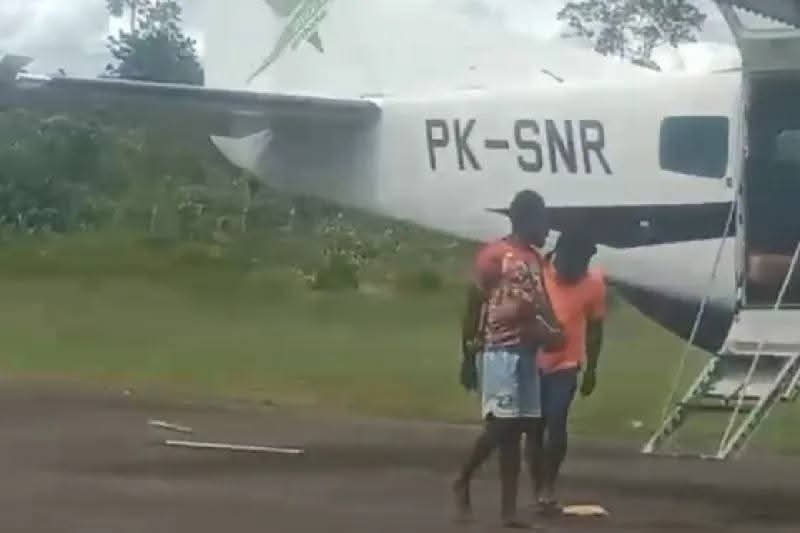
On 11 February 2026, in the afternoon hours, OPM rebels opened fire on a small commercial aircraft operated by Smart Air as it landed at Korowai Airport in Danowage Village, Yaniruma District, Boven Digoel Regency, South Papua. The aircraft had departed from Tanahmerah Airport. As the plane touched down, approximately 20 gunmen fired on it from a distance of around 200 meters. An inspection later identified at least 13 bullet holes in the fuselage. The pilot, Egon Erwan, and the co-pilot, Baskoro, attempted to flee toward nearby forested terrain after the aircraft came under attack. They were pursued by the assailants and shot dead. The 13 passengers on board were successfully evacuated. In their claim, the rebel group stated that the aircraft was targeted because the airline allegedly transported Indonesian security personnel throughout Papua.
Later on, the Indonesian authorities attributed the assault to the West Papua National Liberation Army (TPNPB-OPM) Yahukimo faction, specifically elements known as the “Cannibal Battalion” and the “Red Ant Battalion,” led by Elkius Kobak. As a precaution, airport operations were temporarily suspended. Korowai is an extremely remote area with limited infrastructure, complicating both emergency response and subsequent security reinforcement.
The violence also triggered displacement among local residents. 39 civilians living near the airport fled their homes due to fears of further attacks, with 33 relocating to Kepi in Mappi Regency and six to Senggo District. TRAC assesses that the perpetrators likely retreated toward Yahukimo Regency in Highlands Papua, which borders the attack site and is known as a stronghold of armed separatist factions.
A particularly significant aspect of the incident is the pursuit and killing of the flight crew after they attempted to escape. This detail suggests that the assailants may have intended to abduct the pilots, consistent with previous OPM tactics. In February 2023, OPM militants kidnapped New Zealand pilot Phillip Mehrtens after attacking his aircraft at Paro Airport in Nduga. He was held for approximately 19 months before being released, allegedly following ransom negotiations. The execution of the Smart Air pilots, rather than their abduction, may reflect either a tactical shift or a failed kidnapping attempt.
The location of the attack is also noteworthy. Boven Digoel Regency is not typically considered a primary OPM operational zone, with most rebel activity concentrated in Central Papua and Papua Highlands. The relative stability of Boven Digoel may have led to reduced security preparedness for civilian aviation.
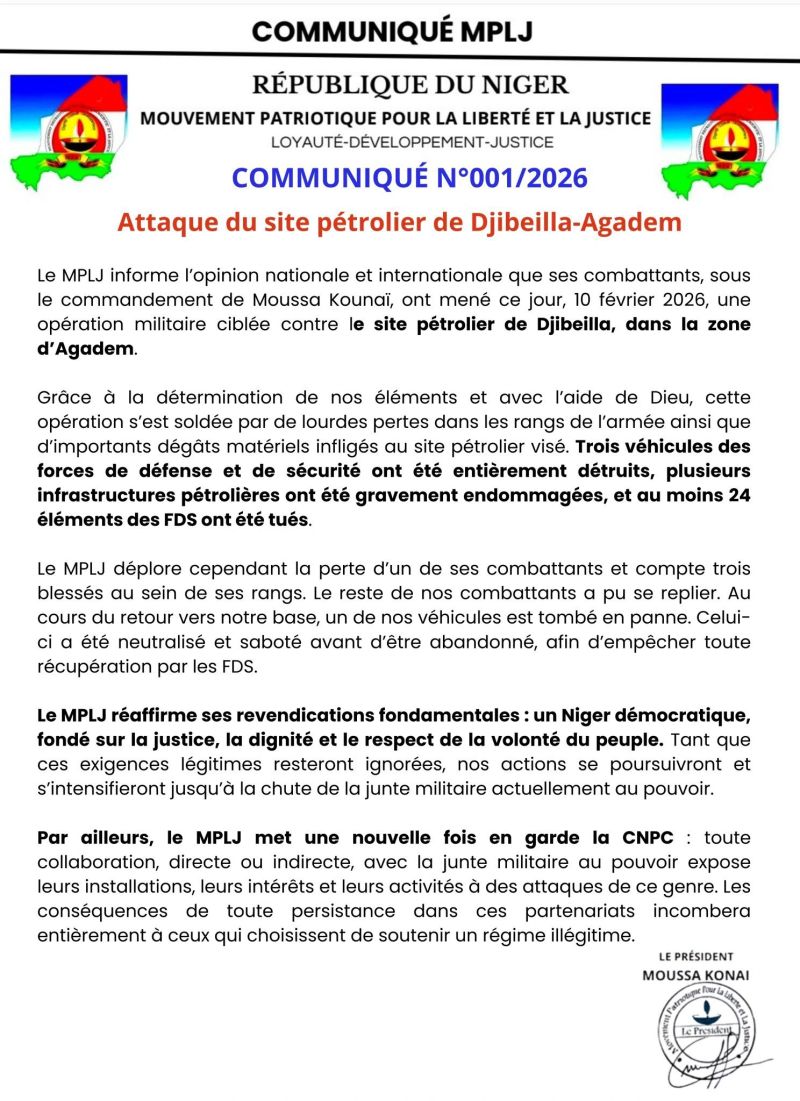
| | TRAC Incident Report: Two Students Injured in a Knife Attack by a Schoolmate Shouting ‘Allah Akbar’ at Kingsbury High School, Brent, Northwest London, England, United Kingdom | | (Left Wing Extremism) Suspected Anarchists Target Railway Lines in Incendiary Attacks in the Areas of Naples and Rome, Campania and Lazio Regions, Italy | | TRAC Incident Report: Militants of the Patriotic Movement for Freedom and Justice (MPLJ) Target the Dibella-Agadem Oil Site in an Armed Assault, Killing 24 FDS Soldiers, Diffa, Niger | | | | |