|
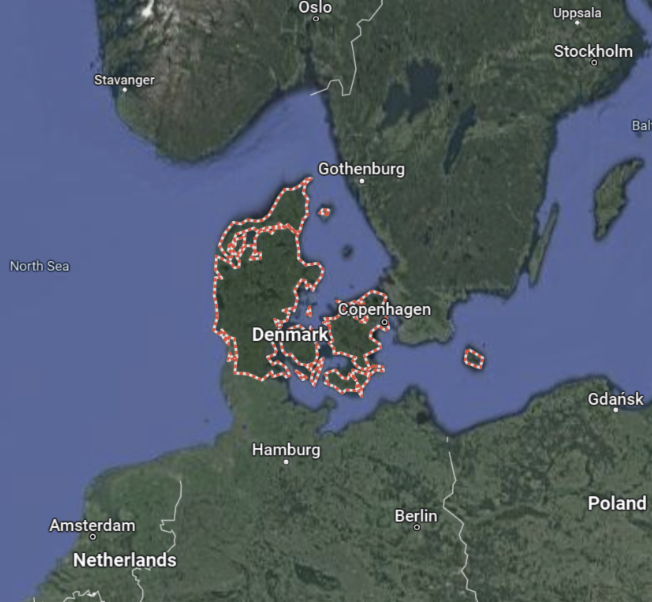
On 14 December 2023, in the early morning hours, an intelligence-based counter-terrorism operation (CTO) led to the arrest of three across Denmark, while a fourth was captured in the Netherlands, as a result of investigations conducted by the Danish Intelligence Service. By the end of the day, a total of 7 people were arrested: three in Denmark, three in Berlin, and one in the Netherlands; four of which were confirmed as Hamas-linked operatives.
According to the authorities, the first suspects apprehended were part of an 'urban gang' preparing unspecified attacks within the Danish territory; however, it did emerge that those four suspects were allegedly plotting attacks on the Jewish community, which TRAC was quick to assert is more of an ideological alignment with a specific militant group rather than an 'urban gang.' This is the sixth Jewish-linked incident that has occurred globally during the 2023 Hanukkah season and well over the 50th anti-Jewish / anti-Israel attack or attempted attack worldwide since the start of the Israeli-Hamas conflict. Moreover, what is notable about the unprecedented wave of attacks that has been affecting Israel and its assets worldwide is that the threats originate from multiple categories of entities, ranging from the extreme far-right and extreme far-left communities to various jihadist groups. It should be assumed that both successful and unsuccessful attacks on Jewish soft targets will continue well after Hanukkah celebrations.
It is important to note that Hanukkah for 2023, the eight-day “festival of lights,” began on 07 December, at sundown, and will continue until 15 December 2023. Given the holiday celebrations, not only will parishioners be desiring to attend Synagogue, making an uptick in more attempts for soft-targeted attacks more likely. Jewish communities around the world, already on high alert since the Hamas 07 October 2023 surprise attack in Israel, should remain extra vigilant over Hanukkah.
Currently, the terror threat level in Denmark is at level four out of five, indicating that the risk of a terror attack in the country is significant. The assessment of an intensified threat towards Denmark came after numerous Quran-burning events occurred in the country, as well as Sweden, in recent months, leading to fierce protests across several Muslim countries, and the promise of revenge.
It is crucial to note that this 14 December CTO comes only one week after the Danish legislators passed a bill that prohibits the desecration of holy books, such as the Bible, the Quran, and the Torah.
|
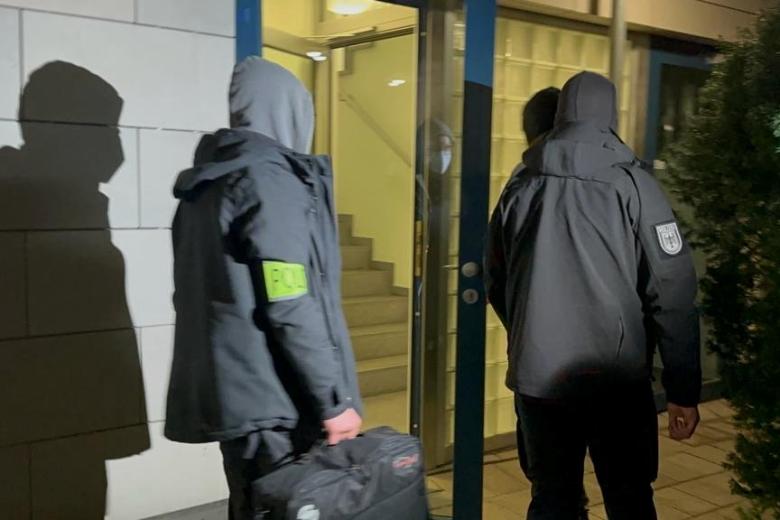 |  | Later in the day, TRAC's initial suspicions that this 'urban gang' plot were inaccurate were confirmed when additional details emerged revealing that one of the men apprehended is a Dutch citizen who was captured in Rotterdam, identified as Nazih R., 57, was already wanted by Danish and German authorities for being a member of the Palestinian Hamas for several years. The three other Hamas-linked operatives, identified as Mohamed B. from Egypt, Abdelhamid Al A., and Ibrahim El-R, born in Lebanon, were arrested in Berlin, Germany. This confirms TRAC's assertion that this was not an 'urban gang' as labeled by Danish authorities, but, in fact, is an extremist jihadi cell that is accused of having taken part in the Hamas foreign operations, reportedly plotting to carry out attacks on Jewish institutions throughout Europe. The Egyptian Abdelhamid Al A. was reported to have been tasked by Hamas leaders in Lebanon to locate an underground weapon depot in Europe, that had been set up by the jihadist group in the past, and to transport the arms to Berlin.
Of note, K9 detection dogs were deployed in the operation, likely to assist investigators specifically looking for weapons and Improvised Explosive Devices (IEDs) components concealed at the suspects' homes.
| | |
|
TRAC Insight:
The Houthis (Ansarallah) Persistent Threat on Ships Travelling Through the Red Sea & its Impact on Global Maritime Trade
| |
|
The escalation of local maritime threats has been ongoing, with the Israeli-Hamas conflict amplifying these concerns. Previously, ships under threat by the Houthis in the Red Sea were connected to nations involved in the Saudi-led coalition war in Yemen.
In 2018, a Bahri crude oil tanker, affiliated with Saudi Arabia’s national shipping carrier, became a Houthi target while navigating the Bab al-Mandab Strait, either heading to or returning from the Red Sea and Suez Canal. Consequently, the Saudi Energy Ministry halted oil shipments through this passage for approximately twelve days, although this suspension wasn’t sufficient to compel shippers to seek alternative routes, all of which are much longer and would cause even more delays.
The recent series of Houthi assaults have predominantly targeted vessels associated with Israel -or- assumed, by the Houthis, to be delivering to Israel. However, this pattern isn’t unprecedented. From 2021 to early 2023, alleged Iranian drone attacks struck a handful of ships linked to Israeli entities, notably in the Arabian Sea near Oman. The conflict in Gaza has intensified these dangers, prompting the Houthis to adopt more aggressive strategies for attacking commercial ships.
| |
|
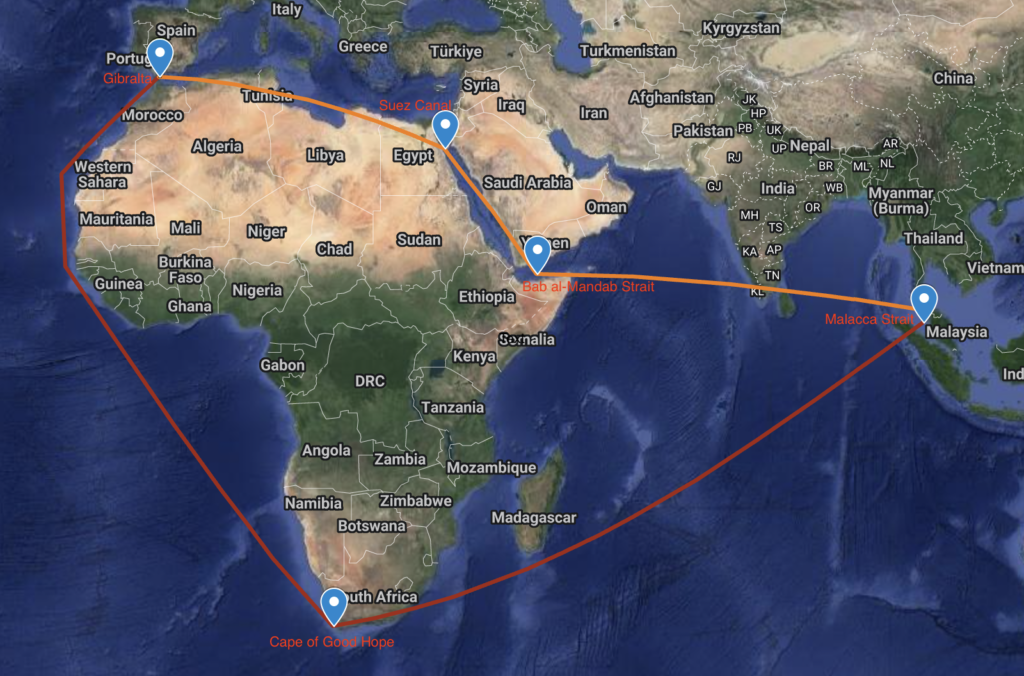
On 14 November 2023, the Houthis, who have controlled a considerable part of Yemen, including the capital Sana’a for years, posted on social networks a poster in Arabic, English, and Hebrew, depicting an Israeli container vessel in flames, that read 'We will sink your ships' (image to the left). In response, the International Maritime Security Construct (IMSC) issued a statement, warning vessels travelling through the Bab al Mandeb Strait and the Red Sea to sail far from Yemen’s shores and during the night hours, to avoid easy detection, alluding to the threats launched by the Houthis to the Israeli ships. The Bab al Mandeb Strait is a maritime choke point that connects the Red Sea to the Gulf of Aden, permitting vessels to transit from the Indian Ocean to the Mediterranean Sea.
Even with the warnings, the Houthis managed to demonstrate their capabilities by seizing the ship named The Galaxy Leader. The Galaxy sailed under the flag of the Bahamas and was leased from a British company co-owned by Israeli businessman Rami Unger and was under contract to a Japanese company. This is a ship that left Turkey and was heading to India with an international civilian crew of 25. The Houthis used a helicopter to board and took the hijack to the port of Hodeida, and then moved to an area further north (see satellite map). The Galaxy Leader remains in Yemen in the hands of the Houthis.
The Houthis followed up on their threat with a series of six operations (dated 12 December 2023), deliberately targeting ships navigating the Red Sea, notably those with ties to Israel. This spate of attacks prompted several companies to swiftly reroute their vessels, steering clear of the critical passages of the Suez Canal and Bab al-Mandab. Instead, these vessels are now passing the Cape of Good Hope route, significantly extending their voyage duration.
The persistent uncertainty and risk associated with the Houthis continued targeting of international vessels amplify the risk of substantial disruption to global trade, particularly impacting crucial trade routes connecting Europe, Asia, and the Middle East. This heightened risk threatens to disturb the flow of commerce between these regions, exerting profound repercussions on the interconnected economies and trade relationships that heavily rely on uninterrupted maritime transportation. At the same time, it raises the question for how long the Houthis can sustain their new focus that changed from targeting mostly Yemeni forces to Israeli interests and Western nations who support Israel.
If the recent series of Houthi attacks on ships in the Red Sea intensify, the Houthis are bound to have profound implications for global trade in the upcoming months. Any Houthi escalation will lead to a major disruption in Red Sea maritime traffic, it will significantly impact both global energy security not to mention the dry cargo trade. Europe, still recuperating from rerouting shipments to avoid the Ukraine war, will be particularly vulnerable to these effects.
The U.S. Energy Information Administration (EIA) highlights the importance of northbound crude oil transfers to the Mediterranean via two critical routes—the Suez Canal and the Sumed pipeline in Egypt. Western sanctions on Russia’s energy industry have compelled Europe to increase oil imports from select Middle Eastern producers by 60%. For instance, Iraq’s oil exports to Europe via the Suez Canal surged from an average of 629,000 barrels per day to 743,000 barrels per day this year, as reported by data from Kpler.
While at this point the immediate impact of the Red Sea attacks remains somewhat contained, the risk of further Houthi escalation poses a significant, profound threat to commercial disruptions worldwide. Safeguarding the freedom of navigation on this crucial waterway is indispensable not only for maintaining energy security in Europe but also insuring the stability of the global economy. As such, any continued Houthi threats to maritime security in the Red Sea need careful attention and strategic measures are needed to mitigate any adverse effects globally.
| |
|
TRAC Incident Report:
Killnet Group Claims Responsibility for a Severe Cyberattack
on Ukrainian Top Mobile Operator Kyivstar, Ukrain
| |
|
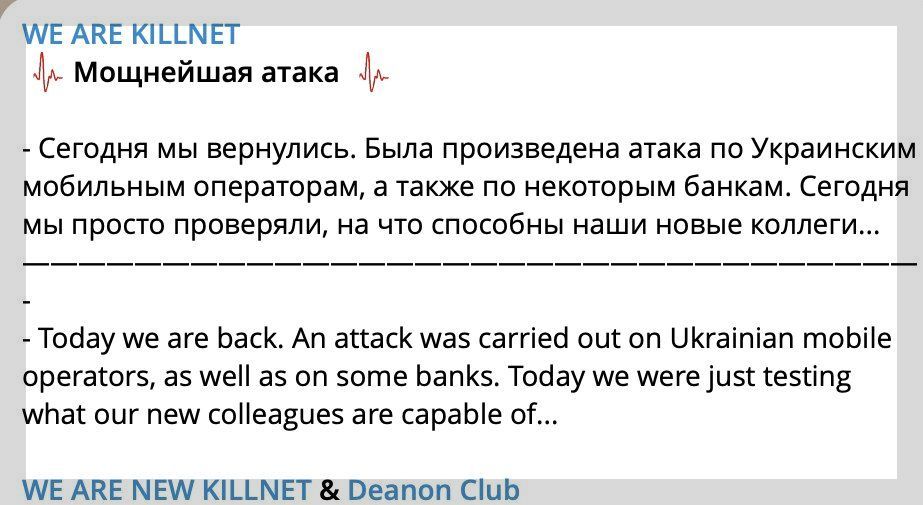
On 12 December 2023, reports emerged in connection with a large-scale cyberattack conducted by the Russian hacker group known as Killnet against Ukraine’s leading mobile operator, Kyivstar. Killnet's massive hack resulted in the said telecommunications company shutting down its service, preventing more than half of the country’s population (24.3 million mobile subscribers) from communicating during a war.
Although the said cyberattack was claimed by Killnet, Ukrainian authorities suspect the involvement of Russian security services. Indeed, Russia has silently used Killnet in the past as its cyber proxy.
| |
|
This incident marks the first breach of the Ukrainian mobile operator Kyivstar, and the largest cyberattack on Ukraine since Russia launched its war on that country in February 2022.
The attack not only damaged IT infrastructure but also resulted in millions of civilian Ukrainians unable to receive critical alerts of potential Russian air strikes across the country, including parts of Kyiv. Following the incident, reports emerged claiming that the Ukrainian military had not been affected by the disruption. However, it should be noted that the company also provides communication services to the armed forces, government agencies, and law enforcement. A second claim, released by a hacker group known as Solntsepek, claims to have disrupted security communications. TRAC rules out that this incident is financially motivated.
Of note, this attack comes on the same day that Ukraine’s President Zelensky traveled to Washington to meet with United States President Joe Biden.
| |
|
TRAC Incident Report:
Security Breach at Indian Parliament as Intruders Throw Smoke Bombs Inside Lok Sabha Building on the 22nd Anniversary of 2001 Parliament Attack, New Delhi, India
| |
|
On 13 December 2023, two young men, who were allowed into visitor's gallery of the Indian Parliament, jumped into the Lok Sabha (the lower house) and intentionally disrupted its proceedings. The perpetrators entered the house and immediately ran towards the house speaker igniting yellow smoke canisters. The accused, identified as Sagar Sharma (resident of Lucknow) and D Manoranjan (resident of Mysore), entered the Lok Sabha on Bharatiya Janata Party (BJP) Pratap Simha’s (Member of Parliament) reference.
The perpetrators shouted, "tana shahi nahi chalegi" ("dictatorship won’t be accepted"), a slogan against the union government.
A total of six people were arrested in connection with the incident. Neelam and Amol Shide were arrested for similar activities outside the parliament; Neelam Devi, aged 42, hails from Hissar (Haryana), while Amol Shinde, aged 25, is from Latur (Maharashtra). Two other suspects, Lalit Jha from Gurgaon and Vicky Sharma also from Gurgaon, were arrested later.
TRAC purports that this incident was intentionally planned to occur just a week after the Sikhs for Justice (SFJ) Leader Gurpatwant Singh Pannun made direct threats calling on supporters to attack the Indian Parliament and on the anniversary of the 2001 Jaish-e-Mohammed (JeM) attack on parliament. The 13th of December is of particular significance for Indians as on this day in 2001, Jaish-e-Mohammed (JeM) militants attacked the Indian Parliament killing nine members of the security forces before being neutralized. This year is the 22nd anniversary of the attack and is observed with a special commemorative program.
It is worth mentioning that the Parliament of India is located in one of the most highly secured areas of New Delhi near the residence of the President of India (Rashtrapati Bhavan), India Gate, the Secretariat building, the Ministry of Home and External Affairs, and other key offices.
| |
TRAC Video Report: Alleged Leftist Radical Throws a Bottle at Newly Elected Far-Right President Milei During His Inauguration Ceremony, Buenos Aires, Argentina | |
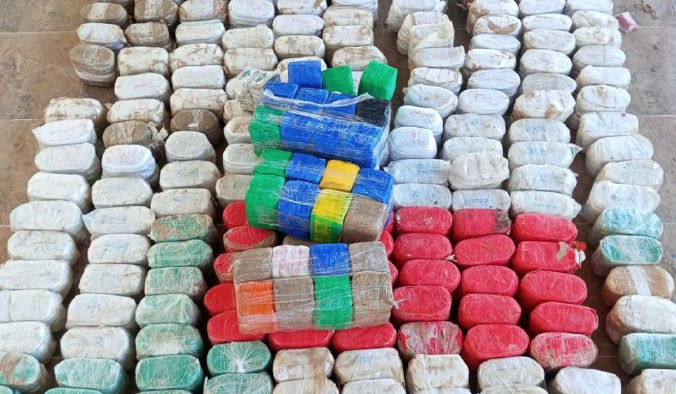
TRAC Photo Report: Jordanian Authorities Clash with Pro-Assad Drug Traffickers and Seizes 119,000 Captagon Pills and 1,748 Packets of Hashish Near the Syrian-Jordan Border in Suwayda Province, Syria | |
TRAC Poster Report: French Anarchist Share Posters 'No to the Olympic Games, Neither here nor Elsewhere!', France | | | | |