|
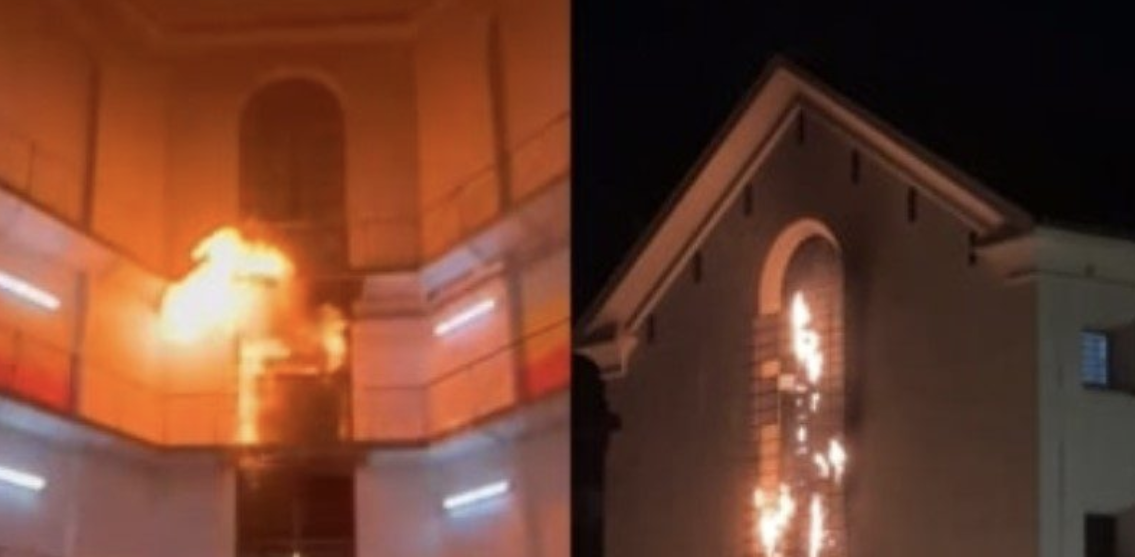
On 25 September 2024, around 9 PM local time, a group of 120 inmates initiated a violent protest inside the Regina Coeli prison in central Rome. The demonstration quickly escalated into chaos, with prisoners setting fire to mattresses and even a part of the roof. They also detonated gas canisters from camping stoves commonly used for cooking, resulting in significant damage to several cells within the facility.
The riot was contained only after hours of struggle, which required the intervention of anti-riot security forces deployed from other nearby penitentiaries. One prison guard reportedly suffered from smoke inhalation due to the heavy fumes caused by the fires. The Eighth section of the prison, where the unrest began, sustained severe damage, including the collapse of the roof before the flames engulfed the area. Additionally, the prison's electrical system in that section was extensively damaged, leading to a power outage. Despite the intensity of the situation, no inmates managed to escape, largely due to the swift response by the security forces. However, the fact that the flames were visible from outside the building and that the roof collapsed hints at a possible mass escape attempt that was thwarted in its early stages.
The Regina Coeli prison is situated in Rome's Trastevere neighborhood, a bustling area known for its attractions, traditional restaurants, and bars that draw both locals and international tourists. The location of the prison in such a high-density area raises serious concerns about the potential risk to public safety had the escape attempt been successful.
This is the second protest at Regina Coeli within a month, suggesting a pattern of unrest and dissatisfaction among inmates. TRAC contends that these incidents may not just be spontaneous acts of defiance but part of a broader strategy aimed at exploiting vulnerabilities within the prison's infrastructure to facilitate escape attempts.
One key aspect that stands out is that the Eighth section of the prison, where the protest erupted, is typically considered among the quietest sections because it houses the so-called “protected” inmates—individuals such as sex offenders, collaborators of justice, and former law enforcement members. The fact that even this relatively calm section is facing upheaval underscores the issue of overcrowding, a problem that plagues all parts of the Regina Coeli facility. This overcrowding not only amplifies tensions among inmates but also limits the ability of prison authorities to manage and de-escalate situations effectively. Overcrowded conditions can lead to frustration, desperation, and the likelihood of coordinated actions aimed at destabilizing the prison environment.
Interestingly, despite the severity of the incident, it did not make national news, potentially indicating a downplaying of the event by the authorities. This aligns with the current stance of Italy's far-right government, which has recently pushed for the introduction of new legislation that criminalizes acts of riot within penitentiaries and migrant detention centers (CPRs). The new Security bill, which is currently being reviewed by the Senate after passing in the Chamber, proposes prison sentences ranging from one to five years for individuals involved in such disturbances. The government's emphasis on this legislation, coupled with its silence on the specific details of the Regina Coeli incident, suggests a deliberate effort to maintain public perception of law and order while laying the groundwork for stricter punitive measures against unrest within detention facilities.
The recurring protests and violent incidents at Regina Coeli highlight deeper systemic issues within Italy’s prison system, such as overcrowding, inadequate infrastructure, and the lack of effective communication channels for inmate grievances. The prison's location in a densely populated area adds another layer of complexity, making it a high-risk facility in terms of both security breaches and public safety.
This protest serves as a stark reminder of the ongoing challenges facing Italy's prison system. While the immediate crisis was contained, the systemic issues that led to the unrest remain unaddressed. As the Italian government pursues stricter punitive measures against such acts, the underlying tensions within overcrowded and poorly managed facilities like Regina Coeli could continue to fuel instability.
| | |
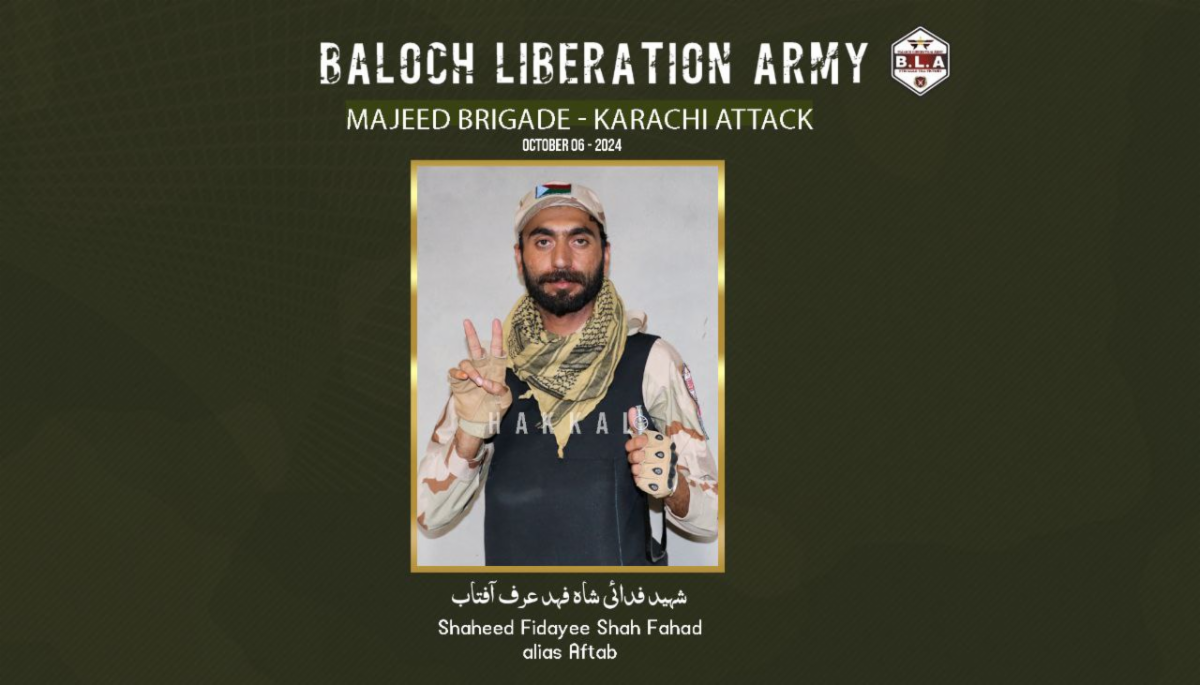
TRAC Incident Report: Baloch Liberation Army’s (BLA) Majeed Brigade Fidayee Shah Fahad (aka Aaftab) Conduct Suicide VBIED Attack Targeting Chinese Convoy of Engineers and Investors Departing from Jinnah International Airport in Karachi, Sindh, Pakistan | |
|
On 6 October 2024, Suhail Fahad, also known as Aaftab, a member of the Baloch Liberation Army’s (BLA) Majeed Brigade, carried out a suicide vehicle-borne improvised explosive device (VBIED) attack targeting a Chinese convoy of engineers and investors departing from Jinnah International Airport in Karachi. The explosion resulted in multiple casualties, including both Chinese nationals and their security personnel. However, neither the BLA nor Pakistani authorities have disclosed the precise number of victims. Airport officials did confirm that over 40 Chinese nationals had arrived just an hour before the attack took place.
The boldness of this attack, specifically in Karachi, marks a significant escalation in the BLA's operations, as it is far from their traditional area of activity in Balochistan. This move into urban centers like Karachi indicates a strategic shift in the group's insurgency tactics. Historically, the BLA has concentrated its efforts within Balochistan, but expanding into high-profile cities like Karachi allows them to gain greater media attention and puts pressure on the Pakistani government to protect its urban centers and key economic interests.
This is not the first time the BLA has attacked Chinese nationals in Karachi. In April 2022, a rare female BLA suicide bomber detonated near the Confucius Institute at Karachi University, killing three Chinese teachers and injuring several others. That incident was notable for being the group's first recorded use of a female suicide bomber, signaling their commitment to evolving tactics in their ongoing campaign against Chinese interests. The BLA’s consistent targeting of Chinese nationals is rooted in their opposition to China’s role in the China-Pakistan Economic Corridor (CPEC). The militants view the project as a tool of exploitation, benefiting Pakistan's central government and Chinese investors while marginalizing the people of Balochistan. BLA perceives Chinese involvement as an extension of colonial practices, exploiting the region's natural resources without delivering tangible benefits to the local communities.
The Majeed Brigade is the elite unit within the BLA, specializing in suicide attacks and high-risk operations. This unit has been at the forefront of targeting both Chinese interests and Pakistani military installations linked to CPEC. Their attacks are designed to disrupt the project’s progress and draw international attention to the perceived injustices against the Baloch people. The Majeed Brigade's involvement in this Karachi attack is in line with their mission to challenge what they consider Pakistan's and China's exploitation of Balochistan’s resources.
This attack in Karachi comes on the heels of increased BLA activity observed in recent months. In late August 2024, the BLA launched “Operation Herof”, one of its most ambitious and coordinated assaults to date. This operation involved around 800 elite fighters from the BLA’s Fatah Squad and Special Tactical Operations Squad (STOS), along with seven suicide bombers from the Majeed Brigade. The attack resulted in the deaths of approximately 130 Pakistani military personnel and was positioned as the first phase of a larger campaign to reclaim Balochistan territory.
The BLA’s attack in Karachi signifies a calculated attempt to escalate their conflict with the Pakistani state and extend their operations beyond their stronghold in Balochistan. Expanding their theater of operations to urban areas like Karachi not only increases the visibility of their cause but also amplifies the security challenges faced by Pakistani authorities. This shift indicates a willingness by the BLA to engage in urban warfare to inflict maximum damage on symbols of Chinese economic influence and the Pakistani government's security apparatus.
| |
TRAC Insight: Hindu Imagery and Neo-Nazi Accelerationism – A Contradictory Fusion | |
|
Recently, neo-Nazi accelerationist movements, often intertwined with Satanic ideologies, have begun to appropriate Hindu symbols and religious texts in their propaganda efforts. This seemingly contradictory fusion of ideologies manipulates elements of Hinduism—such as Goddess Kali, the swastika, and quotes from the Bhagavad Gita—to justify their destructive goals and propagate their distorted vision of racial superiority. By twisting these religious symbols to fit their own narrative, these extremist groups aim to add a layer of legitimacy to their agenda of chaos and racial hierarchy.
The convergence of neo-Nazism, Satanism, and accelerationism might seem paradoxical, given their different ideological origins, but they share a common goal of promoting chaos and destruction. These movements overlap in their mutual disdain for societal norms and their promotion of extremist beliefs:
- Neo-Nazism is grounded in the belief of Aryan racial supremacy, drawing its roots from Hitler’s fascist ideology and advocating for the dominance of a so-called superior race.
- Satanism, particularly in its modern forms, often embraces individualism, anti-authoritarianism, and a rejection of traditional Christian morality. It sometimes glorifies concepts of power and destruction as virtues.
- Accelerationism seeks to accelerate societal collapse to trigger radical change, often advocating for violent or extreme actions to achieve a new societal order. This ideology sees chaos as a necessary precursor to revolution.
These ideologies coalesce in online extremist communities, where they feed off each other’s narratives. For neo-Nazi accelerationists, Satanism can serve as a vehicle to express their rejection of conventional values, while both Satanists and accelerationists glorify the concept of chaos as a means to achieve their objectives.
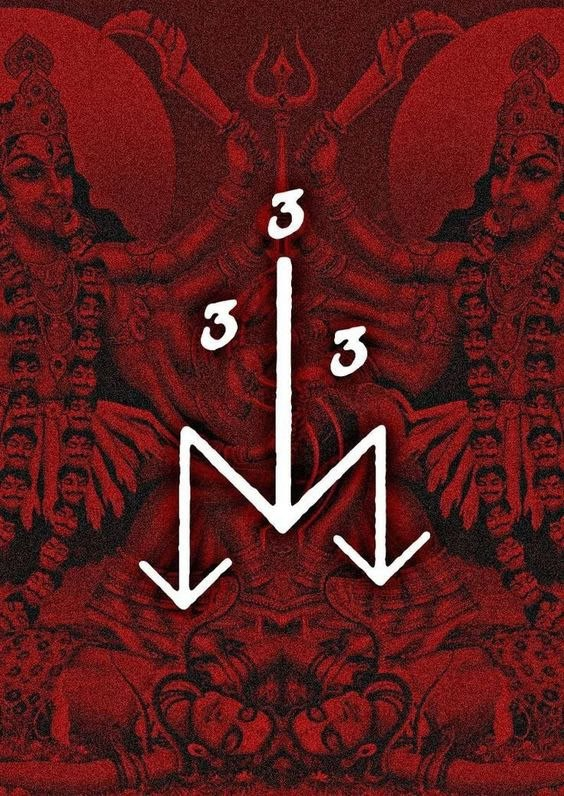
Goddess Kali, revered in Hinduism for her powerful and transformative qualities, has been appropriated by groups like Injekt Division. In these contexts, Kali’s imagery is stripped of its religious significance and instead used to symbolize destruction and chaos. Images of Kali standing on Lord Shiva, accompanied by references to Adolf Hitler and the number 333 (a symbol used by some far-right groups), have surfaced in their propaganda materials. For Hindus, Kali represents both destruction and creation, embodying the forces that bring about change by annihilating evil and ignorance. However, for neo-Nazi accelerationists, Kali’s imagery is co-opted to represent the chaos they aim to unleash upon society. This deliberate misrepresentation attempts to forge a symbolic connection between their ideological goals of societal collapse and the transformative destruction that Kali is traditionally associated with. This appropriation creates a stark contradiction. Neo-Nazi ideologies are inherently anti-non-white and anti-non-Christian, yet they adopt symbols from a deeply respected Hindu tradition, a religion practiced primarily by non-white communities in India. This paradox indicates that these groups exploit Hindu symbols superficially, without genuine respect or understanding of their meanings, merely to serve their own agenda of chaos and racial division.
The connection between Nazism and Hinduism has its roots in the Aryan race theory. Historically, the term "Aryan" referred to ancient Indo-European people who migrated into the Indian subcontinent. The Nazis later appropriated the term to promote their idea of a superior race, creating a superficial link between their racist ideology and ancient Indian history. Neo-Nazi groups continue to exploit this distorted connection by using symbols like the swastika, originally a sign of auspiciousness in Hinduism, Buddhism, and Jainism, repurposed by the Nazis as a symbol of racial purity. Groups like Injekt Division have circulated images featuring both the Nazi swastika and the Hindu swastika (which has four dots), attempting to blend these symbols to create a misleading connection to ancient “Aryan” civilization and legitimize their racist beliefs.
The use of Shani Dev imagery by Injekt Division and other accelerationist groups adds another layer to their twisted symbolism. Shani, the Hindu god associated with Saturn and karmic justice, is believed to bring about consequences based on one’s past deeds. By presenting a syringe as an offering to Shani, these groups imply their intent to “inject” chaos into society, viewing their violent actions as a form of retributive justice against those they perceive as deserving punishment. This appropriation twists Shani Dev’s role in delivering justice according to karma into a justification for their accelerationist agenda, painting their violent tactics as a necessary punishment for a corrupt society.
Despite neo-Nazism’s usual stance against other races and religions, these groups are selectively co-opting Hindu symbols and texts to suit their narratives. They misuse references from the Bhagavad Gita, such as the verse "He who is the same in pain and pleasure is fit for immortality," to justify their beliefs in violence and martyrdom. The comparison of Adolf Hitler to the Hindu deity Kalki, the prophesied destroyer of the wicked, further illustrates their attempt to draw a parallel between their ideological leaders and Hindu concepts of divine retribution.
| |
TRAC Incident Report: Environmental Activist Group ‘Extinction Rebellion’ Sabotage NGE Warehouse in Protest of A69 Motorway Construction, in Domène, Isère, Southeastern France | |
|
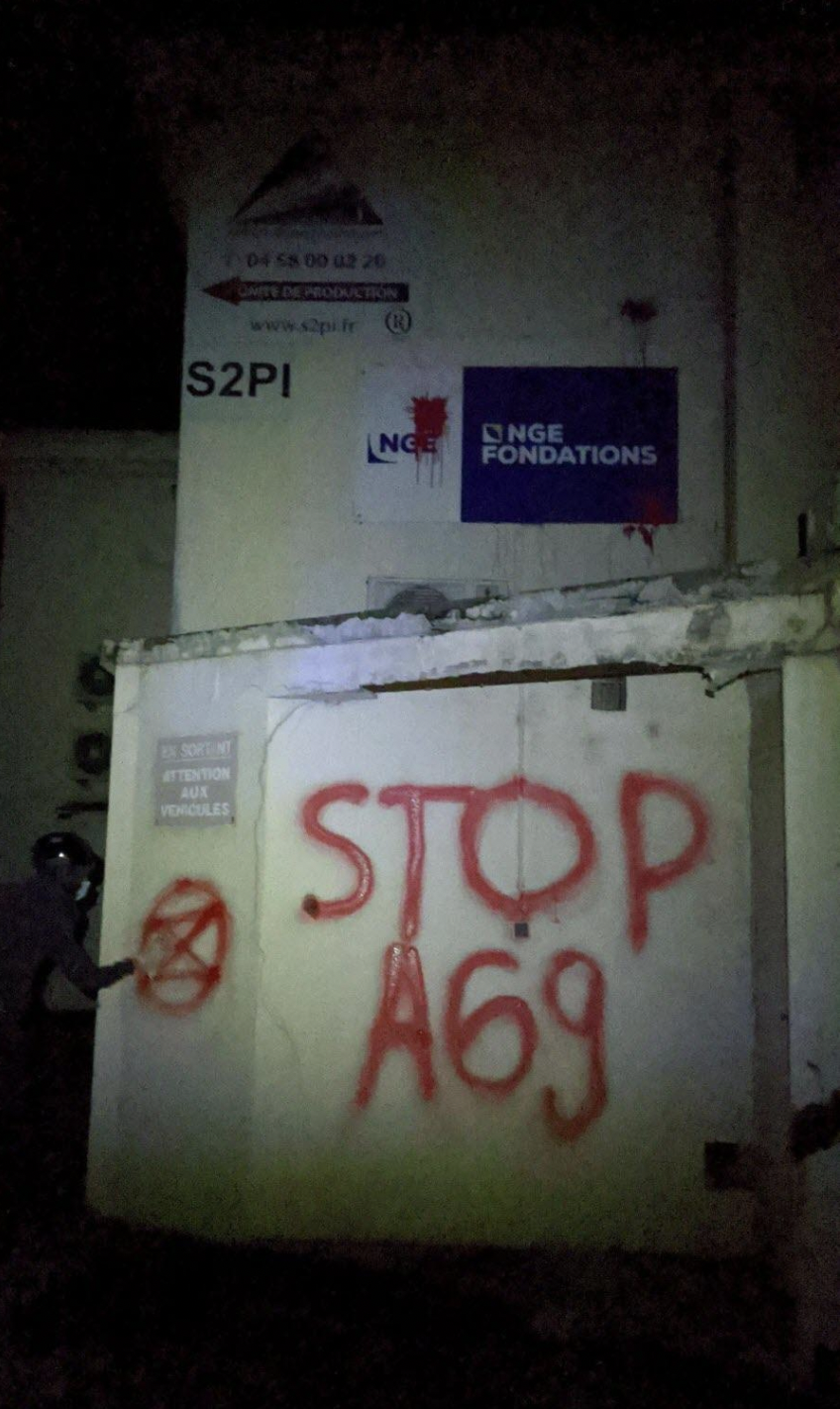
On 1 October 2024, the environmentalist group Extinction Rebellion (XR) sabotaged an NGE construction warehouse in Domène, Isère, in southeastern France, protesting the company’s involvement in the construction of the A69 motorway. Although the extent of the damage to the warehouse is yet to be fully assessed, Extinction Rebellion publicly claimed responsibility for the attack through a press release and left their placards and graffiti on-site to make their involvement clear.
Extinction Rebellion has historically been known for its commitment to nonviolent civil disobedience, often organizing large-scale protests, sit-ins, and blockades to demand action on climate change and environmental issues. This incident marks a significant departure from their usual tactics, as it involves direct damage to infrastructure, which is uncharacteristic for a group that typically focuses on peaceful forms of activism. The decision to target the NGE warehouse suggests an escalation in tactics, possibly indicating a shift in strategy in response to the perceived urgency of the environmental threat posed by projects like the A69 motorway.
The A69 motorway project, intended to connect the towns of Castres and Toulouse, has been a focal point of environmental opposition due to its significant environmental impact, particularly the deforestation required for its construction. Activists have criticized the project for contributing to habitat destruction and increasing carbon emissions, arguing that it contradicts France's commitments to reducing greenhouse gases and promoting sustainable development. Since 1 September 2024, when large-scale tree cutting and deforestation began to make way for the motorway, the project has faced increasing opposition from both environmentalist and anarchist groups. TRAC has recorded multiple incidents of sabotage and disruptive actions against the construction, suggesting a coordinated effort among various activist factions to halt or delay its progress.
The involvement of Extinction Rebellion in a sabotage action against infrastructure marks a notable shift in their approach, likely driven by the urgency they feel about the climate crisis and the immediate impact of the motorway project. This escalation could signal a broader strategic shift among environmental groups, where frustration over the lack of governmental response to climate concerns may push traditionally nonviolent organizations to adopt more direct action tactics. The A69 motorway is seen as symbolic of broader environmental issues that pit economic development against ecological preservation. As construction continues, it is likely to remain a flashpoint for eco-activist groups and anarchists, with ongoing efforts to disrupt the project. TRAC anticipates a rise in sabotage attempts and protest actions aimed at slowing down or stopping the motorway's development altogether.
This change in tactics by Extinction Rebellion and others could have significant implications for future environmental protests. If nonviolent groups begin to embrace more aggressive methods, it may lead to increased scrutiny from law enforcement and could potentially polarize public opinion on the environmental movement. It also suggests that frustration with governmental and corporate inaction on climate change might be pushing some activists towards radicalization, blending traditional environmental concerns with more extreme forms of resistance.
| |
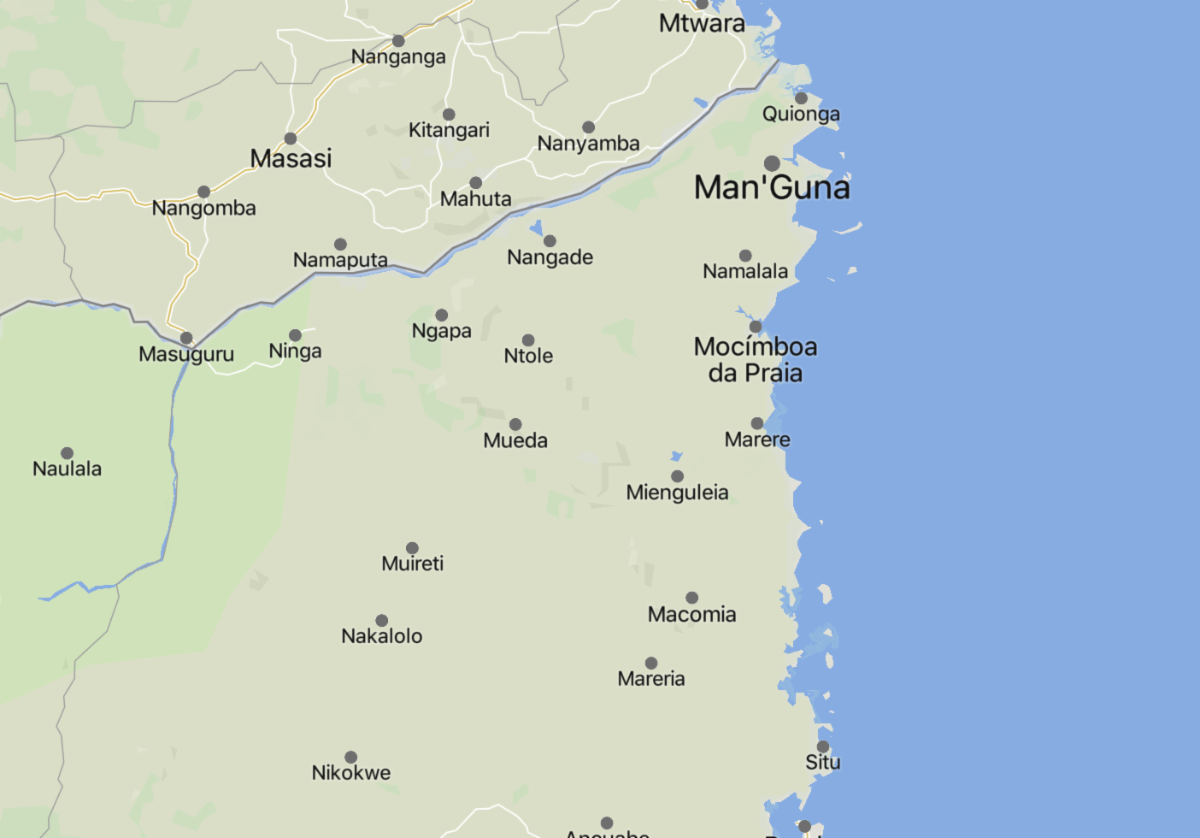
TRAC Incident Report: Suspected Islamic State Mozambique (IS-M/Shabaab Cult) Capture and Execute a Christian Resident in Man’Guna [TotalGas Presence], Palma, Cabo Delgado Province, Mozambique | |
|
On 4 October 2024, suspected Islamic State Mozambique (IS-M) militants captured and executed a Christian resident in the rural area of Man’Guna, Palma County. The area is strategically significant due to its proximity to TotalEnergies’ natural gas project and its location near the Tanzanian border, making it a focal point for both economic development and militant activity. This attack marks the second such incident within a week in the same region, following an armed assault by IS-M militants on 26 September 2024.
Man’Guna's proximity to Palma underscores its strategic importance, not only as a base for militant operations but also due to its closeness to TotalEnergies' natural gas project, one of the largest economic initiatives in the region. The project has drawn significant international investment, making it both a symbol of economic growth and a high-value target for militant groups like IS-M. The execution of a Christian resident in this area suggests that IS-M is intent on sending a message both to the local population and to international stakeholders about their ongoing influence and capacity to strike near these critical assets.
This attack is part of a broader pattern of militant activity in Palma County, where IS-M has been consistently targeting economic infrastructure and Christian communities. In 2021, IS-M militants launched a major assault on Palma, resulting in widespread destruction, mass beheadings, and the displacement of half the town’s population. The recurrence of attacks in this region signals IS-M's strategy to destabilize the area by targeting both religious minorities and economic projects, thereby undermining both social cohesion and economic development efforts.
The TotalEnergies' natural gas project has been both a driver of economic development and a magnet for extremist activity. The project's location in an area with high levels of insurgent presence makes it particularly vulnerable to disruptive attacks aimed at economic sabotage. IS-M’s strategy seems to be twofold: discouraging investment in the region by attacking foreign interests and fueling sectarian violence by targeting Christians, who are seen as representatives of Western influence.
The increased frequency of attacks near Palma and Man’Guna points to a resurgence of IS-M activity in the region, likely aimed at exploiting the vulnerabilities left by ongoing military and security challenges. The border area with Tanzania serves as a crucial logistical hub for the movement of fighters, arms, and supplies, allowing IS-M to sustain its insurgency. The proximity to an international border also complicates counter-insurgency operations for Mozambican forces, who may face difficulties in securing these areas against cross-border militant movements.
| |
TRAC Incident Report: FAMA/Wagner (Africa Corps) Convoy Drone Striked a Vehicle Reportedly Belonging to Azawadi Forces South of Tinzaouatine, Kidal Region, Mali | |
(Instructional Manual) White Lives Matter Releases (WLM) Activist Publish Manual 3.0 Outlining their Pro-White Activism Strategies | |
TRAC Incident Report: Knife-Wielding Lone Wolf Kills Three and Wounds 15 Others at a Supermarket on the “Golden Week” Holiday’s Eve, Sōngjiāng District, Shanghai, China | | | | |