|
Lashkar‑e‑Taiba (LeT)’s Expanding Maritime Capabilities and Threat to India’s Maritime Domain
Lashkar-e-Taiba (LeT) is developing a specialised maritime wing known as a “Water Force,” integrating advanced sea-based skills into its militant training framework. Trainees aged 15 to 35 undergo 20–40 day courses covering advanced swimming, scuba diving, underwater manoeuvring, water rescue operations, and the operation of high-speed motorboats, with training structured around a Mumbai-style small-cell attack model designed to move operatives covertly from sea to land using small boats or divers and replicate the 26/11 pattern of simultaneous multi-target strikes. This initiative builds on LeT’s long-standing amphibious training programs, including combat diving at the Neelam River and facilities near Mangla and Tarbela Dams, historically conducted through the Al Dawa Water Training Unit under the Falah-e-Insaniyat Foundation (an LeT proxy) near Muzaffarabad, Kotli, and Mangla Dam to facilitate infiltration across the Kishanganga River from the Tangdhar sector.
Alongside technical instruction, the program incorporates ideological indoctrination and paramilitary discipline, with recruits first exposed to religious messaging before entering a selection pipeline where suitable candidates advance to weapons and guerrilla warfare training. The emphasis on agile, small-team operations suggests a shift away from mass mobilisation imagery toward precision-style attacks designed to maximise psychological and media impact with a smaller logistical footprint.
Recruitment and Front-Organisation Networks
The recruitment mechanism relies heavily on front organisations that present themselves as youth development or disaster response outfits. These fronts, most notably the Pakistan Markazi Muslim League (PMML) and the Pakistan Muslim Youth League (MYL), are used to attract large numbers of young people under the cover of “rescue” or “preparation” training. Within this framework, swimming-focused courses drew in approximately 5,000 youths, with a smaller subset filtered into LeT and PMML’s cadres. Around 300 of these individuals are believed to have joined LeT’s militant ranks after further screening, ideological indoctrination, and weapons training. This two-tier system allows LeT to maintain a broad recruitment base while keeping its core militant component relatively small and disciplined.
Training Locations
Training is reported across multiple locations in Pakistan and Pakistan-administered Kashmir, suggesting a deliberately dispersed infrastructure. Sites include Islamabad, Muridke, Lahore, Bahawalpur, Karachi, Kasur, and Alipur on the Pakistani side, and the Suran River in Poonch, Mangla Dam near Mirpur, and Muzaffarabad in Pakistan-administered Kashmir. These venues provide access to rivers, reservoirs, and coastal infrastructure, enabling structured practice in swimming, diving, and boat handling. The inclusion of Karachi and Mangla Dam is particularly significant, as both locations offer proximity to major ports, naval facilities, and inland waterways that can be used for both training and future staging.
Potential Targets and Attack Scenarios
The development of maritime capabilities provides militant organisations with alternative infiltration routes that can bypass heavily monitored land borders, particularly along the India–Pakistan axis. Using small boats, divers, or amphibious teams, operatives could approach coastal areas with limited detection, especially at night or within congested maritime zones where fishing and commercial traffic complicate monitoring. This approach allows small, highly trained cells to infiltrate urban coastal environments and carry out coordinated attacks against multiple targets in a short timeframe, prioritising precision while maximising disruption, media attention, and psychological impact. Potential targets would likely include major coastal cities and maritime infrastructure, with Mumbai remaining the most symbolically significant due to the legacy of the 2008 attacks and its concentration of hotels, transport hubs, and financial institutions, though cities such as Kochi, Chennai, Visakhapatnam, and Port Blair could also be targeted to test India’s coastal security across different regions. Ports, naval facilities, energy infrastructure, and waterfront tourist districts would be particularly vulnerable due to their visibility and limited shoreline defences.
Regions such as Gujarat, given its proximity to Pakistan’s maritime border and critical infrastructure, including Kandla and Mundra ports and petrochemical facilities, as well as Goa, with its tourism sector and accessible beaches, present additional soft-target environments, while the remote geography of the Andaman and Nicobar Islands complicates surveillance and maritime domain awareness. The most plausible operational scenario would involve small teams infiltrating by high-speed boats, possibly supported by divers or underwater diversions, followed by rapid attacks on hotels, transport hubs, or commercial centers to exploit coordination gaps between maritime and land security agencies. Despite this, operational success remains uncertain, as India’s post-26/11 investments in coastal surveillance, radar networks, and coordination among the Navy, Coast Guard, and state agencies have raised the barrier for large-scale infiltration.
Institutionalisation of Maritime Militancy
What stands out is the institutionalisation of maritime militancy. LeT is not just improvising a maritime capability; it is building a structured, multi-layered training and recruitment system that, in some ways, mirrors a miniature semi-professional security sector. The use of front organisations, age-targeted recruitment, and regularised courses suggests a long-term investment in human capital rather than a one-off campaign. This indicates that counter-terrorism efforts will need to focus not only on disrupting specific planned attacks but also on degrading the underlying infrastructure, training sites, recruitment pipelines, and ideological messaging.
Ultimately, the emergence of a disciplined maritime wing highlights the importance of integrating intelligence, law enforcement, and naval operations, as well as engaging local communities, to detect, disrupt, and contain these threats before they manifest as coordinated attacks. Failure to address the organisational infrastructure could allow the group to maintain operational readiness and exploit future security gaps, potentially escalating the maritime threat environment in the subcontinent.
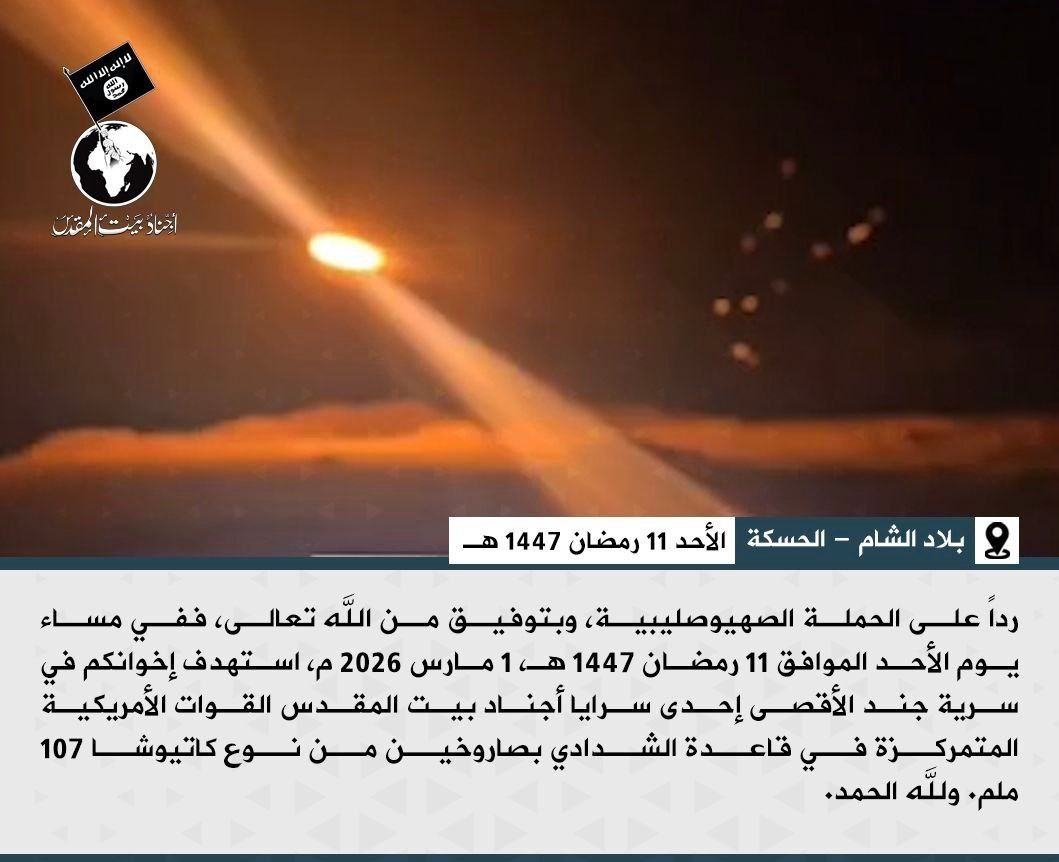
| | | TRAC Incident Report: Alleged Al-Qaeda Affiliated Group Soldiers of the Bayt Al-Maqdis [Ajnad Bayt al-Maqdis] & Islamic Resistance Front in Syria (IRFS)Competing Claims of Katyusha Rocket Attack Targeting al-Shaddadi Military Base, Hasakah Governorate, Syria | | |
On 2 March 2026, two groups, Soldiers of the Bayt al-Maqdis and the Islamic Resistance Front in Syria (IRFS), separately claimed responsibility for firing 107mm Katyusha rockets at the al-Shaddadi military base in Hasakah, Syria. The competing claims immediately raise credibility concerns, as both groups attempted to frame the attack within the broader regional escalation following coordinated U.S.–Israeli strikes in Iran and Iran’s subsequent retaliatory missile and drone campaign across the region. The incident appears to reflect the wider mobilisation of actors linked to Iran’s proxy network, which has already manifested in increased activity from affiliated groups in Iraq, along with vocal support from Hezbollah and the Houthis.
The claim attributed to Soldiers of the Bayt al-Maqdis is particularly questionable. The group only recently emerged, announcing allegiance to al-Qaeda on 22 February 2026, yet al-Qaeda’s operational presence in Syria remains fragmented and weakened after the dissolution of Hurras al-Din in January 2025, and historically concentrated in Idlib rather than Hasakah. This makes a rapid operational capability in the region unlikely. Instead, the claim may represent ideological branding rather than direct organisational involvement, especially given that al-Qaeda’s as-Sahab Media recently issued messaging calling for attacks if the United States invades Muslim lands and expressing support for Iran. Meanwhile, the IRFS claim uses rhetoric closely resembling the “Islamic Resistance in Iraq,” which has frequently positioned itself within the Iranian “axis of resistance.” The use of 107mm Katyusha rockets, previously linked to pro-Hezbollah cells uncovered in Syria and in attempted weapons smuggling operations destined for Hezbollah, further suggests the potential involvement or influence of Iran-aligned networks operating in Syria.
Finally, the strategic significance of the attack itself may be limited, as U.S. forces had already withdrawn from the al-Shaddadi base earlier in 2026, with control transferred to Syrian forces. As a result, TRAC assesses that the attack was likely symbolic rather than materially impactful, serving primarily as propaganda within the broader regional confrontation and as an attempt by competing militant groups to claim relevance within the evolving “axis of resistance” narrative.
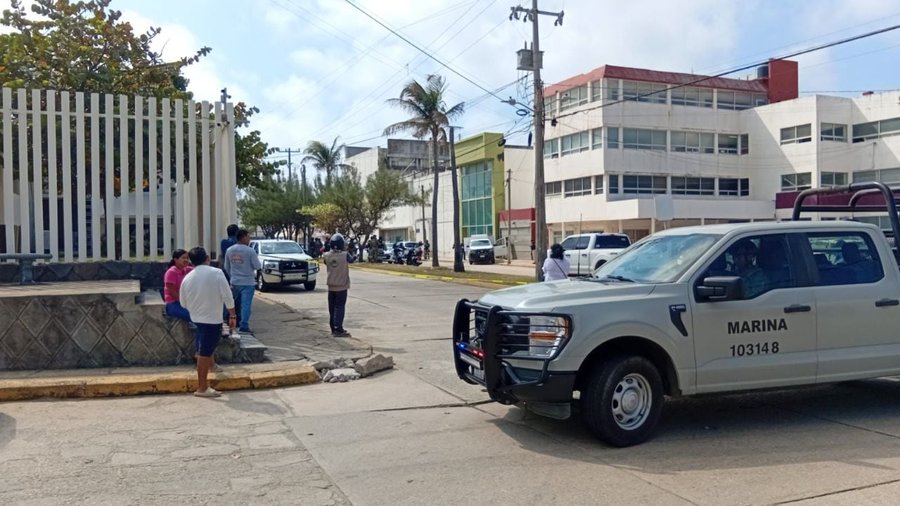
| | TRAC Incident Report: Grupo Cobra Targets Progresa Financial Company Leaving Four Dead in Coatzacoalcos, Veracruz, Mexico | | |
On 3 March 2026, between 1:00 and 2:00 p.m. local time, an armed group arrived at the Progresa financial company on Lázaro Cárdenas Avenue in the María de la Piedad neighbourhood of Coatzacoalcos, Veracruz. The building, which previously housed the Administrative Justice Tribunal, was targeted by attackers who went to the second floor and attempted to collect extortion payments. When those present denied any arrangement, the gunmen opened fire, killing one woman and three men and injuring two additional women. Shortly after the attack, Grupo Cobra released a video on social media claiming responsibility, accusing the company of operating as an extortion front and showing footage of the moment the attackers opened fire. Authorities issued a Code Red security alert and launched both ground and aerial search operations, but no arrests have been reported.
The incident reflects the broader environment of extortion-related violence in Coatzacoalcos, which has forced the closure of numerous businesses. In January 2026, the well-known restaurant El Calamar was set on fire in a Molotov-cocktail attack widely linked to protection-money demands, highlighting the scale of coercive criminal activity in the region. Official figures indicate that at least 16 homicides have been recorded in the area so far in 2026, underscoring the persistent insecurity affecting local commerce and communities.
The emergence of Grupo Cobra in mid-2025, presenting itself as a coalition of “civilians and businessmen,” suggests the group is exploiting rather than simply responding to the extortion environment in Veracruz. Both the Progresa attack and the earlier arson of El Calamar follow a pattern in which armed actors justify violence by accusing targets of involvement in extortion networks while portraying themselves as enforcers of justice. In practice, however, such actions may be aimed at controlling or reshaping extortion systems, eliminating rivals, disciplining businesses that refuse to cooperate, or consolidating authority under the rhetoric of community self-defence. In this context, the attack on the Progresa financial company likely represents not only an extortion-linked killing but also a symbolic assertion of power over the local credit and finance sector, reinforcing a broader trend in which armed groups use narratives of “security” and “justice” to legitimise coercive economic control in Coatzacoalcos and surrounding areas.
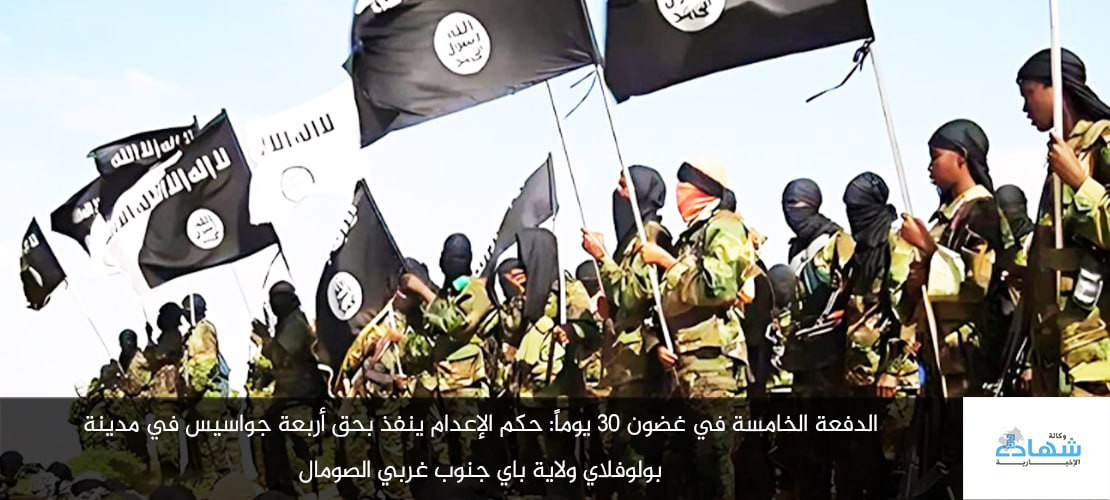
| | (Claim) Al-Shabaab Kangaroo Court Executed Four “Spies”, Who Worked for the Somalian & American Intelligence, in Buulo Fulaay, Bay, Southwestern Somalia | | |
On 3 March 2026, Al-Shabaab’s local Sharia court publicly executed four men in Buulo Fulaay, Bay region, Somalia. The men were accused of spying for the U.S., Ethiopian, and Somali government intelligence services. The men, Abdullah Abdu Buri (24), Faisal Hassan Dhurrah (33), Mahmoud Mohamed Abdirahman “Kabi” (40), and Osman Moallem Mede Adam Sidke (25), were executed by firing squad after “confessing” to activities such as collecting intelligence on al-Shabaab fighters, planting tracking devices used to guide airstrikes, providing information on militant movements, facilitating Somali or Ethiopian military operations, and assisting government-aligned forces logistically. Al-Shabaab framed the executions as punishment for espionage and “revealing the secrets of Muslims”, and stated that this was the fifth group of alleged spies executed in the past month across several towns in southern Somalia.
These executions serve both coercive governance and propaganda functions. Public executions reinforce al-Shabaab’s parallel judicial system in areas where it maintains influence, projecting authority and deterring local cooperation with government or foreign intelligence services. By accusing the men of enabling airstrikes and military operations, the group also seeks to justify harsh reprisals and shape local narratives about civilian casualties by attributing them to informants.
Multiple batches of “spies” have been executed in recent weeks, suggesting a broader internal security campaign aimed at tightening control over populations in Bay and neighbouring regions while signalling to residents that collaboration with Somali, Ethiopian, or U.S. forces carries severe consequences.
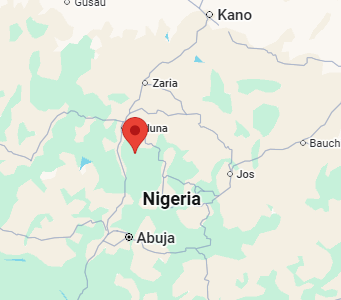
| | TRAC Incident Report: Masked Driver of a Car Loaded with Ammunition Arrested Outside Senate Candidate Ken Paxton’s Watch Party, Dallas, Texas, United States | | TRAC Incident Report: Bandits Storm Mosque During Taraweeh, Abduct Six Worshippers, in the Azara Community of Kachia LGA, Kaduna State, Nigeria | |
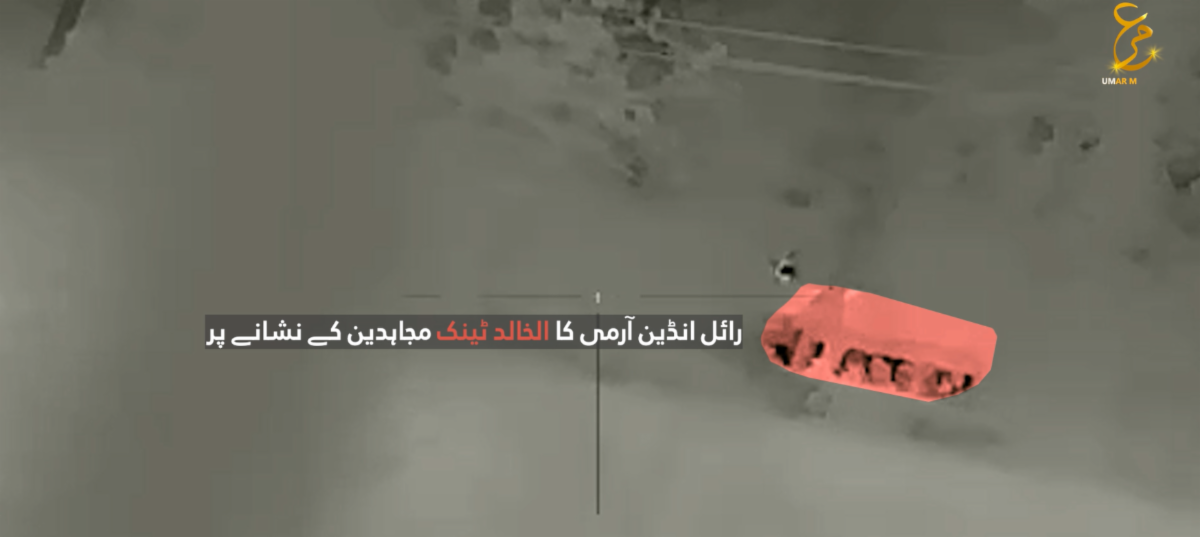
(Video) Tehreek-e-Taliban Pakistan (TTP) Special Unit (SIF) Ambush Al-Khalid Tank of Pakistani Army in Gomel District, Tank Province, Khyber Pakhtunkhwa, Pakistan
| | | | |