|
In a striking resurgence of violence, Islamic State Khurasan (ISK) has launched back-to-back suicide bombings targeting high-profile Taliban figures, signaling a calculated effort to destabilise the Taliban’s control and undermine their authority in Afghanistan. These twin attacks—occurring within just two days of each other—demonstrate ISK’s strategic precision and its commitment to dismantling the Taliban’s image as Afghanistan’s uncontested ruler.
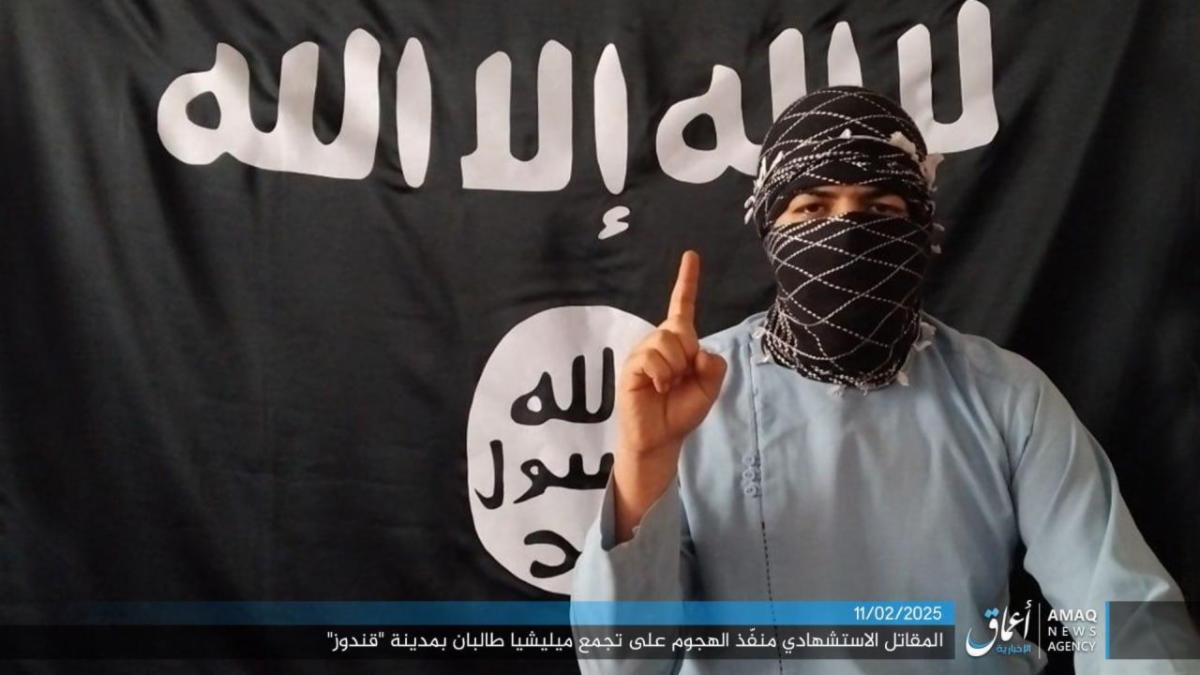
On 11 February 2025, ISK suicide bomber Abu Ali al-Ansari carried out a deadly assault outside a Kabul Bank branch in Kunduz, targeting Taliban fighters collecting their paychecks. The explosion killed at least 25 people and injured over 48 others, including both Taliban fighters and civilians. The location—a financial hub within a heavily fortified area—was deliberately chosen to maximise impact, disrupt Taliban operations, and inflict economic instability. By striking at a government-sanctioned financial institution, ISK not only inflicted human casualties but also sowed fear among Taliban ranks and exposed vulnerabilities within their security apparatus.
Just two days later, on 13 February 2025, ISK struck again. This time, a suicide bomber identified as Abu Yusuf al-Ansari targeted the Taliban’s Ministry of Urban Development and Housing in PD-9, Kabul. Despite Taliban claims that the bomber was neutralised before reaching the target, insider reports suggest that the attacker engaged in a firefight with security forces before detonating his explosive vest, resulting in multiple casualties. Critically, Arsala Kharoti, the Taliban’s Deputy Minister for Finance and Administration, was seriously injured in the blast and remains in critical condition. The ability to penetrate the capital and directly target senior Taliban officials highlights ISK’s operational reach and its capacity to strike at the heart of the Taliban’s governance.
These two high-profile attacks, launched in quick succession, are not isolated incidents but rather part of a broader ISK campaign aimed at destabilising the Taliban's rule. ISK has long framed the Taliban as Western collaborators and religiously compromised, criticising their engagement in diplomacy and their failure to implement Sharia law fully. Through attacks on financial hubs and government institutions, ISK seeks to portray the Taliban as incapable of securing their strongholds, further delegitimising their authority.
The timing of these attacks is particularly telling. With Ramadan approaching—a period historically marked by heightened militant activity—TRAC has long anticipated a surge in ISK operations. The Islamic holy month often catalyses jihadist groups, who view it as an opportune time to escalate violence under the banner of religious duty. ISK has capitalised on this pattern in past years, using Ramadan to launch devastating attacks, and the recent bombings in Kunduz and Kabul signal the early stages of what could be another deadly campaign.
This escalation is eerily reminiscent of ISK’s 2022 and 2023 suicide bombing waves, which wreaked havoc across Afghanistan, leaving hundreds dead and severely undermining Taliban control. The group’s decision to return to high-profile suicide bombings is a calculated move designed to remind both the Taliban and the international community that ISK remains a potent and adaptive force. Far from being dormant, ISK appears to be reinvigorated, actively pursuing a strategy that combines symbolic targets, psychological warfare, and operational disruption.
The implications of these attacks are significant. Firstly, they expose the Taliban’s fragile grip on security, even in areas deemed “highly secure.” Secondly, by directly targeting government officials and disrupting financial operations, ISK is strategically undermining the Taliban’s ability to govern. Lastly, this resurgence of ISK activity signals a dangerous period ahead, particularly as Ramadan approaches, raising the likelihood of further coordinated attacks not only in Afghanistan but potentially in neighbouring regions.
| | |
TRAC Incident Report: March 23 Movement (M23) Militants Led an Armed Assault and Captured Key Airport in Kavumu, South-Kivu Province, Congo (DR) | |
|
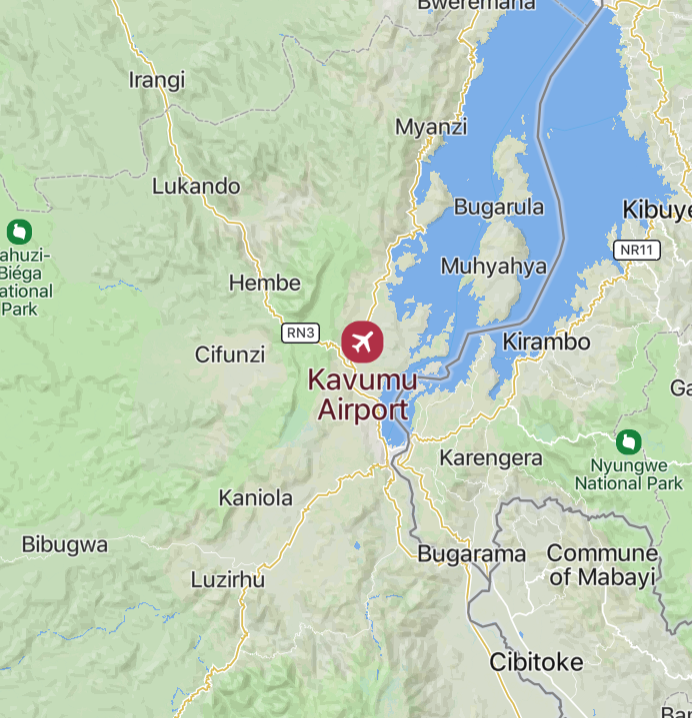
On 14 February 2025, M23 militants executed a strategic armed assault, successfully capturing the Kavumu Airport in South-Kivu Province, Congo (DR). This move marks a critical advancement in M23's ongoing offensive, positioning the group closer to its next primary target, Bukavu, and reinforcing its rapid southward expansion following the capture of Goma.
M23’s momentum appears unstoppable. Since seizing Goma, the militants have shown no signs of slowing, moving steadily towards Bukavu—a key stronghold that, if captured, could shift the regional balance of power. The Congolese Army (FARDC) has proven incapable of halting M23’s advance, and the upcoming battle for Bukavu is poised to become a pivotal moment in the conflict. Complicating the situation is the entry of Burundian forces, who have joined forces with the Congolese military to defend Bukavu against M23. This raises the stakes significantly, increasing the likelihood of the conflict escalating into a broader regional war.
The capture of Kavumu Airport is a game-changer for M23. Historically reliant on Rwandan logistical support, M23’s expansion has been geographically limited by supply constraints. With control over the airport, the militants can now streamline weapons, supplies, and reinforcements directly into South Kivu, strengthening their operational capabilities and allowing them to sustain offensives deeper into Congo. This logistical advantage also sets the stage for future campaigns beyond Bukavu, with Butembo reportedly eyed as their next target.
Meanwhile, the humanitarian situation in M23-controlled areas is deteriorating rapidly. In Goma, the living conditions have become dire—running water has been shut off, forcing residents to drink from contaminated lakes, heightening the risk of disease outbreaks. The militant group’s focus on territorial gains has come at the expense of governance, leaving civilians in worsening conditions and highlighting M23’s inability, or unwillingness, to manage the regions it seizes.
Their long-term ambitions remain uncertain as M23 tightens its grip on eastern Congo. Despite provocative rhetoric about marching toward Kinshasa, such an advance would be logistically impossible—traversing over a thousand miles of dense jungle. Instead, the group’s likely course is to solidify control in the east by targeting cities like Butembo. However, this move carries its risks, mainly due to the proximity of Islamic State Central Africa (ISCA) forces operating in the region.
Thus far, M23 and ISCA have maintained an uneasy non-aggression pact, driven by mutual strategic benefit. ISCA’s focus on jihadist campaigns and M23’s ethnic and political objectives have kept them from direct conflict. However, M23’s territorial expansion into areas near Butembo—a region where ISCA maintains a presence—raises the potential for escalating tensions. The future of this relationship hinges on M23’s strategic goals: whether they choose to support a tactical coexistence or engage in conflict to eliminate ISCA and consolidate control.
In the immediate term, the fate of Bukavu remains the most pressing concern. If it falls to M23—as Goma did—it would cement the group’s dominance in eastern Congo, setting the stage for further expansion. However, such gains come with heightened risks: deepening regional involvement, increased humanitarian crises, and possible direct conflict with ISCA. As the situation escalates, the region teeters on the brink of broader conflict, with the potential for significant destabilisation far beyond Congo’s borders.
| |
TRAC Incident Report: Suspected Mapuche Groups Behind Several Arson Attacks on Forested Areas in the South of the Country, Araucanía, Biobío, Ñuble Regions, Chile | |
|
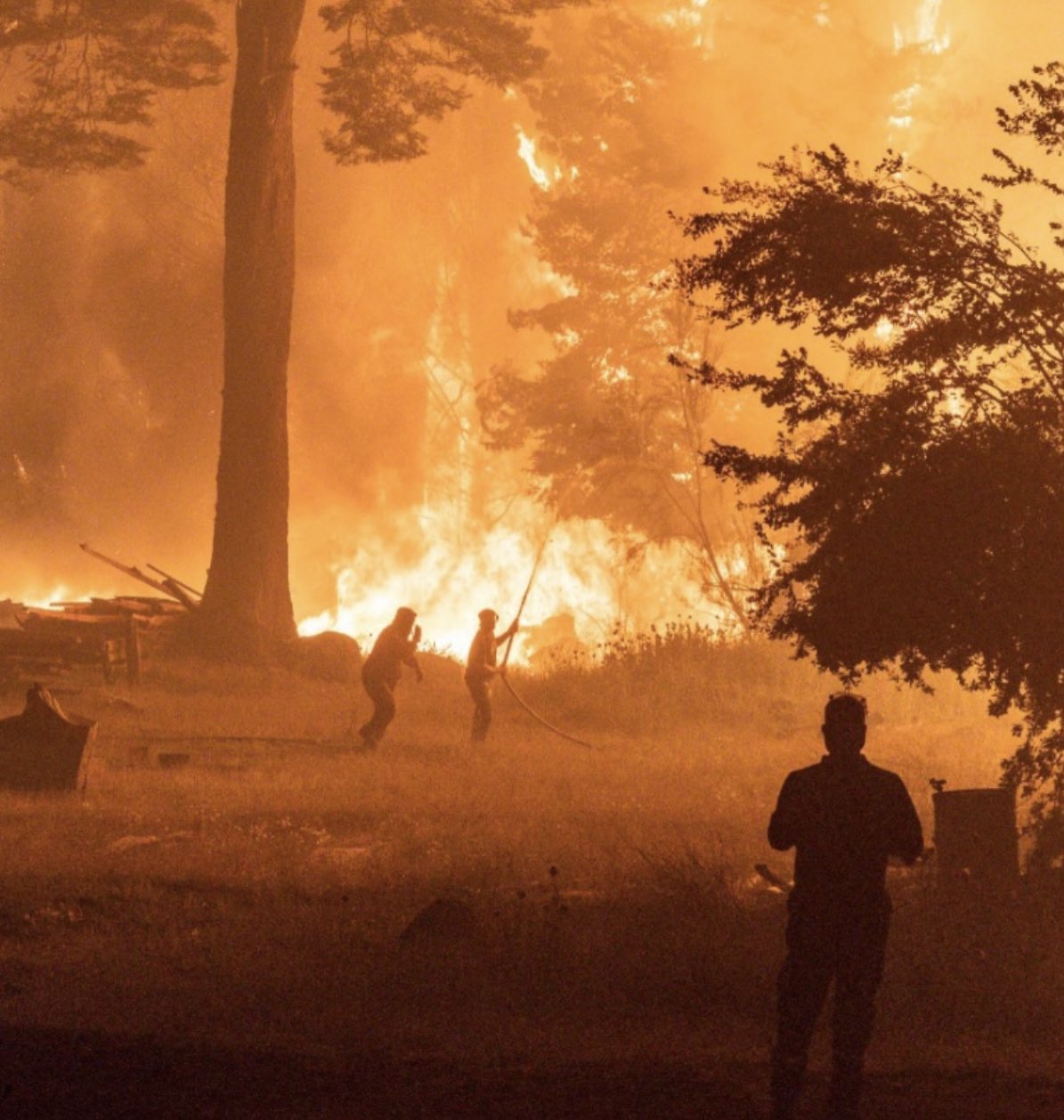
Since 06 February 2025, 221 forest fires have erupted across southern Chile, with the most intense outbreaks concentrated in the Araucanía Region, the Biobío (Arauco Province) and Ñuble regions. These fires have devastated approximately 11,000 hectares of land, resulting in significant human and material losses. To date, the fires have caused the death of an elderly woman, injured three others, destroyed 28 homes, forced the evacuation of numerous localities, and led to the arrest of 15 individuals suspected of involvement in these incidents.
Chilean authorities have confirmed that many of these fires resulted from deliberate arson. TRAC assesses with high confidence that the wildfires were orchestrated by arsonists linked to Mapuche organisations active in the Araucanía and Biobío regions. This assertion is supported by the specific patterns of the fire outbreaks—several erupted simultaneously in the dense forest between Ercilla and Pailahueque in the Araucanía Region. The fires followed a distinct straight-line pattern, a hallmark of coordinated arson attacks. Coupled with the prevailing heatwave and strong winds, the fires rapidly escalated, overwhelming firefighting efforts. The spatial distribution of the fires suggests the involvement of at least two organised groups working in tandem.
These fires are deeply intertwined with territorial disputes and the long-standing grievances of the Mapuche people. The Mapuche have historically used direct action—including sabotage and arson—to protest the Chilean government. They demand the restitution of ancestral lands and have often escalated their resistance when peaceful negotiations stall.
In response to the escalating crisis, Chilean authorities have imposed a curfew across 12 communes in La Araucanía, including the Malleco and Cautín provinces, from 10:00 PM to 6:00 AM. Officially, the curfew aims to facilitate the operations of firefighters and emergency responders. However, TRAC believes this measure also serves to deter further arson attacks and prevent potential assaults on emergency personnel by militant factions.
TRAC also highlights that this is not an isolated or spontaneous event but rather part of a broader strategy employed by radical Mapuche groups. In recent years, activists have circulated a manual titled ‘KUTRALWE – Tools for Struggles’, which outlines tactics for disrupting the Chilean economy, reclaiming land, and manipulating public opinion to favor the Mapuche cause. The manual explicitly promotes arson as a tool for resistance, declaring: “If justice cannot be done under the imposed laws, we will do Mapuche Justice (…) Justice for us is in the Fire.” This ideological framing portrays fire as a symbolic and tactical weapon in the Mapuche struggle for autonomy. Deliberately targeting forested areas inflicts environmental and economic damage and directly challenges the Chilean state’s authority over the contested territories.
| |
(Poster) al-Saif Media (Unofficial Islamic State): ‘Heading for Slaughter’ (Released in German & English) | |
|
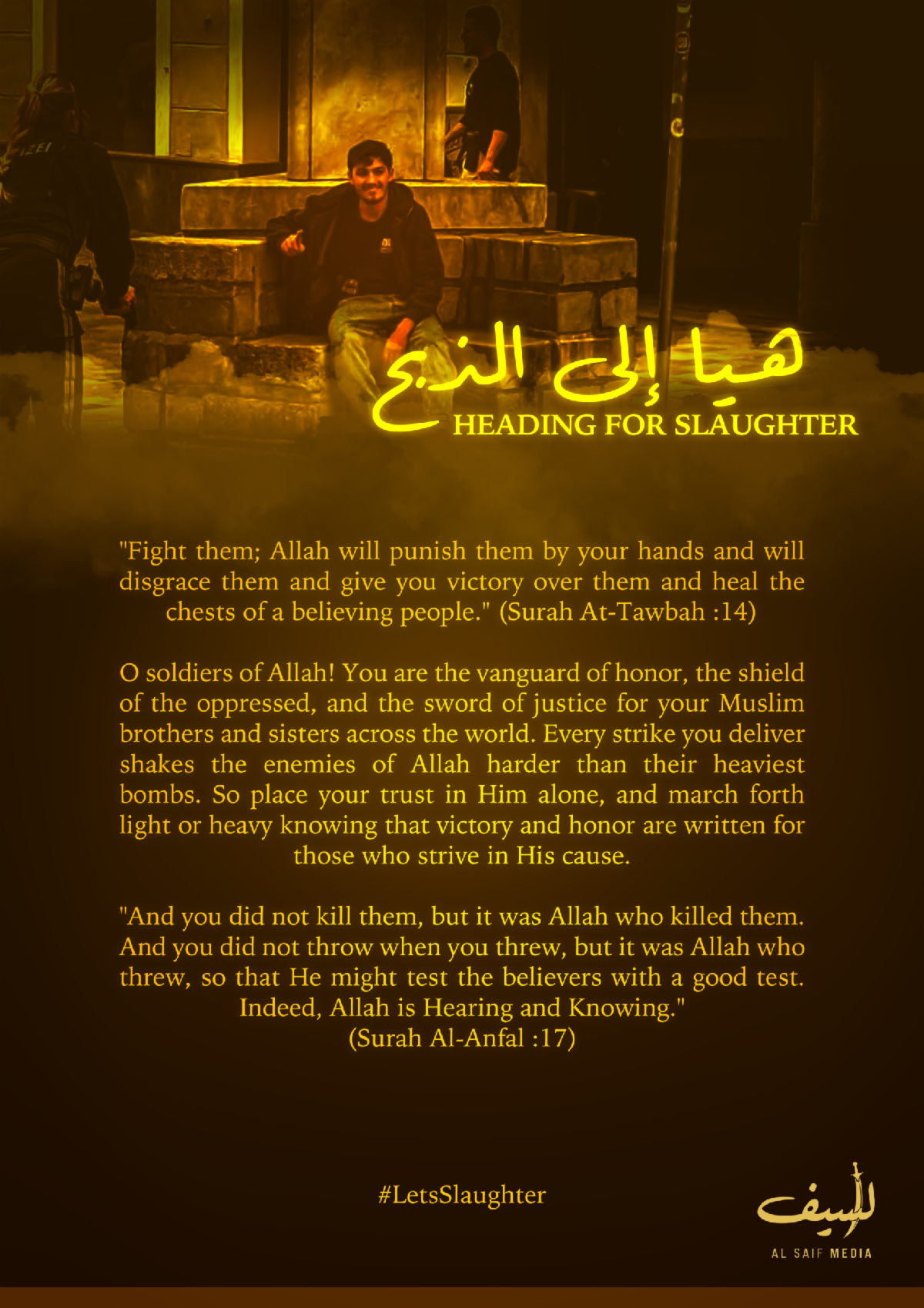
This latest al-Saif Media propaganda piece titled “Heading for Slaughter,” marks a notable escalation in the Islamic State’s German-language outreach, underscoring their intensified focus on inspiring attacks in Germany and Austria. The poster prominently features the attacker from the 15 February 2025 knife assault in Villach, further amplifying the group’s glorification of so-called ‘lone wolf’ operatives. The use of direct Quranic citations, militant rhetoric, and aggressive call-to-action slogans like #LetsSlaughter signals an effort to radicalise German-speaking sympathisers by framing violence as divinely sanctioned.
This increase in German-language propaganda appears to be yielding tangible results, as 2025 has already witnessed a disturbing rise in IS-inspired attacks across both Germany and Austria. By leveraging visually striking content and targeted messaging, IS has managed to insert itself into the online radicalisation space with alarming effectiveness. Given the historical precedent of past IS-linked knife and vehicular attacks in the region, the presence of tailored propaganda in German—alongside sustained recruitment efforts—indicates a persistent and evolving threat landscape in Central Europe.
| |
TRAC Incident Report: 15-Year-Old Satanic 764 Group-Linked Nazi Boy Arrested for Plotting an Attack Using an IED, Bolzano, Trentino-Alto Adige Region, Northeastern Italy | |
TRAC Incident Report: Third Shooting in Less Than Ten Days Leaves Teen Boy Dead at Clémenceau Metro (Train) Station, Anderlecht, Brussels, Belgium | |
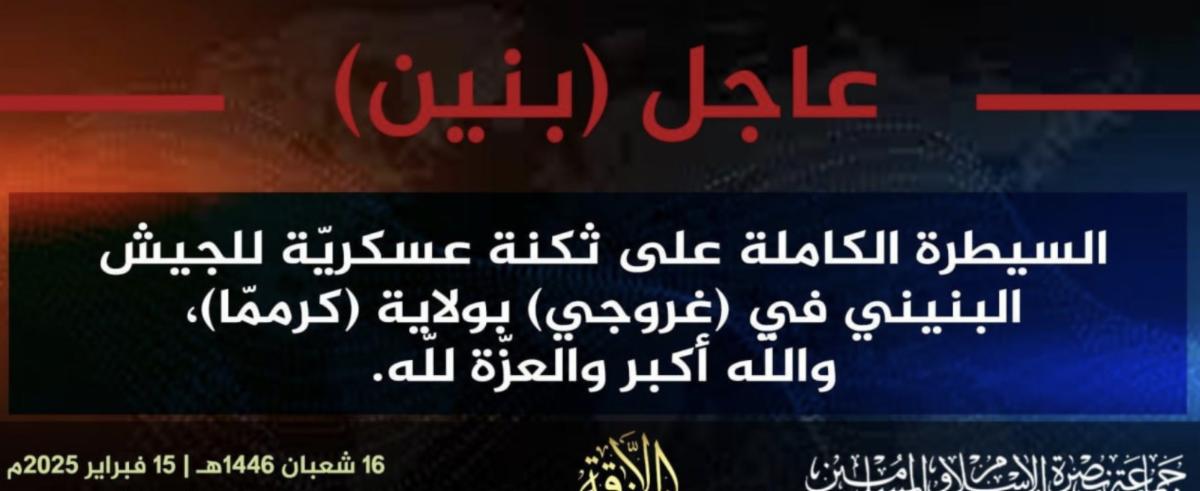
TRAC Incident Report: Jama’a Nusrat ul-Islam wa al-Muslimin (JNIM) Militants Take Over a Base of the Beninese Army, in the Karimama Area, Alibori Department, Northern Benin | | | | |