|
Nazi Teenage Student Targets Classmates in a Knife Attack at School in Odintsovo District, Moscow, Russia
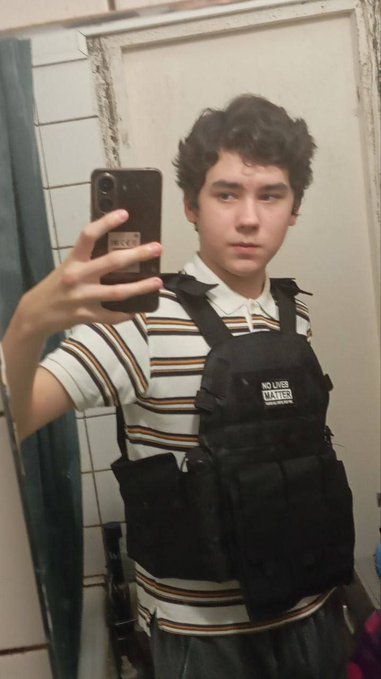
On 16 December 2025, a 15-year-old student identified as Timofey K.pepper-sprayed a security guard and assaulted classmates with a knife at Uspenskaya Secondary School in Gorki-2 village, Odintsovo district, west of Moscow, Russia. The assailant killed a 10-year-old Tajik boy and injured at least three others before barricading himself inside an office and taking a female student hostage. The school was immediately evacuated as emergency services and rapid-response units mobilised to the scene. Special forces stormed the room approximately 20 minutes later, successfully detaining the suspect and rescuing the hostage unharmed.
Far-Right Ideological Motivation and Visual Evidence
While the investigation is ongoing, preliminary indicators strongly suggest that the attack was motivated by far-right, Nazi-inspired extremist ideology. Photos and videos circulating on Russian social media show the attacker wearing a balaclava, tactical vest, and helmet emblazoned with antisemitic and neo-Nazi slogans, including “Kill the kikes”, as well as a T-shirt depicting the Kolovrat, a symbol widely used by Slavic neo-pagan and extremist groups. His vest also displayed the motto “No Lives Matter,” referencing an online extremist community known for radicalising Russian teenagers through violent propaganda. Additionally, the suspect wore a patch associated with the notorious Russian neo-Nazi paramilitary unit “Rusich.” Rumours online suggest he had recently celebrated the birthday of Brenton Tarrant, the perpetrator of the 2019 Christchurch mosque attacks, further evidence of ideological alignment with transnational far-right terrorism.
Preparation, Propaganda Intent, and Security Failures
According to TRAC’s assessment, the attacker prepared the assault for several days, using his mobile phone to record the killing of the 10-year-old victim as a form of propaganda meant to inspire like-minded extremists. His actions, including threatening a teacher and multiple children with a large knife, were enabled in part by inadequate situational response: the school security guard misjudged the threat, approaching the teen directly instead of adopting protective measures or seeking immediate reinforcements.
Choice of Target and Likely Racial Motivation
Notably, the targeted school is an elite institution attended by children of wealthy Russian businessmen and officials. TRAC believes that the attacker deliberately targeted this location due to the presence of ethnic minority students, consistent with the racist and nationalist motives seen in his attire and online content.
Broader Trend of School Violence and Transnational Radicalisation
This incident is part of a broader trend: once rare in Russia, school attacks have become increasingly frequent. The Gorki-2 assault occurred just one day after another knife attack at a St. Petersburg high school, where a ninth-grade student stabbed a teacher over academic grievances. TRAC also highlights a relevant precedent from October 2024, when a minor affiliated with both the “No Lives Matter” extremist movement and the Satanic “764” group carried out a knife attack on two civilians in Sweden, demonstrating the transnational nature of this online radical subculture. Lastly, similar to Benton Tarrant, he also videotaped his assault.
| | | TRAC Incident Report: Dogo Gide Bandits Planted Improvised Explosive Device (IED) Detonates on Gurusu–Gwashi Road in Bukkuyum LGA, Zamfara State, Nigeria | | |
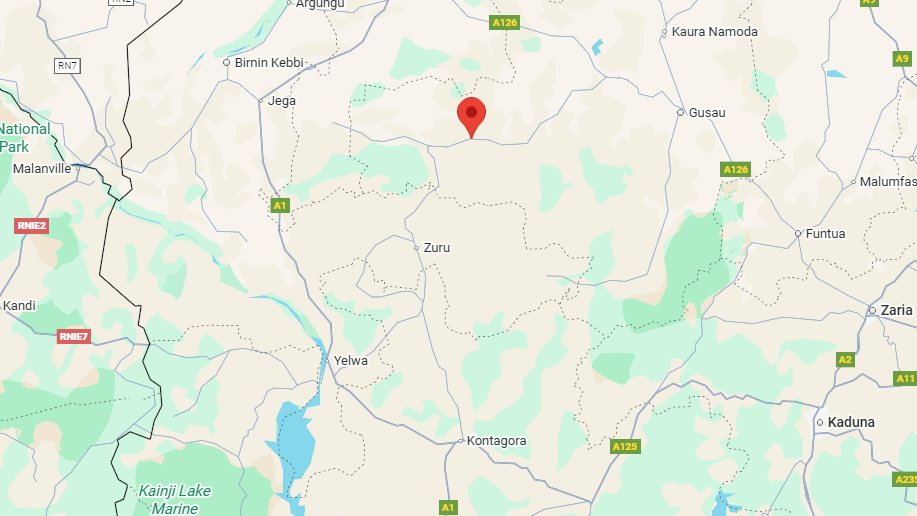
On 10 December 2025, an improvised explosive device (IED) detonated along the Gurusu–Gwashi road in the Bukkuyum Local Government Area (LGA), injuring passengers travelling in a Toyota Eagle Eye vehicle. Preliminary local reporting suggests the attack was carried out by a bandit known as Sadiku, potentially in collaboration with the notorious bandit leader Dogo Gide. If confirmed, this would represent a notable escalation in the operational methods of bandit networks in northwestern Nigeria.
Armed bandit groups in the northwest, particularly in Zamfara, Katsina, and Niger states, have historically relied on small arms and ammunition obtained through regional smuggling networks. Their arsenals have typically been built through porous borders, illegal gold-mining sites, black-market arms brokers, and local intermediaries. Unlike jihadist groups such as Boko Haram or the Islamic State West Africa Province (ISWA), bandits have rarely used explosives, as IEDs do not traditionally support their primary objectives of mass kidnapping, cattle rustling, or looting.
However, this incident highlights a concerning shift. Increasing contact between certain bandit factions and jihadist elements, combined with shared supply routes, convergence in remote hideouts, and growing access to explosive materials, has created pathways for both the transfer of technology and operational expertise. Fertiliser, mining explosives, and detonators circulate through some of the same informal economies that sustain militant groups. As a result, bandits are gaining the capacity to manufacture or deploy IEDs even without direct ideological alignment with jihadist actors.
Although the tactical utility of IEDs remain limited for kidnap-for-ransom operations; their use becomes more plausible in the context of territorial competition. Bandit groups in northwestern Nigeria are increasingly engaged in violent disputes over taxation zones, mining sites, grazing corridors, and control of rural communities. In such environments, IEDs can serve as tools of intimidation or area denial, mirroring patterns seen in parts of Latin America, where criminal organizations deploy explosives to deter rival factions, punish communities, or signal dominance.
This incident also appears consistent with a broader trend: the growing sophistication and emboldenment of bandit groups as they accumulate wealth and strengthen their logistical networks. Recently, bandit groups have demonstrated expanded capabilities, including the use of encrypted communications, advanced firearms, and escalatory violence designed to pressure local populations. Such developments, recorded by TRAC, highlight how northwestern banditry is evolving beyond opportunistic criminality into a more complex and militarised threat ecosystem.
| | TRAC Incident Report: Syrian Democratic Forces (SDF/PKK) Thwart an Attempted Escape of 18 Islamic State (IS)-Affiliated Women and Children in al-Hol [al-Hawl] Camp, Hasakah Governorate, Syria | | |
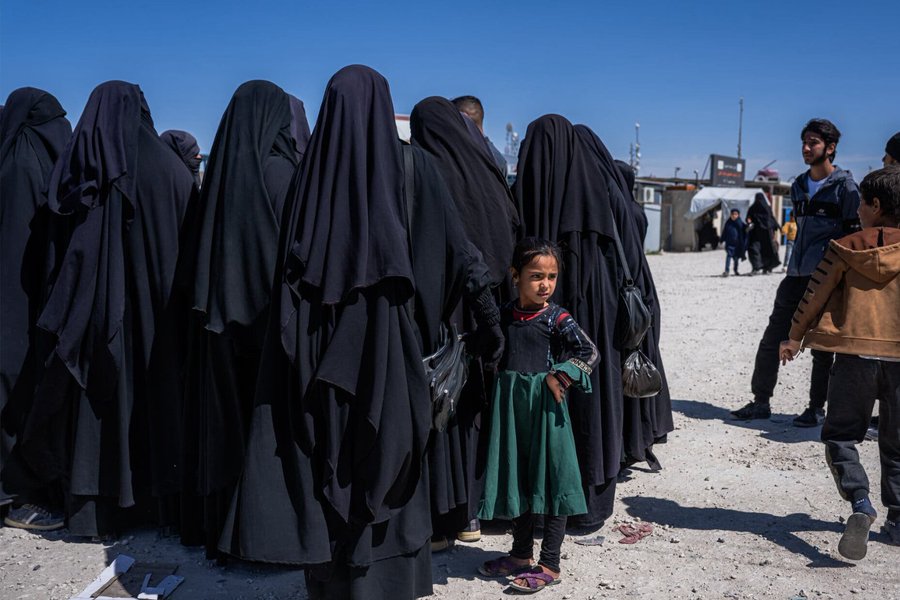
On 11 December 2025, Syrian Democratic Forces (SDF) successfully foiled an attempted escape by 18 women and children linked to the Islamic State (IS). The group reportedly included nationals from Russia and Turkmenistan. The incident once again highlights the persistent volatility of al-Hol Camp, which continues to serve as both a containment site for IS-affiliated families and a potent symbol within the organisation’s propaganda architecture.
Al-Hol, home to thousands of women and children associated with IS fighters, remains deeply embedded in IS strategic narratives. To the group, the camp is more than a detention facility; it is a living monument to their fallen “caliphate,” where loyal believers are held by what IS labels “apostate Kurds” backed by Western forces. This framing is repeatedly invoked in IS messaging, which portrays al-Hol as a place of suffering and injustice, conditions that must be avenged.
The camp population includes the wives, children, and relatives of slain or imprisoned IS fighters, many of whom continue to adhere to IS ideology. Although the camp is intended to house only women and minors, numerous counter-terrorism raids have revealed the presence of adult men hiding inside the flimsy tents provided to residents. As a result, al-Hol has evolved into a dense radicalisation ecosystem, where extremist teachings circulate, and IS influence persists despite constant security monitoring. Throughout 2025, TRAC documented multiple CTOs targeting suspected IS operatives embedded within the camp, reinforcing the assessment that al-Hol functions as an incubator for ideological entrenchment and operational planning.
Al Hol clearly has an “IS army in waiting,” should the group succeed in orchestrating a breakout. This is echoed in the 2022 Ghweiran prison attack, in which IS attempted a large-scale jailbreak. Such events highlight chronic structural weaknesses in the region’s detention infrastructure and the destabilising potential of coordinated IS operations. The strategic significance of al-Hol was also emphasised in last year’s speech by IS spokesperson Sheikh Abu Hudhayfa al-Ansari, titled “By Allah, This Matter Will Be Completed.” Delivered on the Islamic State’s 10th anniversary, the address blended historical revisionism with calls for renewed violence. Al-Ansari depicted al-Hol as a site of degradation where “female believers” allegedly suffer under SDF control. His message was a direct incitement, urging IS supporters in Syria to conduct attacks against camp personnel and security forces.
The involvement of women and children for all over the world, including foreign nationals from Russia and Turkmenistan, in the latest escape attempt illustrates the persistent risks posed by populations for whom no comprehensive legal or repatriation frameworks exist. Escape attempts by IS-linked women and minors are particularly concerning, as they reveal both ideological resilience and the psychological pressures of indefinite detention. These dynamics allow IS to continue manipulating vulnerable individuals, reinforcing loyalty and operational usefulness.
| | TRAC Incident Report: Four Members of the ‘Turtle Island Liberation Front’ Detained for Planning to Detonate Pipe Bombs on New Year’s Eve, Los Angeles Area, California, United States | | |
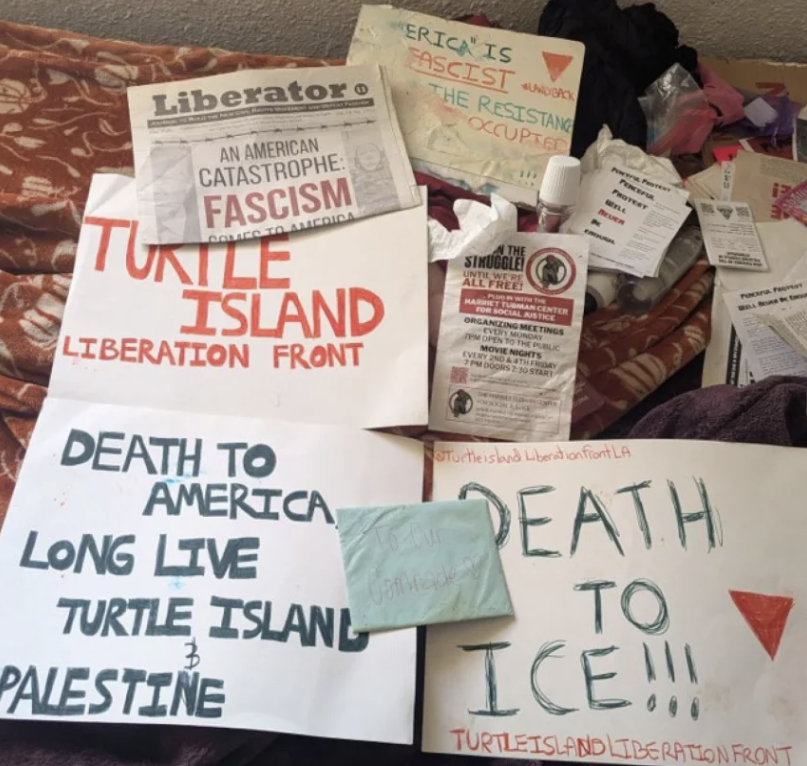
On 15 December 2025, U.S. authorities announced the arrest of four individuals who self-identified as members of the so-called “Turtle Island Liberation Front” for plotting to detonate pipe bomb–type improvised explosive devices (IEDs) across Los Angeles, California, on New Year’s Eve. The suspects, Audrey Ilene Carroll, Dante Garfield, Zachary Aaron Page, and Tina Lai, were reportedly motivated by strong pro-Palestinian, anti-law-enforcement, and anti-government ideologies. More specifically, Carroll is alleged to have provided the co-conspirators with an eight-page document titled “Operation Midnight Sun”.
Under said “Operation Midnight Sun”, the group planned to conduct simultaneous bombings at five designated sites, focusing on U.S. companies in Los Angeles. On 12 December, the suspects allegedly travelled to the Mojave Desert to assemble and test their devices. Authorities say three members were assigned to plant “backpacks with IEDs at different points along their assigned buildings,” describing the devices as complex pipe bombs. During the operation, the FBI recovered bomb-making components, precursor chemicals, and materials suitable for making Molotov cocktails.
The case highlights a growing global trend: the increasing use of pipe bombs as tools of terror. These devices are simple to construct using readily available online instructions, and their components, often purchased from ordinary hardware stores, are difficult for authorities to trace. The discovery of materials for Molotov cocktails is also significant, as such incendiary devices are commonly employed by anarchist groups and individuals aligned with Antifa during violent protests and clashes.
While authorities have not explicitly linked the suspects to Antifa, TRAC assesses that the group’s ideological profile aligns with broader militant anarchist and anti-state movements. This may ultimately result in terrorism-related charges referencing Antifa as the investigation progresses, particularly given that, earlier this year, the Trump administration formally designated Antifa as a terror-related entity. This designation could shape prosecutorial strategy.
However, despite attempts by officials to associate the Turtle Island Liberation Front with left-wing extremism, the methodology described in this case is atypical for anarchist, Antifa, or pro-Palestinian networks. Historically, such movements have favoured arson, firebombings, and Molotov cocktails over the construction and deployment of coordinated pipe bombs. The use of complex IEDs indicates a level of technical escalation and operational planning not commonly observed in these milieus, suggesting either an ideological hybridisation or an emerging trend that diverges from traditional left-wing militant tactics.
| | TRAC Incident Report: Religiously Motivated Shooting by Naveed Akram (24) & Sajid Akram (50) Targets Jewish Community, Killing 11 and Injuring More, On First Day of Hanukkah at Bondi Beach, Sydney, Australia | | (PDF / Instructional Manual) Islamic State (IS) Insiders Circulate Manual on How to Build Magnetic Improvised Explosive Devices (IEDs) (Radio-Controlled Magnetic Anti-Vehicle Mine) in Russian | |
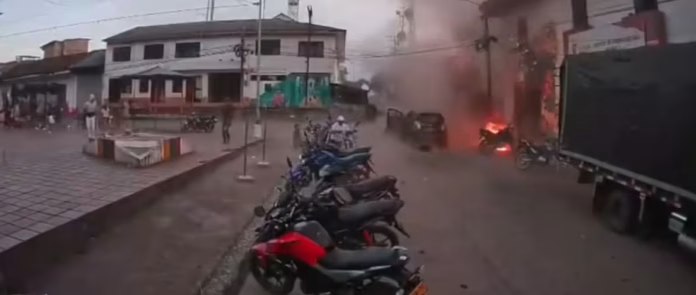
TRAC Incident Report: Central General Staff (EMC/FARC)-Linked Motorcycle Bomb Detonates Near a Police Station in Balboa, Cauca Department, Colombia
| | | | |