|
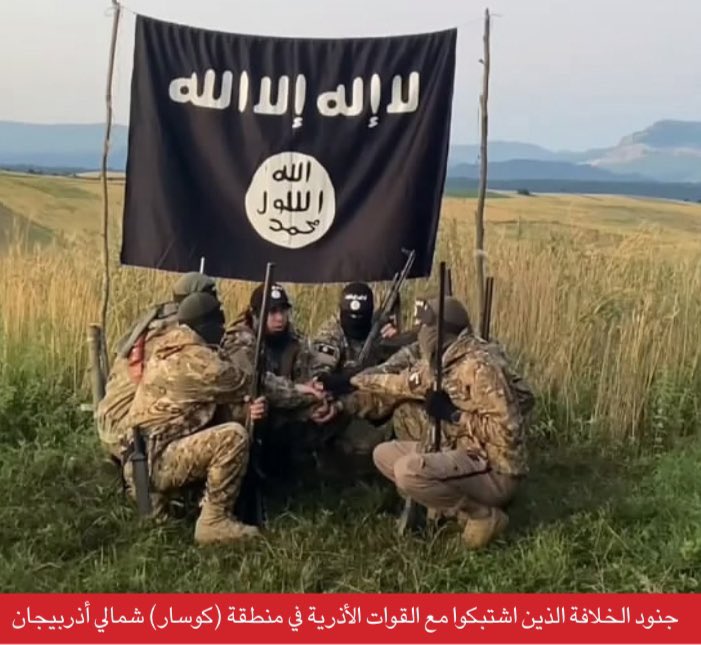
On 14 September 2024, Islamic State (IS) militants carried out their first-ever attack in Azerbaijan, targeting Azerbaijani forces in the city of Qusar, the capital of Qusar District, located in northern Azerbaijan near the Russian border. The assault resulted in the deaths and injuries of eight Azerbaijani soldiers, marking a significant escalation of IS activity into previously untouched areas.
Following the attack, Al-Naba, the official weekly newspaper of IS, featured images of the militants responsible for the Qusar operation in its latest issue. This public acknowledgement by IS confirms the group’s involvement in the incident and suggests that they now consider Azerbaijan as part of their network of "wilayat" (provinces). This declaration holds particular significance, as it marks the first time IS has officially claimed an operation in Azerbaijan.
Tactical Analysis of the Qusar Attack
The militants involved in the Qusar attack employed a variety of automatic weapons, including AK-74 rifles, AKM rifles, Bulgarian-made RGD-5 grenades, and shotguns. This diverse and sophisticated arsenal reflects a high level of preparedness and capability among the Azerbaijani extremists associated with IS. The fact that these militants had access to such well-equipped weaponry also underscores the broader threat posed by IS affiliates in Azerbaijan and the wider Caucasus region.
Historically, Azerbaijan has been a source of recruitment for IS, with a significant number of Azerbaijani citizens—particularly young men—joining the group in Iraq and Syria. Many of these individuals were recruited through psychological pressure and the manipulation of religious ideologies. The successful recruitment of Azerbaijani nationals has contributed to a latent IS presence in the region, which appears to be materializing into direct actions like the Qusar attack.
Implications for Security in the Region
This attack signals a potential shift in IS's strategy, focusing not only on the traditional strongholds in the Middle East and Africa but also on new territories in Central Asia and Europe. IS's decision to target Azerbaijan, a bordering country to Russia and Iran, also hints at its ambition to destabilize the broader Caucasus region—a geopolitically sensitive area.
Azerbaijan has long been viewed as a gateway between Europe and Asia, and this attack suggests that IS may now be seeking to exploit this strategic position. The presence of IS militants in Azerbaijan could potentially threaten the security of the Caspian region and disrupt the energy infrastructure that is vital to Europe’s energy security. Additionally, this development poses a risk to Azerbaijan's diplomatic relations with regional powers like Russia, Iran, and Turkey, all of which have vested interests in preventing the spread of extremism within their borders.
The Broader IS Strategy in 2024
The assault in Qusar is part of a broader strategy by IS to expand its operations into new and previously less-impacted regions. This attack in Azerbaijan represents the eighth transnational operation IS has claimed in 2024 alone. In addition to Azerbaijan, IS has launched attacks in countries such as Iran, Turkey, Russia, Oman, and Germany, highlighting a clear pattern of growth into areas traditionally outside of IS's central regions of influence. This surge in operations shows that IS is determined to broaden its global reach and disrupt security in regions not historically considered vulnerable to their influence.
This first-ever IS attack in Azerbaijan is a significant milestone that demonstrates IS's ongoing ability to expand into new areas despite global counter-terrorism efforts. The Qusar incident is not just an isolated event but part of a larger trend that reveals the group's ability to adapt and operate in increasingly diverse environments. The threat posed by IS is far from diminished, and their expanding operations in Central Asia, Europe, and beyond highlight the need for heightened vigilance and international cooperation to combat the group’s growing influence.
| | |
TRAC Incident Report: Jama’at Nusrat al-Islam wa al-Muslimin (JNIM) Militants Led an Armed Assault Against Police Forces on Guéné-Malanville Road, Alibori Department, Benin
&
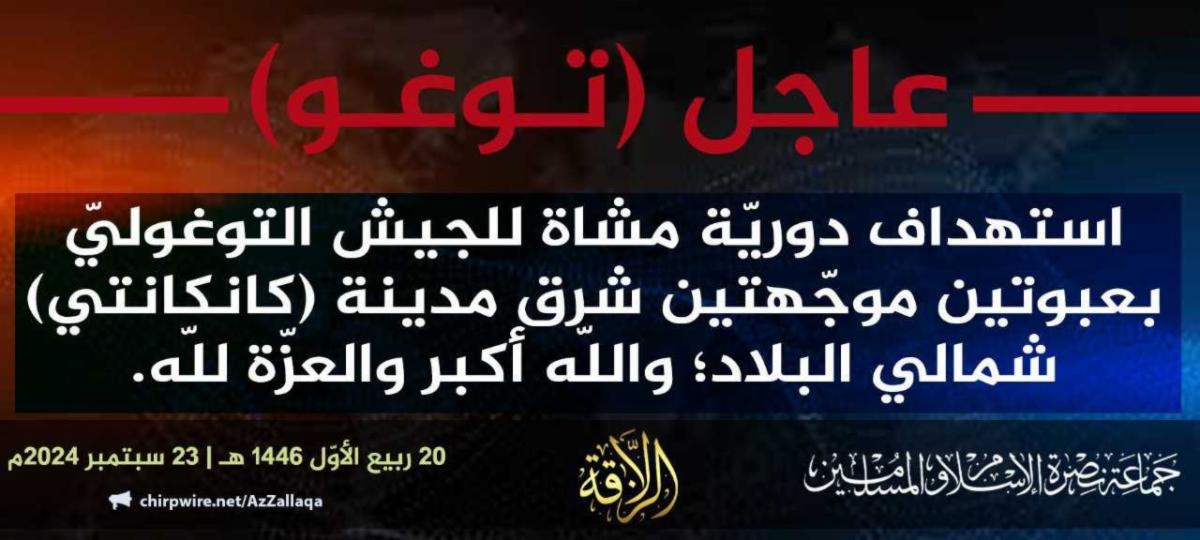
TRAC Incident Report: Jama’at Nusrat al-Islam wa al-Muslimin (JNIM) Militants Detonated Remotely Controlled IEDs on Togolese Army Patrols East of Kankanti, Kpendjal Prefecture, Savannes Region, Togo
| |
|
While recent headlines have largely focused on Jama’at Nusrat al-Islam wal-Muslimin's (JNIM) devastating twin assaults in Bamako, which resulted in the deaths of at least 70 soldiers, two other equally significant attacks by JNIM in Togo and Benin have gone underreported. These incidents underscore the group's expanding presence and the evolving security threat it poses across the Sahel.
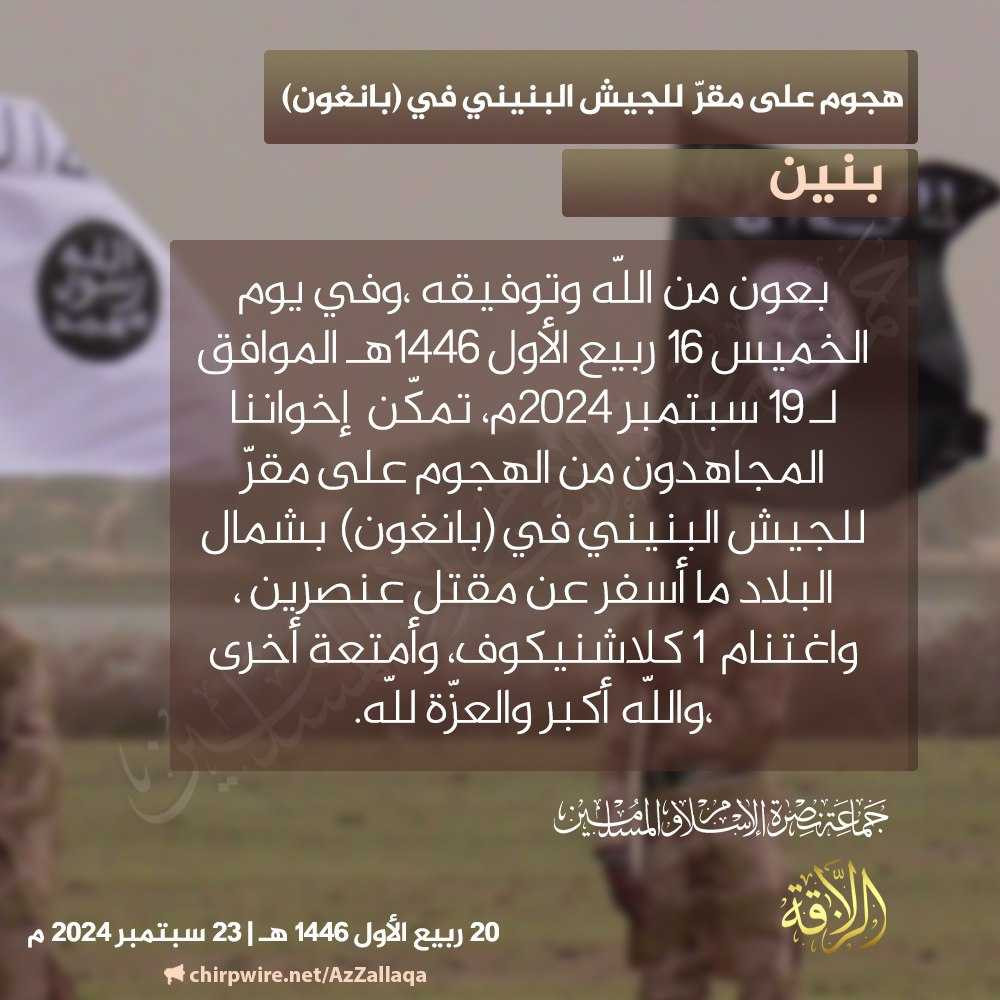
On 19 September 2024, JNIM militants launched an armed assault on police forces along the Guéné-Malanville Road in the Alibori Department of Benin. The attack resulted in the deaths of two police officers. This incident took place in a strategically crucial area near the tri-border region where Niger, Nigeria, and Benin meet—a region already destabilized by strained relations among these states following the Nigerien coup in 2023. The deteriorating cooperation between these countries only complicates the response to growing jihadist threats, particularly from groups like JNIM and the Islamic State in the Greater Sahara (ISGS), who, while not coordinating their efforts, have avoided confrontations despite operating nearby.
JNIM’s expansion into Benin is not incidental; the group has long expressed ambitions to push southward into the littoral states, aiming to entrench itself deeper into West Africa. This push guarantees its longevity, providing the militants with access to new territories and resources. The choice to target a key roadway in Benin is particularly concerning. By attacking security forces along such vital infrastructure, JNIM is signaling a clear strategy: weaken state control over key routes to facilitate the movement of militants and establish footholds for future operations. If left unchecked, this tactic could lead to the establishment of insurgent cells and bases across Benin, further embedding JNIM's presence in the region.
In a separate incident on 23 September 2024, JNIM militants detonated two IEDs targeting a Togolese Army patrol near Kakanti, located in the Kpendjal Prefecture of Togo's Savannes Region. Though no specific casualty numbers were reported, this attack is part of a broader pattern of insurgent activity in northern Togo, suggesting the presence of an established JNIM cell in the area. Kankanti may serve as a regional hub for the group's operations, and dismantling this cell at this critical juncture could significantly slow the spread of jihadist militancy across Togo's northern border.
JNIM’s repeated attacks in Togo—this being the second consecutive bombing—also indicate the presence of a skilled bomb maker within their ranks, as well as a steady supply chain for IED components. This suggests a well-organized logistical network, including safe houses where explosives are assembled and stored. The ability to produce and deploy IEDs not only enhances JNIM's operational capabilities but also expands its footprint in the region, making it harder for national forces to root them out.
The broader implications of JNIM’s actions in Togo and Benin are alarming. The group’s infiltration into these regions is part of a calculated strategy to embed itself across multiple states, making it increasingly difficult for any single country to effectively combat their presence. As JNIM spreads across national borders, counter-insurgency efforts will require greater regional cooperation and synchronized efforts. This includes intelligence sharing, coordinated military operations, and political collaboration—factors that have been hindered by the strained relationships between Niger, Nigeria, and Benin since the coup in Niger.
In summary, JNIM's recent attacks in Togo and Benin highlight the group's continued southward expansion and its determination to exploit the vulnerabilities in West Africa’s littoral states. The militants’ ability to operate freely, target key infrastructure, and establish logistical networks for IED production indicates that JNIM has successfully embedded itself in the region, posing a growing threat to regional stability.
|  | |
TRAC Incident Report: Suspected Al-Qaeda in the Islamic Maghreb (AQIM) Double Tap Armed Assault & Improvised Explosive Device (IED) Kills Two Shepards, Beni Snous, Algeria | |
|
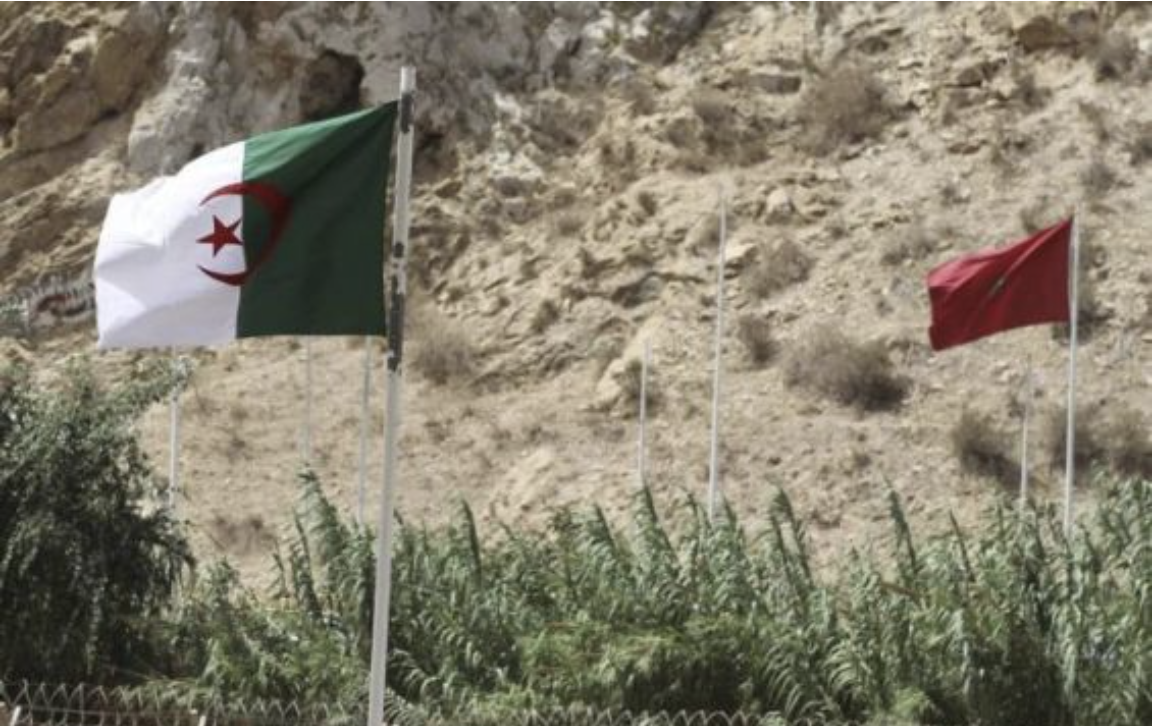
On 18 September 2024, suspected Al-Qaeda in the Islamic Maghreb (AQIM) militants launched an armed assault in the Beni Snous region of Algeria, killing two local shepherds. The victims, identified as Abdelhamid Jorda (40) and Abdelkader Ben Chert (43), were attacked while working in the forested area near the Algerian-Moroccan border. Following the attack, the militants detonated an improvised explosive device (IED), which injured three Algerian soldiers who arrived to investigate the initial incident.
The use of the double-tap tactic—a secondary attack aimed at security personnel responding to the initial assault—demonstrates AQIM’s evolving strategy in the region. This tactic is particularly effective in destabilizing an area, not only by inflicting immediate casualties but also by deterring security forces from quick responses, as they fear additional attacks. The combination of a traditional armed assault and IED detonation signals a resurgence of AQIM's operational sophistication and their renewed focus on establishing dominance in the region.
The Beni Snous area is a critical location, with its dense forests providing natural cover and its proximity to the Algeria-Morocco border offering strategic advantages for militant movements and smuggling operations. This border region has long been a contentious area for insurgent groups seeking to control key crossings and movement corridors, both for logistical support and to maintain access to North African militant networks. For AQIM, reestablishing a foothold in such an area could significantly enhance their ability to conduct cross-border operations and reinforce their presence in Algeria.
Prior to this incident, AQIM had not been attributed with a significant attack in over a year. This suggests that AQIM may be in the process of rebuilding its operational capacity, leveraging small-scale but impactful operations like this one to reassert its presence in Algeria. Beyond physical attacks, AQIM continues to wage a propaganda war against the Algerian government, positioning itself as a defender of jihadist ideology and the establishment of an Islamic state. AQIM has released multiple statements criticizing Algeria's counter-terrorism laws, accusing the government of criminalizing jihad and undermining the possibility of an Islamic caliphate. The group frequently denounces former and current Algerian government officials, accusing them of demonizing the Islamic era and comparing it to dictatorial regimes. These messages often incite attacks against government personnel, further demonstrating AQIM's intention to undermine Algeria's political and military structure from within.
This dual approach—combining direct attacks with propaganda aimed at fostering dissent—is a hallmark of AQIM’s broader strategy. While the group’s military capacity may be limited at present, its use of propaganda allows it to maintain ideological influence, recruit new members, and create an atmosphere of distrust between the Algerian government and its citizens.
| |
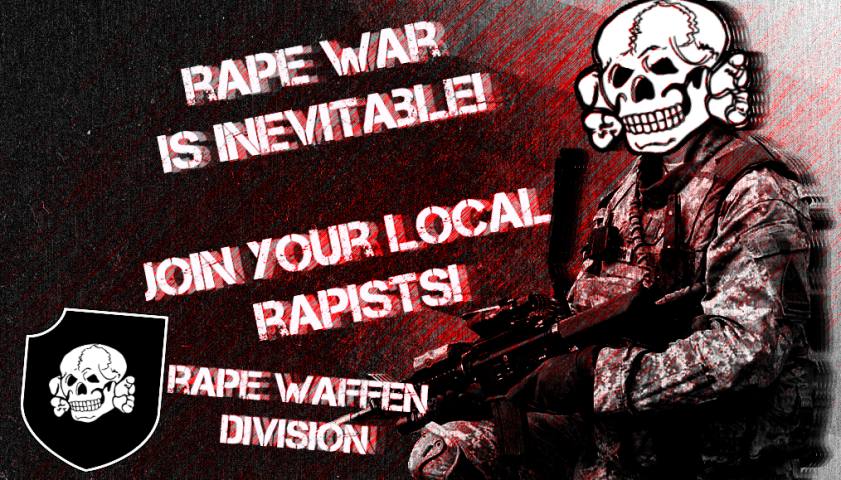
(Poster / Right Wing Extremism) Neo-Nazi Satanists Circulate Poster “Rape War is Inevitable – Join Your Local Rapist” | |
|
This poster is the second radical poster circulated by a Satanic neo-Nazi group calling themselves ‘There is No Consensual Solution‘. The poster reflects a growing trend within far-right extremist groups that blend hypermasculine and misogynistic beliefs with racist ideologies. These groups often see rape as not only a weapon of war but also as a method to propagate “white supremacy.” This misogynistic rhetoric aligns with the ideals of Incel (Involuntary Celibate) communities, which feel aggrieved by societal rejection and often place the blame on women for their lack of social or sexual success. The call to action to “Join Your Local Rapist” can be seen as an attempt to attract Incels to the broader Neo-Nazi movement by exploiting their shared disdain for women.
The skull imagery and aggressive “Rape War” slogan allude to Satanist-inspired Neo-Nazi groups, particularly those associated with the Order of Nine Angles (O9A). O9A has long been advocating for extreme violence, ritualistic murder, and societal breakdown. These groups glorify violence, including sexual violence, as a means of chaos creation and societal destruction.
The reference to divisions like Atomwaffen Division (AWD) and Feuerkrieg Division (FKD) shows how this poster is trying to tap into a broader network of white supremacist, Neo-Nazi groups to encourage violent uprisings.
The direct appeal to “rape” as a weapon highlights an attempt to radicalize Incels, individuals who already harbor resentment and hatred towards women. Far-right extremist groups, like Teufelsreich and Terrorgram subgroups, are increasingly targeting Incel communities by playing on their feelings of rejection and loneliness, offering them a sense of power through violent extremism.
| |
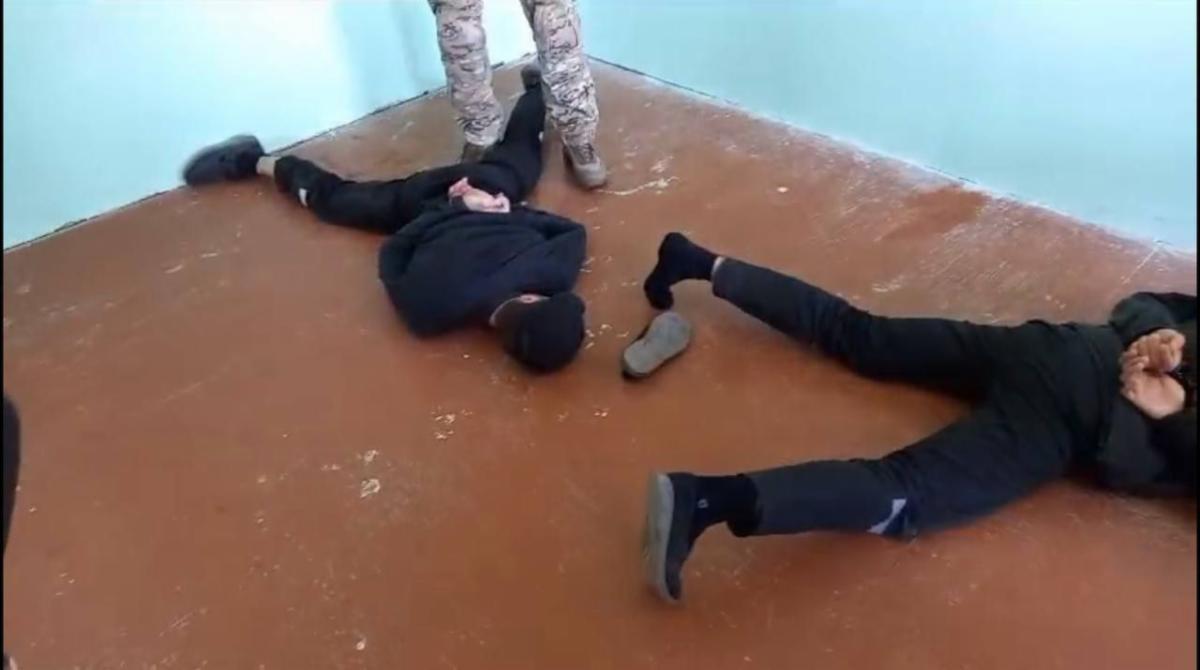
TRAC Incident Report: Suspected Islamic State Kavakaz (ISK/ISQ) Attempted Prison Break in the Nizhny Novgorod Region, Russia | |
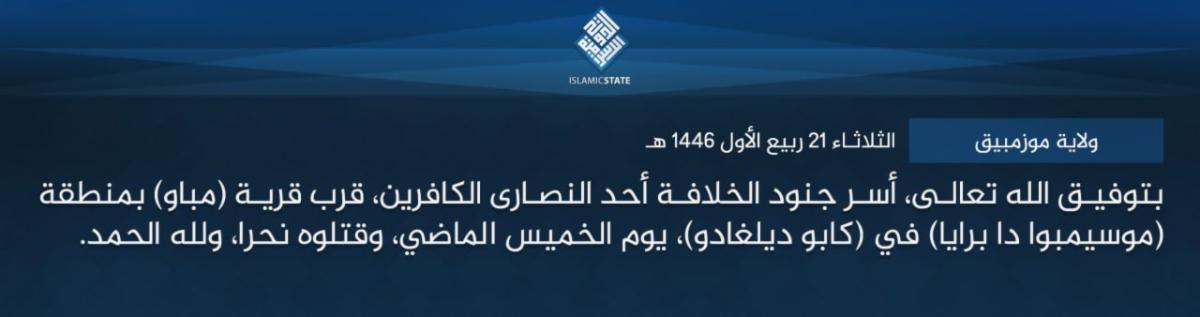
TRAC Incident Report: Islamic State Mozambique (IS-M/Shabaab Cult) Militants Led an Armed Assault on Civilians in Mbau, Mocimboa da Praia, Cabo Delgado Province, Mozambique
| |
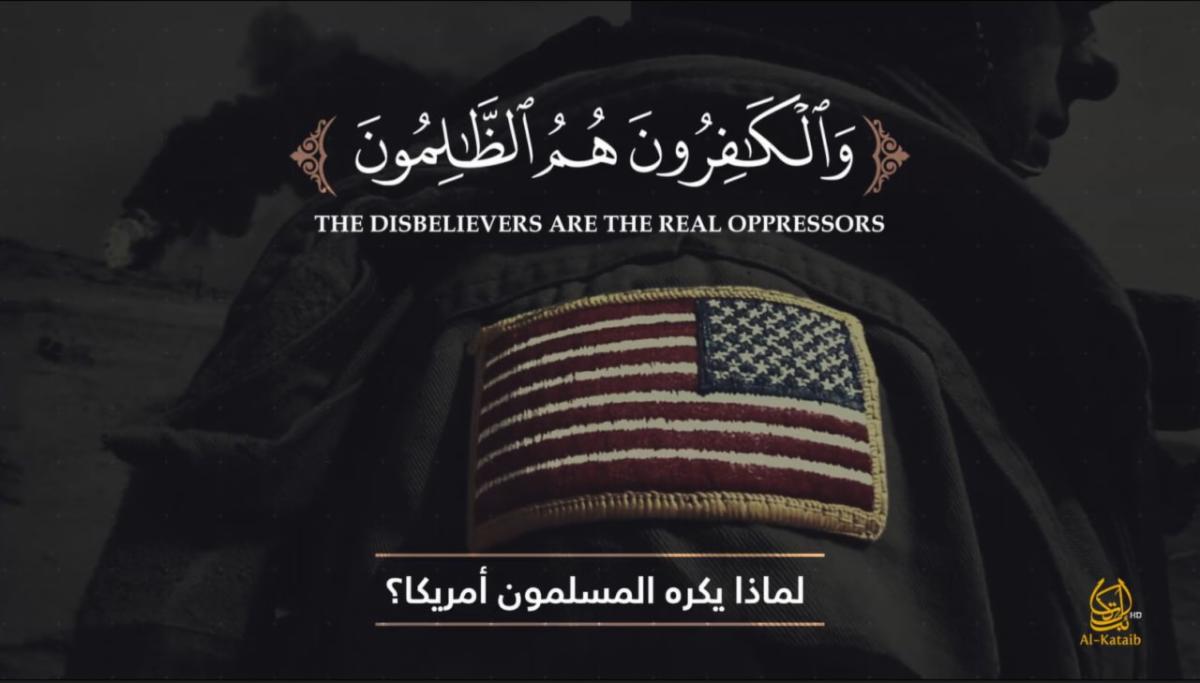
(Video) Al-Kataeb Foundation Propaganda Video: ‘And the Infidels are the Oppressors – Why do Muslims Hate America?’ | | | | |