NewsletterHeader5.png

As the year draws to a close, the TRAC team would like to wish all our readers, partners, and colleagues a very Merry Christmas and Happy Holidays. Thank you for your continued support, engagement, and trust throughout the year. We wish you a safe, peaceful, and restorative holiday season, and we look forward to continuing our work together in the year ahead.

Weekly Analyst Review

24 December 2025


Bottom Line Up Front

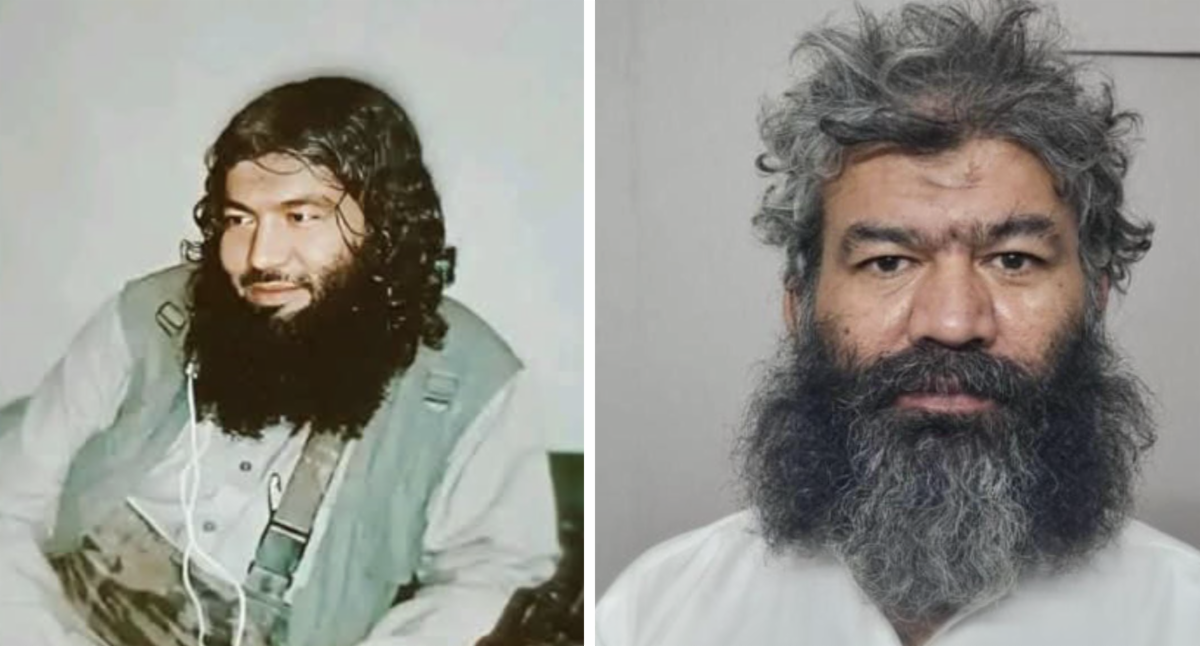
Insight into the Arrest of Islamic State Khurasan (ISK) Spokesman Sultan Aziz Azzam 


On 16 May 2025, Pakistani authorities conducted a high-profile counterterrorism operation that resulted in the arrest of Sultan Aziz Azzam, the official spokesperson of Islamic State Khorasan Province (ISK). The operation was led by Pakistan’s Inter-Services Intelligence (ISI) and took place in the border region between Nangarhar Province in eastern Afghanistan and Khyber Pakhtunkhwa in Pakistan. The arrest was deliberately kept confidential for several months to protect intelligence equities and enable follow-on operations against ISK networks.


Azzam’s detention marked a significant blow to ISK’s leadership structure, particularly its media and external messaging apparatus. As the founder of the Al-Azaim Foundation, ISK’s primary propaganda and recruitment arm, Azzam played a central role in shaping the group’s ideological narrative and operational messaging.


Impact on ISK Operations and Propaganda

The arrest of Sultan Aziz Azzam formed part of a broader Pakistani crackdown on ISK activities along the Afghanistan–Pakistan border. Since his detention, multiple planned ISK attacks have reportedly been disrupted, several commanders and ideological facilitators neutralised, and the group’s overall manpower reduced.


In parallel, another senior ISK figure, Abu Yasir al-Turki (also known as “Khurasan.Lion”), was detained in May 2025. These arrests further degraded ISK’s command-and-control capabilities. In the weeks that followed, major ISK-linked propaganda outlets, including Voice of Khorasan, were taken offline. In June 2025, encrypted ISK communication channels were abruptly disabled via a coordinated “kill switch,” triggering speculation and concern across IS-affiliated online ecosystems. Since then, ISK’s propaganda output has dropped sharply, reflecting a significant disruption to its media infrastructure.


Persistent ISK Presence Despite Leadership Losses

Despite these setbacks, TRAC cautions that ISK remains active in Afghanistan, contradicting Taliban claims that the group has been eliminated. ISK continues its recruitment and indoctrination efforts, particularly in border regions, including the use of children in madrasahs and preparation for suicide operations. This underscores that, while leadership arrests have constrained ISK’s capabilities, they have not fully neutralised the group’s operational footprint or ideological appeal.


Early Life and Professional Background

Sultan Aziz Azzam was born in 1980 in the Bati Kot district of Nangarhar Province, an area characterised by strong tribal rules and religious conservatism. Before his involvement in jihadist militancy, he built a professional career in local governance and media. He served as an advisor to the Nangarhar Provincial Council, gaining insight into political processes and community dynamics.


Azzam later transitioned into broadcasting, working with Spinghar Radio in Shinwar, followed by positions at Hamesha Bahar Radio and Nan Radio in Jalalabad. There, he hosted literary and cultural programming, including serialised dramas that earned him local recognition. Fluent in Pashto and Dari, he later proved his communication skills and established networks instrumental in his role as an extremist propagandist. The propaganda power of radio in Afghanistan cannot be underestimated, as it is the main form of communication (opposed to TV or Internet) by the local population.


Radicalisation and Role Within ISK

Azzam was also a poet and writer who frequently published his work on social media platforms, particularly Facebook, before joining ISK. He began writing during his university years and increasingly framed his worldview around the aspiration to live under what he described as a “true Islamic system.” This ideological trajectory ultimately led him to join ISK around 2013–2014, coinciding with the group’s expansion into eastern Afghanistan.


Because of Azzam's mass media experience, even as a new recruit, Azzam rapidly rose through ISK's ranks, becoming its chief media spokesman and head of information operations. He oversaw propaganda production, coordinated messaging between field units and media teams, and issued official statements aimed at both local and international audiences. His speeches and videos emphasised recruitment, ideological justification for violence, and the glorification of ISK attacks, portraying the group as resilient and disciplined.


Ideological Output and Recruitment Activities

Beyond his public statements, Azzam authored several books and articles aimed at inspiring jihadist mobilisation. His most prominent work, Travellers of the Maze, is a multi-part publication chronicling the experiences of ISK fighters in the Spin Ghar mountains, where the group once maintained territorial control. Excerpts from these writings circulated widely on Telegram and other encrypted platforms, reinforcing ISK’s narrative of endurance and sacrifice.


He reportedly leveraged his prior media connections to recruit others into ISK, at times coercing former colleagues to join. Intelligence assessments link him directly to the recruitment of operatives involved in high-profile attacks in Afghanistan.


International Designation and Claimed Death

In 2018, reports surfaced claiming that Sultan Aziz Azzam had been killed in a U.S. drone strike. However, the Taliban confirmed in 2023 that he was alive and residing in Pakistan, casting doubt on earlier assessments. On 1 December 2021, the U.S. Treasury formally designated Azzam as a Specially Designated Global Terrorist (SDGT) under Executive Order 13224 for his role in financing, supporting, and directing terrorist activities.


Responsibility for Major ISK Attacks

As ISK’s spokesperson, Azzam publicly claimed responsibility for several major attacks. These include the 26 August 2021 suicide bombing near Hamid Karzai International Airport in Kabul, the killing of three female journalists on 2 March 2021, and the large-scale prison assault in Jalalabad on 3 August 2020. His arrest, therefore, is not merely a symbolic victory but rather a substantive disruption to ISK’s external operations and propaganda-driven recruitment strategy.


TRAC has consistently maintained that the Islamic State moved their external operations branch, better known as the Emni, to the Khurasan region. It is unclear how the Emni, if at all, will be affected by Azzam's detention because the Islamic State, as well as other jihadist groups, have been able to execute operations from behind prison walls.

Other Developments

TRAC Incident Report: Three Coolers Containing Human Remains Found on Mazatlán-Culiacán Highway, Sinaloa, Mexico

On 21 December 2025, at approximately 10:30 a.m. local time, Mexican authorities discovered three abandoned coolers containing human remains along the Mazatlán–Culiacán highway, near kilometer 192.5 in the Costa Rica locality of Sinaloa state. The discovery was made after motorists travelling along the highway alerted emergency services to white thermal containers left on the roadside. In response, units from the National Guard, state police, and the Sinaloa General Prosecutor’s Office (FGE) were deployed to secure the area, close traffic lanes, and initiate forensic procedures.


The remains were deliberately displayed in a high-visibility location, consistent with tactics commonly used by cartels to intimidate rivals, signal territorial control, and send messages to authorities. Forensic teams were tasked with identifying the victims and determining whether the remains are linked to recent disappearances reported in the region. As of now, officials have not released details regarding the number of victims or potential suspects.


This incident forms part of a broader surge in extreme violence across Sinaloa, marked by armed confrontations, road blockades, arson attacks, and the public dumping of bodies. These developments have heightened fear among residents and prompted sustained high-alert status for federal, state, and municipal security forces. The escalation is primarily driven by ongoing infighting between rival factions of the Sinaloa Cartel, particularly as they contest control over strategic corridors, trafficking routes, and local enforcement networks following leadership disruptions.


The placement of human remains along a major highway highlights the deteriorating security environment and reflects a deliberate strategy of psychological warfare aimed at both civilian populations and competing criminal groups. 

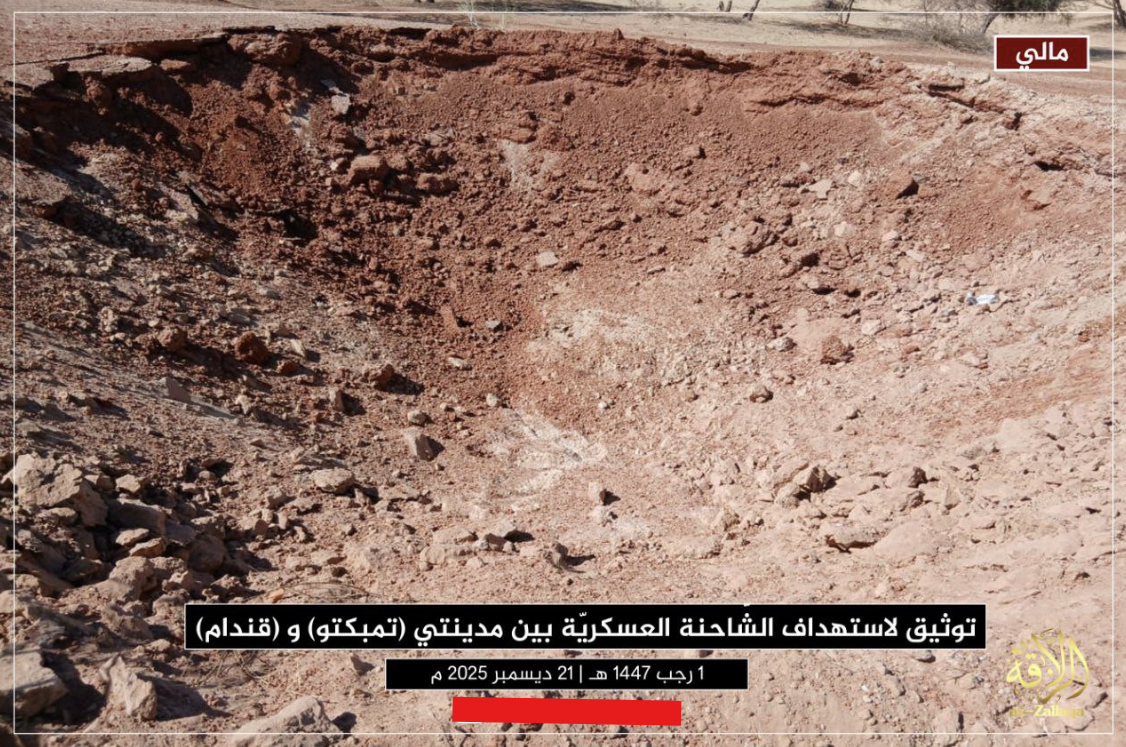
TRAC Incident Report: Jama’a Nusrat ul-Islam wa al-Muslimin (JNIM) Militants Target a Military Truck of the FAMA/Africa Corps Forces with an Improvised Explosive Device (IED) Between Timbuktu and Goundam, Timbuktu Region, Mali

On 21 December 2025, fighters from Jama’at Nusrat al-Islam wa al-Muslimin (JNIM) detonated an improvised explosive device (IED) against a military truck transporting Malian Armed Forces (FAMA) personnel and allied Africa Corps soldiers along the road between Timbuktu and Goundam, in Mali’s Timbuktu Region. The attack targeted a key supply and movement corridor used by government and allied forces, underscoring JNIM’s continued focus on degrading mobility and logistics rather than engaging in direct large-scale confrontations.


This incident occurred just three days after JNIM targeted Timbuktu Airport with a missile, highlighting a sustained and coordinated pressure campaign against security infrastructure in and around the city. The close temporal proximity of these attacks suggests deliberate sequencing, aimed at maintaining operational momentum while stretching the defensive capacity of FAMA and its partners. By alternating between indirect fire and roadside bombings, JNIM continues to exploit asymmetric tactics that minimise its own exposure while maximising disruption.


The 21 December bombing further reinforces TRAC's assessments that JNIM is seeking to isolate and eventually seize Timbuktu City. Rather than attempting an immediate assault, the group appears intent on systematically weakening government control through repeated strikes on vehicles, patrols, and strategic facilities, inflicting casualties and eroding morale among both Malian forces and Africa Corps personnel. This mirrors JNIM’s broader strategy elsewhere in central and northern Mali, where prolonged attrition has preceded territorial encroachment.


Operationally, JNIM militants appear to be tightening their grip around Timbuktu from multiple directions. The group maintains a presence to the east, around Ber, and to the west, near Goundam, effectively constricting access routes and increasing the risk of ambushes along major roadways. If this pattern continues, Timbuktu risks becoming progressively isolated, leaving government forces increasingly dependent on air resupply and vulnerable to further coordinated attacks aimed at undermining long-term control of the city.

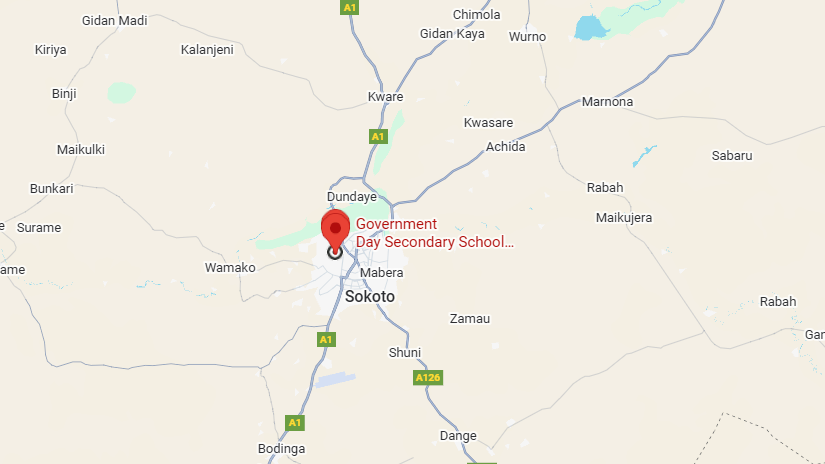
TRAC Incident Report: Nigerian Authorities Arrest Anas Sani and Three Others for Using Peace Corps Uniforms to Kidnap and Abuse 28 Girls in Government Day Secondary School (GDSS) Gidan Igwai in Sokoto city, Sokoto State, Nigeria

On 19 December 2025, Nigerian police arrested Anas Sani in Sokoto City in connection with a large-scale sexual exploitation and abduction case involving at least 28 girls. Authorities stated that Sani, together with three accomplices, disguised as members of the Peace Corps of Nigeria, including wearing official uniforms, to gain the trust of the victims and their families. Using these false identities, the suspects abducted, intimidated, sexually assaulted, and secretly recorded their victims over an extended period. The plot was so elaborate that Sani had rented offices to reinforce the ruse of legitimacy.


The Peace Corps of Nigeria is a legally registered, youth-focused non-governmental organisation dedicated to peacebuilding, volunteerism, youth empowerment, and community engagement. It operates nationwide and holds formal recognition from government ministries and international partners. Police stressed that the organisation itself has no connection to the crimes and that its name and reputation were deliberately exploited to lend legitimacy to the suspects’ approach and lower victims’ defences.


Sani and his collaborators lured girls with promises of Peace Corps-related opportunities, then subjected them to repeated sexual assaults. The perpetrators allegedly filmed these assaults and used the recordings as tools of coercion, blackmailing victims into continued abuse, intimidation, and psychological torture over prolonged periods. This method significantly compounded the harm by trapping victims in cycles of fear and control.

TRAC Incident Report: Dipu Chandra Das, a Hindu Garment Factory Worker, Lynched to Death Over Blasphemy Allegations, in Bhaluka, Mymensingh District, Bangladesh

(Statement) Saraya Ansar al-Sunnah Condemns Collaboration Between United States (US) and Syria in New Anti Islamic State (IS) Airstrikes, Syria


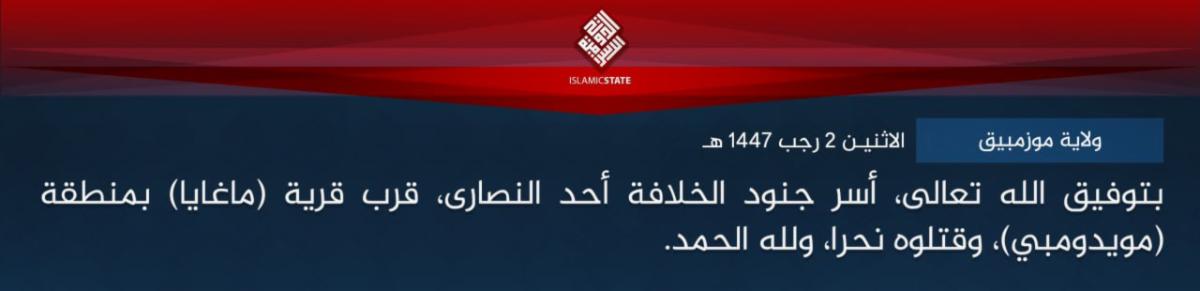
TRAC Incident Report: Islamic State Mozambique (IS-M/Shabaab Cult/Wilyat Muzinbik) Militants Captured and Beheaded a Christian in Magaia, Muidumbe District, Cabo Delgado Province, Mozambique


TRACFusion_Newsletter2.png

CLICK HERE FOR PAST WEEKLY BRIEFINGS

TRAC Logo_Primary_TransparentWhite.png
Facebook          X          Instagram